Billing System for SaaS: Complete Guide 2026
Discover the best billing system for SaaS in 2026. Compare top platforms, learn implementation best practices, and choose the right solution for your subscription business.
Choosing the right billing system for SaaS is one of the most critical decisions for any software business. With the global SaaS market projected to reach $819 billion by 2030, having a robust billing infrastructure isn’t just convenient—it’s essential for scaling revenue and maintaining compliance across multiple jurisdictions.
Whether you’re launching a new SaaS product or looking to upgrade your existing billing setup, this comprehensive guide will walk you through everything you need to know about SaaS billing systems in 2026, from core features to implementation best practices.
What Is a SaaS Billing System?
A SaaS billing system is a specialized software platform that automates the entire revenue lifecycle for subscription-based businesses. Unlike traditional payment processors that simply handle transactions, modern SaaS billing systems manage complex pricing models, subscription lifecycles, tax compliance, and revenue recognition.
The key difference between a basic payment gateway and a full-featured SaaS billing system lies in the depth of functionality. While Stripe or PayPal can process payments, a dedicated billing system handles proration, dunning management, usage-based metering, and multi-currency support—all critical for SaaS businesses.
Core Features Every SaaS Billing System Needs
When evaluating billing systems for your SaaS, look for these essential capabilities:
1. Flexible Pricing Model Support
Modern SaaS businesses rarely stick to simple monthly subscriptions. Your billing system should support:
- Subscription billing: Monthly, annual, and custom billing cycles
- Usage-based pricing: Metered billing for API calls, storage, or compute
- Hybrid models: Base subscription + overage charges
- Tiered pricing: Good-better-best plan structures
- Per-seat pricing: Charges based on number of users
2. Automated Tax Compliance
With over 160 countries implementing VAT and evolving sales tax regulations in the US, automated tax calculation is non-negotiable. Your billing system should automatically calculate, collect, and remit taxes based on customer location and product type.
3. Subscription Lifecycle Management
From trial conversions to churn prevention, your billing system should handle:
- Free trial management and conversion tracking
- Prorated upgrades and downgrades
- Automated dunning for failed payments
- Pause and resume subscription options
- Self-service customer portals
Top SaaS Billing Systems Compared (2026)
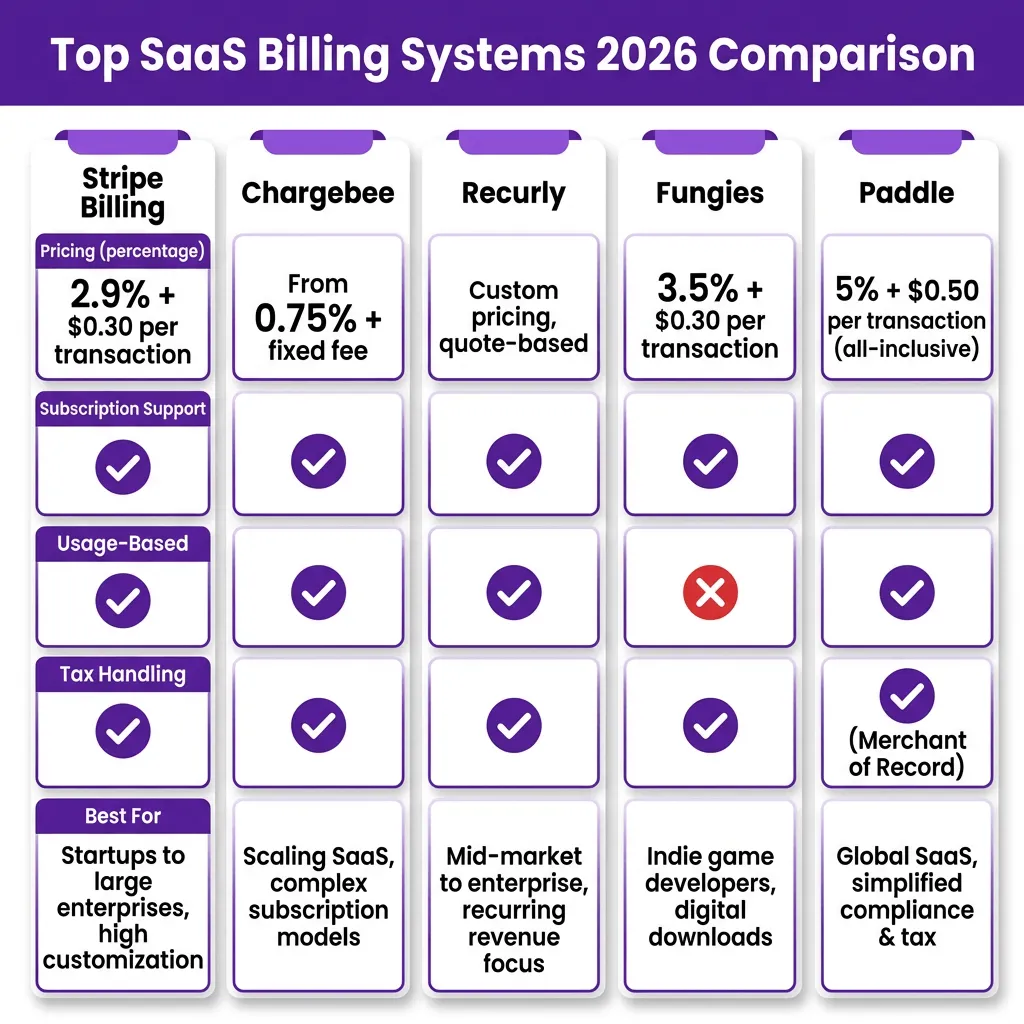
Here’s how the leading billing platforms stack up for different use cases:
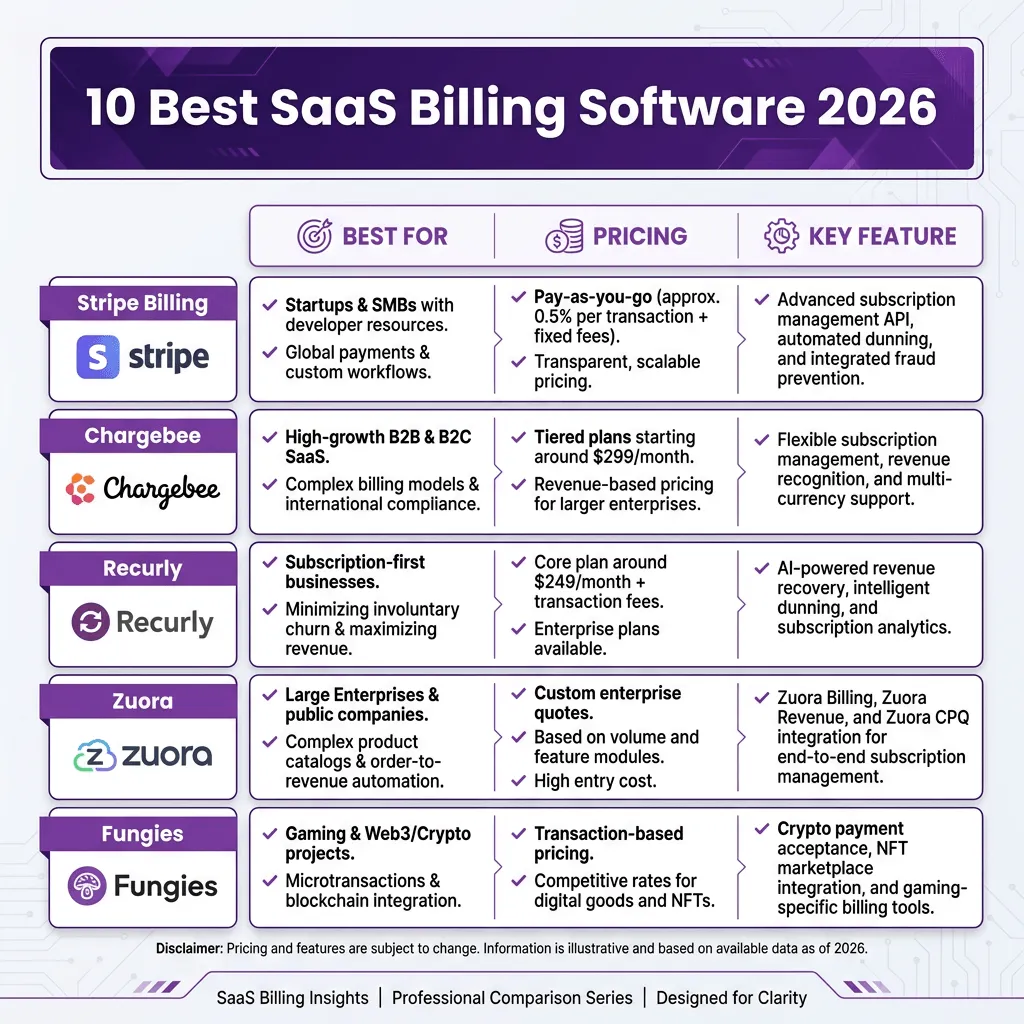
Stripe Billing
Best for: Developer-first teams with technical resources
Stripe Billing offers powerful APIs and extensive customization options. It supports subscription and usage-based billing with robust webhook functionality. However, tax compliance requires additional setup with Stripe Tax, and you’ll need to handle merchant-of-record responsibilities yourself.
Pricing: 0.7% on recurring payments
Chargebee
Best for: Mid-market B2B SaaS with complex billing needs
Chargebee excels at handling sophisticated subscription scenarios, including multi-year contracts, ramp deals, and complex pricing tiers. It offers strong revenue recognition features and integrates with most accounting systems.
Pricing: Starting at $599/month + 0.75% of revenue
Recurly
Best for: Subscription-first businesses focused on retention
Recurly offers industry-leading dunning management and churn reduction tools. Its revenue optimization features help recover failed payments and reduce involuntary churn by up to 20%.
Pricing: Custom pricing based on volume
Fungies
Best for: SaaS and digital product businesses wanting full compliance coverage
Fungies combines billing, tax compliance, and Merchant of Record services in one platform. It handles VAT, sales tax, and global compliance automatically, making it ideal for SaaS companies selling internationally without dedicated finance teams.
Pricing: Competitive transaction-based pricing with no monthly fees
Paddle
Best for: Software companies wanting complete MoR services
Paddle acts as the Merchant of Record, handling all tax compliance, fraud prevention, and payment processing. While comprehensive, it offers less flexibility for custom billing scenarios compared to API-first platforms.
Pricing: 5% + 50¢ per transaction
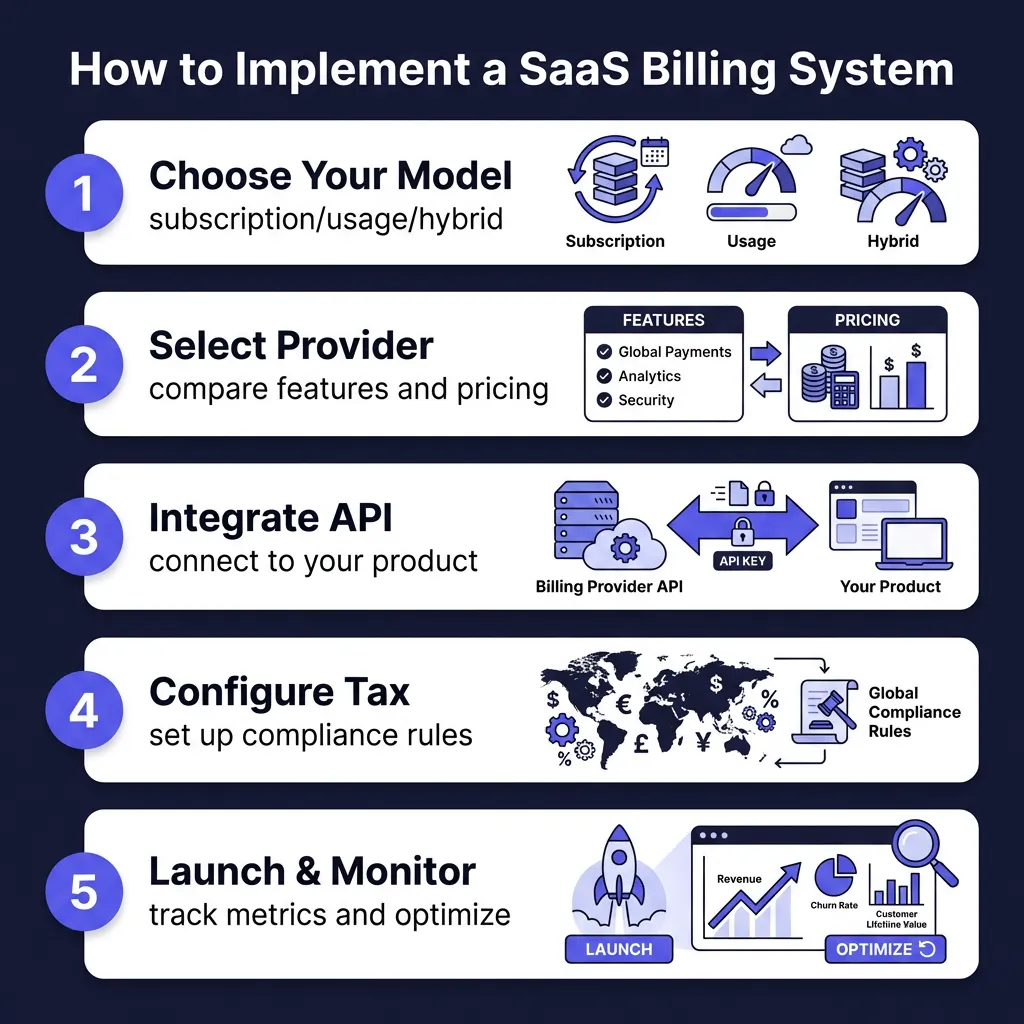
How to Implement a SaaS Billing System: 5-Step Framework
Step 1: Define Your Pricing Strategy
Before selecting a billing system, clearly define your pricing model. Will you use simple subscriptions, usage-based pricing, or a hybrid approach? Document your pricing tiers, billing frequencies, and any special scenarios like annual discounts or enterprise contracts.
Step 2: Evaluate Your Compliance Requirements
Determine where your customers are located and what tax obligations you’ll face. If you’re selling to EU customers, you’ll need VAT handling. US sales tax varies by state and product type. A Merchant of Record model can eliminate this complexity entirely.
Step 3: Assess Integration Complexity
Consider your technical resources and timeline. API-first platforms like Stripe offer maximum flexibility but require development work. Turnkey solutions like Fungies or Paddle provide faster implementation with less engineering overhead.
Step 4: Plan for Scale
Your billing system should grow with your business. Consider factors like multi-currency support, localized payment methods, and the ability to handle complex enterprise contracts as you move upmarket.
Step 5: Test and Iterate
Start with a pilot group of customers before full rollout. Monitor key metrics like payment success rates, churn, and time-to-invoice. Use this data to optimize your billing processes continuously.
Common SaaS Billing Mistakes to Avoid
Even experienced SaaS founders make these billing mistakes:
- Ignoring tax compliance until it’s too late: Tax authorities are cracking down on digital businesses. Set up proper tax handling from day one.
- Underpricing implementation costs: Factor in engineering time, payment processing fees, and potential revenue share when comparing options.
- Neglecting dunning management: Failed payments account for 20-40% of churn. Automated retry logic is essential.
- Over-engineering for hypothetical scenarios: Start with your current needs, not every possible future requirement.
- Failing to offer self-service: B2B buyers increasingly expect to manage their subscriptions without contacting support.
The Future of SaaS Billing (2026 and Beyond)
Several trends are shaping the future of SaaS billing:
AI-Powered Pricing Optimization: Machine learning algorithms are increasingly used to optimize pricing tiers and identify expansion opportunities.
Usage-Based Everything: As AI and API-first products proliferate, pure usage-based pricing is becoming more common, requiring sophisticated metering infrastructure.
Embedded Finance: Billing is becoming integrated into product experiences, with customers managing subscriptions directly within applications.
Regulatory Complexity: New tax regulations in emerging markets and evolving digital services taxes mean compliance automation is more critical than ever.
FAQ: SaaS Billing Systems
What’s the difference between a payment processor and a billing system?
A payment processor (like Stripe or PayPal) handles individual transactions. A billing system manages the entire subscription lifecycle, including pricing, invoicing, tax calculation, and revenue recognition.
Do I need a Merchant of Record for my SaaS?
If you’re selling internationally and don’t have dedicated tax and legal resources, a Merchant of Record can save significant time and reduce compliance risk. The MoR assumes liability for tax collection and remittance.
How much should I budget for a SaaS billing system?
Costs vary widely. Simple solutions start at 0.5-1% of revenue, while enterprise platforms may charge $500+/month plus revenue share. Factor in implementation costs and payment processing fees (typically 2.9% + 30¢).
Can I switch billing systems later?
Yes, but migration complexity depends on your current setup. Plan for data export, customer communication, and potential payment method re-collection. Some platforms offer migration assistance.
What’s the best billing system for a startup?
For early-stage SaaS, look for solutions with no monthly fees that scale with your revenue. Consider whether you need global tax compliance from day one or can add it later.
Conclusion
Selecting the right billing system for your SaaS is a strategic decision that impacts everything from cash flow to compliance. The best choice depends on your pricing complexity, target markets, technical resources, and growth stage.
For most SaaS businesses in 2026, we recommend evaluating platforms that offer flexible pricing models, automated tax compliance, and room to grow. Start with your current needs, but choose a platform that can evolve with your business.
Ready to Simplify Your SaaS Billing?
Join hundreds of SaaS companies using Fungies.io — automated billing, global tax compliance, and Merchant of Record services in one platform.
No credit card required