25 Digital Product Ideas to Sell Online in 2026: High-Margin Opportunities
Discover 25 profitable digital product ideas to sell online in 2026. From online courses to templates, find high-margin opportunities perfect for creators and entrepreneurs.
The digital product market is exploding. In 2026, creators and entrepreneurs are building profitable businesses selling everything from Notion templates to AI-generated art — all without holding inventory, shipping physical goods, or dealing with complex logistics.
If you’re looking for digital product ideas to start or expand your online business, this guide covers 25 proven opportunities. Each idea includes profit margin potential, difficulty level, and the tools you need to get started.
Ready to Sell Your Digital Products?
Fungies.io makes it easy to sell any digital product globally — with automated tax compliance, instant setup, and competitive 3.5% fees.
Start Selling Free →No credit card required • Get paid in 24 hours
Why Sell Digital Products?
Before diving into the ideas, here’s why digital products are one of the best business models in 2026:
- Zero inventory costs: Create once, sell infinitely. No warehousing, no shipping, no stockouts.
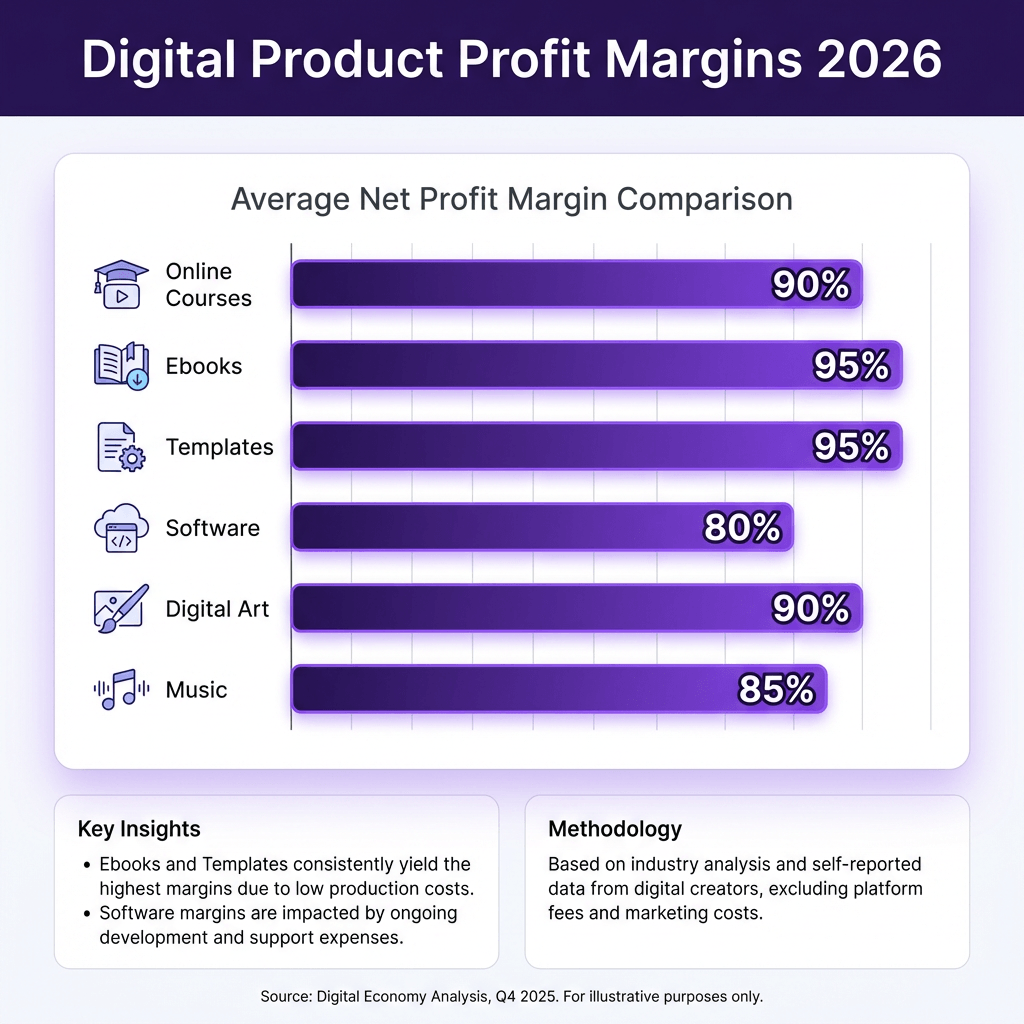
- High profit margins: Most digital products have 80-95% profit margins after payment processing fees.
- Passive income potential: Products can generate revenue while you sleep, travel, or work on new projects.
- Global reach: Sell to anyone, anywhere, instantly.
- Easy to update: Fix bugs, add features, or refresh content without recalling inventory.
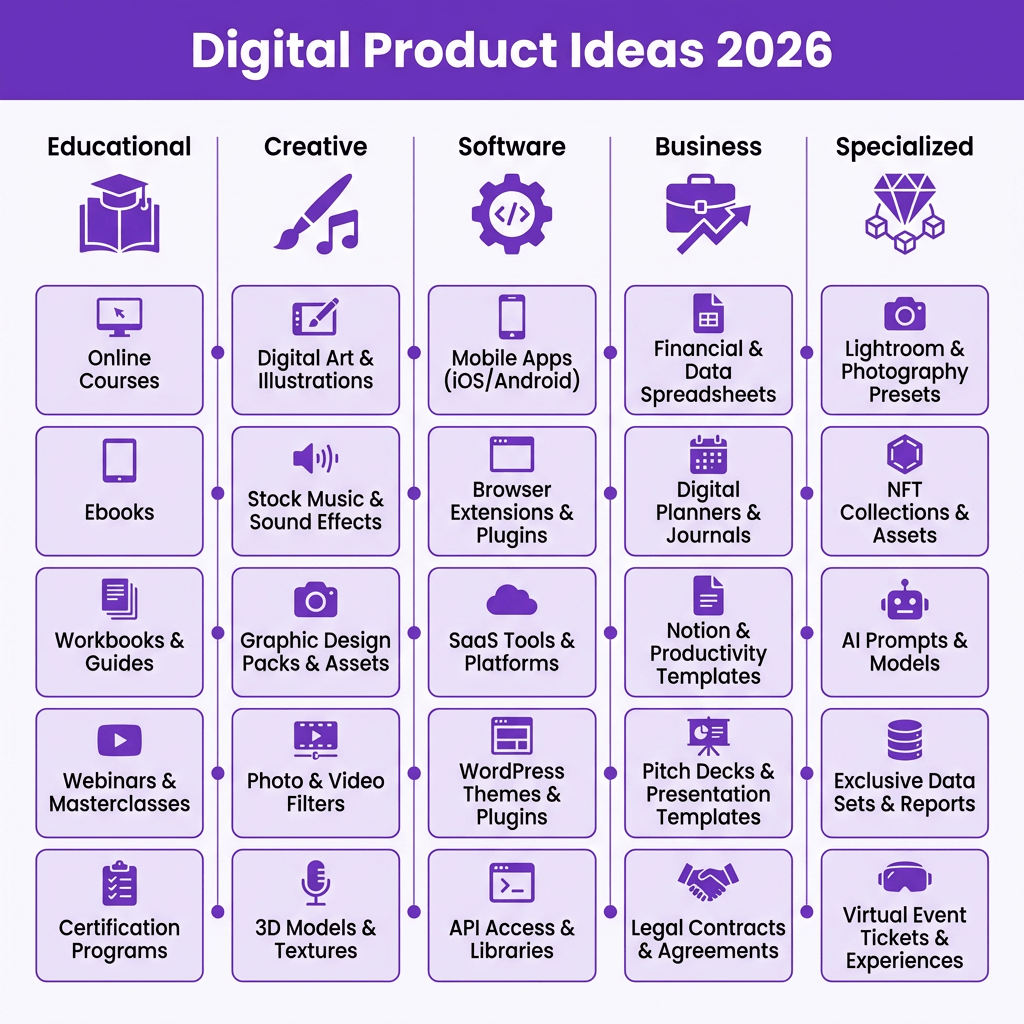
Category 1: Educational Digital Products
1. Online Courses
The e-learning market is projected to reach $400 billion by 2026. If you have expertise in any area — programming, design, marketing, cooking, fitness — you can package it into a course.
- Profit margin: 85-95%
- Difficulty: Medium (requires content creation)
- Tools: Teachable, Thinkific, or self-hosted with Fungies
- Price range: $50-$2,000
2. Ebooks and Guides
Ebooks remain one of the easiest entry points into digital products. Write about what you know, format it professionally, and sell it as a PDF or EPUB.
- Profit margin: 90%+
- Difficulty: Low
- Tools: Google Docs, Canva, Adobe InDesign
- Price range: $5-$50
3. Templates and Swipe Files
Notion templates, Excel spreadsheets, resume templates, business plan templates — people pay for ready-made solutions that save them time.
- Profit margin: 95%+
- Difficulty: Low
- Tools: Notion, Google Sheets, Canva
- Price range: $5-$50
4. Checklists and Workbooks
Actionable, printable resources that help people achieve specific goals. Wedding planning checklists, business launch workbooks, fitness tracking sheets.
- Profit margin: 95%+
- Difficulty: Low
- Price range: $3-$25
5. Coaching Programs
While not entirely passive, digital coaching programs (recorded videos + live Q&A sessions) scale better than 1:1 coaching.
- Profit margin: 80-90%
- Difficulty: Medium-High
- Price range: $200-$5,000
Category 2: Creative Digital Products
6. Digital Art and Illustrations
Sell digital prints, wallpapers, phone backgrounds, or printable art. AI tools like Midjourney and DALL-E have made creation easier than ever.
- Profit margin: 90%+
- Difficulty: Low-Medium
- Tools: Midjourney, Photoshop, Procreate
- Price range: $5-$100
7. Stock Photos
High-quality, niche stock photos sell consistently. Focus on underserved niches rather than competing with Shutterstock on generic business photos.
- Profit margin: 85-90%
- Difficulty: Medium
- Tools: DSLR camera, Lightroom
- Price range: $5-$50 per bundle
8. Music and Audio
Background music for videos, podcast intros, meditation tracks, or sound effects. The demand for royalty-free audio is massive.
- Profit margin: 85-90%
- Difficulty: Medium-High
- Tools: Ableton, Logic Pro, FL Studio
- Price range: $10-$200
9. Fonts and Typography
Designers constantly need fresh fonts. Create unique typefaces and sell them on your own site or font marketplaces.
- Profit margin: 90%+
- Difficulty: High
- Tools: FontLab, Glyphs, FontForge
- Price range: $15-$100
10. 3D Models and Assets
3D models for game developers, architects, and 3D printing enthusiasts. The metaverse and VR growth is driving demand.
- Profit margin: 85-90%
- Difficulty: High
- Tools: Blender, Maya, ZBrush
- Price range: $10-$500
Category 3: Software and Tools
11. Mobile Apps
Create utility apps, games, or niche tools. While app stores take a cut, you can also sell directly to keep more revenue.
- Profit margin: 70-85%
- Difficulty: High
- Tools: Swift, React Native, Flutter
- Price range: Free-$50+ (or subscription)
12. WordPress Themes and Plugins
The WordPress ecosystem is massive. Create themes for specific niches or plugins that solve specific problems.
- Profit margin: 80-90%
- Difficulty: High
- Tools: PHP, JavaScript, WordPress Codex
- Price range: $30-$200
13. Browser Extensions
Simple but useful browser extensions can generate significant revenue. Productivity tools, ad blockers, or niche utilities.
- Profit margin: 85-90%
- Difficulty: Medium
- Tools: JavaScript, Chrome Extensions API
- Price range: Free-$20 (or subscription)
14. SaaS Tools
Build software-as-a-service tools for specific industries or use cases. Higher complexity but massive revenue potential.
- Profit margin: 70-85%
- Difficulty: Very High
- Tools: React, Node.js, AWS
- Price range: $10-$500/month
15. Automation Scripts and Workflows
Zapier workflows, Python scripts, Excel macros — sell pre-built automation that saves businesses time.
- Profit margin: 90%+
- Difficulty: Medium
- Price range: $20-$200
Ready to Sell Your Digital Products?
Fungies.io makes it easy to sell any digital product globally — with automated tax compliance, instant setup, and competitive 3.5% fees.
Start Selling Free →No credit card required • Get paid in 24 hours
Category 4: Business and Productivity Tools
16. Business Plan Templates
Pre-built business plan templates for specific industries. Include financial projections, market analysis frameworks, and pitch deck templates.
- Profit margin: 95%+
- Difficulty: Low
- Price range: $25-$100
17. Marketing Templates
Email sequences, social media calendars, ad copy templates, SEO checklists — marketers always need templates.
- Profit margin: 95%+
- Difficulty: Low
- Price range: $15-$75
18. Financial Spreadsheets
Budget trackers, investment calculators, business financial models. People pay for well-designed spreadsheets that save them hours.
- Profit margin: 95%+
- Difficulty: Low-Medium
- Tools: Excel, Google Sheets
- Price range: $10-$50
19. Project Management Templates
Asana templates, Trello boards, Monday.com workflows for specific industries or project types.
- Profit margin: 95%+
- Difficulty: Low
- Price range: $10-$40
20. Legal Document Templates
Contracts, terms of service, privacy policies, NDAs — pre-written legal templates (with disclaimers) sell well to small businesses.
- Profit margin: 95%+
- Difficulty: Medium (requires legal knowledge)
- Price range: $25-$150
Category 5: Specialized Digital Products
21. Presets and Filters
Lightroom presets, Photoshop actions, VSCO filters. Photographers and content creators constantly buy these.
- Profit margin: 95%+
- Difficulty: Low
- Tools: Lightroom, Photoshop
- Price range: $10-$50
22. Video Assets
Intro animations, transitions, LUTs, stock footage. Video content growth means growing demand for video assets.
- Profit margin: 85-90%
- Difficulty: Medium
- Tools: After Effects, Premiere Pro, DaVinci Resolve
- Price range: $15-$100
23. Printable Planners
Daily planners, habit trackers, budget planners, meal planners. The printable planner market is surprisingly large.
- Profit margin: 95%+
- Difficulty: Low
- Tools: Canva, Adobe InDesign
- Price range: $5-$25
24. Digital Stickers
For GoodNotes, Notability, and other digital planning apps. Create themed sticker packs for planners and journals.
- Profit margin: 95%+
- Difficulty: Low
- Tools: Procreate, Illustrator
- Price range: $3-$15
25. NFTs and Digital Collectibles
While the NFT hype has cooled, digital collectibles remain viable for artists with established audiences.
- Profit margin: 80-95%
- Difficulty: Medium
- Tools: Various NFT platforms
- Price range: Variable
How to Choose the Right Digital Product Idea
With 25 ideas to choose from, here’s how to decide where to start:
Start with Your Skills
What are you already good at? If you’re a designer, start with templates or fonts. If you’re a developer, build tools or apps. Leverage your existing expertise.
Consider Your Resources
Some products require significant upfront investment (courses, software), while others can be created in a weekend (templates, checklists). Match your choice to your available time and budget.
Research Market Demand
Before building, validate demand. Search for similar products, check keyword volumes, and look at what’s selling on marketplaces.
Think About Margins
Higher-priced products often have similar creation costs to lower-priced ones. A $200 course doesn’t cost 10x more to create than a $20 ebook, but it generates 10x the revenue per sale.
Getting Started: Your Action Plan
Ready to create your first digital product? Here’s a simple roadmap:
- Week 1: Choose your product idea and validate demand
- Week 2-3: Create your product
- Week 4: Set up your sales platform and payment processing
- Week 5: Launch and start marketing
The key is to start simple. Your first product doesn’t need to be perfect — it just needs to solve a problem for your customers. You can always iterate and improve based on feedback.
FAQ: Digital Product Ideas
What digital products sell best?
Online courses, templates, and software tools consistently generate the most revenue. However, the “best” product depends on your skills and audience. A well-targeted product in a small niche often outperforms a generic product in a crowded market.
How much can you make selling digital products?
Income varies widely. Some creators earn a few hundred dollars per month as a side income, while others build six or seven-figure businesses. Your results depend on product quality, marketing effort, and market demand.
Do you need a website to sell digital products?
No, but it’s recommended. You can sell on marketplaces like Etsy, Gumroad, or Creative Market. However, having your own website gives you more control, higher profit margins, and direct customer relationships.
What’s the easiest digital product to create?
Templates, checklists, and simple ebooks are the easiest entry points. They require minimal technical skills and can be created in tools you already know (Google Docs, Canva, Notion).
How do you protect digital products from piracy?
Use a secure payment platform, deliver products via email or secure download links, and consider watermarking or DRM for high-value content. However, don’t let piracy fears stop you — most customers pay willingly.
Conclusion: Start Creating Today
The digital product market has never been more accessible. Whether you want to earn a side income or build a full-time business, there’s a digital product idea on this list that matches your skills and goals.
The key is to start. Don’t wait for the perfect idea or perfect timing — pick something from this list, create a minimum viable version, and get it in front of potential customers. You can always improve and expand based on real feedback.
The creators building successful digital product businesses aren’t necessarily the most talented — they’re the ones who took action. Your first product might not be a home run, but each product you create teaches you something that makes the next one better.
Ready to Sell Your Digital Products?
Fungies.io makes it easy to sell any digital product globally — with automated tax compliance, instant setup, and competitive 3.5% fees.
Start Selling Free →No credit card required • Get paid in 24 hours