Dunning Management SaaS: The Complete Guide to Recovering Failed Payments in 2026
Learn how dunning management SaaS solutions can recover 60-85% of failed payments automatically. Complete guide to reducing involuntary churn and maximizing subscription revenue in 2026.
Every SaaS company faces the same hidden revenue leak: failed payments. Whether it’s expired credit cards, insufficient funds, or bank declines, involuntary churn costs subscription businesses 9-15% of their annual revenue. That’s where dunning management SaaS solutions come in—automating the recovery of failed payments and keeping your hard-earned customers.
In this complete guide, we’ll explore what dunning management is, why it’s critical for SaaS businesses in 2026, how to implement it effectively, and which software solutions deliver the best results.
What Is Dunning Management for SaaS?
Dunning management is the automated process of recovering failed subscription payments. When a customer’s credit card charge fails, dunning software kicks into action—retrying the payment at optimal times, notifying the customer, and providing easy ways to update payment information.
The term “dunning” comes from traditional accounting, where businesses would send payment reminders to delinquent accounts. Modern dunning management SaaS platforms have transformed this into a sophisticated, automated workflow that recovers revenue while preserving customer relationships.
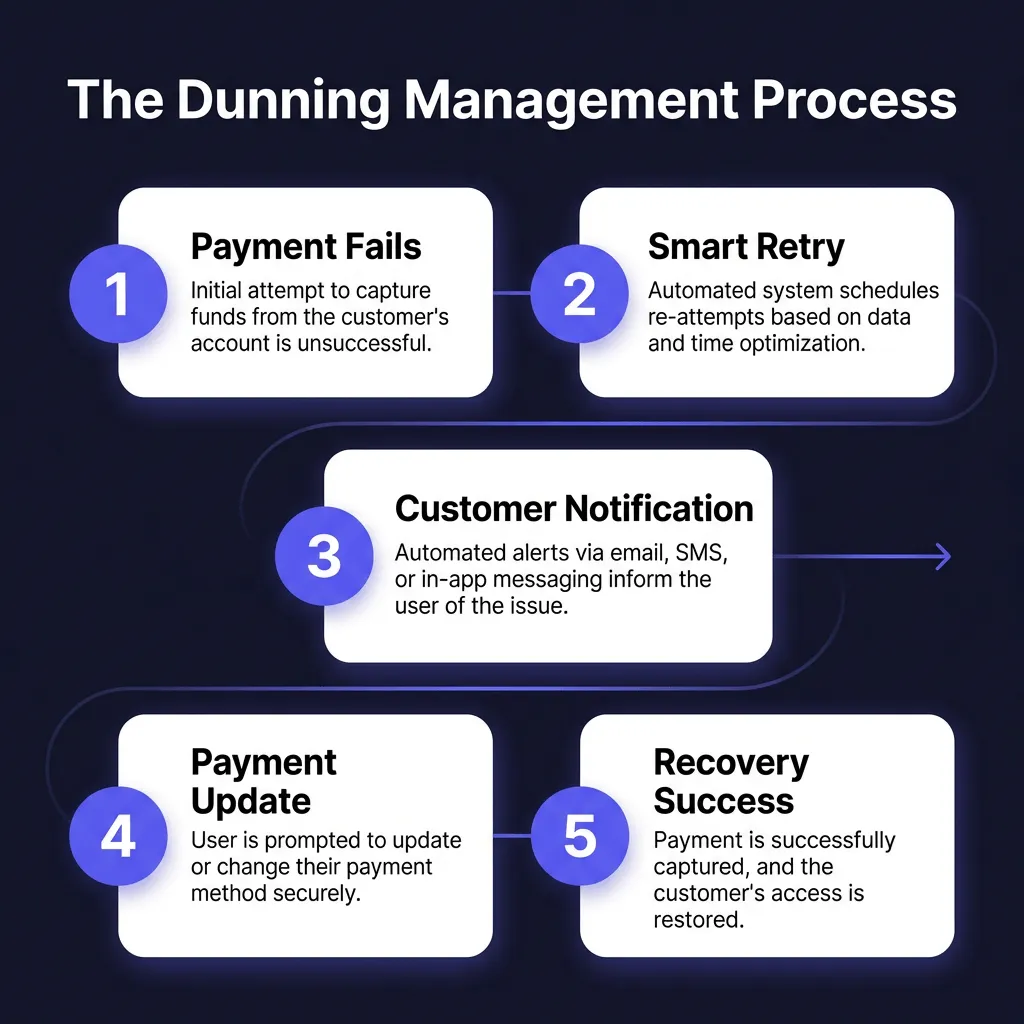
Here’s what happens when a payment fails:
- Payment fails – Card expired, insufficient funds, or bank decline
- Smart retry logic – System attempts retry at optimal intervals based on decline codes
- Customer notification – Email or SMS alerts sent with payment update links
- In-app reminders – Banners or modals within your application
- Payment update – Customer updates card via self-service portal
- Recovery success – Payment processes, subscription continues
Why Dunning Management Is Critical for SaaS in 2026
The subscription economy has exploded, but so has payment failure complexity. Here are the key reasons dunning management has become non-negotiable:
1. Involuntary Churn Is Your Biggest Revenue Leak
Involuntary churn—customers lost to payment failures rather than cancellation—represents 20-40% of total churn for most SaaS companies. Unlike voluntary churn, these customers want to stay; they just need help fixing their payment method. Without dunning management, you’re effectively telling willing customers to leave.
2. Credit Card Expiration Is Inevitable
Credit cards expire every 3-4 years on average. For a SaaS with 1,000 customers, approximately 25-30 cards expire every month. Without automated dunning, each expiration becomes a potential churn event. Smart dunning software detects upcoming expirations and prompts updates before payments fail.
3. Payment Complexity Has Increased
Modern SaaS businesses accept payments globally, across multiple currencies, through various payment methods. Each adds complexity: currency conversion issues, international bank policies, local payment method quirks. Dunning management SaaS platforms handle this complexity automatically.
4. Customer Expectations Have Changed
Customers expect seamless experiences. A failed payment shouldn’t mean immediate service interruption. Modern dunning management provides grace periods, proactive communication, and frictionless payment updates—turning a negative experience into a demonstration of customer care.
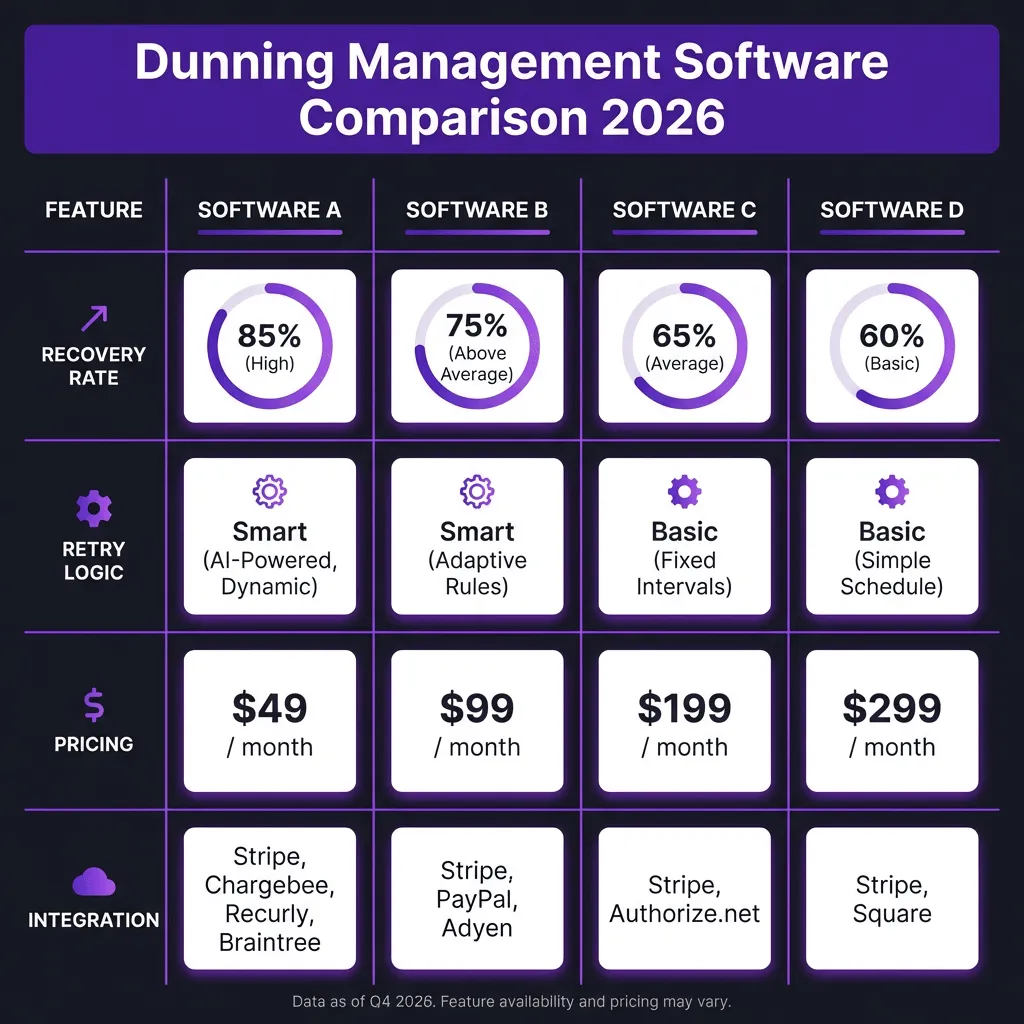
Key Features of Dunning Management SaaS
Not all dunning solutions are created equal. Here are the essential features to look for:
Smart Retry Logic
Basic retry schedules (retry every 24 hours) are ineffective. Smart retry logic analyzes decline codes and adjusts timing accordingly:
- Soft declines (insufficient funds): Retry in 3-7 days when funds may be available
- Hard declines (stolen card): Immediate customer notification, no retries
- Expired cards: Pre-dunning notification 30 days before expiration
- Network errors: Retry within hours
Multi-Channel Communication
Effective dunning reaches customers where they are:
- Email sequences – Branded, personalized payment failure notifications
- SMS alerts – For urgent cases or high-value customers
- In-app messaging – Banners, modals, or account notifications
- Slack/Teams integration – For B2B customers with multiple stakeholders
Self-Service Payment Update
Customers should be able to update payment information without logging into your main application. Dedicated payment update pages reduce friction and increase recovery rates by 25-40%.
Analytics and Reporting
You can’t improve what you don’t measure. Look for dunning software that provides:
- Recovery rate by retry attempt
- Revenue recovered monthly
- Churn prevented calculations
- Decline code analysis
- A/B testing for email templates
How to Implement Dunning Management in Your SaaS
Implementing dunning management doesn’t have to be complex. Here’s a practical framework:
Step 1: Audit Your Current Churn
Before implementing dunning, understand your baseline. Calculate your involuntary churn rate by analyzing cancellations that occurred after payment failures. This becomes your benchmark for measuring improvement.
Step 2: Choose Your Approach
You have three options for dunning management:
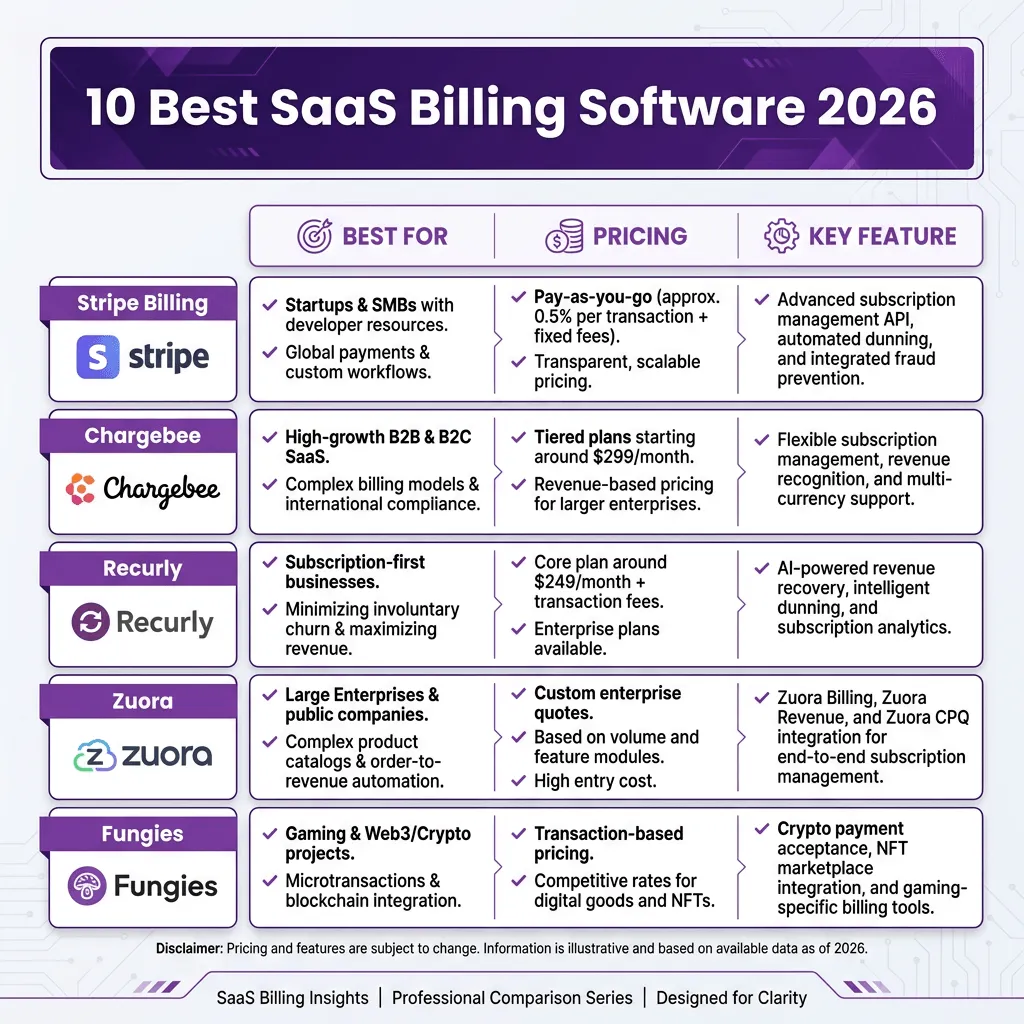
- Built-in billing platform dunning – If you use Stripe Billing, Chargebee, or similar, start with their native features
- Standalone dunning software – Specialized tools like Churnbuster or FlyCode for advanced features
- Merchant of Record solution – Platforms like Fungies that include dunning as part of complete subscription management
Step 3: Configure Your Dunning Workflow
Set up your dunning cadence. A typical workflow looks like:
- Day 0 – Payment fails, immediate retry, customer notification
- Day 3 – Second retry, follow-up email
- Day 7 – Third retry, SMS notification (if enabled)
- Day 14 – Final retry, account suspension warning
- Day 21 – Account suspension (if still unpaid)
Step 4: Optimize Based on Data
Monitor your recovery rates and iterate. Test different email subject lines, retry timing, and communication channels. Even small improvements compound significantly over time.
Reduce Failed Payment Churn with Fungies
Built-in dunning management, smart retry logic, and automated customer outreach. Recover up to 85% of failed payments automatically.
No credit card required
Dunning Management Best Practices for 2026
Maximize your dunning effectiveness with these proven strategies:
Segment Your Dunning Approach
Not all customers are equal. High-value enterprise customers deserve white-glove treatment—personal outreach from account managers. Self-serve customers can rely more heavily on automation. Segment by customer lifetime value, plan tier, or engagement level.
Implement Pre-Dunning
The best dunning is preventing failures before they happen. Pre-dunning workflows notify customers 30 days before card expiration, giving them time to update payment methods proactively. This can reduce payment failures by 30-50%.
Maintain Brand Consistency
Dunning communications should feel like an extension of your product, not a third-party interruption. Use your branding, tone of voice, and design language in all payment notifications.
Offer Multiple Payment Methods
When customers update payment information, let them choose from multiple options: credit card, PayPal, ACH, or local payment methods. The easier you make it, the higher your recovery rate.
FAQ: Dunning Management for SaaS
What is a good payment recovery rate?
Industry benchmarks vary, but 60-70% recovery rates are considered good, while top-performing dunning systems achieve 80-85%. Your starting point matters—moving from 30% to 60% recovery has massive revenue impact.
How much does dunning management software cost?
Pricing models vary. Some charge a flat monthly fee ($50-300/month), others take a percentage of recovered revenue (5-10%), and some include dunning as part of broader billing platforms. For most SaaS companies, the ROI is immediate—recovering even one failed payment often covers the monthly cost.
Can I build dunning management in-house?
Technically yes, but it’s rarely worth it. Building reliable retry logic, email deliverability, analytics, and payment method update flows requires significant engineering effort. Third-party solutions have refined these systems across thousands of customers.
What’s the difference between dunning and collections?
Dunning handles failed subscription payments from active customers who want to continue service. Collections deals with overdue invoices and delinquent accounts. Dunning is proactive and automated; collections is reactive and often manual.
Does dunning management work for B2B SaaS?
Absolutely. B2B dunning often requires more sophistication—multiple stakeholders, invoice-based billing, and longer sales cycles mean payment failures need careful handling. Many dunning platforms offer B2B-specific features like Slack notifications and account manager alerts.
Conclusion: Don’t Let Failed Payments Steal Your Growth
Dunning management SaaS isn’t just a nice-to-have feature—it’s essential infrastructure for any subscription business. With involuntary churn costing SaaS companies 9-15% of annual revenue, implementing smart dunning workflows delivers immediate ROI while improving customer experience.
The best dunning solutions combine smart retry logic, multi-channel communication, and seamless payment updates to recover 60-85% of failed payments automatically. Whether you choose a standalone dunning tool or a complete Merchant of Record solution like Fungies, the key is taking action. Every day without dunning management is revenue left on the table.
Ready to stop losing customers to payment failures? Start implementing dunning management today and turn failed payments into recovered revenue.