How to Sell Digital Art Online: Complete Guide for Artists 2026
Learn how to sell digital art online in 2026. Complete guide covering best platforms, pricing strategies, marketing tips, and scaling your creative business.
The digital art market is exploding. In 2026, global demand for unique, personalized digital artwork has reached an all-time high, with the creator economy valued at over $250 billion. Whether you’re a seasoned illustrator transitioning to digital mediums or a digital native looking to monetize your creativity, learning how to sell digital art online has become essential for building a sustainable creative business.
Unlike traditional art sales, selling digital art offers unique advantages: zero inventory costs, unlimited reproductions, instant global delivery, and the ability to automate your entire sales process. But with these opportunities come challenges — choosing the right platform, pricing your work correctly, protecting your intellectual property, and standing out in an increasingly crowded marketplace.
The Digital Art Market in 2026
The digital art landscape has transformed dramatically. AI-generated art has flooded the market, making authentic human-created artwork more valuable than ever. Collectors are actively seeking original pieces from individual artists, and platforms are evolving to better support creator-owned businesses.
Key market trends this year include:
- AI Art Saturation: With AI-generated images everywhere, hand-crafted digital art commands premium prices
- Print-on-Demand Integration: Artists are expanding into physical products without holding inventory
- Subscription Models: Patreon-style recurring revenue is becoming standard for established artists
- NFT Market Correction: After the hype cycle, NFTs have stabilized as a legitimate (if niche) revenue stream
- Direct-to-Consumer Growth: More artists are building their own websites to avoid marketplace fees
Choosing the Right Platform
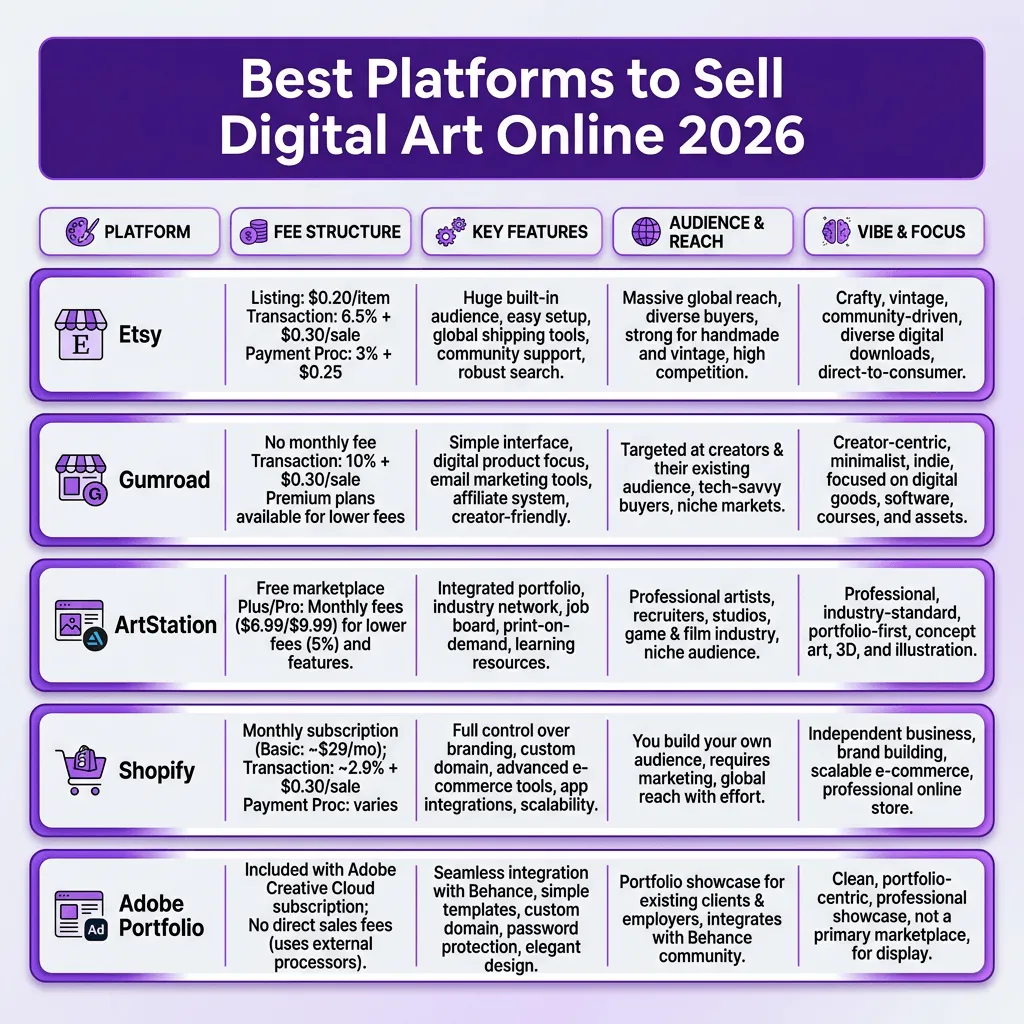
Selecting where to sell your digital art is the single most important decision you’ll make. Each platform has distinct advantages, fee structures, and audience demographics. Here’s a breakdown of the top options in 2026:
Etsy
Etsy remains the largest marketplace for digital downloads, with over 96 million active buyers. It’s ideal for artists selling printable wall art, planners, and templates. The platform charges a $0.20 listing fee plus 6.5% transaction fee. While the audience is massive, competition is fierce and standing out requires strong SEO and marketing.
Gumroad
Gumroad has become the go-to for independent creators. It offers a simple setup, handles VAT/tax compliance automatically, and charges 10% + 30¢ per transaction. The platform excels for artists with existing audiences, as it lacks built-in discovery features.
Shopify
For artists serious about building a brand, Shopify provides complete control. At $29/month plus transaction fees, it’s an investment that pays off once you’re making consistent sales. The learning curve is steeper, but you own your customer relationships completely.
Creative Market
Creative Market caters specifically to designers and creatives. They handle all marketing and take a 30% commission, but provide access to a highly targeted audience of designers and agencies. Best for fonts, templates, and design assets.
Your Own Website (Fungies.io)
Building your own storefront gives you maximum control and the highest profit margins. Platforms like Fungies.io let you sell digital art with 0-5% fees, automatic file delivery, tax compliance handled globally, and direct customer relationships. This is the best long-term strategy for serious artists.
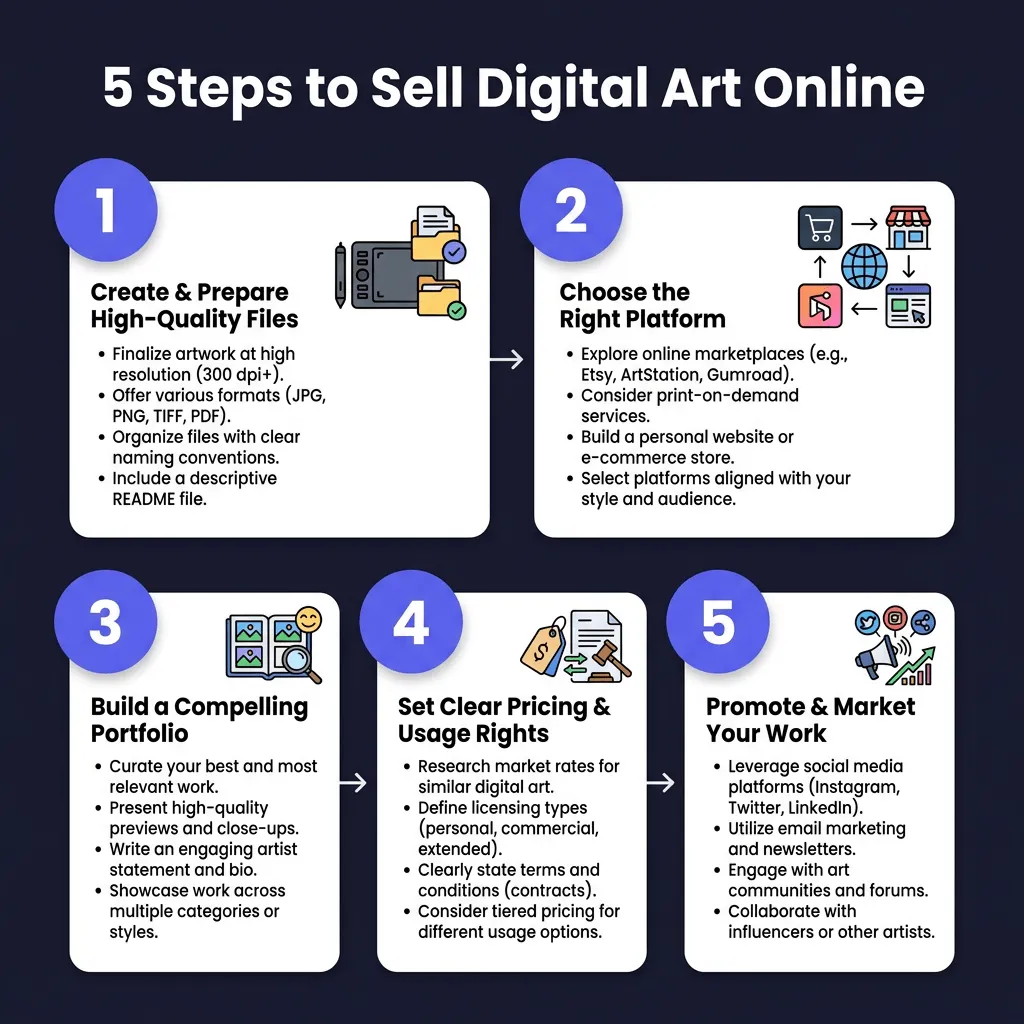
Step-by-Step: How to Sell Digital Art Online
Step 1: Build a Strong Portfolio
Before selling, curate 10-20 of your best pieces that showcase your style and range. Your portfolio should demonstrate consistency while showing versatility. Include process shots and behind-the-scenes content — buyers love seeing how art is made.
Step 2: Choose Your Primary Platform
Start with one platform and master it before expanding. For beginners, Etsy or Gumroad offer the easiest entry. For established artists, a self-hosted solution like Fungies provides better margins and control.
Step 3: Price Your Artwork Correctly
Pricing digital art requires balancing perceived value with market rates. Research competitors with similar styles and experience levels. A common formula: (Hours worked × Hourly rate) + Material costs + Profit margin. Don’t undervalue your work — digital art can be resold infinitely, but your time cannot.
Step 4: Create Compelling Listings
Your product listings need to sell the transformation, not just the file. Instead of “Digital Download: Sunset Illustration,” try “Transform Your Space: Boho Sunset Wall Art — Instant Download for Modern Homes.” Include mockups showing the art in context, detailed specifications, and usage rights.
Step 5: Market Your Art
Even on marketplaces with built-in traffic, marketing accelerates success. Share your process on Instagram and TikTok. Build an email list. Collaborate with other artists. Consider Pinterest — it’s a visual search engine where digital art performs exceptionally well.
Ready to Sell Your Digital Art?
Join thousands of artists using Fungies.io — the simplest way to sell digital art with automatic delivery, tax compliance, and 50+ payment methods.
No credit card required • Keep 95%+ of your earnings
Protecting Your Digital Art
Intellectual property theft is a real concern. Protect your work by:
- Watermarking previews: Never upload full-resolution unmarked images
- Using low-res previews: Show 72 DPI watermarked versions, deliver 300 DPI clean files
- Clear licensing terms: Specify personal vs. commercial use in your listings
- Copyright registration: For high-value pieces, formal registration provides legal protection
- Monitoring tools: Use reverse image search to find unauthorized uses of your work
Scaling Your Digital Art Business
Once you’ve made your first sales, focus on scaling:
- Productize your art: Create collections and series rather than one-off pieces
- Bundle offerings: Sell packs of 5-10 related designs at a discount
- Automation: Use tools that handle delivery, taxes, and customer service automatically
- Email marketing: Build a list of past buyers for repeat sales
- Expand formats: Offer the same designs as prints, phone cases, and merchandise
FAQ
What types of digital art sell best?
Printable wall art, planner templates, social media graphics, and digital stickers consistently top sales charts. In 2026, AI-assisted art with human curation is also performing well, as is nostalgic/retro-style illustration.
How much can I make selling digital art?
Income varies widely. Hobbyists might earn $100-500/month, while established artists can make $5,000-20,000+ monthly. The key factors are consistency, marketing effort, and building a recognizable style that attracts repeat buyers.
Do I need a business license to sell digital art?
Requirements vary by location. In most jurisdictions, casual sellers don’t need formal business registration until reaching certain income thresholds. However, keeping business income separate and tracking expenses is always recommended.
What’s the best platform for beginners?
Etsy offers the easiest start with built-in traffic, while Gumroad provides simplicity for artists with existing audiences. For long-term growth, building your own storefront with Fungies.io gives you the most control and highest profit margins.
How do I handle taxes on digital art sales?
Digital products are subject to VAT/sales tax in most jurisdictions. Platforms like Gumroad and Fungies.io handle tax collection and remittance automatically. If selling independently, you’ll need to manage tax compliance yourself or use specialized tools.
Conclusion
Selling digital art online in 2026 offers unprecedented opportunities for creative entrepreneurs. The market is mature, tools are accessible, and demand continues growing. Success requires choosing the right platform, pricing strategically, protecting your work, and consistently marketing your art.
Start small, focus on quality over quantity, and build systems that can scale. Whether you’re looking for side income or a full-time creative career, the digital art market has room for authentic, skilled artists who treat their craft as a business.
Ready to turn your art into income? Create your free storefront on Fungies.io and start selling in minutes — no coding required, automatic file delivery included, and you keep 95%+ of every sale.