How to Sell Online Courses: Complete Guide for Creators 2026
Learn how to sell online courses in 2026: validation, platform selection, content creation, pricing strategies, and marketing tactics. Complete guide for creators.
The online course industry is booming. In 2026, the e-learning market is projected to reach $375 billion, with independent creators capturing an increasingly larger share. Whether you’re an expert looking to monetize your knowledge or a creator ready to package your skills into a scalable product, selling online courses has never been more accessible — or more profitable.
But here’s the challenge: with so many platforms and strategies available, where do you actually start? This guide cuts through the noise and gives you a proven framework for creating, pricing, and selling your online course — even if you’ve never done it before.
Why Sell Online Courses?
Before diving into the how, let’s look at the why. Online courses offer unique advantages that other digital products simply can’t match:
- High profit margins: Once created, courses cost almost nothing to deliver. Top creators report 80-90% profit margins after platform fees.
- Scalable income: Unlike consulting or freelancing, you can sell to 10 students or 10,000 without additional work.
- Positioning as an expert: A well-crafted course establishes you as an authority in your field.
- Passive revenue potential: Automated sales funnels can generate income while you sleep.
- Global reach: Sell to students worldwide without geographical constraints.
- Impact at scale: Help hundreds or thousands of people instead of trading time for money one-on-one.
According to recent data, the average successful course creator earns $5,000-$15,000 per month within their first year — with top performers scaling to six and seven figures annually. The global shift toward remote learning and skill development means this trend is only accelerating.
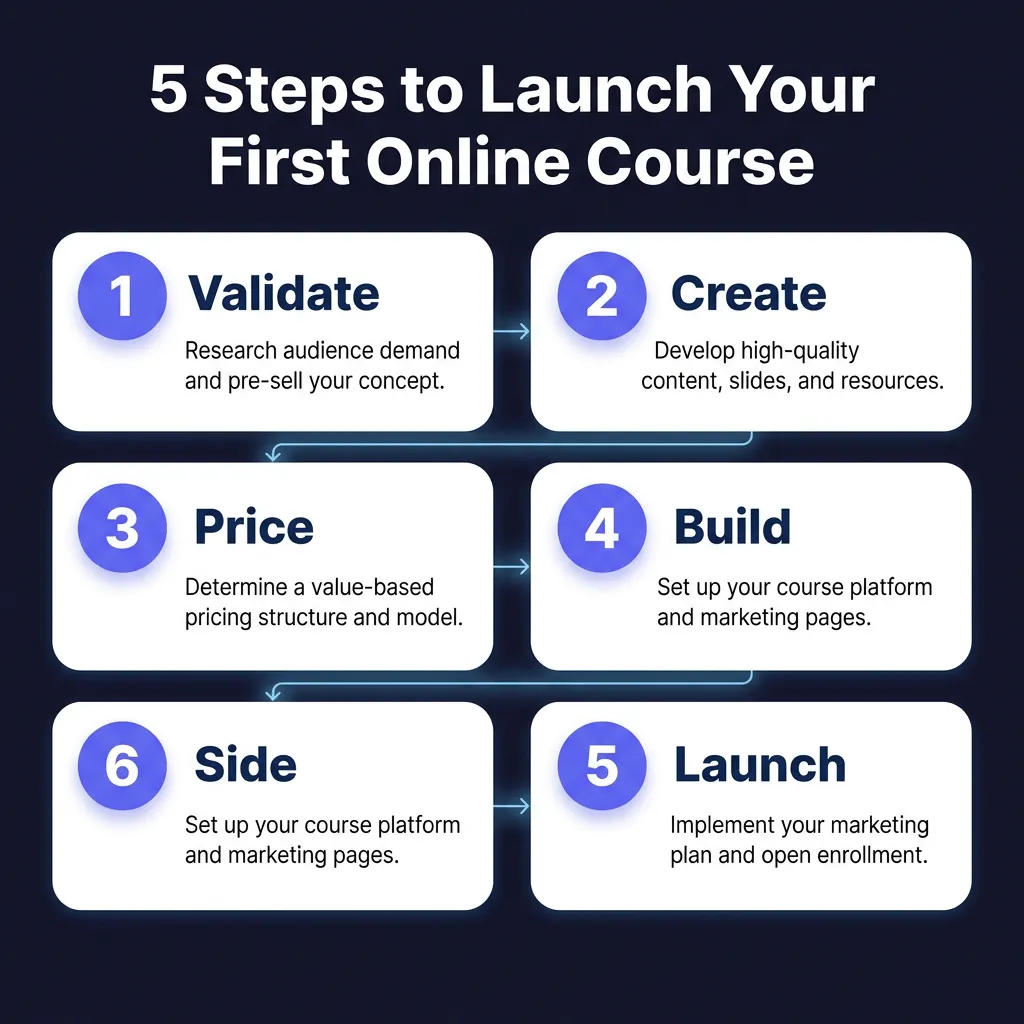
Step 1: Validate Your Course Idea
The biggest mistake new course creators make? Building something nobody wants to buy. Validation saves you months of wasted effort and ensures you’re creating a product with real market demand.
Three Validation Methods That Work
- The Pre-Sale Test: Create a landing page with your course outline and offer early-bird pricing. If people pay before you build it, you’ve validated demand. This is the gold standard of validation.
- The Audience Survey: Ask your email list or social following: “What’s your biggest challenge with [topic]?” Their exact words become your sales copy.
- The MVP Approach: Launch a live workshop or cohort-based version first. If it sells, turn the recordings into your evergreen course.
Pro tip: Look for “painful problems” — issues that cost people time, money, or status. The more painful the problem, the easier the sale. People buy solutions to urgent problems, not nice-to-have improvements.
Step 2: Choose the Right Platform
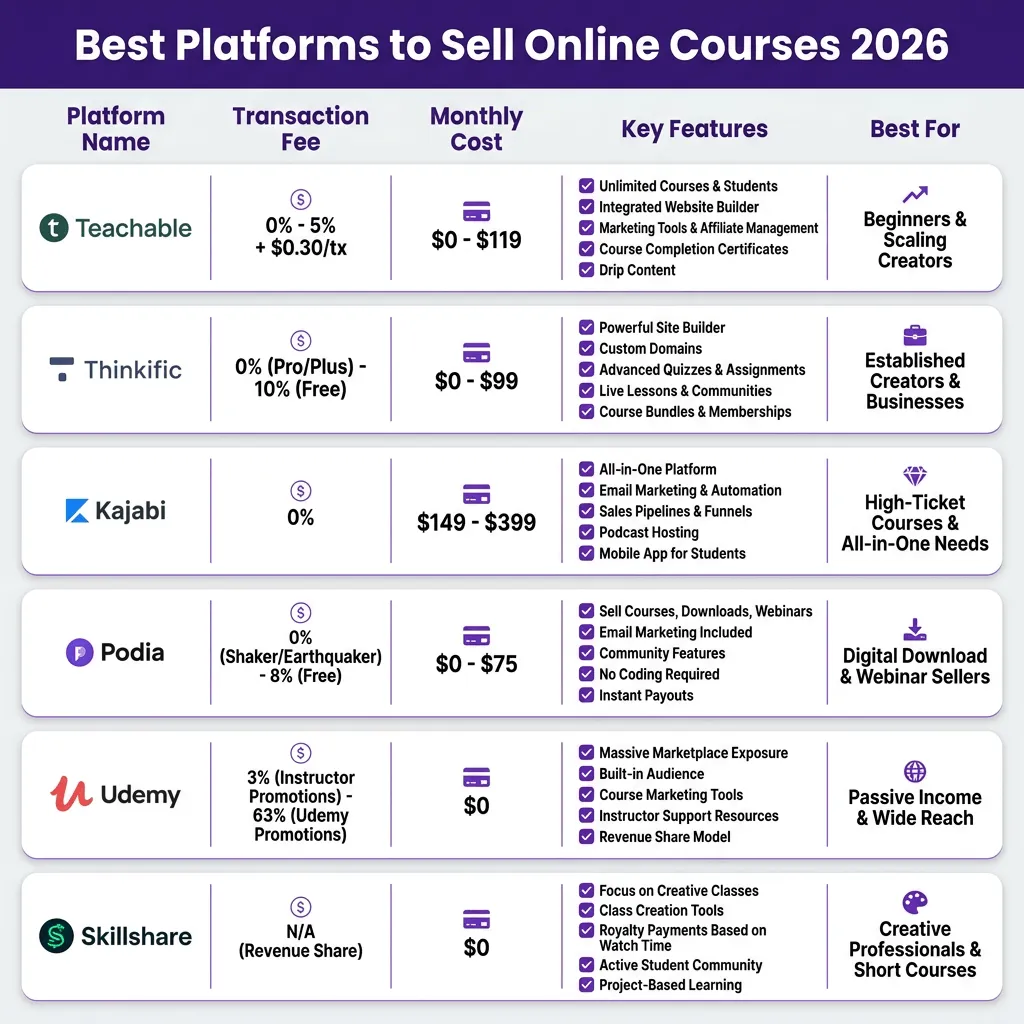
Your platform choice impacts everything from your profit margins to your student’s learning experience. The wrong platform can limit your growth and eat into your revenue with hidden fees.
All-in-One Course Platforms
Platforms like Teachable, Thinkific, and Kajabi offer built-in course hosting, student management, and basic marketing tools. Best for creators who want simplicity and don’t mind higher transaction fees (5-10%). These platforms handle the technical setup but limit customization and charge premium prices for advanced features.
Merchant of Record Solutions
For creators selling globally, a Merchant of Record (MoR) like Fungies.io handles the complex backend: tax compliance, VAT collection, payment processing, and fraud protection. You focus on teaching; they handle the paperwork. This is especially valuable if you’re selling to students in the EU, UK, or other regions with strict tax requirements. MoR solutions typically offer lower fees and more flexibility than all-in-one platforms.
Self-Hosted Options
WordPress plugins like LearnDash or LifterLMS give you full control but require technical setup and separate payment processing. Best for established businesses with development resources who want complete ownership of their platform and data.
Step 3: Create Compelling Content
Great courses aren’t just information dumps — they’re transformational experiences. Here’s the framework top creators use to build courses that students actually complete and recommend.
The Outcome-First Structure
Start with the promise: “By the end of this course, you will…” Every lesson should move students closer to that outcome. Cut anything that doesn’t directly serve the transformation. Students don’t want information — they want results.
Video Best Practices
- Keep lessons short: 5-15 minutes is the sweet spot for engagement. Attention drops significantly after 20 minutes.
- Use the “talking head” format: Seeing your face builds trust and connection. Don’t hide behind slides.
- Include screen recordings: Essential for software tutorials and walkthroughs. Show, don’t just tell.
- Add captions: 85% of social videos are watched without sound — the habit carries over to courses. Accessibility matters.
- Invest in decent audio: Bad audio kills engagement faster than mediocre video. A $100 USB microphone is enough.
Supporting Materials
Worksheets, checklists, templates, and resource guides increase perceived value and help students implement what they learn. These “quick wins” justify premium pricing and improve completion rates. Students who use your resources get better results — and results drive referrals.
Step 4: Price for Profit
Pricing psychology is crucial. Price too low and you attract problem students who don’t value your work. Price too high without social proof and you struggle to make sales. Finding the right balance is key to sustainable revenue.
2026 Course Pricing Benchmarks
- Starter/Mini Courses: $47-$97 (1-3 hours of content, single outcome)
- Flagship Courses: $297-$997 (comprehensive, transformational, 5-15 hours)
- Cohort-Based Programs: $1,000-$5,000+ (live instruction, community, accountability)
- Membership/Subscription: $29-$99/month (ongoing content, community access)
- High-Ticket Masterminds: $5,000-$25,000+ (direct access, small group, done-with-you)
The 10x Rule: Price your course at 1/10th of the value students will receive. If your course helps someone land a $10,000 client, a $997 price point is justified. If it saves them 20 hours per month at $50/hour, that’s $1,000/month in value — price accordingly.
Step 5: Build Your Sales Machine
Creating the course is only half the battle. You need a system that consistently attracts and converts students. The best course in the world won’t sell without effective marketing.
The Simple Sales Funnel
- Traffic Source: YouTube, blog SEO, podcast appearances, or paid ads. Pick one channel and master it.
- Lead Magnet: A free resource that solves a specific problem and showcases your expertise. This builds your email list.
- Email Sequence: 5-7 emails that educate, build trust, and introduce your course. Share stories and case studies.
- Sales Page: Long-form copy that addresses objections and demonstrates transformation. Focus on outcomes, not features.
- Checkout: Frictionless payment with clear next steps. Every extra click loses sales.
Launch Strategies That Work
- Founding Member Launch: Offer 50% off to your first 20-50 students in exchange for testimonials. This builds social proof.
- Webinar Launch: Live or automated webinars convert at 5-15% — significantly higher than sales pages alone. The live element creates urgency.
- Challenge Launch: A free 5-day challenge that delivers value and naturally leads to your paid offer. High engagement, high conversion.
- Affiliate Partnerships: Partner with complementary creators who already have your target audience. Pay 30-50% commission — it’s worth it for the volume.
FAQ: Selling Online Courses
Do I need to be an expert to sell a course?
No — you need to be one step ahead of your students. If you’ve achieved a result they want, you can teach the path. “Expert” status comes from helping others get results, not from having decades of experience. Your recent learning is actually an advantage — you remember what beginners struggle with.
How long should my course be?
Focus on outcome, not length. A 2-hour course that delivers a clear transformation is more valuable than a 20-hour course that overwhelms students. Most successful flagship courses are 3-10 hours of core content. Completion rates drop as course length increases — shorter is often better.
What’s the best platform for beginners?
For beginners selling globally, a Merchant of Record solution like Fungies.io removes the complexity of tax compliance and payment setup. For creators focused on the US market only, Teachable or Thinkific offer simpler onboarding. Consider where your students are located and whether you need global tax coverage.
How do I handle refunds?
Offer a 14-30 day money-back guarantee. It reduces purchase anxiety and increases conversions. Surprisingly, generous refund policies often result in fewer refunds because they attract committed buyers. Most platforms handle refunds automatically.
Do I need to handle taxes when selling courses?
If you’re selling globally, yes — and it’s complex. EU VAT, US sales tax, and other regional requirements apply to digital courses. Using a Merchant of Record like Fungies.io transfers this liability to them; they collect and remit taxes on your behalf. Without an MoR, you’ll need to register and file in multiple jurisdictions.
When should I launch my course?
Launch when you have 50-100 people on your waitlist or email list. Don’t build in secret — validate as you go. Pre-sell before you finish recording. The market feedback will make your course better, and you’ll have revenue to reinvest in production quality.
Conclusion: Your Course Business Starts Now
The online education market isn’t slowing down. Every day, creators are turning their knowledge into profitable, scalable businesses. The difference between those who succeed and those who don’t? They start before they feel ready.
Your expertise has value. Someone out there is struggling with exactly what you’ve already figured out. Create the course you wish you had when you were starting out. Price it fairly. Market it consistently. And watch your knowledge business grow.
The tools have never been more accessible. The market has never been larger. The only question is: will you take action?
Ready to Sell Your Online Course?
Fungies.io makes it easy to sell courses globally — automatic tax compliance, 50+ payment methods, and instant payouts. No coding required.
No credit card required