Indie Game Marketing: The Complete 2026 Guide for Developers
Learn how to market your indie game in 2026 with this complete guide. Covers Steam optimization, social media strategy, influencer outreach, and the 6-month marketing timeline.
Marketing an indie game is just as important as building it. With over 12,000 games released on Steam in 2025 alone, standing out requires more than just great gameplay — you need a strategic marketing plan that builds awareness, drives wishlists, and converts players. This guide covers everything you need to know about indie game marketing in 2026.
What Is Indie Game Marketing?
Indie game marketing is the process of promoting independent video games to reach your target audience, build a community, and drive sales. Unlike AAA studios with million-dollar budgets, indie developers must be strategic, authentic, and community-focused. The goal is to create sustainable visibility that grows organically through player engagement and word-of-mouth.
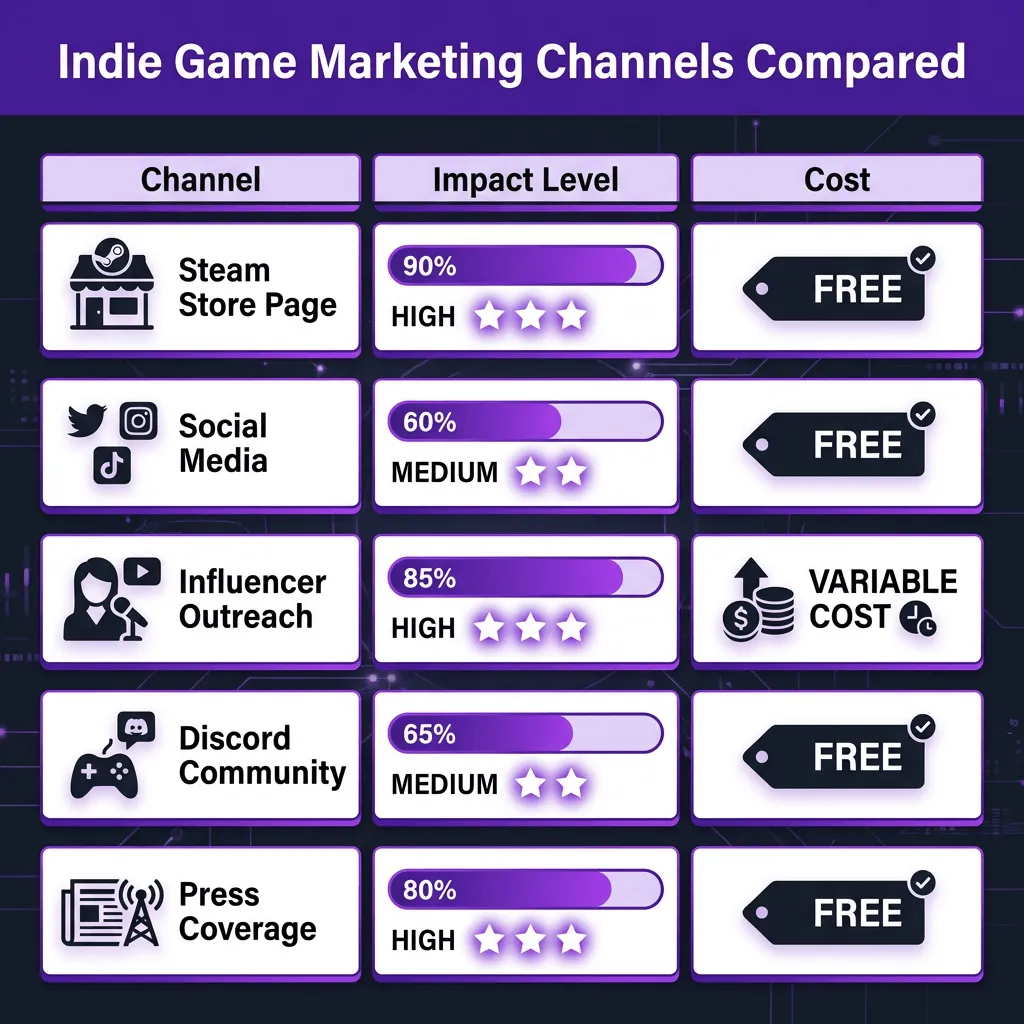
Effective indie game marketing combines multiple channels: Steam optimization, social media presence, influencer outreach, community building, and press coverage. Each channel serves a different purpose in your overall strategy, and the most successful indie developers master the art of telling their game’s story across all of them.
Why Marketing Matters More Than Ever
The indie game market has never been more competitive. Steam releases approximately 30-40 new games every single day. Standing out in this crowded marketplace requires deliberate, consistent marketing efforts starting months before your launch date.
Games that launch with established communities and marketing momentum consistently outperform those that rely solely on Steam’s discovery algorithms. Your marketing efforts directly impact your wishlist velocity, which Steam’s algorithm uses to determine how prominently to feature your game.
Building Your Marketing Foundation
Define Your Unique Selling Proposition
Before you start marketing, you need to clearly articulate what makes your game special. What combination of genre, art style, mechanics, or story sets you apart? Your USP becomes the foundation of all your marketing messaging.
Ask yourself: If someone can only remember one thing about my game, what should it be? This becomes your elevator pitch — a single sentence that captures the essence of your game and makes people want to learn more.
Identify Your Target Audience
Not every gamer is your potential customer. Define your ideal player: What genres do they love? What platforms do they use? What communities do they belong to? The more specific you can be, the more effective your marketing will be.
Research games similar to yours and analyze their communities. What subreddits do their fans frequent? Which Twitch streamers play their games? What Discord servers do they join? This research reveals where you should focus your marketing efforts.
The 6-Month Marketing Timeline
Successful indie game marketing follows a predictable timeline. Here’s how to structure your marketing efforts from pre-production through post-launch:
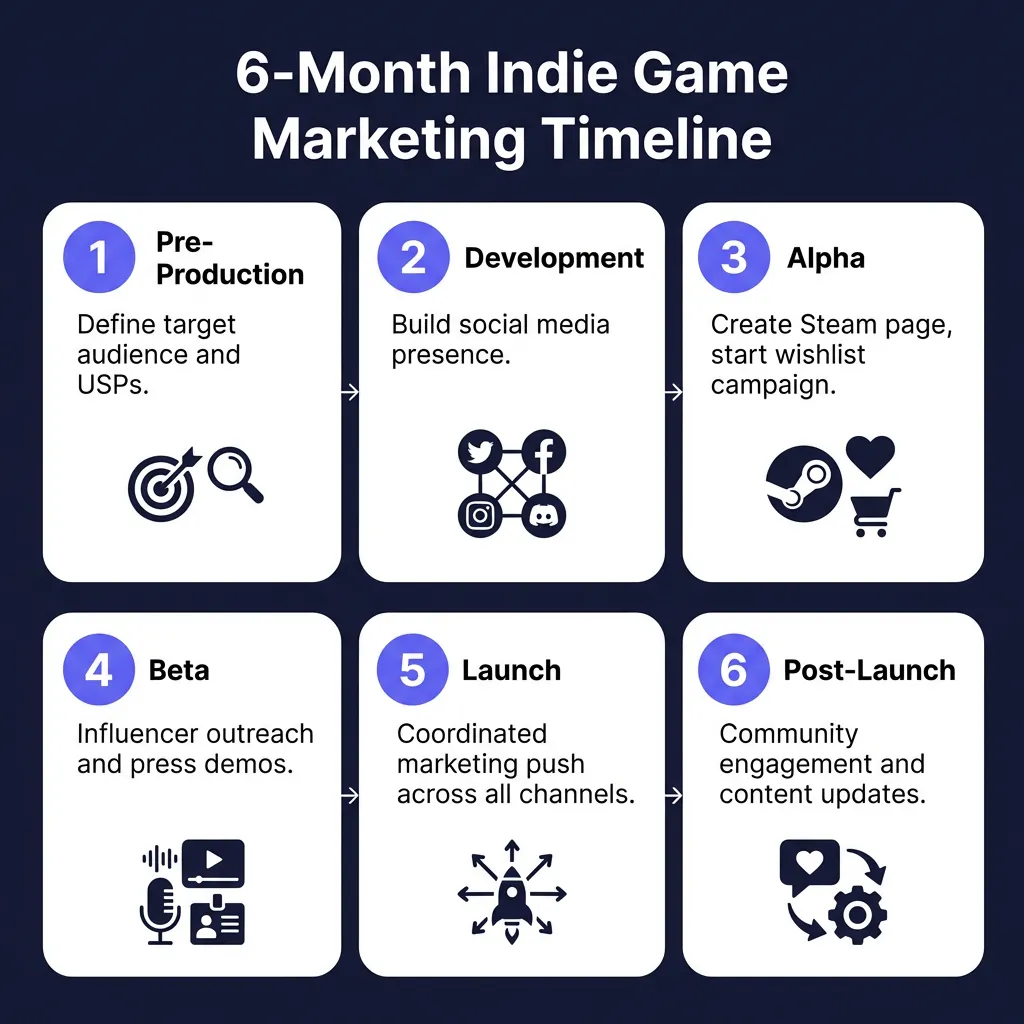
Months 1-2: Pre-Production
Start building your presence before you have anything to show. Create social media accounts, begin sharing your development journey, and start networking with other developers. Document your process — behind-the-scenes content performs exceptionally well.
Months 3-4: Development
Share regular development updates, concept art, and work-in-progress footage. Build anticipation by showing your game’s evolution. Engage with your growing community and incorporate their feedback where appropriate.
Months 5-6: Alpha & Beta
Create your Steam page and launch your wishlist campaign. Reach out to influencers and press with demo builds. Attend virtual or physical game events to showcase your game. Your goal is maximizing wishlists before launch.
Essential Marketing Channels
Steam Store Optimization
Your Steam page is your most important marketing asset. Invest in professional key art, compelling screenshots, and a trailer that hooks viewers in the first 10 seconds. Write a description that sells the experience, not just the features.
Steam tags matter — they determine which players see your game in recommendations. Choose tags that accurately represent your game and have sufficient search volume. Update your page regularly with new screenshots and announcements.
Social Media Strategy
X/Twitter remains the primary platform for gamedev conversations. Share GIFs, development insights, and engage with the community. TikTok offers the highest organic reach potential for game content — short, engaging clips can go viral and drive significant traffic.
YouTube provides long-tail discoverability through devlogs and development tutorials. Discord lets you build deeper community relationships and gather direct feedback. Reddit offers access to targeted niche communities — but requires authentic, non-promotional participation.
Influencer Outreach
Identify streamers and YouTubers who play games similar to yours. Personalize your outreach — show that you understand their content and explain why your game fits their audience. Provide easy access to review copies and respect their editorial independence.
Micro-influencers (10K-100K followers) often provide better ROI than massive creators. They have more engaged communities and are more likely to actually play and cover your game. Build genuine relationships rather than treating it as pure transaction.
Launch Strategy
Your launch window is the most important marketing moment in your game’s lifecycle. Coordinate your marketing efforts to create a concentrated burst of activity: press coverage, influencer streams, social media posts, and community events all happening simultaneously.
Consider a soft launch or early access period to build reviews and social proof before your full release. Games that launch with positive reviews and established communities see significantly better long-term performance.
Post-Launch Marketing
Marketing doesn’t stop at launch. Games that sustain post-launch engagement see better long-term revenue through Steam’s recommendation algorithm, which favors active games. Plan regular updates, respond to reviews, and maintain your community presence.
Consider post-launch content like DLC, seasonal events, or quality-of-life updates as marketing opportunities. Each update gives you a reason to reach out to press and influencers again, generating new waves of visibility.
FAQ
When should I start marketing my indie game?
Start as early as possible — ideally during pre-production. Building an audience takes time, and early community members often become your most passionate advocates.
How much should I budget for indie game marketing?
Many successful indie games spend 30-50% of their total budget on marketing. However, effective marketing is possible with minimal budget through consistent community building and strategic outreach.
Which social media platform is best for indie games?
X/Twitter is essential for gamedev networking. TikTok offers the highest organic reach. Focus on 2-3 platforms where your target audience is most active rather than spreading yourself thin.
How important are Steam wishlists?
Extremely important. Steam’s algorithm uses wishlist velocity to determine visibility. Aim for at least 5,000-10,000 wishlists before launch for optimal algorithmic support.
Should I hire a marketing agency?
Most indie developers handle marketing themselves until they have significant revenue. When you do hire help, look for agencies or consultants with specific indie game experience.
Conclusion
Indie game marketing in 2026 comes down to four key principles: start early, be authentic, build community, and maintain consistency. The developers who succeed are those who treat marketing as an integral part of game development, not an afterthought.
Your game deserves to be played. With the right marketing strategy, you can cut through the noise and connect with the players who will love what you’ve created. Start building your audience today — your future players are waiting.
Ready to Sell Your Indie Game?
Join hundreds of indie developers using Fungies.io — build your game website, accept payments in 50+ methods, and let us handle tax compliance globally.
No credit card required