10 SaaS Customer Retention Strategies That Actually Work in 2026
Discover 10 proven SaaS customer retention strategies for 2026. Reduce churn, increase LTV, and build a retention-first growth system with actionable tactics.
Here’s the reality most SaaS founders don’t want to hear: you’re probably losing 5-10% of your revenue every month to churn. And I’m not just talking about customers actively canceling — involuntary churn from failed payments alone accounts for 20-40% of total churn in subscription businesses.
The good news? A 5% improvement in retention can increase profitability by 25-95% according to Bain & Company. Retention isn’t just a metric — it’s the difference between SaaS products that scale and those that stall.
Why SaaS Retention Matters More Than Ever in 2026
In 2026, competition is brutal and switching costs have never been lower. Users will abandon your product if it takes weeks to demonstrate value. The average SaaS company loses 5-7% of customers monthly — but top performers keep churn under 3%.
Here’s what the data tells us:
- Acquiring a new customer costs 5-25x more than retaining an existing one
- 80% of future profits come from just 20% of loyal customers
- 68% of churn happens because customers feel unappreciated
- Personalization can improve retention by up to 20%
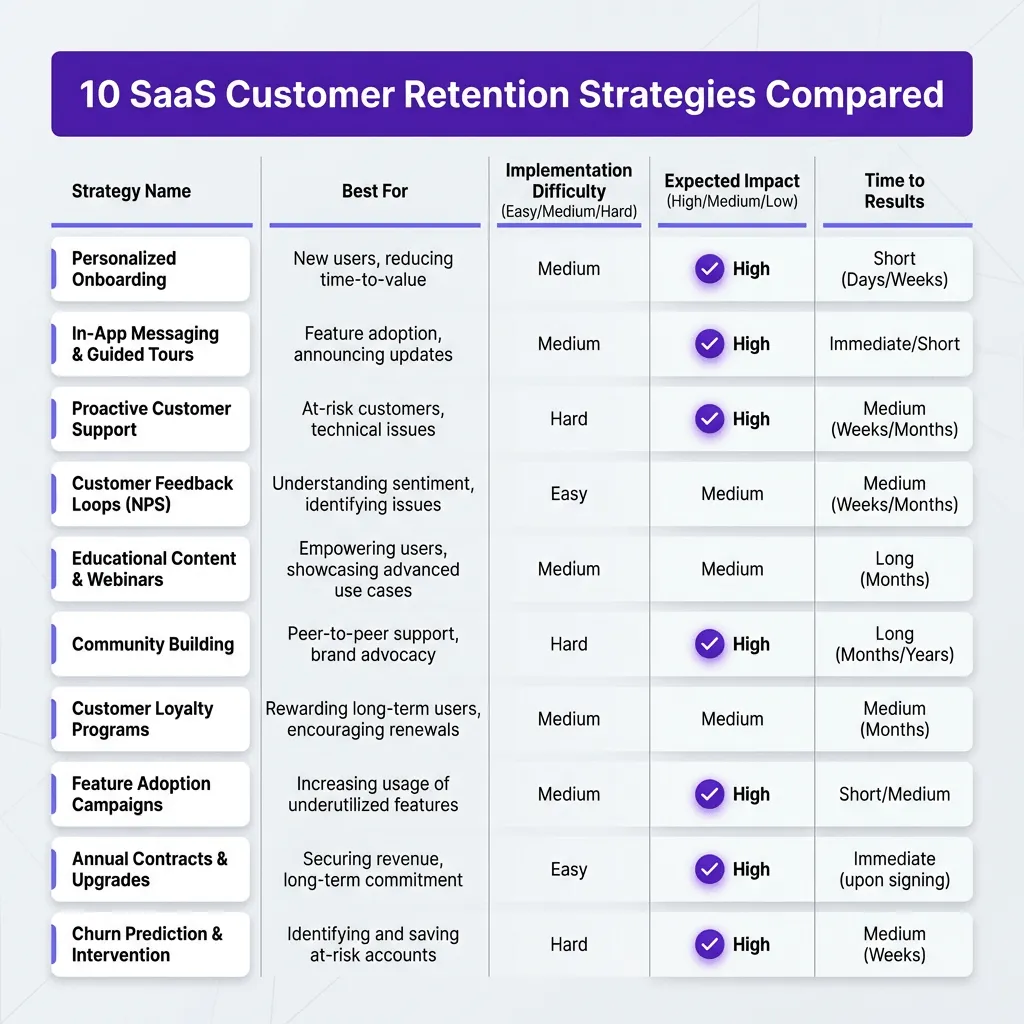
10 Proven SaaS Customer Retention Strategies
1. Optimize Your Onboarding Experience
First impressions matter. 40-60% of users who sign up for a free trial never log in again. Your onboarding should get users to their “aha moment” within the first session.
Best practices: Use progressive profiling instead of long forms. Implement interactive product tours. Set up automated check-in emails at day 1, day 3, and day 7. Measure time-to-value and optimize relentlessly.
2. Implement Predictive Churn Detection
Most churn is predictable 30-90 days before cancellation. Behavioral signals like declining login frequency, reduced feature usage, and support ticket spikes all precede churn.
Build health scores based on engagement metrics. When scores drop, trigger automated re-engagement campaigns or flag accounts for customer success outreach.
3. Reduce Involuntary Churn
This is the silent killer. Failed credit cards, expired payment methods, and billing issues cause 20-40% of all churn — and most of those customers never intended to leave.
Solutions: Use smart dunning management with multiple retry attempts. Send pre-expiration notifications. Offer backup payment methods. Consider a Merchant of Record like Fungies that handles payment recovery automatically.
4. Create a Customer Success Program
Proactive beats reactive every time. Customer success isn’t support — it’s about ensuring customers achieve their desired outcomes with your product.
Assign dedicated success managers to high-value accounts. Conduct quarterly business reviews. Share usage insights and recommendations. Make customers feel like partners, not transactions.
5. Build In-Product Engagement Loops
Retention improves when users feel forward momentum. Design features that create natural reasons to return: dashboards that update daily, reports that generate weekly, notifications that trigger based on activity.
Gamification works too — progress bars, achievement badges, and streak counters can increase engagement significantly.
6. Develop a Voice of Customer Program
You can’t improve what you don’t measure. Systematically collect feedback through NPS surveys, CSAT scores, and in-app micro-surveys. But more importantly — close the loop. When customers give feedback, show them you acted on it.
7. Create a User Community
Communities create emotional bonds that are hard to break. Users who engage with community content have 2-3x higher retention rates than those who don’t.
Build forums, Slack channels, or Discord servers. Host virtual events and webinars. Encourage user-generated content and peer-to-peer support.
8. Implement Usage-Based Expansion Triggers
Don’t wait for customers to hit limits — proactively suggest upgrades when they’re ready. Track usage patterns and trigger expansion offers at the right moment.
This isn’t just about upselling — it’s about ensuring customers have the right plan for their needs, which reduces frustration and churn.
9. Offer Annual Plans with Incentives
Annual subscriptions dramatically improve retention. Customers committed to a year are less likely to churn, and you get upfront cash flow.
Offer 15-20% discounts for annual billing. Make the annual option prominent in your pricing page. The reduction in churn usually more than pays for the discount.
10. Personalize Every Touchpoint
Generic experiences feel disposable. Use data to personalize emails, in-app messages, and support interactions. Segment customers by behavior, industry, and lifecycle stage.
Even simple personalization — like using the customer’s name and referencing their specific use case — can increase engagement by 20%.
Ready to Reduce Churn and Boost Retention?
Fungies.io helps SaaS companies automate billing, reduce involuntary churn, and improve payment success rates — all with built-in tax compliance.
No credit card required
Frequently Asked Questions
What is a good retention rate for SaaS?
For B2B SaaS, monthly churn should be under 5% (ideally 2-3%). Annual churn under 10% is considered healthy. Top-performing SaaS companies achieve negative churn through expansion revenue.
How do I calculate customer retention rate?
Retention Rate = ((Customers at End of Period – New Customers) / Customers at Start of Period) × 100. For example, if you started with 100 customers, ended with 110, and acquired 20 new ones: ((110-20)/100) × 100 = 90% retention.
What’s the difference between voluntary and involuntary churn?
Voluntary churn happens when customers actively cancel because they’re dissatisfied or no longer need the product. Involuntary churn occurs due to failed payments, expired cards, or billing issues — these customers often didn’t want to leave.
How quickly can I improve retention?
Quick wins like fixing involuntary churn can show results in 30 days. Onboarding improvements typically show impact in 60-90 days. Cultural changes and product improvements may take 3-6 months to reflect in retention metrics.
Should I focus on acquisition or retention?
Both matter, but retention is more efficient. A 5% increase in retention can increase profits by 25-95%, while acquisition costs keep rising. Early-stage companies should balance both; growth-stage companies should prioritize retention.
Conclusion
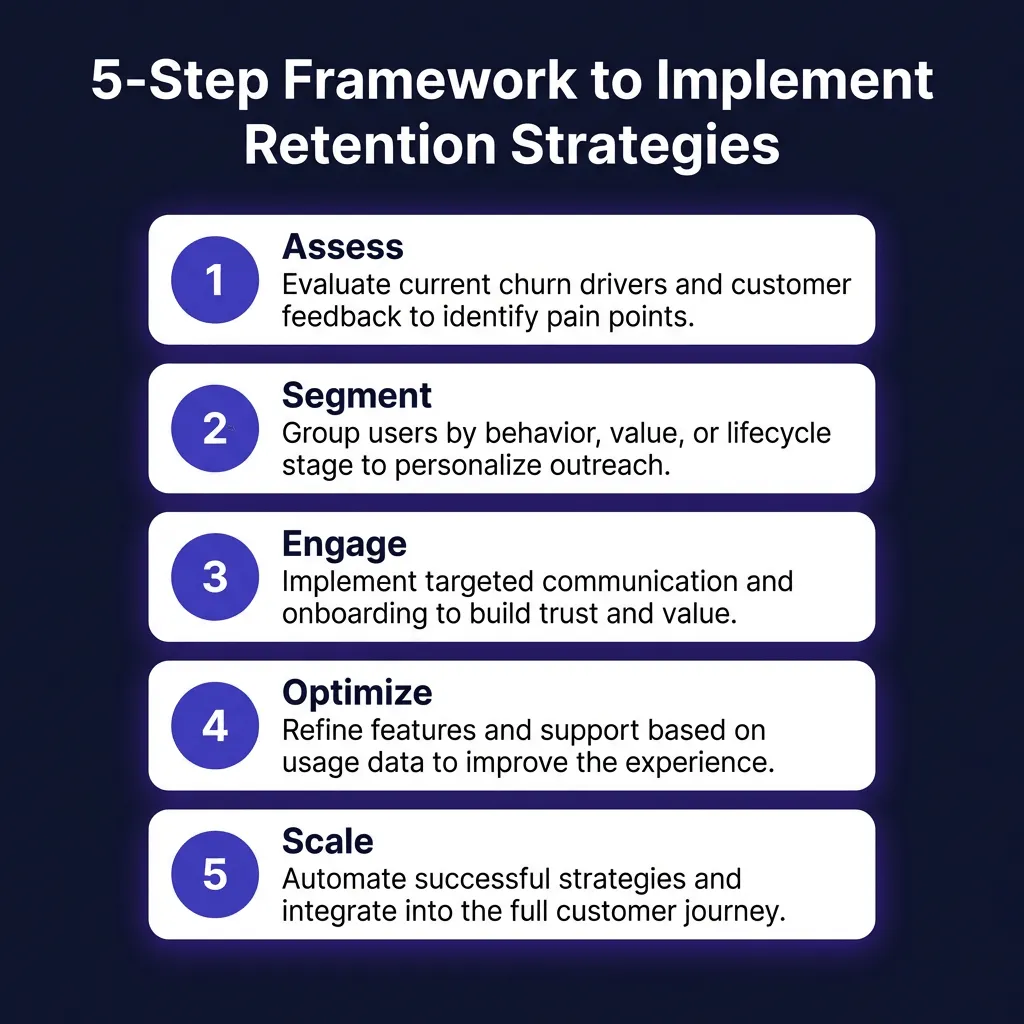
SaaS customer retention isn’t about a single tactic — it’s about building a retention-first culture across product, marketing, and customer success. Start with quick wins like reducing involuntary churn and optimizing onboarding, then build toward deeper strategies like predictive analytics and customer communities.
Remember: retention compounds. Small improvements today create massive differences in revenue over time. The companies that win in 2026 won’t be the ones with the most customers — they’ll be the ones who keep them.
Sources: Bain & Company, Baremetrics 2026 SaaS Benchmarks, OpenView Partners SaaS Benchmarks Report, Business of Apps 2026 Retention Study