10 SaaS Pricing Mistakes Costing You Revenue in 2026 (And How to Fix Them)
98% of SaaS companies see revenue impact from pricing changes, yet most spend only 8 hours on pricing total. Discover the 10 most common SaaS pricing mistakes killing your growth in 2026 — from underpricing to broken upsell paths — with data-backed fixes.
Here’s a sobering statistic: 98% of SaaS companies that changed their pricing strategy saw neutral or positive revenue impact, with two in five reporting 25% or faster growth from pricing changes alone. Yet the average company spends only eight hours total on pricing in its entire lifetime.
That disconnect is costing you money. Probably a lot of it.
I’ve audited dozens of SaaS pricing pages over the years. The same mistakes show up again and again — mistakes that silently drain revenue, confuse customers, and stall growth. In this guide, I’ll walk you through the 10 most common SaaS pricing mistakes I see in 2026, backed by real data, and exactly how to fix each one.
1. Underpricing Your Product
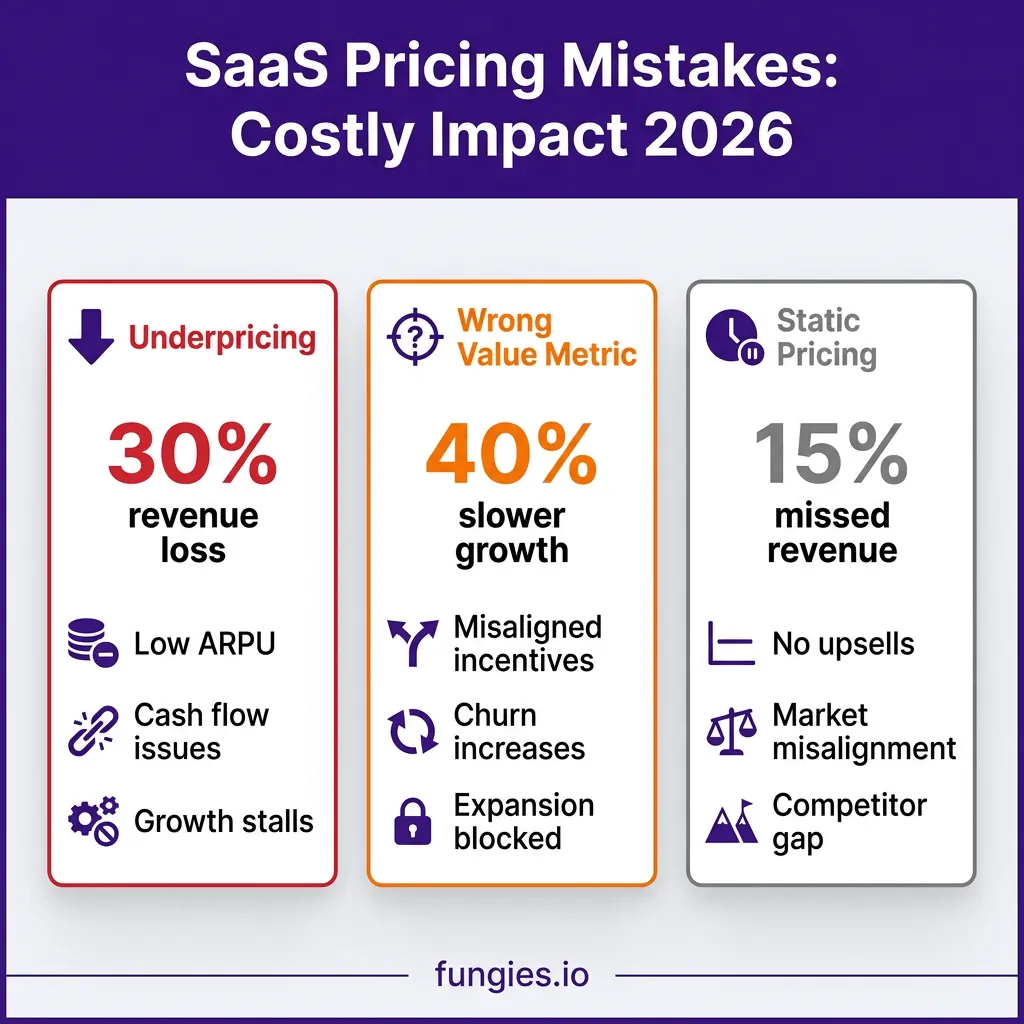
This is the big one. Most SaaS founders price too low, especially in the early stages. They’re scared of rejection, so they anchor to what feels “safe” rather than what reflects actual value.
Here’s what the data shows: B2B buyers are not as price-sensitive as you think. They care about the three R’s — ROI, risk, and reputation. A $49/month tool that saves them 10 hours weekly is a no-brainer. A $9/month tool that saves them 2 hours feels suspiciously cheap.
According to OpenView’s research, innovative Seed and Series A companies are especially guilty here. They leave 20-30% of potential revenue on the table by underpricing.
2. Picking the Wrong Value Metric
Your value metric is what you charge for — seats, usage, API calls, contacts, storage. Pick the wrong one and everything else breaks.
The best value metrics check five boxes:
- Value-based: Correlates with customer success
- Flexible: Works for small and large customers
- Scalable: Grows as customer grows
- Predictable: Customers can forecast costs
- Feasible: You can actually measure and bill it
Don’t just copy your competitors. They might have it wrong. Slack charges per active user — smart, because it aligns with actual usage. Some competitors charge per seat regardless of activity — customers hate paying for dormant accounts.
3. Making It Hard to Buy
Software buying has changed. End users discover products and advocate bottom-up. They expect to start free, see value, then pay as usage grows.
If your only option is “schedule a demo” or “contact sales,” you’re losing customers. Not everyone wants to talk to a human. Not everyone is ready to commit to annual contracts.
Design pricing that fits how your customers want to buy:
| Buying Style | Pricing Approach |
|---|---|
| Self-serve explorers | Freemium or free trial |
| Team evaluators | Low-cost starter tier |
| Department buyers | Pay-as-you-go options |
| Enterprise procurement | Contact sales with custom pricing |
4. Broken Upsell Paths
The gold standard in SaaS used to be net-negative churn. Today, the expectation is higher — aim for 110%+ net revenue retention. That means your existing customers should generate more revenue this year than last, even accounting for churn.
Great SaaS companies have two or more levers for expansion:
- Usage-based expansion: More API calls, more storage, more seats
- Feature-based expansion: Premium features in higher tiers
- Product line expansion: Additional products or modules
- Services expansion: Implementation, support, training
If your customers hit a ceiling with nowhere to go, they’ll eventually outgrow you.
5. Static Pricing That Never Changes
Your product evolves. Your market evolves. Your pricing should too.
Most companies set prices once and forget them. That’s a mistake. You should review pricing quarterly and make meaningful changes at least annually. Companies that actively manage pricing see 3-8% revenue increases within 12 months according to McKinsey.
Assign a pricing owner. Assemble a cross-functional team. Collect data. Test changes with new cohorts before rolling out broadly.
6. Confusing Pricing Tiers
More tiers isn’t always better. I’ve seen pricing pages with 7+ plans that paralyze decision-making. Analysis paralysis kills conversions.
Research shows the sweet spot is 3-4 pricing tiers. Three tiers leverage the “decoy effect” — customers tend to pick the middle option when presented with three choices. Four tiers can work if you have distinct customer segments with genuinely different needs.
Each tier should have clear differentiation:
| Tier | Target | Key Differentiator |
|---|---|---|
| Starter | Individuals/small teams | Core features, limited usage |
| Professional | Growing teams | Advanced features, higher limits |
| Business | Larger organizations | Admin controls, integrations |
| Enterprise | Big companies | Custom terms, dedicated support |
7. Wrong Annual Discount Strategy
Annual discounts are standard in SaaS, but most companies get the percentage wrong. Go too low and customers stick with monthly. Go too high and you train the market to wait for discounts.
The research is clear: the optimal annual discount is 15-20%. Recurly’s study of 1,000+ SaaS companies found the most popular discount is 16.7% — literally “2 months free.”
Anything above 25% risks creating a discount expectation. Below 15% doesn’t provide enough incentive to commit.
8. Ignoring Pricing Psychology
Humans are predictably irrational when it comes to prices. Smart SaaS companies leverage this.
Price anchoring: Show your highest tier first. It makes everything else feel reasonable. A $299 Enterprise plan makes the $99 Professional plan look like a steal.
Charm pricing: $99 feels significantly cheaper than $100, even though it’s only $1 difference. Use it for your main tiers.
Decoy pricing: Intentionally make one tier unattractive to push customers toward your preferred option. The “Professional” tier should feel like the obvious choice.
9. No Clear Free Trial or Freemium Strategy
Should you offer freemium or free trials? The answer depends on your product and market.
Here’s what the data shows:
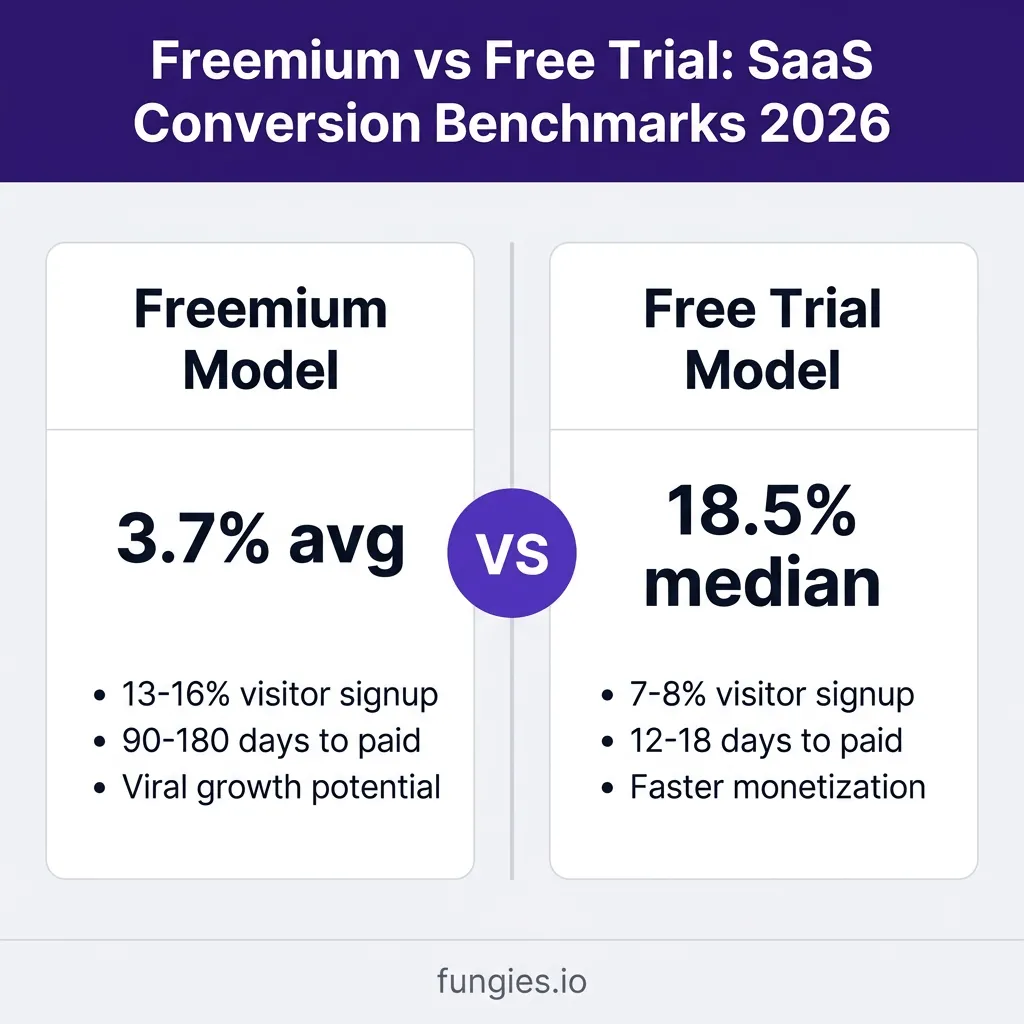
| Model | Conversion Rate | Best For |
|---|---|---|
| Freemium | 2-5% free-to-paid | High volume, viral potential, low ACV |
| Opt-in trial | 17-18% trial-to-paid | Mid-market, self-serve |
| Opt-out trial | 48-50% trial-to-paid | High ACV, sales-assisted |
Products with ACVs above $50/month achieve 40-60% higher conversion rates through trials compared to freemium models. But freemium requires 20-50x the user volume to generate equivalent revenue.
10. Missing the “Contact Sales” Escape Valve
Not every customer fits in your predefined boxes. Large enterprises have weird procurement requirements, custom security needs, and unique integration demands.
If you don’t have a “Contact Sales” option for your highest tier, you’re leaving enterprise deals on the table. These deals might be 10-100x your standard ACV.
Your pricing page should have a clear path for every buyer type — from solo founders to Fortune 500 companies.
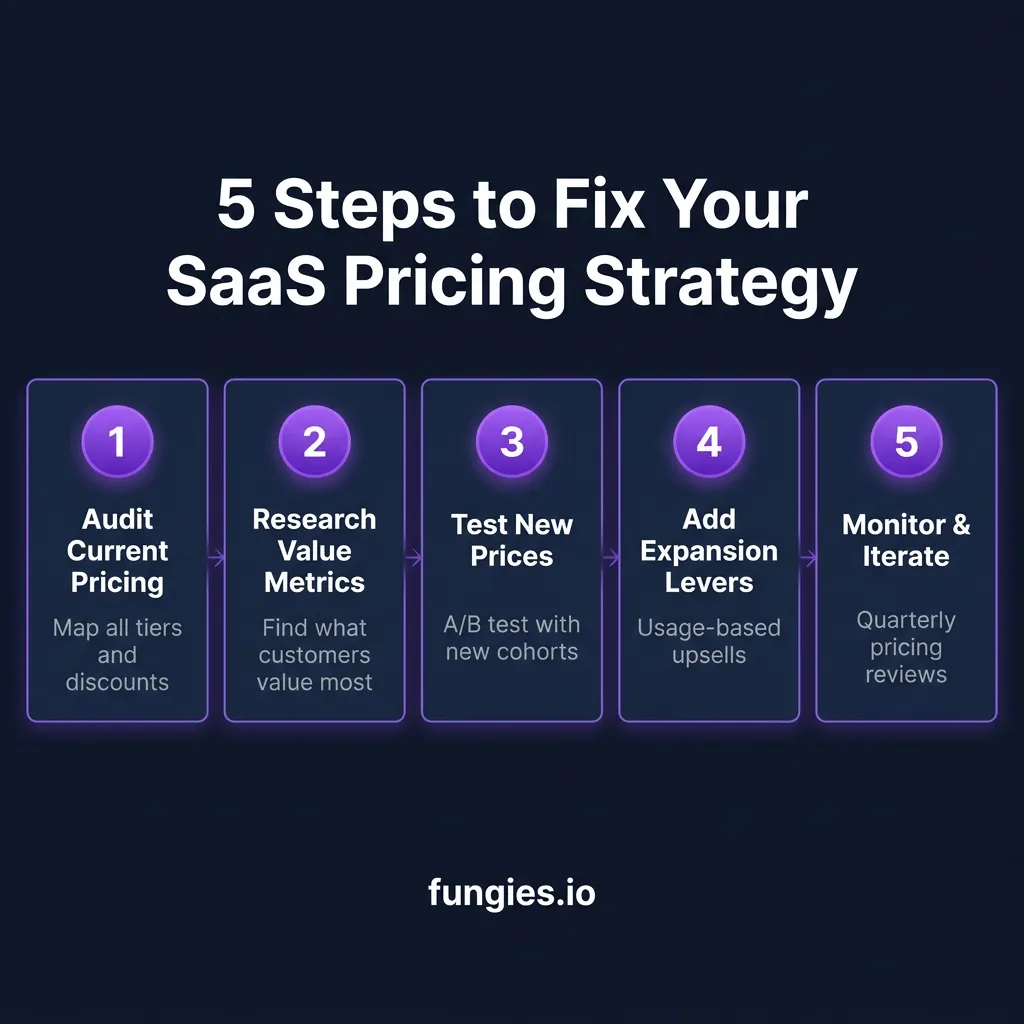
How to Fix Your SaaS Pricing: A 5-Step Framework
If you’re making some of these mistakes, don’t panic. Pricing isn’t permanent. Here’s how to fix it:
Step 1: Audit Your Current Pricing
Map every tier, every discount, every add-on. Interview recent customers about their buying decision. Calculate your actual ACV, expansion revenue, and net retention.
Step 2: Research Value Metrics
Survey customers on what they value most. Look at usage data. Test different value metrics with small cohorts. The right metric aligns your success with customer success.
Step 3: Test New Prices
Don’t change pricing for everyone at once. Test with new signups first. Measure conversion rates, not just revenue. A 20% price increase with a 5% conversion drop is still a win.
Step 4: Add Expansion Levers
Identify where customers hit limits. Create natural upgrade paths. Usage-based pricing is your friend here — it grows with the customer.
Step 5: Monitor and Iterate
Set quarterly pricing reviews. Track competitor changes. Survey customers annually about value perception. Pricing is a continuous process, not a one-time decision.
Frequently Asked Questions
How often should SaaS companies change pricing?
Review quarterly, adjust annually. Major pricing overhauls every 2-3 years are normal as your product and market evolve. The key is having a process, not a rigid schedule.
What’s the best value metric for SaaS?
There’s no universal answer. The best metric aligns with customer value, scales with usage, and is easy to understand. Common winners: seats (for collaboration tools), API calls (for infrastructure), contacts (for marketing tools), usage volume (for analytics).
Should I show monthly or annual pricing by default?
Show annual by default with monthly as an option. Annual plans improve cash flow and reduce churn. Just make sure the monthly option is clearly visible for customers who need it.
How do I know if I’m underpricing?
If customers never complain about price, you’re probably too cheap. If your sales cycle is fast and conversion is high, test higher prices. If you have strong product-market fit but weak margins, that’s a pricing problem.
What’s a good free trial length?
7 days for simple products, 14-30 days for complex products. The goal is giving users enough time to experience value, not maximizing trial duration. Shorter trials often convert better because they create urgency.
Conclusion
Pricing is the fastest lever for SaaS growth. A 20% price increase with no churn impact flows straight to your bottom line. That’s easier than acquiring 20% more customers.
Most SaaS companies treat pricing as an afterthought. They copy competitors, guess at numbers, and never revisit decisions made in the company’s earliest days. That’s a massive missed opportunity.
The good news? Pricing mistakes are fixable. Start with an audit. Talk to customers. Test changes with new cohorts. Build a culture where pricing is an ongoing conversation, not a one-time decision.
And if you’re building a SaaS that needs global payments, tax compliance, and a checkout that actually converts, check out Fungies.io. We handle the complex stuff so you can focus on building a product worth pricing properly.
Sources
- OpenView Partners – 5 SaaS Pricing Mistakes
- SaaS Factor – Freemium vs Trial Models
- First Page Sage – SaaS Freemium Conversion Rates 2026
- Monetizely – Designing Pricing Tiers
- HelloAdvisr – Monthly vs Annual Pricing
- Monetizely – Anchoring Effect in SaaS Pricing
- Reddit r/SaaS – Pricing Mistakes Discussion
- ChartMogul – SaaS Pricing Mistakes Webinar