SaaS Viral Loops: The Complete Guide to Engineering Self-Sustaining Growth in 2026
Learn how to engineer viral loops into your SaaS product. Discover the 5 viral loop archetypes, calculate your K-factor, and see how Dropbox, Notion, and Figma achieved explosive growth without paid ads.
Here’s a number that should stop you in your tracks: Dropbox grew 3,900% in 15 months without spending a dollar on traditional advertising. Notion reached 30 million users with zero sales team. Figma got acquired for $20 billion partly because their product spread like wildfire through design teams.
What do they all have in common? They engineered viral loops directly into their products. Not marketing afterthoughts — core product mechanics that turned every user into a potential growth engine.
What Are Viral Loops (And Why They Beat Paid Acquisition)
A viral loop is a product mechanism where every new user brings in additional users — creating a self-reinforcing growth cycle. It’s the difference between pushing growth through ad spend and pulling growth through product design.
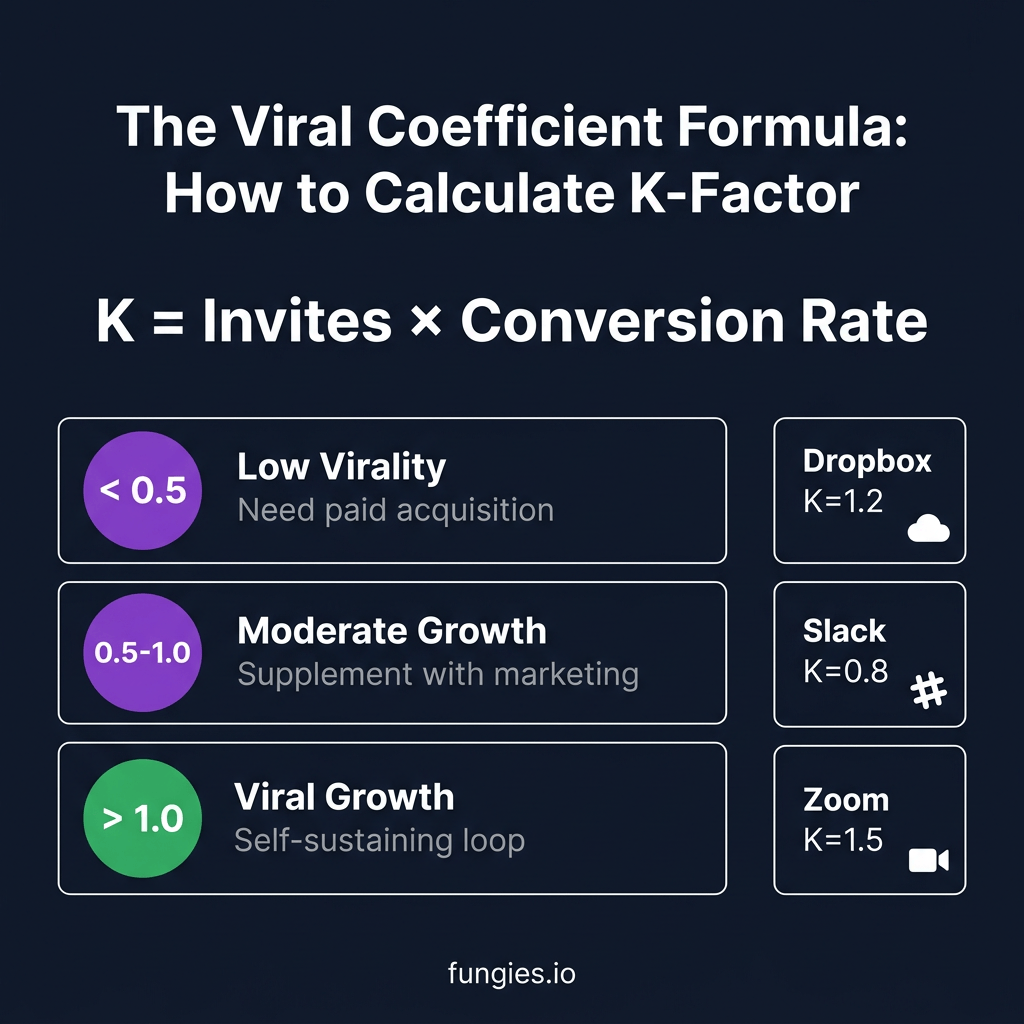
Here’s the math that matters: if your viral coefficient (K-factor) is 1.0, each user brings exactly one new user. You’re doubling organically. If K > 1.0, you’re in hockey-stick territory. Dropbox hit K = 1.2 at their peak. Zoom hit K = 1.5 during the pandemic.
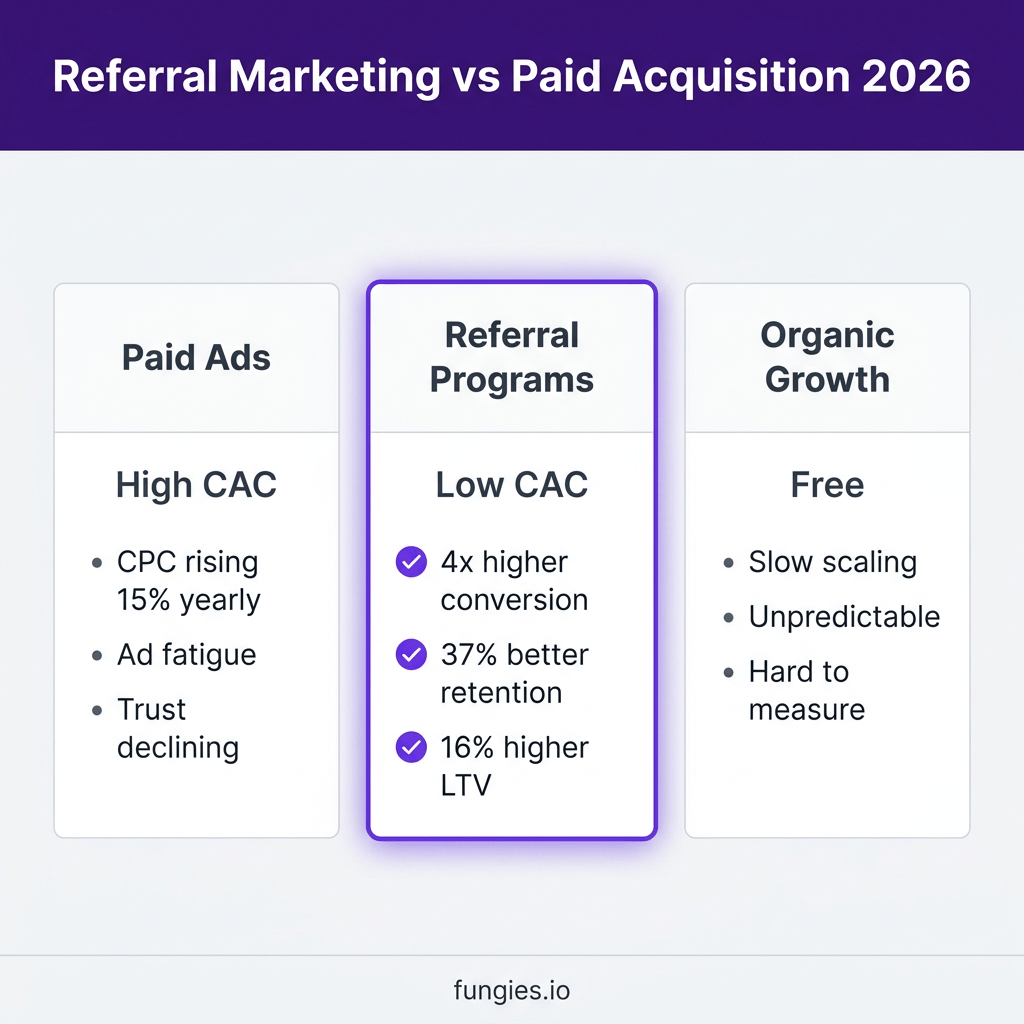
Compare that to paid acquisition. The average SaaS company burns $1.24 to acquire $1.00 of new ARR through ads. Viral growth? Marginal cost approaches zero.
The 5 Viral Loop Archetypes Every SaaS Founder Should Know
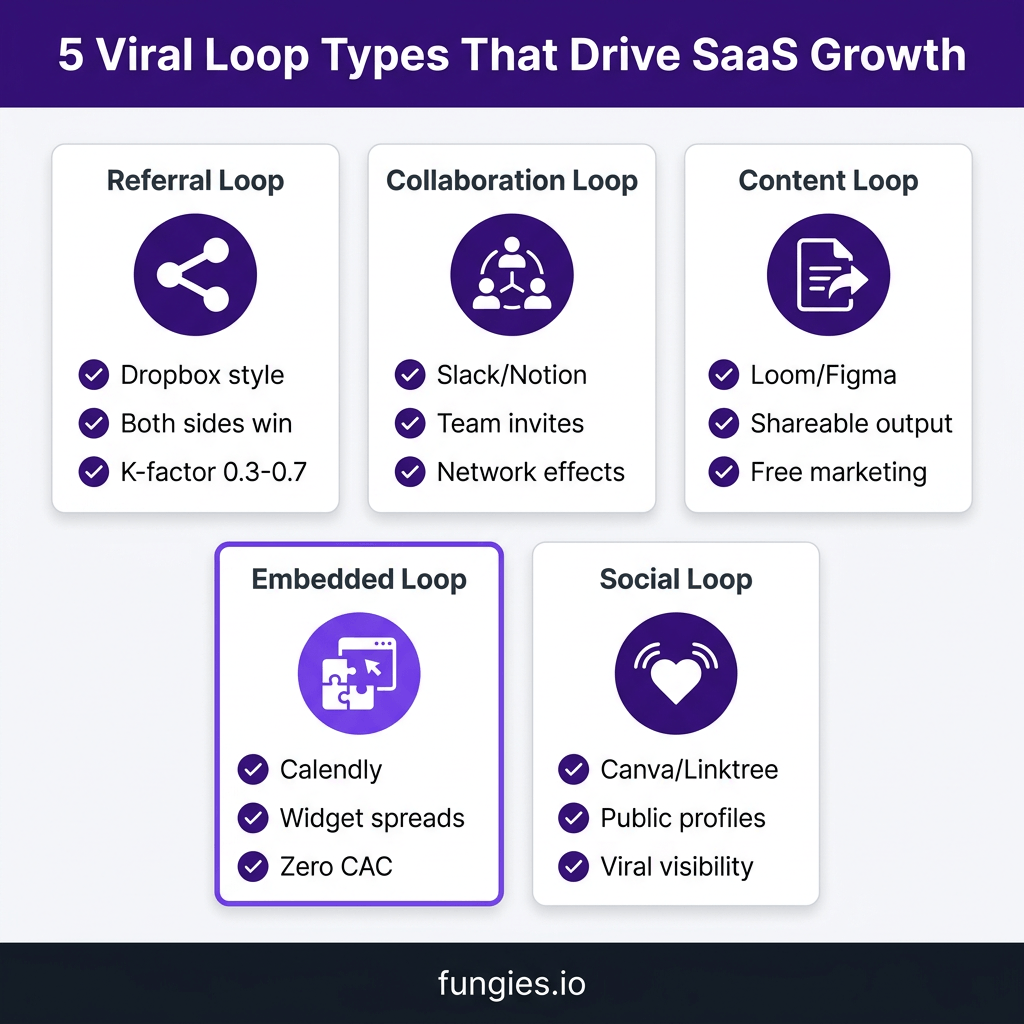
1. The Referral Loop: Give to Get
This is the Dropbox playbook. Users get something valuable for inviting friends. Both sides win. Dropbox offered 500MB bonus storage per referral — capped at 16GB. Simple, tangible, immediately gratifying.
The genius? The reward directly increased product value. More storage = better Dropbox experience. Users weren’t just earning credits — they were upgrading their tool.
Key metrics: Referral programs drive 20-40% of new customers for top SaaS companies. Referred customers have 37% higher retention and 16% higher lifetime value than paid-acquisition customers.
2. The Collaboration Loop: Built for Teams
Slack is pointless alone. Notion is weak solo. Figma is just another design tool without collaboration. These products embed virality into their core value proposition.
When someone joins your Slack workspace, they don’t think ‘I should invite others to get credits.’ They think ‘I need my team here or this doesn’t work.’ The invitation isn’t gamified — it’s essential.
The benchmark: Products with true collaboration loops see 40-60% of new signups come from organic team invitations. Slack’s K-factor hovered around 0.8 pre-IPO — not quite viral, but close enough to dramatically reduce CAC.
3. The Content Loop: Create Once, Share Forever
Loom videos spread because every video ends with ‘Recorded with Loom.’ Figma files go viral because designers share links to their work. Canva templates spread because creators want showcase pages.
These loops leverage user-generated content as free advertising. Every piece of content created on your platform becomes a distribution channel.
Real numbers: Loom’s free tier watermark drove 30% of their organic signups. Figma’s community files generated millions of impressions without ad spend.
4. The Embedded Loop: Be Everywhere
Calendly doesn’t ask you to share — it makes sharing unavoidable. Every meeting invite contains a Calendly link. Every recipient sees the product in action. Many convert without Calendly spending a penny.
Typeform, Linktree, and Link-in-bio tools use the same mechanic. The product output (forms, links, scheduling pages) naturally exposes new users to the tool.
Why it works: Embedded loops have the lowest friction. Users don’t decide to share — the product shares itself through normal usage.
5. The Social Loop: Public by Default
Linktree profiles are public. Notion templates are public. GitHub repos are public. These products default to visibility, turning user activity into organic discovery.
When someone creates a beautiful Linktree page, they share it everywhere. Every visitor sees ‘Create your own Linktree’ at the bottom. The product markets itself through user success.
How to Calculate Your Viral Coefficient (K-Factor)
The formula is simple. The implications are massive.
K = Average Invites per User × Conversion Rate
If each user invites 3 people and 25% convert, your K-factor is 0.75. Here’s what that means in practice:
- K < 0.5: Low virality. You’ll need heavy paid acquisition to grow.
- K = 0.5-1.0: Moderate growth. Virality supplements but doesn’t replace marketing.
- K > 1.0: Viral growth. Each user brings more than one new user. You’re self-sustaining.
Most SaaS companies sit between 0.3 and 0.7. The goal isn’t necessarily K > 1.0 (that’s rare) — it’s maximizing whatever natural virality your product has.
Engineering Viral Loops: A Practical Framework
Step 1: Identify Natural Sharing Moments
Where does your product already create value that involves other people? Zoom calls need invitees. Slack messages need recipients. Figma designs need reviewers.
Map every touchpoint where users naturally interact with non-users. These are your viral insertion points.
Step 2: Reduce Friction to Zero
Every extra click kills virality. Dropbox’s referral flow was three clicks. Invite → Email → Accept. That’s it.
Audit your invitation flow. Remove signup requirements before seeing value. Pre-fill messages. Use smart defaults. If it takes more than 30 seconds, it’s too long.
Step 3: Align Incentives with Product Value
The best rewards aren’t cash — they’re product upgrades. Dropbox gave storage. Notion gives workspace credits. Figma gives design files.
When the reward improves the product experience, users want to refer. When it’s external (cash, gift cards), you’re buying distribution, not earning it.
Step 4: Measure and Optimize
Track these metrics religiously:
- Invites per user: How many people does each user invite?
- Conversion rate: What percentage of invites sign up?
- Time to invite: How long after signup do users start inviting?
- Viral revenue: What’s the ARR attributable to viral signups?
Real-World Viral Loop Case Studies
| Company | Viral Loop Type | Key Mechanic | Result |
|---|---|---|---|
| Dropbox | Referral | 500MB per invite | 3,900% growth in 15 months |
| Slack | Collaboration | Team invites required | $27B valuation, 0 → 12M+ DAUs |
| Zoom | Embedded | Meeting links in invites | 10M → 200M daily participants |
| Notion | Social + Collaboration | Template gallery + team | 30M+ users, $10B valuation |
| Loom | Content | Watermarked videos | 30% of signups from shares |
| Calendly | Embedded | Links in every invite | 10M+ users, $3B+ valuation |
Common Viral Loop Mistakes (And How to Avoid Them)
Mistake 1: Building a Loop Nobody Wants
I see this constantly. Founders add ‘invite friends’ buttons that offer $10 credits. Users don’t care. The reward isn’t compelling and the product doesn’t naturally involve others.
Fix: Don’t force virality where it doesn’t fit. Single-player tools (calculators, personal trackers) rarely benefit from viral loops. Focus on product-led content or SEO instead.
Mistake 2: Asking Too Early
Prompting for referrals during onboarding is premature. Users haven’t experienced value yet. Why would they invite friends to something they don’t understand?
Fix: Trigger invites after value moments. Dropbox asked after you uploaded your first file. Notion prompts after you create your first useful page. Timing matters more than frequency.
Mistake 3: Ignoring the Recipient Experience
Most viral loops obsess over the sender and ignore the receiver. Generic invites get ignored. Personalized, context-rich invites convert.
Fix: Make invites feel human. Include the sender’s name, explain the value clearly, and let recipients experience the product before forcing signup. Figma lets you view designs before creating an account. That’s intentional.
When Viral Loops Don’t Work (And What to Do Instead)
Not every product can be viral. B2B enterprise tools with long sales cycles. Niche developer utilities. Single-player productivity apps. These categories rarely achieve K > 0.5.
That’s fine. HubSpot built a decacorn without product virality. They used content marketing and sales. Basecamp grew to millions through opinionated brand building and founder audience.
The key is honest assessment. If your product doesn’t naturally involve multiple users, don’t force a viral loop. Focus on the channels that actually work for your category.
FAQ: Viral Loops for SaaS
What’s a good viral coefficient for SaaS?
K = 0.3-0.7 is typical. K = 0.7-1.0 is strong. K > 1.0 is exceptional and rare. Most successful SaaS companies operate in the 0.5-0.8 range, supplementing virality with paid acquisition.
How long does it take to build a viral loop?
Engineering the loop takes 2-4 weeks. Optimizing it takes 6-12 months. The biggest gains come from iteration — testing invitation copy, reward structures, and timing triggers.
Can B2B SaaS have viral loops?
Absolutely. Slack, Notion, Figma, and Zoom are B2B. The loop is often collaboration-based rather than referral-based. Team invites beat friend invites in B2B contexts.
What’s better: one-sided or double-sided rewards?
Double-sided almost always wins. When both the sender and receiver get value, conversion rates increase 2-3x. Dropbox’s ‘give 500MB, get 500MB’ outperformed every single-sided variant they tested.
How do I know if my product can support viral growth?
Ask: does my product create value that naturally involves other people? If yes, you can build a loop. If no, focus on other channels. Honest assessment beats forced mechanics.
Conclusion: Engineering Growth, Not Buying It
Viral loops aren’t magic. They’re mechanics. When you understand the psychology of why people share — social capital, utility, reciprocity — you can design products that spread organically.
The best SaaS companies of the last decade didn’t outspend competitors on ads. They out-engineered them on distribution. Dropbox didn’t have Google’s budget. Notion didn’t have Salesforce’s sales team. They had products designed to grow themselves.
Your viral loop won’t appear overnight. It takes iteration, measurement, and patience. But when it clicks — when K crosses 0.7, then 0.9, then 1.0 — everything changes. Growth becomes a byproduct of usage. And that’s when SaaS companies become unicorns.
Ready to build your SaaS growth engine? Get started with Fungies — the Merchant of Record platform that handles payments, tax compliance, and global expansion so you can focus on building products that sell themselves.