How to Sell Your Music Online: The Complete Guide for Independent Artists in 2026
Learn how to sell your music online with this complete 2026 guide. Compare top distribution platforms, maximize revenue streams, and build your independent music career.
The music industry has transformed dramatically over the past decade. With streaming services dominating consumption and independent artists generating over $1.4 billion in revenue annually, there’s never been a better time to sell your music online. Whether you’re a bedroom producer, singer-songwriter, or band looking to reach global audiences, this comprehensive guide will show you exactly how to distribute, monetize, and promote your music in 2026.
According to recent industry data, independent artists now account for 34% of all music consumed on streaming platforms. The barrier to entry has never been lower — but with thousands of tracks uploaded daily, standing out requires strategy, quality, and the right distribution approach.
Understanding Music Distribution in 2026
Before you can sell your music online, you need to understand how digital distribution works. Unlike physical sales where you ship CDs or vinyl, digital distribution involves uploading your tracks to a distributor who then delivers them to streaming platforms like Spotify, Apple Music, Amazon Music, and hundreds of others worldwide.
Music distributors act as the middleman between you and the streaming platforms. They handle the technical requirements, metadata formatting, royalty collection, and payments. In 2026, most distributors offer 100% royalty retention, meaning you keep all earnings after the platform’s standard fees (typically around 30% for streaming).
The key difference between distributors lies in their pricing models, additional services, and speed of distribution. Some charge annual fees for unlimited uploads, others take a percentage of royalties, and a few offer genuinely free tiers with limited features.
Top Platforms to Sell Your Music Online
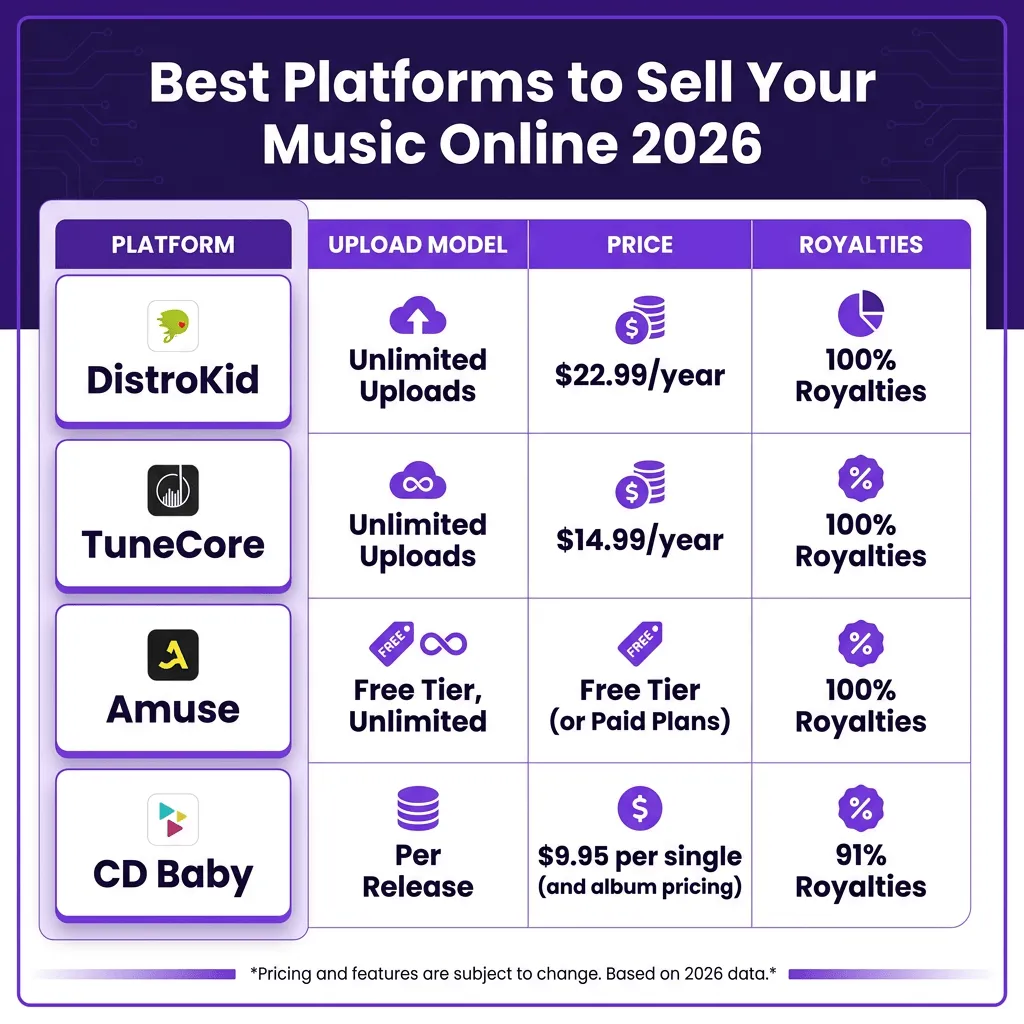
Choosing the right distributor is crucial for your music career. Here’s a detailed breakdown of the leading platforms in 2026:
1. DistroKid — Best for Prolific Artists
DistroKid has become the go-to choice for independent artists who release music frequently. For a flat annual fee of $22.99 (Musician plan), you get unlimited uploads to all major platforms including Spotify, Apple Music, TikTok, Instagram, and YouTube Content ID. The platform is known for its fast distribution speeds — often getting your music live within 24-48 hours.
Key features include automatic revenue splits (if you collaborate with other artists), hyperfollow links for pre-saves, and detailed analytics. The higher-tier plans ($35.99/year for Musician Plus) add features like customizable label names, scheduled releases, and daily sales statistics.
2. TuneCore — Best All-Round Option
TuneCore, one of the original indie distributors, has evolved significantly. They now offer both subscription plans ($14.99/year for unlimited releases) and per-release pricing. TuneCore stands out for its comprehensive artist services including publishing administration, which helps you collect royalties from performances, radio plays, and mechanical licenses.
The platform provides detailed analytics, social media promotion tools, and educational resources. Their distribution network covers 150+ digital stores and streaming services globally, making it ideal for artists targeting international audiences.
3. Amuse — Best Free Option
For artists just starting out or those on a tight budget, Amuse offers a genuinely free tier with unlimited releases and 100% royalty retention. The free plan distributes to all major platforms including Spotify, Apple Music, and Amazon Music. The catch? Distribution takes longer (up to 4 weeks) and you miss out on features like YouTube Content ID and fast-track releases.
Amuse also offers a paid “Pro” plan ($59.99/year) that adds faster distribution, multiple artist profiles, and advanced analytics. The platform has gained popularity among independent artists who want to test the waters before committing to paid services.
4. CD Baby — Best for Physical + Digital
CD Baby remains relevant in 2026 by offering both digital distribution and physical CD/vinyl manufacturing. Unlike subscription-based competitors, CD Baby charges per release ($9.95 for a single, $29 for an album). There’s no annual fee, making it cost-effective for artists who release infrequently.
The platform takes a 9% commission on digital sales but offers comprehensive services including YouTube monetization, sync licensing opportunities, and publishing administration. CD Baby is ideal for artists who want a one-stop shop for both digital and physical distribution.
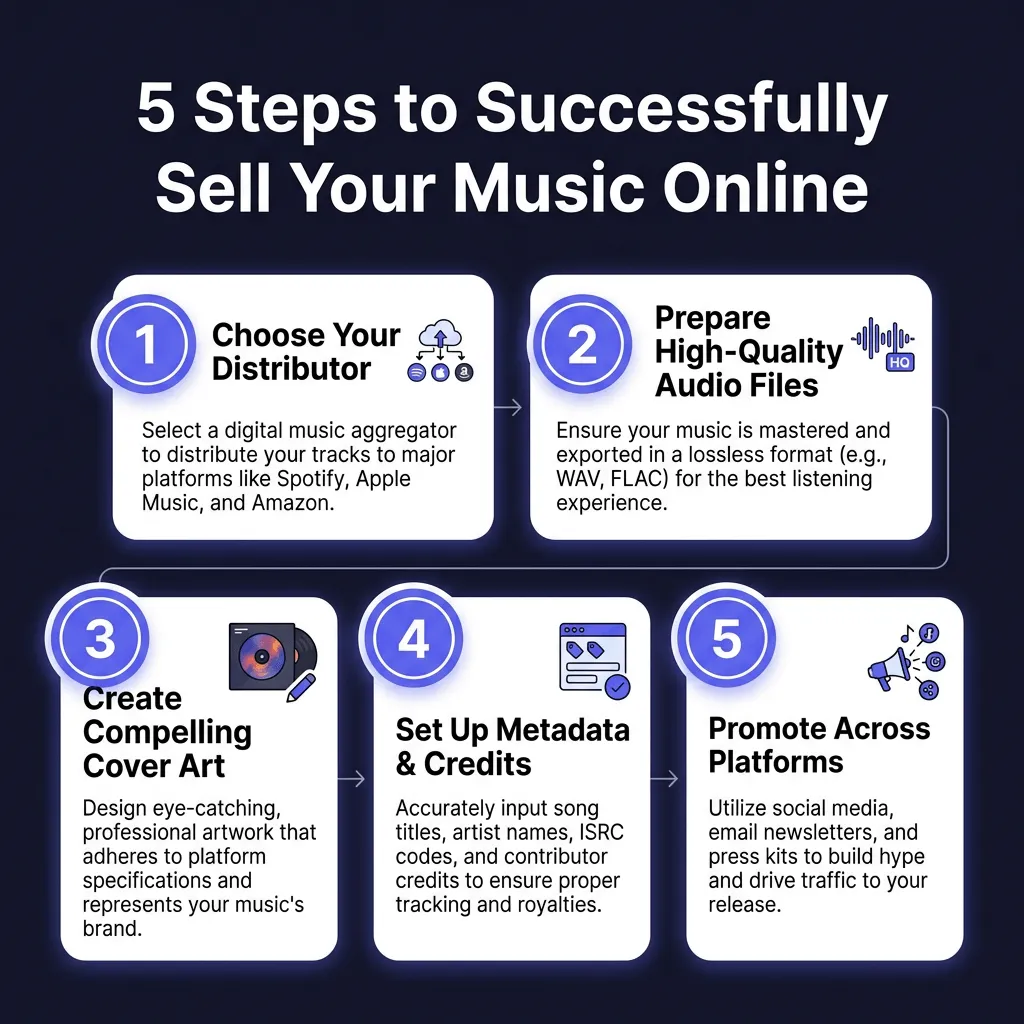
5 Steps to Successfully Sell Your Music Online
Getting your music on streaming platforms is just the beginning. Here’s a proven framework for successfully selling your music online:
Step 1: Choose the Right Distributor
Consider your release frequency, budget, and long-term goals. If you plan to release monthly, a subscription service like DistroKid or TuneCore makes sense. For occasional releases, CD Baby’s per-release model might be more economical. Test free options like Amuse if you’re just starting out.
Step 2: Prepare High-Quality Audio Files
Streaming platforms require specific audio formats. Export your tracks as WAV files (16-bit, 44.1kHz) for the best quality. Ensure your mixes are properly mastered — loudness standards for streaming typically target -14 LUFS integrated. Poor audio quality is the fastest way to lose listeners.
Step 3: Create Compelling Cover Art
Your cover art is often the first impression potential listeners get. Requirements vary by platform, but generally you need a square image (3000×3000 pixels minimum), JPG or PNG format, and no explicit content unless properly labeled. Consider hiring a designer or using tools like Canva to create professional artwork that represents your brand.
Step 4: Set Up Metadata and Credits
Accurate metadata is crucial for discoverability and royalty collection. Include primary and featured artists, songwriters, producers, and composers. Choose appropriate genres and subgenres. Add ISRC codes (your distributor can generate these) for proper tracking. Complete metadata helps algorithms recommend your music to the right audiences.
Step 5: Promote Across Multiple Platforms
Distribution alone won’t build an audience. Create a promotion strategy that includes social media (TikTok, Instagram, Twitter), email marketing, playlist pitching, and potentially paid advertising. Engage with your audience consistently — respond to comments, share behind-the-scenes content, and build a community around your music.
Maximizing Your Revenue Streams
While streaming royalties form the foundation, successful independent artists diversify their income:
- Direct-to-Fan Sales: Platforms like Bandcamp allow you to sell digital downloads and physical merchandise directly to fans, often at higher margins than streaming.
- Sync Licensing: Getting your music placed in TV shows, films, commercials, and video games can generate significant upfront fees plus ongoing royalties.
- YouTube Content ID: Monetize when others use your music in their videos. Most distributors offer this service for an additional fee.
- Live Performances: Virtual concerts and livestreams have become viable revenue sources, especially for artists with engaged online followings.
- Merchandise: T-shirts, vinyl, and limited-edition items can generate more revenue than music sales for established artists.
Common Mistakes to Avoid
As you sell your music online, watch out for these common pitfalls:
- Rushing releases: Poorly mixed tracks or amateur cover art will hurt your brand. Take time to polish every element.
- Ignoring metadata: Incomplete or incorrect metadata leads to lost royalties and poor discoverability.
- Releasing without a plan: Have your promotion strategy ready before your release date. Pre-saves and teaser content build momentum.
- Neglecting analytics: Regularly review your streaming data to understand where your audience is growing and which tracks perform best.
- Expecting instant success: Building a music career takes time. Consistency and quality matter more than viral moments.
FAQ: Selling Your Music Online
How much does it cost to sell your music online?
Costs vary by distributor. Free options like Amuse charge nothing upfront. Subscription services range from $14.99-$59.99 annually for unlimited releases. Per-release distributors charge $9.95-$29 per release with no annual fees. Most platforms let you keep 100% of royalties after platform fees.
How long does it take to get music on Spotify?
Distribution times vary: DistroKid and TuneCore typically deliver within 24-72 hours, while free tiers from Amuse can take 2-4 weeks. Always plan your release date at least 2-3 weeks in advance to allow for processing and playlist pitching.
Do I need to copyright my music before distributing?
Your music is automatically copyrighted when you create it. However, registering with your country’s copyright office (like the US Copyright Office) provides additional legal protection and is necessary if you plan to pursue infringement claims. Most distributors don’t require formal registration.
Can I use multiple distributors?
Generally, you should use one distributor per release to avoid duplicate content issues on streaming platforms. However, you can use different distributors for different releases or switch distributors for new releases. If switching, you’ll need to remove old releases from the previous distributor before re-uploading.
How much money can I make selling music online?
Streaming royalties average $0.003-$0.005 per stream. To earn $1,000 monthly, you’d need approximately 200,000-300,000 streams. However, successful independent artists combine streaming with direct sales, sync licensing, merchandise, and live performances to build sustainable careers.
Conclusion
The opportunity to sell your music online has never been more accessible. With the right distributor, quality production, and consistent promotion, independent artists can build global audiences and sustainable careers without traditional record label backing.
Start by choosing a distribution platform that matches your release schedule and budget. Focus on creating high-quality music and engaging with your audience authentically. Remember that success in the music industry is a marathon, not a sprint — consistency, quality, and genuine connection with your fans will take you further than any shortcut.
Ready to share your sound with the world? Pick a distributor, prepare your best tracks, and take the first step toward building your music career in 2026.
Ready to Monetize Your Digital Creations?
Join thousands of creators using Fungies.io — automated tax compliance, 50+ payment methods, global Merchant of Record for your digital products.
No credit card required