The Ultimate Guide to SaaS Pricing for Young Startups
Introduction Pricing is one of the most critical, yet often overlooked, aspects of building a successful Software-as-a-Service (SaaS) business. For young startups and indie hackers, the right pricing strategy can be the difference between rapid growth and stagnation. Yet, research shows that the average SaaS startup spends a mere six hours on their pricing strategy
Introduction
Pricing is one of the most critical, yet often overlooked, aspects of building a successful Software-as-a-Service (SaaS) business. For young startups and indie hackers, the right pricing strategy can be the difference between rapid growth and stagnation. Yet, research shows that the average SaaS startup spends a mere six hours on their pricing strategy in total 1. This guide provides a comprehensive framework for building a robust pricing strategy, with a special focus on how indie hackers can leverage platforms like Fungies to implement these best practices with ease.
This article will explore the fundamental principles of SaaS pricing, dissect the most effective pricing models, and offer actionable advice on structuring free trials, subscription intervals, and discounts. We will also delve into the psychological aspects of pricing and provide a practical checklist for implementation. By the end of this guide, you will have a clear understanding of how to craft a pricing strategy that not only attracts customers but also maximizes revenue and long-term value.
Understanding SaaS Pricing Fundamentals
SaaS pricing is fundamentally different from traditional software sales. Instead of a large, one-time upfront payment for a perpetual license, SaaS operates on a subscription model. This recurring revenue model offers several advantages for both the business and the customer. For startups, it provides a predictable revenue stream, fosters long-term customer relationships, and allows for continuous product improvement. For customers, it lowers the barrier to entry, reduces upfront risk, and offers greater flexibility.
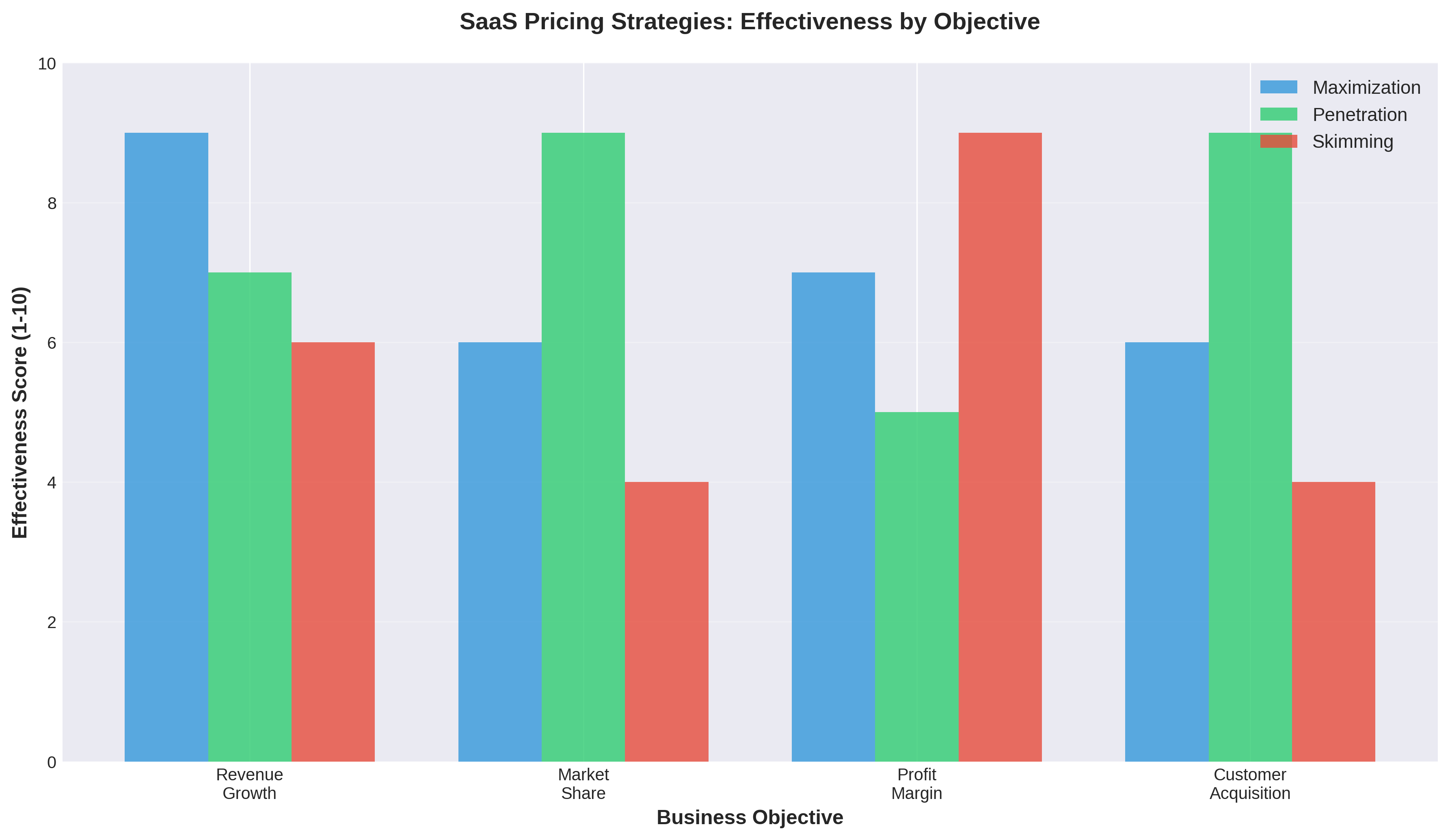
Before diving into specific models, it’s essential to understand the three core pricing strategies that startups can adopt, as outlined by Tomasz Tunguz, a venture capitalist at Redpoint:
“There are only three pricing strategies startups should pursue: Maximization, Penetration and Skimming. They prioritize revenue growth, market share and profit margin, respectively.” 2
•Maximization: Aims to maximize revenue from each customer, often through value-based pricing and upselling.
•Penetration: Focuses on capturing a large market share quickly, often with lower prices to attract a broad customer base.
•Skimming: Targets early adopters willing to pay a premium for a new or innovative product, prioritizing profitability.
At the heart of any successful pricing strategy is the concept of value-based pricing. This approach ties the price of your product to the perceived value it delivers to the customer. A popular heuristic for this is the 10x Rule, which suggests that the value your product provides should be at least ten times its price 3. This ensures that customers feel they are getting a great deal, which in turn increases their willingness to pay and remain loyal.
The Six Essential SaaS Pricing Models
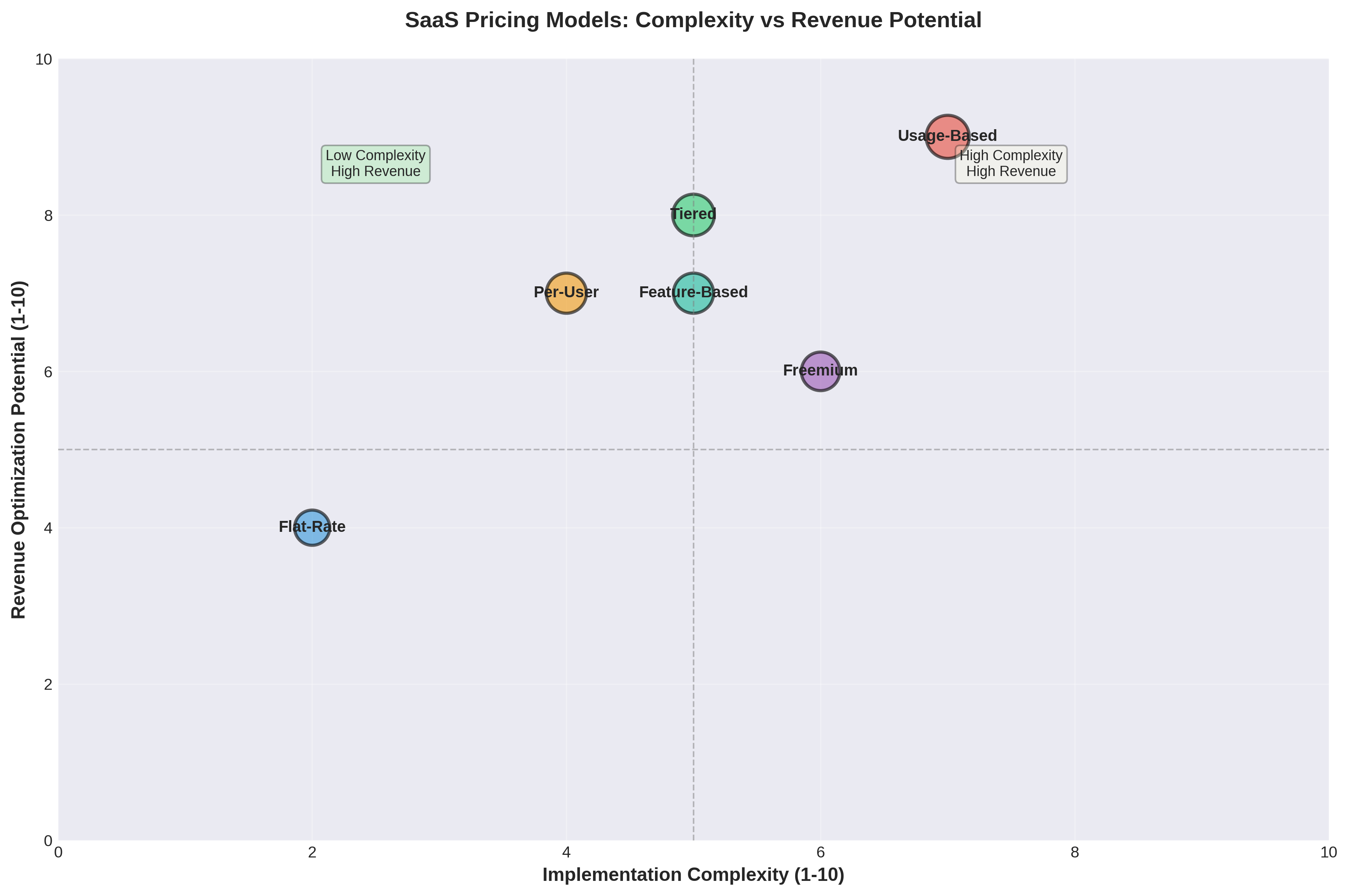
Choosing the right pricing model is crucial for aligning your product with customer needs and business goals. While there are many variations, most SaaS pricing models fall into one of six categories. The average SaaS company offers around 3.5 pricing tiers, indicating that a multi-tiered approach is often the most effective 4.
| Pricing Model | Description | Best For | Pros | Cons |
| Flat-Rate | A single price for a single set of features. | Simple products with a uniform user base. | Easy to understand and sell. | Leaves money on the table; one-size-fits-all doesn’t work for diverse customers. |
| Tiered | Multiple plans with different features and price points. | Products serving diverse customer segments. | Caters to different needs; clear upsell path. | Can be complex; requires careful feature allocation. |
| Usage-Based | Price is based on how much the customer uses the product. | APIs, infrastructure, and transactional services. | Aligns price with value; scalable. | Unpredictable revenue; can be complex to track. |
| Per-User | Price is based on the number of users or seats. | Collaboration and team-based software. | Predictable revenue; easy to understand. | Can discourage adoption within teams. |
| Freemium | A free, limited version of the product with paid upgrades. | Products with a large potential user base. | Low barrier to entry; viral growth potential. | High support costs for free users; low conversion rates. |
| Feature-Based | Tiers are defined by the features included in each plan. | Products with a wide range of features. | Clear value differentiation; encourages upgrades. | Can be difficult to determine the right feature mix for each tier. |
Structuring Free Trials for Maximum Conversion
A free trial is a powerful tool for customer acquisition, with 44% of SaaS companies offering one 1. It allows potential customers to experience your product’s value firsthand, reducing their purchasing risk. However, not all free trials are created equal. The structure of your trial can have a significant impact on conversion rates.
There are two primary types of free trials:
•Opt-In (No Credit Card Required): This model has a lower barrier to entry and generates more signups. However, it requires a more robust onboarding process to convince users to upgrade. The average conversion rate for opt-in trials is around 18.2% 5.
•Opt-Out (Credit Card Required): This model has a higher barrier to entry but results in a much higher conversion rate, averaging 48.8% 5. It’s best suited for established products with strong brand recognition.
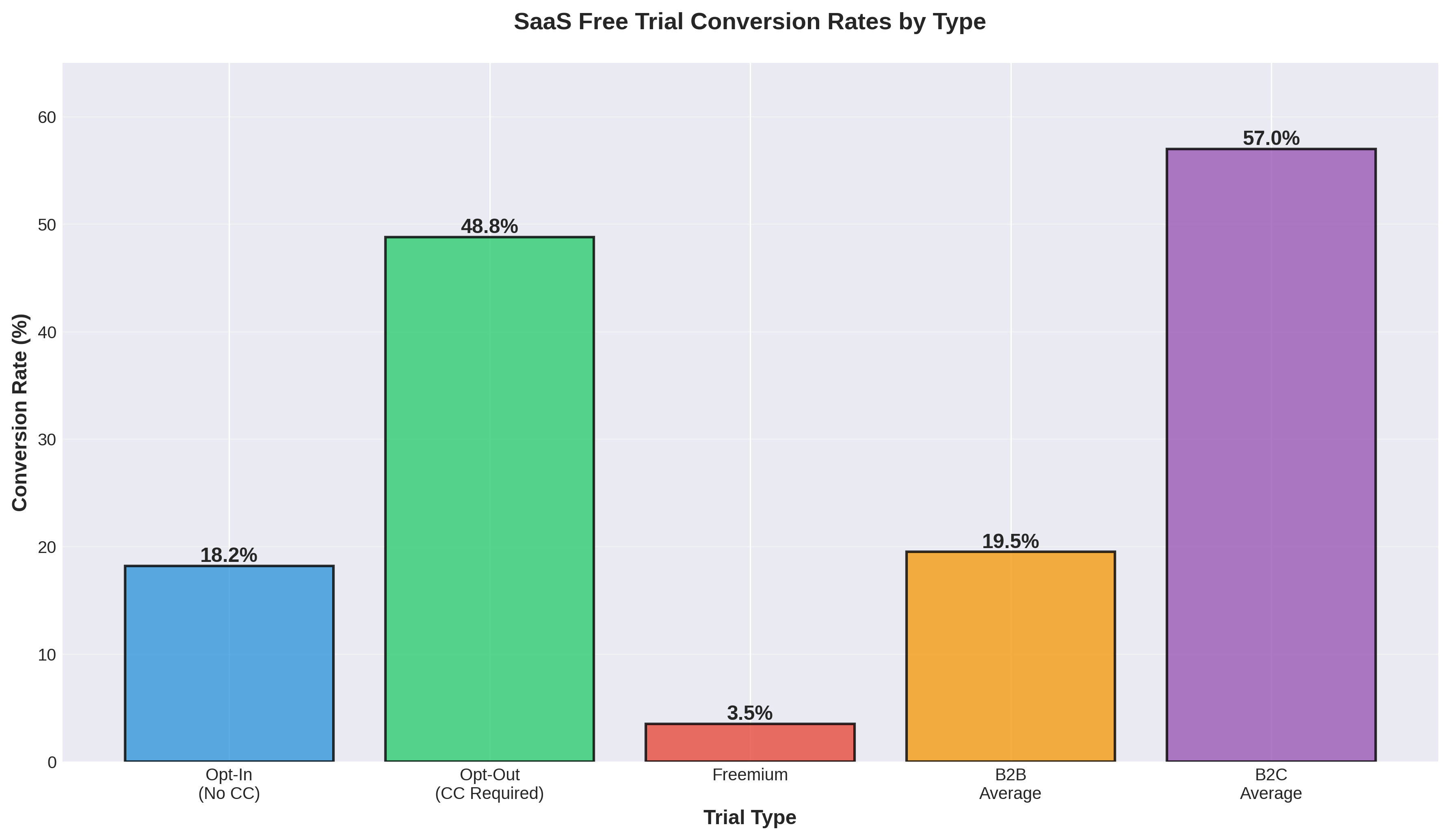
The most common free trial length is 30 days 1. However, the ideal duration depends on the complexity of your product. The goal is to give users enough time to experience the “Aha! Moment”—the point at which they understand the value your product provides. Interestingly, a study by Totango found that 50% of all free trial signups occur after the trial has ended, highlighting the importance of a well-defined email follow-up sequence 1.
Platforms like Fungies make it easy for indie hackers to implement flexible free trials. As their documentation states, you can set up a trial period where “customers pay nothing but have to provide Payment Details for automatic payments” 6. Once the trial ends, Fungies automatically charges the customer’s preferred payment method and sends email communications, streamlining the entire process.
Subscription Intervals: Daily, Weekly, Monthly, or Yearly?
Choosing the right billing interval is another critical decision. The most common options are monthly and annual subscriptions, but with modern payment platforms, more granular intervals are possible.
| Billing Interval | Pros | Cons | Typical Discount |
| Monthly | Lower commitment for customers; easier to attract new users. | Higher churn rate; less predictable cash flow. | 0% |
| Annual | Improved cash flow; lower churn rate; higher customer lifetime value. | Higher commitment for customers; requires a discount to incentivize. | 10-20% |
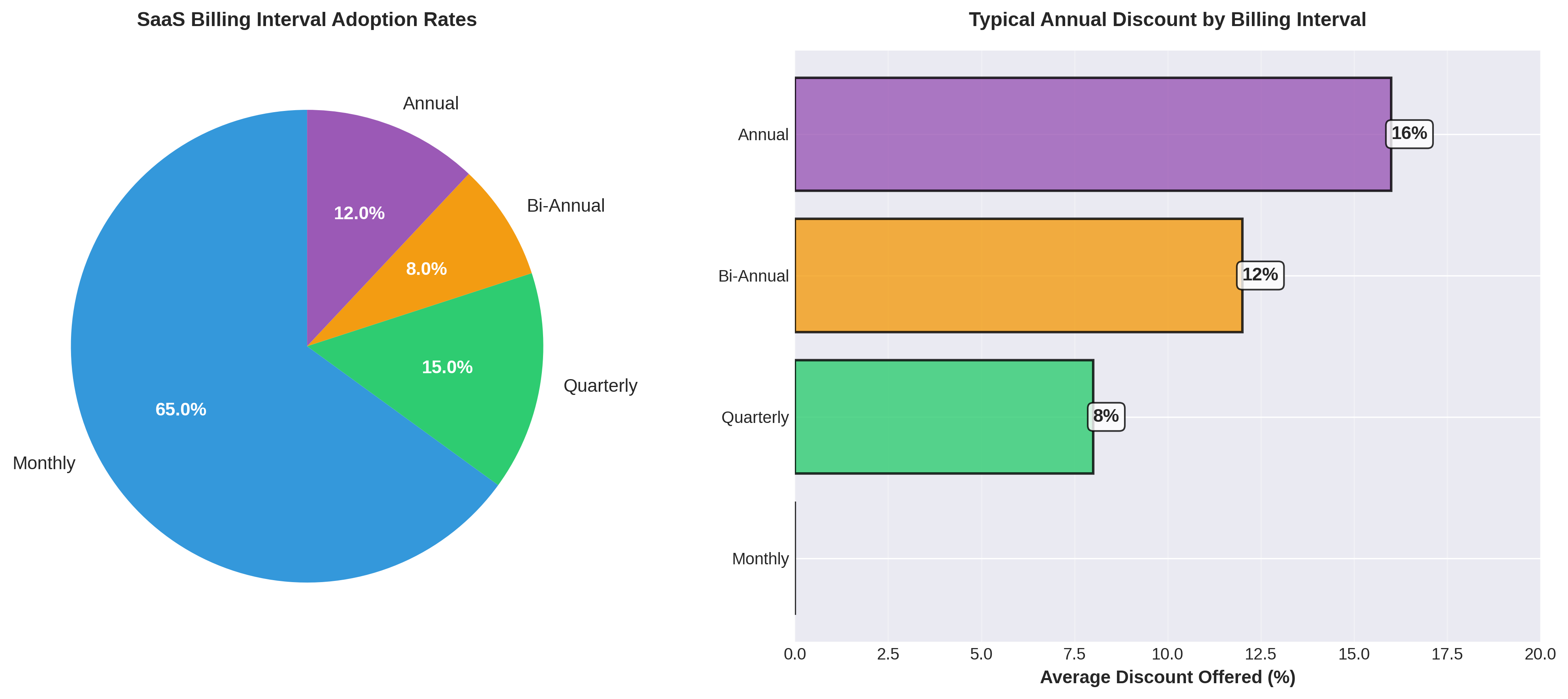
Offering both monthly and annual plans is a common and effective strategy. The annual plan should be presented as the better value, with a discount of 10-20% to encourage a longer-term commitment. This not only improves cash flow but also reduces churn, as customers are locked in for a full year.
For indie hackers and startups looking for more flexibility, platforms like Fungies offer highly customizable subscription intervals. Their API allows you to set a recurringInterval of day, week, month, or year, and a recurringIntervalCount to create custom billing cycles, such as every two weeks or every three months 7. This level of flexibility allows you to tailor your pricing to the specific needs of your customers.
Leveraging Fungies for Indie Hackers
For indie hackers and small startups, managing payments, taxes, and subscriptions can be a significant burden. This is where a Merchant of Record (MoR) like Fungies becomes invaluable. An MoR handles all the complexities of payment processing, tax compliance, and invoicing, allowing you to focus on building your product.
Fungies offers several features that are particularly beneficial for implementing the pricing strategies discussed in this guide:
Built-in Discount Creation Mechanisms
Discount codes are a powerful tool for customer acquisition, retention, and conversion. Fungies provides a comprehensive discount system that allows you to create sophisticated promotional campaigns without writing a single line of code. Through the Fungies dashboard, you can create discount codes with the following parameters:
•Code Type: Choose between percentage-based discounts (e.g., 20% off) or fixed-amount discounts (e.g., $10 off).
•Purchase Limits: Control how many times a discount code can be used, preventing abuse while encouraging early adoption.
•Time-Based Validity: Set specific start and end dates for your promotions, creating urgency and aligning with marketing campaigns.
•Internal Naming: Keep track of your campaigns with internal names that are not visible to customers 8.
This flexibility allows indie hackers to experiment with different promotional strategies, from launch discounts to seasonal sales, without the need for complex integrations or custom development.
Flexible Free Trial Configuration
As mentioned earlier, Fungies provides a seamless way to manage free trials. The platform supports both time-based and feature-based trials, giving you the flexibility to choose the model that best fits your product. When a customer starts a free trial, Fungies collects their payment details upfront, ensuring a smooth transition to a paid subscription when the trial ends.
The trial configuration is remarkably flexible. Through the Fungies API, you can set a trialInterval (day, week, month, or year) and a trialIntervalCount to create custom trial periods. This means you can offer a 7-day trial, a 2-week trial, or even a 45-day trial, depending on the complexity of your product and the time needed for customers to reach their “Aha! Moment” 7.
Once the trial period ends, Fungies automatically charges the customer’s preferred payment method and sends email communications to notify them of the conversion. This automation reduces friction and ensures that you don’t lose customers due to manual processes or forgotten follow-ups 6.
Custom Subscription Intervals
One of the most powerful features of Fungies for indie hackers is the ability to define custom billing cycles. While most SaaS platforms limit you to monthly or annual billing, Fungies allows you to create subscription intervals that match your product’s value delivery.
Through the Fungies API, you can set a recurringInterval of day, week, month, or year, and combine it with a recurringIntervalCount to create virtually any billing cycle imaginable. For example, you could offer:
•Weekly billing for a productivity tool used primarily on weekdays.
•Bi-weekly billing for a service that aligns with payroll cycles.
•Quarterly billing for a business intelligence tool that delivers value on a quarterly reporting basis.
•Bi-annual billing for a seasonal product or service.
This level of flexibility allows you to align your pricing with the natural rhythm of your customers’ usage and budgeting cycles, potentially improving retention and reducing churn 7.
Global Sales and Tax Compliance
As a Merchant of Record, Fungies handles the complexities of international sales tax and VAT, allowing you to sell to a global audience without the administrative headache. The platform supports over 150 currencies and automatically calculates and collects the appropriate taxes for each transaction, whether you’re selling to customers in the United States, Europe, or anywhere else in the world.
This is particularly valuable for indie hackers who want to focus on product development rather than tax compliance. With Fungies, you can confidently sell to customers around the world, knowing that all tax obligations are being handled correctly.
Psychological Pricing Tactics
Beyond the numbers, pricing is also about psychology. How you present your prices can have a significant impact on a customer’s purchasing decision. Understanding and applying these psychological principles can help you optimize your pricing page for conversions.
Choice Architecture
The number of options you present matters. The famous “jam study” by Sheena Iyengar and Mark Lepper demonstrated that while more choices attract more attention, fewer choices lead to more sales 9. When presented with 24 varieties of jam, only 3% of customers made a purchase. When presented with just 6 varieties, 30% made a purchase—a tenfold increase.
For SaaS, the sweet spot is typically 3-4 pricing tiers 4. This provides enough choice to cater to different customer segments without overwhelming potential buyers. The 7±2 rule from cognitive psychology suggests that humans can hold approximately 7 items in working memory, so keeping your options within this range ensures that customers can easily compare and make a decision.
Anchoring and Decoy Pricing
The first price a customer sees sets an “anchor” that influences their perception of subsequent prices. This is why many SaaS companies present their most expensive plan first or place it prominently on the left side of the pricing page (in left-to-right reading cultures). By presenting a higher-priced enterprise plan first, your other plans can seem more affordable in comparison.
Decoy pricing is a related tactic where you introduce a third option that makes one of your other options look more attractive. For example, if you have a $10/month plan and a $30/month plan, you might introduce a $25/month plan with only slightly more features than the $10 plan. This makes the $30 plan look like a much better value, steering customers toward your preferred tier.
The Power of 9 and Charm Pricing
Prices ending in 9 (e.g., $49) are perceived as being significantly lower than the next round number. This is known as “charm pricing” and is a classic retail tactic that has been proven to be effective in SaaS as well. A study by MIT and the University of Chicago found that a women’s clothing item priced at $39 sold better than the same item priced at $34 or $44 10.
However, this tactic should be used judiciously. For enterprise or premium products, round numbers (e.g., $100, $500) can convey a sense of quality and prestige, which may be more appropriate for your brand positioning.
Framing and Presentation
How you frame your pricing can also influence purchasing decisions. Presenting an annual plan as “$10 per month, billed annually” rather than “$120 per year” makes the price seem more affordable. Similarly, breaking down the cost per user or per day can make even expensive products seem reasonable. For example, “less than the cost of a coffee per day” is a common framing technique that makes a $5/month subscription seem trivial.
Practical Implementation Checklist
1.Research Your Customers: Understand their needs, willingness to pay, and the value they derive from your product.
2.Analyze Your Competitors: Know what they charge and how they position themselves, but don’t let it dictate your strategy.
3.Choose a Value Metric: Align your pricing with the value your customers receive (e.g., per user, per project, per GB of storage).
4.Select a Pricing Model: Start with one of the six models discussed and tailor it to your business.
5.Design Your Tiers: If using a tiered model, create 3-4 distinct plans that cater to different customer segments.
6.Implement a Free Trial: Decide between an opt-in or opt-out model and set a trial length that allows users to experience your product’s value.
7.Offer Annual Discounts: Encourage longer-term commitments with a 10-20% discount on annual plans.
8.Leverage a Merchant of Record: Use a platform like Fungies to handle payments, taxes, and subscriptions.
9.Monitor and Iterate: Continuously track key metrics like MRR, churn, and LTV, and be prepared to adjust your pricing as your business evolves.
Conclusion
Pricing is not a one-time decision but an ongoing process of discovery and optimization. For young startups and indie hackers, getting it right from the start can significantly accelerate growth. By understanding the fundamentals of SaaS pricing, choosing the right models, and leveraging powerful platforms like Fungies, you can build a pricing strategy that not only attracts customers but also fuels your long-term success.
Remember that the best pricing strategy is one that is rooted in the value you provide to your customers. As you continue to improve your product and deliver more value, don’t be afraid to let your pricing evolve along with it.
References
[1] Cobloom. (2024). The Ultimate Guide to SaaS Pricing Models, Strategies & Psychological Hacks.
[2] Tunguz, T. (n.d.). The Complete Guide to SaaS Pricing Strategy. LinkedIn.
[3] Maxio. (2025). Guide to SaaS Pricing Models: Strategies and Best Practices.
[4] Invesp. (n.d.). The State of SaaS Pricing Strategy—Statistics and Trends.
[5] Userpilot. (2025). SaaS Average Free Trial Conversion Rate: Benchmarks.
[6] Fungies.io. (n.d.). Free Trials and Custom Intervals. Fungies.io Help Center.
[7] Fungies.io. (n.d.). Create a new offer. Fungies API Reference.
[8] Fungies.io. (n.d.). Discount Codes. Fungies.io Help Center.