Introduction: Why Your Checkout Integration Is Costing You Revenue
For SaaS founders and developers, checkout is the last mile — the moment where everything you’ve built either converts or fails. Yet it remains one of the most neglected parts of the stack.
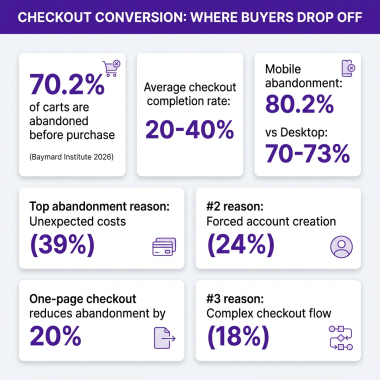
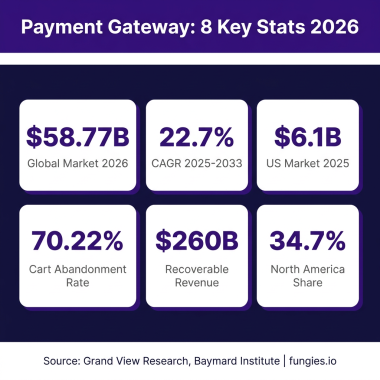
According to a 2024 Baymard Institute study, the average checkout abandonment rate sits at 70.19% across all industries — and for SaaS specifically, billing complexity, lack of local payment methods, and tax friction push that number even higher. Meanwhile, pricing localization research shows that offering local currencies and payment methods can drive 2x faster international growth.
This guide covers everything you need to find the best checkout integration for your SaaS product: what to look for, how the major platforms compare, and why more developers are moving away from DIY Stripe setups toward full-service Merchant of Record solutions like Fungies.
What Is a SaaS Checkout Integration?
A checkout integration is the technical layer between your SaaS product and your customer’s wallet. It handles:
- Payment processing — collecting card details, bank transfers, or digital wallet payments
- Subscription management — recurring billing, upgrades, downgrades, trials
- Tax calculation & remittance — VAT, sales tax, GST by jurisdiction
- Checkout UX — the form, payment method display, and confirmation flow
- Compliance — PCI DSS, SCA (Strong Customer Authentication in EU), PSD2
A basic checkout integration (like raw Stripe) handles the first two but leaves tax, compliance, and localization entirely on you. A Merchant of Record integration handles all five — making you the product company and them the legal seller.
The Hidden Cost of a Bad Checkout: Real Developer Pain Points
A 2025 Reddit analysis of 12,000 posts across r/SaaS, r/startups, and r/entrepreneur identified billing complexity as one of the top 3 pain points for SaaS founders:
“Billing complexity: Stripe is powerful but surprisingly painful. Usage-based billing + tax compliance = weeks of engineering for an early team.”
— Developer, r/NoCodeSaaS (2025)
Here’s what that engineering time actually looks like:
| Task | DIY with Stripe | With MoR (Fungies) |
|---|---|---|
| EU VAT registration (27 countries) | 40-80 hours + legal fees | Not needed |
| US sales tax nexus setup | 20-40 hours | Not needed |
| Monthly tax filing | 5-10 hours/month | Automated |
| Chargeback management | 2-5 hours/dispute | Handled for you |
| SCA/PSD2 compliance (EU) | 1-2 weeks of dev | Built in |
| Adding a new payment method | Days per method | 50+ instant |
For a two-person startup, that’s easily 3-6 months of engineering time per year spent on infrastructure instead of product. The best checkout integration eliminates this entirely.
Key Factors in Choosing the Best Checkout Integration
1. Integration Speed & Developer Experience
The fastest integrations use a hosted widget or a few lines of JavaScript. The slowest require custom webhook handlers, idempotency key management, and payment state machine logic. For most SaaS teams, time-to-checkout should be measured in hours, not weeks.
What to look for: REST API with clear docs, official SDKs for your stack (Node.js, Python, PHP, Go), sandbox environment, and responsive developer support.
2. Global Payment Method Coverage
Your international customers don’t all have Visa cards. Payinsider research shows dramatic conversion lifts from local payment methods:
- +46% conversion with BLIK in Poland
- +39% with iDEAL in the Netherlands
- +27% with Konbini for digital apps in Japan
- +47% with PayPal for digital products in Germany
If your checkout only accepts credit cards, you’re leaving these conversions on the table every single day.
3. Tax & Compliance Handling
Digital goods sold globally face a complex tax landscape. The EU requires VAT on all digital services sold to EU customers — regardless of where you’re based. The US has sales tax nexus rules in 45 states, each with different thresholds and product definitions.
A Merchant of Record (MoR) becomes the legal seller of your product, which means they are responsible for tax compliance — not you. This is the single biggest distinction between payment processors (Stripe, Braintree) and MoR solutions (Fungies, Paddle, FastSpring).
4. Subscription & Billing Flexibility
Modern SaaS pricing is complex: monthly, annual, usage-based, seat-based, freemium-to-paid, and hybrid models. Your checkout integration should handle all of these natively, including:
- Prorated upgrades and downgrades
- Free trials with or without credit card
- Grace periods for failed payments
- Dunning (automatic retry logic)
- Multi-currency with automatic conversion
5. Checkout Conversion Optimization
The best checkout integrations are designed to convert, not just process. Key conversion features include:
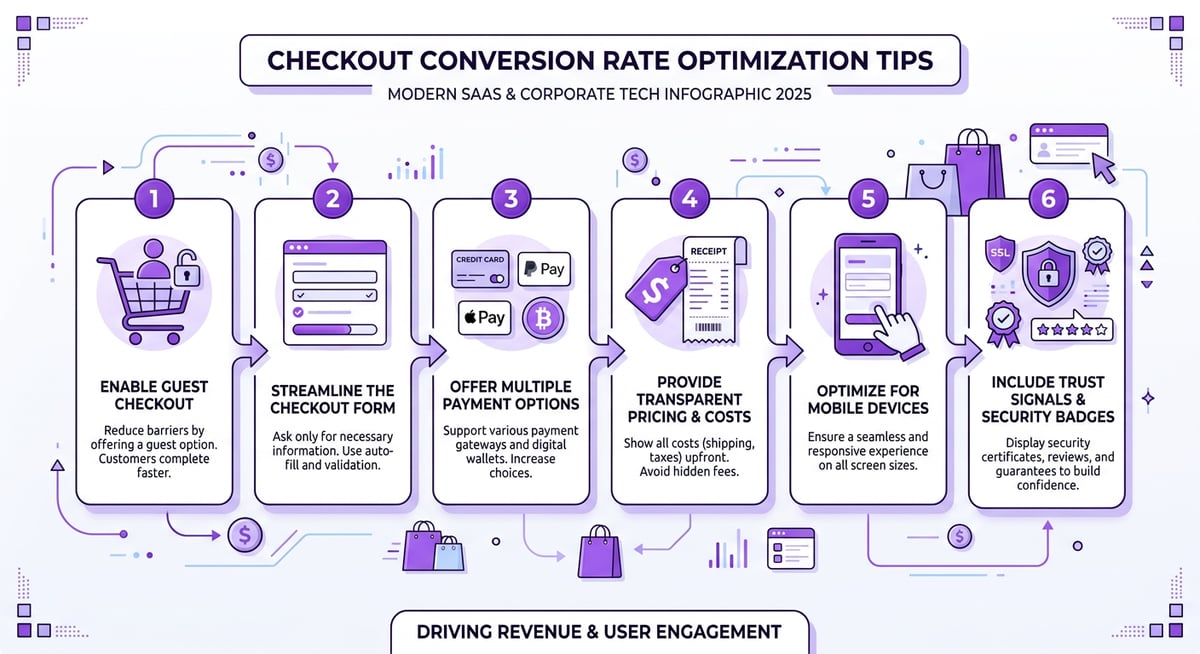
- One-page checkout — each additional step increases abandonment by ~10%
- Localized currency display — customers convert 25% better in their native currency
- Trust signals — SSL badges, accepted payment logos, money-back guarantees
- Mobile optimization — over 60% of SaaS trials now start on mobile
- Pre-filled fields — reduces friction for repeat or returning customers
- Smart retry logic — recover failed payments automatically before they churn
The Major Checkout Integration Options: Compared
Let’s compare the most popular checkout integrations available to SaaS developers in 2025:
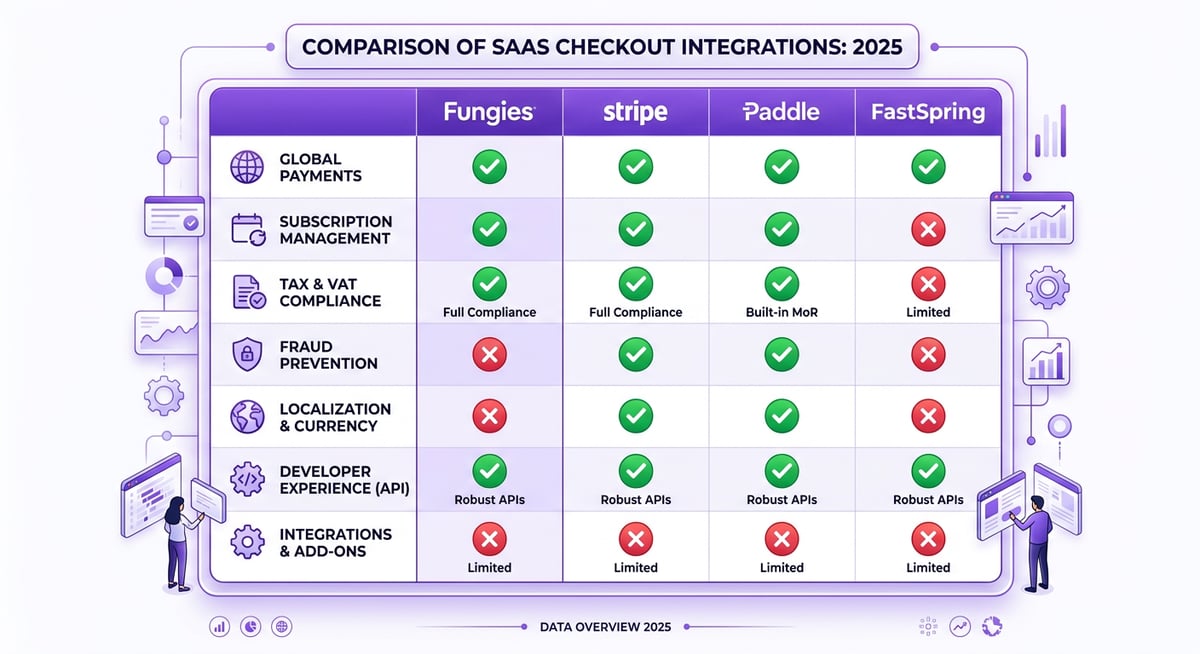
| Feature | Fungies | Stripe | Paddle | FastSpring | Lemon Squeezy |
|---|---|---|---|---|---|
| Type | MoR | PSP | MoR | MoR | MoR |
| Tax compliance | ✅ Full auto | ❌ DIY | ✅ Auto | ✅ Auto | ✅ Auto |
| Integration time | ✅ <5 min | ⚠️ Hours | ⚠️ Days | ❌ Weeks | ✅ <30 min |
| Pricing | ✅ 5% + $0.50 | ⚠️ 2.9% + $0.30* | ⚠️ 5% + $0.50 | ❌ 5.9%+ | ⚠️ 5% + $0.50 |
| Payment methods | ✅ 50+ | ⚠️ 30+ | ⚠️ 20+ | ⚠️ 20+ | ⚠️ 10+ |
| Subscription mgmt | ✅ Full | ✅ Full (complex) | ✅ Full | ✅ Full | ✅ Good |
| Chargeback protection | ✅ Yes | ❌ Your risk | ✅ Yes | ✅ Yes | ✅ Yes |
| Developer API | ✅ REST + hooks | ✅ Excellent | ⚠️ Limited | ❌ Legacy | ✅ Good |
| Analytics dashboard | ✅ Built-in | ⚠️ Basic | ✅ Good | ✅ Good | ✅ Good |
*Stripe pricing doesn’t include Stripe Tax ($0.50/transaction extra), which you need for sales tax compliance. Add Stripe Billing for subscriptions. Total cost for a full SaaS stack on Stripe is typically 4-6% of revenue.
Deep Dive: The Best Checkout Integration for Each SaaS Type
For Early-Stage Startups (Pre-$10k MRR)
Recommendation: Fungies or Lemon Squeezy
At this stage, you need to move fast. Every hour spent on billing infrastructure is an hour not spent on product. An MoR solution means zero tax setup — you can be selling to EU customers on day one without registering for VAT OSS.
Fungies’ 5% + $0.50 fee is the same as Paddle but with significantly faster integration and better developer documentation. At $10k MRR, you’re paying ~$500/month in fees — comparable to what you’d spend on a Stripe + Stripe Tax + Stripe Billing stack, but without the 40-80 hours of EU VAT registration.
For Growth-Stage Companies ($10k–$100k MRR)
Recommendation: Fungies with API integration
At this stage, checkout conversion becomes a major growth lever. A 5% improvement in checkout conversion on $50k MRR is $2,500/month in extra revenue — far more than any fee savings from switching to raw Stripe.
Key priorities: localized payment methods, dunning management, upgrade/downgrade flows, and usage-based billing. Fungies supports all of these via its REST API, while Paddle’s API is more limited and FastSpring requires going through their support team for complex configurations.
For Scale-Stage Companies ($100k+ MRR)
Recommendation: Fungies with custom integration or enterprise-level MoR
At scale, tax optimization and fee negotiation become important. However, the bigger risk is switching costs — a checkout migration at $1M+ ARR can disrupt customer subscriptions and impact churn. Companies that built on an MoR early avoid a painful migration later.
How to Integrate Fungies Checkout: A Technical Walkthrough
Option A: JavaScript Widget (5 Minutes)
<!-- Step 1: Add the script -->
<script src="https://cdn.fungies.io/checkout.js"></script>

<!-- Step 2: Add a button -->
<button onclick="openCheckout()">Start Free Trial</button>

<!-- Step 3: Configure -->
<script>
function openCheckout() {
  FungiesCheckout.open({
    productId: "your-product-id",
    onSuccess: function(order) {
      // User subscribed! Activate their account
      window.location.href = "/dashboard?order=" + order.id;
    },
    onClose: function() {
      // Checkout closed without completing
    }
  });
}
</script>
Option B: REST API Integration
# Create a checkout session via API
import requests

response = requests.post(
    'https://api.fungies.io/v0/checkout/sessions',
    headers={
        'Authorization': 'Bearer YOUR_API_KEY',
        'Content-Type': 'application/json'
    },
    json={
        'product_id': 'prod_xxx',
        'customer_email': '[email protected]',
        'success_url': 'https://yourapp.com/success',
        'cancel_url': 'https://yourapp.com/cancel',
        'metadata': {'user_id': '12345'}
    }
)

checkout_url = response.json()['url']
# Redirect user to checkout_url
Option C: Webhook Handler for Subscription Events
// Node.js webhook handler
app.post('/webhook/fungies', express.raw({type: 'application/json'}), (req, res) => {
  const event = JSON.parse(req.body);

  switch (event.type) {
    case 'subscription.created':
      activateUser(event.data.customer_id);
      break;
    case 'subscription.cancelled':
      downgradeUser(event.data.customer_id);
      break;
    case 'payment.failed':
      sendFailedPaymentEmail(event.data.customer_email);
      break;
  }

  res.json({ received: true });
});
Checkout Conversion Optimization: 7 Proven Tactics
Even the best checkout integration underperforms without optimization. Here are the tactics with the highest impact:
| Tactic | Avg. Conversion Lift | Implementation Difficulty |
|---|---|---|
| Show local currency | +25% | Low (1 line of config) |
| Add local payment methods | +27-47% (market-dependent) | Low (built into Fungies) |
| Remove unnecessary form fields | +20-35% | Low |
| Add trust badges & security icons | +15% | Low |
| Optimize for mobile | +20% | Medium |
| Implement dunning / smart retry | +8-12% MRR recovery | Medium |
| Offer annual plan with discount | +15-30% LTV | Low |
The Merchant of Record Model: Why It’s Winning
The shift toward Merchant of Record solutions is accelerating. Between 2021 and 2025, the MoR model has gone from a niche option to the default choice for indie SaaS founders and venture-backed startups alike.
Why? Three reasons:
- Tax complexity keeps growing — the EU’s OSS system, US marketplace facilitator laws, and digital services tax rules in 100+ countries make DIY compliance increasingly risky and expensive.
- Stripe’s complexity ceiling — Stripe is excellent but requires significant engineering investment for international tax, subscriptions, and localization. Teams that hit $50k MRR often spend more time on billing than product.
- Chargeback risk — digital goods have high dispute rates. With a payment processor, every chargeback threatens your Stripe account. With an MoR, it’s their problem.
According to Paddle’s research, Stripe processes payments but leaves all compliance to merchants, while MoR solutions like Fungies are “responsible for calculating, collecting, reporting, and remitting sales tax and VAT to government authorities.”
Common Checkout Integration Mistakes to Avoid
- Building before validating — use a hosted checkout before investing in a custom API integration. Validate pricing and product-market fit first.
- Ignoring tax from day one — even at $1k MRR you may have tax obligations in your customers’ jurisdictions. Start with an MoR to be safe.
- Single payment method — offering only card payments limits your market by 30-50% in many countries.
- No dunning logic — failed payments without retry logic can cost you 5-15% of MRR monthly.
- Not testing the checkout flow — run through the full checkout flow as a customer at least weekly. Bugs in checkout = direct revenue loss.
- Ignoring mobile — over 60% of SaaS trial signups now start on mobile. Your checkout must work perfectly on small screens.
Frequently Asked Questions: Best Checkout Integration for SaaS
What’s the difference between a payment gateway and a checkout integration?
A payment gateway (like Stripe or Braintree) processes card transactions but doesn’t handle tax, compliance, or subscription logic. A full checkout integration (especially an MoR solution) handles the entire purchase flow including tax calculation, payment processing, subscription management, and compliance — from a single integration point.
Do I need to register for VAT if I use Fungies?
No. Because Fungies acts as the Merchant of Record, Fungies is the legal seller of your product. Fungies handles all VAT registrations, calculations, and remittances on your behalf. You don’t need to register for VAT in any EU country, even if you have thousands of European customers.
Can I switch from Stripe to an MoR checkout without disrupting existing subscribers?
Yes, but it requires careful migration planning. Most MoR platforms (including Fungies) offer migration support to transfer existing subscription data. The key is to grandfather existing subscribers on their current billing terms while routing new subscribers through the new checkout. Plan for a 4-6 week migration window for a smooth transition.
What’s the best checkout integration for a B2B SaaS with enterprise customers?
Enterprise SaaS often requires invoice-based billing, purchase orders, and custom contract terms — which most consumer-focused checkout integrations don’t support well. For hybrid B2C/B2B models, an MoR with both self-serve checkout and invoice capability works best. Fungies supports both payment modes through its API.
How does checkout conversion rate affect SaaS growth?
Checkout conversion directly impacts your top-of-funnel revenue. A 5% improvement in checkout conversion on $100k MRR means an extra $5,000 per month without any additional marketing spend. Given that the average SaaS checkout converts at 15-25%, there’s almost always significant room for improvement through localization, payment method expansion, and UX optimization.
Conclusion: Which Checkout Integration Is Best for Your SaaS?
After analyzing developer pain points, conversion data, and pricing across all major platforms, the answer depends on your stage and priorities:
- You want the fastest setup with zero tax headaches → Fungies (under 5 minutes, full MoR, 50+ payment methods)
- You need maximum API control and have engineering bandwidth → Stripe (but budget for significant tax & compliance work)
- You’re already at scale and need enterprise features → Fungies with API or Paddle
- You’re a solo creator selling digital products → Fungies or Lemon Squeezy
For the vast majority of SaaS developers — especially those who want to focus on product rather than payment infrastructure — the best checkout integration is one that handles tax, compliance, and global payments automatically. That means choosing a Merchant of Record solution from day one.
Try Fungies free — set up your checkout integration in under 5 minutes →
Sources & References
- Baymard Institute, “Cart Abandonment Rate Statistics” (2024) — baymard.com
- GeoTargetly, “Pricing Localization for SaaS” (2025) — geotargetly.com/blog/pricing-localization-saas
- PayInsider, “Going Global: Local Payment Methods Conversion Data” (2024) — payinsider.com
- Paddle, “FastSpring vs Stripe Comparison” (2025) — paddle.com/alternatives/fastspring-vs-stripe
- FastSpring Blog, “Stripe vs Paddle: MoR Comparison” (2025) — fastspring.com/blog/stripe-vs-paddle
- Reddit r/NoCodeSaaS, “12K posts analysis: SaaS pain points” (2025)
- Miles Consulting Group, “How SaaS Companies Can Solve Sales Tax Compliance” (2025)
- Orb Blog, “Enterprise Billing Complexity in SaaS” (2024) — withorb.com