Purchases that happen in a browser rather than on in-app purchase rails
A web store is a second place to buy, sitting outside the platform's billing system. That changes the economics, and it also changes what you are allowed to say inside the app. Start from the honest version: we are an external store, not an in-app purchase provider, and the rules about pointing players at us are set by Apple and Google rather than by us.














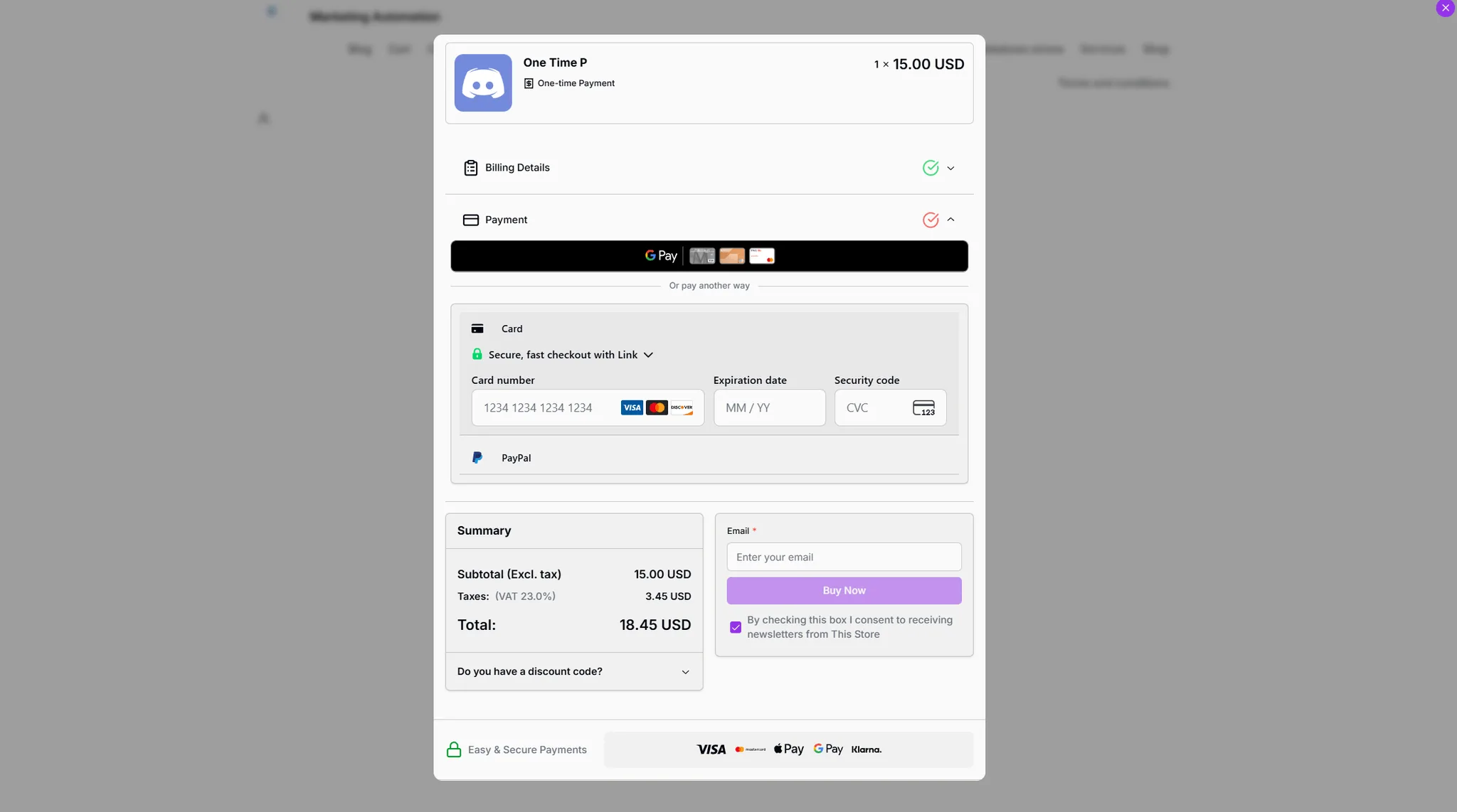
What a web store can do for a live mobile game
- Sell the same things the game sells
- Virtual currency, item bundles, passes and subscriptions, using the same catalogue you would list anywhere else. Nothing about the product needs a mobile-specific version.
- Price without a platform's tiers
- Offers are yours to set, so a web-only bundle, a starter pack at an odd price point or a seasonal discount code is a change in the dashboard rather than a submission to anyone.
- Carry the player ID through the purchase
- Custom checkout fields hold your own identifier, and it comes back on the payment webhook. That is the mechanism by which a browser purchase becomes an entitlement on the right account.
- Take payment the way phones take payment
- Apple Pay, Google Pay and other wallets are ordinary web payment methods here, alongside cards, so a purchase on a phone is a fingerprint rather than a typed card number.
- Offer local methods where your players are
- Bank redirects, vouchers, buy-now-pay-later, PayPal and the South Korean methods appear based on the player's country and the charging currency, which matters more on mobile than anywhere else because the audience is broader.
- Keep the buyer's details
- The checkout collects an email and billing details, because we are the seller of record. That gives you a purchase history and a way to reach a paying player, neither of which a platform purchase gives you.
Getting a player from the game to the store and back
- 01
Publish the store on your own domain
It should read as part of the game rather than as a third-party page, because a player who is unsure whether a store is official does not buy from it.
- 02
Reach players through channels you control
Your website, your social accounts, your Discord, your newsletter, your support pages and your own advertising all point at it freely. What you may say inside the app itself is the platform's decision, not ours — see below.
- 03
Have the player identify themselves
A player ID field on the checkout, or a link that already carries the identifier for a signed-in player. Validate it before payment if your backend can, because a purchase with an unmatchable ID becomes a support ticket.
- 04
Grant on the webhook, revoke on reversal
Your server credits the currency or unlocks the item when the payment event arrives, and takes it back on a refund or chargeback event. The client is never the authority for either.
Being accurate about the platform rules
This is not in-app purchase, and we do not pretend otherwise
We do not integrate with Apple's or Google's billing systems. A purchase in our checkout is a web purchase made by a person in a browser. If you need to sell inside the app on the platform's own rails, that is their SDK and their commission, and this product is not a substitute for it.
Steering rules differ by platform, country and month
Whether and how you may tell players inside an app about an outside way to buy has changed repeatedly, differs between the two stores, and differs again between jurisdictions. Read the current guidelines for the platforms you ship on, and treat any vendor who promises you a settled answer as guessing.
The store has to be reachable to be worth anything
A player who never leaves the app never sees it. In practice a web store earns from the players you can reach elsewhere — the ones in your Discord, on your mailing list, following the game's account. If you have no channel to those players, build that first; the store will not create it for you.
The commission arithmetic is the easy part
Selling outside the app avoids the app store's cut and costs 5% + 50¢ instead — less once you are selling at volume — with tax and chargebacks included in that. The case for routing your highest-spending players there is made on the mobile games solution page; the work is everything above this line.
What sellers say once they have switched
 Vadim Finayev
 “We work with quite a few merchants of record, but none comes close to the support and speed of implementation of Fungies. If you want a payment partner that actually gives you the feeling they want to work with you — rather than leaving you on read for three days or randomly restricting your account — you are in the right place.”
 David Elliott
 “I researched the options and Fungies was the best fit for functionality and customisation within a store builder you can connect to your own domain. Taking a small percentage of sales, instead of charging a subscription for every environment and plugin, is refreshing.”
 Elnura Abdimanap Kyzy
 “The platform is user-friendly, integrates easily with APIs and webhooks, and simplifies managing digital products and subscriptions. We were up and running quickly and support has been responsive throughout. Fungies is clearly tailored to the needs of SaaS businesses.”
 Francisco Magnone Rienzi
 “Fungies has been a great partner — fast setup, competitive pricing, and real humans providing quick answers. They are constantly rolling out new features, and I am excited to see what is next.”
Mobile web store questions
Selling to players without a marketplace in the middle.
Build the store, then solve identity
The shop takes an afternoon. Deciding how a browser purchase finds the right player account is the part worth thinking about first.