Ulti Arena built the marketplace, then made it white label.
A marketplace for game art, interface kits and music, spanning four EVM networks — and designed so a studio could launch its own copy rather than commission one from scratch.
- Ulti Arena
- Singapore
- NFT marketplace
- 4 EVM networks supported
- Two token standards listed side by side
- White label deployable on the shared architecture
The challenge
Artists and developers making game assets had nowhere obvious to sell a one-off. Stock marketplaces are built around unlimited licences, which is the opposite of what a commissioned piece of key art or a bespoke interface kit is worth.
The second problem was repetition. Every studio that wanted a marketplace of its own was commissioning the same contracts, the same wallet integration and the same admin tooling. The brief was to build it once properly and then let others deploy on top of it.
What was built
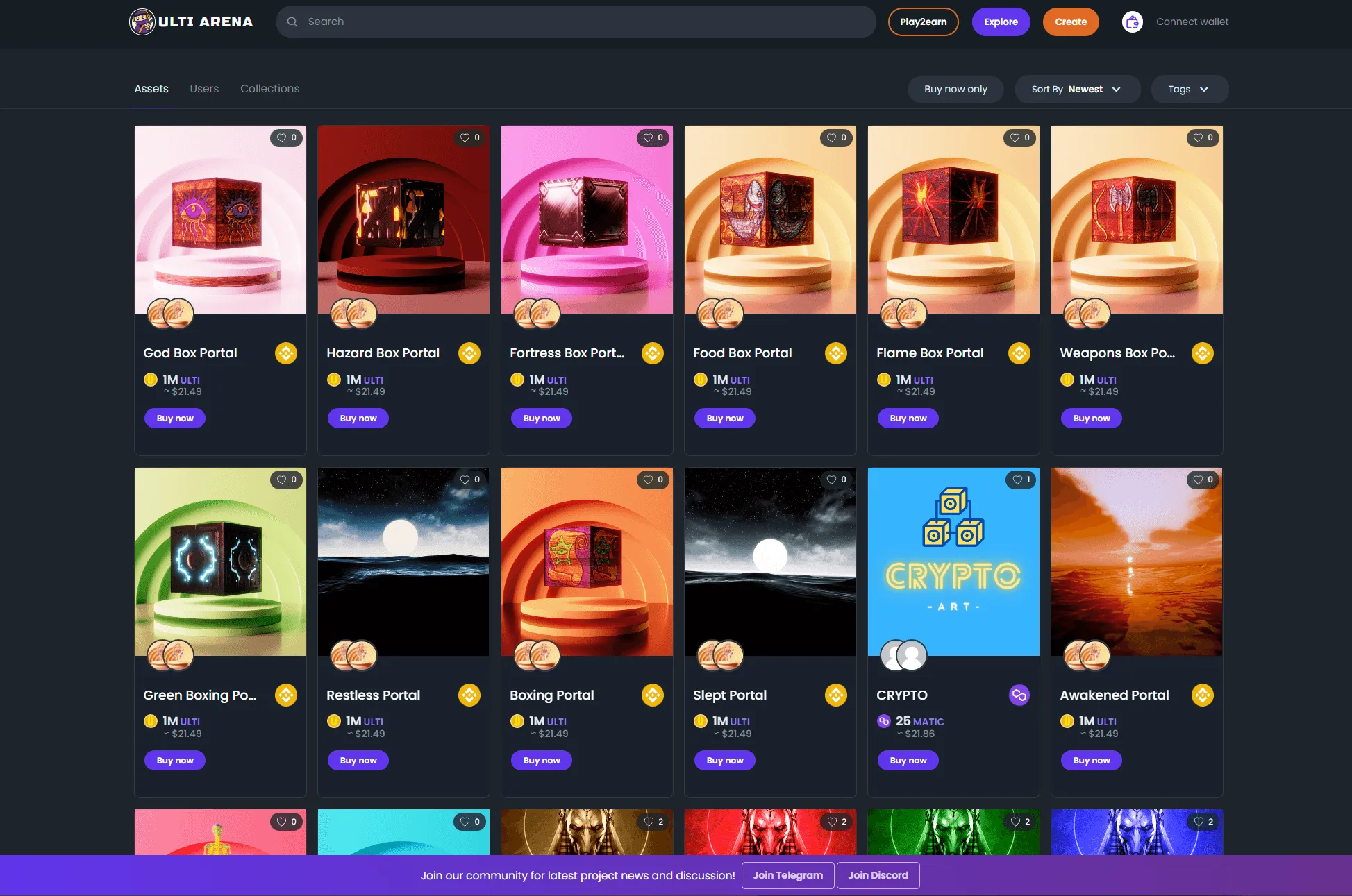
Ulti Arena launched as a marketplace for game assets on BNB Chain, and grew to span Ethereum, Polygon and Avalanche as well. Because the design targets EVM networks generally rather than one chain, adding another is configuration rather than a rebuild.
Sellers list under both common token standards — ERC-721 for a genuinely unique piece, ERC-1155 where an asset is issued in a run. Listings carry their history, group into collections, and take Buy Now offers. Lazy minting means a seller does not pay to mint until the asset actually sells.
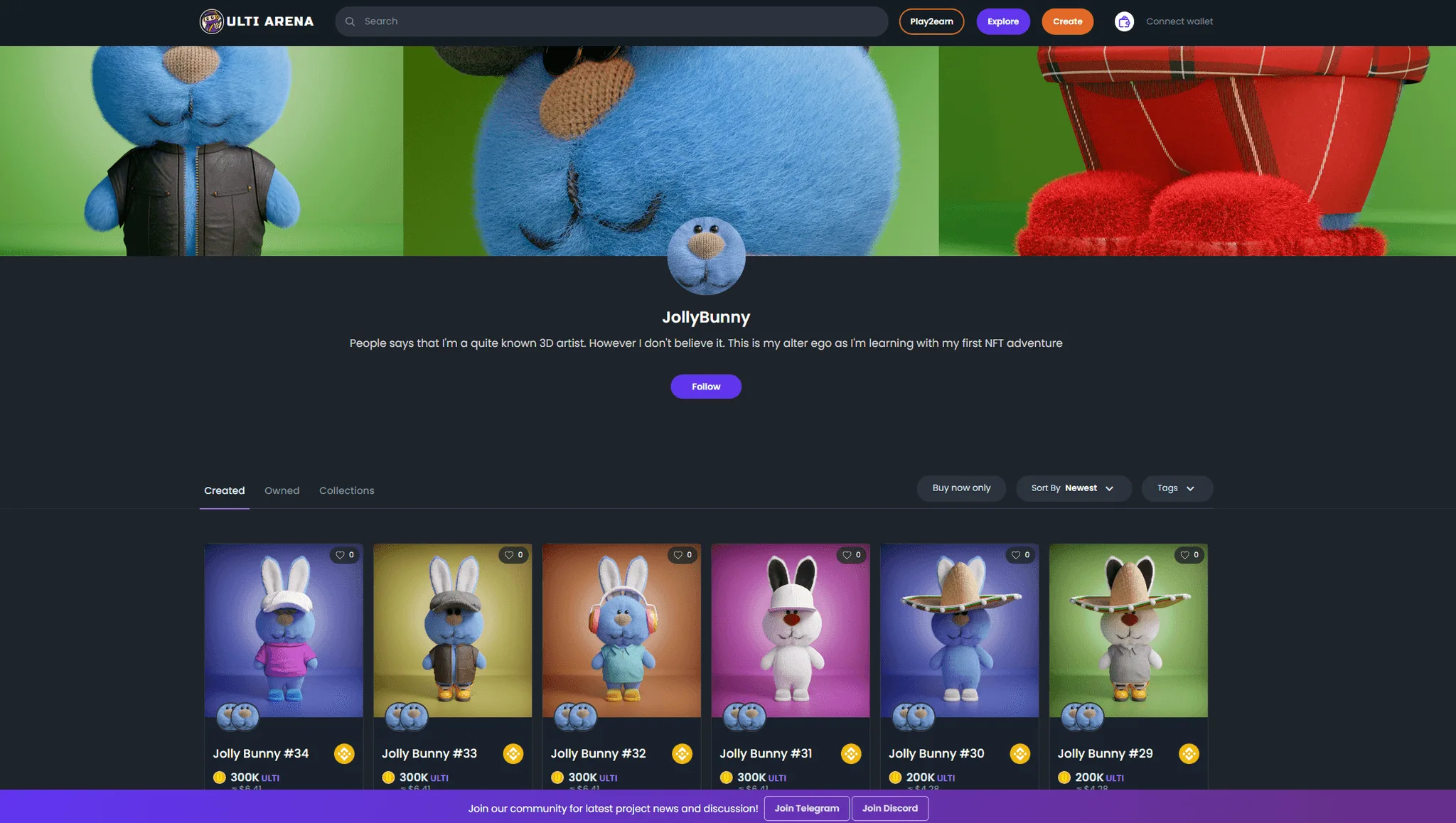
The catalogue is not limited to images. Video, animation and music are supported, and files can be pinned to IPFS so the asset does not depend on the marketplace staying online. Around that sits the social layer a market needs to work: artist profiles, collection pages, sharing, likes and views.
Payment is in whichever token the operator enables. Native currencies — Ether, BNB, AVAX, MATIC — sit alongside ERC-20 stablecoins including USDC, USDT and BUSD, and any other ERC-20 can be added.
The admin panel is what makes the white label claim real. An operator can verify and ban sellers, hide or remove assets, curate what is featured, manage networks and currencies, and delegate all of that through permissions. The marketplace contracts are upgradeable, so fixes ship without moving addresses and breaking every link to them.
Where this sits today
This is a record of work the team did, not a description of what Fungies sells now.
Fungies today is a Merchant of Record for digital goods. It settles in ordinary currency, it does not take cryptocurrency, and it does not deploy contracts. The white label idea did carry over, though, in a plainer form: a store runs on your own domain under your own branding, and our name appears only where the receipt legally requires it.
What they used
- Multi-chain marketplace
- Listings, collections, offers and lazy minting across four EVM networks, with more addable by configuration.
- Web3 authentication
- MetaMask and WalletConnect sign-in with signature verification, so a wallet is the account.
- Operator admin panel
- Seller verification, moderation, featured curation, network and currency management, all behind delegated permissions.
5% + 50¢
per sale, and nothing else
Negotiable at higher sales volume.
No monthly fee. No minimum. No card to get started.
One rate covers the whole stack. There is no tier that unlocks tax filing and no add-on for the store builder.
- ✓ Payment processing
- ✓ Tax calculation and filing
- ✓ Fraud screening
- ✓ Chargeback handling
- ✓ Store builder and hosting
- ✓ Every platform feature
More customer stories
Software and AI
Games
Want a store under your own brand?
Your domain, your branding, your customer relationship — and worldwide tax handled as part of the deal.