Choosing the right subscription billing software can make or break your SaaS business. Get it wrong, and you’re drowning in failed payments, tax nightmares, and angry customers. Get it right, and you’ve got a predictable revenue machine that scales with you.
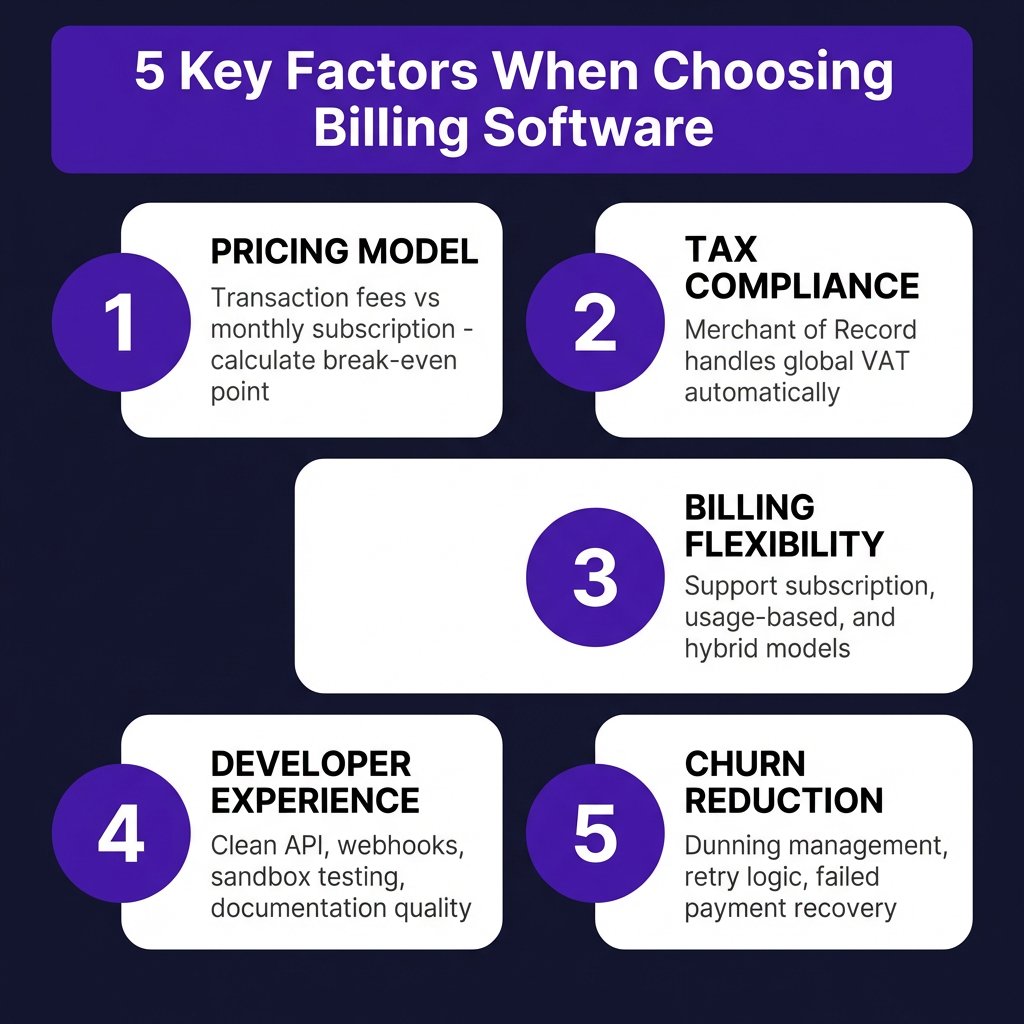
Here’s the thing most founders miss: billing isn’t just about charging cards. It’s about dunning management, tax compliance across 50+ countries, usage-based pricing models, and giving your finance team actual visibility into MRR without manual spreadsheets.
I’ve tested pretty much every major billing platform over the years — from Stripe Billing to Paddle, Chargebee to Recurly, and newer players like Fungies. In this guide, I’m breaking down the 10 best subscription billing tools for SaaS in 2026, with real pricing, feature comparisons, and my honest take on who each one works best for.
What Is Subscription Billing Software?
Subscription billing software automates recurring payments for SaaS companies and digital businesses. Unlike one-time payment processors, these platforms handle the complexity of recurring revenue: trial periods, prorated upgrades/downgrades, subscription pauses, failed payment retries, and involuntary churn reduction.
Modern billing platforms also manage sales tax and VAT compliance, generate invoices automatically, and integrate with your accounting stack (QuickBooks, Xero, NetSuite). Some act as Merchant of Record, taking on legal liability for tax collection — a massive advantage if you sell globally.
Why Your Billing Stack Matters More Than You Think
Most SaaS founders obsess over acquisition. But here’s what the data shows: reducing churn by just 5% can increase profits by 25-95% (Harvard Business School). And a huge chunk of churn is involuntary — failed payments, expired cards, declined transactions.
The right billing platform handles this automatically with smart retry logic, card updater tools, and dunning email sequences. Translation: you recover revenue that would’ve otherwise disappeared.
Then there’s the tax headache. Sell to customers in the EU, UK, Australia, or US states with sales tax? You’re looking at potentially dozens of tax jurisdictions. Merchant of Record platforms like Paddle and Fungies handle this for you — they collect, remit, and file taxes on your behalf.
10 Best Subscription Billing Tools for SaaS in 2026
Let’s dive into the actual platforms. I’ve ranked these based on pricing, feature depth, developer experience, and real-world reliability.
1. Stripe Billing
Best for: Developer-first teams already using Stripe Payments
Stripe Billing is the natural choice if you’re already processing payments with Stripe. It’s incredibly flexible, supports subscription and usage-based pricing, and has best-in-class documentation.
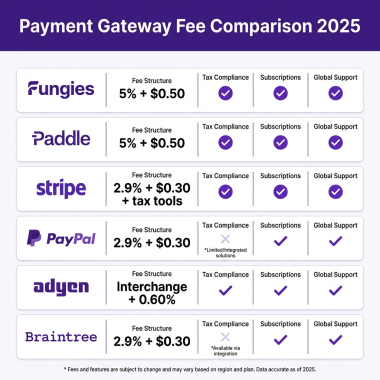
- Pricing: 0.8% + 50¢ on recurring transactions (in addition to base payment processing)
- Key features: Metered billing, subscription schedules, tax calculation (not collection), invoicing, revenue recognition
- Developer experience: Excellent API, extensive libraries, sandbox testing
- Limitations: Not a Merchant of Record — you’re responsible for tax compliance
Honestly, if you’re a technical team comfortable managing tax compliance yourself, Stripe Billing is hard to beat. The flexibility is unmatched.
2. Paddle
Best for: SaaS companies selling globally who want tax handled automatically
Paddle is a Merchant of Record — they take on legal liability for collecting and remitting sales tax and VAT worldwide. This alone can save you hundreds of hours and thousands in accounting fees.
- Pricing: 5% + 50¢ per transaction (all-in, includes payment processing)
- Key features: Global tax compliance, subscription management, dunning, license key management, payouts to your bank
- Developer experience: Good API, checkout.js for embedded flows
- Limitations: Higher transaction fees, less flexible than Stripe for custom billing logic
If you’re selling B2B SaaS globally and don’t want to deal with VAT registrations in 30+ countries, Paddle is worth the premium.
3. Chargebee
Best for: Mid-market to enterprise SaaS with complex billing requirements
Chargebee is built for scale. If you need advanced revenue recognition, multi-currency support, or intricate billing rules (think: tiered pricing + overage charges + contract terms), Chargebee handles it.
- Pricing: From $299/month (Stripe or PayPal required separately for payment processing)
- Key features: Advanced analytics, revenue recognition (ASC 606 / IFRS 15), quote-to-cash, extensive integrations
- Developer experience: Robust API, but steeper learning curve
- Limitations: Expensive for early-stage startups, requires separate payment processor
Chargebee makes sense once you’re at $50K+ MRR and need enterprise-grade features. For smaller teams, it’s overkill.
4. Recurly
Best for: Subscription businesses focused on churn reduction
Recurly’s claim to fame is its dunning management and churn reduction tools. Their Smart Retry feature uses machine learning to optimize payment retry timing, recovering up to 76% of failed payments.
- Pricing: From $149/month (payment processing separate)
- Key features: Advanced dunning, subscription analytics, A/R automation, fraud protection
- Developer experience: Solid API, good documentation
- Limitations: Pricing adds up quickly, not a Merchant of Record
If involuntary churn is your biggest leak, Recurly’s recovery tools can pay for themselves.
5. Fungies
Best for: Indie hackers and small SaaS teams wanting MoR without monthly fees
Fungies is a newer Merchant of Record platform built specifically for indie developers and small SaaS companies. The big differentiator: no monthly fees, just a flat transaction rate.
- Pricing: 5% all-in (includes payment processing, tax compliance, fraud protection)
- Key features: Merchant of Record, global tax handling, no-code checkout, subscription + one-time payments, instant payouts
- Developer experience: Clean REST API, webhooks, SDKs for major frameworks
- Limitations: Newer platform with smaller ecosystem than Stripe/Paddle
For teams under $50K MRR who want global tax compliance without $300/month software fees, Fungies is a no-brainer. You only pay when you make sales.
6. LemonSqueezy
Best for: Creators and micro-SaaS selling digital products
LemonSqueezy launched as a Merchant of Record for digital products and has gained traction with indie makers. It’s simpler than Paddle but covers the basics well.
- Pricing: 5% + 50¢ per transaction
- Key features: Merchant of Record, license keys, subscriptions, affiliates, global tax
- Developer experience: Simple API, checkout overlays
- Limitations: Less flexible for complex SaaS billing, focused on digital products
7. FastSpring
Best for: Established software companies selling desktop + SaaS
FastSpring is one of the oldest Merchant of Record platforms, originally built for downloadable software. They’ve adapted to SaaS but still excel at hybrid models (desktop + subscription).
- Pricing: Custom pricing (typically 3.9-5.9% + fixed fee)
- Key features: Merchant of Record, global tax, quote-based sales, multiple payment methods
- Limitations: Higher fees, slower innovation cycle, enterprise-focused
8. Zoho Subscriptions
Best for: Small businesses already in the Zoho ecosystem
If you’re using Zoho CRM, Zoho Books, and other Zoho products, Zoho Subscriptions integrates seamlessly. It’s affordable but lacks advanced features.
- Pricing: From $15/month (payment processing separate)
- Key features: Basic subscription management, invoicing, customer portal, Zoho integration
- Limitations: Limited flexibility, not a Merchant of Record, basic dunning
9. ChargeOver
Best for: Usage-based and hybrid billing models
ChargeOver specializes in complex billing scenarios: usage-based, tiered pricing, seat-based, and hybrid models. It’s built for B2B SaaS with non-standard pricing.
- Pricing: From $149/month
- Key features: Usage metering, custom billing rules, revenue recognition, QuickBooks integration
- Limitations: Not a Merchant of Record, pricing adds up
10. SaaSOptics
Best for: Enterprise SaaS with complex revenue recognition needs
SaaSOptics (now part of Bill.com) is built for enterprise. If you need ASC 606 compliance, multi-entity consolidation, and contract management, this is your platform.
- Pricing: Custom enterprise pricing
- Key features: Revenue recognition, contract management, advanced analytics, multi-currency
- Limitations: Expensive, overkill for startups, long implementation
Quick Comparison Table
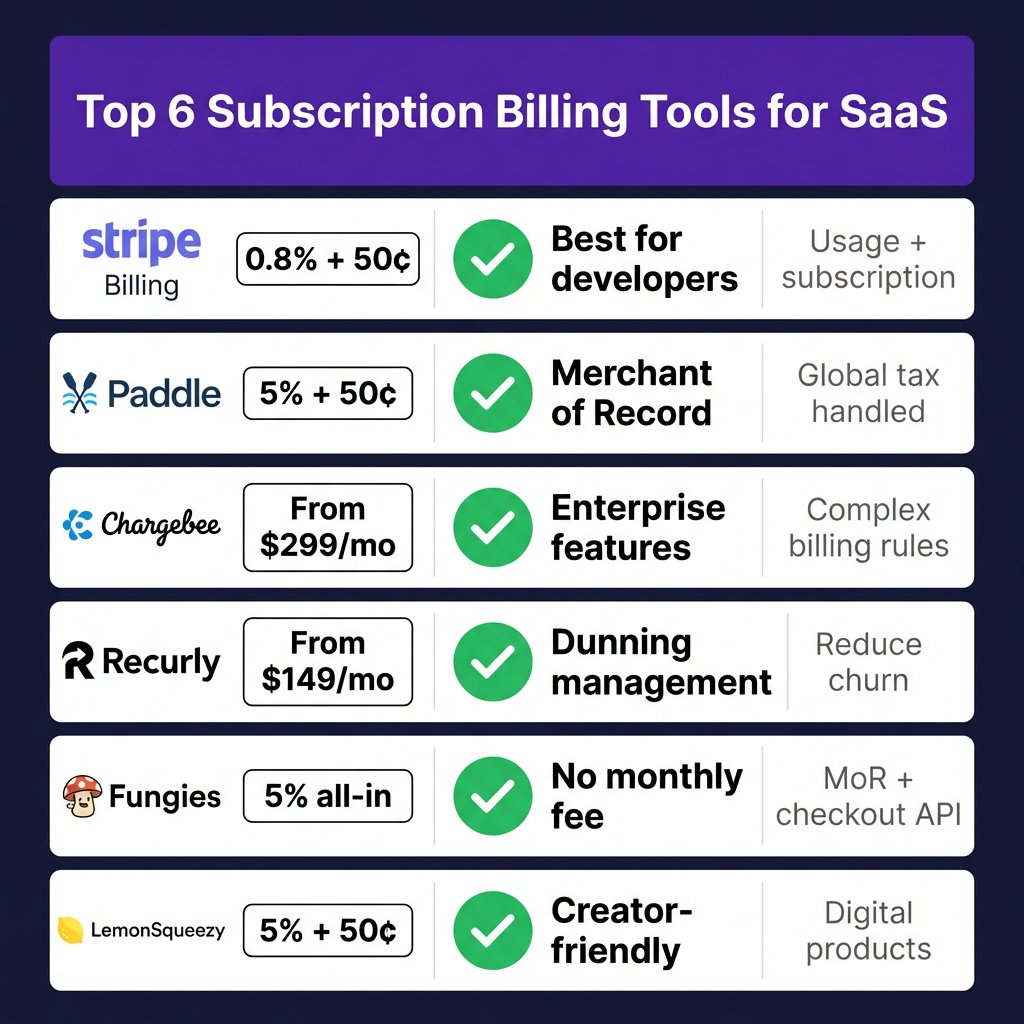
| Platform | Pricing | Merchant of Record | Best For |
|---|---|---|---|
| Stripe Billing | 0.8% + 50¢ | No | Developer-first teams |
| Paddle | 5% + 50¢ | Yes | Global SaaS, tax handled |
| Chargebee | From $299/mo | No | Enterprise, complex billing |
| Recurly | From $149/mo | No | Churn reduction |
| Fungies | 5% all-in | Yes | Indie hackers, no monthly fees |
| LemonSqueezy | 5% + 50¢ | Yes | Creators, digital products |
| FastSpring | Custom (4-6%) | Yes | Desktop + SaaS hybrid |
| Zoho Subscriptions | From $15/mo | No | Zoho ecosystem users |
| ChargeOver | From $149/mo | No | Usage-based billing |
| SaaSOptics | Enterprise | No | Enterprise revenue recognition |
FAQ: Subscription Billing for SaaS
What’s the difference between a payment processor and a Merchant of Record?
A payment processor (like Stripe Payments) just handles card transactions. A Merchant of Record (like Paddle or Fungies) legally sells the product on your behalf — they collect and remit sales tax, handle refunds, and take on compliance liability. The tradeoff: MoRs charge higher fees but save you from tax headaches.
Do I need a Merchant of Record for my SaaS?
If you’re selling globally (especially to the EU, UK, or Australia), yes — or you need to register for VAT in each country. For US-only sales, you can start with Stripe Billing and add tax compliance later. But once you hit international customers, an MoR becomes worth it.
What’s the cheapest billing platform for early-stage SaaS?
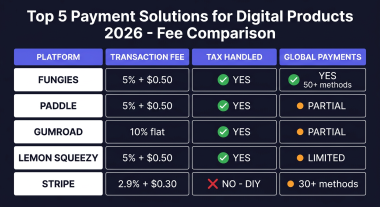
Fungies and LemonSqueezy are the most affordable for early-stage teams — no monthly fees, just 5% transaction fees. Once you’re processing $50K+ MRR, platforms like Chargebee or Recurly become cost-effective for their advanced features.
Can I switch billing platforms later?
Yes, but it’s painful. You’ll need to migrate customer payment methods (via tokenization), prorate existing subscriptions, and update integrations. Best to choose a platform that can scale with you from the start.
How do I handle usage-based billing?
Stripe Billing, Chargebee, and ChargeOver all support metered/usage-based billing. You track usage events (API calls, GB stored, seats active) and the platform calculates charges at month-end. Make sure your chosen platform supports your specific metering model.
Final Thoughts: Choose Based on Your Stage
Here’s my honest take:
Pre-revenue or under $10K MRR: Go with Fungies or LemonSqueezy. No monthly fees, tax handled, and you can launch in hours. Don’t over-engineer this.
$10K-$50K MRR: If you’re technical and US-focused, Stripe Billing gives you maximum flexibility. If you’re selling globally, Paddle or Fungies saves you from tax nightmares.
$50K+ MRR: Now you can justify Chargebee or Recurly for their advanced analytics, dunning, and revenue recognition. Or stick with Stripe/Paddle if they’re working fine.
The best billing platform is the one that lets you focus on building your product — not fighting with invoices and tax filings.
Ready to simplify your billing? Try Fungies free and get Merchant of Record protection with no monthly fees.
Sources
- Harvard Business School — “The Value of Keeping the Right Customers”
- Stripe Billing Documentation — https://stripe.com/billing
- Paddle Merchant of Record Guide — https://www.paddle.com/resources/merchant-of-record
- Chargebee Features — https://www.chargebee.com/features/
- Recurly Dunning Management — https://recurly.com/dunning-management/
- Sotion — “The 12 Best Platforms to Sell Digital Products in 2026”
- Easytools — “10 Best platforms to sell digital products in 2026”