Passive Income Digital Products: The Complete Guide for Creators in 2026
Discover how to build sustainable passive income with digital products. Learn the 7 best product types, pricing strategies, and the 5-step framework to launch your first product.
Imagine waking up to notifications that you’ve made sales while you slept. That’s the reality for creators who’ve mastered passive income digital products. In 2026, the digital product market is projected to reach $950 billion globally, and individual creators are capturing larger slices of this pie than ever before.
Unlike traditional businesses that trade time for money, digital products let you create once and sell infinitely. Whether you’re a designer, writer, developer, or educator, there’s a digital product format that fits your skills. This guide breaks down exactly how to build sustainable passive income streams with digital products — no fluff, just actionable strategies that work in today’s market.
Why Digital Products Are the Ultimate Passive Income Vehicle
The math is simple but powerful. When you sell a service, your income is capped by the hours you can work. When you sell a digital product, your income is capped by… well, basically nothing. One ebook can sell 10 copies or 10,000 copies with the same amount of ongoing effort.
Here’s what makes digital products particularly attractive in 2026:
- Zero marginal cost: Selling your 1,000th copy costs the same as selling your first
- Global reach: Your customers can be anywhere with an internet connection
- Instant delivery: No shipping, no inventory, no logistics headaches
- High margins: Most digital products have 80-95% profit margins after platform fees
- Scalability: Your business can grow without you working more hours
Real numbers from successful creators tell the story. Notion template sellers on Gumroad report earning $500-$5,000 monthly within their first year. Ebook authors on Amazon KDP regularly hit $1,000-$10,000 monthly after building a catalog. Stock photo contributors on Shutterstock earn passive income for years from photos shot once.
The 7 Best Digital Products for Passive Income in 2026
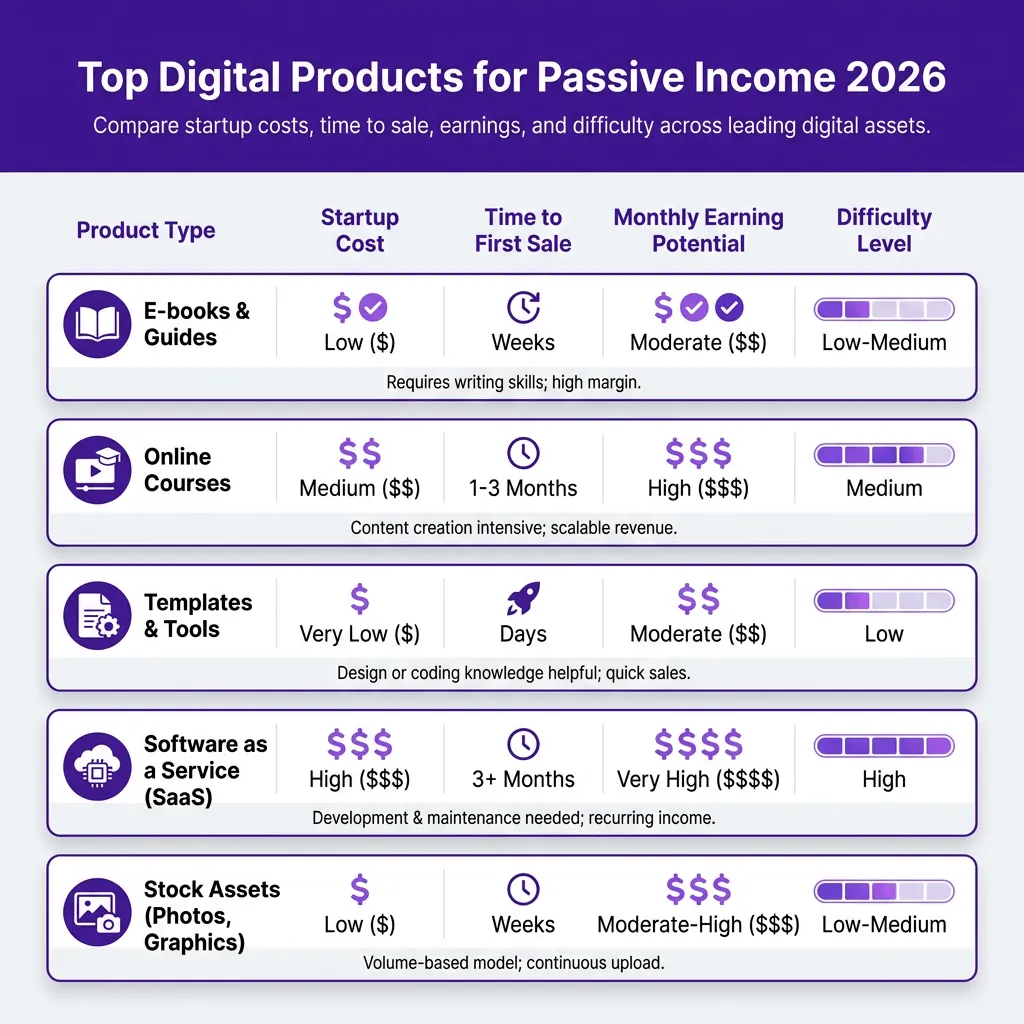
Not all digital products are created equal. Some require significant upfront investment but pay off long-term. Others are quick to create but face more competition. Here are the seven formats showing the strongest performance right now:
1. Notion Templates
With over 30 million Notion users worldwide, templates for project management, habit tracking, and business operations are in constant demand. Startup cost: $0. Time to first sale: 1-4 weeks. Earning potential: $500-$5,000/month.
2. Online Courses
The e-learning market hit $400 billion in 2025 and keeps growing. Platforms like Teachable, Thinkific, and Udemy make hosting simple. Startup cost: $100-$500 (equipment). Time to first sale: 2-8 weeks. Earning potential: $1,000-$50,000/month.
3. Ebooks and Guides
Still one of the most accessible entry points. Write about what you know, format it well, and sell on Amazon KDP or your own site. Startup cost: $0-$50. Time to first sale: 2-6 weeks. Earning potential: $300-$3,000/month.
4. Digital Planners and Journals
The productivity and wellness markets are booming. Digital planners for GoodNotes, Notability, and similar apps sell consistently. Startup cost: $0-$100 (design tools). Time to first sale: 2-4 weeks. Earning potential: $400-$4,000/month.
5. Software Tools and Plugins
For developers, Chrome extensions, Figma plugins, and WordPress plugins can generate serious passive income. Startup cost: Time investment. Time to first sale: 1-3 months. Earning potential: $1,000-$20,000/month.
6. Stock Photos and Videos
If you have a camera and an eye for composition, stock content keeps earning for years. Shutterstock, Adobe Stock, and Pond5 are major marketplaces. Startup cost: $500-$2,000 (camera gear). Time to first sale: 1-3 months. Earning potential: $200-$5,000/month.
7. Presets and Filters
Lightroom presets, LUTs for video, and Instagram filters are huge among creators. If you have editing skills, this is low-hanging fruit. Startup cost: $0-$100. Time to first sale: 1-3 weeks. Earning potential: $300-$3,000/month.
The 5-Step Framework to Launch Your First Digital Product
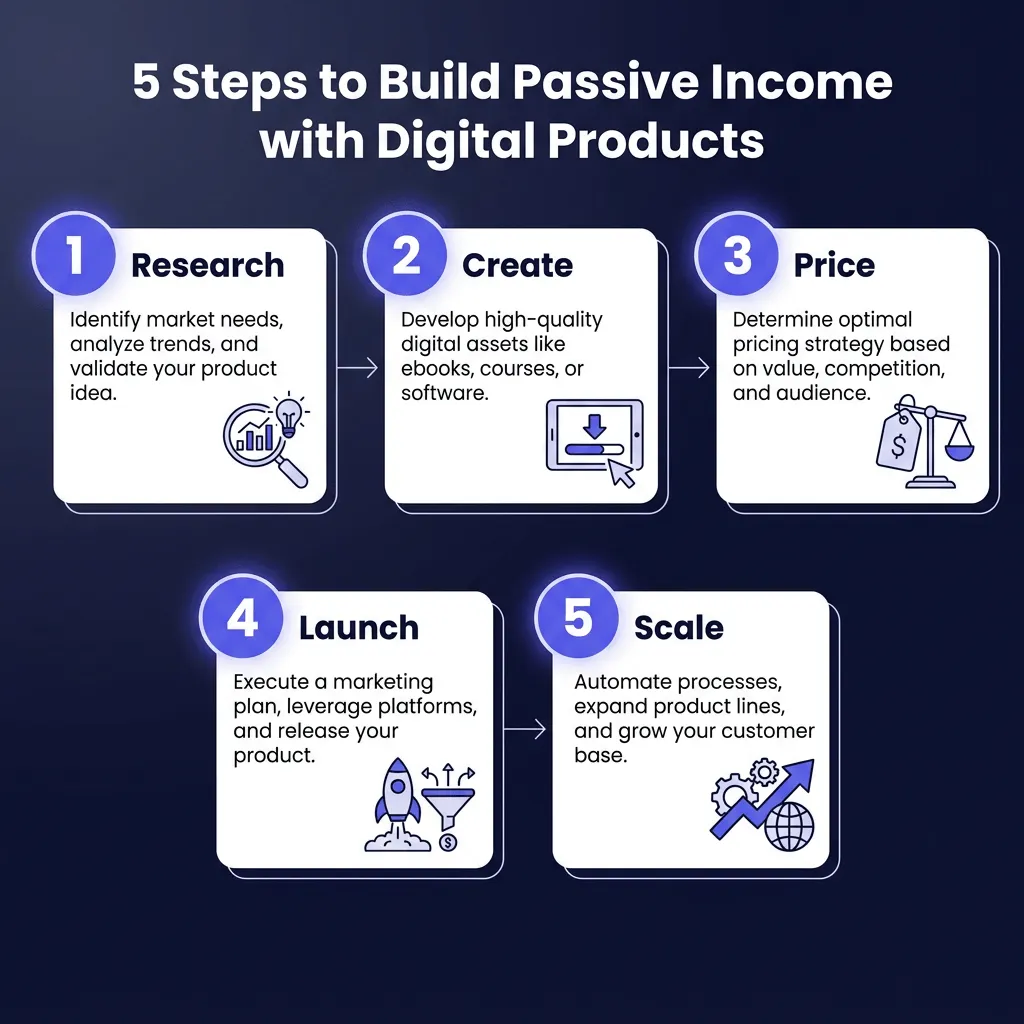
Here’s the process that’s worked for thousands of successful creators. Skip steps at your own risk — each one matters.
Step 1: Research What People Actually Want
Don’t create what you think people want. Create what they’re already searching for. Use these research methods:
- Reddit: Search r/Notion, r/entrepreneur, r/passive_income for pain points
- AnswerThePublic: Find questions people ask about your topic
- Competitor analysis: What’s already selling? Can you do it better?
- Direct conversations: Ask your target audience about their struggles
Step 2: Create Something Genuinely Useful
Mediocre products get refunds and bad reviews. Great products get recommendations and repeat customers. Focus on solving one specific problem exceptionally well rather than trying to be everything to everyone.
Step 3: Price Based on Value, Not Time
The biggest mistake new creators make is underpricing. Your price should reflect the value your customer receives, not how long it took you to create. A $49 Notion template that saves someone 20 hours of setup is an incredible deal. A $5 ebook that changes someone’s business trajectory is underpriced.
Step 4: Launch with Intention
Don’t just publish and hope. Build anticipation, create a launch sequence, and leverage your existing audience. Even a small email list of 100 people can generate significant initial sales if they’re the right people.
Step 5: Optimize and Scale
After launch, analyze what worked and what didn’t. Double down on successful channels. Build systems for customer support. Then create your next product. Most successful creators have multiple products generating income streams.
Ready to Start Your Digital Product Business?
Fungies.io makes selling digital products simple — automated tax compliance, global payments, and instant delivery. Focus on creating, we handle the rest.
No credit card required
Choosing the Right Platform for Your Digital Products
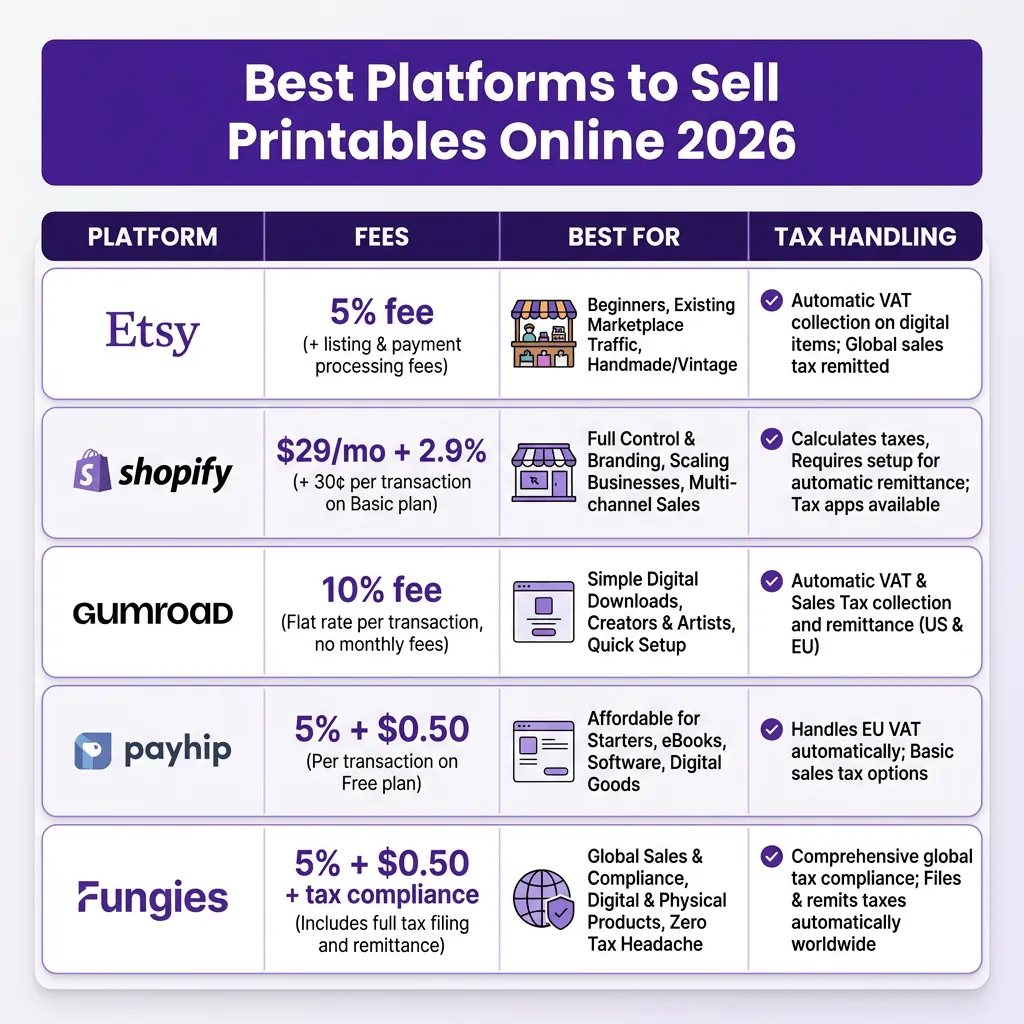
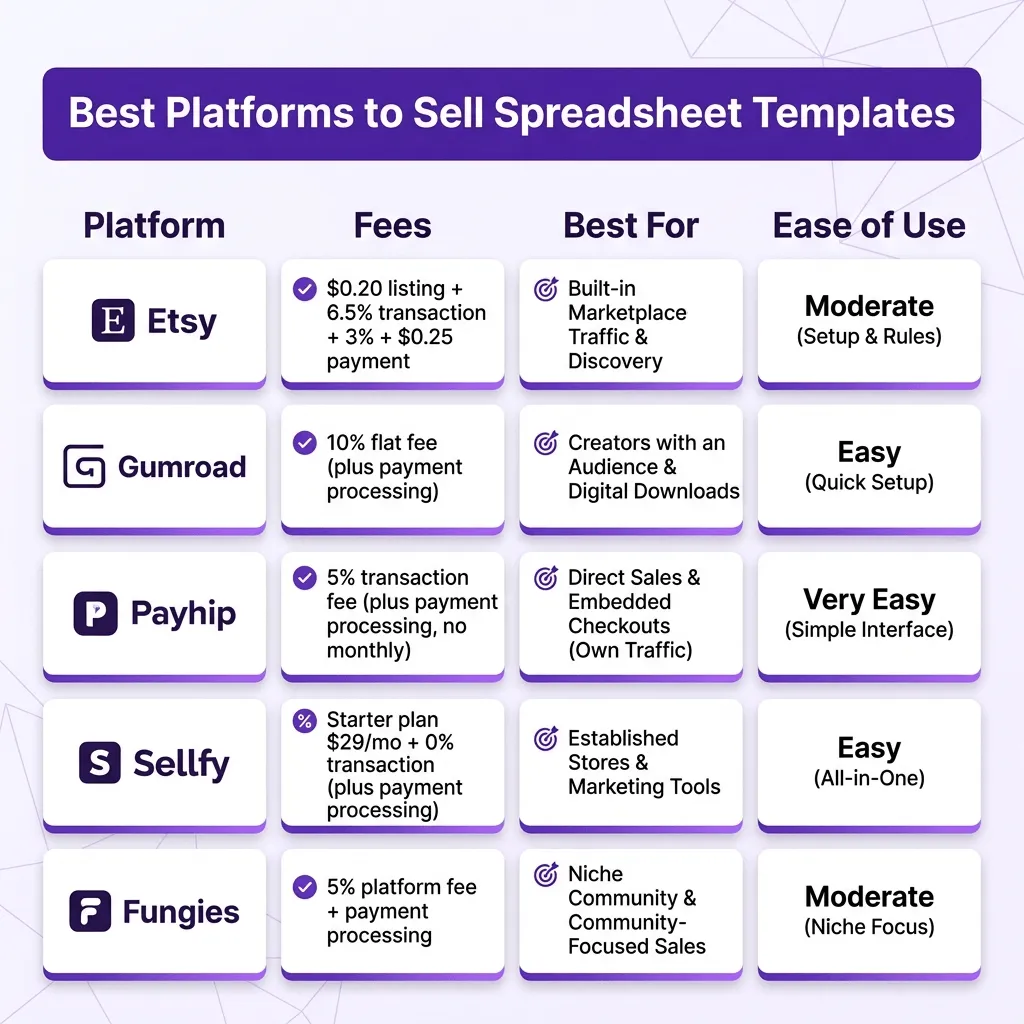
Where you sell matters almost as much as what you sell. Here’s a quick breakdown:
| Platform | Best For | Fees | Pros | Cons |
|---|---|---|---|---|
| Gumroad | Beginners | 10% + processing | Simple, built-in audience | High fees, limited customization |
| Teachable | Courses | 5% + $1/transaction | Course-focused features | Monthly fees for advanced features |
| Shopify + apps | Scaling | $29/month + 2.9% | Full control, scalable | Technical setup required |
| Fungies | Tax compliance | 5% + $0.50 | Auto tax handling, global | Newer platform |
| Your own site | Brands | Payment processing only | Full control, no platform risk | Marketing is 100% on you |
Common Mistakes That Kill Digital Product Businesses
Learn from others’ failures so you don’t repeat them:
- Creating before validating: Build an audience first, or at least validate demand
- Underpricing: Low prices attract problem customers and hurt your brand
- Ignoring customer service: Even passive income requires some active support
- Neglecting marketing: “Build it and they will come” is a myth
- Quitting too early: Most creators don’t see significant income for 6-12 months
FAQ: Passive Income Digital Products
How much can I realistically make with digital products?
First-year earnings typically range from $100-$2,000/month for part-time creators. Full-time creators with multiple products often hit $5,000-$20,000/month after 2-3 years. The key is consistency and building a portfolio of products.
What’s the easiest digital product to start with?
Notion templates and simple ebooks have the lowest barriers to entry. They require minimal technical skills and can be created with free tools. Start there, learn the process, then expand to more complex products.
Do I need a large audience to sell digital products?
No, but you need the right audience. 100 engaged followers who trust you beats 10,000 random followers. Focus on building genuine connections with people who have the problem your product solves.
How do I handle taxes on digital product income?
This is where platforms like Fungies shine. As a Merchant of Record, Fungies handles VAT, sales tax, and compliance automatically. If you’re selling on your own, you’ll need to research tax obligations in your customers’ jurisdictions — which gets complex fast for international sales.
Can I really make passive income, or is it just marketing hype?
It’s real, but “passive” is relative. You’ll work hard upfront creating products and building systems. The passive part comes later when sales continue with minimal ongoing effort. Expect 6-12 months of active work before true passivity kicks in.
Conclusion: Your Path to Passive Income Starts Today
The digital product revolution isn’t slowing down. Every day, creators are building sustainable income streams that free them from trading time for money. The question isn’t whether it’s possible — it’s whether you’ll start.
Pick one product type from this guide. Spend this week researching what your audience actually wants. Next week, create your first product. The following week, launch it. By this time next month, you could have your first passive income sale.
The tools have never been more accessible. The market has never been larger. The only thing standing between you and passive income is the decision to start. So what’s your first product going to be?
Ready to Start Your Digital Product Business?
Fungies.io makes selling digital products simple — automated tax compliance, global payments, and instant delivery. Focus on creating, we handle the rest.
No credit card required