Here’s a number that should make you pause: 47% of SaaS companies lose revenue every month due to failed payments and billing inefficiencies. That’s nearly half the industry bleeding cash because their recurring billing setup isn’t cutting it.
I’ve seen it firsthand. Startups cobbling together Stripe with spreadsheets. Growth-stage companies drowning in invoice disputes. The right recurring billing software isn’t just a nice-to-have—it’s the difference between predictable MRR and constant revenue leakage.
In this guide, I’ll break down the 10 best recurring billing software options for SaaS companies in 2026. These aren’t random picks—they’re platforms I’ve researched extensively, comparing real user feedback, pricing transparency, and feature depth.

What Is Recurring Billing Software?
Recurring billing software automates the cycle of charging customers on a set schedule—weekly, monthly, or annually. It handles subscription signups, invoicing, payment collection, failed payment retries, and revenue tracking without manual intervention.
Think of it as the financial engine of your SaaS business. Without it, you’re manually creating invoices, chasing payments, and reconciling accounts. With it, revenue flows in predictably while you focus on building product.
Why Your Choice of Billing Software Matters
Honestly, most founders underestimate billing until it becomes a problem. Here’s what the data shows:
- involuntary churn accounts for 20-40% of all customer churn in SaaS—mostly from failed payments that could be recovered
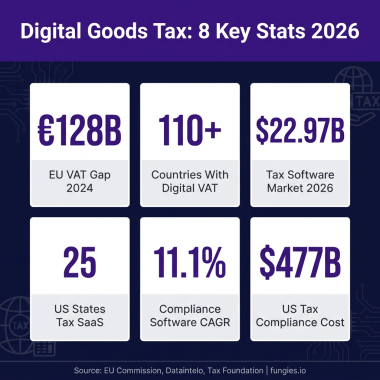
- Tax compliance complexity grows exponentially as you sell globally—VAT in 27 EU countries, US sales tax in 45+ states
- Revenue recognition errors can trigger audit issues and misreported metrics
- Pricing flexibility determines how quickly you can test and iterate on monetization
The wrong platform locks you into rigid pricing models. The right one scales with your business and adapts to whatever pricing strategy you need.
10 Best Recurring Billing Software for SaaS (2026)
1. Stripe Billing
Stripe Billing is the default choice for developer-led SaaS companies—and for good reason. It integrates seamlessly with Stripe’s payment infrastructure and offers robust APIs for custom implementations.
Key Features:
- Flexible subscription models (tiered, volume, usage-based)
- Smart retries and dunning management
- Customer portal for self-service
- Revenue recognition support
- 135+ currencies supported
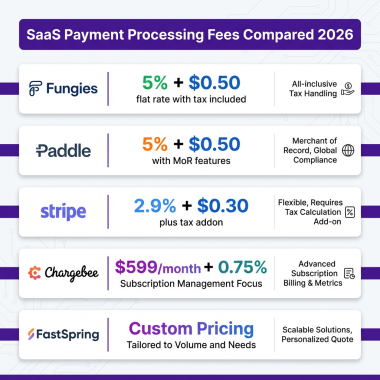
Pricing: 0.5% on recurring payments (in addition to standard Stripe processing fees of 2.9% + $0.30)
Best for: Developer-led startups and SaaS companies already using Stripe who want deep customization and API control.
2. Chargebee
Chargebee has become the go-to subscription management platform for SaaS companies that need billing sophistication without building everything from scratch. It’s designed specifically for recurring revenue businesses.
Key Features:
- 400+ billing scenarios supported
- Automated revenue recognition
- Tax automation (Avalara integration)
- Subscription lifecycle management
- Advanced analytics and SaaS metrics
Pricing: Free up to $250K in cumulative billing, then paid plans starting at $599/month
Best for: B2B SaaS companies with complex pricing models, multiple tiers, and need for sophisticated subscription management.
3. Recurly
Recurly focuses heavily on subscription retention and reducing involuntary churn. With 15+ years in the market, they’ve processed billions in subscription revenue and refined their dunning and retry logic extensively.
Key Features:
- Industry-leading dunning management
- Machine learning-powered retry logic
- Subscription analytics and forecasting
- Revenue recognition automation
- Global tax compliance support
Pricing: Custom pricing based on volume (typically starts around $300-500/month for smaller businesses)
Best for: Subscription businesses focused on retention and churn reduction, especially those with high transaction volumes.
4. Paddle
Paddle operates as a Merchant of Record, meaning they handle not just billing but also tax compliance, fraud prevention, and regulatory requirements. It’s an all-in-one solution for SaaS companies selling globally.
Key Features:
- Merchant of Record (handles all tax compliance)
- Global payment methods (local acquiring)
- Subscription and one-time billing
- Fraud protection included
- Revenue recovery tools
Pricing: 5% + $0.50 per transaction, no monthly fees
Best for: SaaS companies selling internationally who want to outsource tax compliance and focus on product growth.
5. Fungies
Fungies is a Merchant of Record platform built specifically for SaaS and digital product companies. It combines recurring billing with automatic tax compliance, making global expansion straightforward.
Key Features:
- Recurring and usage-based billing
- Automatic global tax compliance (VAT, sales tax)
- No-code checkout integration
- Developer-friendly APIs and webhooks
- Multi-currency support
Pricing: 5% + $0.50 per transaction, no monthly fees, no hidden charges
Best for: Indie developers and SaaS founders who want a simple, all-in-one solution without the complexity of managing separate billing and tax tools.
6. Maxio (formerly Chargify)
Maxio is built for B2B SaaS companies with complex billing needs. It handles everything from simple subscriptions to sophisticated usage-based pricing and contract management.
Key Features:
- B2B-focused subscription management
- Usage-based and hybrid billing
- Revenue recognition and reporting
- 20+ payment gateway integrations
- Contract and order management
Pricing: Starts at $599/month (Grow plan), scales with MRR
Best for: B2B SaaS companies with complex contracts, usage-based pricing, and need for detailed financial reporting.
7. Zenskar
Zenskar is a newer entrant focused on AI-powered billing automation. Their no-code visual builder lets finance teams configure complex pricing without engineering help.
Key Features:
- Visual, no-code pricing builder
- AI-powered contract ingestion
- Automated revenue recognition
- Flexible billing cadences
- Customer self-service portal
Pricing: Starts at $15,000/year for the Startup plan
Best for: SaaS companies with complex, custom pricing models that change frequently and need finance team autonomy.
8. Zuora
Zuora is the enterprise standard for subscription billing. Used by companies like Zoom and Siemens, it handles massive scale and complex global operations.
Key Features:
- Enterprise-grade subscription management
- Multi-entity and multi-currency support
- Advanced revenue recognition
- Workflow automation
- Comprehensive analytics
Pricing: Custom enterprise pricing (typically $50K+ annually)
Best for: Large enterprises with complex global operations, multiple subsidiaries, and need for extensive customization.
9. Outseta
Outseta combines billing with CRM, email marketing, and help desk—making it ideal for early-stage SaaS startups that want an all-in-one platform.
Key Features:
- All-in-one SaaS operations platform
- Subscription billing and CRM
- Email marketing automation
- Help desk and live chat
- Membership site support
Pricing: Starts at $99/month for the Starter plan
Best for: Early-stage startups and membership businesses that want to consolidate tools and minimize stack complexity.
10. Lago
Lago is an open-source billing platform designed for usage-based and hybrid pricing models. It gives engineering teams full control over billing logic while providing finance teams the visibility they need.
Key Features:
- Open-source and self-hostable
- Event-based usage metering
- Real-time billing calculations
- Hybrid pricing support
- API-first architecture
Pricing: Free self-hosted, or cloud plans starting at $0 (pay-as-you-grow)
Best for: Technical teams building AI or API products with usage-based pricing who want full control over billing infrastructure.

Comparison Table: Recurring Billing Software at a Glance
| Platform | Pricing | Best For | Key Strength |
|---|---|---|---|
| Stripe Billing | 0.5% + processing | Developer-led startups | API flexibility |
| Chargebee | Free to $599+/mo | Complex B2B SaaS | 400+ billing scenarios |
| Recurly | Custom | Retention focus | Dunning management |
| Paddle | 5% + $0.50 | Global SaaS | Merchant of Record |
| Fungies | 5% + $0.50 | Indie developers | Simple + tax compliance |
| Maxio | From $599/mo | B2B complex pricing | Revenue recognition |
| Zenskar | From $15K/yr | AI-powered billing | No-code builder |
| Zuora | Enterprise | Large enterprises | Scale + complexity |
| Outseta | From $99/mo | Early-stage startups | All-in-one platform |
| Lago | Free / Cloud | Usage-based pricing | Open source |
How to Choose the Right Recurring Billing Software
After reviewing dozens of platforms, here’s my framework for making the right choice:
1. Evaluate Your Pricing Complexity
Simple monthly subscriptions? Stripe Billing or Fungies work great. Complex usage-based models with tiers and overages? You’ll need Chargebee, Maxio, or Zenskar.
2. Consider Tax Compliance Needs
Selling globally? A Merchant of Record like Paddle or Fungies handles VAT and sales tax automatically. Otherwise, you’ll need separate tax tools like Avalara or TaxJar.
3. Assess Your Technical Resources
Have a dedicated billing engineer? Stripe’s flexibility shines. Need something finance can manage without engineering? Chargebee or Zenskar are better fits.
4. Factor in Growth Stage
Pre-revenue or early-stage: Outseta or free Chargebee tier. Growth stage: Recurly or Paddle. Enterprise: Zuora or Maxio.
FAQ: Recurring Billing Software
What’s the difference between recurring billing and subscription management?
Recurring billing focuses specifically on automating payment collection. Subscription management is broader—it includes billing plus features like plan upgrades/downgrades, customer lifecycle management, and retention tools. Most platforms today combine both.
Can I switch billing platforms later?
Yes, but it’s painful. Migrating active subscriptions requires careful coordination to avoid disrupting customer billing cycles. Most platforms offer migration tools, but expect some engineering effort and potential customer communication.
Do I need a Merchant of Record?
If you’re selling to customers in multiple countries, yes. A Merchant of Record handles tax collection, remittance, and compliance liability. Without one, you’re responsible for registering, collecting, and remitting taxes in every jurisdiction where you have customers.
What’s the best recurring billing software for startups?
For most SaaS startups, I recommend starting with Stripe Billing (if you want control) or Fungies (if you want simplicity with tax compliance). Both scale well and won’t lock you into expensive contracts early on.
How much should I budget for recurring billing software?
Budget 0.5-1% of your revenue for billing infrastructure. This includes platform fees plus payment processing. For a $1M ARR SaaS, expect $5K-10K annually in billing-related costs.
Final Thoughts
Choosing the right recurring billing software is a strategic decision that impacts your revenue operations for years. Don’t just look at today’s needs—consider where your pricing model might evolve in 12-24 months.
If you want the simplest path to global recurring billing with built-in tax compliance, give Fungies a try. It’s free to set up, and you only pay when you process transactions.
Whatever you choose, implement it properly from day one. The cost of fixing billing mistakes down the road far exceeds the time invested in choosing the right platform today.