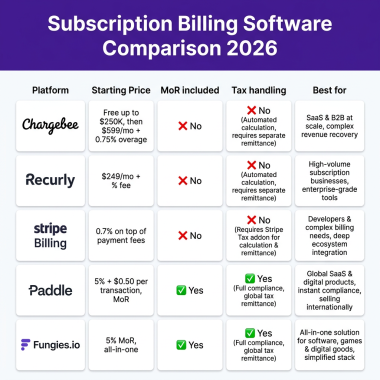
Here’s a number that should terrify every SaaS founder: the average B2B SaaS company loses 5-7% of its customers annually to churn. For a $5M ARR business, that means watching $250,000+ evaporate every single year. Not from failed product-market fit. Not from competitive pressure. Just from customers quietly slipping out the back door.
I’ve spent years analyzing retention data across hundreds of SaaS companies, and the pattern is clear. The companies that master retention don’t just grow faster—they grow cheaper. A 5% increase in retention can boost profits by 25-95%, according to Bain & Company research. Meanwhile, acquiring a new customer costs 5-25x more than keeping an existing one.
What Is SaaS Retention (And Why It Matters More Than Ever)
SaaS retention is the art and science of keeping your customers subscribed, engaged, and expanding their usage over time. It’s measured through metrics like Net Revenue Retention (NRR), Gross Revenue Retention (GRR), and logo churn rate.
In 2026, retention has become the defining metric for SaaS success. According to SaaS Capital’s latest benchmarks, the median NRR for private B2B SaaS companies is 106%, with top performers exceeding 120%. The difference between 100% NRR and 110% NRR isn’t just 10% more revenue—it’s the difference between a company that grows organically and one that bleeds cash on customer acquisition.
The 2025 Recurly Churn Report reveals median B2B SaaS annual churn sits at 3.5% (2.6% voluntary, 0.8% involuntary). But here’s what most founders miss: voluntary churn is almost entirely preventable. Customers don’t leave because they found a better product. They leave because they never experienced the value they were promised.
The 10 Best SaaS Retention Strategies for 2026
1. Optimize Your Onboarding for Time-to-Value
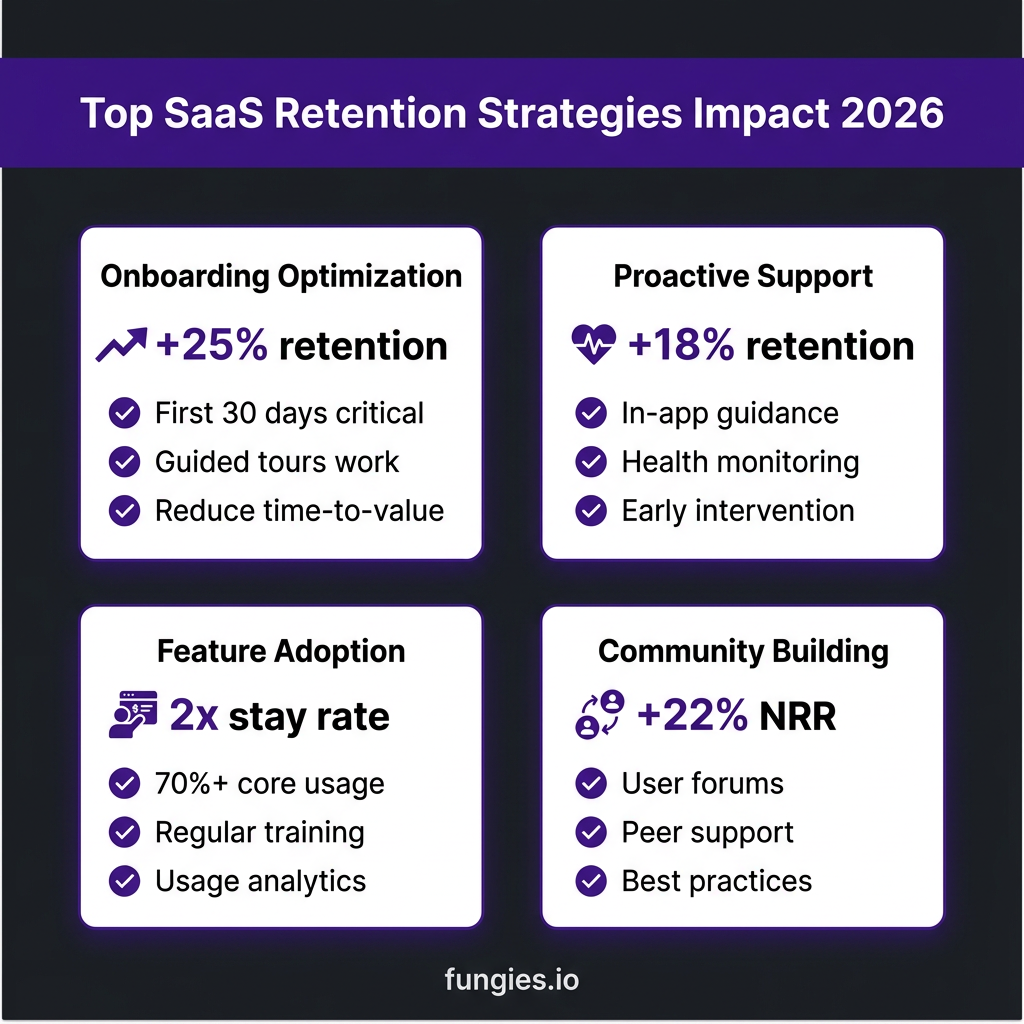
The first 30 days determine everything. Users who experience your product’s core value within their first session are 3x more likely to become long-term customers. Yet most SaaS companies treat onboarding as an afterthought—a series of tooltips and a welcome email.
Effective onboarding in 2026 means guided tours that adapt to user behavior, progressive disclosure that doesn’t overwhelm, and clear milestones that show progress. Companies with optimized onboarding see 25% higher first-year retention rates.
Key tactics:
- Identify your “aha moment”—the specific action that correlates with retention
- Design onboarding flows that guide users to that moment as fast as possible
- Use checklists and progress bars to create completion momentum
- Send contextual emails based on onboarding progress, not just time delays
2. Implement Proactive Customer Health Scoring
Waiting for customers to complain is a retention death sentence. By the time a customer reaches out with a problem, they’ve already decided to leave. Proactive health scoring uses product analytics to identify at-risk accounts before they churn.
A good health score combines multiple signals: login frequency, feature adoption, support ticket volume, NPS responses, and expansion metrics. Companies using predictive churn models can intervene with at-risk accounts weeks before they would have canceled.
Implementation framework:
- Define 5-7 key behavioral indicators that predict retention
- Weight each indicator based on correlation with churn
- Create automated alerts when accounts drop below health thresholds
- Build playbooks for different risk levels (green/yellow/red)
3. Drive Feature Adoption Through In-App Guidance
Here’s a stat that changed how I think about retention: customers who engage with over 70% of core features are twice as likely to stay compared to those with lower adoption rates. Feature adoption isn’t just about usage—it’s about value realization.
The best SaaS companies don’t wait for users to discover features. They use in-app guidance, contextual tooltips, and usage-based recommendations to drive adoption. When a user hasn’t tried a key feature after 7 days, trigger a targeted walkthrough.
Best practices:
- Map features to specific user outcomes, not just functionality
- Use behavioral triggers to show guidance at the right moment
- A/B test different guidance formats (tooltips vs. modals vs. checklists)
- Track feature adoption as a leading indicator of retention
4. Build a Customer Community
Community isn’t a nice-to-have—it’s a retention moat. When customers connect with peers, share best practices, and help each other succeed, switching costs increase dramatically. Companies with active user communities report 22% higher NRR on average.
In 2026, successful SaaS communities blend async forums, live events, certification programs, and peer mentorship. The goal isn’t just engagement—it’s creating a space where customers achieve outcomes they couldn’t achieve alone.
Community building blocks:
- Start with a focused use case, not a generic discussion forum
- Recognize and elevate power users as community leaders
- Host regular virtual events with actionable content
- Integrate community touchpoints into your product experience
5. Create Multi-Threaded Relationships
The biggest hidden churn risk? Single-threaded relationships. When your only contact at a customer company leaves, you lose the account. Multi-threaded relationships mean building connections across multiple stakeholders—end users, managers, executives.
According to 2025 retention research, B2B SaaS companies with relationships across 3+ stakeholders have 40% lower churn than those with single-threaded accounts. This isn’t just about having more contacts—it’s about embedding your product deeper into their workflows.
Expansion tactics:
- Identify natural expansion paths within existing accounts
- Create role-specific onboarding for different user types
- Track stakeholder changes as churn risk indicators
- Build executive business reviews into your cadence
6. Fix Involuntary Churn With Smart Dunning
Here’s a painful truth: involuntary churn represents $1.3 billion in recoverable SaaS revenue annually. Expired credit cards account for 42% of all payment failures—an entirely preventable problem with automated card updater services and smart dunning campaigns.
Modern dunning isn’t just retrying failed payments. It’s personalized outreach, alternative payment methods, and grace periods that keep customers active while billing issues get resolved. The best dunning sequences recover 30-40% of failed payments.
Dunning best practices:
- Use automated card updaters before expiration
- Send pre-dunning emails before cards expire
- Offer multiple retry schedules based on failure reason
- Provide in-app payment update flows, not just email links
7. Implement Usage-Based Pricing (When Appropriate)
Pricing model directly impacts retention. Usage-based pricing models demonstrate superior retention compared to traditional per-seat pricing because they align costs with value received. When customers scale up, they pay more—but they also get more value, so they don’t churn.
According to Maxio’s 2025 Pricing Trends Report, companies using hybrid models (subscription + usage) report the highest median growth rate at 21%. The key is choosing a value metric that scales with customer success.
Value metrics that work:
- API calls, messages sent, or transactions processed
- Seats or users (only when more users = more value)
- Storage, bandwidth, or compute resources
- Successful outcomes (leads generated, payments processed)
8. Run Quarterly Business Reviews (QBRs)
Regular business reviews aren’t just for enterprise accounts. Even SMB-focused SaaS companies benefit from structured check-ins that demonstrate value, gather feedback, and identify expansion opportunities.
Effective QBRs focus on outcomes, not features. Show customers exactly what they’ve achieved with your product. Share usage trends, ROI calculations, and recommendations for getting more value. These conversations naturally surface expansion opportunities and catch churn risks early.
QBR structure:
- Review goals and outcomes from the past quarter
- Present usage analytics and ROI metrics
- Share product roadmap and upcoming features
- Identify new use cases and expansion opportunities
- Gather feedback and address concerns proactively
9. Use AI-Powered Customer Success
AI isn’t replacing customer success teams—it’s amplifying them. In 2026, leading SaaS companies use AI to analyze customer communications, predict churn risk, suggest next-best-actions, and automate routine touchpoints.
AI-powered sentiment analysis can flag at-risk accounts based on support ticket tone. Predictive models can identify which customers are likely to expand (or churn) before they know it themselves. Chatbots handle routine questions while CSMs focus on high-value strategic conversations.
AI applications for retention:
- Sentiment analysis on support interactions and NPS responses
- Predictive models for churn risk and expansion likelihood
- Automated personalized content recommendations
- Smart routing of high-risk accounts to senior CSMs
10. Close the Loop on Customer Feedback
Customers who feel heard stay longer. But most SaaS companies collect feedback and let it disappear into a black hole. Closing the loop means acknowledging feedback, acting on it, and communicating changes back to customers.
When customers see their suggestions implemented, they become invested in your success. They’re not just users anymore—they’re co-creators. This emotional investment is one of the strongest retention levers available.
Feedback loop process:
- Centralize feedback from all channels (support, surveys, sales, community)
- Categorize and prioritize based on impact and frequency
- Communicate roadmap decisions transparently
- Personally thank customers whose feedback shaped features
SaaS Retention Benchmarks by Company Stage
Not all retention targets are created equal. What’s considered “good” varies dramatically by your ARR, customer segment, and business model. Here’s how the benchmarks break down in 2026:
| Metric | Early Stage ($1-5M) | Growth Stage ($5-25M) | Scale Stage ($25M+) |
|---|---|---|---|
| Monthly Churn | 3-5% | 2-3% | <2% |
| Annual Logo Churn | 15-25% | 10-15% | 5-10% |
| Gross Revenue Retention | 85-90% | 90-93% | 93-95%+ |
| Net Revenue Retention | 100-105% | 105-110% | 110-120%+ |
Bootstrapped SaaS companies with $3-20M ARR show median NRR of 103% and GRR of 91%, according to SaaS Capital’s 2025 benchmarks. Top quartile performers exceed 117% NRR, demonstrating the compounding power of strong retention.
How to Implement Your Retention Strategy
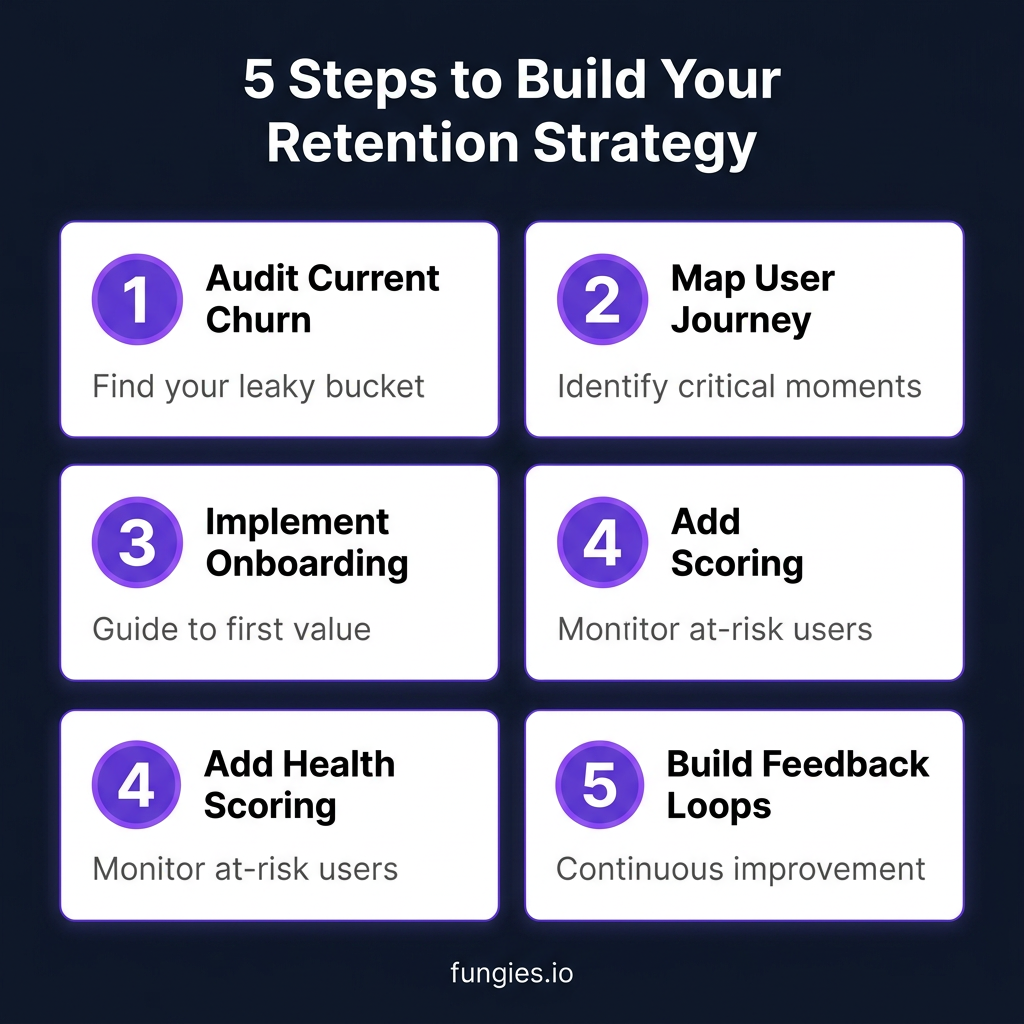
Knowing the strategies is one thing. Implementing them is another. Here’s a practical framework for rolling out retention improvements:
Month 1: Audit and Measure
- Calculate your current retention metrics (NRR, GRR, logo churn)
- Identify your biggest churn drivers through exit interviews
- Map the user journey and identify friction points
- Benchmark against companies at your stage
Month 2-3: Quick Wins
- Fix involuntary churn with dunning optimization
- Implement basic health scoring
- Improve onboarding for the first 7 days
- Set up automated retention alerts
Month 4-6: Strategic Initiatives
- Launch customer community
- Implement in-app guidance for key features
- Build QBR process for top accounts
- Close feedback loops on product requests
FAQ: SaaS Retention Strategies
What’s a good churn rate for SaaS?
For B2B SaaS, a good monthly churn rate is under 2% (under 5% for SMB-focused products). Annual churn should ideally be under 10%. The 2025 Recurly Churn Report shows median B2B SaaS annual churn at 3.5%, with top performers achieving sub-2% rates.
What’s the difference between NRR and GRR?
Gross Revenue Retention (GRR) measures revenue retained from existing customers without including expansion revenue. Net Revenue Retention (NRR) includes expansion, contraction, and churn. GRR shows how well you keep customers; NRR shows how well you grow existing accounts.
How do I calculate customer retention rate?
Customer Retention Rate = ((Customers at End of Period – New Customers) / Customers at Start of Period) × 100. For example, if you started with 100 customers, ended with 110, and acquired 20 new ones, your retention rate is 90%.
What’s the #1 cause of SaaS churn?
Poor onboarding and failed time-to-value. Most voluntary churn happens in the first 30-90 days when users don’t experience the promised value. Companies that optimize for quick wins during onboarding see 25% higher retention rates.
Should I focus on retention or acquisition?
Both matter, but retention compounds. A 5% increase in retention can increase profits by 25-95%, while acquisition costs continue rising. In 2026’s competitive landscape, sustainable growth requires balancing both—acquiring the right customers and keeping them engaged long-term.
Conclusion: Retention Is the New Growth
The SaaS companies winning in 2026 aren’t just acquiring customers faster—they’re keeping them longer. Retention isn’t a customer success problem or a product problem. It’s a business strategy that touches every department from marketing to engineering.
Start with the fundamentals: fix your onboarding, implement health scoring, and eliminate involuntary churn. Then layer in advanced strategies like community building, AI-powered success, and multi-threaded relationships. The companies that master retention don’t just survive—they compound.
Ready to reduce churn and grow your SaaS revenue? Get started with Fungies—the complete platform for SaaS billing, subscriptions, and revenue retention with transparent 5% + $0.50 pricing and no monthly fees.
Sources
- SaaS Capital 2025 Benchmarking Survey – saas-capital.com
- Recurly 2025 Churn Report – recurly.com
- Maxio 2025 Pricing Trends Report – maxio.com
- ChurnZero 2025 SaaS Benchmarks – churnzero.com
- Bain & Company Customer Retention Research
- Userlens B2B SaaS Retention Benchmarks 2025
- Focus Digital SaaS Churn Rate Report 2025