Here’s a brutal stat that keeps SaaS founders up at night: 40-60% of users who sign up for your product never return after their first login. Not because your product is bad. Not because they don’t have the problem you solve. But because they didn’t experience enough value in that first session to come back.
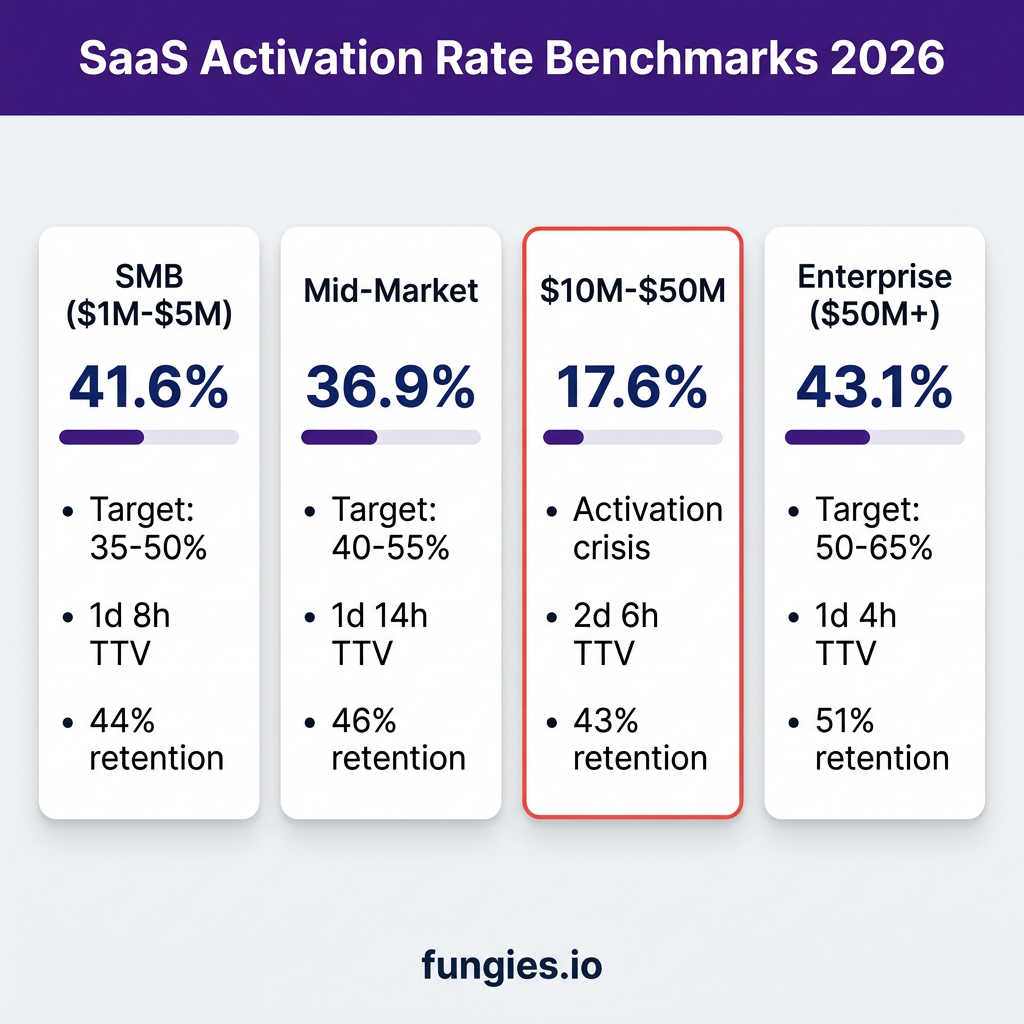
The industry average activation rate sits at just 37.5%. That means 62 out of every 100 signups leave before experiencing your product’s core value. If your activation rate is below 25%, you have a structural leak that no amount of marketing spend will fix.
What Is SaaS Onboarding Optimization?
SaaS onboarding optimization is the systematic process of reducing the time between signup and a user’s first meaningful value experience. It’s not about creating prettier tutorials or longer walkthroughs. It’s about removing friction, eliminating unnecessary steps, and getting users to their “aha moment” as fast as humanly possible.
Honestly, most SaaS companies get this wrong. They treat onboarding as product education — showing users every feature and explaining how things work. But users don’t care about features. They care about solving their problem. Your onboarding should guide them to that solution, not give them a product tour.
Why Time-to-Value Is the Ultimate Retention Driver
Time-to-value (TTV) measures how long it takes a new user to experience meaningful value from your product. This metric directly correlates with retention in ways that might surprise you.
According to 2026 benchmark data, users who reach their aha moment in the first hour have 4-5x higher Day 7 retention than those who take 24+ hours. Users who activate in their first session are 2-3x more likely to become active long-term users. The gap is staggering.
Here’s what the data shows across different product categories:
| Product Type | Target TTV | Activation Rate Target |
|---|---|---|
| Collaboration tools | Under 5 minutes | 50-65% |
| Simple utilities | Under 15 minutes | 50-60% |
| Development tools | Under 30 minutes | 35-50% |
| Analytics platforms | Under 1 hour | 30-45% |
| Enterprise software | Under 24 hours | 15-30% |
The pattern is clear: faster time-to-value equals better retention. Every minute you shave off your TTV translates directly into higher activation rates and lower churn.
The 7-Stage Onboarding Journey Map
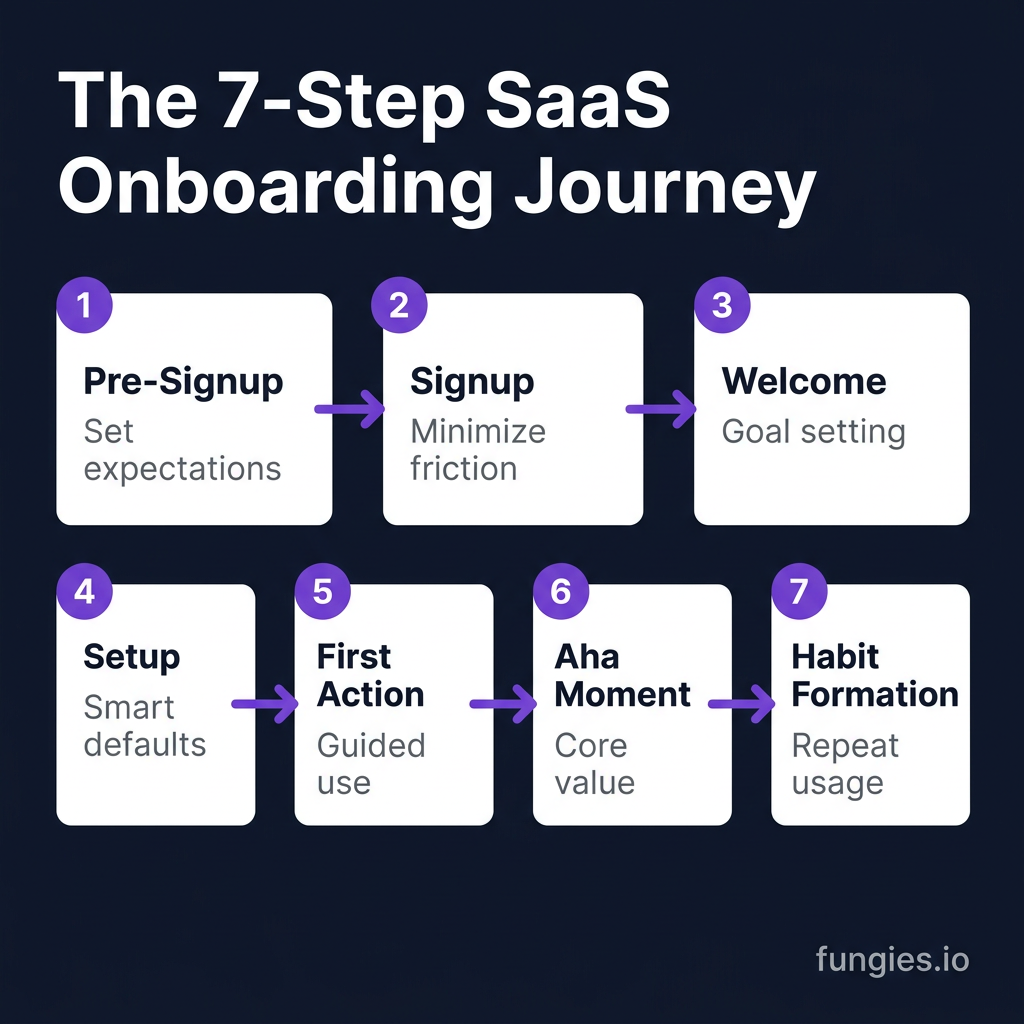
Effective onboarding isn’t a single experience — it’s a structured journey with distinct stages. Understanding each stage helps you identify where users drop off and what to optimize.
Stage 1: Pre-Signup — Setting Expectations
Before users even sign up, your landing page should set clear expectations. What will they accomplish? How long will it take? What do they need to get started?
Good example: “Create your first project in under 5 minutes.” Bad example: “The most powerful project management platform on the market.” One sets expectations; the other makes vague claims.
Stage 2: Signup — Friction Minimization
Every field in your signup form kills conversion. I’ve seen companies lose 30% of signups by asking for company size, use case, and phone number upfront.
Minimal signup requires just email and password. Collect everything else progressively after users are inside the product. Get them to value first; worry about data collection later.
Stage 3: Welcome — Orientation and Goal-Setting
Your first screen after signup sets the tone. Restate your value proposition concisely, set expectations for onboarding (“This will take 5 minutes”), and show a clear next step.
Consider asking 1-2 questions to personalize the experience: “What’s your role?” or “What do you want to accomplish?” This enables contextual onboarding paths that dramatically improve activation.
Stage 4: Setup — Necessary Configuration
Some products require setup before value delivery — connecting data sources, integrating tools, or importing contacts. The key is making this as painless as possible.
Use smart defaults to minimize configuration. Enable one-click integrations where possible. Show progress indicators (“2 of 3 steps complete”). And critically — allow users to skip if it’s not immediately necessary.
Stage 5: First Action — Guided Initial Use
This is where the magic happens. Guide users to their first meaningful action using interactive walkthroughs, tooltips, or checklists. Don’t just tell them what to do — hand-hold them through doing it.
Example for a project management tool: “Let’s create your first project. Click here to get started… Great! Now add your first task… Perfect!” This guided approach dramatically increases completion rates.
Stage 6: Aha Moment — First Meaningful Value
The aha moment is when users “get it” — they understand why your product is valuable because they’ve experienced it. Slack’s aha moment is team communication flowing. Dropbox’s is first file sync. Figma’s is first design shared and commented on.
Identify your aha moment by analyzing what successful users do early that predicts long-term retention. Then optimize your entire onboarding flow to get every user to this moment as fast as possible.
Stage 7: Habit Formation — Repeat Usage Pattern
First value isn’t enough. You need users to come back. Use email reminders with specific next actions, in-app notifications (sparingly), progress tracking (“You’ve completed 3 projects!”), and integration hooks that make your product part of their workflow.
The goal is making your product part of their daily or weekly routine. Without habit formation, even activated users will eventually churn.
Three Core Onboarding Approaches
Different products and users benefit from different onboarding strategies. Choose the approach that matches your product complexity and user sophistication.
Guided Tour: Step-by-Step Walkthrough (High Guidance)
Best for complex products with many features or users unfamiliar with your category. Uses modal windows, tooltips, or dedicated tours that walk users through features sequentially.
Keep tours under 5 steps focused on the path to first value, not a comprehensive feature tour. Users skip long tours, and forced walkthroughs feel patronizing to experienced users.
Progressive Disclosure: Learn-by-Doing (Medium Guidance)
Show features and guidance contextually as users need them, not all at once. This approach gets users to value faster and feels less intrusive.
Combine with a visible checklist of recommended actions so users have direction without hand-holding. This balanced approach works well for most self-service SaaS tools.
Self-Discovery: Minimal Guidance (Low Guidance)
Provide minimal onboarding and let users explore. This works for very simple products or expert users who prefer figuring things out themselves.
The risk is high abandonment for confused users. Even with minimal guidance, provide easily accessible help, templates, and examples. Don’t make users hunt for basic functionality.
6 Tactics to Reduce Time-to-Value
Here are proven tactics that directly reduce your time-to-value and improve activation rates:
1. Remove Unnecessary Steps
Audit your onboarding flow and eliminate every non-essential step. Do users really need to verify email before using the product? Can setup happen later? Is that configuration screen actually necessary for first value?
Every removed step increases completion rates. I’ve seen companies double activation simply by removing three form fields from their signup process.
2. Defer Non-Essential Setup
Postpone everything that isn’t required for first value: profile completion, team invitations, integration setup, customization. Get users to their aha moment first, then ask for the extras.
3. Use Smart Defaults
Minimize configuration through intelligent defaults. Pre-select common options. Auto-populate sensible values. The best configuration is no configuration.
4. Provide Sample/Demo Data
Don’t make users start from blank slates. Show what the product looks like with data. Let users explore without creating from scratch. Seeing the product in action accelerates understanding dramatically.
5. Offer Templates and Presets
Industry templates accelerate value delivery. A “Marketing campaign planning” template or “Software development sprint” template lets users start with 80% done instead of 0% done.
6. Enable Partial Completion
Allow users to experience value without completing full setup. Add “Skip for now” and “Complete later” options. Don’t force completion of onboarding before allowing product use.
Activation Metrics You Should Track
You can’t optimize what you don’t measure. Here are the key metrics for onboarding optimization:
| Metric | Formula | Target Benchmark |
|---|---|---|
| Activation Rate | (Users reaching aha moment / Total signups) × 100 | 40-60% (varies by complexity) |
| Time-to-Activation | Median time from signup to aha moment | Same session to 24 hours |
| Onboarding Completion | (Users completing all steps / Total signups) × 100 | 70%+ |
| Day 7 Retention (Activated) | % of activated users returning at Day 7 | 60-80% |
| Day 7 Retention (Non-activated) | % of non-activated users returning at Day 7 | 10-20% |
The retention gap between activated and non-activated users is typically 3-4x. This proves that activation is the primary predictor of long-term retention.
Common Onboarding Mistakes to Avoid
After analyzing hundreds of SaaS onboarding flows, here are the most common mistakes I see:
Mistake 1: Confusing Onboarding Completion with Activation
Only 19.2% of users complete onboarding checklists, yet 37.5% reach activation. Users find value on their own terms, outside your prescribed path. Research shows that 80% onboarding completion can coexist with just 22% activation.
Your goal isn’t to force users through your checklist. It’s to eliminate every obstacle between signup and the first moment of value.
Mistake 2: The $10M-$50M Activation Crisis
Companies in the $10M-$50M revenue segment face a structural activation crisis, with rates dropping to just 17.6%. At this stage, onboarding complexity scales faster than the team’s ability to manage it.
Product features proliferate without corresponding onboarding investment. Sales teams onboard users manually, creating an assisted activation rate that masks underlying structural problems. Companies that reach $50M+ recover because they finally invest in proper activation infrastructure.
Mistake 3: Requiring External Prerequisites
If your activation event requires external data, integrations, or team members that users don’t have on day one, you have a structural activation problem that no amount of onboarding optimization will fix.
Redesign your activation event to trigger on first meaningful action within the product itself, not on external prerequisites.
FAQ: SaaS Onboarding Optimization
What is a good activation rate for SaaS?
It depends on your segment and product complexity. SMB companies should aim for 35-50%, mid-market for 40-55%, and enterprise for 50-65%. The aggregate median of 37.5% is a useful floor, not a target. If you’re below 25%, you have a structural leak.
How do I identify my product’s aha moment?
Pull your 90-day retention cohort and run a behavioral analysis. Compare the first-session actions of retained users against churned users. The earliest behavioral milestone that separates these cohorts is your aha moment — the first moment a user experiences your product’s core value.
How long should onboarding take?
Simple products should target under 15 minutes. Medium complexity products should target under 1 hour. Complex enterprise products can take up to 24 hours, but users should see some value within the first session. Every hour beyond expectations increases abandonment risk.
Should I use video tutorials in onboarding?
Videos can work, but keep them under 2 minutes and make them skippable. Interactive tutorials that walk users through actual actions in the product have higher completion rates than passive video watching. Use video for complex features, not for basic onboarding.
What’s the ROI of onboarding optimization?
According to Appcues’ growth model, a 25% activation improvement compounds to a 34% MRR lift over 12 months. That’s more impact than equivalent improvements in acquisition, retention, or referral rates. Activation improvement is a permanent multiplier on your existing traffic.
Conclusion: Make Time-to-Value Your North Star
Onboarding isn’t a nice-to-have feature. It’s the moment where you win or lose customers. Users who experience value in their first session are 2-3x more likely to become retained customers. Users who don’t experience value quickly often never return, no matter how good your product is.
Optimize time-to-value ruthlessly. Remove every unnecessary step. Defer everything non-essential. Use templates, examples, and smart defaults to accelerate value delivery. Measure time from signup to aha moment and push it as close to zero as possible.
If you’re building a SaaS product and want to accept payments without the complexity of tax compliance and billing infrastructure, check out Fungies.io. We handle the Merchant of Record complexity so you can focus on building a great product experience — including that critical first-mile onboarding that turns signups into loyal customers.