Here’s a sobering statistic: 73% of SaaS companies struggle with revenue recognition compliance, and improper recognition is one of the top reasons startups fail audits. If you’re running a subscription business, getting revenue recognition wrong isn’t just an accounting headache—it can derail funding rounds, trigger regulatory penalties, and destroy investor confidence.
I’ve seen founders scramble to restate financials because they recognized annual subscription revenue upfront. I’ve watched companies miss IPO windows due to ASC 606 compliance gaps. The good news? Revenue recognition doesn’t have to be complicated. This guide breaks down exactly how to handle SaaS revenue recognition correctly in 2026.
What Is SaaS Revenue Recognition?
SaaS revenue recognition is the accounting process of recording subscription revenue in the correct accounting period. Unlike traditional product sales where you recognize revenue at the point of sale, SaaS revenue must be recognized over the subscription term as you deliver the service.
Here’s the critical distinction: when a customer pays you $12,000 for an annual subscription, you can’t record that as $12,000 in revenue on day one. Instead, you recognize $1,000 per month over 12 months as you provide access to your software. The remaining $11,000 sits on your balance sheet as deferred revenue (a liability) until earned.
This concept—revenue recognition over time versus at a point in time—is fundamental to SaaS accounting. Get this wrong, and your financial statements become misleading, potentially violating GAAP and triggering audit findings.
Understanding ASC 606: The 5-Step Framework
ASC 606 (Accounting Standards Codification Topic 606) is the revenue recognition standard that governs how SaaS companies recognize revenue. Issued by FASB and effective since 2018, it replaced the previous industry-specific guidance with a principles-based, five-step framework.
Step 1: Identify the Contract with a Customer
A contract exists when you and your customer have approved terms, identified rights and payment terms, and both parties are committed to performance. For SaaS, this is typically your Terms of Service or Master Service Agreement combined with an order form.
Key considerations: contracts can be written, oral, or implied by business practices. Multiple documents (order form, TOS, SLA) may combine to form a single contract. You need to assess whether collection is probable before recognizing revenue.
Step 2: Identify Performance Obligations
Performance obligations are the distinct goods or services you promise to deliver. In SaaS, this gets complex fast. Your software access is typically one performance obligation. But what about implementation services? Training? Support? Custom development?
A performance obligation is distinct if the customer can benefit from it either on its own or with resources readily available to them. If you bundle professional services that don’t significantly customize the software, they may be separate performance obligations. If they’re essential to the software functioning, they may need to be combined.
Step 3: Determine the Transaction Price
The transaction price is the amount you expect to receive in exchange for your services. For SaaS, this includes the subscription fee, but you must also consider variable consideration like usage-based overages, discounts, and refunds.
You’ll need to estimate variable consideration and constrain it to amounts highly probable of not reversing. If you offer a 30-day money-back guarantee, you may need to defer recognition until that period lapses or estimate expected refunds.
Step 4: Allocate Transaction Price
If you have multiple performance obligations, allocate the transaction price based on standalone selling prices. This is where SaaS bundling gets tricky. If you sell your SaaS for $100/month and implementation services separately for $5,000, but bundle them together for $4,500, you need to allocate that $4,500 proportionally.
The software portion gets recognized over the subscription term. The implementation portion may be recognized over time (if the customer consumes benefits as you work) or at a point in time (upon completion).
Step 5: Recognize Revenue
Finally, recognize revenue as you satisfy performance obligations. For SaaS subscriptions, this means recognizing revenue ratably over the subscription term—typically straight-line monthly recognition. For implementation services, it depends on whether control transfers over time or at a point in time.
Common SaaS Revenue Recognition Scenarios
Let’s walk through real-world scenarios you’re likely to encounter:
Annual Subscriptions with Upfront Payment
Customer pays $12,000 upfront for a 12-month subscription. You record:
- Day 1: $12,000 cash (asset), $12,000 deferred revenue (liability)
- Each month: Recognize $1,000 revenue, reduce deferred revenue by $1,000
Your income statement shows $1,000 monthly. Your balance sheet shows remaining deferred revenue as a liability until earned.
Monthly Subscriptions
Customer pays $100 monthly. Revenue recognition is straightforward—recognize $100 in the month service is provided. If you bill on the 15th for the upcoming month, you may have a small deferred revenue balance for the period between billing and month-start.
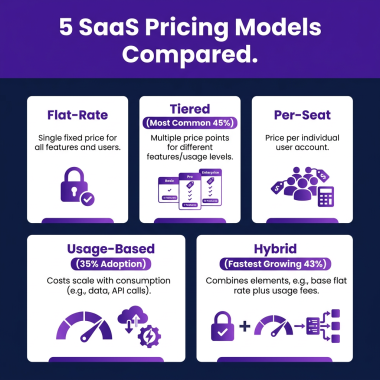
Usage-Based Pricing
Customer pays based on API calls, storage, or seats used. This is variable consideration under ASC 606. You estimate expected usage and recognize revenue as it’s consumed. At period-end, true-up to actual usage.
If you can’t reasonably estimate usage, recognize revenue when the uncertainty resolves—typically when you invoice based on actual consumption.
Setup Fees and Implementation
You charge a $5,000 setup fee plus $1,000/month for the SaaS. Is the setup fee a separate performance obligation? If setup is distinct (customer could hire someone else), allocate transaction price and recognize setup revenue when complete. If setup is integral to the SaaS functioning, combine and recognize over the subscription term.
Revenue Recognition Pitfalls to Avoid
After reviewing dozens of SaaS financials, here are the most common mistakes I see:
Mistake 1: Recognizing Annual Payments Upfront
This is the classic error. A customer pays $12,000 for a year, and the founder records $12,000 revenue immediately. This overstates revenue, understates liabilities, and creates a compliance nightmare. Always defer and recognize ratably.
Mistake 2: Ignoring Variable Consideration
Offering usage-based pricing without properly estimating and constraining variable consideration leads to revenue reversals. If you bill based on API calls and can’t estimate usage patterns, you may need to wait until invoicing to recognize revenue.
Mistake 3: Mishandling Professional Services
Bundling implementation services with SaaS without properly identifying separate performance obligations distorts revenue timing. If implementation is truly distinct, recognize it separately. If it’s essential to the SaaS functioning, it may need to be combined and recognized over the subscription term.
Mistake 4: Forgetting Contract Modifications
Mid-contract upsells, downsells, and renewals require careful accounting. ASC 606 has specific guidance on contract modifications—prospective treatment, cumulative catch-up, or a combination. Get this wrong and your revenue recognition becomes unreliable.
Revenue Recognition Software Comparison
Manual revenue recognition in spreadsheets is error-prone and doesn’t scale. Here’s how leading solutions compare:
| Platform | Best For | Key Features | Pricing |
|---|---|---|---|
| Maxio (SaaSOptics) | High-growth SaaS | ASC 606 automation, investor reporting, forecasting | From $500/month |
| Stripe Revenue Recognition | Stripe users | Automatic recognition, ASC 606 compliant, real-time reports | 0.25% of recognized revenue |
| NetSuite | Enterprise SaaS | Full ERP, advanced revenue management, multi-subsidiary | Custom pricing |
| Sage Intacct | Mid-market SaaS | Revenue recognition module, project accounting, dashboards | From $400/month |
| QuickBooks + RevRec Tools | Early-stage SaaS | Basic recognition, integrations with SaaS billing tools | $80-300/month |
Honestly, most early-stage SaaS companies can get by with Stripe’s built-in revenue recognition or a QuickBooks integration. Once you’re processing significant volume or preparing for audit/exit, upgrade to a dedicated solution like Maxio.
Implementing ASC 606: A Practical Checklist
Ready to get your revenue recognition house in order? Work through this checklist:
- Document your revenue recognition policy: Write down how you handle each type of revenue stream, performance obligations, and timing. This becomes your accounting memo for auditors.
- Review all customer contracts: Identify performance obligations, variable consideration, and renewal terms. Update contract templates to clarify deliverables.
- Map your revenue streams: Categorize every type of revenue you earn and determine the appropriate recognition pattern for each.
- Implement deferred revenue tracking: Set up your accounting system to properly track deferred revenue balances and monthly recognition.
- Automate where possible: Use your billing platform’s revenue recognition features or integrate with dedicated software. Manual spreadsheets don’t scale.
- Reconcile monthly: Compare recognized revenue to deferred revenue rollforwards. Investigate any discrepancies immediately.
- Prepare for audits: Maintain documentation supporting your judgments on performance obligations, standalone selling prices, and variable consideration estimates.
How Fungies Simplifies Revenue Recognition
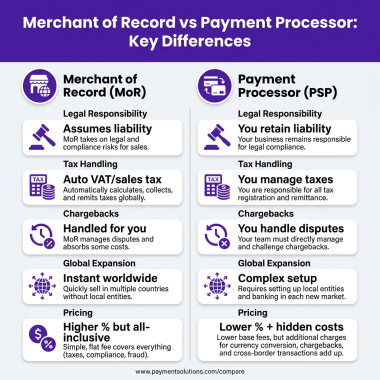
Here’s something most founders don’t realize: your payment infrastructure directly impacts revenue recognition complexity. When you use a merchant of record like Fungies, you offload significant compliance burden.
Fungies handles the entire payment stack—checkout, tax calculation, invoicing, and compliance—while providing clear revenue reporting. You get automated deferred revenue tracking, ASC 606 compliant revenue schedules, and clean financial data for your accounting team.
Instead of wrestling with Stripe’s revenue recognition add-ons or building complex spreadsheets, you get straightforward monthly revenue reports that map directly to your general ledger. For SaaS companies preparing for growth, this simplification is worth its weight in gold.
With Fungies’ flat 5% + $0.50 pricing, you get transparent revenue recognition without the hidden complexity of percentage-based fees that change your recognized amounts month to month.
FAQ: SaaS Revenue Recognition
What’s the difference between cash and accrual accounting for SaaS?
Cash accounting recognizes revenue when payment is received. Accrual accounting (required for ASC 606) recognizes revenue when earned. SaaS companies must use accrual accounting—recognizing subscription revenue over the service period regardless of when cash is collected.
Do I need a CPA to handle revenue recognition?
For early-stage SaaS with simple subscriptions, you can handle revenue recognition with good software and careful attention. Once you have complex contracts, usage-based pricing, or are preparing for audit/exit, engage a CPA with SaaS experience. The cost of getting it wrong far exceeds professional fees.
How do free trials affect revenue recognition?
Free trials don’t generate revenue, so there’s nothing to recognize. Revenue recognition begins when the paid subscription starts. If you offer a freemium model with paid upgrades, recognize revenue only on the paid portion.
What about annual contracts paid monthly?
This is the simplest scenario. You recognize revenue each month as you bill and collect. There’s no deferred revenue complexity because payment and service delivery align monthly.
When should I implement revenue recognition software?
Implement dedicated revenue recognition software when: (1) you’re processing more than $1M ARR, (2) you have complex contracts with multiple performance obligations, (3) you’re preparing for a financial audit, (4) you’re raising Series A or beyond, or (5) your spreadsheet-based system is breaking.
Conclusion: Get Revenue Recognition Right from Day One
Revenue recognition isn’t the most exciting part of running a SaaS business, but it’s one of the most critical. Getting it wrong creates audit risk, investor skepticism, and potential regulatory issues. Getting it right gives you clean financials, confident forecasting, and a smoother path to growth.
The key is understanding ASC 606’s five-step framework and applying it consistently. Identify your contracts, determine performance obligations, calculate transaction price, allocate appropriately, and recognize revenue as you deliver value. Document your policies, automate where possible, and reconcile regularly.
If you’re looking to simplify your entire payment and revenue recognition stack, check out Fungies. We handle the complexity of global payments, tax compliance, and revenue reporting so you can focus on building your product.
Sources
- FASB ASC 606 Revenue from Contracts with Customers – fasb.org
- AICPA Revenue Recognition Guide for SaaS – aicpa.org
- Stripe Revenue Recognition Documentation – stripe.com
- Maxio SaaS Revenue Recognition Guide – maxio.com
- HubiFi Deferred Revenue Guide – hubifi.com