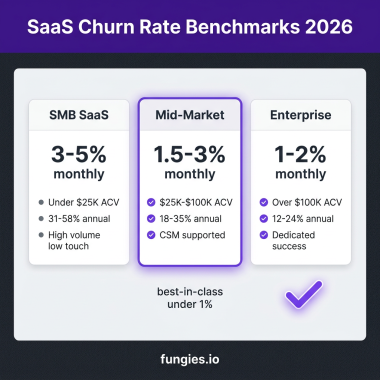
Here’s a stat that’ll make you pause: 23% of SaaS churn is directly caused by payment-related friction. Not product issues. Not customer service failures. Just… payments not working smoothly.
I’ve spent years optimizing payment flows for SaaS companies, and I can tell you this — choosing the wrong payment processing software isn’t just an operational headache. It’s a growth killer. The right platform can reduce churn, increase conversion rates, and save you thousands in fees. The wrong one? You’ll be patching together workarounds while your competitors scale.
In this guide, I’m breaking down the 10 best payment processing software options for small businesses in 2026. Whether you’re launching your first SaaS product or looking to switch providers, this comparison will save you weeks of research.
What Is Payment Processing Software?
Payment processing software is the technology stack that enables businesses to accept electronic payments from customers. It handles the entire transaction flow — from capturing card details at checkout to moving funds into your bank account.
But modern payment processing goes way beyond simple card swipes. Today’s platforms offer subscription billing, multi-currency support, fraud detection, API integrations, and detailed analytics. For SaaS businesses specifically, you need software that handles recurring payments, dunning management, and global tax compliance.
The global payment processor market is projected to grow from $71.15 billion in 2026 to $122.08 billion by 2031 — a CAGR of 11.4%. This growth is driven by embedded finance adoption, real-time payment systems, and the increasing complexity of global commerce.
Why Your Choice of Payment Processor Matters
Most founders treat payment processing as a commodity decision. They look at the headline rate (usually 2.9% + $0.30) and call it a day. That’s a mistake.
Here’s what actually impacts your bottom line:
- Hidden fees: Chargeback fees, international transaction fees, monthly gateway fees — these add up fast
- Conversion rates: A clunky checkout experience can kill 20-30% of potential sales
- Churn from failed payments: Without smart dunning, you’re losing customers to expired cards
- International expansion: Not all processors support global payments equally
- Developer time: Poor documentation means weeks of integration work vs. days
Companies with optimized billing infrastructure grow 1.5x faster than competitors. The difference isn’t marginal — it’s transformational.
10 Best Payment Processing Software for Small Business in 2026
1. Stripe — Best for Developers and SaaS
Stripe has become the default choice for tech-forward businesses, and for good reason. Their API is exceptional, documentation is comprehensive, and the ecosystem of tools is unmatched.
Key Features:
- Comprehensive API with extensive documentation
- Stripe Billing for subscription management
- Stripe Connect for marketplace payments
- 135+ currency support
- Advanced fraud protection with Radar
- Real-time webhooks and event handling
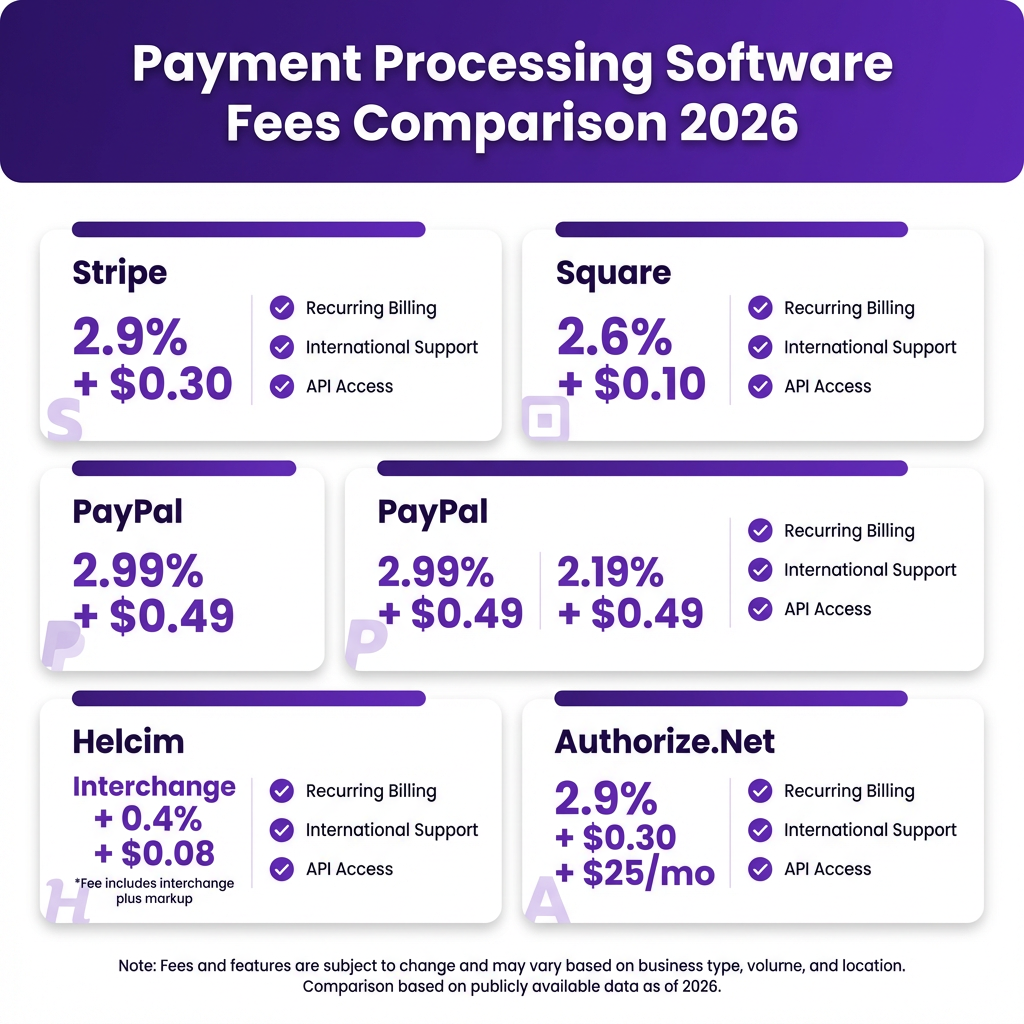
Pricing: 2.9% + $0.30 per transaction. Volume discounts available.
Best for: SaaS companies, marketplaces, and any business with developer resources that needs custom payment flows.
2. Square — Best for Omnichannel Businesses
Square started with in-person payments and has evolved into a complete business ecosystem. If you sell both online and in-person, Square’s unified system is hard to beat.
Key Features:
- Free POS system with integrated payments
- Free mobile card reader
- Inventory management across channels
- Appointment scheduling and team management
- Same-day transfer options
Pricing: 2.6% + $0.10 in-person; 2.9% + $0.30 online.
Best for: Retail businesses, restaurants, and service providers that need both online and in-person payment acceptance.
3. PayPal — Best for Quick Setup and Consumer Trust
PayPal’s biggest advantage isn’t technical — it’s psychological. Over 400 million active users trust PayPal, and offering it as a checkout option can boost conversion rates by 10-15% for some businesses.
Key Features:
- One-click checkout for PayPal users
- PayPal Credit and Pay in 4 options
- Buyer and seller protection programs
- Extensive global reach
- Easy integration with most e-commerce platforms
Pricing: 2.99% + $0.49 per transaction.
Best for: E-commerce stores, small businesses prioritizing quick setup, and companies selling to consumers who value PayPal’s buyer protection.
4. Helcim — Best Transparent Interchange-Plus Pricing
Helcim is the anti-Stripe in the best way possible. No complicated pricing tiers. No hidden fees. Just straightforward interchange-plus pricing that gets cheaper as you grow.
Key Features:
- True interchange-plus pricing (interchange + 0.4% + $0.08)
- Automatic volume-based discounts
- Free POS and invoicing tools
- Integrated CRM and customer management
- Rate-lock guarantee
Pricing: Interchange + 0.4% + $0.08 for in-person; Interchange + 0.5% + $0.25 for online. No monthly fees.
Best for: Growing businesses processing $10K+ monthly that want transparent pricing and lower effective rates.
5. Authorize.Net — Best for Established Businesses with Bank Relationships
Authorize.Net is the old guard of payment gateways. While it lacks the developer-friendly polish of Stripe, it offers deep integrations with legacy systems and can be cost-effective for high-volume merchants.
Key Features:
- Long-established gateway with bank partnerships
- Advanced fraud detection suite
- Recurring billing capabilities
- Virtual terminal for phone orders
- Extensive accounting software integrations
Pricing: $25/month gateway fee + 2.9% + $0.30 per transaction.
Best for: Established businesses with existing merchant accounts, companies with legacy ERP integrations, and high-volume merchants who can negotiate better interchange-plus rates.
6. Adyen — Best for Enterprise Global Expansion
Adyen powers payments for Netflix, Uber, and Microsoft. It’s built for scale and global reach, offering a single platform for accepting payments anywhere in the world.
Key Features:
- Single platform for global payments
- Local payment methods in 100+ countries
- Unified commerce across online, mobile, and in-store
- Revenue optimization with machine learning
- Direct bank relationships in major markets
Pricing: Interchange++ pricing with custom rates for enterprise.
Best for: Mid-market to enterprise companies with significant international transaction volume.
7. Braintree — Best for PayPal Integration
Owned by PayPal but operating as a separate developer-focused platform, Braintree offers the best of both worlds: modern APIs with access to PayPal’s massive user base.
Key Features:
- Modern APIs with comprehensive documentation
- Native PayPal and Venmo integration
- Drop-in UI for quick implementation
- Advanced fraud tools
- Recurring billing support
Pricing: 2.9% + $0.30 per transaction.
Best for: Businesses that want PayPal acceptance with modern developer tools and APIs.
8. Stax by Fattmerchant — Best for High-Volume Businesses
Stax (formerly Fattmerchant) uses a subscription model instead of taking a percentage of each transaction. For high-volume businesses, this can mean significant savings.
Key Features:
- Subscription pricing (starting at $99/month)
- Direct cost of interchange with no markup
- Comprehensive analytics dashboard
- Integrated invoicing and inventory
- Same-day funding options
Pricing: $99-$199/month subscription + direct interchange costs.
Best for: Businesses processing $30K+ monthly that can benefit from subscription pricing over percentage-based fees.
9. WePay by JPMorgan — Best for Platforms and Marketplaces
WePay, now part of JPMorgan Chase, specializes in platform payments. If you’re building a marketplace or platform that needs to handle payments between multiple parties, WePay is purpose-built for this.
Key Features:
- Designed for platform and marketplace payments
- Same-day deposits to Chase accounts
- Integrated risk management
- Flexible payout scheduling
- White-label payment experiences
Pricing: Custom pricing based on volume and use case.
Best for: Platforms, marketplaces, and businesses that need to split payments between multiple parties.
10. Fungies — Best All-in-One for SaaS and Digital Products
Full disclosure: I work with Fungies. But I’m including them because they solve a specific problem that none of the above address elegantly — handling payments, tax compliance, and subscription management in one platform.
Most payment processors handle the transaction and stop there. You’re still responsible for sales tax calculation, VAT compliance, invoicing, and dunning. Fungies wraps all of this into a Merchant of Record model.
Key Features:
- Merchant of Record handles all tax compliance
- No-code checkout and storefront builder
- Subscription management with dunning
- Global tax calculation and remittance
- Developer-friendly APIs and webhooks
Pricing: 5% + $0.50 per transaction. No monthly fees.
Best for: SaaS companies, digital product sellers, and businesses that want to offload tax compliance complexity.
Side-by-Side Comparison Table
| Platform | Best For | Online Rate | Monthly Fee | Setup Time |
|---|---|---|---|---|
| Stripe | Developers & SaaS | 2.9% + $0.30 | $0 | 1-2 days |
| Square | Omnichannel | 2.9% + $0.30 | $0 | Same day |
| PayPal | Quick setup | 2.99% + $0.49 | $0 | Hours |
| Helcim | Transparent pricing | Interchange + 0.5% | $0 | 1-2 days |
| Authorize.Net | Legacy systems | 2.9% + $0.30 | $25 | 3-5 days |
| Adyen | Global enterprise | Interchange++ | Custom | 2-4 weeks |
| Braintree | PayPal integration | 2.9% + $0.30 | $0 | 1-2 days |
| Stax | High volume | Interchange only | $99-199 | 3-5 days |
| WePay | Platforms | Custom | Custom | 1-2 weeks |
| Fungies | SaaS + Tax | 5% + $0.50 | $0 | Same day |
How to Choose the Right Payment Processor
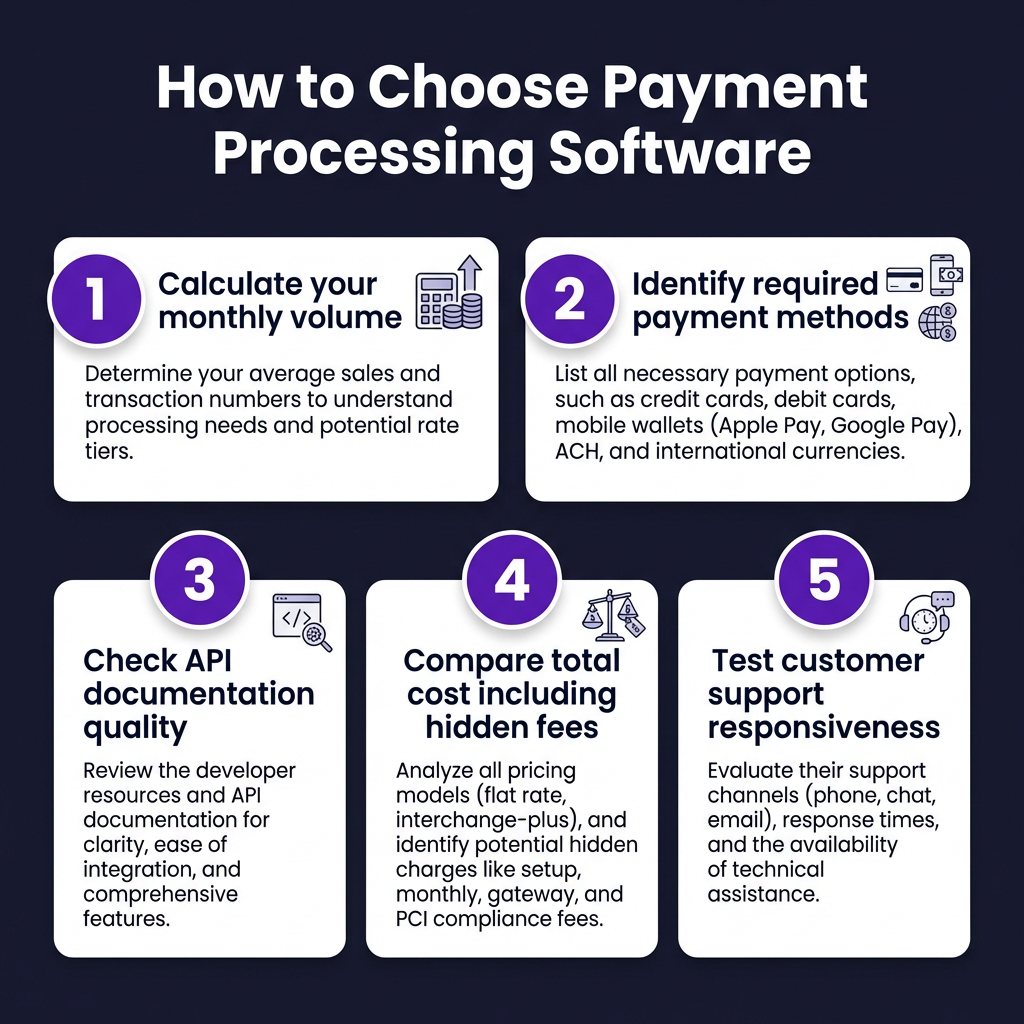
After reviewing hundreds of payment setups, here’s my decision framework:
Step 1: Calculate Your Monthly Volume
If you’re processing under $10K/month, flat-rate pricing (Stripe, Square) is usually simpler and more predictable. Above $30K/month, interchange-plus or subscription models (Helcim, Stax) start making financial sense.
Step 2: Identify Required Payment Methods
Do you need international cards? ACH transfers? Buy-now-pay-later options? Not all processors support every method equally. Map out your requirements before comparing.
Step 3: Evaluate API Documentation
If you have developers, spend 30 minutes reading the API docs of your top 2-3 choices. Poor documentation will cost you weeks of engineering time. Stripe and Braintree set the standard here.
Step 4: Factor in Hidden Costs
The headline rate isn’t the whole story. Add up:
- Monthly gateway fees
- Chargeback fees ($15-25 per incident)
- International transaction fees (often 1% extra)
- PCI compliance fees
- Refund fees
Step 5: Test Support Responsiveness
When payments break (and they will), you need fast support. Send a test inquiry to each provider’s support channel before committing. Response time varies dramatically.
Red Flags to Avoid
I’ve seen businesses make expensive mistakes. Watch out for:
- Long-term contracts: Avoid providers requiring 2-3 year commitments
- Opaque pricing: If you can’t calculate your effective rate, walk away
- Poor mobile experience: 60%+ of payments happen on mobile
- Limited international support: If you plan to expand globally, verify currency and method support
- No webhook reliability: For SaaS, reliable webhooks are non-negotiable
Frequently Asked Questions
What’s the cheapest payment processor for small business?
For low volumes (under $10K/month), flat-rate providers like Square and Stripe are typically cheapest due to no monthly fees. For higher volumes, Helcim’s interchange-plus model or Stax’s subscription pricing often wins. Calculate your effective rate based on your actual volume.
Can I use multiple payment processors?
Yes, and many businesses do. Common setups include Stripe for subscriptions + PayPal for checkout options, or a primary processor + backup for redundancy. Just ensure your accounting system can reconcile multiple sources.
How long does payment processor setup take?
Simple setups (Square, PayPal) can be live same-day. Developer-integrated solutions (Stripe, Braintree) typically take 1-3 days. Enterprise solutions (Adyen, WePay) may require 2-4 weeks for full implementation and compliance review.
Do I need a merchant account?
Payment service providers (Stripe, Square, PayPal) include merchant account functionality. Traditional gateways (Authorize.Net) require a separate merchant account. For most small businesses, the integrated approach is simpler.
What’s the difference between a payment gateway and payment processor?
A payment gateway securely transmits card data. A payment processor handles the actual transaction authorization and fund movement. Modern providers like Stripe combine both. Traditional setups (Authorize.Net gateway + bank processor) separate them.
Final Thoughts
Choosing payment processing software isn’t a forever decision. Most successful businesses I’ve worked with have switched providers at least once as they’ve scaled. The key is picking the right tool for your current stage while keeping migration options open.
If you’re just starting out, Stripe or Square offer the best combination of features, documentation, and scalability. If you’re processing significant volume, run the numbers on interchange-plus options like Helcim. And if tax compliance is keeping you up at night, a Merchant of Record solution like Fungies can eliminate that headache entirely.
The worst choice? Analysis paralysis. Pick a provider, implement it properly, and start collecting payments. You can always optimize later.
Ready to simplify your payments and tax compliance? Get started with Fungies and launch your payment integration today — with global tax compliance handled for you.
Sources
- Research and Markets — Payment Processor Market Analysis 2026-2031
- NerdWallet — Best Payment Processors for Small Business 2026
- Forbes Advisor — Square vs PayPal Comparison 2026
- BetterCloud — SaaS Statistics 2026
- Reddit r/SaaS — Payment Gateway Discussions 2024-2025
- Paymid — SaaS Payment Stack Research