The digital product economy is booming in 2026. With over 00 billion in annual global sales, creators are building six-figure businesses selling everything from Notion templates to online courses. The best part? You don’t need inventory, shipping, or massive upfront investment.
In this guide, we’ll break down the 25 most profitable digital products you can sell today, complete with profit margins, startup costs, and real earning potential. Whether you’re a designer, writer, developer, or educator, there’s a digital product niche waiting for you.
Why Digital Products Are the Ultimate Business Model
Before diving into specific products, let’s understand why digital products have become the go-to business model for modern entrepreneurs:
- Zero Inventory Costs: Create once, sell infinitely. No warehousing, no shipping, no stock management.
- 95%+ Profit Margins: After payment processing (2-5%), most revenue is pure profit.
- Global Reach: Sell to customers in 190+ countries instantly.
- Passive Income Potential: Products can generate revenue while you sleep.
- Scalability: Handle 10 or 10,000 sales with the same effort.
According to recent market research, the average digital product creator earns $3,000-$8,000 per month within their first year, with top creators pulling in six figures annually.
Top 10 Most Profitable Digital Products in 2026
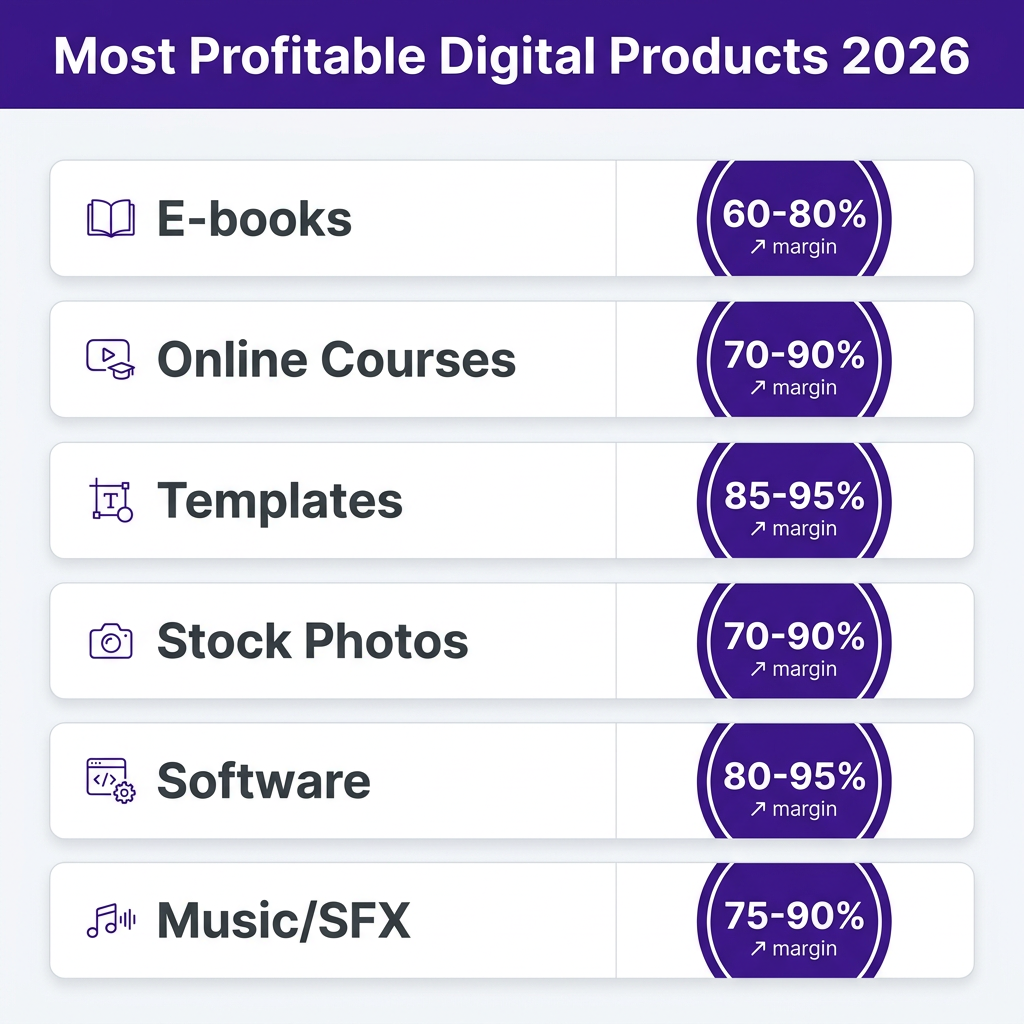
1. Online Courses (Profit Margin: 70-90%)
Online courses remain the king of digital products. With platforms like Teachable and Kajabi making course creation accessible, creators are earning $10,000+ per launch. The key is solving a specific problem for a specific audience — from Python programming to sourdough baking.
Startup cost: $100-$500 (microphone, basic editing software)
Potential earnings: $1,000-$100,000+ per course
2. Notion Templates (Profit Margin: 85-95%)
Notion templates have exploded in popularity. With 30+ million Notion users, templates for project management, habit tracking, and business planning sell for $15-$150 each. Top creators report earning $5,000-$20,000 monthly.
Startup cost: Free (just your time)
Potential earnings: $500-$10,000+ per month
3. E-books and Guides (Profit Margin: 60-80%)
E-books remain a staple for writers and experts. Whether it’s a comprehensive guide to digital marketing or a cookbook for keto enthusiasts, well-targeted e-books can generate consistent passive income. Amazon KDP makes publishing accessible, but selling direct gives you higher margins.
Startup cost: $50-$200 (cover design, formatting)
Potential earnings: $200-$5,000+ per month
4. Software and Apps (Profit Margin: 80-95%)
From Chrome extensions to mobile apps, software products command premium prices. Indie developers are building micro-SaaS businesses generating $10,000+ MRR (Monthly Recurring Revenue). Tools that solve specific business problems — like email validators or social media schedulers — are especially lucrative.
Startup cost: $500-$5,000 (development time/tools)
Potential earnings: $1,000-$50,000+ MRR
5. Stock Photos and Videos (Profit Margin: 70-90%)
Content creators constantly need high-quality visuals. Stock photography, video clips, and drone footage sell repeatedly on platforms like Shutterstock, Adobe Stock, and your own storefront. Niche content (diverse business scenes, specific industries) commands premium prices.
Startup cost: $500-$2,000 (camera equipment)
Potential earnings: $300-$3,000+ per month
6. Website Themes and Templates (Profit Margin: 75-90%)
WordPress themes, Shopify templates, and Framer sites are in constant demand. A well-designed theme can sell for $50-$300 and generate thousands in passive income. The key is staying current with design trends and platform updates.
Startup cost: $100-$500 (design tools)
Potential earnings: $1,000-$15,000+ per month
7. Music and Sound Effects (Profit Margin: 75-90%)
From podcast intros to game soundtracks, audio assets are essential for creators. Royalty-free music and SFX packs sell to YouTubers, podcasters, and game developers. A single high-quality track can sell hundreds of times.
Startup cost: $200-$1,000 (audio equipment/software)
Potential earnings: $500-$8,000+ per month
8. Digital Planners and Journals (Profit Margin: 80-95%)
Digital planners for GoodNotes, Notability, and similar apps have a passionate audience. Budget planners, fitness trackers, and gratitude journals sell for $10-$40. The low price point encourages impulse purchases.
Startup cost: $50-$200 (design software)
Potential earnings: $500-$5,000+ per month
9. Presets and LUTs (Profit Margin: 85-95%)
Photography presets (Lightroom) and video LUTs are goldmines for visual creators. A single preset pack can sell for $25-$75. Influencers and photographers constantly seek new looks to differentiate their content.
Startup cost: $50-$150 (editing software)
Potential earnings: $1,000-$10,000+ per month
10. Printable Products (Profit Margin: 85-95%)
Wall art, planners, worksheets, and educational printables sell exceptionally well on Etsy and your own store. The key is targeting specific niches — homeschool worksheets, wedding planners, or fitness trackers.
Startup cost: $30-$100 (design tools)
Potential earnings: $300-$5,000+ per month
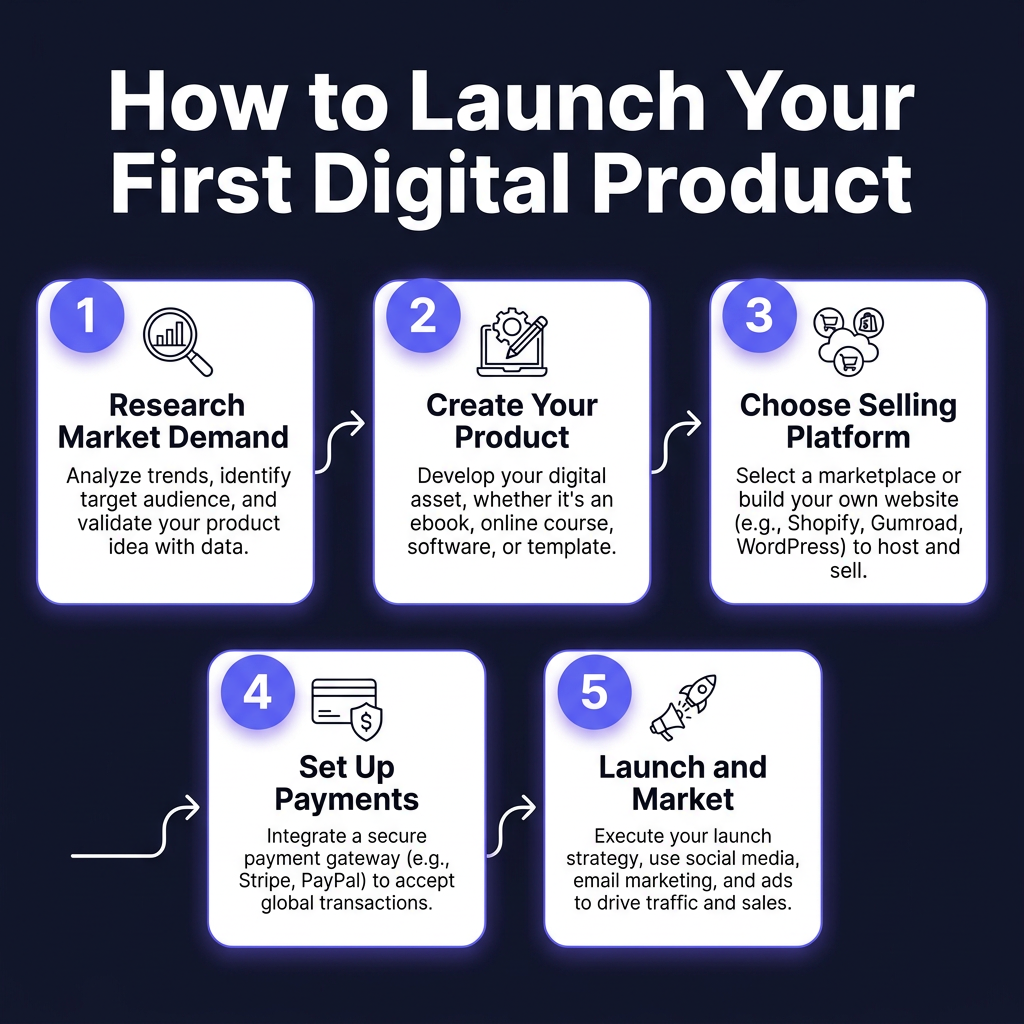
How to Launch Your First Digital Product
Ready to turn your knowledge or skills into income? Here’s the proven 5-step framework:
Step 1: Validate Your Idea
Before creating anything, validate demand. Search Reddit, Facebook groups, and forums for people asking questions related to your topic. Use tools like Google Trends and keyword research to confirm interest. The best products solve problems people are already trying to solve.
Step 2: Create a Minimum Viable Product
Don’t build the perfect product — build a good product and improve it based on feedback. For a course, start with a 1-hour workshop. For templates, create 3-5 essential pages. Launch quickly and iterate.
Step 3: Choose Your Platform
Select a platform that handles the technical complexity:
- Gumroad: Simple, 10% fee, good for beginners
- Payhip: 5% fee, instant payouts
- Fungies.io: 5% + tax handling, global MoR, best for scaling
- Shopify: 9/month, full control
Step 4: Set Up Your Sales System
Your sales page needs to answer three questions: What is it? Who is it for? What result will they get? Include testimonials (even from beta users), clear pricing, and a money-back guarantee to reduce purchase anxiety.
Step 5: Launch and Market
Your launch strategy depends on your audience. Options include:
- Social media: Share valuable content, build anticipation
- Email marketing: Nurture subscribers with free content
- Paid ads: Scale once you have proven organic sales
- Partnerships: Collaborate with complementary creators
- Content marketing: SEO-optimized blog posts and YouTube videos
Ready to Start Selling Digital Products?
Join thousands of creators using Fungies.io — automated tax compliance, 50+ payment methods, global Merchant of Record.
No credit card required
15 More Digital Product Ideas to Consider
Looking for more inspiration? Here are additional profitable digital product categories:
- 11. Coaching Packages: 1-on-1 or group coaching programs ($500-$5,000+)
- 12. Membership Communities: Recurring revenue through exclusive content ($10-$100/month)
- 13. Fonts and Typography: Custom fonts for designers ($20-$100 per font)
- 14. Icons and Graphics: UI kits, icon packs, illustrations ($15-$75)
- 15. 3D Models: For games, architecture, and VR ($20-$200)
- 16. Excel/Google Sheets Templates: Budget trackers, business dashboards ($15-$50)
- 17. Resume Templates: ATS-friendly designs ($10-$30)
- 18. Social Media Templates: Instagram carousels, TikTok covers ($15-$40)
- 19. Brushes and Textures: Procreate, Photoshop brushes ($10-$35)
- 20. Webinars and Workshops: Live or recorded sessions ($50-$500)
- 21. Checklists and Cheat Sheets: Quick reference guides ($5-$25)
- 22. Calculators and Tools: Interactive spreadsheets ($20-$100)
- 23. Subscriptions and Newsletters: Paid email content ($5-$50/month)
- 24. Virtual Events: Summits, conferences, networking ($50-$500)
- 25. AI Prompts: Curated prompts for ChatGPT, Midjourney ($10-$50)
Tax and Legal Considerations
As your digital product business grows, you’ll face tax obligations. Selling globally means dealing with VAT in Europe, sales tax in the US, and GST in Australia. Each jurisdiction has different thresholds and requirements.
This is where a Merchant of Record (MoR) becomes invaluable. An MoR like Fungies.io handles:
- Global tax collection and remittance
- Payment processing in 135+ currencies
- Fraud prevention and chargeback management
- Compliance with local regulations
Instead of registering for VAT in 20+ countries, you sell through the MoR and focus on creating great products.
Frequently Asked Questions
What is the easiest digital product to sell?
Notion templates and printable products have the lowest barrier to entry. They require no special skills beyond basic design knowledge, cost nothing to create, and have massive existing demand.
How much can I realistically make selling digital products?
Beginners typically earn $200-$1,000 in their first three months. With consistent effort and marketing, $3,000-$8,000 monthly is achievable within a year. Top creators earn six figures annually.
Do I need a website to sell digital products?
No. Platforms like Gumroad, Payhip, and Fungies.io let you sell without a website. However, having your own site gives you more control, higher profit margins, and better customer relationships.
What are the best platforms for selling digital products?
For beginners: Gumroad or Payhip. For scaling: Fungies.io (handles tax compliance globally) or Shopify (full control). For courses: Teachable or Kajabi. Choose based on your product type and growth goals.
How do I price my digital products?
Research competitors, then price based on value delivered. Templates: $15-$50. Courses: $100-$500. Software: $10-$100/month. Test different price points — you can always adjust based on demand.
Conclusion: Start Your Digital Product Journey Today
The digital product economy has never been more accessible. With the right product, platform, and marketing strategy, you can build a profitable business that generates income while you sleep.
Start small. Choose one product from this list that aligns with your skills. Create a minimum viable version. Launch it. Learn from feedback. Iterate and improve.
The creators earning six figures today started with a single product and a willingness to try. Your first digital product could be the foundation of a life-changing business.
Ready to start selling? Create your free Fungies account and launch your first digital product today. With automated tax compliance, global payment processing, and a 5% transaction fee, you keep more of what you earn while we handle the complexity.