You just shipped your SaaS. Payments are an afterthought — you’ll “figure it out later.” Three months down the line, you have customers in Germany demanding proper VAT invoices, a tax authority in Australia asking why you haven’t registered for GST, and a failed transaction rate of 23% because your checkout doesn’t support local payment methods.
This happens to almost every founder who launches globally without a payments strategy. The fix isn’t complicated — but it does require knowing what to set up, in what order, and what the tradeoffs actually cost you.
This checklist covers everything: choosing between a Merchant of Record and a DIY stack, what countries matter for tax registration, how to configure billing to survive real-world edge cases, and which platforms handle the compliance so you don’t have to.
Why Payment Setup Is a Day-One Decision
Most founders treat payments as a feature you bolt on. It’s actually infrastructure — and the decisions you make on day one compound over time.
Here’s what’s at stake:
- Tax liability accumulates retroactively. If you sell to EU customers without collecting VAT, you can owe back-taxes on every transaction you’ve ever processed. Some jurisdictions will fine you for each missed return.
- Migrating billing stacks is painful. Moving 500 subscribers from Paddle to Stripe mid-product requires careful migration logic, customer communication, and usually some churn. Founders who pick the wrong platform at launch often stay stuck on it.
- Failed payments compound into churn. A 2024 study by ProfitWell found that involuntary churn — payments failing due to card issues — accounts for 20–40% of total SaaS churn. Your billing configuration from day one determines how much revenue you silently lose.
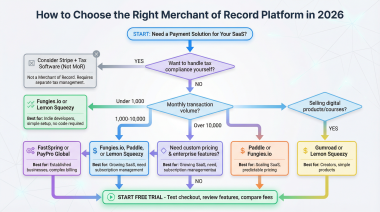
The core question you need to answer first: Merchant of Record or DIY?
Step 1: Choose Your Stack — MoR vs DIY
This is the decision tree that determines everything else.
Merchant of Record (MoR)
A MoR becomes the legal seller of your product. They collect payment, remit taxes, handle chargebacks, and send you a net payout. You’re not the merchant — they are.
Who should use a MoR:
- Bootstrapped founders and indie hackers who can’t hire a tax lawyer
- SaaS products selling to consumers globally (B2C or B2B with individual buyers)
- Anyone targeting EU customers (VAT is non-optional)
- Teams without a dedicated finance/ops function
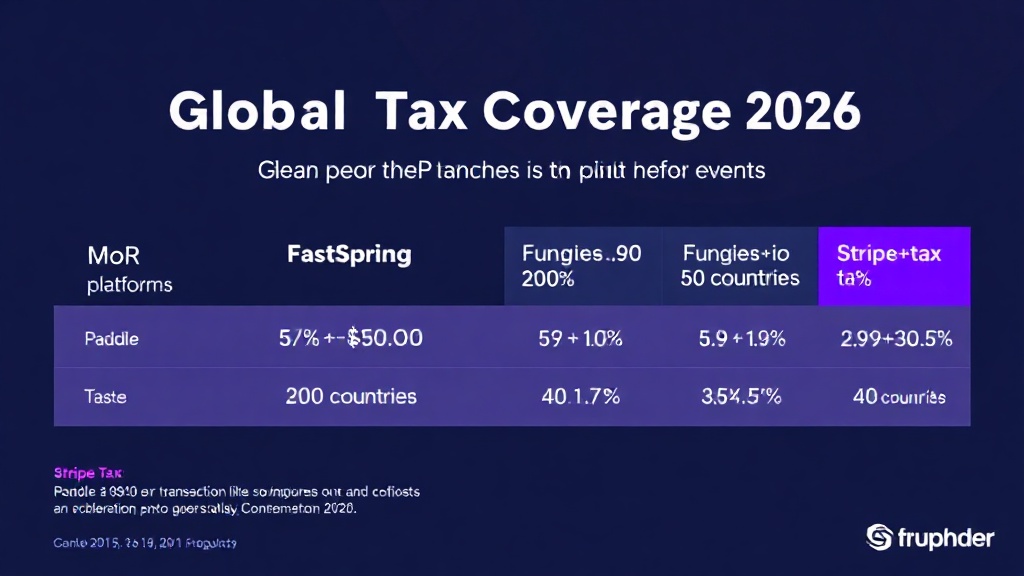
MoR pricing (2026 real numbers):
| Platform | Fee Structure | Monthly Cost at $10K MRR* | Tax Countries |
|---|---|---|---|
| Paddle | 5% + $0.50/txn | ~$550 | 200+ |
| FastSpring | 5.9% + $0.95/txn | ~$640 | 200+ |
| Fungies.io | 5% + $0.50/txn | ~$500 | 50+ |
| Creem | 3.9% + $0.40/txn | ~$430 | 30+ |
| Dodo Payments | 4% + $0.40/txn | ~$440 | 100+ |
*Estimated for 200 transactions/month at average $50 ticket size. Actual cost varies by volume and transaction count.
DIY Stack (Stripe + Tax Layer)
With Stripe, you’re still the merchant of record. You collect payment, you owe the taxes. But you add Stripe Tax (0.5% extra per transaction) to automate calculation and reporting.
Who should use Stripe DIY:
- B2B SaaS with enterprise customers who pay on invoices
- Companies with their own legal entity and finance team
- Products needing deep billing customization (usage-based, seat-based, complex tiers)
- High-volume SaaS where 5% MoR fees start costing $10K+/month
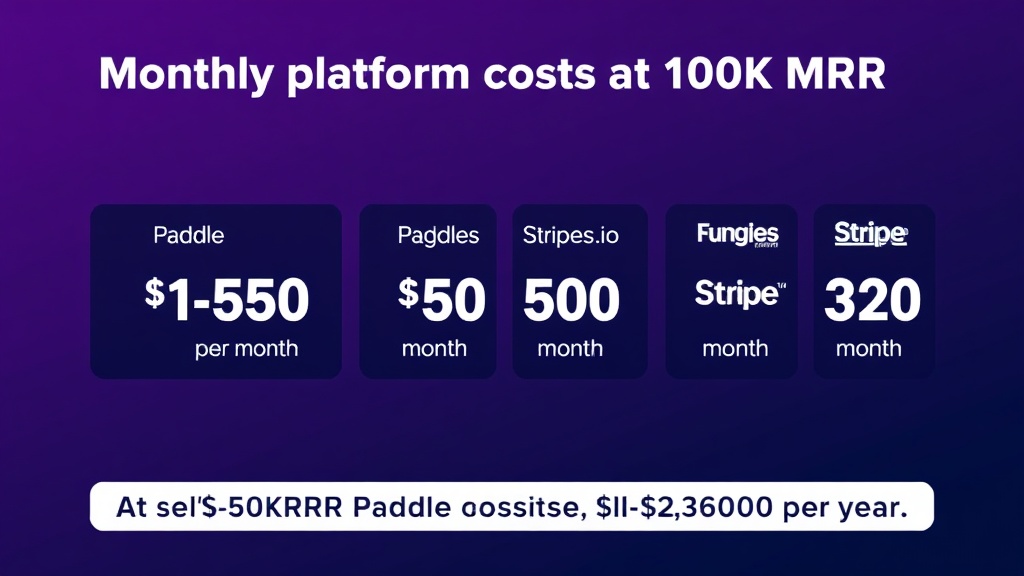
At $10K MRR the gap is small. At $200K MRR, the difference between Stripe (~$7,000/month) and Paddle (~$11,000/month) is $48,000/year — enough to hire someone.
Step 2: Map Your Tax Registration Requirements
If you’re going the DIY route, you can’t skip this. Even with a MoR, understanding the coverage matters.
The countries that matter most for digital products:
| Region | Tax | Rate | Registration Threshold | MoR handles it? |
|---|---|---|---|---|
| EU (27 countries) | VAT via OSS | 17–27% | €10,000/year cross-border | Yes (all MoRs) |
| UK | VAT | 20% | £85,000/year | Yes (all MoRs) |
| Australia | GST | 10% | AUD 75,000/year | Yes (most MoRs) |
| Canada | GST/HST | 5–15% | CAD 30,000/year | Yes (major MoRs) |
| US (45 states) | Sales tax | 4–10% | $100K revenue OR 200 transactions per state | Yes (all MoRs) |
| India | GST | 18% | Non-resident: mandatory registration | Paddle, FastSpring |
| Japan | Consumption tax | 10% | ¥10M/year | Paddle, FastSpring |
If you’re selling to US customers, you have economic nexus in any state where you exceed $100,000 in sales or 200 transactions. That means you potentially owe sales tax to 45 states. With a MoR, this is their problem. Without one, you need Stripe Tax, TaxJar, or Avalara — and you still need to file returns.
Step 3: Configure Subscription Billing for Real-World Edge Cases
Don’t just set up the happy path. The billing configuration that actually matters is what happens when things go wrong.
The billing checklist:
Trials and freemium:
- Free trial with card required: higher conversion, more friction at signup
- Free trial without card: lower friction, lower conversion to paid
- Freemium: highest top-of-funnel, requires strong upgrade triggers
Data point: Fungies research found that free trials with card-required convert at 15–20% vs 3–8% for cardless trials. But cardless trials generate 3–5x more signups. Do the math for your CAC.
Dunning (failed payment recovery):
- Retry failed cards at day 3, 7, and 14 after failure
- Send email reminders at each retry (dunning sequence)
- Smart retry logic (retry on payday, retry on different time of day) can recover 40–60% of initially failed payments
- Cancel subscription after 21–30 days of failed attempts
Paddle includes dunning as part of the platform. With Stripe, you configure this manually or use a tool like Churnbuster or Stunning.
Proration and plan changes:
- Upgrades should charge the difference immediately
- Downgrades should credit the difference to next billing cycle
- Annual to monthly switches need careful handling to avoid negative invoices
Invoicing for B2B:
- EU B2B customers often need VAT invoices with their VAT number
- Some enterprise buyers require net-30 payment terms (invoice + bank transfer, no card)
- Paddle and FastSpring generate these automatically. Stripe requires you to build invoice customization.
Step 4: Set Up Checkout for Global Conversion
A checkout that converts in the US might fail in Brazil, India, or Germany. Localization isn’t optional if you want conversion rates above 60%.
What global checkout requires:
- Local payment methods: iDEAL in Netherlands, Boleto in Brazil, UPI in India, SEPA debit in Europe. Stripe supports 40+ local methods. Most MoRs support 10–20.
- Currency display: Show prices in local currency, not just USD. Customers in Europe expect EUR prices.
- Language localization: Checkout in local language significantly improves conversion in non-English markets.
- Tax-inclusive pricing: EU customers expect prices with VAT included. Display “€19 incl. VAT” rather than “$19 + tax”.
Checkout conversion benchmarks (2025 data):
- US: 60–75% average checkout completion
- UK: 55–70%
- Germany: 45–60% (strict data protection expectations, prefer bank transfer options)
- Brazil: 30–50% (without Boleto, drops to 20–30%)
- India: 35–55% (UPI significantly improves this)
If you use Paddle, their hosted checkout handles most of this automatically. With Stripe, you need to configure payment methods, currency, and localization manually via the Payment Element.
Step 5: Test Transactions Across Key Markets
Before you launch, actually test your checkout in your target markets. Not just with a US Visa card.
Testing checklist:
- ✅ US card (Visa, Mastercard) — basic test
- ✅ European card — triggers 3DS authentication (Strong Customer Authentication)
- ✅ UK card post-Brexit — separate payment region with different SCA rules
- ✅ Test a failed payment and verify dunning kicks in
- ✅ Test a refund — does it process within 5–7 business days?
- ✅ Test annual → monthly plan change
- ✅ Test coupon/discount codes
- ✅ Verify tax amount on invoice is correct for EU buyer with valid VAT number (should be 0%)
Stripe provides test card numbers for different scenarios including 3DS, declines, and specific bank errors. Paddle’s sandbox environment supports similar testing.
Step 6: Configure Failed Payment Recovery (Dunning)
This is the most overlooked setup step — and it’s where SaaS companies silently lose 15–25% of their revenue.
Industry benchmarks for involuntary churn:
- Without dunning: 3–5% monthly churn from card failures alone
- With basic dunning (3 retries + email): reduces this to 1–2%
- With smart dunning (ML-based retry timing): reduces to 0.5–1%
What a good dunning sequence looks like:
| Day | Action | Expected Recovery Rate |
|---|---|---|
| 0 (failure) | Immediate retry once | 15% of failures |
| 3 | Retry + email “Card declined” | 12% of remaining |
| 7 | Retry + email “Action required” | 10% of remaining |
| 14 | Final retry + email “Account will cancel” | 8% of remaining |
| 21 | Cancel + offboarding email | Win-back campaign later |
Paddle’s Retain product (formerly ProfitWell) handles this automatically and includes an account updater that refreshes expired card details from networks. It’s included in their fee.
Fungies.io includes basic dunning built-in. For Stripe, you set this up manually or add a tool like Stunning ($99/month) or Churnbuster ($49/month).
Step 7: Set Up Payouts and Revenue Reporting
You need to know what you’re making, in what currencies, and when it’s hitting your bank.
Payout configuration checklist:
- Payout currency: Do you want USD, EUR, or local currency? Most MoRs default to USD. Set your preference upfront.
- Payout schedule: Daily, weekly, or monthly? Monthly consolidates fees. Daily gives you faster cash flow visibility.
- Multi-currency accounting: If you sell in EUR and receive USD, you have FX exposure. Document how you handle this.
- Revenue recognition timing: When does a subscription payment count as revenue? At charge date or over the subscription period? Matters for accounting (ASC 606 / IFRS 15).
Revenue reporting tools by platform:
- Paddle: Built-in analytics dashboard + ProfitWell metrics (MRR, churn, LTV)
- Stripe: Sigma (SQL-based), Radar dashboard, + integrations with ChartMogul/Baremetrics
- Fungies.io: Built-in analytics dashboard with MRR tracking
- FastSpring: Dashboard + API reporting
Putting It All Together: The Checklist
Run through this before you flip the switch on payments:
- ☐ Chosen stack: MoR (Paddle / FastSpring / Fungies / Creem) or DIY (Stripe + Tax)
- ☐ Tax coverage verified for your primary target markets
- ☐ Subscription billing configured: trials, plan changes, proration logic
- ☐ Dunning set up: 3+ retries, email sequence, cancel window
- ☐ Checkout localized: currencies, local payment methods, language
- ☐ Tested with EU card (triggers SCA / 3DS)
- ☐ Refund flow tested
- ☐ Payout currency and schedule configured
- ☐ Revenue dashboard connected (ChartMogul, Baremetrics, or native)
- ☐ Invoicing configured for B2B customers (VAT number support)
Which Platform Should You Actually Use?
Here’s the honest breakdown based on the type of business you’re running:
| You are… | Best option | Why |
|---|---|---|
| Solo founder, < $5K MRR, global | Fungies.io or Creem | Lowest friction, MoR coverage, fast setup |
| Growing SaaS, $5K–$50K MRR, global | Paddle or Fungies.io | Full MoR + dunning + analytics included |
| Enterprise SaaS, > $50K MRR | Stripe + Stripe Tax or FastSpring | Lower % fees justify DIY complexity |
| Software / plugin / one-time product | Fungies.io or FastSpring | Good support for non-subscription models |
| US-only, B2B, invoiced payments | Stripe | Best invoice + ACH + net-terms support |
| Creator economy, digital downloads | Gumroad or Payhip (+ Fungies for global) | Marketplace discovery + simple setup |
Key Takeaways
- Pick your payments architecture before you have customers — migrating billing stacks later causes churn and headaches
- A Merchant of Record is the default-correct choice for most indie and bootstrapped SaaS — tax compliance alone justifies the 5% fee at early stage
- Set up dunning from day one — involuntary churn from failed payments is 15–25% of total churn for most SaaS companies
- Localize checkout for your target markets — local payment methods and currency display can double conversion rates in markets like Brazil and India
- Test with European cards before launch — SCA/3DS authentication catches most founders off guard and silently kills conversion
FAQ
What’s the difference between a Merchant of Record and a payment processor?
A payment processor (like Stripe) facilitates the transaction but you remain the legal seller — which means tax liability, chargebacks, and compliance are on you. A Merchant of Record (like Paddle or Fungies.io) becomes the legal seller, taking on full responsibility for taxes, fraud, chargebacks, and regulatory compliance across all markets. You get a net payout after fees.
Do I need a Merchant of Record if I’m only selling to US customers?
Not necessarily. US-only sellers can use Stripe with Stripe Tax for sales tax. But as soon as you have customers in the EU or Australia, a MoR becomes significantly easier. EU VAT alone requires registering in or using the OSS scheme — most founders without a MoR simply don’t comply, exposing themselves to back-tax liability.
When does it make sense to switch from a MoR to Stripe DIY?
The crossover point is typically $200–500K ARR, when the MoR fee (5%) starts costing $10–25K/month. At that point, hiring a tax consultant and using Stripe Tax often costs less. Most indie founders never reach this threshold, so staying on a MoR for life is perfectly reasonable.
How long does it take to set up a Merchant of Record for my SaaS?
With Fungies.io or Creem: 1–2 hours for basic setup, 1–2 days for full integration including API/webhook setup. Paddle takes 2–7 business days due to a manual approval process. FastSpring requires a sales call. For solo founders, Fungies.io is currently the fastest MoR to get live on.
Conclusion
Global payments aren’t complicated if you make the right architectural decisions on day one. The checklist above covers every major failure point we’ve seen founders hit — from tax liability to dunning to checkout localization.
If you’re launching a SaaS product and want to skip all of this complexity, Fungies.io handles global payments, tax compliance, and billing infrastructure so you can focus on the product. Setup takes under two hours — no sales calls, no waiting for approval.
References
- Paddle: 2026 SaaS Sales Tax Guide (US and International)
- Avalara: Global VAT and GST on Digital Services
- Supastarter: The Ultimate SaaS Launch Checklist for 2026
- Numeral: Should SaaS Businesses Use a Merchant of Record?
- ChartMogul: The SaaS Conversion Report
- Dodo Payments: Best Merchant of Record for Indie Hackers in 2026
- Indie Hackers: The Micro-SaaS Checklist I Wish I Had Before My First Launch