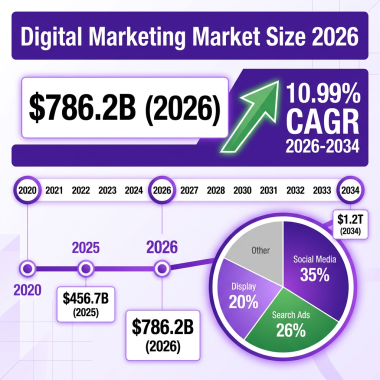
Digital marketing has evolved from an experimental channel to the dominant force in global advertising, with businesses now allocating the majority of their marketing budgets to digital platforms. In 2026, the digital marketing landscape is undergoing its most significant transformation yet—driven by artificial intelligence, shifting consumer behaviors, and the emergence of new platforms that are reshaping how brands connect with their audiences. With global digital ad spending reaching $786.2 billion in 2026 and projected to exceed $1.2 trillion by 2034, understanding the current state and future trajectory of digital marketing is essential for any business looking to maintain competitive advantage.
The statistics tell a compelling story: 78% of organizations now use AI across business functions, 91% of businesses leverage video as a marketing tool, and social media platforms have captured over 5.2 billion active users worldwide. Yet despite these impressive adoption rates, many marketers struggle to demonstrate tangible ROI, with over 80% of organizations reporting no measurable impact on enterprise-level EBIT from their AI initiatives. This disconnect between investment and results highlights the complexity of modern digital marketing and the critical need for data-driven strategies.
The transformation we are witnessing in 2026 represents more than incremental change—it signals a fundamental restructuring of how businesses communicate with customers. Traditional marketing funnels have given way to complex, multi-touchpoint journeys where consumers discover, research, and purchase across an array of digital channels. The linear path from awareness to conversion has been replaced by dynamic, non-linear experiences that demand sophisticated orchestration and real-time responsiveness from marketing teams.
For SaaS companies and digital product sellers specifically, these shifts carry profound implications. The rise of AI-powered search, the dominance of short-form video, and the increasing importance of community-led growth are reshaping customer acquisition strategies. Companies that fail to adapt to these new realities risk being displaced by more agile competitors who understand that digital marketing in 2026 is as much about providing value and building relationships as it is about driving transactions.

Market Overview: The $786.2 Billion Digital Marketing Ecosystem
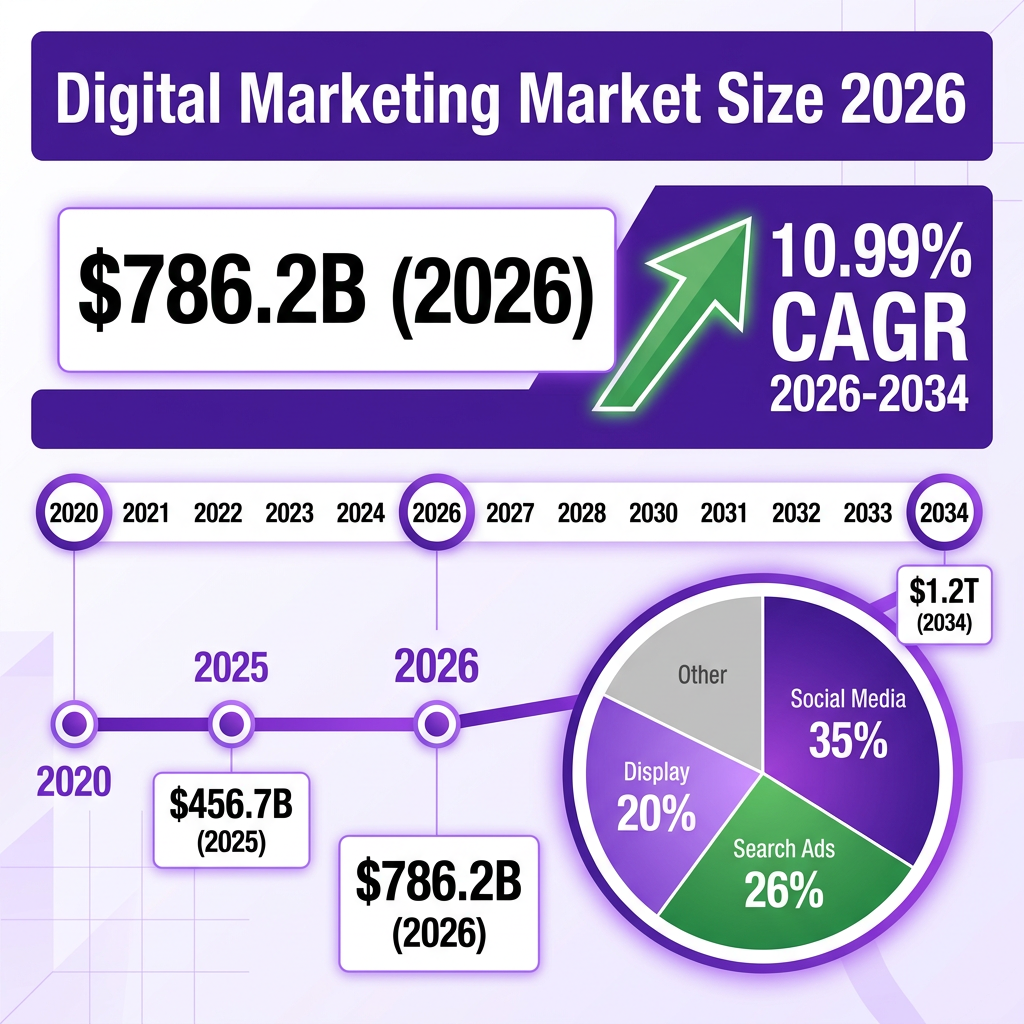
The global digital marketing market has reached unprecedented scale in 2026, valued at $786.2 billion according to the latest industry research from SEO.com and IMARC Group. This represents a significant jump from the $456.7 billion valuation recorded in 2025, demonstrating the accelerating pace of digital transformation across industries. The market is projected to grow at a compound annual growth rate (CAGR) of 10.99% from 2026 to 2034, ultimately reaching $1.2 trillion by the end of the forecast period.
Several macroeconomic factors are driving this explosive growth. The increasing penetration of internet access worldwide has fundamentally transformed the marketing landscape—according to Data Portal, approximately 5.35 billion people were using the internet in 2024, representing 66.2% of the global population. This massive connected audience has prompted businesses to reallocate resources aggressively toward digital channels, recognizing that traditional advertising methods can no longer deliver the reach and targeting precision required in the modern marketplace.
The digital advertising segment specifically has emerged as the largest component of the broader marketing ecosystem. According to The Business Research Company, digital advertising reached $311.86 billion in 2025 and is expected to grow to $588.93 billion by 2030 at a CAGR of 13.5%. North America remains the largest regional market, while Asia-Pacific is experiencing the fastest growth, driven by rapid smartphone adoption and expanding e-commerce infrastructure in countries like India, Indonesia, and Vietnam.
Search advertising continues to dominate within the digital advertising mix, accounting for $202.40 billion in spending—the largest single segment. Social media advertising follows closely behind, with global spending projected to reach $338.75 billion in 2026, growing at 11.86% annually to reach $530.34 billion by 2030. The United States leads in absolute spending, with $298 billion in total digital ad expenditure and $126 billion specifically in social media advertising.
Mobile marketing has become the primary battleground for digital advertisers. Global mobile advertising spend reached $402 billion in 2026, representing 73% of all digital ad spending according to Searchlab research. The US alone accounts for $218 billion of this total. With 60.7% of all web traffic now coming from mobile devices and 91% of consumers making purchases on smartphones, mobile-first strategies have transitioned from best practice to absolute necessity.
The content marketing sector has also experienced substantial growth, with the industry projected to reach $564.8 billion in 2025 according to Amra and Elma. This reflects the continued surge in demand for digital content as businesses recognize that valuable, relevant content drives organic traffic, builds brand authority, and nurtures customer relationships more effectively than interruptive advertising alone.
Regional variations in digital marketing adoption reveal interesting patterns that inform global strategy. Asia-Pacific markets are experiencing the most rapid growth, with China’s mobile advertising ecosystem and India’s active mobile internet user base driving regional expansion. Latin America and Southeast Asia represent emerging opportunities, with younger demographics and increasing internet penetration creating fertile ground for digital-first marketing approaches. European markets, while mature, continue to innovate around privacy-compliant targeting and sustainable marketing practices.
The shift toward digital has also transformed the competitive landscape for marketing services. The digital marketing agency market has grown to $8.27 billion in 2026, with specialized agencies competing alongside full-service firms for market share. This fragmentation reflects the increasing complexity of digital marketing—no single agency can claim expertise across all channels and technologies, leading to the rise of niche specialists in areas like AI-powered marketing, influencer management, and community building.
Key Statistics and Data Points Defining Digital Marketing in 2026
The digital marketing landscape in 2026 is defined by a series of compelling statistics that reveal both the opportunities and challenges facing marketers today. Understanding these benchmarks is essential for setting realistic goals, allocating budgets effectively, and measuring performance against industry standards.
Global Digital Advertising Spend: Total digital ad spending reached $786.2 billion in 2026, with revised projections showing continued growth despite economic headwinds. The average spending per user on social media advertising is forecasted to be $45.11, highlighting the intense competition for consumer attention on these platforms.
AI Adoption in Marketing: Perhaps the most significant shift in 2026 is the widespread adoption of artificial intelligence. A staggering 78% of organizations now use AI in at least one business function, representing a 41.8% relative increase since 2023 according to McKinsey and Stanford HAI data. In marketing specifically, 89% of marketers now use generative AI tools for content creation, with 94% planning to leverage AI for content generation in 2026. However, the maturity gap remains significant—only 1% of companies describe their AI rollouts as ‘mature,’ indicating substantial room for optimization.
Social Media Usage: Social platforms have achieved near-universal reach, with over 5.2 billion active users in 2026 representing more than 64% of the world’s population. The average user spends 2 hours and 28 minutes daily on social platforms, creating unprecedented opportunities for brand engagement. Facebook maintains its position as the largest platform with 3.1 billion monthly active users, followed by YouTube with 2.9 billion, Instagram with 2.3 billion, and TikTok exceeding 1.6 billion users.
Video Marketing Dominance: Video has become the dominant content format, with 91% of businesses using video as a marketing tool in 2026. According to Cisco’s Visual Networking Index, video traffic now accounts for 82.5% of all internet traffic. Short-form video has emerged as the preferred format, with 73% of consumers preferring short videos and platforms like TikTok, Instagram Reels, and YouTube Shorts driving the highest engagement rates.
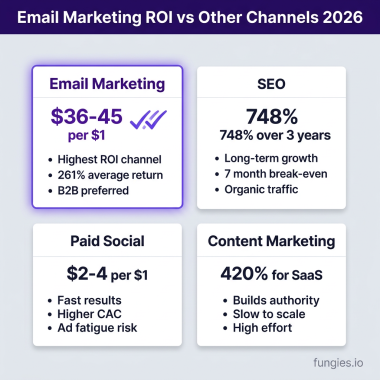
Email Marketing Performance: Despite the rise of social media and messaging apps, email marketing maintains its position as the highest-ROI channel. For every $1 spent on email marketing, businesses see an average return of $36-$42, representing an ROI of 3600-3800%. Average open rates across industries range from 15-25%, with B2B emails typically achieving 18-22%. Welcome emails achieve the highest open rates at 82%, while personalized subject lines increase open rates by 26%.
SEO and Organic Search: Search engine optimization continues to drive significant value, with organic search accounting for 53.3% of all website traffic. The global SEO industry has grown to $80+ billion, with SEO software markets valued at $10.3 billion. However, the landscape is shifting dramatically—60% of Google searches now result in zero clicks, and AI Overviews have reduced organic CTR from up to 39.8% down to 13-20% for affected queries.
Mobile Commerce: Mobile devices now drive the majority of e-commerce activity, with 57% of online purchases made on mobile. The average mobile order value is $68, and mobile conversion rates have improved to 2.4% globally. Notably, 30% of all mobile searches are related to local stores, highlighting the importance of local SEO and location-based marketing strategies.
Content Marketing Benchmarks: The average blog post now exceeds 1,400 words, requiring several hours to produce. Blog articles with relevant images receive dramatically higher view counts, while image-rich posts attract significantly more backlinks than text-heavy alternatives. Over 76% of content marketers rely on blogs to generate leads, and 87% of B2B marketers report that content marketing created brand awareness in the past 12 months.
Voice Search Adoption: Voice search continues to grow, with 20.5% global usage and 157.1 million users in the United States alone. This shift toward conversational queries is changing how marketers approach keyword strategy and content optimization, requiring a focus on natural language and question-based content.
Marketing Technology Investment: Marketing technology (MarTech) now represents 25.4% of marketing budgets on average, reflecting the critical role of software and systems in modern marketing operations. Despite this investment, 40% of marketers say proving the ROI of their marketing activities remains a top challenge, highlighting the ongoing struggle to connect marketing activities to business outcomes.
Influencer Marketing Evolution: The influencer marketing landscape has matured significantly, with the global market reaching $24 billion in 2026. Micro-influencers (those with 10,000-100,000 followers) now deliver higher engagement rates than mega-influencers, with average engagement rates of 3.86% compared to 1.21% for accounts with over 1 million followers. This shift toward authentic, niche influence has changed how brands approach partnerships, prioritizing alignment and engagement over raw reach.
Programmatic Advertising Growth: Programmatic ad buying now accounts for over 90% of digital display advertising, with AI-powered real-time bidding systems optimizing ad placements across millions of publisher sites. The efficiency gains are substantial—programmatic campaigns typically achieve 20-30% lower cost-per-acquisition compared to traditional direct buys, while delivering superior targeting precision.
Seven Major Trends Shaping Digital Marketing in 2026
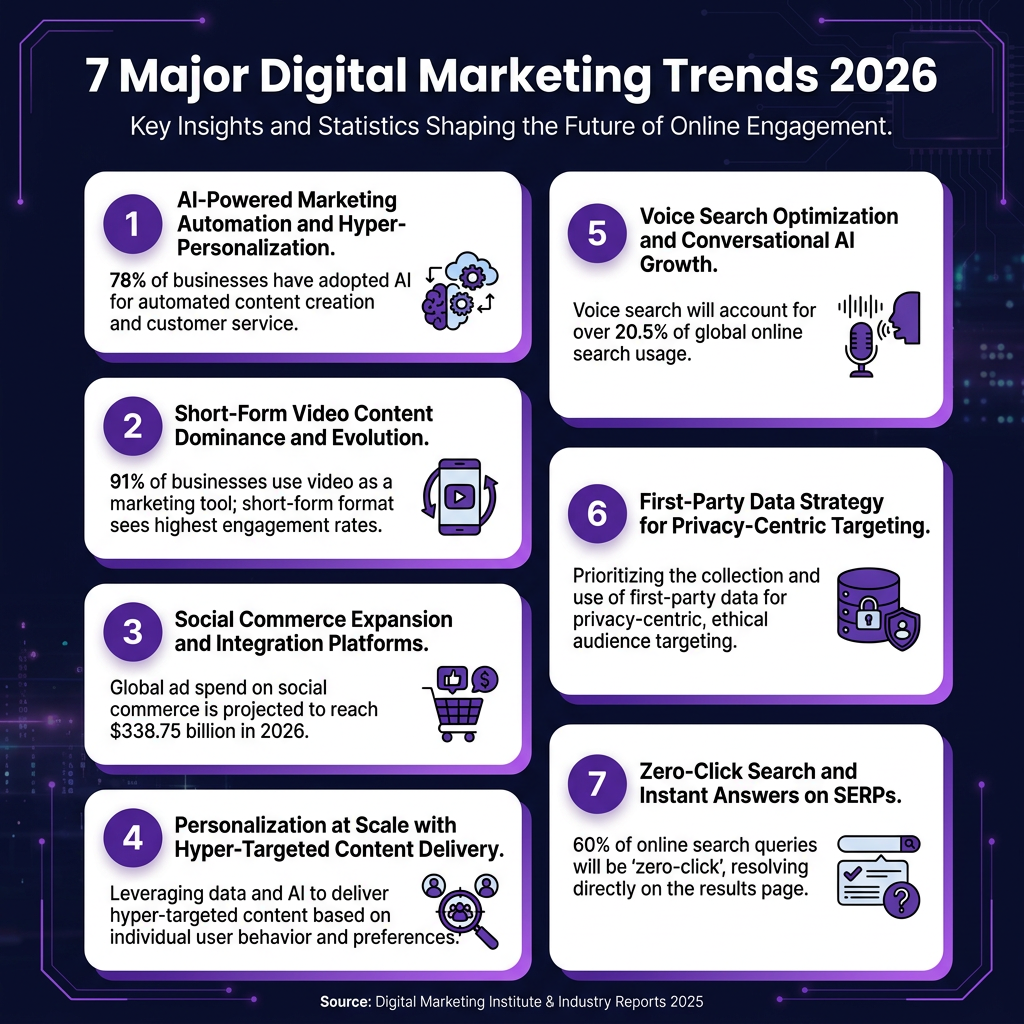
The digital marketing landscape of 2026 is being reshaped by seven transformative trends that are redefining how brands connect with consumers, allocate budgets, and measure success. Understanding these trends is critical for marketers seeking to maintain competitive advantage in an increasingly complex environment.
1. AI-Powered Marketing at Scale
Artificial intelligence has transitioned from experimental technology to foundational infrastructure across digital marketing operations. With 78% of organizations now using AI across business functions, the technology is being deployed across the entire marketing funnel—from predictive analytics and audience segmentation to content generation and campaign optimization. Generative AI specifically has revolutionized content production, with 62% faster content production reported by organizations using AI tools.
The generative AI market itself has reached $91.57 billion in 2026, with marketing representing one of the largest use cases. Marketers are using AI for everything from drafting social media posts and email copy to generating video scripts and optimizing ad creative. However, the value gap remains significant—over 80% of organizations report no tangible impact on enterprise-level EBIT from their AI initiatives, suggesting that implementation maturity, rather than adoption, is the current challenge.
2. The Dominance of Short-Form Video
Video marketing has achieved near-universal adoption, with 91% of businesses using video as a marketing tool. However, the format has shifted decisively toward short-form content. Platforms like TikTok, Instagram Reels, and YouTube Shorts have trained consumers to expect bite-sized, engaging content that delivers value within seconds. According to recent data, 73% of consumers prefer short videos over longer formats.
Instagram Reels now generate 2.25x more reach than other content formats and account for over 50% of ad inventory on the platform. This shift has profound implications for content strategy—brands must now master the art of storytelling in 15-60 second formats while maintaining brand consistency and delivering clear calls to action. The production landscape has also evolved, with AI-powered video tools making professional video creation 60% cheaper and 5x faster.
3. Social Commerce and Shoppable Content
The integration of e-commerce functionality directly into social media platforms has created a new paradigm for digital retail. Social commerce conversion rates now reach 2.8% for native in-app purchases, compared to traditional e-commerce benchmarks. This trend is particularly pronounced among younger consumers—41% of Gen Z now goes to social media first when they need information, bypassing traditional search engines entirely.
Platforms have responded by enhancing their shopping features. Instagram Shopping, TikTok Shop, and Pinterest Product Pins have transformed social feeds into discovery and purchase channels. For marketers, this means developing content strategies that seamlessly blend entertainment and commerce, leveraging user-generated content, and optimizing for mobile-first shopping experiences.
4. Hyper-Personalization at Every Touchpoint
Personalization has evolved beyond simply inserting a recipient’s name into an email. Modern consumers expect experiences tailored to their preferences, behaviors, and context in real-time. AI-powered personalization engines now enable dynamic content adaptation across websites, emails, ads, and mobile apps based on user behavior, purchase history, and predictive models.
Research shows that personalized emails deliver 6x higher transaction rates, while 80% of consumers are more likely to purchase from brands that provide personalized experiences. However, the challenge lies in balancing personalization with privacy concerns—as third-party cookies are phased out, marketers must build first-party data strategies and leverage contextual targeting to maintain relevance.
5. The Rise of Voice and Visual Search
Voice search now accounts for 20.5% of global search usage, with 157.1 million users in the United States alone. This shift toward conversational queries is fundamentally changing SEO strategy—marketers must now optimize for natural language patterns, question-based queries, and featured snippets that voice assistants prioritize.
Visual search is also gaining traction, with tools like Google Lens enabling users to search using images rather than text. For e-commerce brands, this means optimizing product images for visual search, implementing structured data, and ensuring that visual content is discoverable through image-based queries. The convergence of voice and visual search points toward a future where multimodal search becomes the norm.
6. First-Party Data and Privacy-First Marketing
The deprecation of third-party cookies and increasing privacy regulations have forced marketers to rebuild their data strategies around first-party data. Brands are now investing heavily in data collection infrastructure—loyalty programs, newsletter subscriptions, gated content, and interactive experiences that encourage users to voluntarily share information.
This shift requires a value exchange mindset—consumers will share data when they perceive clear benefits, whether that is personalized recommendations, exclusive content, or streamlined experiences. Marketers must focus on building trust through transparent data practices and delivering tangible value in exchange for customer information.
7. Zero-Click Search and Answer Engine Optimization
Perhaps the most disruptive trend for traditional SEO is the rise of zero-click searches. According to Gartner, traditional search engine volume will drop 25% by 2026, with 60% of Google searches now resulting in zero clicks. Google’s AI Overviews and featured snippets provide answers directly on the search results page, reducing the need for users to visit websites.
This has given rise to Answer Engine Optimization (AEO) and Generative Engine Optimization (GEO)—strategies focused on optimizing content for AI systems and answer engines rather than traditional search rankings. Marketers must now think beyond driving traffic to building brand authority and ensuring their content is cited as a source by AI systems.
Key Players and the Competitive Landscape
The digital marketing ecosystem in 2026 is dominated by several major platforms and technology providers, each competing for advertising dollars and user attention. Understanding the competitive dynamics between these players is essential for effective budget allocation and channel strategy.
Meta (Facebook, Instagram, WhatsApp)
Meta remains the dominant force in social media advertising, with Facebook’s 3.1 billion monthly active users and Instagram’s 2.3 billion users providing unparalleled reach. The company’s advertising revenue continues to grow despite regulatory challenges and competition from newer platforms. Meta’s strength lies in its sophisticated targeting capabilities, extensive user data, and the integration of shopping features across its platforms. Instagram Reels has become a significant growth driver, accounting for over 50% of ad inventory and generating 2.25x more reach than other content formats.
Google (Search, YouTube, Display Network)
Google continues to dominate search advertising with its $202.40 billion segment, processing over 8.5 billion searches daily. YouTube, with 2.9 billion monthly active users and 1 billion hours of video watched daily, represents a significant video advertising platform. However, Google faces challenges from AI-driven search alternatives and zero-click trends that reduce traffic to websites. The company’s response includes AI Overviews, enhanced shopping features, and continued investment in YouTube Shorts to compete with TikTok.
TikTok
TikTok has emerged as a formidable competitor, exceeding 1.6 billion monthly active users in 2026. The platform’s algorithm-driven content discovery and emphasis on short-form video have forced competitors to adapt. TikTok Shop has transformed the platform into an e-commerce destination, particularly for younger consumers. Despite regulatory scrutiny in some markets, TikTok’s influence on content trends and consumer behavior is undeniable.
Amazon Advertising
Amazon has built the third-largest digital advertising business, leveraging its e-commerce data to offer highly targeted advertising both on and off its platform. With consumers increasingly starting product searches on Amazon rather than Google, the platform has become essential for brands in the consumer goods space. Amazon’s advertising tools have expanded beyond sponsored products to include display advertising, video ads, and programmatic solutions.
Microsoft (Bing, LinkedIn)
Microsoft has gained momentum through its partnership with OpenAI, integrating AI capabilities into Bing search and attracting users seeking alternatives to Google. LinkedIn remains the dominant platform for B2B marketing, with 70% of video marketers now using the platform according to recent data. Microsoft’s advertising network provides reach across search, display, and professional social media.
Digital Marketing Agencies
The digital marketing agency market has grown to $8.27 billion in 2026 and is projected to reach $27.57 billion by 2035, growing at 14.32% annually. Leading agencies like Paklogics, WebFX, and Disruptive Advertising have differentiated themselves through AI integration, performance-based pricing, and specialization in specific industries or channels. The agency landscape is increasingly fragmented, with boutique firms competing alongside full-service agencies for market share.

Challenges and Pain Points in Digital Marketing
Despite the opportunities presented by the growing digital marketing ecosystem, marketers face significant challenges that can impede performance and complicate strategy execution. Understanding these pain points is the first step toward developing effective solutions and avoiding common pitfalls that waste budget and damage brand reputation.
1. Proving ROI and Attribution
The most persistent challenge facing digital marketers is demonstrating the return on marketing investment. According to recent research, 40% of marketers say proving the ROI of their marketing activities is a top challenge. The proliferation of touchpoints across the customer journey has made attribution increasingly complex—consumers may interact with a brand through multiple channels (social media, search, email, display ads) before converting, making it difficult to assign credit accurately.
Additionally, privacy changes and cookie deprecation have fragmented tracking capabilities, reducing visibility into user behavior across sessions and devices. The traditional last-click attribution model has become obsolete as customer journeys span weeks or months and involve dozens of touchpoints. Marketers must invest in advanced attribution models, marketing mix modeling, and first-party data strategies to maintain measurement accuracy.
The pressure to demonstrate ROI has intensified as economic conditions have tightened marketing budgets. CMOs are increasingly required to justify every dollar spent, and marketing teams that cannot connect their activities to revenue outcomes face budget cuts and organizational skepticism. This has created a paradox where short-term performance metrics are prioritized over long-term brand building, potentially undermining sustainable growth.
2. AI Implementation and the Value Gap
While AI adoption has reached 78% of organizations, the value gap remains significant. Over 80% of organizations report no tangible impact on enterprise-level EBIT from their AI initiatives. This disconnect between adoption and results stems from several factors: immature implementation strategies, lack of skilled personnel, poor data quality, and unrealistic expectations about AI capabilities.
Many organizations have approached AI as a magic solution that will automatically improve results without considering the organizational changes required to leverage AI effectively. They purchase AI tools without clear use cases, fail to train staff on effective utilization, and lack the data infrastructure necessary to feed AI systems quality inputs. The result is expensive technology that sits underutilized while teams continue working as they always have.
Marketers must approach AI as a capability to be developed rather than a tool to be deployed. This requires investment in training, data infrastructure, and change management to ensure that AI tools are integrated effectively into workflows and decision-making processes. Success requires identifying specific use cases where AI can deliver measurable improvements, piloting solutions with clear success metrics, and scaling only after demonstrating value.
3. Content Saturation and Attention Scarcity
The democratization of content creation through AI tools has led to an explosion of content volume, making it increasingly difficult for brands to stand out. Millions of new blog posts are published daily, social media feeds are saturated with content, and consumers have developed sophisticated filters for ignoring promotional messages. The average consumer is exposed to thousands of marketing messages daily, creating a battle for attention that most brands lose.
Breaking through this noise requires exceptional quality, genuine value, and strategic distribution. Brands must focus on creating content that is truly distinctive—whether through original research, unique perspectives, or exceptional production values—rather than adding to the content deluge with generic material. The bar for content quality has risen dramatically, and mediocre content not only fails to engage but can actively damage brand perception.
The challenge is compounded by the resource requirements of high-quality content production. While AI can accelerate certain aspects of content creation, truly distinctive content still requires human creativity, strategic thinking, and editorial judgment. Marketers must balance the efficiency gains of AI-assisted production with the investment required to create content that genuinely stands out.
4. Platform Dependency and Algorithm Changes
Digital marketers are increasingly dependent on platforms they do not control—Google, Meta, TikTok, and others can change algorithms, policies, and pricing with little notice. Google’s AI Overviews have reduced organic CTR to 13-20% for affected queries, while social media algorithm changes can decimate organic reach overnight. These platforms prioritize their own business interests over the success of individual marketers, creating significant strategic risk.
This dependency risk requires diversification across channels, investment in owned media (email lists, websites, communities), and continuous monitoring of platform changes to adapt strategies quickly. However, diversification is easier said than done—each platform has unique characteristics and audience expectations, requiring specialized expertise and resources that smaller teams struggle to maintain.
The platform dependency challenge is particularly acute for small and medium businesses that lack the resources to maintain presence across multiple channels. These organizations often find themselves at the mercy of algorithm changes that can destroy carefully built marketing programs overnight. Building owned audiences through email and community becomes not just a best practice but a survival necessity.
5. Talent Shortage and Skills Gap
The rapid evolution of digital marketing has created a persistent talent shortage. Skills that were cutting-edge just a few years ago have become obsolete, while new capabilities in AI, data science, and immersive technologies are in high demand but short supply. Marketing teams struggle to find professionals who combine creative excellence with technical proficiency and strategic thinking.
This skills gap extends beyond technical capabilities to include strategic competencies. Many marketers have grown up in an era of tactical execution—optimizing ads, scheduling social posts, managing email campaigns—without developing the strategic thinking required to navigate the complex landscape of 2026. The most successful marketing organizations are investing heavily in training and development, recognizing that human capabilities are the ultimate competitive advantage in an AI-augmented world.
Opportunities and Growth Strategies
Despite the challenges, the digital marketing landscape of 2026 presents significant opportunities for organizations willing to invest strategically and adapt to changing conditions. Here are three key growth strategies that are delivering results:
1. AI-Augmented Creativity and Efficiency
Rather than replacing human marketers, AI is most effective when it augments human capabilities. Organizations that have successfully bridged the value gap use AI for repetitive tasks—data analysis, content drafting, A/B testing—while reserving human judgment for strategic decisions, creative direction, and relationship building.
The key is developing workflows where AI and humans collaborate effectively. For example, AI can generate multiple ad creative variants, analyze performance data to identify winners, and optimize bidding in real-time, while human marketers focus on brand strategy, messaging frameworks, and creative concepts. This hybrid approach can improve efficiency by 60% while maintaining quality and brand consistency.
2. Community-Led Growth
As paid acquisition costs rise and organic reach declines, community-led growth has emerged as a sustainable alternative. Building engaged communities around brands—whether through Discord servers, Reddit communities, LinkedIn groups, or owned forums—creates a loyal audience that generates word-of-mouth, provides product feedback, and defends the brand against competitors.
Successful community strategies focus on value creation rather than promotion—providing educational content, facilitating connections between members, and creating exclusive experiences that reward participation. Brands like Notion, Figma, and Glossier have demonstrated that community investment can drive significant growth at lower cost than traditional advertising.
3. First-Party Data Infrastructure
Organizations that invest in first-party data collection and activation are building sustainable competitive advantages. By creating valuable experiences that encourage users to share information voluntarily—interactive tools, personalized recommendations, exclusive content—brands can build rich customer profiles that enable personalization without relying on third-party cookies.
This requires investment in data infrastructure, including customer data platforms (CDPs), consent management systems, and analytics tools that can unify data across touchpoints. The payoff is improved targeting, better customer experiences, and reduced dependency on platform data.
Case Studies and Success Stories
Real-world examples demonstrate how organizations are successfully navigating the digital marketing landscape of 2026. These case studies highlight strategies that have delivered measurable results across different industries and company sizes, providing actionable insights for marketers looking to replicate their success.
Case Study 1: AI-Powered Personalization at Scale
A mid-sized e-commerce retailer with $50 million in annual revenue implemented an AI-powered personalization engine that analyzed customer behavior, purchase history, and browsing patterns to deliver individualized product recommendations and email content. The implementation process took six months and required integration with their existing e-commerce platform, email service provider, and customer data platform.
The results were significant and sustained over time. Email open rates increased by 42%, click-through rates improved by 67%, and revenue per email increased by 85%. Website conversion rates improved by 23% as personalized product recommendations drove higher average order values. Customer lifetime value increased by 34% as more relevant communications strengthened customer relationships.
The key success factor was the combination of AI automation with human oversight—marketers set the strategic parameters, defined brand voice guidelines, and established guardrails for automated content, while AI handled the execution at scale. Regular review cycles ensured that AI-generated content remained aligned with brand values and marketing objectives. The company also invested heavily in data quality, cleaning and standardizing customer data before implementation to ensure accurate personalization.
Case Study 2: Short-Form Video Transformation
A B2B software company specializing in project management tools faced declining engagement with their traditional content marketing approach. Whitepapers and long-form blog posts were generating diminishing returns, with download rates dropping 40% year-over-year. The marketing team made the bold decision to shift their entire content strategy toward short-form video content distributed across LinkedIn, YouTube Shorts, and TikTok.
The transformation required significant organizational change. The company hired video specialists, invested in production equipment, and trained subject matter experts to appear on camera. They developed a content framework that broke complex project management concepts into 60-second explainers, using visual metaphors and real-world examples to make technical topics accessible.
Results exceeded expectations. Within six months, the company increased its social media following by 340%, with video content generating 12x more engagement than their previous text-based content. Cost-per-lead decreased by 45% as organic reach replaced paid acquisition for top-of-funnel awareness. Most surprisingly, the sales cycle shortened by 20% as prospects arrived better educated about the product through video content. The strategy proved that even technical B2B products can benefit from consumer-style short-form video approaches when executed with authenticity and educational value.
Case Study 3: Community-Driven Product Development
A digital creator platform serving independent artists and designers faced intense competition from well-funded rivals with larger marketing budgets. Rather than competing on advertising spend, the company invested heavily in building a Discord community of power users who provided product feedback, created tutorials for other users, and advocated for the platform on social media.
The community strategy was deliberate and long-term. The company hired dedicated community managers, established clear guidelines for participation, and created recognition programs for top contributors. They hosted weekly AMAs with the product team, giving community members direct input into roadmap decisions. Exclusive beta access and early feature previews rewarded engaged community members.
Over 18 months, this community became the primary driver of new user acquisition, with community-referred users showing 2.3x higher retention rates than users acquired through paid channels. The company reduced its paid advertising budget by 30% while maintaining growth rates, demonstrating the economic value of community investment. Product development accelerated as community feedback identified high-priority features, reducing time-to-market for key capabilities by 40%.
Case Study 4: First-Party Data Strategy Success
A direct-to-consumer skincare brand recognized early that the deprecation of third-party cookies would fundamentally impact their digital marketing effectiveness. Rather than waiting for the cookieless future to arrive, they proactively built a comprehensive first-party data strategy centered on value exchange.
The brand launched a personalized skincare quiz that collected detailed information about skin type, concerns, and goals while providing immediate value through customized product recommendations. They developed a loyalty program that rewarded not just purchases but also engagement—reviews, referrals, and user-generated content. Email newsletters evolved from promotional blasts to educational content tailored to individual skin concerns.
The results validated the strategy. First-party data collection increased by 300%, enabling personalized marketing that drove a 56% increase in customer lifetime value. Email engagement rates tripled as content became more relevant. Most importantly, when third-party cookie restrictions finally took full effect, the brand maintained targeting capabilities while competitors saw performance decline. The investment in first-party data infrastructure provided sustainable competitive advantage in a privacy-first marketing environment.
Future Outlook and Predictions (2026-2030)
Looking ahead to 2030, several transformative trends will reshape the digital marketing landscape in profound ways. Organizations that anticipate these changes and adapt their strategies accordingly will be best positioned for success in an increasingly AI-driven, privacy-conscious, and immersive digital environment.
AI Agent Intermediation
Gartner predicts that by 2028, 90% of B2B buying will be AI agent intermediated, with over $15 trillion of B2B spend flowing through AI agent exchanges. This represents a fundamental shift in how purchasing decisions are made—instead of human buyers researching options and comparing vendors, AI agents will handle discovery, evaluation, and negotiation on behalf of their human principals.
For marketers, this means optimizing for machine readability and agent compatibility. Brands will need to ensure their product information, pricing, and value propositions are structured in ways that AI agents can easily process and compare. This may represent a return to more standardized, specification-driven marketing approaches. Content will need to be factual, well-structured, and easily parsable by automated systems. The art of persuasion will shift from emotional appeals to human buyers to logical demonstrations of value to AI intermediaries.
The implications extend beyond B2B markets. Consumer AI assistants are becoming increasingly sophisticated at making purchasing recommendations based on user preferences, budget constraints, and quality requirements. Brands that establish strong presence in AI training data and knowledge graphs will have significant advantages in this new discovery paradigm.
The Decline of Traditional Search
Gartner’s prediction that traditional search engine volume will drop 25% by 2026 and 50% by 2028 is already materializing faster than anticipated. As AI chatbots and virtual agents become more sophisticated, users are increasingly bypassing search engines entirely, asking questions directly to AI assistants that synthesize information from multiple sources and provide conversational answers.
This trend will accelerate the shift toward Answer Engine Optimization (AEO) and Generative Engine Optimization (GEO). Marketers will need to focus on ensuring their content is discoverable by AI systems, cited as authoritative sources, and structured to be easily incorporated into AI-generated responses. The goal shifts from driving traffic to becoming the source that AI systems reference.
Traditional SEO tactics focused on keyword density and backlink building will become less relevant as AI systems prioritize content quality, factual accuracy, and semantic relevance. Brands will need to invest in becoming authoritative knowledge sources in their domains, creating comprehensive resources that AI systems naturally gravitate toward when answering user questions.
Immersive and Spatial Computing
As augmented reality (AR) and virtual reality (VR) technologies mature, marketing will expand into immersive environments that transcend traditional screens. Apple’s Vision Pro, Meta’s Quest line, and competing devices are creating new platforms for brand experiences that go beyond two-dimensional interfaces. By 2030, spatial computing is expected to represent a significant channel for advertising, e-commerce, and customer engagement.
Forward-thinking brands are already experimenting with AR try-on experiences for fashion and cosmetics, virtual showrooms for real estate and automotive, and immersive brand activations at virtual events. These early investments in spatial computing capabilities will pay dividends as the technology achieves mainstream adoption and consumers come to expect immersive brand experiences.
The creative possibilities are vast—brands can create persistent virtual spaces where customers interact with products in three dimensions, attend virtual events with realistic social presence, and experience brand storytelling in fully immersive environments. The challenge will be developing compelling content that justifies the higher production costs while delivering measurable business results.
Sustainability and Ethical Marketing
Consumer expectations around sustainability and ethical business practices will increasingly influence purchasing decisions across all demographics, not just environmentally conscious segments. Digital marketing will need to reflect genuine corporate commitments rather than superficial greenwashing. Transparency in supply chains, carbon footprint disclosure, and authentic social impact initiatives will become competitive differentiators.
Marketers will need to develop new skills in communicating sustainability credentials, measuring and reporting impact, and building trust through authentic storytelling. This represents an opportunity for brands that have invested in genuine sustainability practices to differentiate themselves in an increasingly values-driven marketplace. However, consumers are becoming adept at identifying inauthentic claims, making genuine commitment essential.
Regulatory requirements around environmental claims are also tightening, with authorities cracking down on misleading sustainability marketing. Brands will need to ensure their marketing claims are substantiated, transparent, and compliant with evolving regulations across different markets.
The Convergence of Online and Offline Experiences
The distinction between digital and physical marketing will continue to blur as technologies like QR codes, NFC, and location-based services create seamless bridges between offline touchpoints and digital experiences. Retail environments will become increasingly connected, with in-store displays personalized based on customer digital profiles, and online browsing influencing in-store recommendations.
This omnichannel convergence requires marketers to think holistically about customer journeys that span physical and digital spaces. Attribution will need to account for cross-channel influences, and content strategies will need to maintain consistency across all touchpoints. The brands that succeed will be those that deliver cohesive experiences regardless of where customers encounter them.
Key Takeaways
- Massive Market Scale: The digital marketing market has reached $786.2 billion in 2026 and is projected to grow to $1.2 trillion by 2034, with a CAGR of 10.99%. Mobile advertising now represents 73% of all digital ad spend, making mobile-first strategies essential.
- AI is Ubiquitous but Immature: While 78% of organizations use AI and 89% of marketers leverage generative AI tools, only 1% describe their AI implementations as mature. The focus must shift from adoption to effective implementation to realize tangible ROI.
- Video Dominates Content: With 91% of businesses using video marketing and video accounting for 82.5% of internet traffic, short-form video has become the preferred format for both consumers and marketers.
- Zero-Click Search is Reshaping SEO: 60% of Google searches now result in zero clicks, requiring marketers to adopt Answer Engine Optimization (AEO) and Generative Engine Optimization (GEO) strategies focused on AI discoverability rather than just traffic.
- Community and First-Party Data are Strategic Imperatives: As platform dependency risks increase and third-party cookies are phased out, investing in owned communities and first-party data infrastructure provides sustainable competitive advantages.
Sources and Citations
- IMARC Group – Global Digital Marketing Market Report 2026: https://www.imarcgroup.com/digital-marketing-market-statistics
- SQ Magazine – Digital Marketing Statistics 2026: https://sqmagazine.co.uk/digital-marketing-statistics
- The Business Research Company – Digital Advertising Market Report 2026: https://www.thebusinessresearchcompany.com/report/digital-advertising-global-market-report
- McKinsey & Stanford HAI – AI Adoption Statistics 2026: https://sociallyin.com/ai-adoption-statistics
- Statista – Social Media Advertising Worldwide: https://www.statista.com/outlook/amo/advertising/social-media-advertising/worldwide
- Searchlab – Mobile Marketing Statistics 2026: https://searchlab.nl/en/statistics/mobile-marketing-statistics-2026
- Colorlib – SEO Statistics 2026: https://colorlib.com/wp/seo-statistics
- Email Monday – Email Marketing ROI Statistics: https://www.emailmonday.com/email-marketing-roi-statistics
- Searchlab – Video Marketing Statistics 2026: https://searchlab.nl/en/statistics/video-marketing-statistics-2026
- Business Research Insights – Digital Marketing Agency Market: https://www.businessresearchinsights.com/market-reports/digital-market-108704