Notion templates have become one of the hottest digital products to sell in 2026. With over 30 million Notion users worldwide and the creator economy booming, there’s never been a better time to turn your organizational skills into passive income. Whether you’re a productivity guru, a project management expert, or just someone who’s built an elegant system, selling Notion templates can generate anywhere from $500 to $10,000+ per month.
In this complete guide, I’ll walk you through exactly how to sell Notion templates online — from creating something people actually want to buy, to choosing the right platform, pricing strategically, and marketing effectively (even without a massive following).
Why Notion Templates Are Profitable
Before diving into the how, let’s talk about why Notion templates are such an attractive business model. First, the barrier to entry is incredibly low — you don’t need coding skills, design expertise, or upfront investment. If you know how to use Notion, you can create templates.
Second, the profit margins are exceptional. Unlike physical products, digital products have virtually zero marginal cost. Create it once, sell it infinitely. Even after platform fees, you’re keeping 85-95% of every sale.
Third, the demand is real and growing. Notion’s user base has exploded, and most users don’t have the time or expertise to build sophisticated systems from scratch. They’d rather pay $15-50 for a professionally designed template that saves them hours of setup time.
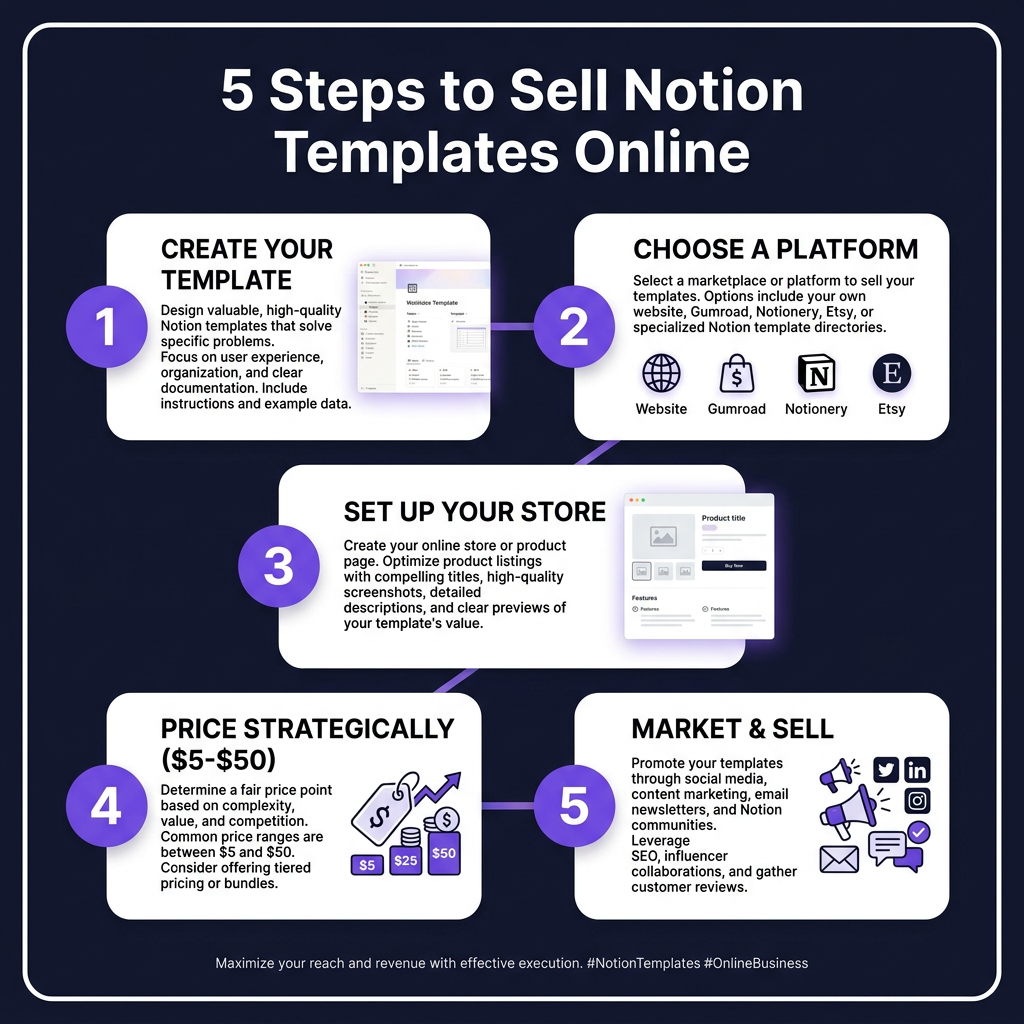
Step 1: Create a Notion Template People Want to Buy
The biggest mistake new template creators make? Building what they think is cool instead of what people actually need. Here’s how to validate your idea before spending time building:
Research what’s already selling. Browse the Notion Marketplace, Gumroad, and Twitter/X to see which templates are gaining traction. Look for patterns — are productivity planners selling well? What about habit trackers, content calendars, or project management systems?
Solve a specific problem. The best-selling templates address a clear pain point. “Personal Planner” is vague. “Freelancer Client Management System with Automated Invoicing” is specific and valuable.
Design for aesthetics AND function. Notion users care about both. Your template should look beautiful (clean layouts, consistent formatting, appealing colors) while being genuinely useful. Include clear instructions — many buyers are Notion beginners.
Step 2: Choose the Right Platform to Sell
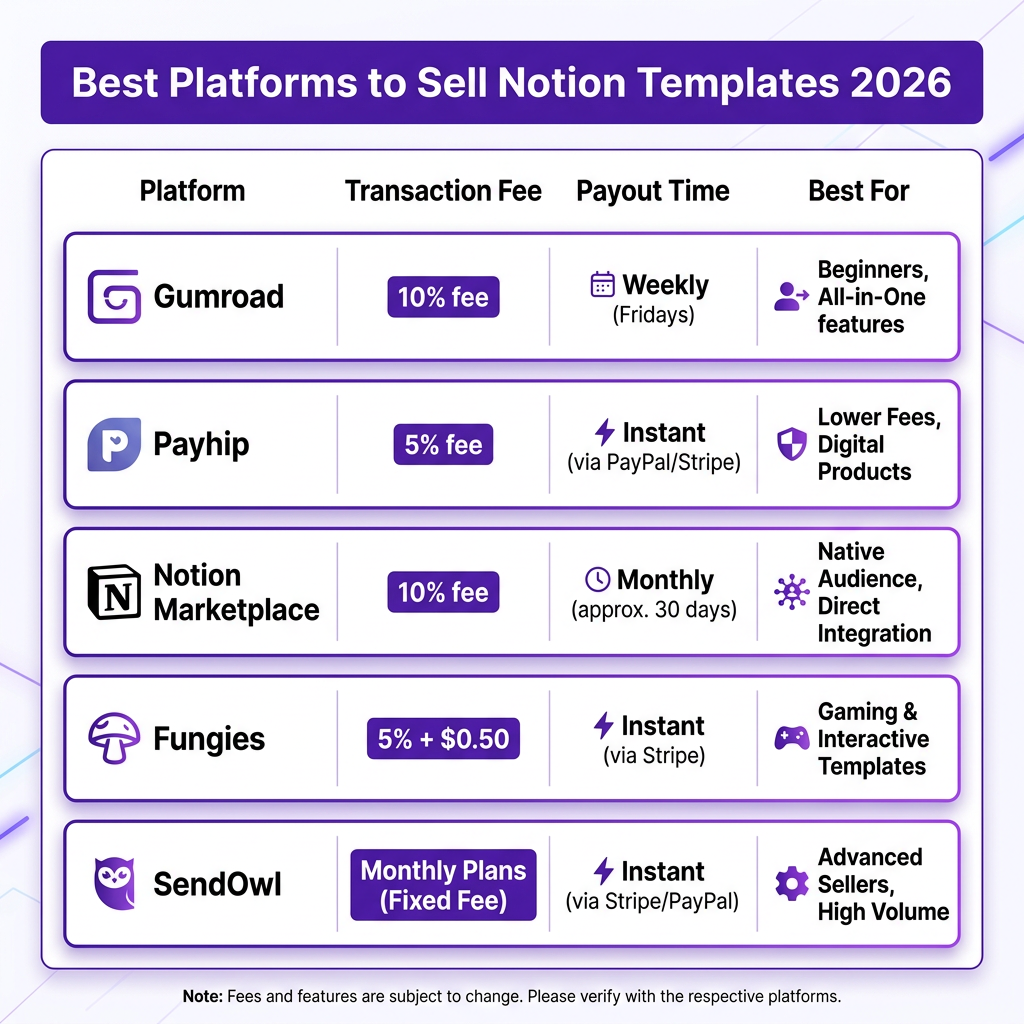
Where you sell matters almost as much as what you sell. Each platform has different fees, audiences, and features. Here’s the breakdown:
Gumroad is the most popular choice for creators. It’s easy to use, has a built-in audience, and handles delivery automatically. However, their fees have increased — you’ll pay 10% + processing fees on every sale. For a $20 template, that’s $2+ in fees.
Notion Marketplace is the official platform. Great for discoverability among Notion users, but you need to apply and get approved. They take 10% + Stripe fees, and you’re limited to selling directly to Notion users.
Payhip offers lower fees at 5% per transaction. It’s simple to set up and includes basic marketing tools like discount codes and affiliate programs. Good for beginners who want to minimize fees.
Fungies offers competitive pricing at 5% + $0.50 per transaction with automatic tax compliance built in. This is crucial if you’re selling internationally — tax laws are complex, and Fungies handles VAT, sales tax, and regulatory compliance automatically. Plus, you get a professional checkout experience and instant payouts.
Step 3: Set Up Your Store and Listings
Once you’ve chosen your platform, it’s time to create compelling listings. Your product page needs to do the selling for you.
Write a benefit-driven title. Instead of “Project Management Template,” try “Project Management System for Freelancers: Track Clients, Deadlines & Invoices in One Place.” Specificity sells.
Create a preview video or GIF. Show the template in action. Walk through the key features, demonstrate how it works, and highlight the value. Videos significantly increase conversion rates.
Include high-quality screenshots. Show every section of your template. Use clean, professional mockups if possible. Buyers want to see exactly what they’re getting.
Write detailed descriptions. What’s included? Who is it for? What problems does it solve? How do they access it after purchase? Address objections before they arise.
Step 4: Price Strategically
>Pricing psychology matters. Price too low and you signal low quality. Price too high without justification and you scare buyers away.
Entry-level templates ($5-15): Simple planners, basic trackers, single-page templates. Good for building your customer base and getting reviews.
Mid-range templates ($15-35): Comprehensive systems, multi-page workspaces, specialized tools for specific professions (freelancers, students, content creators).
Premium templates ($35-100+): Complex business systems, agency-level tools, templates with training videos or bonus resources.
Start in the mid-range ($19-29) for your first template. It’s high enough to signal quality but accessible enough to generate sales while you build social proof.
Ready to Sell Your Notion Templates?
Join thousands of creators using Fungies.io — low 5% + $0.50 fees, automatic tax compliance, and instant payouts.
No credit card required
Step 5: Market Your Templates (Without a Huge Following)
You don’t need 10,000 Twitter followers to make sales. Here are proven strategies that work with zero audience:
Reddit communities. Share value first in subreddits like r/Notion, r/productivity, and r/freelance. When relevant, mention your template. Don’t spam — contribute genuinely.
Notion communities. Join Discord servers, Facebook groups, and Slack communities where Notion users hang out. Share tips, answer questions, and occasionally promote your templates.
Free samples. Create a “lite” version of your template and give it away for free in exchange for email signups. This builds your list and lets people experience your quality before buying.
Cross-sell and bundle. Once you have multiple templates, offer bundles at a discount. Someone who bought your habit tracker might also want your goal-setting system.
Common Mistakes to Avoid
I’ve seen too many creators give up because they made avoidable mistakes. Don’t let this be you:
Not validating before building. Spend a day researching before spending a week building. Make sure people actually want what you’re creating.
Ignoring customer support. Buyers will have questions. Respond quickly and helpfully. Good support leads to reviews, and reviews lead to more sales.
Setting and forgetting. Update your templates regularly. Notion adds new features constantly — keep your products current and communicate updates to buyers.
Underpricing out of fear. You’re not just selling a file — you’re selling hours of saved time and a proven system. Price accordingly.
FAQ: Selling Notion Templates
Do I need to be a Notion expert?
No, but you should be proficient. You need to understand how databases, relations, and formulas work to create valuable templates.
Can I really make money selling Notion templates?
Absolutely. Top creators make $10,000+ monthly. Realistic starting income is $500-2,000/month within 3-6 months if you’re consistent.
What types of templates sell best?
Productivity systems, business/CRM tools, content calendars, habit trackers, and student planners consistently perform well.
Do I need to handle taxes?
If you’re selling internationally, yes — and it’s complicated. Platforms like Fungies handle tax compliance automatically, saving you major headaches.
How do I protect my templates from being shared?
You can’t completely prevent sharing, but you can include watermarks, license agreements, and focus on providing ongoing value (updates, support) that encourages legitimate purchases.
Conclusion: Start Selling Today
Selling Notion templates is one of the most accessible ways to build passive income in 2026. The tools are free, the demand is real, and the profit margins are exceptional.
Start by researching what sells. Build one template that solves a specific problem. Choose a platform with fair fees and professional presentation. Price confidently. Market consistently.
Your first sale might come this week. Your first $1,000 month might come this quarter. The creators making serious money started exactly where you are right now — with an idea and the willingness to execute.
Ready to turn your Notion skills into income? Choose your platform, create your first template, and start selling. The opportunity is waiting.
Ready to Sell Your Notion Templates?
Join thousands of creators using Fungies.io — low 5% + $0.50 fees, automatic tax compliance, and instant payouts.
No credit card required
Sources
- Notion Official Help Center – Selling on Marketplace
- SendOwl Blog – How to Sell Notion Templates Guide
- The Leap – Notion Template Creation Guide 2025
- Kate Hayes YouTube – Digital Products Masterclass
- Creator Economy Research – Digital Product Trends 2026