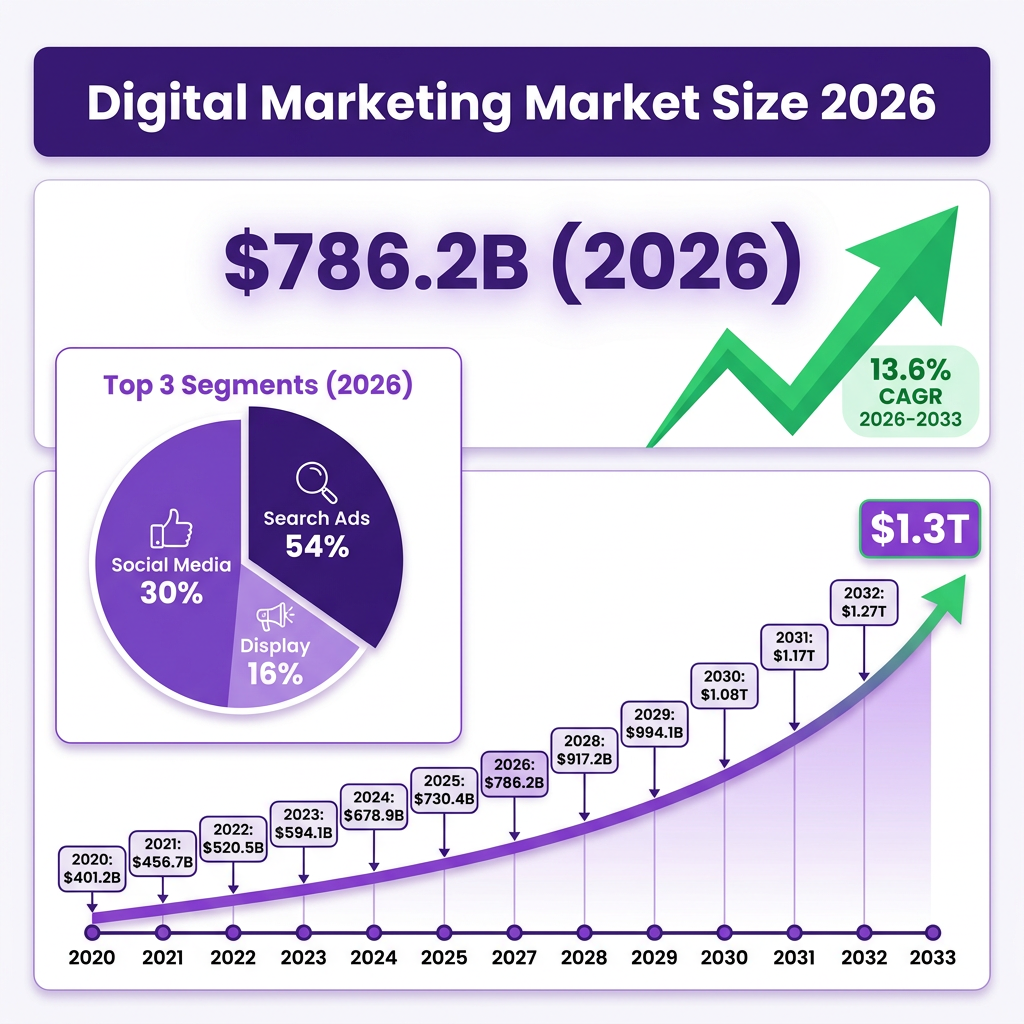
The digital marketing landscape has reached an unprecedented inflection point in 2026. With global digital ad spend projected to hit $786.2 billion this year and the total addressable market expected to exceed $1.3 trillion by 2033, organizations are navigating the most transformative period in marketing history. The compound annual growth rate of 13.6% reflects not just increased budgets, but a fundamental restructuring of how businesses connect with consumers across an increasingly fragmented digital ecosystem.
What makes 2026 particularly significant is the convergence of three massive forces: artificial intelligence integration at every level of the marketing stack, the maturation of privacy-first advertising frameworks following the deprecation of third-party cookies, and the explosive growth of short-form video as the dominant content consumption format. For marketing leaders, this isn’t merely about adopting new tools—it’s about reimagining entire strategies to thrive in an environment where consumer attention is scarcer, competition is fiercer, and the technical sophistication required to succeed has never been higher.
Market Overview: The $786.2 Billion Digital Marketing Ecosystem
The digital marketing industry has evolved from a collection of experimental channels into a mature, data-driven discipline that commands the majority of global advertising investment. In 2026, digital advertising accounts for over 65% of total media spend worldwide, a figure that would have seemed impossible just a decade ago. This shift reflects a permanent change in consumer behavior—people now spend an average of 6 hours and 40 minutes online daily, with nearly 60% of that time spent on mobile devices.
The market’s growth trajectory tells a compelling story of sustained expansion. Starting from $472.5 billion in 2025, the industry is on track to nearly triple in size by 2033. This 13.6% compound annual growth rate outpaces virtually every other segment of the technology sector, driven by the continued migration of commerce online, the proliferation of connected devices, and the increasing sophistication of targeting and measurement capabilities.
Search advertising remains the largest single segment, generating over $250 billion in annual revenue and accounting for 40.9% of the global digital advertising market. Google continues to dominate this space, processing 8.5 billion searches daily and capturing the vast majority of search ad spend. However, the landscape is shifting as AI-powered search interfaces begin to change how users discover information and interact with advertising.
Social media advertising has emerged as the second-largest category, with global spend projected to reach $317.3 billion in 2026—up from $277 billion in 2025. This represents a year-over-year growth rate of 12.8%, driven primarily by the continued expansion of video advertising on platforms like TikTok, Instagram Reels, and YouTube Shorts. The average return on investment from paid social media advertising stands at $5.20 for every $1 spent, making it one of the most efficient channels for customer acquisition.
Mobile advertising deserves special attention, as it now represents 54% of all digital ad budgets. With 5.35 billion people using the internet globally—accounting for 66.2% of the world’s population—and the vast majority accessing it through smartphones, mobile-first marketing has transitioned from a best practice to a baseline requirement. The mobile marketing market alone is projected to reach $81.74 billion by 2030, growing at a 23.9% CAGR.
Key Statistics and Data: The Numbers Driving Digital Marketing in 2026
Understanding the digital marketing landscape requires diving deep into the statistics that define performance, investment, and consumer behavior. These numbers aren’t just interesting data points—they’re the foundation upon which successful strategies are built.
Global Market and Investment Statistics
The global digital advertising industry is projected to reach $1.16 trillion by 2030, representing a CAGR of 15.4% from 2025 to 2030. This growth is supported by robust investment across all major markets, with the United States leading at an estimated $298 billion in ad spend. Over 75% of marketers and 60% of small businesses plan to maintain or increase their marketing spend in 2026, with the majority of increases directed toward content creation, digital ads, and brand building initiatives.
Video advertising now accounts for 38% of total digital ad budgets, reflecting the format’s superior engagement metrics and conversion performance. Spending on mobile advertising specifically is expected to reach $495 billion in 2026, making up nearly half of all digital ad investments. The average spending per user on social media advertising is forecasted to be $45.11, a figure that has grown steadily as platforms improve their targeting capabilities and measurement tools.
AI and Automation Adoption
Artificial intelligence has moved from experimental to essential in 2026. A remarkable 78% of organizations are now using AI across business functions, with marketing leading adoption. The AI-in-marketing market is projected to grow from $12.05 billion in 2020 to $107.54 billion by 2028—a 9x increase that reflects the technology’s transformative impact on content creation, campaign optimization, and customer analytics.
Among marketers specifically, 56% now run AI in production environments, and 70% name generative AI as the most important consumer trend to watch. The productivity gains are substantial: 93% of marketers use AI to generate content faster, and 65% of businesses report an uplift in SEO performance due to AI marketing tools. The generative AI market itself has reached $91.57 billion, with content production happening 62% faster when AI tools are integrated into workflows.
However, adoption isn’t universal or without concerns. 43% of businesses are put off by AI content inaccuracies or biases, and nearly 60% of marketers worry about job displacement. Small and medium-sized businesses are actually outpacing larger enterprises in adoption rates, with 67% of SMBs now using AI in marketing and 62% of SMB leaders stating that without AI, their business won’t remain competitive within three years.
Channel-Specific Performance Metrics
Email marketing continues to deliver the highest ROI of any digital channel, generating between $36 and $42 for every $1 spent. With 4.73 billion email users expected by the end of 2026 and over 392 billion emails sent daily, the channel remains indispensable. Abandoned cart emails now achieve an average open rate of 50.5%, a click rate of 6.25%, and a conversion rate of 3.33%, with top-performing brands reaching conversion rates of 7.69%.
SEO remains the largest traffic driver, with organic search accounting for 53% of all website traffic. The global SEO industry has grown to over $80 billion, with the SEO software market valued at $10.3 billion. However, the landscape is shifting: AI Overviews and zero-click searches are reducing organic CTR from up to 39.8% to 13-20% for many queries. Despite this, 92% of digital marketers already optimize for both classic and AI-driven search, recognizing that visibility in AI-generated answers is becoming as important as traditional rankings.
Pay-per-click advertising maintains strong performance across platforms. Google Ads delivers an average CTR of 6.66%, an average CPC of $5.26, and an average conversion rate of 7.52% across all industries. Facebook ads show similar performance with an average conversion rate of 7.72% and an average CPC of $1.72. Notably, 65% of high-intent searches result in clicks on Google ads, compared to just 18% for display ads, underscoring the value of capturing users at the moment of intent.
Video marketing has reached near-universal adoption, with 93% of businesses using video as a marketing tool and 91% considering it an important part of their overall strategy. Short-form video is particularly dominant, with Reels generating 2.25x more reach than other content formats and accounting for over 50% of ad inventory on Meta platforms. YouTube has surpassed 2.70 billion monthly active users, while TikTok and Instagram continue to drive significant engagement through their short-form video offerings.
Consumer Behavior and Engagement
Consumer behavior in 2026 is defined by mobile-first consumption, privacy consciousness, and platform diversification. 57% of online purchases are now made on mobile devices, and 46% of Google searches have local intent. Voice search has reached 20.5% global usage with 157.1 million U.S. users, requiring marketers to optimize for conversational queries and featured snippets.
Social media has become a primary search and discovery tool, particularly among younger demographics. Users now spend an average of 2 hours and 31 minutes daily on social platforms, accounting for about 15% of their waking hours. 98-99% of social media users access platforms via mobile devices, and social commerce conversion rates are 2.8% for native in-app purchases compared to 9 minutes average session time for traditional e-commerce.
Consumer trust in AI-generated content has actually declined, with comfort levels falling from 57% to 46% in a single year. This trust gap represents both a challenge and an opportunity for brands that can effectively balance AI efficiency with human authenticity. 40% of marketers cite proving ROI as a top challenge, highlighting the ongoing need for better measurement and attribution tools.
Major Trends Shaping Digital Marketing in 2026
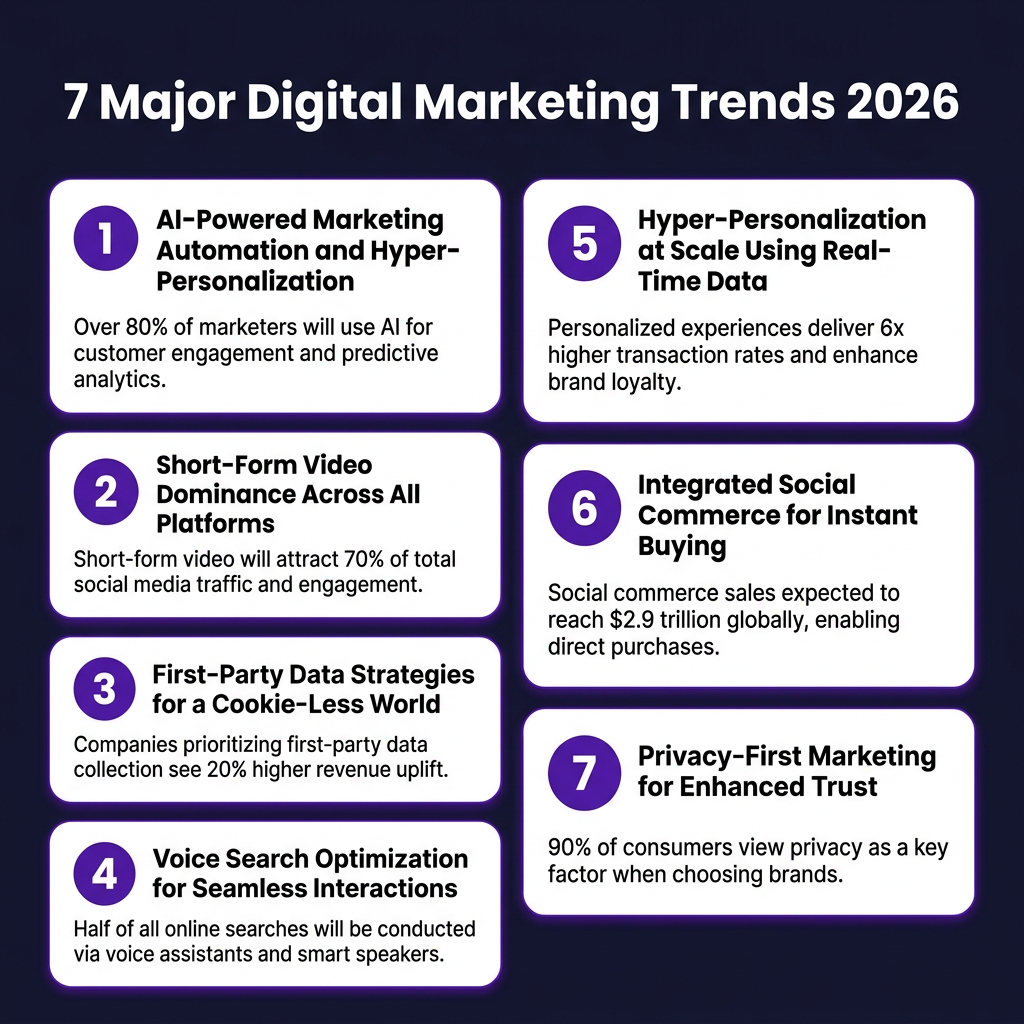
The digital marketing landscape of 2026 is being reshaped by seven transformative trends that are redefining how brands connect with consumers, allocate budgets, and measure success. Understanding these trends isn’t optional—it’s essential for any organization seeking to maintain competitive advantage.
1. AI-Powered Marketing at Scale
Artificial intelligence has transitioned from a competitive advantage to a baseline requirement. The most significant shift in 2026 is the emergence of Generative Engine Optimization (GEO) and Answer Engine Optimization (AEO), which optimize content for AI-driven search interfaces rather than traditional keyword-based rankings. Marketers are now optimizing for visibility in AI-generated answers, featured snippets, and conversational search results.
AI’s impact extends across the entire marketing funnel. Predictive analytics powered by machine learning now enable hyper-personalization at every touchpoint, with AI analyzing subscriber data to predict intent, personalize content, and automate perfectly timed offers. Content creation has been transformed—non-AI blog creation has dropped from 65% to just 5% as marketers embrace AI writing assistants. However, the focus has shifted from AI-generated volume to AI-augmented quality, with human oversight remaining critical for maintaining brand voice and accuracy.
The top investment area for marketers in 2026 is AI-powered marketing tools, with 95% of B2B organizations planning to increase investment in AI-powered applications and 89% boosting AI content creation budgets. The key differentiator is no longer whether organizations use AI, but how effectively they integrate it into their workflows while maintaining the human creativity and strategic thinking that AI cannot replicate.
2. The Dominance of Short-Form Video
Short-form video has become the undisputed king of content formats in 2026. With attention spans continuing to shrink and mobile consumption dominating, platforms like TikTok, Instagram Reels, and YouTube Shorts have captured the majority of user engagement. Reels generate 2.25x more reach than other content formats and now account for over 50% of Meta’s ad inventory.
The statistics are staggering: 93% of video marketers see video as an important part of their strategy, and 69% have created social media videos as their primary use case. 73% of video marketers have created explainer videos, recognizing that short-form content is the most effective way to communicate value propositions quickly. The shift to video is so pronounced that 70% of video marketers now use LinkedIn for video distribution—a platform traditionally associated with text-based professional content.
For marketers, this trend requires a fundamental rethinking of content strategy. Blog posts still rank among the top five content formats for investment, but they’re now behind short-form video, live video, long-form video, and user-generated content. The most successful brands are building video-first strategies that repurpose long-form content into bite-sized clips optimized for each platform’s unique algorithm and audience expectations.
3. First-Party Data and Privacy-First Marketing
The deprecation of third-party cookies has accelerated the shift toward first-party data strategies, fundamentally changing how marketers collect, manage, and activate customer information. With privacy regulations tightening globally and consumers becoming increasingly protective of their data, brands must build direct relationships with their audiences to gather the insights needed for effective targeting and personalization.
This trend manifests in several ways. The return to owned channels—email newsletters, branded communities, and direct messaging—has become a priority as marketers seek to reduce dependence on platform algorithms. Zero-party data, which customers intentionally and proactively share with brands, is now valued more highly than inferred behavioral data. Marketers are investing in customer data platforms (CDPs) and consent management frameworks that enable transparent data collection while delivering personalized experiences.
The implications extend to advertising effectiveness. With reduced tracking capabilities, contextual targeting and cohort-based advertising are experiencing a renaissance. Marketers are focusing on content alignment rather than individual user tracking, requiring deeper understanding of audience segments and the contexts in which they consume content. The brands winning in this environment are those that have built trust through transparent data practices and deliver genuine value in exchange for customer information.
4. Voice Search and Conversational AI
Voice search has matured significantly in 2026, with 20.5% global usage and 157.1 million U.S. users regularly using voice assistants for search queries. This shift requires marketers to optimize for natural language patterns, featured snippets, and local intent. The rise of conversational AI and chatbots has further transformed how consumers interact with brands, with AI agents now handling increasingly complex customer service and sales interactions.
The optimization implications are substantial. Traditional keyword strategies must evolve to address conversational queries—questions phrased in natural language rather than fragmented search terms. Content must be structured to provide direct answers that voice assistants can easily extract and present. Local SEO has become even more critical, as voice searches frequently include location-based intent like “near me” queries.
Beyond search, conversational AI is transforming customer engagement. AI-powered chatbots now handle routine inquiries, qualify leads, and even complete transactions, freeing human agents to focus on complex, high-value interactions. The most sophisticated implementations use natural language processing to understand context, sentiment, and intent, delivering personalized responses that feel genuinely helpful rather than robotic.
5. Hyper-Personalization at Scale
Personalization has evolved from a nice-to-have to an expectation. Consumers now anticipate that brands will understand their preferences, anticipate their needs, and deliver relevant experiences across every touchpoint. The challenge in 2026 is achieving this personalization at scale while maintaining authenticity and avoiding the “creepy” factor that can damage brand trust.
AI and machine learning are the enablers of this trend, analyzing vast datasets to identify patterns, predict behavior, and automate personalized experiences. Email marketing has become a top personalization use case, with AI optimizing send times, subject lines, and content based on individual engagement patterns. Website personalization dynamically adjusts content, offers, and navigation based on visitor profiles and behavior.
The most effective personalization strategies balance automation with human oversight. While AI can identify patterns and automate delivery, human marketers must define the strategic framework, ensure brand consistency, and intervene when algorithms produce unexpected or inappropriate results. The goal is personalization that feels helpful and relevant, not invasive or manipulative.
6. Social Commerce and Shoppable Content
The integration of commerce into social media platforms has reached maturity in 2026, with social commerce conversion rates of 2.8% for native in-app purchases. Platforms like Instagram, TikTok, and Pinterest have built robust shopping features that allow users to discover, research, and purchase products without leaving the app. This frictionless shopping experience is particularly appealing to younger consumers who expect seamless transitions between content consumption and transaction.
For marketers, social commerce requires rethinking the traditional funnel. Discovery and purchase happen in the same session, often triggered by influencer recommendations or algorithmic content suggestions. User-generated content has become a critical driver of social commerce, with consumers trusting peer recommendations more than brand messaging. The most successful social commerce strategies leverage authentic content from real customers, making it easy for viewers to purchase featured products with minimal friction.
Live shopping—broadcasts where hosts demonstrate products and viewers can purchase in real-time—has gained significant traction, particularly in Asian markets and increasingly in Western countries. This format combines the engagement of live video with the urgency of limited-time offers, creating compelling shopping experiences that drive impulse purchases and community engagement.
7. Privacy-First Measurement and Attribution
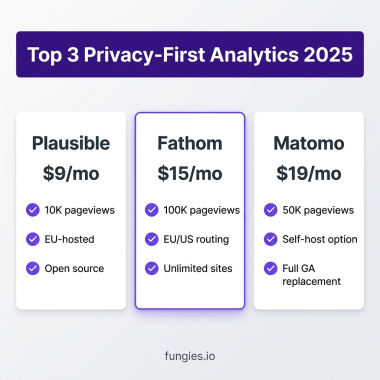
The measurement landscape has been fundamentally disrupted by privacy changes, and 2026 marks the year when marketers have largely adapted to the new reality. With third-party cookies deprecated, mobile ad identifiers restricted, and privacy regulations expanding globally, traditional attribution models have become less reliable. Marketers are now adopting privacy-first measurement approaches that respect user privacy while still providing actionable insights.
First-party data has become the foundation of measurement strategies, with brands building comprehensive customer profiles based on direct interactions. Marketing mix modeling (MMM) has experienced a resurgence as a privacy-safe alternative to user-level attribution, using aggregated data to understand channel performance. Incrementality testing—controlled experiments that measure the true causal impact of marketing spend—has become standard practice for validating attribution models.
The shift to privacy-first measurement requires organizational changes as well. Marketing, data science, and legal teams must collaborate closely to ensure measurement practices comply with regulations while delivering the insights needed for optimization. The brands succeeding in this environment are those that view privacy compliance not as a constraint, but as an opportunity to build trust and differentiate through transparent data practices.
Key Players and Competitive Landscape
The digital marketing ecosystem is dominated by a handful of technology giants, but the competitive landscape is more dynamic than the concentration of market power might suggest. Understanding the key players, their strategies, and the emerging challengers is essential for marketers making platform and partnership decisions.
The Triopoly: Google, Meta, and Amazon
Google, Meta, and Amazon continue to dominate digital advertising, collectively capturing approximately 60% of global digital ad spend. Each has evolved their offerings significantly in 2026 to address changing market conditions and competitive pressures.
Google has leaned heavily into AI-powered advertising, with Performance Max campaigns and AI-driven bidding strategies now handling the majority of automated ad spend. The integration of generative AI into search results through AI Overviews has created new advertising opportunities while disrupting traditional SEO strategies. YouTube remains the dominant video platform, with Shorts providing a crucial response to TikTok’s growth. Google’s dominance in search advertising—with 89.85% of global search traffic—remains its moat, though AI-powered search interfaces pose both opportunities and threats to this position.
Meta has successfully pivoted to short-form video through Reels, which now accounts for over 50% of time spent on Instagram and a significant portion of Facebook engagement. The company’s AI investments are paying dividends in ad targeting and creative optimization, helping offset the impact of Apple’s privacy changes. Meta’s Advantage+ shopping campaigns have become a standard tool for e-commerce advertisers, automating much of the campaign management process. The company’s push into the metaverse may have stalled, but its core advertising business remains robust.
Amazon has solidified its position as the third pillar of digital advertising, with its advertising business generating over $50 billion annually. The company’s unique advantage is its position at the point of purchase—ads on Amazon reach consumers with demonstrated purchase intent. Amazon’s advertising offerings have expanded beyond the platform itself, with demand-side platform (DSP) capabilities enabling advertisers to reach Amazon audiences across the web. The company’s retail media network has inspired similar offerings from Walmart, Target, and other major retailers.
Emerging Platforms and Challengers
Beyond the triopoly, several platforms are reshaping the competitive landscape. TikTok has become impossible to ignore, with over 1 billion monthly active users and engagement rates that dwarf those of established platforms. The company’s advertising business has matured rapidly, with sophisticated targeting and measurement capabilities that rival Meta’s. TikTok Shop has added commerce capabilities that create new opportunities for direct response advertising.
LinkedIn has emerged as a surprisingly effective platform for B2B marketing, with 70% of video marketers now using the platform—up from negligible usage just a few years ago. Microsoft’s integration of AI capabilities through Copilot is enhancing LinkedIn’s advertising and analytics offerings, making it an increasingly compelling option for B2B marketers.
Retail media networks represent a major growth area, with retailers from Walmart to CVS building advertising businesses that leverage their first-party purchase data. These networks offer advertisers the ability to reach consumers based on actual purchase behavior, a level of targeting that has become increasingly valuable as third-party data sources dry up.
Marketing Technology Vendors
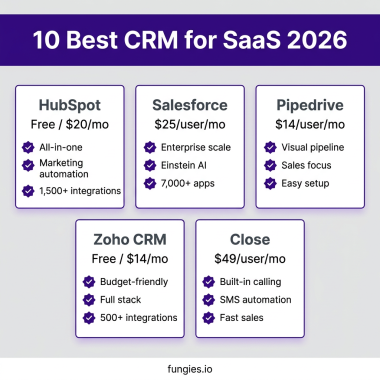
The marketing technology landscape remains fragmented, with thousands of vendors competing across categories including customer data platforms, marketing automation, content management, and analytics. Consolidation has continued, with major players like Salesforce, Adobe, and HubSpot acquiring capabilities to build comprehensive marketing clouds.
AI-native vendors are gaining traction, offering specialized tools for content generation, predictive analytics, and campaign optimization. These vendors often outperform established players in specific use cases, though integration challenges can limit their adoption. The most successful marketing technology strategies combine best-of-breed point solutions with integrated platforms, using APIs and data warehouses to create cohesive technology stacks.

Challenges and Pain Points
Despite the opportunities, digital marketing in 2026 is not without significant challenges. Marketing leaders must navigate a complex landscape of technical, organizational, and strategic obstacles to achieve their objectives.
1. Attribution and Measurement Complexity
The deprecation of third-party cookies and mobile ad identifiers has fundamentally disrupted attribution models that marketers have relied on for years. 40% of marketers cite proving ROI as a top challenge, and the difficulty is only increasing as privacy regulations expand and technical restrictions tighten. The shift to privacy-first measurement requires new skills, new tools, and new ways of thinking about marketing effectiveness.
Multi-touch attribution has become increasingly difficult, with marketers struggling to understand how different channels and touchpoints contribute to conversions. Last-click attribution, always imperfect, has become nearly useless in a world where customer journeys span devices, platforms, and privacy boundaries. The transition to aggregated measurement approaches like marketing mix modeling requires statistical expertise that many marketing organizations lack.
2. Content Saturation and Attention Scarcity
The explosion of AI-generated content has created a saturation problem—there’s simply more content than any human could consume, and the noise makes it harder for quality content to break through. 376 billion emails are sent daily, millions of blog posts are published, and social media feeds are endless scrolls of content competing for limited attention. Breaking through this noise requires exceptional creativity, precise targeting, and often significant paid promotion budgets.
Consumer attention spans continue to shrink, with the average human attention span now shorter than that of a goldfish according to some studies. This creates pressure for ever-shorter content formats, which can struggle to communicate complex value propositions or build meaningful brand relationships. Marketers must balance the need for attention-grabbing brevity with the depth required to educate prospects and build trust.
3. Talent and Skills Gaps
The rapid evolution of digital marketing has created significant talent gaps. Skills that were cutting-edge just a few years ago—like traditional SEO or social media management—have evolved so dramatically that practitioners must constantly retrain. New disciplines like AI prompt engineering, generative engine optimization, and privacy-first analytics require skills that few marketers possess.
The demand for data science and analytics skills in marketing has outpaced supply, making it difficult for organizations to build the measurement capabilities they need. Meanwhile, the creative skills required for effective video production, interactive content, and experiential marketing are also in short supply. Marketing leaders struggle to build teams with the diverse skill sets required for modern digital marketing.
4. Platform Dependence and Algorithm Volatility
Most digital marketing strategies depend heavily on platforms—Google, Meta, Amazon, TikTok—that control access to audiences and can change the rules at any time. Algorithm updates can decimate organic reach overnight, policy changes can invalidate established tactics, and account suspensions can halt revenue streams with little recourse. This platform dependence creates strategic vulnerability that keeps marketing leaders up at night.
The volatility is particularly acute in SEO, where Google algorithm updates can dramatically shift rankings and traffic. AI Overviews have reduced organic CTR for many queries, and the shift to AI-powered search threatens to disrupt the entire SEO industry. Social media algorithms are equally unpredictable, with organic reach on platforms like Facebook and Instagram declining steadily as platforms prioritize paid content.
Opportunities and Growth Strategies
Amid the challenges, significant opportunities exist for organizations that can execute effectively. The following strategies represent the highest-potential growth levers for digital marketing in 2026.
1. AI-Augmented Creativity and Production
The most successful marketers in 2026 are those who have learned to leverage AI not as a replacement for human creativity, but as a force multiplier. AI tools can generate content variations, optimize headlines, personalize messaging, and analyze performance at scales impossible for human teams. This frees creative professionals to focus on strategy, storytelling, and the high-level creative direction that AI cannot replicate.
The key is finding the right balance. Organizations that have fully automated their content creation often produce generic, undifferentiated material that fails to build brand equity. Those that ignore AI entirely are being outpaced by more efficient competitors. The winners are building human-AI collaboration workflows that combine the scale and speed of AI with the judgment and creativity of human marketers.
2. First-Party Data Strategy
Organizations that have invested in first-party data collection and activation are thriving in the privacy-first era. By building direct relationships with customers and creating value exchanges that incentivize data sharing, these brands have assembled rich customer datasets that enable personalization and measurement without relying on third-party tracking.
Effective first-party data strategies include loyalty programs that reward engagement, content subscriptions that capture preferences, interactive experiences that gather zero-party data, and transparent privacy policies that build trust. The brands succeeding in this environment view data collection not as extraction, but as the foundation of a value exchange that benefits both parties.
3. Video-First Content Strategy
The shift to video represents more than a format change—it requires a fundamental rethinking of content strategy. Organizations that have embraced video-first approaches are seeing superior engagement, reach, and conversion metrics compared to those still focused on text and static images. The key is creating video content that feels native to each platform rather than simply repurposing television commercials.
Successful video strategies combine short-form content for awareness and reach with longer-form content for education and conversion. User-generated content and influencer partnerships provide authenticity that branded content struggles to achieve. Live video and interactive formats create engagement opportunities that static content cannot match. The investment in video production capabilities—both in-house and through partners—is paying dividends for forward-thinking organizations.
4. Integrated Customer Experience
The most sophisticated marketers in 2026 have moved beyond channel-specific optimization to focus on integrated customer experiences that span touchpoints and devices. Rather than optimizing email, social, and search in isolation, these organizations map complete customer journeys and design experiences that guide prospects seamlessly from awareness to purchase to advocacy.
This integration requires breaking down organizational silos that have traditionally separated brand marketing, performance marketing, and customer success. It requires technology stacks that can unify customer data across sources and activate it in real-time. And it requires measurement frameworks that can attribute value across touchpoints rather than crediting only the last click. The organizations achieving this integration are seeing compounding returns as each channel reinforces the others.
Case Studies and Success Stories
Theory is valuable, but real-world examples demonstrate what’s possible when digital marketing strategies are executed effectively. The following case studies illustrate how organizations across different industries have leveraged the trends and strategies outlined in this report to achieve measurable business results.
Case Study 1: AI-Powered Personalization Drives 40% Revenue Increase
A mid-sized e-commerce retailer implemented an AI-powered personalization engine that analyzed customer behavior across their website, email, and mobile app to deliver individualized product recommendations and content. Within six months, the company saw a 40% increase in revenue per visitor, a 25% improvement in email open rates, and a 15% reduction in cart abandonment. The key to success was not just the technology implementation, but the organizational alignment that ensured marketing, product, and engineering teams were working toward shared personalization goals.
Case Study 2: Short-Form Video Transforms B2B Lead Generation
A B2B software company traditionally relied on whitepapers and webinars for lead generation, but struggled to reach younger decision-makers who preferred video content. The company shifted to a video-first strategy, creating short-form educational content for LinkedIn and YouTube that addressed specific pain points in their target industries. The results were dramatic: cost per lead decreased by 60%, lead quality improved as measured by sales acceptance rates, and the sales cycle shortened by 30%. The company attributed much of the success to their willingness to experiment with new formats and iterate quickly based on performance data.
Case Study 3: First-Party Data Strategy Reduces Customer Acquisition Costs
A direct-to-consumer brand faced rising customer acquisition costs as privacy changes limited their ability to target and measure advertising effectiveness. Rather than simply accepting higher costs, the company invested heavily in first-party data collection through a loyalty program, interactive content, and transparent value exchanges. By building rich customer profiles based on zero-party data, the company was able to reduce their dependence on platform targeting and improve advertising efficiency. Customer acquisition costs decreased by 35%, customer lifetime value increased by 50%, and the company gained strategic independence from platform algorithm changes.
Future Outlook and Predictions
Looking beyond 2026, several trends will continue to reshape the digital marketing landscape. Understanding these future developments can help organizations prepare for the changes ahead and position themselves for long-term success.
The Continued Rise of AI Agents
AI agents—autonomous systems that can plan, execute, and optimize marketing tasks without human intervention—will become increasingly sophisticated over the next five years. By 2030, we expect AI agents to handle the majority of routine marketing operations, from bid management and budget allocation to content distribution and performance reporting. This will free human marketers to focus on strategy, creativity, and the complex problem-solving that AI cannot replicate.
The Convergence of Physical and Digital
The distinction between digital marketing and physical marketing will continue to blur as connected devices proliferate and augmented reality matures. Marketers will need to think in terms of integrated experiences that span the physical and digital worlds, using technologies like AR, IoT, and location-based services to create seamless customer journeys. The brands that master this convergence will create differentiated experiences that competitors cannot easily replicate.
The Evolution of Search
Search marketing will look fundamentally different by 2030. AI-powered search interfaces will become the norm, with users expecting direct answers rather than lists of links. Voice and visual search will capture increasing share of queries, requiring marketers to optimize for new input modalities. And the search landscape may fragment as AI assistants from different providers develop distinct user bases and advertising models. SEO as we know it will evolve into something more complex and more integrated with overall content strategy.
Sustainability and Purpose-Driven Marketing
Consumer expectations around corporate responsibility will continue to rise, and marketing will play a central role in communicating—and delivering on—brand purpose. Sustainability claims will face increasing scrutiny, requiring marketers to ensure their messaging is backed by genuine action. Brands that can authentically connect their marketing to meaningful social and environmental impact will build deeper customer relationships and command premium pricing.
Key Takeaways
- The global digital marketing market will reach $786.2 billion in 2026 and exceed $1.3 trillion by 2033, growing at a 13.6% CAGR
- AI has become essential to marketing operations, with 78% of organizations using AI across business functions and 93% of marketers leveraging it for content creation
- Short-form video dominates content consumption, with Reels generating 2.25x more reach than other formats and accounting for over 50% of Meta’s ad inventory
- Privacy-first marketing is now mandatory, with first-party data strategies replacing third-party cookie dependence
- Email marketing maintains the highest ROI at $36-42 for every $1 spent, while social media advertising delivers $5.20 ROI per dollar
- Mobile advertising represents 54% of digital ad budgets as mobile commerce continues to grow
- The talent gap in digital marketing is widening, with demand for AI, analytics, and video production skills outpacing supply
- Platform dependence remains a strategic risk, with algorithm changes potentially disrupting established marketing strategies overnight
Sources and Citations
- IMARC Group – Global Digital Marketing Market Report 2026: https://www.imarcgroup.com/digital-marketing-market-statistics
- SQ Magazine – Digital Marketing Statistics 2026: https://sqmagazine.co.uk/digital-marketing-statistics
- Grand View Research – Digital Advertising Market Size & Share Report: https://www.grandviewresearch.com/industry-analysis/digital-advertising-market-report
- Hostinger – 47 Essential Digital Marketing Statistics for 2026: https://www.hostinger.com/tutorials/digital-marketing-statistics
- Technology Checker – AI in Marketing Statistics 2026: https://technologychecker.io/blog/ai-in-marketing-statistics-use-cases
- Adobe – 25+ AI Marketing Statistics You Need to Know in 2026: https://www.adobe.com/uk/acrobat/resources/ai-marketing-trends.html
- SQ Magazine – Social Media Advertising Statistics 2026: https://sqmagazine.co.uk/social-media-advertising-statistics
- CodeCrew – The Ultimate 2026 Email Marketing Stats List: https://codecrew.us/blog/email-marketing-stats-you-need-to-know-the-ultimate-list
- Colorlib – 50+ SEO Statistics Every Marketer Should Know (2026): https://colorlib.com/wp/seo-statistics
- SeoProfy – 113 Digital Marketing Statistics for 2026: https://seoprofy.com/blog/digital-marketing-statistics
- Shopify – 18 PPC Statistics To Inform Your Pay-Per-Click Strategy (2026): https://www.shopify.com/blog/ppc-statistics
- Kapwing – 115 Video Marketing Statistics For Creators (2026): https://www.kapwing.com/resources/115-video-marketing-statistics-for-creators-2026
- Digital Applied – Mobile Marketing Statistics 2026: https://www.digitalapplied.com/blog/mobile-marketing-statistics-2026-data-points
- WSI World – Top Digital Marketing Trends for 2026: https://www.wsiworld.com/blog/top-digital-marketing-trends-for-2026-what-businesses-need-to-know
- Google Think – Top Digital Marketing Trends and Predictions for 2026: https://business.google.com/us/think/consumer-insights/digital-marketing-trends-2026