Here’s a sobering statistic: B2B SaaS companies lose an average of 26% of their customers annually. That’s more than one in four customers walking out the door every year. And here’s the kicker — acquiring a new customer costs 5-7x more than keeping an existing one.
If you’re running a SaaS business, you already know churn is the silent killer. You can have the best product in your category, but if customers don’t stick around, your growth curve flatlines. I’ve seen startups with solid products crash because they focused entirely on acquisition while ignoring retention.
The good news? Customer retention software has evolved dramatically. Today’s platforms don’t just track churn — they predict it, automate interventions, and help you turn at-risk accounts into expansion opportunities. In this guide, I’ll break down the 10 best customer retention software tools for SaaS companies in 2026, based on features, pricing, and real-world performance.
What Is Customer Retention Software?
Customer retention software (also called customer success platforms) is a category of tools designed to help SaaS companies reduce churn, increase customer lifetime value, and proactively manage customer relationships.
Unlike traditional CRMs that focus on sales pipelines, retention software centers on post-sale customer health. These platforms combine data from your product, support tickets, billing systems, and communications to give you a 360-degree view of each customer.
Key capabilities include:
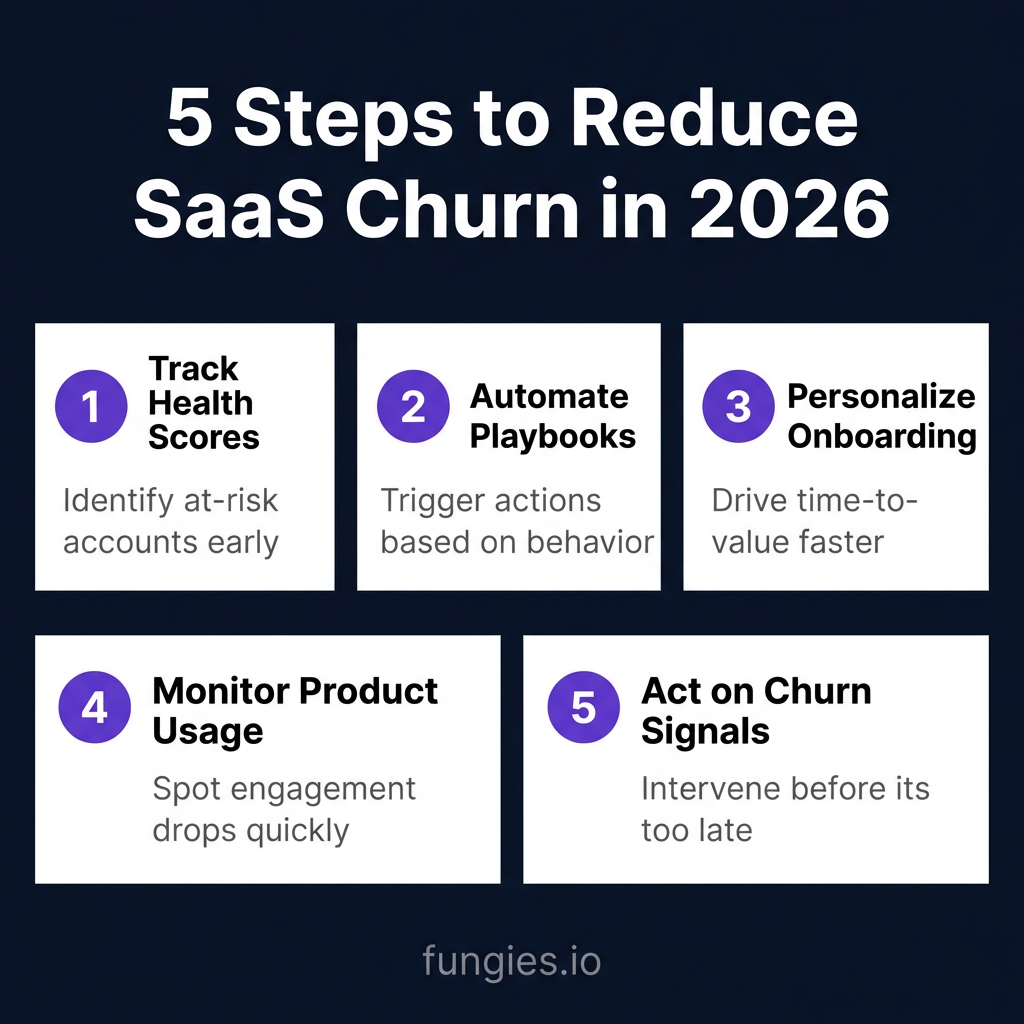
- Health scoring — Automated calculations of customer health based on usage, support interactions, and engagement
- Churn prediction — AI-powered alerts when customers show signs of disengagement
- Playbook automation — Triggered workflows that guide CSMs through retention actions
- Product analytics — Deep insights into feature adoption and user behavior
- Revenue forecasting — Predictions of renewals, expansions, and at-risk revenue
Why Customer Retention Matters More Than Ever
Before diving into the tools, let’s look at the numbers. According to 2025 benchmark data:
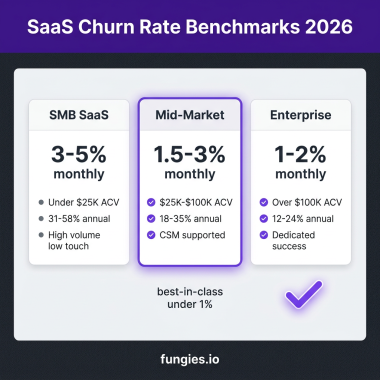
- The average B2B SaaS annual retention rate is 74%
- Top-performing SaaS companies achieve 115-125% Net Revenue Retention (NRR)
- Monthly churn rates vary from 3-8% for SMB-focused SaaS to under 2% for enterprise
- 54.5% of SaaS companies saw decreased churn rates year-over-year by implementing retention strategies
Here’s what this means in practice. If you have $1M ARR with a 5% monthly churn rate, you’re losing $50K in revenue every month just from customers leaving. Cut that churn to 2%, and you’ve effectively added $360K in annual revenue without acquiring a single new customer.
Retention software helps you identify the warning signs early — before customers reach the cancellation button.
10 Best Customer Retention Software for SaaS in 2026
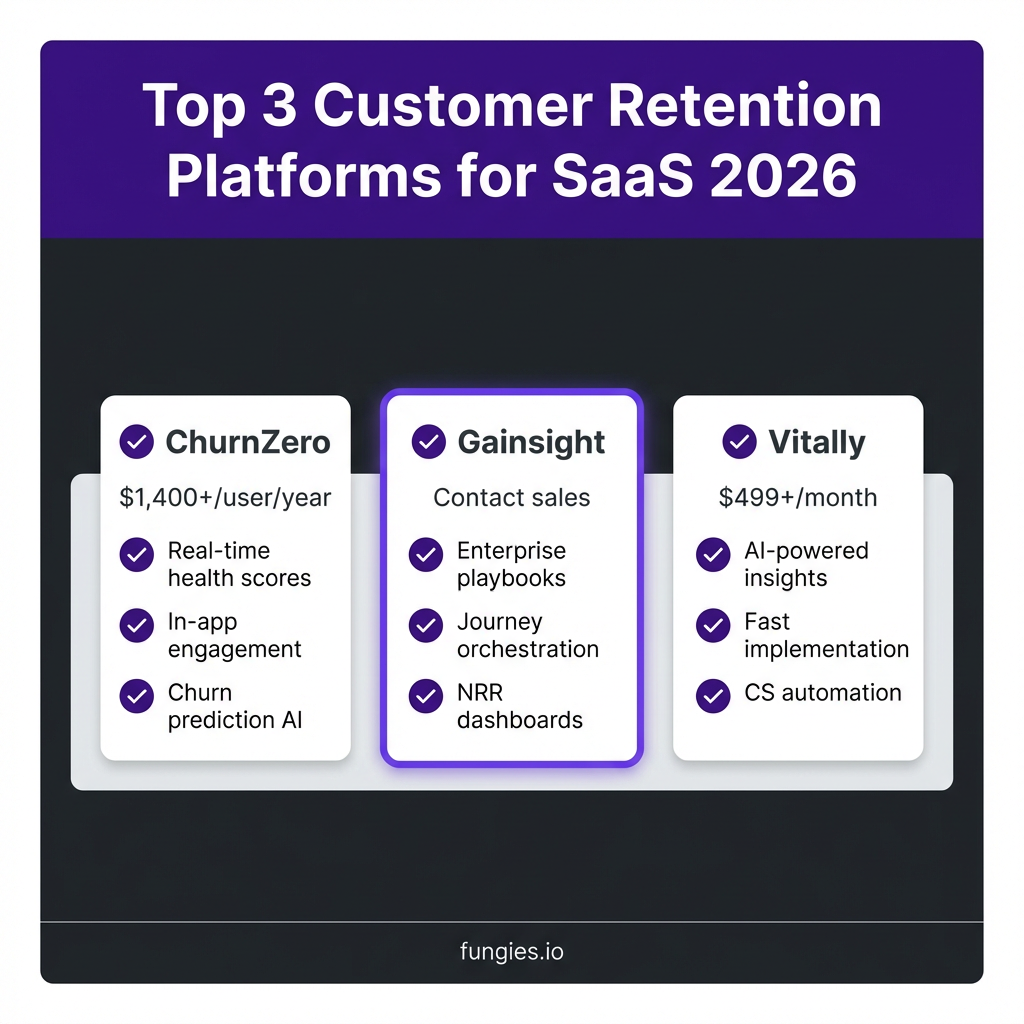
1. ChurnZero
ChurnZero is built specifically for SaaS companies looking to reduce customer attrition in real-time. It’s consistently rated as a leader in G2’s Customer Success category and stands out for its native integrations and AI capabilities.
Key Features:
- Real-time customer health scores with customizable weighting
- In-app communication and engagement tools
- AI-powered churn prediction and renewal forecasting
- Automated playbooks triggered by customer behavior
- Deep CRM integrations (Salesforce, HubSpot, Pipedrive)
Pricing: Platform fee starting around $30K/year plus ~$1,400 per user annually. Enterprise pricing available for larger teams.
Best for: Mid-market to enterprise SaaS companies with dedicated customer success teams who need real-time visibility and automation.
2. Gainsight
Gainsight is the legacy leader in customer success — the platform that essentially created the category. It’s built for large enterprise teams with complex implementations and mature CS operations.
Key Features:
- Comprehensive customer journey orchestration
- Advanced health scoring with multiple data sources
- Success plans and goal tracking for each account
- Robust reporting on NRR, GRR, and expansion metrics
- Customer education and community features
Pricing: Contact sales. Typically $2,500+ per user per month for enterprise implementations.
Best for: Large enterprises with 1,000+ customers, complex data environments, and dedicated CS operations teams.
3. Vitally
Vitally has emerged as the modern favorite for fast-growing SaaS companies. It combines powerful automation with an interface that actually makes CSMs want to use it. The AI features are purpose-built for customer success, not retrofitted from a general platform.
Key Features:
- AI that summarizes customer interactions and generates tasks
- Meeting recording and automatic note-taking
- Seven automation triggers with 13 actions and flexible branching
- Fast implementation compared to enterprise tools
- Strong API for custom integrations
Pricing: Starts at $499/month for smaller teams. Growth tier typically $40K-$75K annually for 500-1,500 customer accounts.
Best for: Product-led growth startups and mid-market SaaS companies that want modern automation without enterprise complexity.
4. Custify
Custify is a customer success platform designed specifically for B2B SaaS companies. It focuses on helping CS teams handle more accounts with less manual work through automation and intelligent workflows.
Key Features:
- Customer 360 view with customizable dashboards
- Advanced segmentation by any metric
- Lifecycle management and journey tracking
- Custom health scores and alerts
- Task automation and playbook builder
Pricing: Starts at $999/month. Custom pricing based on customer volume and feature requirements.
Best for: Small to mid-market SaaS companies looking for an intuitive platform with strong automation capabilities.
5. Planhat
Planhat is the platform CS teams choose when Net Revenue Retention (NRR) is their primary metric. It’s built for data-heavy environments with multiple products or complex customer segments.
Key Features:
- Unified customer data platform layer
- Advanced analytics and forecasting
- Collaboration tools for cross-functional teams
- Revenue intelligence and expansion tracking
- AI-led automation for customer-facing teams
Pricing: Contact sales. Mid-market to enterprise pricing tiers.
Best for: Data-driven CS teams in complex environments with multiple products or segments requiring unified customer views.
6. Totango
Totango is an enterprise customer success platform with a modular approach. You can start with core features and add capabilities as your CS operation matures.
Key Features:
- Modular platform (CSP and Customer Growth Platform)
- AI-powered Customer Intelligence Engine (Unison)
- SuccessBLOCs — pre-built templates for common CS workflows
- Enterprise-grade security and compliance
- Viewer seats for leadership visibility
Pricing: Tiered packages based on seats and accounts. Enterprise packages available.
Best for: Enterprise organizations that want a scalable platform with modular pricing and enterprise security requirements.
7. Zendesk
While primarily known as a support platform, Zendesk has evolved into a comprehensive customer experience solution with strong retention capabilities. Its advantage is combining support data with success workflows.
Key Features:
- Unified support and success data
- AI-powered customer analytics
- Proactive engagement tools
- Extensive integration ecosystem
- Robust ticketing and knowledge base
Pricing: Suite plans start around $99/agent/month. Enterprise plans with advanced features available.
Best for: Companies that want to combine customer support and success in one platform, especially those already using Zendesk for support.
8. HubSpot Service Hub
HubSpot’s Service Hub brings customer success tools into the broader HubSpot ecosystem. If you’re already using HubSpot for marketing and sales, this creates a seamless customer journey from first touch to renewal.
Key Features:
- Native integration with HubSpot CRM
- Customer feedback and NPS surveys
- Knowledge base and self-service tools
- Ticketing and automation
- Customer health insights
Pricing: Free tier available. Paid plans start at $45/month and scale to $1,200+/month for enterprise.
Best for: Small to mid-market companies already in the HubSpot ecosystem who want integrated success tools without a separate platform.
9. Mixpanel
Mixpanel is primarily a product analytics platform, but its retention analysis capabilities make it valuable for CS teams. It helps you understand why customers churn by showing exactly how they interact with your product.
Key Features:
- Advanced retention cohort analysis
- Funnel analysis to identify drop-off points
- User segmentation by behavior
- A/B testing for retention experiments
- Real-time event tracking
Pricing: Free tier for up to 20M events/month. Growth plans start around $25/month and scale based on event volume.
Best for: Product-led growth companies that need deep product analytics to drive retention improvements.
10. Customerscore.io
Customerscore.io is an AI-powered layer that sits on top of your existing tools. Rather than replacing your CRM or CS platform, it adds intelligence for churn prediction and upsell scoring.
Key Features:
- AI-driven health scoring
- Early warning detection for churn risk
- Upsell and expansion scoring
- Works alongside existing CRM and CS tools
- Fast implementation without data migration
Pricing: Contact sales. Pricing based on customer volume and data sources.
Best for: B2B SaaS companies that want AI-driven insights without replacing their existing tech stack.
Customer Retention Software Comparison Table
| Platform | Best For | Starting Price | Key Strength |
|---|---|---|---|
| ChurnZero | Mid-market SaaS | ~$1,400/user/yr | Real-time churn prediction |
| Gainsight | Enterprise | Contact sales | Journey orchestration |
| Vitally | PLG startups | $499/mo | AI-powered automation |
| Custify | Small-mid SaaS | $999/mo | Easy implementation |
| Planhat | Data-heavy teams | Contact sales | NRR focus |
| Totango | Enterprise | Contact sales | Modular platform |
| Zendesk | Support-led CS | $99/agent/mo | Unified experience |
| HubSpot | HubSpot users | $45/mo | Integrated ecosystem |
| Mixpanel | Product-led | $25/mo | Product analytics |
| Customerscore.io | AI augmentation | Contact sales | Intelligence layer |
How to Choose the Right Retention Software
Picking the wrong platform can cost you months of implementation time and tens of thousands of dollars. Here’s my framework for making the right choice:
Consider Your Company Stage
Under $1M ARR: Start with HubSpot Service Hub or Mixpanel. You need basic tracking and feedback tools, not enterprise complexity.
$1M-$5M ARR: Look at Custify or Vitally’s lower tiers. You need automation but don’t have dedicated CS ops resources.
$5M-$20M ARR: ChurnZero, Vitally, or Planhat. You have a CS team and need sophisticated health scoring and playbooks.
$20M+ ARR: Gainsight, Totango, or enterprise ChurnZero. You need enterprise security, custom integrations, and cross-functional alignment.
Evaluate Your Data Environment
If you have customer data scattered across multiple tools (CRM, product analytics, support, billing), you need a platform with strong integration capabilities. Planhat and ChurnZero excel here.
If you’re already committed to HubSpot or Zendesk, their native success tools might be sufficient — the integration advantage is real.
Assess Your Team’s Technical Capacity
Gainsight and Totango require dedicated admins and often external implementation consultants. Vitally and Custify are designed for faster setup with less technical overhead.
Honestly, the biggest predictor of CS platform ROI isn’t which tool you choose — it’s whether your team actually adopts it in the first 90 days.
FAQ: Customer Retention Software
What’s the difference between a CRM and customer retention software?
A CRM focuses on sales pipelines and prospect management. Customer retention software (or customer success platforms) focuses on post-sale health, usage, and renewal forecasting. They work together — most retention platforms integrate deeply with CRMs like Salesforce and HubSpot.
How much should I budget for customer retention software?
For small teams (under 5 CSMs), expect $500-$2,000 per month. Mid-market implementations typically run $2,000-$8,000 monthly. Enterprise platforms like Gainsight can exceed $30,000 annually in platform fees plus per-user costs.
Can I reduce churn without dedicated software?
Yes, but it’s harder. Spreadsheets and manual tracking work at very small scale, but they don’t scale. Once you have more than ~50 customers, you need automation to catch at-risk accounts before they churn. The cost of a retention platform is usually recovered by saving just 2-3 customers per year.
How long does implementation typically take?
Modern platforms like Vitally and Custify can be operational in 2-4 weeks. Enterprise tools like Gainsight often require 3-6 months for full implementation with custom integrations and playbook setup.
What’s the most important feature to look for?
Health scoring accuracy. Everything else is secondary. If the platform can’t accurately identify at-risk customers, it doesn’t matter how pretty the dashboards are. Look for platforms with AI-powered health scores that improve over time based on your actual churn data.
Conclusion: Start Retaining Before You Start Panicking
Customer churn isn’t a problem you solve once — it’s a metric you manage continuously. The SaaS companies that win aren’t necessarily the ones with the best acquisition strategies. They’re the ones that keep customers around long enough to achieve negative churn (where expansion revenue exceeds losses).
The tools I’ve covered here can help, but they’re just enablers. The real work is understanding your customers, delivering value consistently, and intervening early when signals turn red.
If you’re looking for a platform that handles payments, tax compliance, and checkout while you focus on retention, check out Fungies.io. We handle the billing infrastructure so you can focus on what matters — keeping your customers happy and growing.