The digital seller market has reached an inflection point in 2026. With global digital goods valued at $157.39 billion this year and projected to surge to $511.43 billion by 2031, we’re witnessing one of the most significant shifts in commerce since the birth of e-commerce itself. What’s driving this explosive growth? A perfect storm of mobile adoption, AI-powered shopping experiences, and the democratization of digital product creation tools that let anyone become a seller.
\n
In 2024 alone, internet users spent over $560 billion on digital media—a 12.5% year-over-year increase that signals sustained consumer appetite for intangible goods. From e-books and online courses to software and digital art, the barriers to entry have never been lower, while the potential for profit has never been higher. This comprehensive analysis examines the market data, emerging trends, key players, and strategic opportunities that define the digital seller landscape in 2026.
\n
The transformation we’re witnessing extends beyond simple market growth. It represents a fundamental restructuring of how value is created, distributed, and consumed in the digital economy. Independent creators who once struggled to monetize their expertise now have direct access to global markets. Small businesses can compete with established players through niche specialization. And consumers benefit from an unprecedented variety of digital products tailored to their specific needs.
\n

\n
Market Overview: The $157 Billion Digital Goods Ecosystem
\n
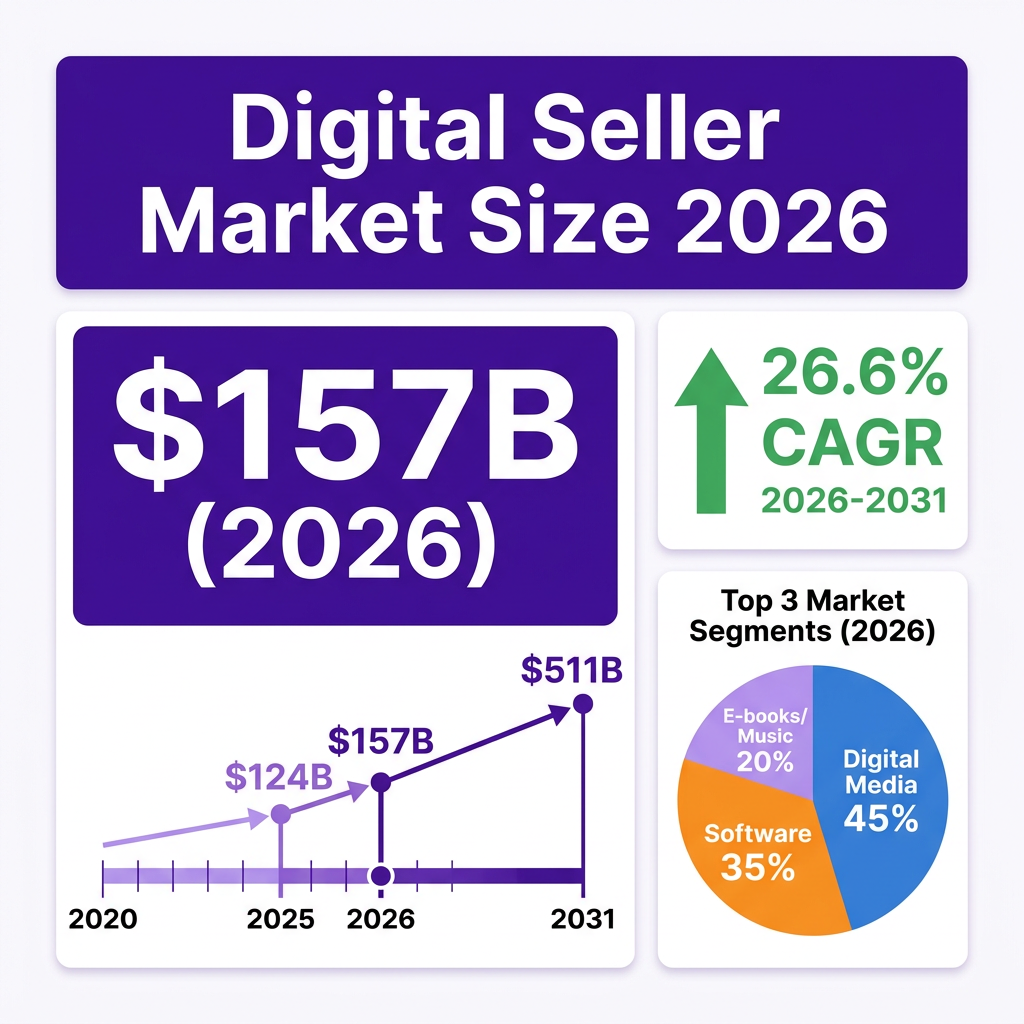
The digital goods market has evolved from a niche segment into a mainstream economic force. According to Mordor Intelligence, the market was valued at $124.32 billion in 2025 and is estimated to reach $157.39 billion in 2026, representing a year-over-year growth of approximately 26.6%. This isn’t a temporary spike—it’s a sustained trajectory that will push the market to over half a trillion dollars by 2031.
\n
What’s particularly striking about this growth is its breadth across categories. The global video streaming market alone exceeded $119 billion in 2025, while the software market generated over $742 billion in revenue, marking a 5.5% increase from 2024. The mobile app market, valued at $330.6 billion in 2025, is projected to grow at a CAGR of 14.3% to reach $1.1 trillion by 2034. Even the online games market contributed $29 billion in 2025, up 5.4% from the previous year.
\n
The core digital products market—encompassing downloadable files, templates, and standalone digital assets—reached $9.8 billion in 2025 according to HTF Market Insights, with projections showing growth to $18.3 billion by 2033. While this represents a smaller segment than software or streaming, it’s the entry point for millions of independent sellers and creators who are building sustainable businesses around digital products.
\n
Looking at the broader digital commerce platform market, Future Market Insights reports revenue ascending from $16.1 billion in 2026 to $92.2 billion by 2036, registering a 19.1% CAGR. This infrastructure growth is the foundation that enables sellers to reach global audiences without building custom e-commerce systems from scratch.
\n
The transaction volume story is equally impressive. Digital product transaction volumes surged nearly 70% between 2022 and 2024, according to Swell. This acceleration reflects not just more buyers entering the market, but existing buyers purchasing more frequently. With 68% of internet users now paying for digital content monthly, the subscription and recurring revenue model has become a dominant force in the seller ecosystem.
\n
Geographic distribution shows the United States and Europe leading in per-capita digital spending, but emerging markets in Asia-Pacific and Latin America are driving volume growth. The democratization of payment processing—through platforms like Stripe, PayPal, and increasingly, cryptocurrency options—has removed traditional barriers that previously limited cross-border digital commerce.
\n
Understanding the historical context helps appreciate the magnitude of current growth. In 2020, during the height of the pandemic-driven digital acceleration, 2 billion consumers purchased digital products. That number has grown substantially as digital consumption habits became permanent. The shift to remote work, online education, and digital entertainment that began as necessity has evolved into preference, creating a permanent expansion of the digital goods market.
\n
\n
Key Statistics and Data: 25 Numbers Every Digital Seller Must Know
\n
Data drives decisions in the digital seller market. Here are the key statistics that define the landscape in 2026, organized by category for strategic reference:
\n
Market Size and Growth
\n
- $157.39 billion: Global digital goods market value in 2026 (Mordor Intelligence)
- $511.43 billion: Projected market value by 2031
- 26.6% CAGR: Compound annual growth rate 2026-2031
- $124.32 billion: Market value in 2025
- $9.8 billion: Core digital products market value in 2025
- $18.3 billion: Projected core digital products market by 2033
\n
Consumer Behavior
\n
- 2 billion: Number of consumers who purchased digital products in 2020 alone
- 68%: Percentage of internet users paying for digital content monthly
- 70%: Transaction volume growth between 2022 and 2024
- $560 billion: Total spent on digital media globally in 2024 (up 12.5% YoY)
- 57%: Share of online purchases made on mobile devices
- 72%: Consumers who use AI for shopping and now make it their primary search tool
\n
Segment Breakdown
\n
- $119 billion: Global video streaming market value in 2025
- $742 billion: Global software market revenue in 2025 (5.5% increase)
- $330.6 billion: Global mobile app market value in 2025
- $1.1 trillion: Projected mobile app market value by 2034
- $29 billion: Global online games market revenue in 2025
- $250 billion: Creator economy market value
\n
Platform and Infrastructure
\n
- $16.1 billion: Digital commerce platform market revenue in 2026
- $92.2 billion: Projected digital commerce platform revenue by 2036
- 19.1% CAGR: Growth rate for digital commerce platforms
- 54%: Share of budgets allocated to mobile advertising
- 46%: Share of local searches on Google
- 12x: Growth in AI referral traffic to e-commerce sites in seven months (Adobe)
\n
Advertising and Marketing
\n
- $786.2 billion: Global digital advertising spend in 2026
- 44%: Users who prefer AI-powered search over traditional search
- 31%: Users who still prefer traditional search
- 30-40%: Higher revenue growth for companies with aligned product strategies
\n
These numbers tell a clear story: the digital seller market is not just growing—it’s maturing. The shift from experimental purchases to habitual buying behavior, combined with infrastructure improvements that reduce friction, creates an environment where serious sellers can build serious businesses. The data also reveals that success in this market requires understanding the interplay between technology adoption, consumer behavior shifts, and platform dynamics.
\n
7 Major Trends Shaping Digital Selling in 2026
\n
The digital seller landscape is being reshaped by seven converging trends that are redefining how products are created, marketed, sold, and consumed. Understanding these trends isn’t optional—it’s essential for anyone looking to compete in this market.
\n
1. AI-Powered Shopping and Generative Engine Optimization
\n
Artificial intelligence has moved from backend automation to frontline customer interaction. According to Adobe’s research, AI referral traffic to e-commerce sites grew twelve times in just seven months. More significantly, 72% of consumers who use AI for shopping now make it their primary search tool. This shift represents a fundamental change in discovery behavior.
\n
For digital sellers, this means optimizing for Generative Engine Optimization (GEO) is becoming as important as traditional SEO. If your products don’t appear in AI-generated results and recommendations, they effectively don’t exist for a growing segment of ready-to-buy consumers. Product descriptions, metadata, and structured data must be crafted with AI consumption in mind, not just human readers.
\n
The implications extend beyond simple visibility. AI shopping assistants are increasingly making purchasing recommendations based on synthesized information from multiple sources. Sellers must ensure their value propositions are clear, their differentiation is obvious, and their trust signals are strong enough to be included in AI-generated summaries. This requires a shift from keyword-focused optimization to context-focused positioning.
\n
2. Mobile-First Commerce Dominance
\n
Mobile isn’t just a channel—it’s the channel. With 57% of online purchases now made on mobile devices and 54% of advertising budgets allocated to mobile, the smartphone is the primary commerce interface for most consumers. Digital products are particularly well-suited to mobile consumption: instant delivery, no shipping concerns, and immediate gratification.
\n
Sellers must ensure their checkout flows, product previews, and delivery mechanisms are optimized for mobile-first experiences. Platforms that offer native mobile apps or progressive web apps (PWAs) are seeing higher conversion rates than those relying on desktop-optimized web experiences.
\n
The mobile-first trend also influences product design. Digital products that are immediately usable on mobile devices—templates formatted for mobile screens, courses optimized for mobile learning, tools that work seamlessly on smartphones—have a significant advantage over products designed primarily for desktop use.
\n
3. The Subscription Economy Expansion
\n
The one-time purchase model is being supplemented—and in many cases replaced—by subscription offerings. With 68% of internet users paying for digital content monthly, consumers have become comfortable with recurring payments for digital goods. This trend spans categories: software (SaaS), content (newsletters, streaming), education (courses), and creative assets (stock photos, templates).
\n
For sellers, subscriptions offer predictable revenue, higher lifetime value, and stronger customer relationships. The challenge is delivering ongoing value that justifies the recurring charge. Successful subscription products focus on continuous improvement, regular content updates, and community building.
\n
The subscription model also changes customer acquisition economics. While customer acquisition cost (CAC) may be higher initially, the lifetime value (LTV) of subscription customers typically exceeds that of one-time purchasers by 3-5x. This allows for more aggressive marketing investment and creates a more stable business foundation.
\n
4. Creator Economy Maturation
\n
The creator economy, valued at over $250 billion, has evolved from influencer marketing to a comprehensive ecosystem of independent entrepreneurs selling directly to their audiences. Platforms like Gumroad, Shopify, and Teachable have democratized the tools needed to create, market, and sell digital products.
\n
This maturation means creators are becoming sophisticated business operators. They’re diversifying revenue streams (courses, templates, memberships, affiliate), building email lists for direct communication, and investing in professional branding. The barrier between “creator” and “business owner” has effectively disappeared.
\n
The professionalization of the creator economy has also raised quality standards. Consumers now expect professional-grade products from independent creators, including polished design, comprehensive support, and regular updates. Creators who treat their work as a business rather than a side project are capturing disproportionate market share.
\n
5. Global Market Access and Localization
\n
Digital products have inherent global reach, but 2026 is seeing increased focus on true globalization. Sellers are localizing content, pricing in local currencies, and accepting regional payment methods. The 2 billion consumers who purchased digital products in 2020 has likely grown significantly, with emerging markets driving much of this expansion.
\n
Payment processing innovations have been critical here. The rise of local payment methods, buy-now-pay-later options, and cryptocurrency acceptance has opened markets that were previously difficult to serve. Sellers who invest in localization—beyond simple translation to cultural adaptation—are capturing market share from competitors who treat international markets as an afterthought.
\n
Tax compliance has also become a critical consideration for global sellers. VAT in Europe, sales tax in the United States, and consumption taxes in other jurisdictions require sophisticated compliance infrastructure. Platforms like Fungies.io that handle tax compliance automatically are becoming essential for sellers looking to expand globally without building internal tax expertise.
\n
6. Platform Consolidation vs. Independence
\n
A tension is emerging between selling through established marketplaces (Etsy, Amazon, AppSumo) and building independent stores (Shopify, WooCommerce). Marketplaces offer built-in traffic and trust but take significant commissions and limit brand control. Independent stores offer full control but require marketing investment to drive traffic.
\n
The winning strategy for 2026 is increasingly hybrid: using marketplaces for discovery and initial customer acquisition, then migrating successful customers to owned channels for repeat purchases and higher-margin sales. Email list building has become the critical bridge between these approaches.
\n
This hybrid approach requires careful platform selection. Each marketplace has different audience demographics, fee structures, and competitive dynamics. Successful sellers analyze platform-specific data to optimize their presence and allocate resources accordingly.
\n
7. AI-Assisted Product Creation
\n
The same AI tools that are changing how consumers shop are also changing how sellers create. AI writing assistants, image generators, code copilots, and video creation tools have dramatically reduced the time and skill required to produce professional digital products. This democratization is increasing competition but also expanding the total addressable market by enabling non-technical creators to enter previously inaccessible categories.
\n
However, this trend also creates a quality challenge. As AI-generated content proliferates, differentiation through genuine expertise, unique perspective, and human curation becomes more valuable. The sellers who thrive are those using AI to amplify their capabilities, not replace their unique value proposition.
\n
The most successful AI-assisted products combine the efficiency of AI generation with the judgment of human curation. A course outline might be generated by AI, but the examples, case studies, and insights come from real experience. A design template might use AI for initial concepts, but the final product reflects professional design sensibility.
\n

\n
Key Players and Competitive Landscape
\n
The digital seller ecosystem comprises multiple layers, from infrastructure providers to marketplace platforms to individual creators. Understanding the competitive landscape requires examining each layer and how they’re evolving.
\n
Infrastructure and Platform Providers
\n
Shopify remains the dominant force in independent e-commerce, with its ecosystem of apps and themes enabling sophisticated digital product stores. The platform’s focus on expanding beyond physical goods—with native digital product support and partnerships with delivery apps—positions it well for continued growth in this segment.
\n
Gumroad has carved out a specific niche serving independent creators with a simplified selling experience. While it lacks the customization of Shopify, its low barrier to entry and creator-focused features (memberships, email integration) make it the starting point for many digital sellers. The platform has processed billions in creator earnings and continues to add features for more established sellers.
\n
Teachable, Thinkific, and Kajabi dominate the online course segment, with each platform differentiating through specific features: Teachable focuses on ease of use, Thinkific emphasizes customization, and Kajabi positions itself as an all-in-one solution with built-in marketing tools.
\n
Amazon (Kindle Direct Publishing, Amazon Music, Prime Video) and Apple (App Store, Apple Books, Apple Music) operate massive digital marketplaces with significant gatekeeping power. Their dominance in specific categories (e-books, apps, music) makes them essential channels for many sellers, despite high commissions and strict content guidelines.
\n
Lemon Squeezy and Paddle have emerged as Merchant of Record alternatives that handle the complexity of global tax compliance, allowing sellers to focus on product development and marketing. These platforms are particularly valuable for SaaS and software sellers who need to handle subscription billing, license management, and international tax obligations.
\n
Payment and Delivery Infrastructure
\n
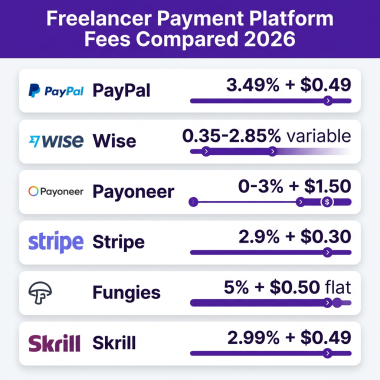
Stripe has become the default payment processor for digital products, with its developer-friendly APIs and support for subscriptions, global payments, and tax compliance. PayPal remains significant, particularly for consumer-facing transactions where buyer trust is paramount.
\n
Specialized digital delivery platforms like SendOwl, Paddle, and Lemon Squeezy have emerged to handle the specific needs of digital sellers: secure file delivery, license key management, VAT/tax compliance, and affiliate program management. These platforms reduce the technical burden on sellers while providing professional-grade infrastructure.
\n
The emergence of cryptocurrency payment options has also opened new markets, particularly for tech-savvy audiences and international customers in regions with limited traditional banking access. Platforms like Coinbase Commerce and BitPay make cryptocurrency acceptance accessible to non-technical sellers.
\n
Marketing and Discovery Platforms
\n
Etsy has become a major channel for digital products, particularly templates, printables, and creative assets. The platform’s search-driven discovery and established trust make it valuable for new sellers, though increasing competition and fee changes have driven some to seek alternatives.
\n
Product Hunt remains the launch platform of choice for software and productivity tools, with a single day of featured placement capable of generating thousands of signups and sales. The platform’s community-driven curation creates social proof that’s valuable beyond the initial traffic spike.
\n
AppSumo has built a business around promotional pricing for digital products, particularly SaaS and productivity tools. While the deep discounts required for listing can be painful, the volume and exposure often justify the margin sacrifice for sellers focused on user acquisition.
\n
Social platforms like TikTok, Instagram, and YouTube have become critical discovery channels, with algorithm-driven content distribution capable of creating viral product sensations overnight. Sellers who master short-form content creation can drive significant traffic without traditional advertising spend.
\n

\n
Challenges and Pain Points for Digital Sellers
\n
Despite the market’s growth, digital sellers face significant challenges that can make or break their businesses. Understanding these pain points—and how successful sellers address them—is crucial for anyone entering this space.
\n
1. Discovery and Traffic Acquisition
\n
The democratization of digital product creation has led to market saturation in popular categories. Standing out requires either significant marketing investment or a truly unique value proposition. Sellers on marketplaces like Etsy report increasing difficulty ranking in search results as more competitors enter the space.
\n
The shift to AI-powered search adds complexity. Traditional SEO tactics may become less effective as AI assistants synthesize information rather than directing users to specific product pages. Sellers must now optimize for being referenced by AI systems, a skill set that differs from traditional search optimization.
\n
Successful sellers are addressing this challenge through content marketing, community building, and strategic partnerships. Rather than competing solely on search rankings, they’re creating owned audiences through email lists, social media followings, and community memberships that provide direct access to customers without platform intermediation.
\n
2. Pricing Pressure and Race to the Bottom
\n
Digital products have near-zero marginal cost, which creates intense pricing pressure. When competitors can duplicate and sell similar products at minimal cost, maintaining premium pricing requires strong brand positioning and demonstrably superior value.
\n
Platform fees compound this challenge. Marketplaces taking 10-30% of revenue, combined with payment processing fees (2-3%), advertising costs, and tool subscriptions, can leave sellers with thin margins unless they achieve significant volume or premium pricing.
\n
The solution for many successful sellers is value-based pricing rather than cost-based pricing. By focusing on the transformation their products enable rather than the features they include, sellers can command prices that reflect outcomes rather than inputs. A $500 course that helps someone land a $10,000 client is a bargain; the same course priced at $50 undermines its perceived value.
\n
3. Piracy and Unauthorized Distribution
\n
The ease of copying and distributing digital products makes piracy a persistent challenge. While DRM (Digital Rights Management) solutions exist, they often create friction for legitimate customers while being circumvented by determined pirates. Many successful sellers have shifted from fighting piracy to focusing on customer experience—making legitimate purchases more convenient and valuable than pirated alternatives.
\n
Some sellers have even embraced piracy as a marketing channel, recognizing that users of pirated products may eventually convert to paying customers. By including watermarks, limited functionality, or upgrade prompts in freely distributed versions, sellers can turn piracy into a lead generation mechanism.
\n
4. Platform Dependency Risk
\n
Sellers who build their businesses entirely on third-party platforms face significant risk. Platform policy changes, fee increases, algorithm updates, or account suspensions can destroy businesses overnight. The 2024-2025 period saw several platforms increase fees or change revenue-sharing models, directly impacting seller profitability.
\n
Smart sellers are mitigating this risk by building direct relationships with customers (primarily through email lists), diversifying across multiple platforms, and maintaining owned channels (websites, blogs) that aren’t subject to platform algorithm changes.
\n
The most resilient digital product businesses treat platforms as acquisition channels rather than business foundations. They use platform traffic to build owned audiences, then monetize those audiences through direct channels that provide greater control and higher margins.
\n
5. Customer Support and Expectations
\n
Digital product buyers often have the same service expectations as physical product buyers, despite the lower price points typical of digital goods. Handling refunds, technical support questions, and feature requests can consume significant time for solo sellers or small teams.
\n
Automation helps, but overly automated support creates frustration when customers encounter edge cases or complex issues. Finding the right balance between efficiency and human touch is an ongoing challenge.
\n
Successful sellers are investing in comprehensive documentation, video tutorials, and FAQ resources that preempt common support questions. They’re also setting clear expectations about response times and support scope, ensuring customers understand what level of service is included with their purchase.
\n
Opportunities and Growth Strategies
\n
Despite the challenges, significant opportunities exist for digital sellers who position themselves strategically. Here are three high-potential growth strategies for 2026:
\n
1. Niche Specialization and Micro-Products
\n
While broad categories are saturated, hyper-specific niches remain underserved. Instead of “social media templates,” successful sellers are creating “Instagram Reels templates for vegan bakeries” or “LinkedIn carousel templates for B2B SaaS founders.” This specialization enables premium pricing, reduced competition, and stronger customer loyalty.
\n
The strategy involves identifying professional communities with specific, recurring needs and creating products that solve those needs precisely. The addressable market may be smaller, but conversion rates and customer lifetime value are typically higher than in broad markets.
\n
Niche specialization also creates natural marketing advantages. It’s easier to become known as “the person who creates templates for veterinary clinics” than as “someone who makes templates.” This reputation effect compounds over time, creating defensible market positions that are difficult for generalists to replicate.
\n
2. Product Ecosystems and Value Ladders
\n
Successful digital sellers are building product ecosystems rather than standalone offerings. A value ladder might start with a free lead magnet (checklist, template), progress to a low-cost entry product ($10-50), move to a core offer ($100-500), and culminate in high-ticket services or masterminds ($1,000+).
\n
This approach maximizes customer lifetime value while meeting buyers at their current commitment level. It also creates natural upsell and cross-sell opportunities that increase revenue without requiring new customer acquisition.
\n
The ecosystem approach also creates network effects. Customers who purchase multiple products from the same seller develop familiarity with their teaching style, design aesthetic, or methodology. This familiarity reduces friction for future purchases and increases the likelihood of recommendations to peers.
\n
3. AI-Augmented Product Development
\n
Rather than competing with AI-generated content, successful sellers are using AI to enhance their unique expertise. Examples include: using AI writing tools to draft course scripts that are then refined with personal experience and case studies; employing AI image generators for concept art that’s then professionally refined; and leveraging AI research tools to identify trending topics and underserved keywords.
\n
The key is using AI for acceleration, not substitution. Products that combine AI efficiency with human expertise, curation, and quality control can be produced faster without sacrificing the differentiation that commands premium pricing.
\n
AI tools are particularly valuable for market research and validation. Before investing significant time in product development, sellers can use AI to analyze search trends, competitor offerings, and customer reviews to identify gaps and opportunities. This data-driven approach to product development reduces the risk of creating products that don’t find market traction.
\n
Case Studies: Digital Seller Success Stories
\n
Theory is valuable, but real-world examples demonstrate what’s possible. Here are three case studies of digital sellers who have built significant businesses:
\n
Case Study 1: The $168K Etsy Digital Products Store
\n
A digital products seller on Etsy achieved $168,000 in revenue within their first year by focusing on a specific niche: printable planners and organizational templates for busy professionals. Their strategy involved:
\n
- Deep niche research using Etsy’s search analytics to identify underserved keywords
- Consistent product releases (2-3 new listings weekly) to maintain algorithmic visibility
- High-quality mockups and lifestyle photography that demonstrated product value
- Strategic use of Etsy’s advertising platform with careful ROAS monitoring
- Email list building through free lead magnets to reduce platform dependency
\n
The seller’s success demonstrates that significant revenue is possible on established marketplaces with disciplined execution and niche focus. Their progression from Etsy-only to multi-platform distribution illustrates the importance of channel diversification.
\n
Key lessons from this case study include the importance of consistent output, the value of platform-specific optimization, and the critical need to build owned audiences even when achieving success on marketplaces. The seller’s investment in email list building from day one provided insurance against platform algorithm changes and fee increases.
The Etsy case study also highlights the importance of visual presentation in digital product sales. Unlike physical products, digital goods can’t be touched or examined before purchase. High-quality mockups, lifestyle images showing the product in use, and preview videos become critical trust signals that help buyers understand what they’re purchasing. The seller’s investment in professional photography and mockup templates likely contributed significantly to their conversion rates.
\n
Case Study 2: The Contrarian Thinking Newsletter Empire
\n
Contrarian Thinking, founded by Codie Sanchez, has grown to over 100,000 newsletter subscribers, a community of 1.5 million people, and a $3 million annual run rate. Their digital product strategy includes:
\n
- A free newsletter that builds authority and audience trust
- Paid courses on business acquisition and alternative investing
- Templates and frameworks for deal analysis and business operations
- Community memberships with exclusive content and networking
- Strategic partnerships and affiliate relationships
\n
This case study illustrates the power of audience-first business building. By establishing expertise and trust through free content, the business creates a receptive market for premium digital products. The diversified revenue streams provide stability and multiple growth vectors.
\n
The Contrarian Thinking model demonstrates that digital products don’t exist in isolation—they’re part of broader value ecosystems. The newsletter builds the relationship, the community deepens it, and the paid products monetize it. This progression from free to paid creates natural customer journeys that feel valuable rather than extractive.
This case study also demonstrates the power of contrarian positioning. In a market saturated with generic business advice, Contrarian Thinking differentiated through specific, unconventional strategies that appealed to a particular type of entrepreneur. This positioning attracted a dedicated audience willing to pay premium prices for specialized knowledge that wasn’t available elsewhere.
\n
Case Study 3: From Side Project to $130K Annual Revenue
\n
A Reddit case study documented a seller who built a $130,000 per year business selling digital products through a combination of owned channels and affiliate partnerships. Key elements of their approach:
\n
- Identifying a specific problem they had personally experienced and solved
- Validating demand through pre-sales before full product development
- Leveraging affiliate relationships with influencers who pre-sold products to their audiences
- Building simple but effective sales funnels using WordPress and email automation
- Continuous iteration based on customer feedback and usage data
\n
This example shows that technical complexity isn’t required for success. A focused product solving a genuine problem, combined with smart marketing through partnerships, can generate significant revenue without massive upfront investment.
\n
The pre-sale validation approach is particularly noteworthy. By selling the product before building it, the seller confirmed market demand and generated initial revenue to fund development. This approach eliminates the risk of building something nobody wants and creates a built-in audience of early adopters who provide feedback and testimonials.
The affiliate marketing strategy employed by this seller also deserves attention. Rather than building their own audience from scratch, they leveraged existing influencers who already had the trust of their target market. This approach accelerated customer acquisition significantly and provided social proof that would have been difficult to generate independently. The key was finding affiliates whose audiences genuinely benefited from the product, ensuring that recommendations felt authentic rather than transactional.
\n
Future Outlook: 2026-2030 Predictions
\n
Looking ahead, several developments will shape the digital seller market through 2030:
\n
Market Growth Trajectory
\n
The digital goods market’s projected growth from $157 billion in 2026 to $511 billion by 2031 suggests a compound annual growth rate that will create enormous opportunities for established players and new entrants alike. This growth will be driven by:
\n
- Continued internet penetration in emerging markets
- Generational shift toward digital-native consumption habits
- Improvement in digital payment infrastructure globally
- Expansion of digital product categories (AI-generated content, virtual goods, NFTs)
\n
The next five years will likely see the emergence of new product categories that don’t exist today. As AI capabilities expand, virtual and augmented reality mature, and blockchain technology finds practical applications, digital sellers will have opportunities to create entirely new types of value.
\n
AI Integration Deepens
\n
By 2030, AI will be deeply integrated into every aspect of digital selling: product creation, marketing personalization, customer service automation, and predictive analytics for inventory and pricing. Sellers who embrace AI augmentation will operate at scales and speeds impossible for purely human-powered operations.
\n
However, this integration will also raise quality expectations. As AI tools become ubiquitous, the baseline for professional digital products will rise. Differentiation will come from creative application of AI, unique human perspective, and superior customer experience rather than simply using AI tools.
\n
The sellers who thrive will be those who develop symbiotic relationships with AI—using it to handle routine tasks while focusing their own efforts on strategy, creativity, and relationship building. The human element will become more valuable, not less, as AI commoditizes basic production capabilities.
\n
Regulatory Evolution
\n
As digital commerce grows, regulatory attention will increase. Tax compliance (VAT, sales tax), consumer protection regulations, and content moderation requirements will become more complex. Platforms and infrastructure providers will increasingly handle compliance on behalf of sellers, but this service will come with costs and restrictions.
\n
Sellers who establish compliance infrastructure early will have advantages as regulations tighten. Those who ignore compliance risks may find themselves unable to sell in major markets or facing significant penalties. The cost of compliance will become a competitive factor, favoring established sellers over newcomers.
\n
Platform Consolidation and Fragmentation
\n
The platform landscape will likely experience simultaneous consolidation (major players acquiring smaller platforms) and fragmentation (niche platforms serving specific creator communities). Sellers will need to maintain presence across multiple platforms while building owned channels that provide independence.
\n
The platforms that survive will be those that provide genuine value beyond simple hosting—whether through built-in audiences, sophisticated marketing tools, or comprehensive compliance support. Sellers should evaluate platforms based on their strategic value, not just their fees.
\n
How to Get Started as a Digital Seller in 2026
For those looking to enter the digital seller market, the path forward has never been more accessible. Here’s a practical framework for getting started:
Step 1: Identify Your Expertise and Niche
Start with what you know. The most successful digital products solve problems the creator has personally experienced. Look for professional communities you belong to, hobbies you’re passionate about, or skills you’ve developed in your career. The intersection of your expertise and market demand is where viable product opportunities exist.
Step 2: Validate Demand Before Building
Before investing significant time in product development, validate that people are willing to pay for your solution. This can be done through pre-sales, surveys of your target audience, or analysis of existing products in your niche. The goal is to confirm that your product idea solves a genuine problem that people are actively seeking solutions for.
Step 3: Choose Your Platform Strategy
Decide whether to start on a marketplace (for built-in traffic) or build your own store (for control and margins). Many successful sellers start on marketplaces to validate their products, then expand to owned channels as they grow. The key is having a plan for building direct customer relationships regardless of where you start.
Step 4: Create Your Minimum Viable Product
Don’t aim for perfection on your first release. Create a product that solves the core problem well, then iterate based on customer feedback. Early customers are often willing to accept less polish in exchange for early access and the opportunity to shape the product’s development.
Step 5: Build Your Marketing Engine
Product creation is only half the battle. Invest in building marketing channels—whether that’s content marketing, social media, paid advertising, or partnerships—that can consistently drive qualified traffic to your offers. The sellers who succeed long-term are those who master customer acquisition as well as product development.
Key Takeaways
\n
- Massive Market Opportunity: The digital goods market will grow from $157 billion in 2026 to $511 billion by 2031, creating unprecedented opportunities for sellers.
- Mobile-First Imperative: With 57% of purchases happening on mobile, optimization for mobile experiences is non-negotiable.
- AI is Reshaping Discovery: 72% of consumers using AI for shopping prefer it as their primary search tool—Generative Engine Optimization is the new SEO.
- Subscription Models Dominate: 68% of internet users pay for digital content monthly, making recurring revenue models essential for sustainable businesses.
- Niche Specialization Wins: In saturated broad markets, hyper-specific niches offer premium pricing, lower competition, and higher customer loyalty.
\n
Conclusion: The Digital Seller Opportunity
The digital seller market in 2026 represents one of the most accessible business opportunities in modern commerce. With $157 billion in current market value and a trajectory toward $511 billion by 2031, the growth potential is undeniable. But beyond the numbers lies something more significant: the democratization of entrepreneurship.
Never before have individuals had such direct access to global markets with so little upfront investment. A creator with expertise, a laptop, and internet connection can build a business that reaches millions. The barriers that once protected established players—distribution networks, marketing budgets, geographic limitations—have been dismantled by digital infrastructure.
Success in this market requires more than just creating a product. It demands understanding the ecosystem: the platforms that enable distribution, the payment systems that handle transactions, the marketing channels that drive discovery, and the compliance requirements that govern global commerce. The sellers who thrive are those who treat their work as a business from day one, investing in the systems and relationships that create sustainable competitive advantages.
As AI transforms both how products are created and how they’re discovered, the human elements of business become more valuable, not less. Expertise, authenticity, and genuine connection with customers are the differentiators that technology cannot replicate. The future belongs to sellers who use AI as a tool while doubling down on the human value they provide.
For those considering entering this market, the message is clear: start now. The tools have never been more accessible, the market has never been larger, and the opportunity has never been more real. The digital seller revolution is here—and it’s just getting started.
Sources and Citations
\n
- Mordor Intelligence – Digital Goods Market Size & Share Analysis: https://www.mordorintelligence.com/industry-reports/digital-goods-market
- Swell – 32 Digital Product Sales Statistics: https://www.swell.is/content/digital-product-sales-statistics
- Whop – 100+ Digital Products Statistics for 2026: https://whop.com/blog/digital-product-statistics
- Future Market Insights – Digital Commerce Platform Market: https://www.futuremarketinsights.com/reports/digital-commerce-platform-market
- Mirakl – 2026 Marketplace Predictions: https://www.mirakl.com/blog/2026-marketplace-predictions-that-will-change-how-you-sell-online
- Digital Marketing Institute – Digital Marketing Trends 2026: https://digitalmarketinginstitute.com/blog/digital-marketing-trends-2026
- Amplitude – Product Benchmarks: https://amplitude.com/benchmarks
- InsightsByJess – $168K Etsy Store Case Study: https://insightsbyjess.com/168k-store-case-study-digital-products-to-sell-on-etsy
- Starter Story – Digital Products Success Stories: https://www.starterstory.com/ideas/digital-product-sales-business/success-stories
- Adobe – AI Shopping Research: https://www.mirakl.com/blog/2026-marketplace-predictions-that-will-change-how-you-sell-online
- Grand View Research – Digital Media Market: https://www.grandviewresearch.com/industry-analysis/digital-media-market-report