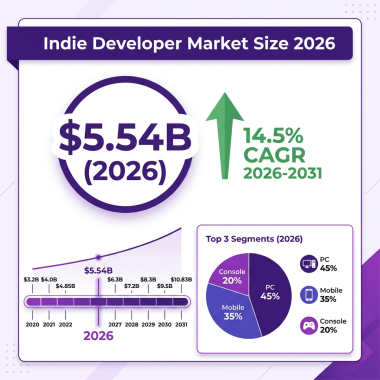
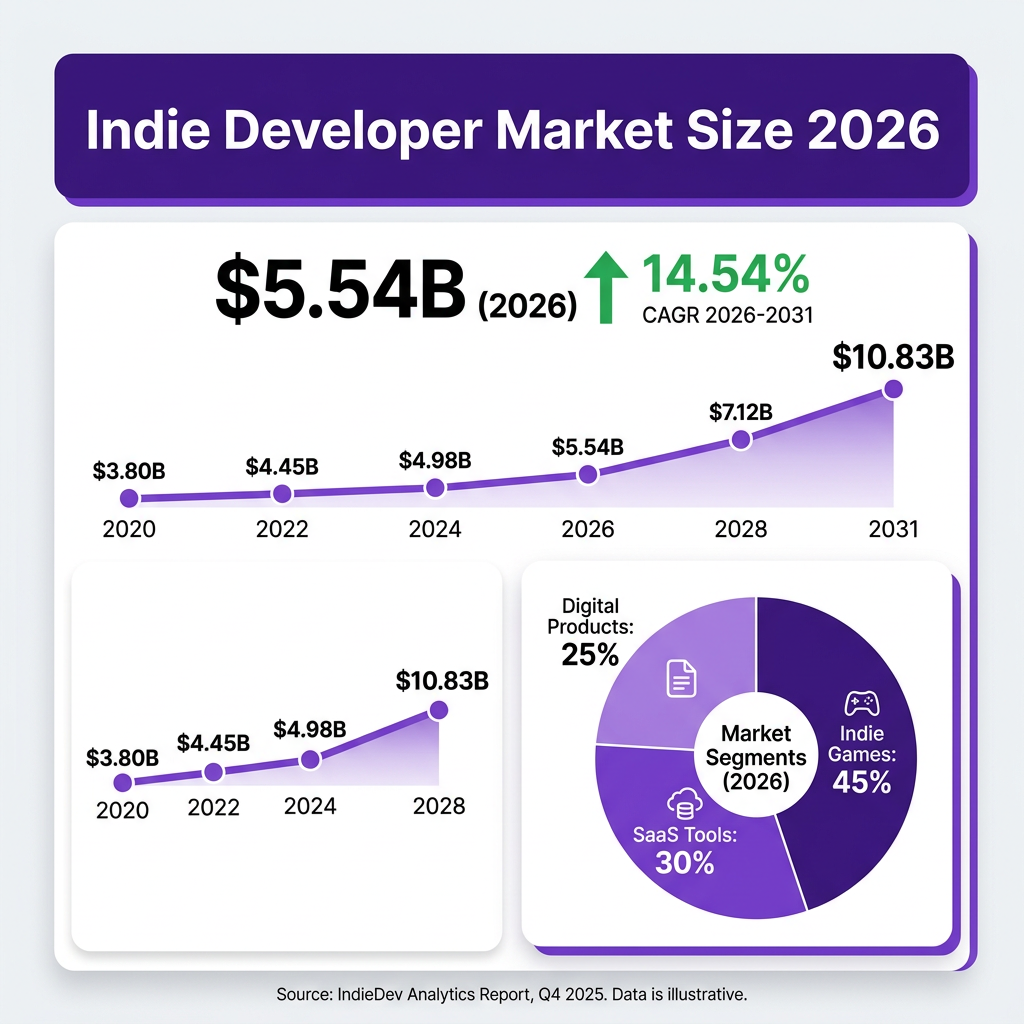
Welcome to the paradox of the indie developer market in 2026 — where the barrier to entry has never been lower, the tools have never been more powerful, but the path to sustainable success has never been more challenging. The global indie game market alone is projected to reach $5.54 billion in 2026, growing at a compound annual growth rate (CAGR) of 14.54% through 2031 when it will hit $10.83 billion. Yet beneath these impressive headline numbers lies a more complex reality: while the total revenue for indie games on Steam reached $650 million in Q1 2026 alone, this money is increasingly concentrated among a smaller number of breakout hits.
This comprehensive analysis examines the complete indie developer landscape in 2026, drawing on the latest market data, industry reports, and expert insights to provide a clear picture of where the market stands, where it is headed, and what strategies are working for successful independent developers in this rapidly evolving ecosystem.

Market Overview: The $5.54 Billion Indie Developer Ecosystem
The indie developer market has undergone a dramatic transformation over the past decade. What began as a niche segment of passionate hobbyists has evolved into a substantial economic force that commands respect from major publishers, attracts significant investment, and increasingly shapes the direction of the broader software and gaming industries.
In 2026, the global indie game market stands at $5.54 billion, representing a significant jump from $4.85 billion in 2025. This growth trajectory shows no signs of slowing, with analysts projecting the market will nearly double to $10.83 billion by 2031. The 14.54% CAGR outpaces many traditional software segments, highlighting the continued vitality and expansion of independent development.
The United States continues to dominate the indie market landscape, generating $3.1 billion in revenue share in 2023, followed by the European Union at $2.8 billion. However, the geographic distribution is shifting as digital distribution platforms democratize access to global markets. Developers from emerging markets are increasingly capturing significant revenue shares, aided by the low barrier to entry and the borderless nature of digital distribution.
The broader context for indie developers extends beyond gaming. The bootstrap startup movement, championed by communities like Indie Hackers, has seen solo founder representation climb from 22% in 2015 to 38% in 2024. This trend reflects a fundamental shift in how entrepreneurs approach business building — prioritizing autonomy, profitability, and sustainable growth over the traditional venture capital-fueled hypergrowth model.
Steam remains the dominant platform for indie game distribution, with Q1 2026 data showing remarkable concentration of revenue. The platform’s Platinum Tier — representing the top 12 highest-grossing games — now includes $20 indie titles like Hollow Knight: Silksong and Schedule 1 standing shoulder-to-shoulder with billion-dollar franchises like Monster Hunter Wilds and EA Sports FC 26. This represents a seismic shift in the industry’s power dynamics.
The math behind this success is striking. To generate the same gross revenue as a $70 AAA game, these $20 indies had to move nearly four times the volume — yet they’re doing exactly that. The Steam community has officially voted against the $70 standard with their wallets, creating unprecedented opportunities for independent developers who can deliver quality experiences at accessible price points.
Key Statistics and Data: Understanding the Numbers
Behind the headline market figures lies a complex statistical landscape that reveals both the opportunities and challenges facing indie developers in 2026. Understanding these numbers is essential for anyone looking to enter or succeed in this competitive market.
The median indie game on Steam earns between $5,000 and $15,000 in lifetime gross revenue. After Steam’s 30% cut, that’s roughly $3,500-$10,500 for the developer. This stark reality check illustrates the winner-take-most dynamics of the market, where a small number of breakout hits capture the majority of revenue while most titles struggle to achieve commercial viability.
However, the total addressable market continues to expand. Analysis of 4,900 Action/Adventure/Indie games on Steam released recently shows a combined $1.8 billion in total estimated revenue across 108 million copies sold. The average price point sits at $10.72, demonstrating the price sensitivity of the indie market and the importance of volume over margin.
The top-performing indie games in Q1 2026 paint a picture of what’s possible at the high end. Mewgenics generated $45M+ in estimated gross revenue, while Slay the Spire II reached $40M+. These figures rival mid-tier AAA releases and demonstrate that indie games can achieve massive commercial success when they resonate with audiences.
The broader gaming industry provides important context. Newzoo reports $188.8 billion in total gaming revenue for 2025, with mobile gaming commanding $92.6 billion, console at $56.1 billion, and PC at $39.5 billion. Indie games have found their strongest foothold on PC, where the open platform and digital distribution have created the most favorable environment for independent developers.
The game development software market that enables indie creation is itself growing steadily, projected to reach $1.887 billion by 2035 at a 3.02% CAGR. North America remains the largest market for these tools, while Asia-Pacific is emerging as the fastest-growing region. Unity dominates with 42% of developers reporting it as their primary engine, followed by Unreal Engine at 30%.
Steam’s tag data reveals important insights about genre performance. The Indie tag encompasses 93,930 games generating approximately $16 billion in total revenue, with an average revenue per game of $220,000 and a median of $570. The disparity between average and median highlights the extreme concentration of success, with a small number of hits dramatically pulling up the average.
The solo founder movement shows equally impressive statistics. Bootstrapped founders building restaurant ordering apps, real estate CRMs, and gym management tools are earning $5K-30K/month. The share of startups with solo founders and no VC cash climbed from 22% in 2015 to 38% in 2024, representing a fundamental shift in entrepreneurship patterns.
AI adoption among indie developers is accelerating rapidly. By 2027, predictions suggest AI will be a superhuman coder, dramatically lowering the technical barrier to entry. Businesses report that up to 50% of their core processes could be run by AI agents by 2025 and beyond, with this prediction materializing faster than anticipated.
The job market for game developers shows continued growth, with 32,090 new jobs expected to fill by 2029. Video game designers earn an average annual salary of $66,894, increasing by 15% with 5-9 years of experience. This career path remains attractive despite the challenges of independent development.
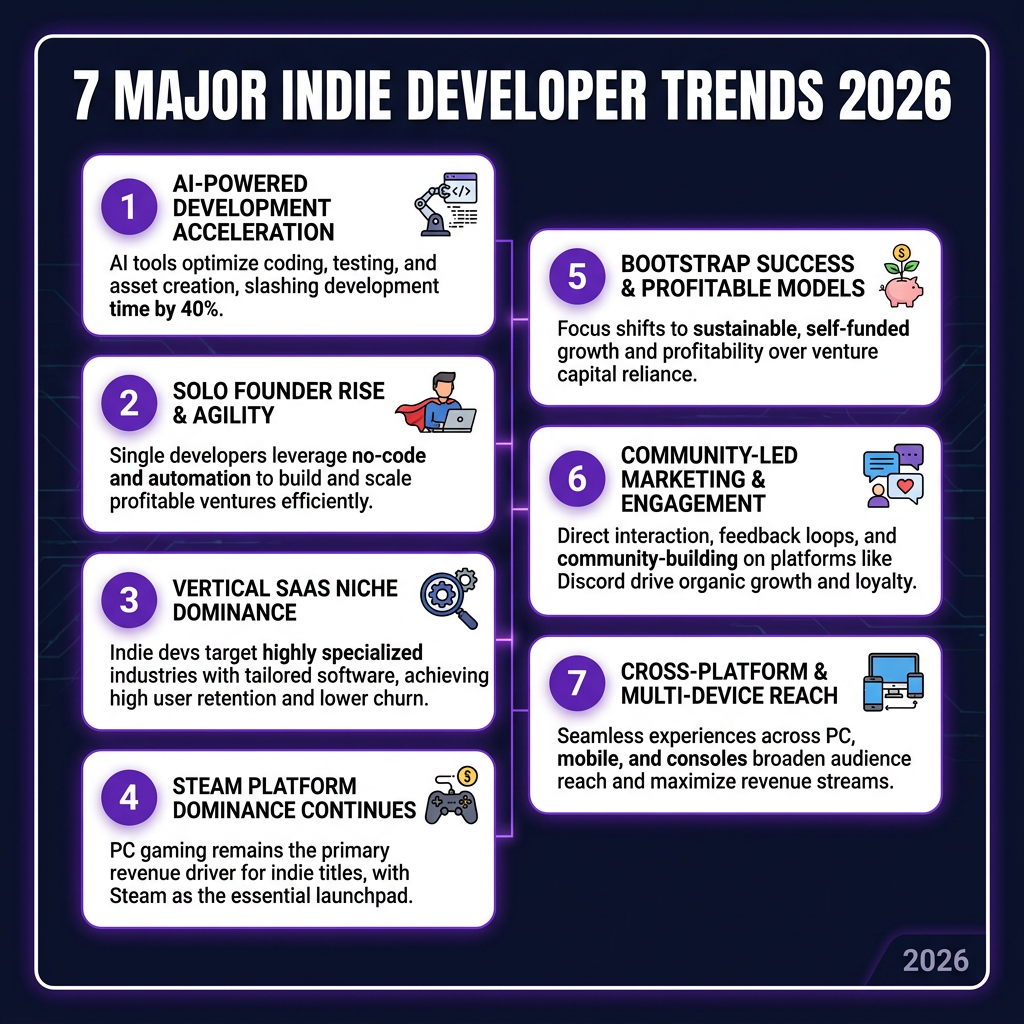
Major Trends Shaping Indie Development in 2026
1. AI-Powered Development Revolution
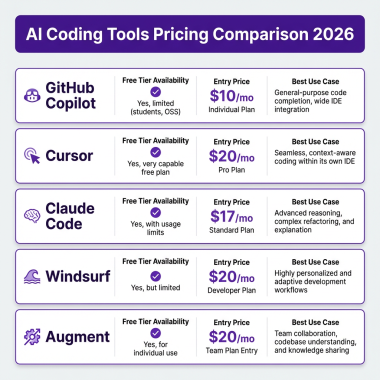
Artificial intelligence has become the engine behind modern indie development. AI coding assistants like Claude Code, Cursor, and GitHub Copilot now write code, review pull requests, and handle background work that used to consume half a developer’s day. The integration of generative AI into development workflows has reduced time-to-market by 40-60% for many indie projects.
AI is not just assisting with code — it’s transforming asset creation, level design, and even marketing copy. Indie developers can now generate professional-quality art assets, compose music, and write dialogue with AI assistance, dramatically reducing the need for specialized team members. This democratization of creative capabilities is perhaps the most significant trend reshaping indie development in 2026.
2. The Rise of the Solo Founder
The one-person business model has emerged as a powerful force in 2026. Solo founders are building multi-million dollar companies without traditional infrastructure or large teams, leveraging AI, global talent marketplaces, and lean operations. The modern solo founder serves as the central vision-holder who orchestrates a network of resources around their business goals.
Success stories abound: Stardew Valley created by a single developer has generated over $30 million. Photopea, built and run solo by Ivan Kutskir for 11+ years, now serves millions of users. These examples prove that with the right idea, relentless execution, and smart leverage, a single founder can reach six, seven, or even eight-figure revenue.
3. Vertical SaaS for Indie Developers
Indie developers are increasingly building tools for other indie developers, creating a self-sustaining ecosystem of specialized software. From game analytics platforms to marketing automation tools, vertical SaaS products serving the indie community are experiencing rapid growth. These tools address the specific pain points of independent creators who lack the resources of major studios.
The vertical SaaS market hit an estimated $130 billion in 2025, growing at 18-22% annually — nearly double the pace of horizontal platforms. For indie developers, this means access to increasingly sophisticated tools tailored to their specific needs at accessible price points.
4. Steam’s Continued Dominance
Steam remains the undisputed king of indie game distribution, with Q1 2026 data showing $650 million in total indie game revenue. The platform’s discovery algorithms, while imperfect, still provide the most reliable path to market for independent developers. Nearly half of the Top 100 sales on Steam are now indie titles, a dramatic shift from just a few years ago.
However, this dominance comes with challenges. With 19,606 games released on Steam in 2025 alone, discoverability has become the primary challenge for indie developers. Success increasingly depends on building an audience before launch rather than relying on platform algorithms.
5. Bootstrap Success Stories
2026 is shaping up to be a golden year for bootstrapped founders. AI handles 80% of the grunt work, validation happens before writing a single line of code, and solo founders are hitting $20K MRR without employees. The Indie Hackers community continues to showcase remarkable success stories, from zero to $10K MRR app portfolios in a year to mid-six-figure annual revenues.
The bootstrap model offers something venture capital cannot: autonomy. Indie hackers prioritize independence from jobs, bosses, capped salaries, and investor control. This freedom, combined with modern tooling, creates a compelling alternative to traditional startup paths.
6. Community-Driven Marketing
Traditional marketing channels have become prohibitively expensive for most indie developers. In response, successful indies have pivoted to community-driven marketing strategies. Crowdfunding, open development, and community playtests are shaping the direction of indie titles long before launch.
Building in public has emerged as a particularly effective strategy. Developers who share their journey on platforms like Twitter, Reddit, and Discord build engaged communities that convert to paying customers at launch. This approach requires transparency and consistency but offers a sustainable alternative to paid acquisition.
7. Cross-Platform and HTML5 Growth
HTML5 indie games are experiencing a renaissance as players expect games that load quickly, work across devices, and deliver depth in short sessions. The shift toward frictionless access benefits independent developers who can create focused, inventive concepts without the overhead of platform-specific development.
Cloud gaming is pushing the industry toward a platform-agnostic future, creating new opportunities for indie developers to reach audiences regardless of their hardware. This trend, combined with the opening of app stores and new business models, is expanding the addressable market for independent creators.

Key Players and Success Stories
The indie developer landscape is filled with remarkable success stories that demonstrate what’s possible with the right combination of talent, timing, and execution. These case studies offer valuable lessons for aspiring indie developers.
Case Study 1: Stardew Valley — The Solo Developer Phenomenon
Eric Barone spent four years developing Stardew Valley entirely by himself, handling programming, art, music, and writing. Released in 2016, the game has sold over 20 million copies and generated more than $30 million in revenue. The key lesson: long-term compounding through quality beats short-term marketing tactics. Barone’s commitment to post-launch support, with free content updates years after release, has built a loyal community that continues to drive sales.
Case Study 2: Photopea — The Browser-Based Photoshop Killer
Ivan Kutskir built Photopea, a free Photoshop alternative that runs in the browser, and ran it solo for over 11 years. The tool now serves millions of users and generates substantial revenue through ads and premium subscriptions. Kutskir’s success demonstrates the power of solving a clear problem with a simple solution, even in a market dominated by giant incumbents.
Case Study 3: Carrd — The Simplest Website Builder
AJ (ajlkn) created Carrd, a simple one-page website builder, as a side project. It has since grown into a million-dollar solo empire with minimal overhead. The lesson: focusing on a narrow use case and executing it exceptionally well can be more valuable than trying to compete with full-featured alternatives.
Case Study 4: NeuroFlow AI — From Seed to $100M ARR in 18 Months
While not a traditional indie game story, NeuroFlow AI demonstrates what’s possible when indie developers apply their skills to AI-powered SaaS. The company turned $500K seed funding into $100M ARR in just 18 months by making AI agents the product rather than just a feature. Their viral freemium tier allowed any user to create a basic agent for free, with collaborative features unlocking after sharing with 3+ team members.
Case Study 5: EcoTrack Analytics — Bootstrapped to $20M ARR
EcoTrack Analytics hit $20M ARR without venture capital by weaponizing community-driven customer acquisition in the sustainability niche. This bootstrapped success story proves that indie developers can achieve significant scale without sacrificing ownership or control.
Challenges and Pain Points
Despite the impressive success stories and market growth, indie developers face significant challenges in 2026. Understanding these obstacles is crucial for anyone considering entering this competitive landscape.
Challenge 1: Market Saturation and Discoverability
The most pressing challenge facing indie developers is market saturation. With nearly 20,000 games released on Steam in 2025 alone, standing out has become increasingly difficult. The median indie game earns just $5,000-$15,000 in lifetime revenue — not enough to sustain a full-time developer.
Discoverability has become the primary bottleneck. Platform algorithms favor games that already have traction, creating a catch-22 for new releases. Marketing budgets that would have been sufficient five years ago now barely move the needle. As one developer noted: “Great for gamers, horrible for indie developers, as it will become more and more impossible to compete without funding.”
Challenge 2: Rising Player Expectations
Players increasingly expect production values that rival AAA titles, even from solo developers. The bar for polish, graphics, and content depth has risen dramatically. Launching a successful indie game in 2026 looks very different than it did just a few years ago — the market is more crowded, players are more demanding, and discoverability is harder than ever.
First impressions happen fast. If the gameplay loop doesn’t hook players within the first session, even the best marketing efforts will struggle to convert interest into long-term engagement. This pressure for immediate polish conflicts with the iterative development model that many indie developers prefer.
Challenge 3: Industry Layoffs and Talent Competition
The game industry has experienced significant turbulence, with over one in four (28%) game developers laid off in the past two years, increasing to one-third (33%) for those in the United States. Half of surveyed developers said their current or most recent employer has conducted layoffs in the past 12 months.
This turbulence has created a paradox: while more experienced developers are available for indie projects, the competition for attention and revenue has intensified. Experienced developers entering the indie space raise the quality bar for everyone, making it harder for newcomers to compete.
Opportunities and Growth Strategies
Despite the challenges, significant opportunities exist for indie developers who can navigate the current landscape strategically. The following approaches have proven effective for successful independent developers in 2026.
Strategy 1: Niche Down and Own Your Category
The most successful indie developers in 2026 have embraced extreme niche targeting. Rather than competing in crowded genres, they identify underserved micro-genres or unique gameplay mechanics that resonate with specific player communities. This approach sacrifices broad appeal for deep engagement with a dedicated audience.
The “weirdo indie co-op” trend exemplifies this strategy. Games that offer unusual cooperative experiences — from chaotic physics-based cooking to asymmetric horror — have found passionate audiences willing to evangelize their favorites. The lesson: it’s better to be the best game for a small audience than an average game for everyone.
Strategy 2: Build Your Audience Before You Build Your Product
Successful indie developers are reversing the traditional development timeline. Instead of building in secret and marketing at launch, they’re building audiences through development blogs, social media presence, and community engagement before the product is complete.
This “build in public” approach serves multiple purposes: it validates demand before significant investment, builds a launch-ready customer base, and creates a feedback loop that improves the final product. Developers who master this strategy launch to immediate sales rather than hoping for algorithmic discovery.
Strategy 3: Leverage AI for Competitive Advantage
AI is not just a tool for efficiency — it’s a competitive differentiator. Indie developers who effectively integrate AI into their workflows can produce content at scales previously impossible for small teams. This includes procedural content generation, AI-assisted art and music creation, and intelligent NPC behavior.
The key is using AI to enhance rather than replace creative vision. The most successful AI-powered indie games use the technology to deliver experiences that would be prohibitively expensive to create manually, while maintaining a coherent artistic direction.
Future Outlook and Predictions (2026-2031)
The indie developer market is poised for continued growth and transformation through 2031. Several key trends will shape the landscape in the coming years.
Market Growth Projections
The indie game market is forecast to reach $10.83 billion by 2031, maintaining a robust 14.32% CAGR. This growth will be driven by continued platform expansion, emerging market adoption, and the increasing normalization of indie games as primary entertainment choices rather than niche alternatives.
The broader software development landscape will see AI become increasingly central. By 2027, AI is predicted to be a superhuman coder, dramatically altering the economics of software development. This will lower barriers to entry while simultaneously raising quality expectations.
Platform Evolution
Cloud gaming will push the industry toward a platform-agnostic future, creating new distribution opportunities for indie developers. The opening of app stores, driven by regulatory pressure, will create new business models and reduce platform fees that currently consume significant portions of indie revenue.
Steam’s dominance will likely continue, but alternative platforms will gain traction. Epic Games Store, GOG, and emerging platforms like Itch.io will provide viable alternatives, though none currently match Steam’s discovery capabilities.
Technology Disruption
Generative AI will continue to disrupt traditional development workflows. While currently only 7% of developers believe generative AI is having a positive impact (down from 13% in 2025), this skepticism likely reflects growing pains rather than long-term rejection. As AI tools mature, adoption will accelerate.
By 2030, we can expect AI to handle the majority of routine development tasks, allowing indie developers to focus on creative direction and unique gameplay mechanics. This shift will enable smaller teams to create increasingly ambitious projects.
The Economics of Indie Development: A Deep Dive
Understanding the financial realities of indie development requires looking beyond headline revenue figures to examine the true economics of building and launching independent products. The cost structure, revenue distribution, and profitability metrics paint a nuanced picture of what it actually takes to succeed as an indie developer in 2026.
Development Costs and Budget Realities
The cost of indie game development varies dramatically based on scope, team size, and development timeline. A solo developer working part-time might spend $0-10,000 on a project, while a small team with contractors could easily invest $100,000-500,000. The median indie game on Steam, earning $5,000-15,000 lifetime, represents a challenging return on investment for all but the most lean operations.
Modern development tools have reduced costs significantly. Unity and Unreal Engine are free for small developers, AI-assisted content creation reduces asset costs, and cloud services eliminate infrastructure investments. However, marketing costs have risen proportionally, with successful indie launches often requiring $10,000-50,000 in paid acquisition to break through the noise.
Revenue Distribution and Platform Fees
Platform fees significantly impact indie developer economics. Steam takes 30% of gross revenue, leaving developers with 70% before taxes and other expenses. Epic Games Store offers a more favorable 12% cut but with lower overall volume. Mobile platforms historically took 30% as well, though regulatory pressure is forcing changes to these rates.
The concentration of revenue among top performers creates a power law distribution that makes financial planning difficult. While the average indie game on Steam generates $220,000 in revenue, the median is just $570. This disparity means that statistical averages are misleading for planning purposes — most developers should expect median outcomes, not average ones.
Alternative Revenue Models
Successful indie developers are diversifying beyond traditional premium sales. Subscription models, DLC strategies, and merchandise sales provide ongoing revenue streams that smooth out the feast-or-famine cycle of launch-dependent income. Games-as-a-service approaches, while requiring ongoing development investment, have proven particularly effective for maintaining long-term revenue.
Crowdfunding remains a viable option for established developers with track records, though success rates have declined as platforms mature. Kickstarter and Fig campaigns can provide both funding and marketing validation, but backers have become more discerning, requiring polished pitches and demonstrable progress.
Regional Market Dynamics
The indie developer market exhibits significant regional variation in both supply and demand. Understanding these dynamics is crucial for developers looking to optimize their market positioning and distribution strategies.
North American Market Leadership
North America remains the largest market for indie games and development tools, with the United States generating $3.1 billion in indie game revenue in 2023. The region benefits from mature digital infrastructure, high disposable income among gamers, and a strong culture of independent game development. However, competition is fiercest here, with the highest marketing costs and most demanding player expectations.
European Market Characteristics
The European Union generated $2.8 billion in indie game sales in 2023, with particular strength in Germany, the UK, and France. European players show strong preference for narrative-driven and artistic games, creating opportunities for developers working in these genres. EU regulations around platform fees and digital rights are also creating a more favorable environment for developers.
Asia-Pacific Growth Opportunities
Asia-Pacific is the fastest-growing region for game development software and indie games, with countries like South Korea, Japan, and emerging markets in Southeast Asia showing rapid adoption. Cultural preferences differ significantly from Western markets, with mobile gaming dominating and PC gaming growing rapidly. Developers who can adapt their content for these markets find less competition and higher growth potential.
Technology Stack and Tooling Evolution
The tools available to indie developers have evolved dramatically, enabling increasingly ambitious projects with smaller teams. Understanding the current technology landscape is essential for making informed development decisions.
Game Engines and Development Platforms
Unity maintains its position as the dominant engine among indie developers, with 42% of developers reporting it as their primary tool. Unreal Engine follows at 30%, offering superior graphical capabilities but with a steeper learning curve. Godot has emerged as a popular open-source alternative, particularly among developers concerned about Unity’s pricing changes and licensing terms.
The game development software market is projected to grow from $1.401 billion in 2025 to $1.887 billion by 2035. This growth reflects both the expanding indie developer base and the increasing sophistication of tools required to meet rising player expectations.
AI Integration in Development Workflows
AI coding assistants have become standard tools for indie developers. Cursor, Claude Code, and GitHub Copilot now handle routine coding tasks, code review, and debugging assistance. These tools don’t replace developer creativity but accelerate implementation, allowing small teams to achieve what previously required larger engineering groups.
Generative AI for asset creation has reached production quality for many use cases. AI-generated textures, music, and even 3D models can significantly reduce art budgets, though human curation remains essential for maintaining coherent artistic direction. The most successful developers use AI to multiply their creative output rather than replace creative judgment.
Marketing and Distribution Strategies
Creating a great product is no longer sufficient for indie success. Marketing and distribution strategy often determines the difference between a breakout hit and a commercial failure.
The Discovery Problem
With nearly 20,000 games released on Steam annually, discoverability has become the primary challenge for indie developers. Platform algorithms favor games that already have traction, creating a catch-22 where new releases struggle to gain visibility without existing sales, but can’t generate sales without visibility.
Successful developers solve this problem by building audiences before launch. Email lists, Discord communities, and social media followings provide a direct channel to potential customers that bypasses platform algorithms. The most successful indie launches in 2026 came from developers who spent months or years cultivating these audiences.
Content Marketing and Community Building
Content marketing has emerged as the most cost-effective acquisition channel for indie developers. Development blogs, behind-the-scenes videos, and social media updates build anticipation while demonstrating competence and commitment. This content serves dual purposes: attracting potential customers and providing ongoing engagement for existing community members.
Community building extends beyond marketing to become a core product strategy. Games with strong community elements — mod support, user-generated content, multiplayer features — benefit from organic growth as players recruit their friends. This viral loop can drive exponential growth that no paid acquisition strategy can match.
Influencer and Streamer Marketing
Streamer and influencer marketing has become essential for indie game success. A single feature by a major Twitch streamer or YouTuber can drive more sales than thousands of dollars in paid advertising. However, securing these features requires either exceptional game quality or established relationships with content creators.
The economics of influencer marketing favor games with strong streaming potential — either through competitive multiplayer, emergent gameplay moments, or narrative content that creates shareable experiences. Developers are increasingly designing with streamability in mind, creating features specifically intended to generate entertaining content for viewers.
The Mental Health and Sustainability Crisis
Beneath the market statistics and success stories lies a concerning reality about the sustainability of indie development as a career. The pressures of independent creation take significant tolls on developer wellbeing.
Crunch Culture and Burnout
Indie development is often romanticized as freedom from corporate exploitation, but the reality frequently involves intense crunch periods and financial stress. Solo developers and small teams feel pressure to match the output of larger studios, leading to unsustainable work patterns. The financial precarity of indie development — with irregular income and uncertain project outcomes — compounds these pressures.
The industry layoffs of 2024-2025 have intensified competition while reducing safety nets. Developers who might have previously relied on studio employment between indie projects now face a more challenging job market, increasing the stakes for each independent release.
Building Sustainable Practices
A growing movement within the indie community emphasizes sustainable development practices. This includes realistic project scopes, healthy work-life boundaries, and financial planning that accounts for the high failure rate of indie projects. Communities like Indie Hackers increasingly celebrate sustainable businesses over growth-at-all-costs approaches.
The most successful long-term indie developers treat their work as a business rather than a passion project. This means maintaining financial reserves, diversifying revenue streams, and making strategic decisions based on market realities rather than creative preferences alone.
Investment and Funding Landscape for Indie Developers
The funding environment for indie developers has evolved significantly, with new options emerging alongside traditional bootstrapping approaches. Understanding these funding mechanisms is crucial for developers planning their financial strategies.
Bootstrap vs. External Funding
The classic indie model involves bootstrapping — funding development through personal savings, consulting work, or early revenue from minimum viable products. This approach maintains full creative and financial control but limits project scope and extends development timelines. The Indie Hackers community has championed this model, with countless success stories of developers building profitable businesses without external investment.
However, the definition of “indie” has evolved. Courtland Allen, founder of Indie Hackers, notes that it’s becoming increasingly common to have investors and yet remain indie in spirit. The key distinction is maintaining autonomy over product decisions and company direction, regardless of funding source.
Alternative Funding Models
Revenue-based financing has emerged as an attractive middle ground between bootstrapping and venture capital. Companies like Pipe and Clearco provide capital based on recurring revenue, with repayment tied to future sales rather than equity dilution. This model preserves ownership while providing growth capital.
Community funding through platforms like Kickstarter and Fig continues to provide validation alongside capital. Successful campaigns demonstrate market demand while building an engaged customer base before launch. However, backer expectations have risen, requiring polished pitches and demonstrable progress to secure funding.
Competitive Analysis: Indie vs. AAA
The relationship between indie and AAA development has shifted dramatically. Where indies once occupied a distinct niche, they now compete directly with major publishers for player attention and revenue.
The Revenue Anomaly
Steam’s 2025 data revealed a striking pattern: $20 indie titles like Hollow Knight: Silksong and Schedule 1 achieved Platinum Tier status alongside $70 AAA blockbusters. To generate equivalent gross revenue, these indies sold nearly four times as many units — demonstrating both the volume potential of accessible pricing and the efficiency of lean development.
This revenue anomaly terrifies major publishers. Their cost structures, built around massive teams and extended development cycles, cannot compete with indie economics at these price points. The result is market segmentation, with AAA focusing on premium experiences and indies capturing the volume market.
Innovation Advantage
Indies maintain a structural advantage in innovation. Without shareholders demanding predictable returns, independent developers can take creative risks that major publishers avoid. This freedom has produced the most critically acclaimed and commercially successful new genres of the past decade — from battle royales to auto-battlers to survival crafting.
The 2026 trend reports emphasize that indie studios are poised to lead innovation across genres. While AAA studios refine proven formulas, indies experiment with new mechanics, narratives, and business models that reshape player expectations.
Conclusion: The State of Indie Development in 2026
The indie developer market in 2026 presents a paradox of unprecedented opportunity and intensifying competition. The tools have never been more powerful, the distribution channels never more accessible, and the potential rewards never greater. Yet the path to sustainable success has never been more challenging, with market saturation, rising player expectations, and algorithmic discovery creating significant barriers for new entrants.
Success in this environment requires more than technical skill or creative vision. It demands business acumen, marketing sophistication, community building expertise, and strategic use of emerging technologies like AI. The developers who thrive are those who treat their work as a business first and a creative pursuit second, making data-driven decisions while maintaining the innovative spirit that defines independent development.
The market data tells a clear story: indie development is no longer a stepping stone to AAA employment or a hobby for passionate amateurs. It has become a viable, sustainable career path for those who can navigate its complexities. The $5.54 billion market size, projected to nearly double by 2031, represents real economic opportunity for independent creators willing to master both the craft of development and the business of distribution.
For aspiring indie developers, the message is both encouraging and sobering. The tools and knowledge to succeed are more accessible than ever. But success requires treating development as a serious business, building audiences before products, and maintaining the persistence to iterate through failure. The indie developers who will define the next decade are those who embrace this reality while maintaining the creative independence that makes indie development worth pursuing.
Key Takeaways
- The indie developer market reached $5.54 billion in 2026 and is projected to grow to $10.83 billion by 2031 at a 14.54% CAGR
- Steam Q1 2026 indie game revenue hit $650 million, but success is increasingly concentrated among breakout hits
- The median indie game earns $5,000-$15,000 lifetime, while top performers can generate $40M+ in revenue
- AI-powered development, solo founder growth, and community-driven marketing are the defining trends of 2026
- Market saturation and discoverability remain the primary challenges facing new indie developers
- Success strategies include extreme niche targeting, audience building before product launch, and strategic AI integration
- The future belongs to indie developers who can combine creative vision with data-driven marketing and community engagement
Sources and Citations
- Mordor Intelligence — Indie Game Market Size & Share Analysis (2026-2031): https://www.mordorintelligence.com/industry-reports/indie-game-market
- Steam Page Analyzer — Indie Game Revenue Data 2026: https://www.steampageanalyzer.com/blog/indie-game-revenue-data
- Games-Stats.com — Top Steam Tags by Sales and Revenue 2026: https://games-stats.com/steam/tags
- Newzoo — Global Games Market Report 2025: https://newzoo.com/resources/trend-reports/newzoo-global-games-market-report-2025
- GDC 2026 State of the Game Industry Report: https://gdconf.com/article/gdc-2026-state-of-the-game-industry
- BCG — Video Gaming Report 2026: https://www.bcg.com/publications/2025/video-gaming-report-2026-next-era-of-growth
- Indie Hackers Community Data: https://www.indiehackers.com
- Accio — 2025 Indie Game Trends Data & 2026 Outlook: https://www.accio.com/business/2025-indie-game-trends
- Gitnux — Indie Game Industry Statistics 2026: https://gitnux.org/indie-game-industry-statistics
- Market Research Future — Game Development Software Market: https://www.marketresearchfuture.com/reports/game-development-software-market-11651