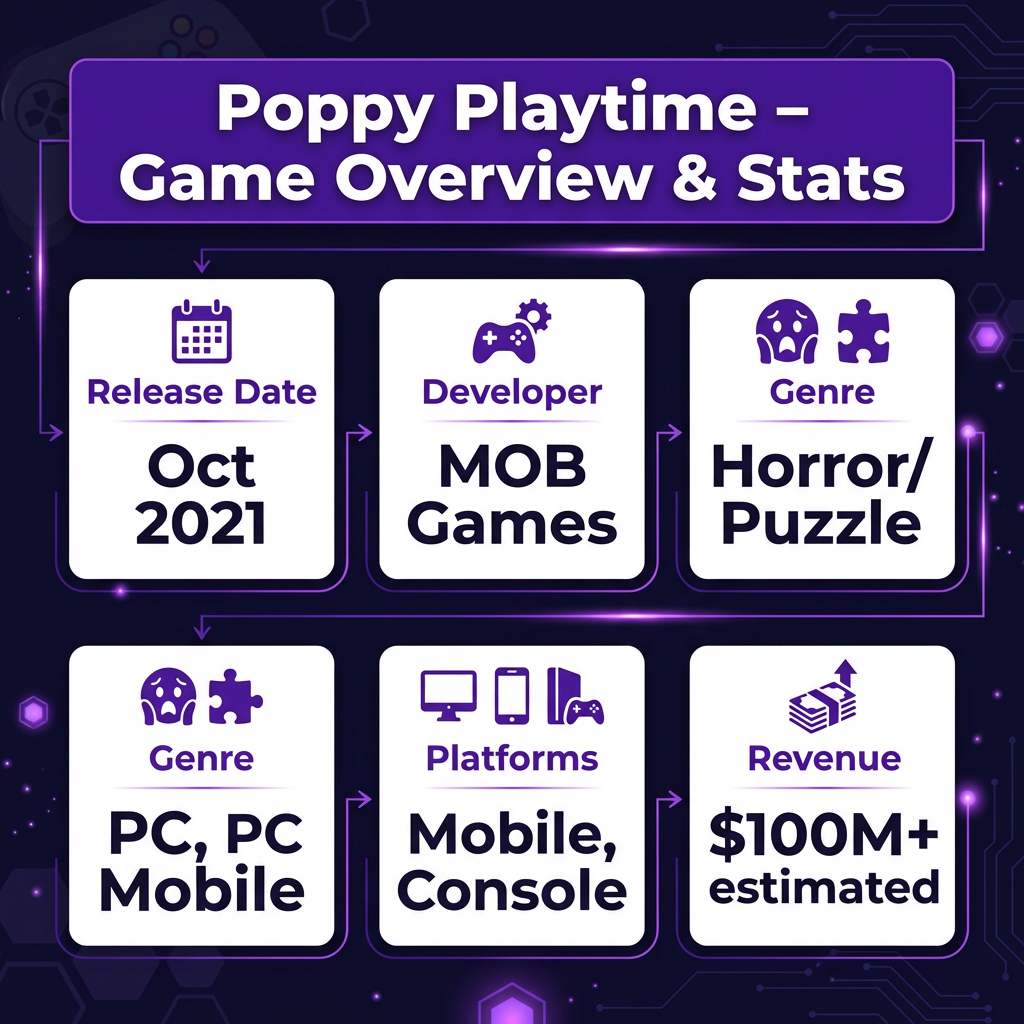
Poppy Playtime took the gaming world by storm in 2021, and indie developers are still studying its success formula. This horror-puzzle game from MOB Games didn’t just go viral—it built a sustainable business model that generated an estimated $100+ million in revenue. If you’re an indie developer wondering how to replicate this success, you’re in the right place.
In this guide, I’ll break down what makes Poppy Playtime special, why it resonated with millions of players, and most importantly—how you can apply its monetization strategies to your own indie game.
What Is Poppy Playtime?
Poppy Playtime is a first-person horror puzzle game developed by MOB Games, a small indie studio that struck gold. The game puts you in the role of a former employee returning to an abandoned toy factory called Playtime Co. Your mission? Investigate what happened to the missing staff while avoiding the terrifying Huggy Wuggy and other twisted toys.
The gameplay centers around the GrabPack—a backpack with two extendable hands that can conduct electricity, grab objects from afar, and solve environmental puzzles. It’s simple mechanics done exceptionally well, and that’s part of the magic.
Why Did Poppy Playtime Go Viral?
Let’s be honest—plenty of indie horror games exist. So why did this one explode? Here’s what MOB Games got right:
1. The Character Design Is Instantaneously Iconic
Huggy Wuggy—that blue furry monster with the wide, toothy grin—became an internet phenomenon overnight. The character design walks the perfect line between “cuddly toy” and “nightmare fuel.” It’s memorable, shareable, and spawned countless memes, TikToks, and YouTube videos. Free marketing.
2. Chapter-Based Release Strategy
Instead of launching a full game, MOB Games released Poppy Playtime in chapters. Chapter 1 dropped in October 2021 for just $2.99—an impulse purchase price point. This approach lowered the barrier to entry and created anticipation for future chapters. Smart.
3. Multi-Platform Expansion
The game started on PC but quickly expanded to mobile (iOS and Android) and consoles. Each platform opened new revenue streams and audiences. The mobile versions alone likely generated millions in additional revenue.
How Much Money Did Poppy Playtime Make?
While exact figures aren’t public, industry estimates place Poppy Playtime’s total revenue north of $100 million. Here’s the breakdown:
- Chapter 1: $2.99 × millions of copies = substantial base revenue
- Chapter 2: $9.99 price increase for significantly more content
- Chapter 3: Continued sales momentum
- Mobile ports: Free-to-play with cosmetic IAPs reaching massive audiences
- Merchandise: Huggy Wuggy plushies, shirts, toys—another revenue stream
The lesson? Diversified revenue streams beat single-point monetization every time.
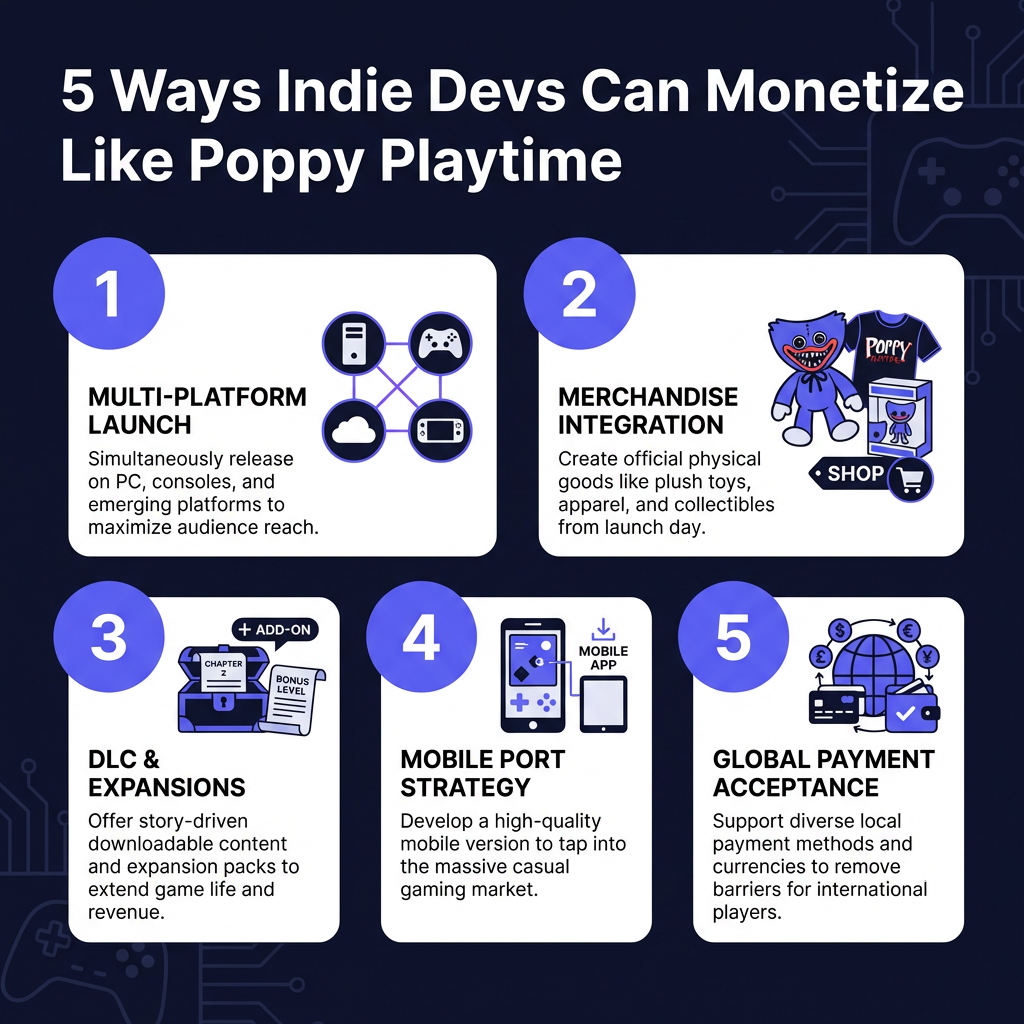
5 Monetization Lessons for Indie Developers
If you’re building an indie game, here’s what you can learn from Poppy Playtime’s success:
1. Start Small, Build Momentum
Don’t wait until your game is “perfect” to release. Chapter 1 of Poppy Playtime was relatively short—maybe 30-45 minutes of gameplay. But it was polished, compelling, and priced to sell. Get your MVP (minimum viable product) out there, gather feedback, and iterate.
2. Price Strategically
$2.99 is an impulse buy. $9.99 requires more consideration. MOB Games started low to build their player base, then increased prices as they delivered more content. This pricing ladder works.
3. Go Multi-Platform Early
PC gamers are great, but mobile gamers are legion. By porting to iOS and Android, Poppy Playtime reached audiences that never touch Steam. Yes, mobile requires different monetization (ads, IAPs), but the volume makes up for it.
4. Build a Universe, Not Just a Game
Poppy Playtime isn’t just gameplay—it’s lore, mystery, and world-building. The story of Playtime Co. keeps players engaged between chapters and creates opportunities for expanded content, merchandise, and even media adaptations.
5. Accept Global Payments Seamlessly
Here’s something most post-mortems miss: to maximize revenue, you need to accept payments globally without friction. That means handling multiple currencies, local payment methods, and tax compliance automatically. Players abandon carts when checkout is complicated.
FAQ
Is Poppy Playtime appropriate for kids?
Despite the toy theme, Poppy Playtime is a horror game with tense atmosphere and jump scares. It’s rated for teens and up. The “cute but creepy” aesthetic is part of what makes it effective.
How many chapters of Poppy Playtime are there?
As of 2026, there are three main chapters released, with Chapter 4 in development. Each chapter expands the story and gameplay significantly.
Can I make a game like Poppy Playtime as a solo developer?
Absolutely. MOB Games was a small team when they started. Focus on one strong mechanic (like the GrabPack), create memorable characters, and tell a compelling story. Tools like Unity and Unreal Engine make solo development more accessible than ever.
What’s the best way to monetize an indie horror game?
The Poppy Playtime model works: release a chapter or demo at a low price point, gather feedback and build an audience, then expand with paid chapters. Consider free mobile versions with cosmetic IAPs to reach broader audiences.
Conclusion
Poppy Playtime proves that indie developers can still hit it big in 2026. The formula isn’t complicated: iconic characters, smart pricing, multi-platform releases, and diversified revenue streams. You don’t need a AAA budget—just a great idea executed well.
If you’re building your own indie game, study what worked here. Start small, price smart, and make sure your checkout process handles global payments without headaches. Your players are everywhere—make sure they can pay you easily.
Ready to Monetize Your Indie Game Globally?
Join hundreds of indie developers using Fungies.io — accept payments in 135+ currencies, automatic tax compliance, and zero monthly fees.
No credit card required