The Notion template market is exploding. In 2026, creators are earning anywhere from $500 to $50,000+ per month selling simple templates that help people organize their lives, businesses, and projects. Whether you’re a productivity enthusiast, a designer, or someone who’s built systems that work — there’s a massive opportunity to monetize your Notion expertise.
But here’s the thing: most creators get stuck on where and how to sell. This guide breaks down everything you need to know to start selling Notion templates online — from choosing the right platform to pricing strategies that actually convert.
Why Sell Notion Templates?
Notion has over 30 million users worldwide, and that number keeps growing. People use it for everything from personal task management to running entire companies. But here’s the catch — most users don’t want to build their systems from scratch. They’d rather buy a proven template that saves them hours of setup time.
The economics are compelling:
- Low startup costs: You need zero inventory, no shipping, and minimal upfront investment
- High margins: Digital products typically have 70-95% profit margins after platform fees
- Passive income: Create once, sell infinitely — there’s no limit to how many times you can sell the same template
- Scalable: Add more templates to your catalog and watch your revenue compound
Where to Sell Notion Templates: Platform Comparison
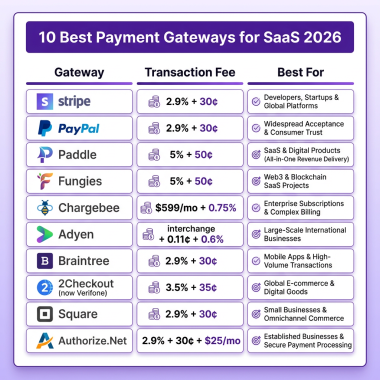
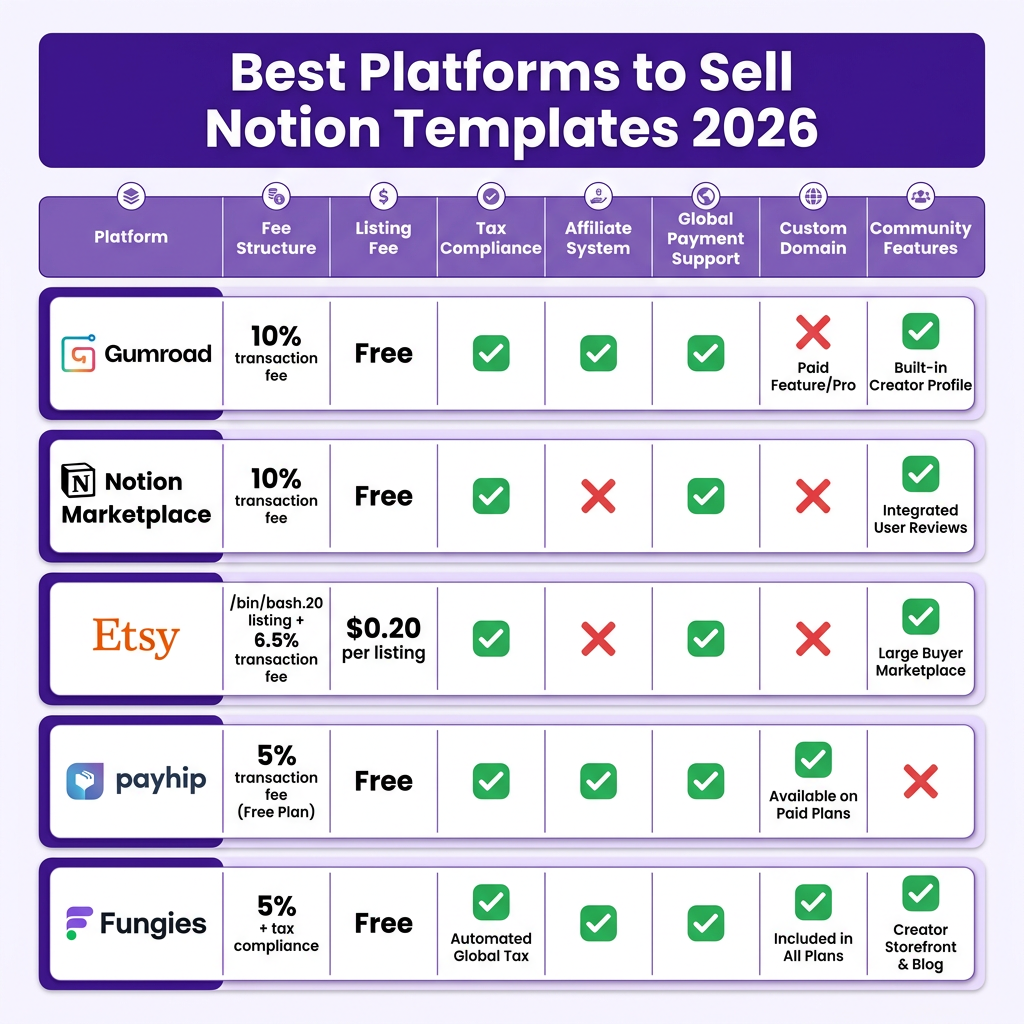
Choosing the right platform is crucial. Each option has different fees, audiences, and features. Here’s a breakdown of the top platforms for selling Notion templates in 2026:
1. Notion Marketplace
Notion’s official marketplace is the most trusted option. Buyers know they’re getting quality templates that work with Notion. The platform takes a 10% fee on sales, and you’ll need to apply to become a verified creator. The approval process can take a few weeks, but the built-in audience of Notion users makes it worth the wait.
2. Gumroad
Gumroad is the go-to for independent creators. It charges 10% + processing fees, offers instant payouts, and has a built-in discovery feature. The platform is particularly strong for creators who already have an audience on social media or email lists.
3. Etsy
Etsy is massive for digital products, with millions of buyers already browsing for templates. You’ll pay $0.20 per listing plus 6.5% transaction fees. The SEO on Etsy is powerful — if you optimize your listings well, you can get discovered by buyers actively searching for Notion templates.
4. Payhip
Payhip offers a clean, simple selling experience with just 5% transaction fees. It’s great for creators who want a professional storefront without the complexity of building their own website.
5. Fungies
Fungies offers a 5% fee structure plus handles all tax compliance automatically — VAT, sales tax, the works. This is huge for creators selling internationally. You get a branded checkout, instant file delivery, and don’t have to worry about tax headaches.
The 5-Step Process to Selling Notion Templates
Step 1: Design Your Template
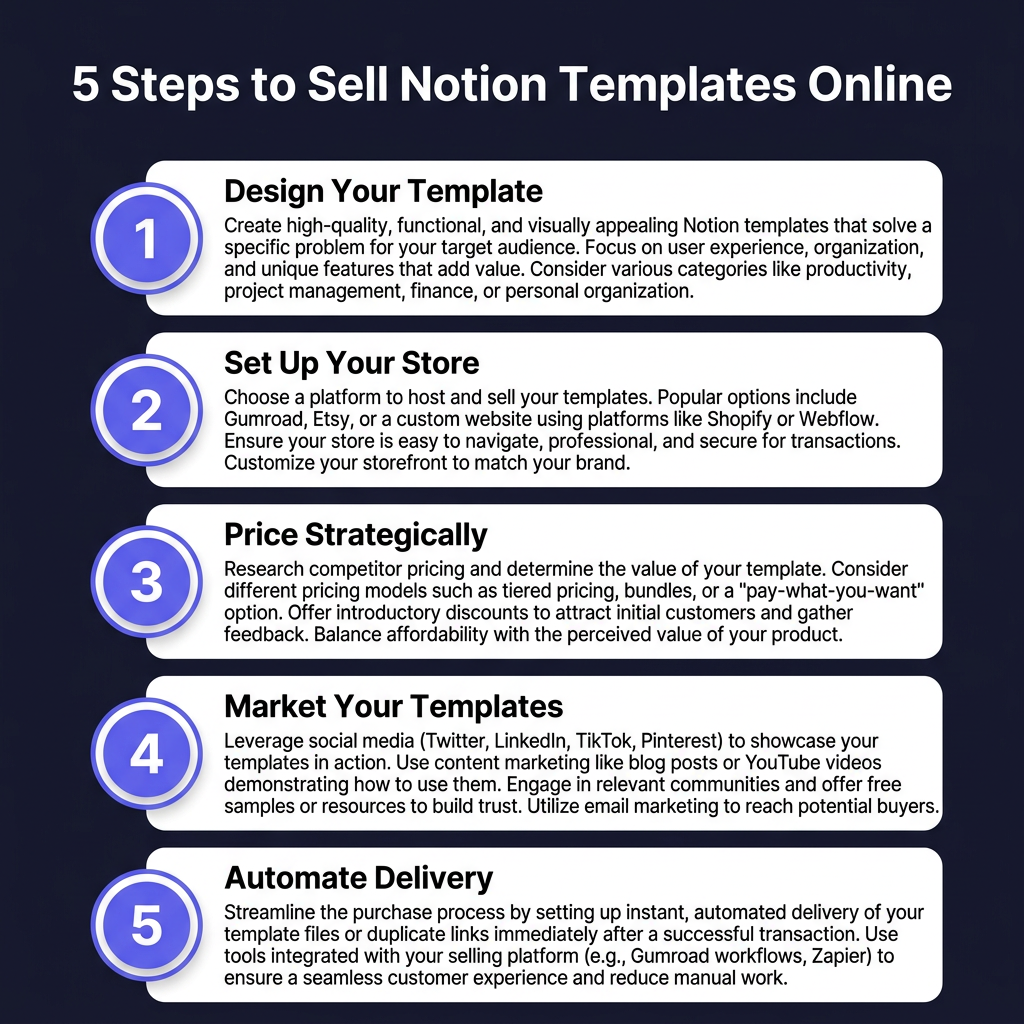
Start by identifying a problem you can solve. The best-selling templates address specific pain points:
- Freelancers needing client management systems
- Students wanting study planners
- Content creators tracking their posting schedule
- Small businesses managing projects
- Individuals tracking habits and goals
Build your template in Notion, test it thoroughly, and make sure it’s user-friendly. Include clear instructions and consider creating a demo video showing how it works.
Step 2: Set Up Your Store
Choose your platform based on your goals. If you want maximum exposure, go with Etsy or Notion Marketplace. If you want lower fees and more control, consider Payhip or Fungies. Set up your storefront with professional branding, clear descriptions, and high-quality preview images.
Step 3: Price Strategically
Pricing varies widely in the Notion template market. Here’s what works:
- Simple templates: $9-19 (habit trackers, basic planners)
- Mid-range: $19-49 (comprehensive systems, business templates)
- Premium: $49-99+ (complete business operating systems, advanced dashboards)
Consider offering bundle deals — buyers love feeling like they’re getting more value. A “Productivity Bundle” with 3-5 related templates can sell for $39-79, even if individual templates are priced lower.
Step 4: Market Your Templates
Don’t just list and hope. Active marketing drives sales:
- Social media: Share screenshots and quick tips on Twitter/X, Instagram, and TikTok
- YouTube: Create setup tutorials and walkthroughs
- Email list: Build a list of interested buyers for launch announcements
- Reddit: Share value in r/Notion and related communities (don’t spam)
- Free samples: Offer a lite version to build trust and collect emails
Step 5: Automate Delivery
Once a customer buys, they should instantly receive their template. Most platforms handle this automatically — you upload your template file or share link, and it’s delivered upon purchase. Make sure to include:
- Clear setup instructions
- A link to duplicate the template
- Contact info for support questions
- Links to video tutorials if available
Common Mistakes to Avoid
Learn from others’ mistakes:
- Overcomplicating templates: Simple, clean designs sell better than complex systems
- Ignoring mobile: Many users access Notion on mobile — test your templates there
- Poor documentation: Confused customers refund. Clear instructions prevent this
- Copying others: Original templates perform better and avoid copyright issues
- Setting and forgetting: Update templates based on feedback and Notion feature updates
FAQ: Selling Notion Templates
Do I need to be a Notion expert to sell templates?
No, but you need to understand your target audience’s needs. If you’ve built a system that works for you, chances are others will find it valuable too. Focus on solving real problems rather than showing off advanced features.
How much can I make selling Notion templates?
Income varies widely. New sellers might make $100-500 in their first month. Established creators with multiple templates and marketing systems can earn $5,000-50,000+ monthly. The key is consistency — keep creating, keep improving, and keep marketing.
What’s the best platform for beginners?
Gumroad or Etsy are great starting points. Gumroad is simpler with lower fees, while Etsy has more built-in traffic. Both handle payments and delivery automatically.
Do I need to handle taxes?
If you’re selling internationally (and you should be), tax compliance gets complex fast. Different countries have different rules for digital products. Platforms like Fungies handle this automatically, charging and remitting VAT/sales tax so you don’t have to worry about it.
Can I sell the same template on multiple platforms?
Yes, absolutely. Many successful creators list on Etsy, Gumroad, and their own website simultaneously. Just keep track of where sales come from to understand your best channels.
Conclusion: Start Selling Today
The Notion template market is still growing. There’s room for creators who can solve real problems with well-designed, easy-to-use templates. You don’t need to be a design expert or have a massive following — you just need to start.
Pick a problem you understand. Build a template that solves it. List it on a platform. Market it consistently. Rinse and repeat.
The creators making serious money in this space aren’t necessarily the most talented — they’re the most consistent. Start with one template. Learn from the feedback. Build another. Within a year, you could have a catalog generating serious passive income.
Ready to Sell Your Digital Products?
Join hundreds of creators using Fungies.io — automated tax compliance, instant payouts, and a checkout that converts.
No credit card required • 5% fee includes tax compliance