The creator economy is booming, and with it, the market for digital goods. In 2026, selling digital products is no longer a niche side hustle; it’s a multi-trillion dollar industry . From ebooks and online courses to Notion templates and Canva templates, creators are finding innovative ways to make money online and build sustainable businesses. But with so many platforms available, choosing the right one can be overwhelming. This guide will break down the best digital goods platforms for creators in 2026, helping you find the perfect Gumroad alternative or Stan Store competitor to launch and grow your online business.
This article is your comprehensive guide to navigating the world of digital product sales. We’ll explore the top platforms, comparing their features, pricing, and suitability for different types of creators. Whether you’re looking to sell digital files, sell audio, or create a full-fledged creator store, you’ll find the information you need to make an informed decision. We’ll also delve into the importance of having a strong link in bio or payment in bio strategy, and how the right platform can help you convert your social media followers into paying customers.
The State of the Digital Goods Market in 2026
The digital goods market is not just growing; it’s exploding. In 2025, the creator economy was valued at $200 billion, and it’s projected to surpass $800 billion by the early 2030s . This incredible growth is fueled by a number of factors, including the increasing accessibility of creation tools, the rise of social media as a distribution channel, and the growing demand for high-quality digital content.
Here are some key statistics that highlight the immense opportunity in the digital goods market:
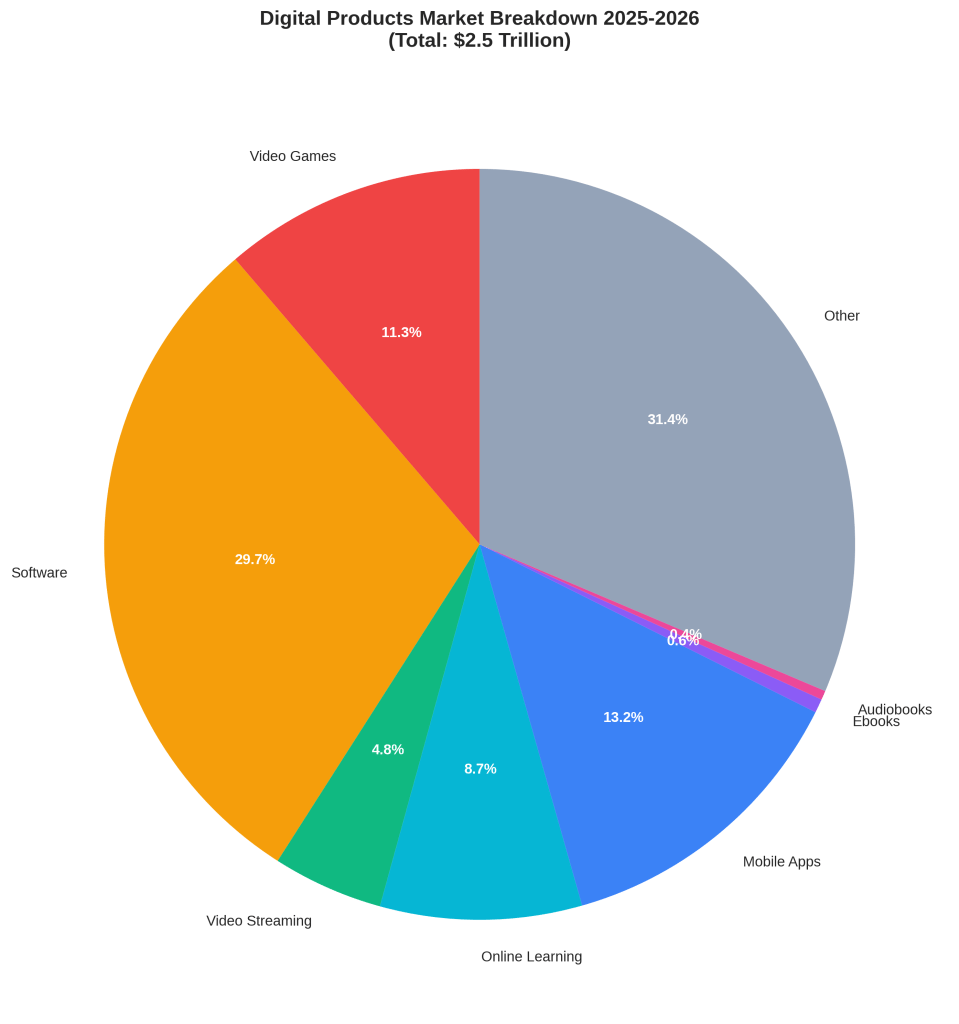
•The digital products industry is currently valued at $2.5 trillion .
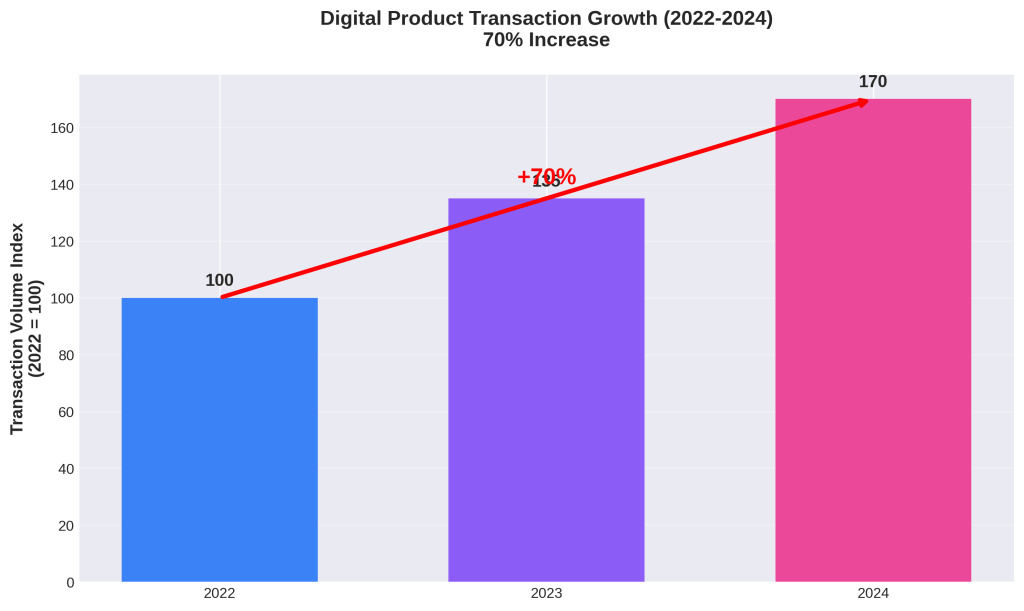
•Digital product transactions surged by 70% between 2022 and 2024 .
•Internet users spent over $560 billion on digital media in 2024, a 12.5% increase from the previous year .
•The online learning market, a huge driver of digital product sales, is projected to be worth $842 billion by 2030 .
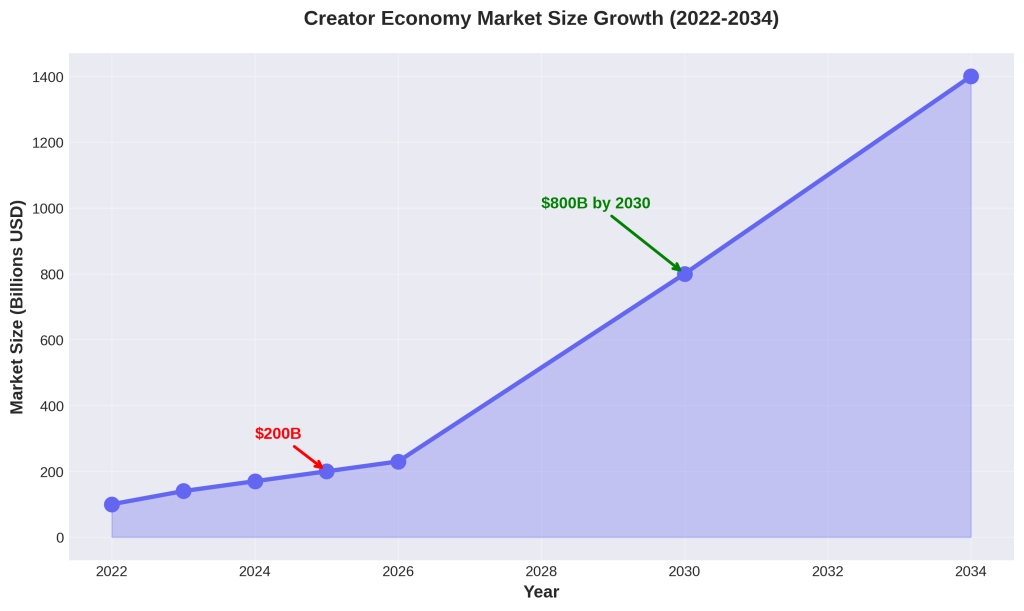
These numbers paint a clear picture: the demand for digital goods is at an all-time high, and it’s only going to continue to grow. For creators, this means that there has never been a better time to start selling digital products online.
Top 6 Digital Goods Platforms in 2026
Now that we’ve established the massive opportunity in the digital goods market, let’s dive into the platforms that can help you capitalize on it. Here are our top 6 picks for the best digital goods platforms for creators in 2026:
Best Choice:
Fungies.io: The All-in-One Merchant of Record & Store Builder
Fungies.io is a powerful, all-in-one platform that combines a Merchant of Record (MoR) service with a no-code e-commerce store builder. This makes it an ideal solution for creators who want to sell digital products, SaaS subscriptions, and game assets globally without the complexities of tax compliance and payment processing. With over 17,000 stores created, Fungies.io has quickly become a go-to platform for serious creators and developers.
The platform’s core value proposition is its simplicity and affordability. It’s free to get started, with no monthly fees or upfront costs. Fungies.io operates on a commission-based model, taking a competitive 5% + 50¢ per transaction, which is in line with other MoR providers like Lemon Squeezy. This “pay-as-you-go” model makes it accessible to creators at all stages of their journey.
| Feature | Details |
| Ideal For | SaaS developers, game developers, and digital product creators who need a comprehensive solution for global sales, tax compliance, and a customizable storefront. |
| Core Functionality | Merchant of Record, no-code website builder, subscription management, digital downloads, and payment processing. |
| Pricing | Free to use, with a 5% + 50¢ fee per transaction. No monthly fees or hidden costs. |
| Pros | All-in-one platform with MoR and store builder; no upfront costs; competitive transaction fees; supports a wide range of digital products; developer-friendly with robust APIs. |
| Cons | The commission-based model may be less cost-effective for very high-volume sellers compared to a fixed monthly fee. |
Fungies.io’s feature set is designed to empower creators and developers. The no-code website builder allows you to create a fully branded storefront in minutes, while the MoR service handles all the back-end complexities of global sales. With support for over 250 payment methods and a developer-friendly API, Fungies.io is a versatile and scalable platform for any digital business.
1. Gumroad: The Simple & Speedy Choice
Gumroad has long been a favorite among creators for its simplicity and ease of use. If you’re looking for a no-fuss platform to start selling your digital products quickly, Gumroad is an excellent choice. It’s a great Gumroad alternative for those who want to test the waters of selling online without a major commitment.
With Gumroad, you can create a product page, upload your files, and start selling in minutes. It’s particularly well-suited for selling individual digital downloads like ebooks, presets, and templates directly from your social media or blog. The platform’s “Discovery” feature can also help you reach a new audience within the Gumroad marketplace, although this comes with a higher transaction fee.
| Feature | Details |
| Ideal For | Creators and solopreneurs who need a straightforward, no-fuss solution to start selling digital products immediately. |
| Core Functionality | Simple product pages, file hosting, and direct-to-customer sales. |
| Pricing | No monthly fee. Gumroad takes a 10% flat fee on each sale, which does not include payment processing fees from Stripe or PayPal. |
| Pros | Extremely easy and fast to set up; no upfront costs; simple, clean checkout experience for customers. |
| Cons | The 10% platform fee is high for high-volume sellers; limited storefront customization and branding control. |
While Gumroad’s 10% fee can be a drawback for established creators with high sales volume, its simplicity and speed make it an attractive option for those just starting out. It’s a great way to validate your product ideas and start generating revenue with minimal friction.
2. Stan Store: The Ultimate Link-in-Bio Creator Store
Stan Store has emerged as a dominant force in the creator economy, positioning itself as the ultimate creator store for social-first entrepreneurs. If you’re looking for a powerful Gumroad alternative that’s optimized for mobile and designed to convert your social media followers into customers, Stan Store is a top contender. It’s the quintessential link in bio and payment in bio solution.
Stan Store’s core proposition is to provide creators with an all-in-one platform to sell their digital products, courses, and services directly from their social media profiles. With zero transaction fees, it’s an attractive option for creators who want to keep 100% of their earnings. The platform is designed for maximum conversions, offering a seamless checkout experience for customers and a user-friendly interface for creators.
| Feature | Details |
| Ideal For | Social-first creators, influencers, and anyone who wants to monetize their audience directly from their link in bio. |
| Core Functionality | All-in-one creator store with digital products, courses, bookings, memberships, and email marketing. |
| Pricing | Creator Plan: $29/month. Creator Pro Plan: $99/month. Both plans have zero transaction fees. |
| Pros | No transaction fees, all-in-one platform, mobile-first design, easy to use, powerful features for creators. |
| Cons | Monthly subscription fee, which may be a barrier for some new creators. |
Stan Store’s feature set is impressive. Even the basic Creator plan includes unlimited courses, digital products, and calendar bookings. The Creator Pro plan unlocks advanced features like email marketing automation, affiliate management, and dynamic pricing. With over $400 million earned by creators on the platform, Stan Store has proven its effectiveness as a powerful tool to make money online .
3. Lemon Squeezy: The Merchant-of-Record Powerhouse
For creators selling to a global audience, managing sales tax and VAT can be a nightmare. This is where Lemon Squeezy shines. As a Merchant of Record (MoR), Lemon Squeezy takes on the legal responsibility for tax compliance, allowing you to sell digital files and products internationally without the headache. This makes it a powerful Gumroad alternative for businesses with a global customer base.
Lemon Squeezy provides a clean, modern checkout experience and a simple storefront. It supports over 130 currencies and pays out to more than 200 countries, making it an excellent choice for creators who want to expand their reach without getting bogged down in complex financial regulations. The platform is also developer-friendly, with robust APIs for custom integrations.
| Feature | Details |
| Ideal For | Creators and businesses selling digital products, subscriptions, or software licenses to a global audience who need tax compliance handled for them. |
| Core Functionality | Merchant-of-Record services, global tax compliance, subscriptions, software licenses, and lead magnets. |
| Pricing | A simple plan of 5% + 50¢ per transaction. This fee includes payment processing and all tax remittance. |
| Pros | The MoR model simplifies international sales and tax compliance; clean and modern checkout experience; excellent developer tools and APIs. |
| Cons | The flat fee can become more expensive than direct payment gateways at very high sales volumes; less of an all-in-one course platform compared to specialized solutions. |
By acting as your Merchant of Record, Lemon Squeezy allows you to focus on what you do best: creating amazing digital products. If offloading the complexities of global sales tax is a top priority for you, Lemon Squeezy is an invaluable partner.
4. Shopify: The Scalable E-commerce Giant
Shopify is a household name in e-commerce, and for good reason. While it’s often associated with physical products, Shopify is also a powerful platform for selling digital goods. By installing the free “Digital Downloads” app, you can transform your Shopify store into a robust platform for selling everything from ebooks and software to Notion templates and Canva templates.
Shopify’s main advantage is its scalability. It’s the ideal choice for serious sellers who envision a standalone brand and require deep operational control. With Shopify, you get access to a powerful store builder, a secure checkout process, and a vast ecosystem of apps for marketing, analytics, and customer management. This allows you to grow from a simple download store to a complex digital empire.
| Feature | Details |
| Ideal For | Businesses planning to sell a mix of physical and digital goods, or creators who want a highly customizable, scalable, and branded storefront. |
| Core Functionality | Full-scale e-commerce platform with a vast app ecosystem for endless customization. |
| Pricing | Starts with a Basic plan at $29/month (billed annually). Transaction fees apply if you don’t use Shopify Payments. |
| Pros | Highly scalable and customizable with extensive themes and apps; powerful analytics and business management tools; combines physical and digital sales seamlessly. |
| Cons | Monthly subscription fees can be costly for new sellers; more complex to set up than dedicated digital platforms; potential for costs to increase with paid apps. |
If you’re a creator with ambitious growth plans, or if you plan to sell both physical and digital products, Shopify’s infrastructure is unmatched. It provides the foundation you need to build a long-term, sustainable business.
5. Payhip: The All-in-One Free Solution
For creators on a budget, Payhip offers an incredibly compelling value proposition: a completely free plan that includes all of its features. This makes it an excellent Gumroad alternative for those who want to start selling digital products without any upfront investment. Payhip is an all-in-one platform that allows you to sell digital downloads, courses, and memberships directly to your audience.
Payhip’s free plan is not a stripped-down version of the platform. You get access to all the features, including unlimited products and revenue. The only catch is a 5% transaction fee, which is still competitive compared to other platforms. As your business grows, you can upgrade to a paid plan to reduce or eliminate the transaction fees.
| Feature | Details |
| Ideal For | Creators who want a free, all-in-one platform to sell digital products, courses, and memberships. |
| Core Functionality | Digital downloads, courses, memberships, and an online store builder. |
| Pricing | Free forever plan with a 5% transaction fee. Paid plans start at $29/month with a 2% transaction fee, and a $99/month plan with no transaction fees. |
| Pros | Free plan with all features included; all-in-one platform for various digital products; easy to use. |
| Cons | The 5% transaction fee on the free plan can add up for high-volume sellers. |
Payhip’s combination of a robust feature set and a free entry point makes it a fantastic option for creators who are just starting out. It provides all the tools you need to build a successful online business without breaking the bank.
6. Sellfy: The Simple Storefront for Creators
Sellfy is another excellent platform for creators who want a simple and user-friendly way to sell their digital products. It offers an all-in-one e-commerce solution specifically designed for creators, with features for selling digital downloads, subscriptions, and even print-on-demand merchandise. This makes it a versatile Gumroad alternative for creators who want to diversify their product offerings.
Sellfy’s platform is known for its intuitive interface and quick setup process. You can create a beautiful, mobile-friendly storefront in minutes, without any technical skills required. The platform also includes built-in marketing tools, such as email marketing and discount codes, to help you promote your products and grow your sales.
| Feature | Details |
| Ideal For | Creators who want a simple and affordable platform to sell digital products, subscriptions, and print-on-demand merchandise. |
| Core Functionality | Digital downloads, subscriptions, print-on-demand, and an online store builder. |
| Pricing | Starts at $22/month (billed annually) for the Starter plan. The Business plan is $59/month, and the Premium plan is $119/month. All plans have 0% transaction fees, but payment processor fees still apply. |
| Pros | Easy to use and set up; all-in-one platform for various product types; built-in marketing tools. |
| Cons | The starter plan has a sales limit of $10k per year. |
Sellfy’s focus on simplicity and its all-in-one feature set make it a strong contender for creators who want a hassle-free way to sell their products online. The inclusion of print-on-demand is a unique feature that allows creators to easily expand their brand into physical merchandise.
Platform Comparison: Which is the Best for You?
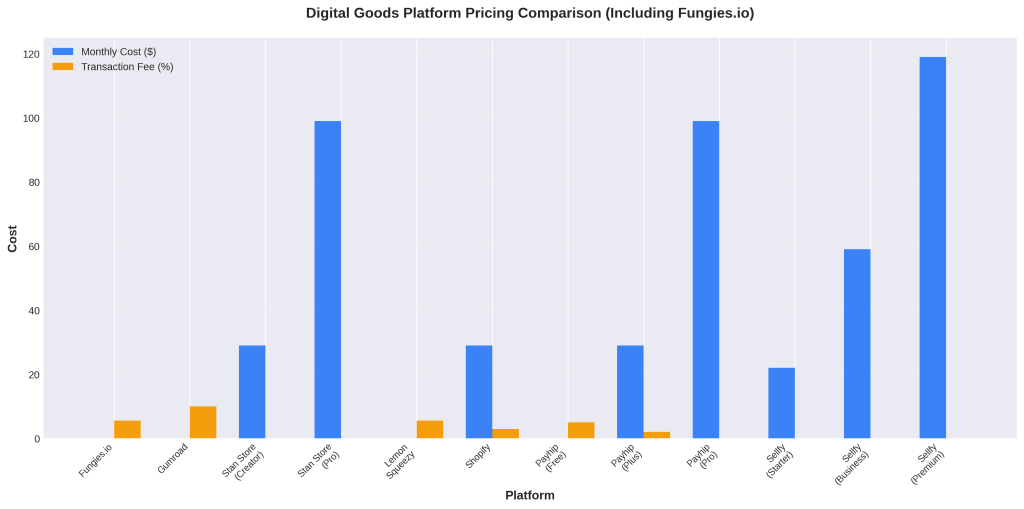
To help you make a decision, here is a comprehensive comparison table of the top digital goods platforms in 2026:
| Platform | Monthly Cost | Transaction Fees | Best For | Key Features |
|---|---|---|---|---|
| Fungies.io | $0 | 5% + 50¢ | All-in-one MoR & Store Builder | Merchant of Record, no-code website builder, subscriptions, global tax compliance |
| Gumroad | $0 | 10% | Quick launch, individual downloads | Simple product pages, file hosting, Discovery marketplace |
| Stan Store | $29-$99 | 0% | Link-in-bio, social-first creators | All-in-one creator store, digital products, courses, bookings, memberships, email marketing |
| Lemon Squeezy | $0 | 5% + 50¢ | Global sales with tax compliance | Merchant-of-Record, global tax compliance, subscriptions, software licenses |
| Shopify | $29+ | Varies | Scalable e-commerce, mixed products | Full-scale e-commerce platform, vast app ecosystem, powerful analytics |
| Payhip | $0-$99 | 0-5% | Simple digital sales, free start | All features on all plans, unlimited products, courses, memberships |
| Sellfy | $22-$119 | 0% (+ payment processing) | Growing brands, print-on-demand | Digital downloads, subscriptions, print-on-demand, built-in marketing tools |
As you can see, the best platform for you will depend on your specific needs and goals. If you’re just starting out and want a free and easy way to sell your products – Fungies.io, Payhip or Gumroad are great options. If you’re a social-first creator who wants to monetize your audience directly from your link in bio, Stan Store is the clear winner. For those selling to a global audience, Lemon Squeezy’s Merchant-of-Record services are a game-changer. And if you have ambitious growth plans and want a scalable, all-in-one solution, Shopify is the way to go. Sellfy is a great middle-ground for creators who want a simple storefront with the option to sell physical products.
How to Choose the Right Platform for Your Business
Choosing the right platform is a critical decision that will have a long-term impact on your business. To help you make the right choice, here are some key factors to consider:
1. Your Budget:
•Free options: If you’re just starting out and have a limited budget, platforms like Payhip and Gumroad offer free plans that allow you to start selling without any upfront investment.
•Subscription-based platforms: Platforms like Stan Store, Shopify, and Sellfy charge a monthly subscription fee. While this may seem like a drawback, these platforms often offer more advanced features and lower transaction fees, which can save you money in the long run.
2. Your Product Type:
•Simple downloads: If you’re selling simple digital downloads like ebooks, presets, or templates, a straightforward platform like Gumroad or Payhip will be sufficient.
•Courses and memberships: If you’re selling online courses or memberships, you’ll need a platform with more advanced features, such as Podia, Teachable, or Kajabi. Stan Store also offers robust course and membership features.
•Mixed products: If you plan to sell a mix of digital and physical products, Shopify is the clear winner, as it’s designed to handle both with ease.
3. Customization and Branding:
•Simple storefronts: Platforms like Gumroad and Stan Store offer simple, easy-to-use storefronts with limited customization options. This is great for creators who want a quick and easy setup.
•Customizable platforms: If you want full control over the look and feel of your online store, Shopify is the way to go. It offers a wide range of themes and apps that allow you to create a truly unique brand experience.
4. Tax Compliance:
•Merchant of Record (MoR): If you’re selling to a global audience, a platform that acts as a Merchant of Record, like Lemon Squeezy, can be a lifesaver. They handle all the complexities of global sales tax and VAT, so you don’t have to.
5. Long-Term Goals:
•Scalability: If you have ambitious growth plans, you’ll want to choose a platform that can scale with your business. Shopify is the most scalable platform on our list, but Stan Store and Sellfy are also good options for growing businesses.
By carefully considering these factors, you can choose the platform that best fits your needs and sets you up for success in the long run.
The Unsung Hero of Global Sales: Why You Need a Merchant of Record
As a digital creator, your focus should be on creating amazing products and connecting with your audience. The last thing you want to worry about is the complex and ever-changing world of global sales tax, VAT, and payment compliance. This is where a Merchant of Record (MoR) comes in.
A Merchant of Record is a legal entity that acts as a reseller between you and your customers. When a customer buys your product, they are technically buying it from the MoR, who then pays you. This simple but powerful distinction has huge implications for your business.
Key Benefits of Using a Merchant of Record:
•Global Tax Compliance: An MoR handles all the complexities of calculating, collecting, and remitting sales tax, VAT, and other indirect taxes in every country and region you sell to. This is a massive undertaking for any business, and an MoR takes this entire burden off your shoulders.
•Payment Processing: An MoR handles all payment processing, including credit card fees, currency conversions, and fraud prevention. This simplifies your accounting and reduces your risk.
•Legal Liability: The MoR assumes all legal liability for the transaction, including disputes, chargebacks, and refunds. This protects you from financial and legal risks.
•Simplified Accounting: With an MoR, you receive a single payout for all your sales, rather than having to reconcile transactions from multiple payment gateways and countries. This makes your accounting much simpler and more streamlined.
For digital creators who want to sell to a global audience, using a Merchant of Record is not just a convenience; it’s a necessity. The Merchant of Record Software Market is projected to grow by over $17 billion by 2032, a clear indicator of its growing importance in the digital economy .
Platforms like Lemon Squeezy are excellent examples of MoR providers that are specifically designed for creators. However, as your business grows and your needs become more complex, you may want to consider a dedicated MoR solution like Fungies.io. Fungies.io is a Merchant of Record payment provider that is specifically designed for digital businesses, offering a comprehensive solution for global sales tax, payment processing, and compliance. By partnering with an MoR, you can focus on what you do best: creating and selling amazing digital products.
Understanding Creator Monetization in 2026
The way creators make money online has evolved significantly. In 2026, the most successful creators are diversifying their income streams and focusing on recurring revenue models. According to recent data, 88% of creators now monetize through paid memberships, making it the dominant revenue model in the creator economy .
Here’s a breakdown of how creators are monetizing their audiences in 2026:
•Paid Memberships: 88% of creators
•Courses: 53% of creators
•Coaching/Services: 51% of creators
•Digital Products: 37% of creators
•Affiliate Revenue: 22% of creators
•Sponsorships: 18% of creators
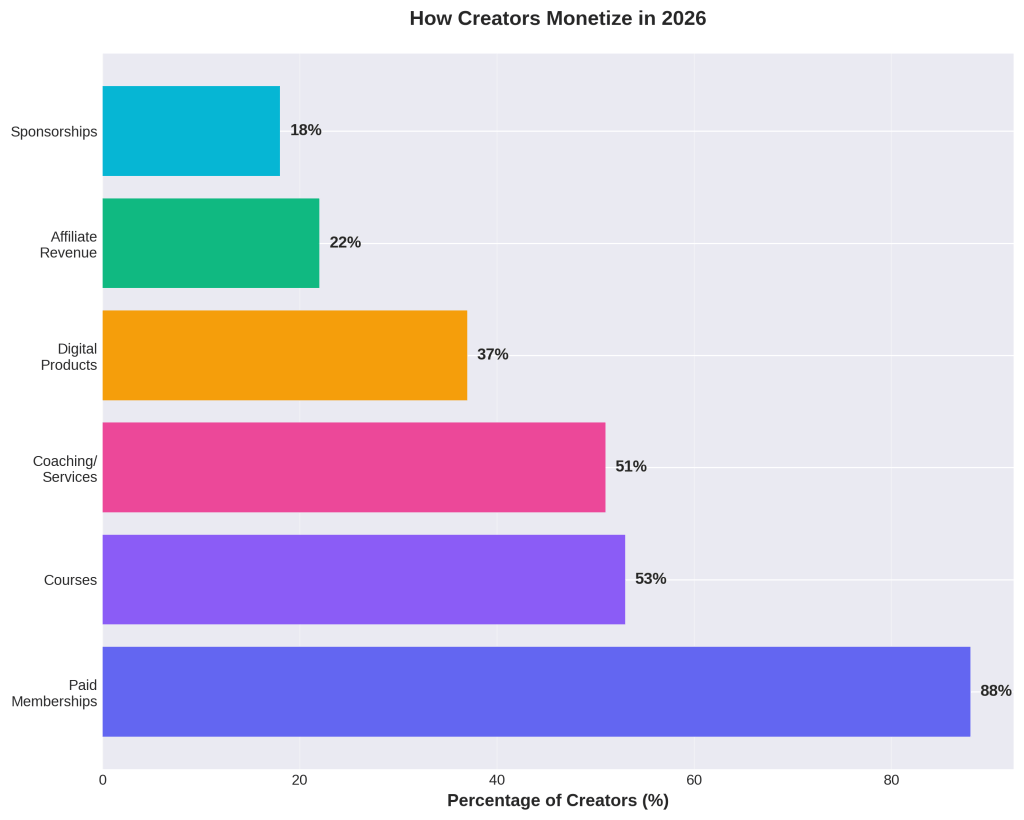
This data reveals a clear trend: creators are moving away from one-time transactions and sponsorships towards recurring revenue models like memberships and subscriptions. This shift makes sense from a business perspective. Recurring revenue provides predictability and stability, allowing creators to plan for the future and invest in their businesses with confidence.
The platforms we’ve discussed in this article all support various monetization models, but some are better suited for specific approaches. For example, Stan Store and Podia are excellent choices for creators who want to build membership-based businesses, while Gumroad and Payhip are better for selling individual digital downloads.
The Importance of Link-in-Bio and Payment-in-Bio
In 2026, social media is the primary distribution channel for most creators. Platforms like Instagram, TikTok, and YouTube are where creators build their audiences and engage with their followers. However, these platforms have limitations when it comes to monetization. This is where link in bio and payment in bio strategies become critical.
A link in bio is a single link in your social media profile that directs your followers to a landing page where they can access all of your products and services. A payment in bio takes this a step further by allowing your followers to make purchases directly from your link, without having to navigate to a separate website.
Stan Store is the clear leader in this space. Its platform is specifically designed to be a creator store that lives in your link in bio. With Stan Store, you can sell digital products, courses, memberships, and services all from a single, mobile-optimized storefront. This seamless experience makes it easy for your followers to become paying customers.
Other platforms, like Gumroad and Payhip, also offer link-in-bio functionality, but they are not as optimized for mobile or as feature-rich as Stan Store. If your primary goal is to monetize your social media audience, Stan Store is the best choice.
What Types of Digital Products Can You Sell?
The beauty of the digital goods market is that the possibilities are endless. Here are some of the most popular types of digital products that creators are selling in 2026:
•Ebooks and Guides: Share your knowledge and expertise in a written format. Ebooks are easy to create and can be sold at a variety of price points.
•Online Courses: Teach a skill or subject in a structured, video-based format. Online courses can command premium prices and provide significant value to your customers.
•Templates: Sell templates for design, productivity, or business. Notion templates and Canva templates are particularly popular, as they save customers time and effort.
•Presets and Filters: If you’re a photographer or content creator, you can sell audio presets, photo filters, or video editing templates.
•Software and Apps: Create and sell software tools, plugins, or mobile apps that solve specific problems for your target audience.
•Music and Audio: Musicians and podcasters can sell audio files, beats, sound effects, or audio courses.
•Memberships and Subscriptions: Offer exclusive content, community access, or ongoing support through a membership or subscription model.
•Coaching and Consulting: Sell your time and expertise through one-on-one coaching sessions or group consulting calls.
The key to success in selling digital products is to identify a problem that your target audience has and create a product that solves it. The more specific and valuable your product is, the more you can charge for it.
Market Data: The Numbers Behind the Opportunity
To fully appreciate the opportunity in the digital goods market, let’s look at some of the key data points:
The creator economy has experienced explosive growth over the past few years. Starting from a valuation of around $100 billion in 2022, the market has grown to $200 billion in 2025 and is projected to reach $800 billion by 2030 . This represents a compound annual growth rate (CAGR) of 22.7%, one of the fastest-growing sectors in the global economy.
Transaction volume has also surged. Between 2022 and 2024, digital product transactions increased by 70% . This indicates not only that more creators are entering the market, but also that consumers are increasingly comfortable purchasing digital goods online.
Breaking Down the $2.5 Trillion Market
The digital products market is vast and diverse. Here’s a breakdown of the major categories:
•Video Games: $282 billion (11.3% of the market)
•Software: $742 billion (29.7% of the market)
•Video Streaming: $119 billion (4.8% of the market)
•Online Learning: $217 billion (8.7% of the market)
•Mobile Apps: $330.6 billion (13.2% of the market)
•Ebooks: $14.9 billion (0.6% of the market)
•Audiobooks: $9.8 billion (0.4% of the market)
•Other: $784.7 billion (31.4% of the market)
While video games and software dominate the market, there is significant opportunity in smaller niches like ebooks, audiobooks, and online courses. These categories are growing rapidly and offer lower barriers to entry for individual creators.
Pricing Strategies for Digital Products
Pricing your digital products correctly is one of the most important decisions you’ll make as a creator. Price too high, and you’ll scare away potential customers. Price too low, and you’ll leave money on the table and undervalue your work.
Here are some pricing strategies to consider:
•Value-Based Pricing: Price your product based on the value it provides to your customers, not the cost to create it. If your product saves your customers time or helps them make money, you can charge a premium price.
•Tiered Pricing: Offer multiple versions of your product at different price points. For example, you could offer a basic, standard, and premium version of your online course, each with different levels of access and support.
•Subscription Pricing: Charge a recurring monthly or annual fee for access to your products or services. This is a great way to build predictable revenue and create long-term customer relationships. Most communities charge between $26-$50 per month .
•Pay What You Want: Allow customers to choose how much they want to pay for your product. This can be a great way to generate buzz and reach a wider audience, but it can also result in lower average revenue per customer.
The right pricing strategy will depend on your product, your target audience, and your business goals. Don’t be afraid to experiment and adjust your pricing over time based on customer feedback and sales data.
Payment Processing: Understanding the Costs
When you sell digital files or products online, you’ll need to accept payments from your customers. This is typically done through a payment processor like Stripe or PayPal. Understanding the costs associated with payment processing is important for calculating your profit margins and choosing the right platform.
Most payment processors charge a standard fee of 2.9% + $0.30 per transaction . This fee is in addition to any platform fees charged by your digital goods platform. For example, if you sell a product for $100 on Gumroad, you’ll pay:
•Gumroad platform fee: 10% ($10)
•Payment processing fee: 2.9% + $0.30 ($3.20)
•Total fees: $13.20
•Your net revenue: $86.80
Compare this to Stan Store, which charges a monthly subscription fee but no transaction fees:
•Stan Store monthly fee: $29 (for Creator plan)
•Payment processing fee: 2.9% + $0.30 ($3.20)
•Total fees: $3.20 (plus $29 monthly)
•Your net revenue: $96.80
As you can see, the fee structure can have a significant impact on your bottom line, especially as your sales volume increases. Platforms with zero transaction fees, like Stan Store and Payhip Pro, become more cost-effective as you scale.
The Global Payments Landscape
The digital payments market is massive and growing rapidly. In 2026, the total transaction value in the digital payments market is projected to reach $26.89 trillion worldwide . Over 70% of global consumers now use digital payment methods, a shift that has been accelerated by the COVID-19 pandemic and the rise of e-commerce .
For creators selling to a global audience, it’s important to offer multiple payment options. Different countries have different payment preferences. For example, credit cards are popular in the United States, but in many European countries, bank transfers and digital wallets are more common. Platforms like Lemon Squeezy and Shopify support a wide range of payment methods and currencies, making it easy to sell to customers around the world.
Building Your Brand with a Creator Store
While marketplaces like Etsy and Creative Market can provide built-in traffic, they also come with limitations. You have less control over your branding, customer relationships, and pricing. This is why many successful creators are moving towards building their own creator stores on platforms like Stan Store, Shopify, and Sellfy.
A creator store is a branded online storefront where you can sell all of your products and services in one place. It’s your digital home base, where your audience can learn about you, browse your offerings, and make purchases. Building a creator store has several advantages:
•Full Branding Control: You can customize the look and feel of your store to match your brand identity. This creates a cohesive experience for your customers and helps you stand out from the competition.
•Direct Customer Relationships: When you sell through your own store, you own the customer data. This allows you to build an email list, send targeted marketing campaigns, and create long-term relationships with your customers.
•Higher Profit Margins: By cutting out the marketplace middleman, you can keep more of your revenue. While you’ll still pay payment processing fees, you won’t have to pay the high commission fees that marketplaces charge.
•Flexibility and Scalability: With your own store, you have the flexibility to sell whatever you want, at whatever price you want. You can also scale your business without worrying about marketplace restrictions or algorithm changes.
If you’re serious about building a long-term, sustainable business as a creator, investing in your own creator store is a smart move.
SEO and Marketing for Digital Products
Creating a great digital product is only half the battle. You also need to get it in front of your target audience. This is where SEO (Search Engine Optimization) and marketing come in.
SEO for Digital Products
SEO is the process of optimizing your website and content to rank higher in search engine results. When people search for keywords related to your product, you want your website to appear at the top of the results. Here are some SEO best practices for digital product creators:
•Keyword Research: Identify the keywords that your target audience is searching for. Use tools like Google Keyword Planner, Ahrefs, or SEMrush to find relevant keywords with high search volume and low competition. For example, if you’re selling Notion templates, you might target keywords like “sell Notion templates,” “best Notion templates,” or “productivity templates.”
•On-Page Optimization: Optimize your product pages with relevant keywords in the title, description, headings, and body text. Make sure your content is high-quality, informative, and provides value to your readers.
•Content Marketing: Create blog posts, videos, or other content that educates your audience and showcases your expertise. This content can drive organic traffic to your website and help you build authority in your niche.
•Backlinks: Get other websites to link to your product pages. Backlinks are a signal to search engines that your content is valuable and trustworthy. You can build backlinks through guest posting, partnerships, or creating shareable content.
Marketing Strategies
In addition to SEO, there are many other marketing strategies you can use to promote your digital products:
•Social Media Marketing: Use platforms like Instagram, TikTok, YouTube, and Twitter to build an audience and promote your products. Share valuable content, engage with your followers, and use your link in bio to drive traffic to your creator store.
•Email Marketing: Build an email list and send regular newsletters to your subscribers. Email marketing is one of the most effective ways to nurture relationships with your audience and drive sales.
•Paid Advertising: Use platforms like Facebook Ads, Instagram Ads, or Google Ads to reach a wider audience. Paid advertising can be expensive, but it can also be highly effective if done correctly.
•Affiliate Marketing: Partner with other creators or influencers who can promote your products to their audiences. Offer them a commission for every sale they generate.
•Collaborations: Collaborate with other creators in your niche to cross-promote each other’s products. This can help you reach new audiences and build valuable relationships.
The key to successful marketing is to be consistent, authentic, and provide value to your audience. Don’t just promote your products; educate, entertain, and inspire your followers.
Common Mistakes to Avoid When Selling Digital Products
As you embark on your journey to make money online by selling digital products, it’s important to be aware of common mistakes that can derail your success. Here are some pitfalls to avoid:
1. Not Validating Your Product Idea
One of the biggest mistakes creators make is spending months creating a product without first validating that there’s a market for it. Before you invest significant time and resources, test your idea with your audience. Create a landing page, run a survey, or offer a pre-sale to gauge interest. This will help you avoid creating a product that nobody wants.
2. Underpricing Your Products
Many creators undervalue their work and price their products too low. While it’s tempting to compete on price, this can actually hurt your business in the long run. Low prices can signal low quality, and they make it harder to cover your costs and generate a profit. Instead, focus on creating high-quality products that provide real value, and price them accordingly.
3. Ignoring Customer Feedback
Your customers are your best source of information about what’s working and what’s not. Pay attention to their feedback, reviews, and questions. Use this information to improve your products, customer service, and marketing. Ignoring customer feedback is a surefire way to lose customers and damage your reputation.
4. Not Building an Email List
Social media platforms can change their algorithms at any time, which can drastically reduce your reach and engagement. An email list, on the other hand, is an asset that you own and control. Make building an email list a priority from day one. Offer a free lead magnet (like a free ebook or template) in exchange for email addresses, and send regular newsletters to stay connected with your audience.
5. Choosing the Wrong Platform
As we’ve discussed in this article, choosing the right platform is critical to your success. Don’t just go with the first platform you find. Take the time to research your options, compare features and pricing, and choose the platform that best fits your needs and goals. If you’re selling to a global audience, make sure your platform handles tax compliance. If you’re a social-first creator, choose a platform with strong link in bio capabilities.
6. Not Investing in Marketing
Creating a great product is not enough. You also need to invest time and resources into marketing. This doesn’t necessarily mean spending a lot of money on ads. It means consistently creating content, engaging with your audience, and promoting your products through various channels. Many creators make the mistake of thinking that “if you build it, they will come.” In reality, you need to actively promote your products to reach your target audience.
The Future of Digital Products and the Creator Economy
The future of the creator economy looks bright. As technology continues to evolve and more people seek flexible, independent income streams, the demand for digital products will only continue to grow. Here are some trends to watch in the coming years:
1. AI-Powered Tools
Artificial intelligence is already transforming the way creators work. AI-powered tools can help with content creation, editing, marketing, and customer service. In the future, we can expect to see even more sophisticated AI tools that make it easier for creators to produce high-quality products and scale their businesses.
2. Increased Personalization
Consumers are increasingly demanding personalized experiences. In the future, creators who can offer customized products, tailored recommendations, and personalized support will have a competitive advantage. Platforms are already starting to offer more personalization features, and this trend will only accelerate.
3. The Rise of Micro-Communities
While large social media platforms will continue to be important for distribution, there’s a growing trend towards smaller, more intimate communities. Creators are building private communities where they can offer exclusive content, foster deeper connections, and charge premium prices. Platforms like Stan Store, Podia, and Circle are leading the way in this space.
4. More Focus on Outcomes
As the creator economy matures, consumers are becoming more discerning. They’re not just looking for content; they’re looking for results. Creators who can demonstrate that their products deliver tangible outcomes (like increased productivity, improved skills, or financial gains) will be more successful. This is why 69% of creators now prioritize member transformation as their primary driver of retention and growth .
5. Consolidation of Tools
Right now, many creators are using multiple tools to manage their businesses: one for email marketing, one for course hosting, one for payment processing, etc. In the future, we can expect to see more consolidation, with all-in-one platforms like Stan Store and Kajabi becoming more popular. These platforms offer everything a creator needs in one place, which simplifies operations and reduces costs.
Case Study: How Creators Are Succeeding with Digital Products
To illustrate the potential of selling digital products, let’s look at some real-world examples of creators who have built successful businesses:
Example 1: The Template Creator
Sarah is a productivity coach who creates Notion templates. She started by giving away free templates on social media to build her audience. Once she had a following of 10,000 people, she launched a paid template library on Payhip. She priced her templates at $29 each and sold 100 templates in the first month, generating $2,900 in revenue. After deducting the 5% platform fee and payment processing fees, she netted around $2,600. As her audience grew, she upgraded to the Payhip Pro plan to eliminate transaction fees and increase her profit margins.
Example 2: The Course Creator
Mike is a photographer who teaches online courses on Stan Store. He created a comprehensive course on portrait photography and priced it at $297. He promoted the course through his Instagram account, which has 50,000 followers. In the first three months, he sold 200 courses, generating $59,400 in revenue. With Stan Store’s zero transaction fees, he only paid the standard payment processing fees (around 3%), netting approximately $57,600. He then reinvested this money into creating more courses and building his email list.
Example 3: The Membership Creator
Jessica is a fitness coach who runs a membership community on Podia. She charges $49 per month for access to her workout programs, meal plans, and private community. She started with 50 members and grew to 300 members over the course of a year. At 300 members, she’s generating $14,700 per month in recurring revenue, or $176,400 per year. After deducting platform fees and payment processing fees, she’s netting around $165,000 per year. This recurring revenue model provides her with financial stability and allows her to focus on creating great content for her members.
These examples show that there are many paths to success in the digital products market. The key is to find a niche, create valuable products, and choose the right platform to support your business.
Conclusion: Choosing Your Path to Success
The digital goods market in 2026 offers unprecedented opportunities for creators to make money online and build sustainable businesses. Whether you’re looking to sell digital files, sell audio, sell templates, or create a full-fledged creator store, there’s a platform that’s right for you.
Here’s a quick recap of our top recommendations:
•For quick launches and individual downloads: Fungies.io, Gumroad or Payhip (free plan)
•For social-first creators and link-in-bio monetization: Fungies.io, Stan Store
•For global sales with tax compliance: Fungies.io, Lemon Squeezy
•For scalable e-commerce and mixed products: Shopify
•For simple storefronts with print-on-demand: Sellfy
•For free all-in-one solution: Fungies.io ,Payhip
As you grow your business, consider partnering with a Merchant of Record like Fungies.io to handle the complexities of global tax compliance and payment processing. This will free you up to focus on what you do best: creating amazing products and serving your audience.
The creator economy is projected to reach $800 billion by 2030 , and there’s never been a better time to get started. Choose your platform, create your products, and start building your online business today. The opportunity is here, and the tools are at your fingertips. All that’s left is for you to take action.
References
[1] Whop. (2025). “100+ digital products statistics for 2026.” Retrieved from
[2] Circle. (2026 ). “Creator Economy Statistics for 2026.” Retrieved from
[3] Stan Store. (2025 ). “Stan Store Pricing: Plans, Costs, and What You Get.” Retrieved from
[5] Stripe. (2026 ). “Pricing & Fees.” Retrieved from
[6] Statista. (2026 ). “Digital Payments – Worldwide.” Retrieved from
[7] Airwallex. (2025 ). “32 Payment Processing Industry Statistics + Trends [2025].” Retrieved from
[9] Cleverbridge. (2026 ). “Top Merchant of Record (MoR) Providers of 2026.” Retrieved from