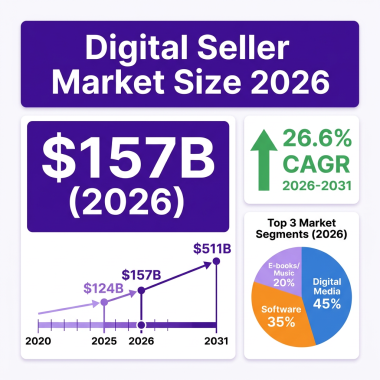
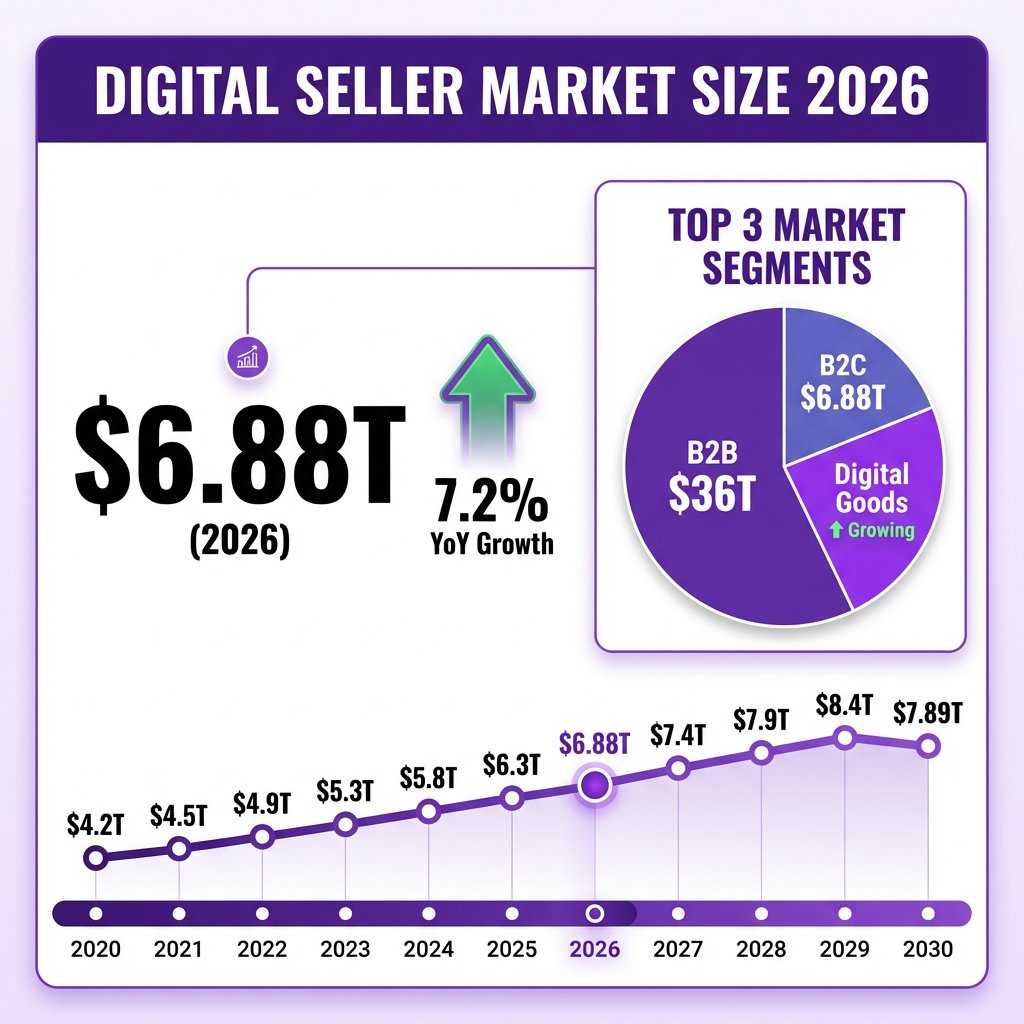
The digital selling landscape has undergone a seismic transformation. In 2026, global e-commerce sales are projected to reach an unprecedented $6.88 trillion, representing a 7.2% year-over-year increase from 2025’s $6.42 trillion figure. This isn’t just growth—it’s a fundamental restructuring of how commerce happens worldwide. With over 2.86 billion digital buyers expected to make purchases online this year, the digital seller ecosystem has become the dominant force in global retail, accounting for more than 20% of total global retail sales.
For entrepreneurs, established businesses, and independent creators, understanding the digital seller landscape in 2026 isn’t optional—it’s survival. The barriers to entry have never been lower, but the competition has never been fiercer. This comprehensive analysis draws from the latest market data, industry reports, and expert insights to give you the complete picture of where digital selling stands today and where it’s headed tomorrow.

Market Overview: The $6.88 Trillion Digital Commerce Ecosystem
The digital commerce market has evolved far beyond simple online transactions. What began as a novel way to sell products through websites has blossomed into a complex, multi-channel ecosystem encompassing everything from social commerce and mobile shopping to AI-powered personalization and cross-border trade. Understanding this ecosystem requires examining both the macro trends driving growth and the micro shifts changing how individual sellers operate.
Global E-commerce Sales Trajectory
The numbers tell a compelling story of sustained expansion. Global e-commerce sales reached approximately $5.7 trillion in 2022, grew to $6.3 trillion by 2024, and are now positioned to hit $6.88 trillion in 2026. Looking ahead, industry forecasts project the market will reach $7.89 trillion by 2028, representing a compound annual growth rate that outpaces traditional retail by a significant margin.
This growth isn’t evenly distributed. The United States e-commerce market alone is expected to reach $1.8 trillion by 2030, representing 29% of all retail sales in the country. Meanwhile, China continues to dominate the global landscape, followed by the United States and Western Europe as the three largest e-commerce markets worldwide. However, emerging markets in Southeast Asia, Latin America, and Africa are showing the fastest growth rates, presenting significant opportunities for digital sellers willing to expand globally.
The B2B Digital Commerce Revolution
While consumer e-commerce (B2C) grabs headlines, the B2B digital commerce sector is experiencing even more dramatic growth. The global B2B e-commerce market is valued at approximately $36 trillion by 2026, growing at a compound annual growth rate of 14.5%. This sector’s growth is driven by the digital transformation of procurement processes, the rise of B2B marketplaces, and the increasing comfort of business buyers with online purchasing.
B2B digital sellers are discovering that the same principles driving B2C success—user experience, personalization, and seamless checkout—apply equally to business customers. The lines between B2B and B2C are blurring as business buyers expect consumer-grade experiences. Companies that can deliver intuitive, efficient digital purchasing experiences for business customers are capturing significant market share from traditional sales channels.
Digital Goods and Virtual Products
The digital goods market represents a distinct and rapidly growing segment within the broader digital seller ecosystem. Online games and virtual goods generated the single-largest revenue pool in 2025, holding 37.45% of the digital goods market share. This category includes everything from in-game purchases and virtual currencies to downloadable content and digital collectibles.
Other significant digital goods categories include e-books, digital music and podcasts, software licenses, online courses, and digital art. The shift toward digital consumption has been accelerated by mobile devices, with the digital goods market attributable to mobile screens poised to keep expanding as 5G networks improve download speeds and streaming quality. For digital sellers, this represents an opportunity to create products with zero marginal cost of production and instant global distribution.
Market Segmentation and Opportunities
The digital commerce market can be segmented by payment method, component, browsing medium, business type, and industry vertical. Card payments and digital wallets dominate payment methods, while mobile devices now account for nearly 59% of total online retail sales. This mobile-first shift has profound implications for digital sellers, requiring mobile-optimized storefronts, streamlined checkout processes, and payment methods that work seamlessly on smartphones.
Cross-border e-commerce represents another major growth opportunity. As logistics networks improve and payment systems become more globally integrated, digital sellers can reach customers in markets that were previously inaccessible. The e-commerce Business Service Provider Directory highlights the growing ecosystem of companies facilitating cross-border sales, from translation services and international payment processors to global fulfillment networks.
Key Statistics and Data: 25+ Numbers Every Digital Seller Must Know
Data-driven decision making separates successful digital sellers from those who struggle. Here are the essential statistics shaping the digital seller landscape in 2026:
Market Size and Growth
- Global e-commerce sales in 2026: $6.88 trillion
- Year-over-year growth rate: 7.2%
- Projected 2028 sales: $7.89 trillion
- Share of total global retail: 20%+
- B2B e-commerce market value: $36 trillion
- B2B CAGR through 2026: 14.5%
- US e-commerce sales by 2030: $1.8 trillion
- US online retail share by 2030: 29%
Consumer Behavior and Demographics
- Global digital buyers in 2026: 2.86 billion
- Mobile commerce share of online sales: 59%
- Desktop/laptop conversion rate: 2.8%
- Mobile conversion rate: 2.8%
- Global average e-commerce conversion rate: 2.5-3%
Platform and Technology Statistics
- Shopify global market share: 10.32%
- Shopify US market share: 29%
- WooCommerce global market share: 20.1%
- Amazon US e-commerce market share: 37.6%
- Active Shopify stores globally: 4.8 million
- US-based Shopify stores: 3 million
- Digital goods market share (games/virtual): 37.45%
Conversion and Performance Benchmarks
Understanding industry benchmarks is crucial for evaluating your performance. The average e-commerce conversion rate varies significantly by industry and target action. Fashion and apparel typically see conversion rates between 1.5-2%, while electronics and computers can achieve 2-3%. Health and beauty products often convert at 2-3%, while luxury goods may see lower rates of 1-2% due to higher consideration periods.
Customer lifetime value (CLV) represents the total revenue you can expect from a single customer account. Successful digital sellers focus not just on acquisition but on increasing CLV through retention strategies, upselling, and cross-selling. The most successful e-commerce businesses achieve CLV to customer acquisition cost (CAC) ratios of 3:1 or higher.
Social Commerce and New Channels
Social commerce is expected to generate trillions of dollars as users shop online via their favorite social media platforms. Instagram Shopping, TikTok Shop, Facebook Marketplace, and Pinterest Shopping have transformed social platforms into direct sales channels. Digital sellers who master social commerce can tap into discovery-driven purchasing behavior that traditional e-commerce sites struggle to replicate.
Cross-Border E-commerce
Cross-border e-commerce continues to grow as logistics networks improve and consumers become more comfortable purchasing from international sellers. Key markets for cross-border sales include China, the United States, the United Kingdom, Germany, and Japan. Digital sellers who can navigate international shipping, customs, and payment processing can access significantly larger addressable markets.
Major Trends Shaping Digital Selling in 2026
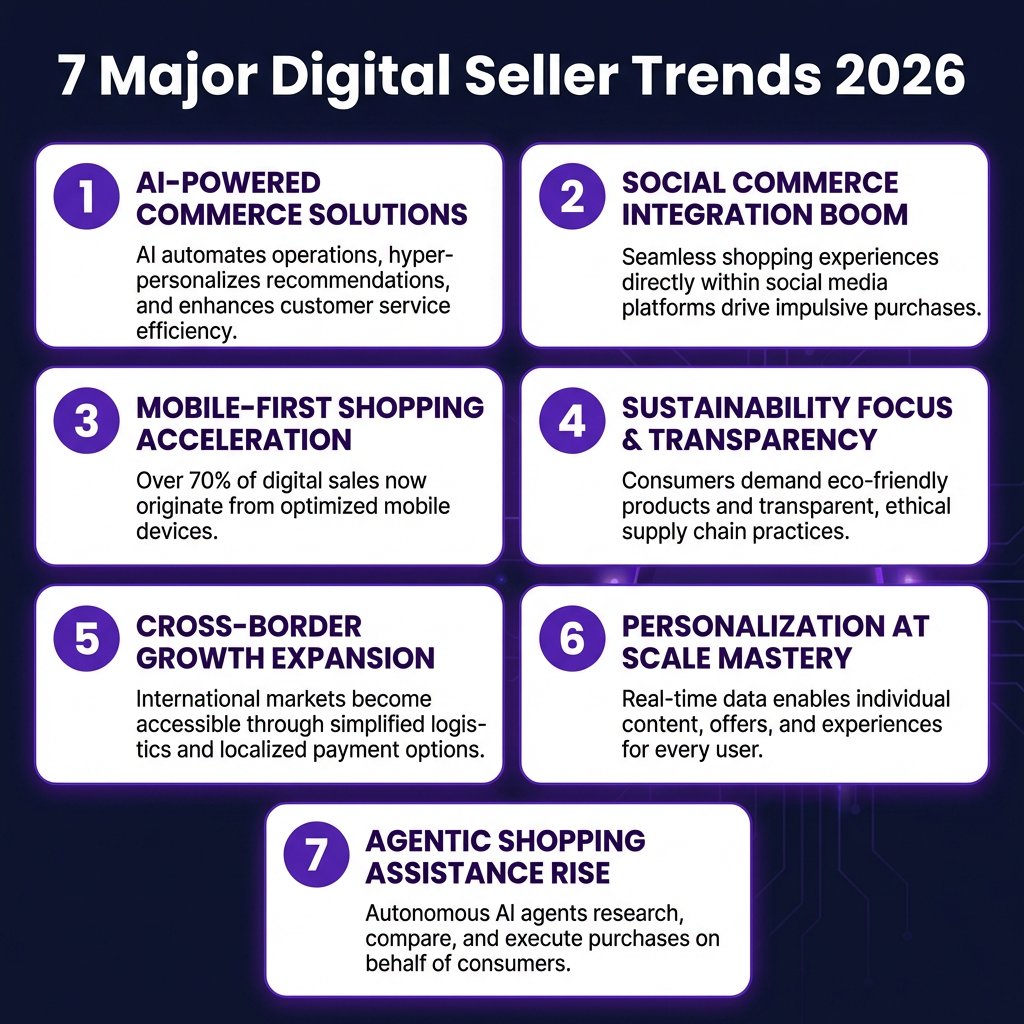
The digital selling landscape is being reshaped by seven major trends that every seller must understand and adapt to:
1. AI-Powered Commerce and Personalization
Artificial intelligence has moved from buzzword to business necessity. AI-powered product search tools now know customer preferences better than their best friends, delivering personalized recommendations that drive conversion. Machine learning algorithms analyze browsing behavior, purchase history, and demographic data to create individualized shopping experiences at scale.
AI is also transforming inventory management, demand forecasting, and pricing optimization. Predictive analytics help digital sellers anticipate trends, optimize stock levels, and adjust pricing dynamically based on demand, competition, and customer behavior. The sellers who leverage AI effectively are achieving significant competitive advantages in conversion rates, customer satisfaction, and operational efficiency.
2. Social Commerce and Shoppable Content
Social media platforms have evolved from marketing channels to full-fledged sales channels. TikTok Shop, Instagram Shopping, Facebook Marketplace, and Pinterest Shopping allow users to discover and purchase products without leaving their favorite apps. This trend represents a fundamental shift from intent-based shopping (searching for specific products) to discovery-based shopping (finding products through content).
Digital sellers are investing heavily in creator partnerships, live shopping events, and shoppable video content. The most successful social commerce strategies combine authentic content with seamless purchasing experiences. Influencer marketing has evolved into creator commerce, where content creators become direct sales channels for brands.
3. Mobile-First and App-Based Commerce
With mobile devices accounting for nearly 59% of total online retail sales, mobile-first design is no longer optional—it’s essential. This goes beyond responsive design to encompass mobile-optimized checkout flows, one-tap payment options, and app-based shopping experiences. Progressive Web Apps (PWAs) are bridging the gap between mobile websites and native apps, offering app-like experiences without the download barrier.
Mobile commerce also enables location-based marketing, push notifications, and personalized experiences that desktop shopping cannot match. Digital sellers who optimize for mobile are capturing the majority of e-commerce traffic and conversions.
4. Sustainability and Ethical Commerce
Consumer awareness of environmental and social issues has transformed purchasing behavior. Digital sellers are under increasing pressure to demonstrate sustainable practices, ethical sourcing, and transparent supply chains. Digital product passports that tell the life story of products are becoming standard expectations for conscious consumers.
Sustainability isn’t just a marketing angle—it’s becoming a competitive differentiator. Sellers who can authentically communicate their environmental commitments, carbon-neutral shipping options, and ethical manufacturing processes are winning customer loyalty and commanding premium prices.
5. Cross-Border and Global Expansion
International e-commerce is becoming accessible to sellers of all sizes. Improved logistics networks, automated customs documentation, and global payment processing have lowered the barriers to cross-border selling. Digital sellers are expanding into emerging markets where e-commerce growth rates exceed mature markets.
Localization goes beyond translation to encompass culturally relevant marketing, local payment methods, and region-specific customer service. The sellers who invest in genuine localization are capturing market share in high-growth regions.
6. Agentic and Conversational Commerce
The rise of AI agents and conversational interfaces is changing how customers shop. Voice commerce through Alexa, Google Assistant, and Siri enables hands-free purchasing. Chatbots and AI assistants guide customers through product selection, answer questions, and complete transactions through natural conversation.
Agentic commerce takes this further, with AI agents browsing, comparing, and executing purchases on behalf of consumers. Digital sellers must optimize their product data, pricing, and availability for AI-driven discovery and purchasing decisions.
7. Fulfillment and Logistics Innovation
E-commerce fulfillment has become a competitive battleground. Same-day and next-day delivery are becoming standard expectations. Smarter reverse logistics, faster restocking, and clearer visibility into returned inventory are essential for cost control and customer satisfaction. Third-party logistics (3PL) providers are offering sophisticated fulfillment solutions that enable small sellers to compete with Amazon’s logistics capabilities.
Micro-fulfillment centers, dark stores, and automated warehouses are reducing delivery times and costs. Digital sellers who optimize their fulfillment strategies are seeing direct impacts on conversion rates, customer satisfaction, and repeat purchase rates.
Key Players and Competitive Landscape
The digital seller ecosystem comprises multiple layers of platforms, marketplaces, and service providers. Understanding the competitive landscape helps sellers choose the right partners and positioning strategies.
Marketplace Giants
Amazon continues to dominate the e-commerce landscape, with retail online sales projected to exceed $492 billion in 2026, representing 37.6% of the US e-commerce market. Amazon’s marketplace model allows third-party sellers to access its massive customer base while leveraging its fulfillment infrastructure through FBA (Fulfillment by Amazon).
Walmart has emerged as a strong competitor, with approximately 18% of the US e-commerce platform market share. Walmart’s marketplace offers sellers access to its physical store network for pickup and returns, creating an omnichannel advantage. Target, Costco, and other mass merchants are also expanding their digital marketplaces.
eBay remains significant for specific categories like collectibles, used goods, and automotive parts. Its auction model and global reach continue to attract sellers in niche markets. Emerging marketplaces like Temu and Shein are disrupting the landscape with ultra-low prices and aggressive marketing.
E-commerce Platforms
Shopify powers 4.8 million active storefronts globally, with 3 million based in the United States. Its 10.32% global market share places it fourth among all e-commerce platforms, behind WooCommerce (20.1%), custom-built solutions, and smaller regional players. Shopify’s ecosystem includes payment processing (Shopify Payments), fulfillment (Shopify Fulfillment Network), and a vast app marketplace.
WooCommerce, built on WordPress, offers the flexibility of open-source software with the largest ecosystem of plugins and themes. It’s particularly popular among content-heavy sites and businesses that want complete control over their technology stack.
BigCommerce, Adobe Commerce (Magento), and Salesforce Commerce Cloud serve larger enterprises with complex requirements. Squarespace and Wix cater to smaller sellers with simpler needs and limited technical expertise.
Payment and Financial Services
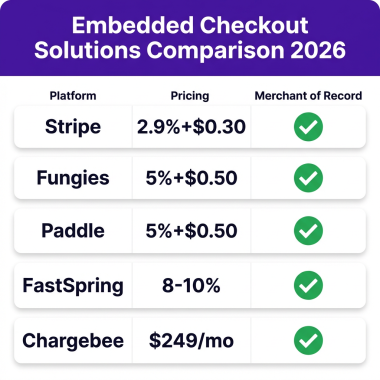
Payment processing has become a key battleground. Stripe and PayPal dominate online payments, while buy-now-pay-later (BNPL) services like Klarna, Afterpay, and Affirm have gained significant traction. Apple Pay, Google Pay, and Shop Pay are streamlining mobile checkout with one-tap payments.
For digital sellers, offering diverse payment options has become essential. Cart abandonment rates drop significantly when customers can pay with their preferred method. Cryptocurrency payments, while still niche, are gaining acceptance for certain customer segments.
Logistics and Fulfillment
Third-party logistics providers like ShipBob, Deliverr (acquired by Amazon), and Red Stag Fulfillment enable sellers to offer fast shipping without owning warehouses. These providers integrate with e-commerce platforms to automate order fulfillment, inventory management, and returns processing.
Amazon’s Multi-Channel Fulfillment (MCF) allows sellers to use Amazon’s warehouses and delivery network for orders from any channel. This levels the playing field, enabling smaller sellers to compete with Amazon’s shipping speeds.

Challenges and Pain Points for Digital Sellers
Despite the massive opportunities, digital sellers face significant challenges in 2026. Understanding these pain points is the first step toward developing effective strategies to overcome them.
1. Customer Acquisition Costs and Marketing Efficiency
Customer acquisition costs have risen dramatically across all channels. Privacy changes like iOS 14.5’s App Tracking Transparency have made Facebook and Instagram advertising less effective and more expensive. Google’s removal of third-party cookies is further complicating targeted advertising.
Digital sellers are shifting toward first-party data strategies, building direct relationships with customers through email marketing, SMS, and loyalty programs. Content marketing, SEO, and organic social media are becoming more important as paid advertising becomes less efficient. The brands that can build authentic communities and generate word-of-mouth are achieving sustainable growth without relying on increasingly expensive ads.
2. Inventory Management and Cash Flow
Inventory fluctuations create significant challenges for digital sellers. Overstocking ties up capital and increases storage costs, while understocking leads to stockouts and lost sales. The uncertainty around demand, combined with supply chain disruptions, makes inventory planning increasingly complex.
New capital requirements as inventory fluctuates can strain cash flow, particularly for growing businesses. Digital sellers are adopting just-in-time inventory strategies, dropshipping models, and demand forecasting tools to optimize inventory levels. Financing solutions like inventory loans and revenue-based financing are helping sellers manage cash flow through growth phases.
3. Bifurcated Consumer Spending and Economic Uncertainty
Economic uncertainty has created a bifurcation in consumer spending. High-income consumers continue spending on premium products and experiences, while budget-conscious consumers are trading down to cheaper alternatives or cutting discretionary spending entirely. This polarization makes pricing and positioning strategies more complex.
Digital sellers must clearly define their target customer segments and align their product offerings, pricing, and marketing accordingly. Value-oriented brands are emphasizing affordability and durability, while premium brands are doubling down on quality, exclusivity, and customer experience.
4. Platform Dependence and Policy Changes
Many digital sellers have built their businesses on platforms they don’t control. Amazon policy changes, Shopify fee increases, or Facebook algorithm updates can dramatically impact revenue overnight. This platform risk is a constant concern for digital sellers.
The solution is channel diversification. Successful digital sellers maintain presence across multiple marketplaces, run their own branded websites, and build direct customer relationships. While platform dependence may be unavoidable in early stages, the goal should be to gradually shift toward owned channels where margins are higher and control is greater.
5. Returns and Reverse Logistics
E-commerce return rates typically range from 20-30%, compared to 8-10% for brick-and-mortar retail. Processing returns is expensive, environmentally damaging, and operationally complex. Smarter reverse logistics, faster restocking, and clearer visibility into returned inventory are essential for cost control and customer satisfaction.
Digital sellers are implementing strategies to reduce return rates, including better product photography, detailed sizing information, virtual try-on technology, and improved quality control. Some are experimenting with return fees or store credit policies to discourage frivolous returns while maintaining customer satisfaction.
Opportunities and Growth Strategies
Despite the challenges, 2026 presents significant opportunities for digital sellers who execute the right strategies. Here are the key growth levers:
1. AI-Driven Personalization and Automation
AI tools have democratized capabilities that were previously available only to large enterprises. AI-powered product recommendations, dynamic pricing, chatbots, and content generation are now accessible to sellers of all sizes. Implementing AI-driven personalization can increase conversion rates by 10-30% and average order value by 15-20%.
Automation extends beyond customer-facing features to backend operations. Automated inventory management, order processing, and customer service workflows reduce costs and free up time for strategic activities. Digital sellers who embrace AI and automation are achieving operational efficiencies that translate directly to competitive advantages.
2. Subscription and Recurring Revenue Models
Subscription models provide predictable revenue, improve cash flow, and increase customer lifetime value. From consumable products with auto-replenishment to curated boxes and membership programs, subscriptions are applicable across many product categories. Zero-click commerce for consumables uses predictive algorithms to automatically reorder products before customers run out.
Digital sellers are experimenting with hybrid models that combine one-time purchases with optional subscriptions. The key is delivering genuine value through convenience, curation, or cost savings that justifies the ongoing commitment.
3. Community-Driven Commerce
Building communities around brands creates defensible competitive advantages that are difficult to replicate. User-generated content, brand ambassador programs, and exclusive member communities drive organic growth and customer loyalty. Gymshark’s success as a $1B+ brand can be attributed to its strategic marketing efforts, strong online presence, influencer collaborations, and commitment to its target audience.
Digital sellers are investing in community platforms, hosting virtual and in-person events, and creating spaces for customers to connect with each other. The most successful community strategies align with customer identities and values, creating emotional connections that transcend transactional relationships.
4. International Expansion
Cross-border e-commerce represents one of the largest untapped growth opportunities. Markets in Southeast Asia, Latin America, the Middle East, and Africa are experiencing e-commerce growth rates of 20-30% annually. Digital sellers who can navigate international logistics, payments, and marketing are accessing vast new customer bases.
Marketplace expansion is often the easiest entry point for international growth. Amazon’s global marketplaces, regional platforms like Mercado Libre (Latin America) and Lazada (Southeast Asia), and cross-border specialists like Global-e enable sellers to test international demand without significant upfront investment.
5. Product Line Expansion and Diversification
Successful digital sellers are expanding beyond their initial product categories to capture larger shares of customer spending. This might mean launching complementary products, creating private label brands, or expanding into adjacent categories. Dollar Shave Club started with razors and expanded into a full men’s grooming brand, eventually selling to Unilever for $1 billion.
The key is maintaining brand coherence and ensuring that new products meet the same quality standards that built the original customer base. Data from existing customers can inform expansion decisions, identifying unmet needs and product gaps.
Case Studies and Success Stories
Real-world examples illustrate the strategies and tactics driving digital selling success in 2026:
Case Study 1: Gymshark – Community-Driven Growth
Gymshark started in a garage in 2012 and grew into a $1 billion+ fitness apparel brand. Their success can be attributed to strategic marketing efforts, strong online presence, influencer collaborations, commitment to their target audience, and adaptability in response to customer feedback. The brand focused on creating exceptional products that generated positive word-of-mouth and built a community of fitness enthusiasts.
Key lessons from Gymshark include the power of influencer marketing when done authentically, the importance of community building, and the value of staying true to a specific target audience. Gymshark’s ambassador program turned customers into advocates, creating organic growth that no advertising budget could buy.
Case Study 2: Dollar Shave Club – Subscription Innovation
Dollar Shave Club disrupted the razor industry with a simple subscription model and viral marketing. Their launch video generated 12,000 orders in the first 48 hours and has been viewed over 27 million times. The company built brand awareness, attracted new prospects, retained customers, and established itself as a major player in the men’s grooming industry.
Unilever acquired Dollar Shave Club for $1 billion in 2016, validating the direct-to-consumer subscription model. The key lessons include the power of a clear value proposition, the effectiveness of authentic marketing that doesn’t take itself too seriously, and the scalability of subscription models for consumable products.
Case Study 3: Electronics Retailer – Technical SEO and Structured Data
An electronics retailer implemented structured data, product schema markup, and direct marketplace optimization. These technical SEO improvements increased organic traffic by double digits and improved search visibility across Google Shopping and marketplace search results. The investment in technical foundations paid dividends in sustainable, low-cost customer acquisition.
This case illustrates that even in an era of AI and social commerce, fundamental SEO and technical optimization remain critical. Digital sellers who neglect the technical foundations of their online presence are leaving traffic and revenue on the table.
Future Outlook and Predictions: 2026-2030
The next five years will bring continued transformation to the digital selling landscape. Here are the key predictions based on current trends and expert analysis:
Continued Market Growth
Global e-commerce sales are projected to reach $7.89 trillion by 2028 and continue growing toward $10+ trillion by 2030. The US market alone will reach $1.8 trillion by 2030, representing nearly 30% of total retail sales. This growth will be driven by continued digital adoption, improvements in logistics and payments, and the expansion of e-commerce into new product categories and geographies.
AI-First Commerce
By 2028, AI will handle the majority of customer interactions in e-commerce, from product discovery to post-purchase support. AI agents will browse, compare, and execute purchases on behalf of consumers, fundamentally changing how buying decisions are made. Digital sellers will need to optimize for AI-driven discovery, ensuring their products are visible and appealing to algorithmic shoppers.
Omnichannel Integration
The distinction between online and offline retail will continue to blur. Buy online, pick up in store (BOPIS), ship from store, and endless aisle (in-store ordering from warehouse inventory) will become standard capabilities. Digital sellers will need to integrate their online operations with physical retail touchpoints, whether through their own stores, pop-ups, or partnerships with established retailers.
Sustainability as Standard
By 2030, sustainability practices will be baseline expectations rather than differentiators. Carbon-neutral shipping, circular economy models, and transparent supply chains will be required to compete for conscious consumers. Digital sellers who invest in sustainable practices now will be positioned for success as regulations tighten and consumer expectations evolve.
Decentralized Commerce
Blockchain technology and decentralized finance will enable new models of digital commerce. Direct creator-to-consumer relationships without platform intermediaries, transparent supply chain tracking, and new payment mechanisms will emerge. While mainstream adoption is still years away, forward-thinking digital sellers are already experimenting with these technologies.
Regulatory Evolution
E-commerce regulation will continue to evolve, with increased focus on consumer protection, data privacy, and platform accountability. Digital sellers will need to stay ahead of regulatory changes, investing in compliance infrastructure and transparent business practices. The sellers who view regulation as an opportunity to build trust rather than a burden to minimize will win customer loyalty.

Adrian Schenberg is a Business Development Manager at Fungies.io, where he helps SaaS companies and digital product businesses find the right payment and compliance setup for their global growth. With a background in B2B SaaS sales and fintech partnerships, Adrian has worked with hundreds of software teams across Europe and North America to streamline their checkout and revenue operations. Before Fungies, Adrian spent several years in SaaS go-to-market roles, helping early-stage companies build their outbound sales motion and expand into new markets. He is particularly passionate about the intersection of developer tools and commercial growth — understanding both the technical and business sides of selling software globally. Based in Warsaw, Poland. Writes about SaaS sales strategy, payments, and digital commerce.
Related Articles