Here’s a stat that’ll keep you up at night: SaaS companies lose between 1% to 5% of total revenue to billing errors every single year. For a company doing $2M ARR, that’s up to $100,000 vanishing into thin air because of failed payments, incorrect calculations, and manual invoicing mistakes.
And here’s the kicker — most founders pick their billing software like they’re ordering lunch. They go with what’s familiar, what a friend recommended, or whatever integrates with Stripe. Six months later? They’re drowning in billing mistakes, manual fixes, and customers wondering why they got charged twice.
The SaaS billing software market is projected to hit $24.8 billion by 2033, growing from $7.8 billion in 2026. With that much money flowing through these platforms, choosing the wrong one isn’t just annoying — it’s expensive.
What Is SaaS Billing Software?
SaaS billing software automates the entire revenue cycle — from subscription management and invoicing to payment collection and revenue recognition. These platforms handle recurring charges, proration, upgrades, downgrades, dunning (failed payment recovery), and tax compliance.
Honestly, if you’re still managing subscriptions in spreadsheets or hacking together Stripe webhooks, you’re not just wasting time — you’re actively leaking revenue. The right billing platform becomes your financial command center, not just another tool in your stack.
Why Your Choice of Billing Software Matters
Involuntary churn — customers who wanted to stay but left because your billing failed them — accounts for 20% to 40% of all churn. That’s customers who liked your product but got frustrated by expired cards, failed payments nobody followed up on, or billing errors that eroded trust.
Your finance team feels this pain too. They’re manually updating subscriptions, chasing failed payments, fixing errors, and creating invoices instead of doing strategic work. The right SaaS billing software eliminates this busywork and gives you predictable revenue.
10 Best SaaS Billing Software Compared
I’ve analyzed the top platforms based on pricing flexibility, usage-based billing support, integrations, and real-world scalability. Here’s what actually works in 2026.
1. Stripe Billing — Best for Developer-Led Teams
Stripe Billing is the industry standard for API-first billing. It offers unmatched flexibility for teams with strong technical resources, handling everything from simple subscriptions to complex metered usage.
Key Features:
- Comprehensive API for custom billing logic
- Support for subscriptions, usage-based billing, and hybrid models
- Machine learning-powered payment retries
- Global payment methods and multi-currency support
- Stripe Tax integration for automatic tax calculation
Pricing: 0.7% per transaction on top of standard Stripe processing fees (2.9% + $0.30). Stripe Tax adds 0.5% per transaction.
Best For: Technical teams who need maximum flexibility and don’t mind building custom billing logic.
2. Chargebee — Best for Mid-Market B2B SaaS
Chargebee operates as a revenue growth management platform built for rapidly scaling companies. It goes beyond simple billing to serve as your financial command center with deep accounting integrations.
Key Features:
- Multi-entity management for global subsidiaries
- Hierarchical billing structures
- Advanced revenue recognition and reporting
- Salesforce, NetSuite, and 30+ gateway integrations
- Custom contract handling for enterprise deals
Pricing: Free up to $250K in revenue, then 0.75% per transaction. Enterprise plans available.
Best For: B2B SaaS companies with sales teams negotiating custom contracts and complex pricing.
3. Recurly — Best for Retention & Churn Reduction
Recurly stakes its claim on one critical problem: retention. The platform uses aggressive machine learning trained on data from companies like Twitch and Paramount+ to recover failed payments that other platforms simply let go.
Key Features:
- AI-powered dunning management with industry-leading recovery rates
- Subscription lifecycle management
- Revenue optimization analytics
- Churn analysis and prevention tools
- Multiple payment gateway support
Pricing: Custom pricing based on volume. Free trial for first 3 months.
Best For: High-volume B2C subscription businesses and companies losing significant revenue to involuntary churn.
4. Paddle — Best Merchant of Record for Global SaaS
Paddle acts as your Merchant of Record (MoR), meaning they technically sell your product to customers, not you. This eliminates global tax compliance headaches, fraud liability, and chargeback management.
Key Features:
- Full Merchant of Record status — handles all tax compliance globally
- Fraud protection and chargeback management included
- Subscription billing, invoicing, and checkout
- Multi-currency support with local payment methods
- Software licensing and activation
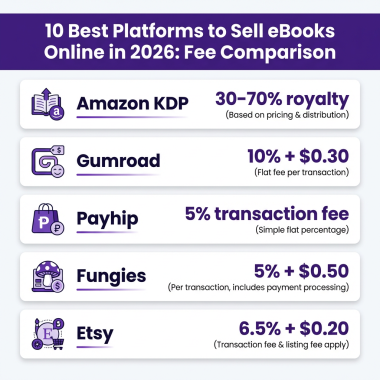
Pricing: 5% + $0.50 per transaction. No monthly fees.
Best For: Global SaaS startups who want to sell worldwide without dealing with VAT/GST registration in every country.
5. Fungies.io — Best Value Merchant of Record
Fungies.io offers the same Merchant of Record benefits as Paddle but with more flexible billing models and a cleaner API experience. You get the full MoR stack — tax, fraud, compliance — without the overhead.
Key Features:
- Merchant of Record with automatic global tax compliance
- No-code checkout with full customization options
- Support for subscriptions, usage-based billing, and one-time payments
- REST API and webhooks for developers
- Fraud protection and chargeback handling included
Pricing: 5% + $0.50 per transaction. No monthly fees, no hidden charges.
Best For: Indie and early-stage SaaS founders who want global compliance without enterprise pricing.
6. Zuora — Best for Enterprise & IPO-Ready Companies
Zuora coined the term “Subscription Economy” and serves as the default choice for large public companies. It evolved from a billing tool into a comprehensive monetization platform used by Zoom, General Motors, and The New York Times.
Key Features:
- Enterprise-grade subscription lifecycle management
- Multi-entity and multi-currency support
- Advanced revenue recognition (ASC 606/IFRS 15)
- Deep ERP integrations (NetSuite, Intacct)
- Usage-based and hybrid billing models
Pricing: Custom pricing starting around $75,000/year. Implementation requires 3-6 months.
Best For: Publicly traded companies or massive organizations needing rigorous governance and audit trails.
7. Maxio — Best for B2B SaaS Finance Teams
Maxio emerged from the merger between Chargify and SaaSOptics. It leads the market for B2B SaaS companies needing audit-ready financials and bridges your billing system and general ledger.
Key Features:
- Automated ASC 606 revenue recognition
- Deferred revenue schedules and SaaS metrics
- Subscription billing with complex contract support
- Deep accounting integrations
- Investor-ready financial reporting
Pricing: Starting at $599/month + 0.75% per transaction.
Best For: Late-stage startups preparing for due diligence, audits, or IPO.
8. Zoho Billing — Best for Budget-Conscious Startups
Zoho Billing expanded beyond recurring subscriptions to handle one-time invoices, project billing, and expense tracking. Its biggest strength comes from the Zoho ecosystem integration.
Key Features:
- Subscription and one-time billing
- Project billing and expense tracking
- Zoho CRM and Zoho Books integration
- Multi-currency and multi-language support
- Customer portal for self-service
Pricing: Starting at $29/month for up to 500 customers.
Best For: Budget-conscious startups already using Zoho products.
9. FastSpring — Best for Digital Product Sellers
FastSpring serves as a veteran Merchant of Record for established software companies. It bridges the gap between self-serve B2C checkout and high-touch B2B sales.
Key Features:
- Full Merchant of Record with global tax handling
- Digital downloads and SaaS subscription support
- Hybrid B2B/B2C sales flows
- 200+ region support without local bank accounts
- Fraud prevention and compliance included
Pricing: Custom pricing starting around 5.9% + $0.95 per transaction, scaling down with volume.
Best For: Global software vendors selling digital downloads or SaaS cross-border.
10. GoCardless — Best for High-Ticket B2B
GoCardless focuses on bank payments (Direct Debit) instead of credit cards. It pulls payments directly from customer bank accounts, avoiding high card fees and expiration-related churn.
Key Features:
- Direct Debit payments in 30+ countries
- Lower fees than credit card processing
- No expired card churn
- Integration with Zuora, Xero, and other platforms
- Automatic payment collection and reconciliation
Pricing: 1% + fees per transaction, capped at $4. International payments at 2% + $0.40.
Best For: High-ticket B2B SaaS charging $5,000+ monthly who want to avoid steep credit card fees.
SaaS Billing Software Comparison Table
| Platform | Best For | Starting Price | MoR | Usage Billing |
|---|---|---|---|---|
| Stripe Billing | Developer-led teams | 0.7% per transaction | No | Yes |
| Chargebee | Mid-market B2B | Free → 0.75% | No | Yes |
| Recurly | Retention focus | Custom | No | Yes |
| Paddle | Global SaaS | 5% + $0.50 | Yes | Yes |
| Fungies.io | Value MoR | 5% + $0.50 | Yes | Yes |
| Zuora | Enterprise | $75,000+/year | No | Yes |
| Maxio | Finance teams | $599/mo + 0.75% | No | Yes |
| Zoho Billing | Budget startups | $29/month | No | Limited |
| FastSpring | Digital products | ~5.9% + $0.95 | Yes | Yes |
| GoCardless | High-ticket B2B | 1% (capped at $4) | No | No |
How to Choose the Right SaaS Billing Software
Switching billing platforms later is painful. Here’s how to choose wisely the first time:
1. Define Your Actual Needs
Do you need full subscription management or just invoicing? Operating across multiple countries? What’s your billing volume and growth rate? List your must-haves versus nice-to-haves before comparing options.
2. Calculate Total Cost of Ownership
A platform charging 5% might cost less than one at 1% if it eliminates hiring tax specialists. Factor in transaction fees, monthly costs, and hidden charges like currency conversion or chargeback fees.
3. Check Integration Capabilities
Your billing software must connect with your CRM, accounting tools, and analytics platforms. Look for open APIs and pre-built integrations. The best platforms become part of your revenue engine, not just another disconnected tool.
4. Test Before Committing
Use free trials. Set up test subscriptions, process payments, see if the interface works. Most mistakes happen because teams skip this step.
Merchant of Record vs Payment Processor: Which Do You Need?
This is the decision that trips up most founders. Here’s the simple breakdown:
Payment Processor (Stripe, Chargebee): You remain the merchant of record. You handle tax compliance, fraud liability, and chargebacks. Lower fees but higher operational burden.
Merchant of Record (Paddle, Fungies, FastSpring): The platform becomes the legal seller. They handle all tax compliance, fraud protection, and chargebacks. Higher fees but zero compliance headache.
In my experience, if you’re selling globally and don’t have a tax department, an MoR usually pays for itself. The 5% fee looks higher than Stripe’s 2.9%, but once you add Stripe Tax (0.5%), currency conversion (1-2%), and the cost of your time dealing with compliance, it’s often a wash.
FAQ
What’s the best SaaS billing software for startups?
For most startups, Stripe Billing offers the best balance of flexibility and cost. If you’re selling globally and want to avoid tax complexity, Fungies.io or Paddle are better choices despite higher fees.
How much does SaaS billing software cost?
Most platforms charge either a percentage of revenue (0.5% to 5%) or a flat monthly fee ($29 to $599+). Merchant of Record platforms typically charge 5% to 6% but include tax compliance and fraud protection.
Do I need a Merchant of Record?
If you’re selling to customers in multiple countries and don’t want to register for VAT/GST in each jurisdiction, yes. An MoR handles all tax compliance, fraud protection, and chargeback management for you.
Can I switch billing platforms later?
Yes, but it’s painful. You’ll need to migrate customer data, payment methods (which often requires customers to re-enter cards), and subscription histories. Choose a platform that can scale with you for at least 2-3 years.
What’s the difference between Stripe and Chargebee?
Stripe Billing is developer-focused with powerful APIs but requires more setup. Chargebee is more business-user friendly with better out-of-the-box features for SaaS like dunning, trials, and revenue recognition.
Conclusion
The right SaaS billing software makes or breaks your revenue operations. Every platform on this list solves real problems, but choosing wrong means migration headaches later.
If you’re building a SaaS business and want to launch fast without worrying about global tax compliance, create your free Fungies.io account and get your first sale live today. With 5% + $0.50 pricing, no monthly fees, and full Merchant of Record protection, you get enterprise-grade billing without the enterprise complexity.
Choose the platform that fits your business stage and start growing without the billing bottlenecks.