10 Best Platforms to Sell eBooks Online in 2026: Complete Comparison
Discover the 10 best platforms to sell ebooks online in 2026. Compare fees, features, and find the perfect platform for your digital books — from Amazon KDP to Fungies and beyond.
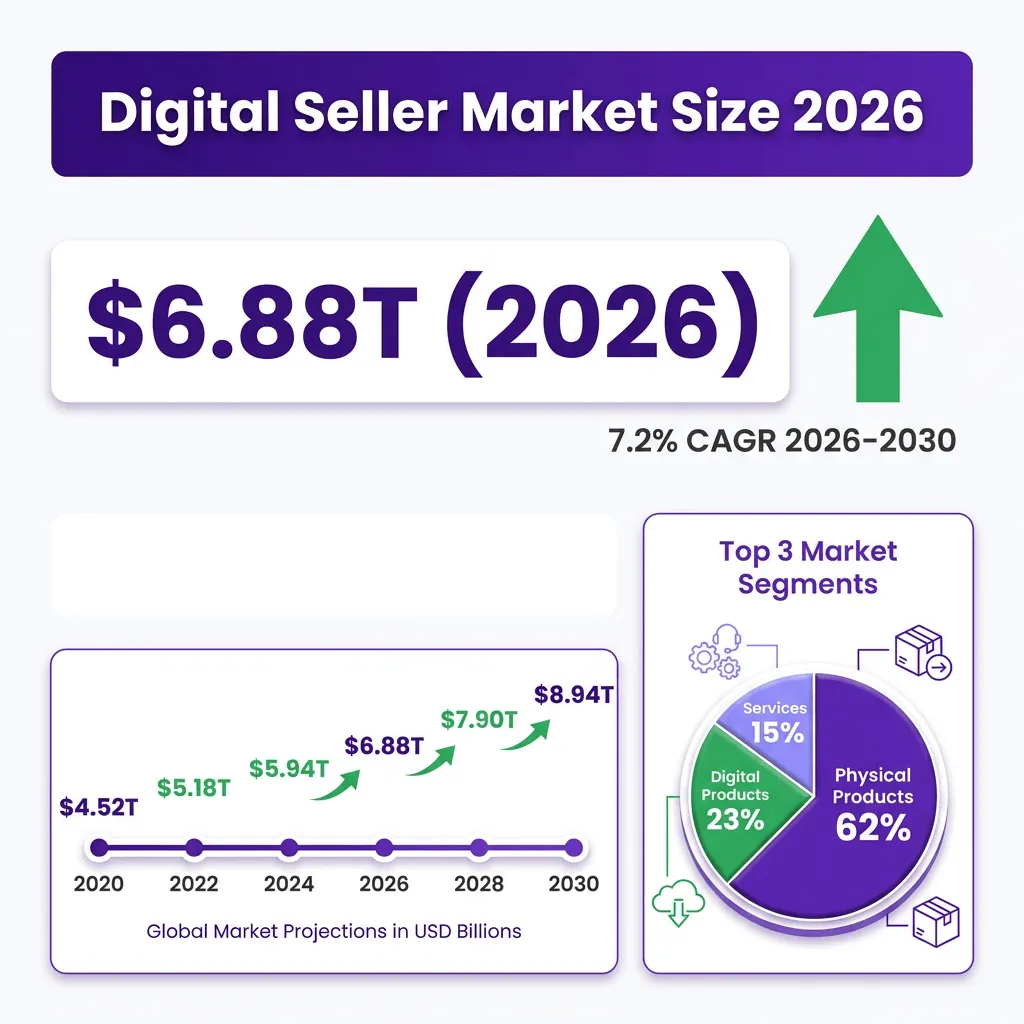
Here’s a number that might surprise you: the global ebook market is projected to hit $14.9 billion in 2025, and it’s still growing. Yet most creators barely scratch the surface of what’s possible when it comes to actually monetizing their digital books.
I’ve spent years watching authors and digital entrepreneurs struggle with the same question: where should I actually sell my ebook? Amazon seems obvious, but the royalty cuts are brutal. Gumroad looks simple, but the fees add up fast. And don’t even get me started on the platforms that promise “easy selling” but leave you drowning in tax compliance paperwork.
The truth? There’s no single “best” platform. What works for a fiction author selling romance novels won’t work for a consultant selling a $200 business strategy guide. In this article, I’ll break down the 10 best platforms to sell ebooks online in 2026, with real fee structures, honest pros and cons, and specific recommendations based on what you’re actually selling.
What to Look for in an eBook Selling Platform
Before diving into the list, let’s talk about what actually matters when choosing where to sell your ebook. I’ve seen too many creators pick platforms based on brand recognition alone, then regret it six months later.
Fee Structure Transparency
Some platforms advertise low fees but hit you with hidden charges. Look for all-in pricing that includes payment processing, platform fees, and any “convenience” charges. A platform charging 5% total is often cheaper than one advertising 3% but adding 2.9% + $0.30 for card processing.
Global Tax Compliance
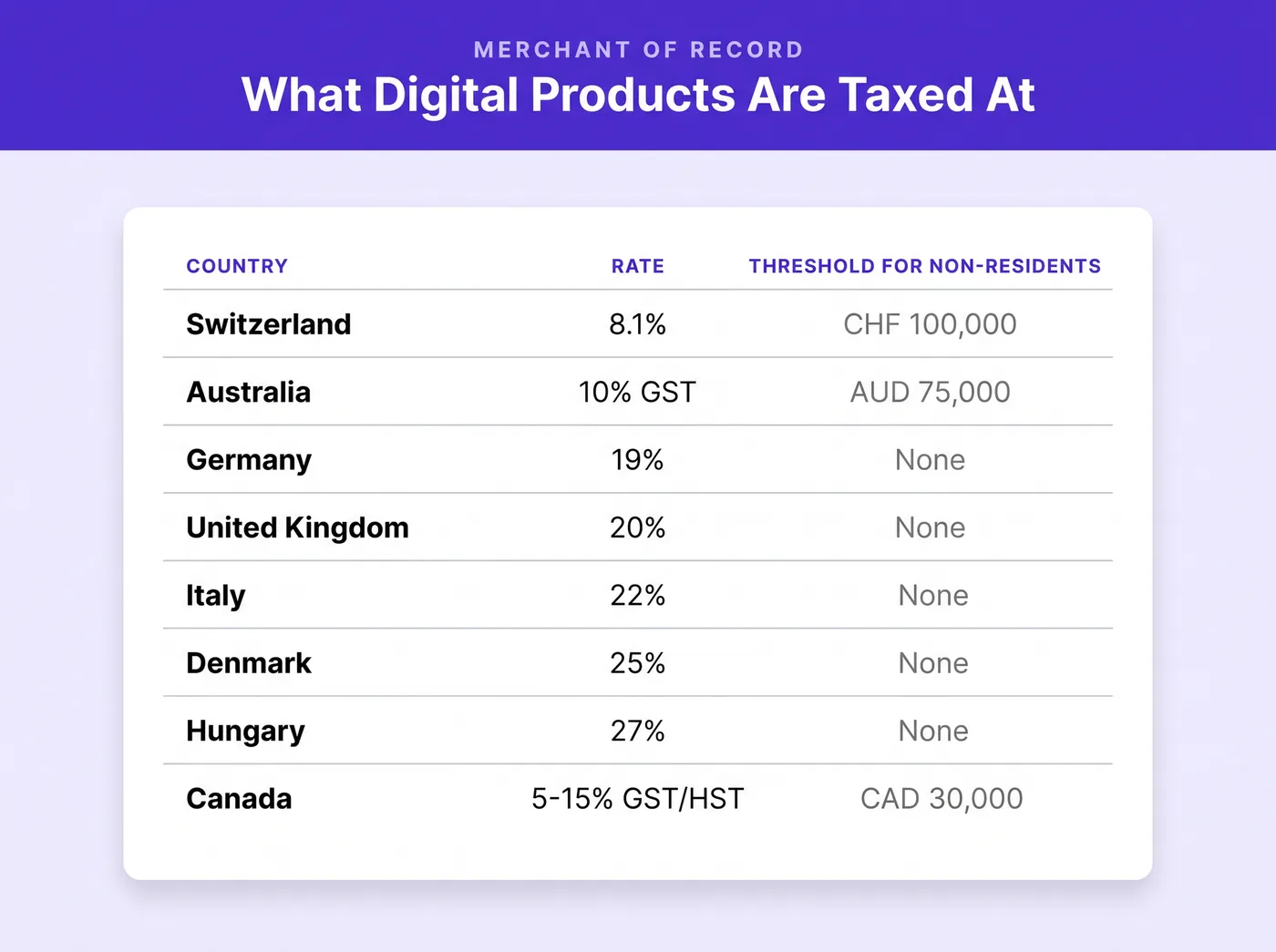
If you’re selling to customers internationally (and you should be), tax compliance becomes a nightmare fast. VAT in Europe, sales tax in the US, GST in Australia — each has different rules, thresholds, and filing requirements. Platforms that handle this for you as a Merchant of Record are worth their weight in gold.
Delivery and DRM
How will customers actually get your ebook? Instant download links? Email delivery? DRM protection? Some platforms handle delivery beautifully; others dump the file in a browser and hope for the best. If you’re selling premium content, secure delivery matters.
The 10 Best Platforms to Sell eBooks Online in 2026
1. Amazon Kindle Direct Publishing (KDP)
Let’s start with the elephant in the room. Amazon KDP dominates the ebook market for good reason — it puts your book in front of millions of Kindle users instantly.
Key Features:
- Access to 100+ million Kindle users
- 70% royalty for books priced $2.99-$9.99 (35% outside this range)
- Kindle Unlimited enrollment option
- Built-in marketing tools (Kindle Countdown Deals, Free Book Promotions)
- Print-on-demand integration via KDP Print
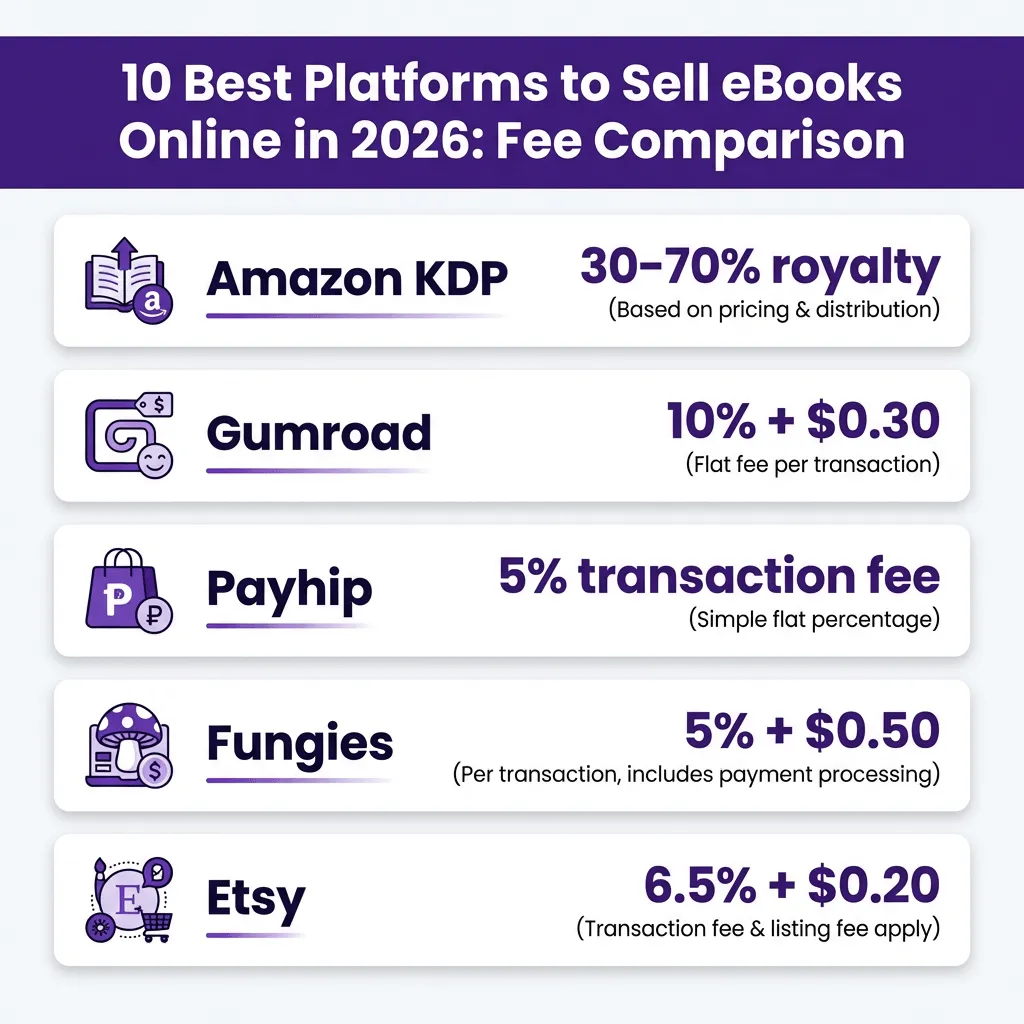
Pricing: 30-70% royalty depending on price and distribution choices. Delivery fees deducted for 70% royalty option ($0.15/MB).
Best for: Fiction authors, genre writers, and anyone targeting the mass-market Kindle audience.
2. Fungies
Full disclosure: I work with Fungies. But I’m including them because they solve a specific problem that most platforms ignore entirely — global tax compliance for digital sellers.
Key Features:
- Merchant of Record handles all global tax compliance (VAT, sales tax, GST)
- Simple embedded checkout that integrates with any website
- Instant delivery with secure download links
- No monthly fees — pay only when you sell
- Multi-currency support with automatic conversion
Pricing: 5% + $0.50 per transaction. No monthly fees, no setup costs, no hidden charges.
Best for: Creators selling internationally who don’t want to deal with tax compliance nightmares, and anyone who wants to sell directly from their own website.
3. Gumroad
Gumroad has become synonymous with creator commerce. It’s the platform that made “sell your first digital product” accessible to everyone, and it still holds a strong position in 2026.
Key Features:
- Simple product pages with customizable branding
- Built-in email marketing to your customers
- Membership and subscription support
- Affiliate program functionality
- “Pay what you want” pricing option
Pricing: 10% + $0.30 per transaction on the free plan. Creator plan at $9/month reduces fee to 7% + $0.30.
Best for: Creators building an audience, those wanting membership features, and sellers who value simplicity over lowest fees.
4. Payhip
Payhip flies under the radar compared to Gumroad, but it’s been quietly building a solid platform for digital sellers. The fee structure is more straightforward, and the feature set has expanded significantly.
Key Features:
- Instant delivery with PDF stamping for security
- Course hosting capabilities
- Membership and subscription support
- EU VAT handling (though not full MoR)
- Embeddable checkout buttons
Pricing: 5% transaction fee on free plan. Pro plan at $29/month eliminates transaction fees (payment processing still applies).
Best for: Sellers who want lower fees than Gumroad without sacrificing features, and those selling courses alongside ebooks.
5. Etsy
Etsy isn’t just for handmade crafts anymore. The platform has become a significant marketplace for digital downloads, including ebooks, planners, templates, and guides.
Key Features:
- Built-in marketplace with 90+ million active buyers
- Instant digital delivery system
- Strong SEO within the platform
- Review system builds social proof
- Low barrier to entry
Pricing: $0.20 listing fee per item, 6.5% transaction fee, plus 3% + $0.25 payment processing.
Best for: Niche ebooks (planners, workbooks, guides), sellers who want marketplace discovery, and those targeting the Etsy demographic.
6. Apple Books
Apple’s ebook platform doesn’t get as much attention as Kindle, but it has a dedicated user base of Apple device owners who prefer reading in the Apple Books app.
Key Features:
- Access to Apple device users (1+ billion active devices)
- 70% royalty rate
- Free conversion and delivery
- Pre-order functionality
- Promotional pricing tools
Pricing: 70% royalty on all sales. No delivery fees or hidden charges.
Best for: Authors targeting Apple users, those already in the Apple ecosystem, and as a secondary distribution channel alongside Amazon.
7. Kobo Writing Life
Kobo has a smaller market share than Kindle, but its users are often more engaged readers. The platform also has strong international reach, particularly in Canada and Europe.
Key Features:
- Strong presence in international markets
- 70% royalty for books priced $2.99+
- Library distribution via OverDrive
- Price match protection
- Promotional opportunities
Pricing: 70% royalty on qualifying titles, 45% on others.
Best for: Authors targeting international markets, library distribution, and as part of a wide distribution strategy.
8. Sellfy
Sellfy positions itself as an all-in-one ecommerce solution for creators. It’s more than just an ebook platform — it’s a full store builder with digital product support.
Key Features:
- Custom storefront with your own domain
- Print-on-demand integration
- Email marketing tools built-in
- Subscription and membership support
- Discount codes and upsells
Pricing: Plans start at $29/month. No transaction fees on paid plans (payment processing still applies).
Best for: Creators wanting a branded storefront, those selling multiple product types, and established sellers with consistent monthly revenue.
9. Shopify with Digital Downloads
Shopify isn’t specifically built for ebooks, but its Digital Downloads app makes it a viable option — especially if you’re already using Shopify for other products.
Key Features:
- Full ecommerce platform capabilities
- Professional storefront with extensive customization
- Abandoned cart recovery
- Advanced analytics and reporting
- Thousands of app integrations
Pricing: Plans from $39/month plus 2.9% + $0.30 payment processing. Transaction fees apply unless using Shopify Payments.
Best for: Sellers with existing Shopify stores, those wanting full ecommerce control, and businesses selling physical and digital products together.
10. Your Own Website (WordPress + WooCommerce or Easy Digital Downloads)
For maximum control and lowest fees long-term, nothing beats selling directly from your own website. The setup is more complex, but the payoff is worth it for serious sellers.
Key Features:
- Complete control over branding and customer experience
- Lowest fees (just payment processing, typically 2.9% + $0.30)
- Direct customer relationships and email list building
- No platform risk or policy changes affecting your business
- Full analytics and customer data ownership
Pricing: Hosting costs ($5-50/month) plus payment processing fees. No platform commissions.
Best for: Established creators with existing audiences, those wanting maximum control, and sellers planning for long-term business growth.
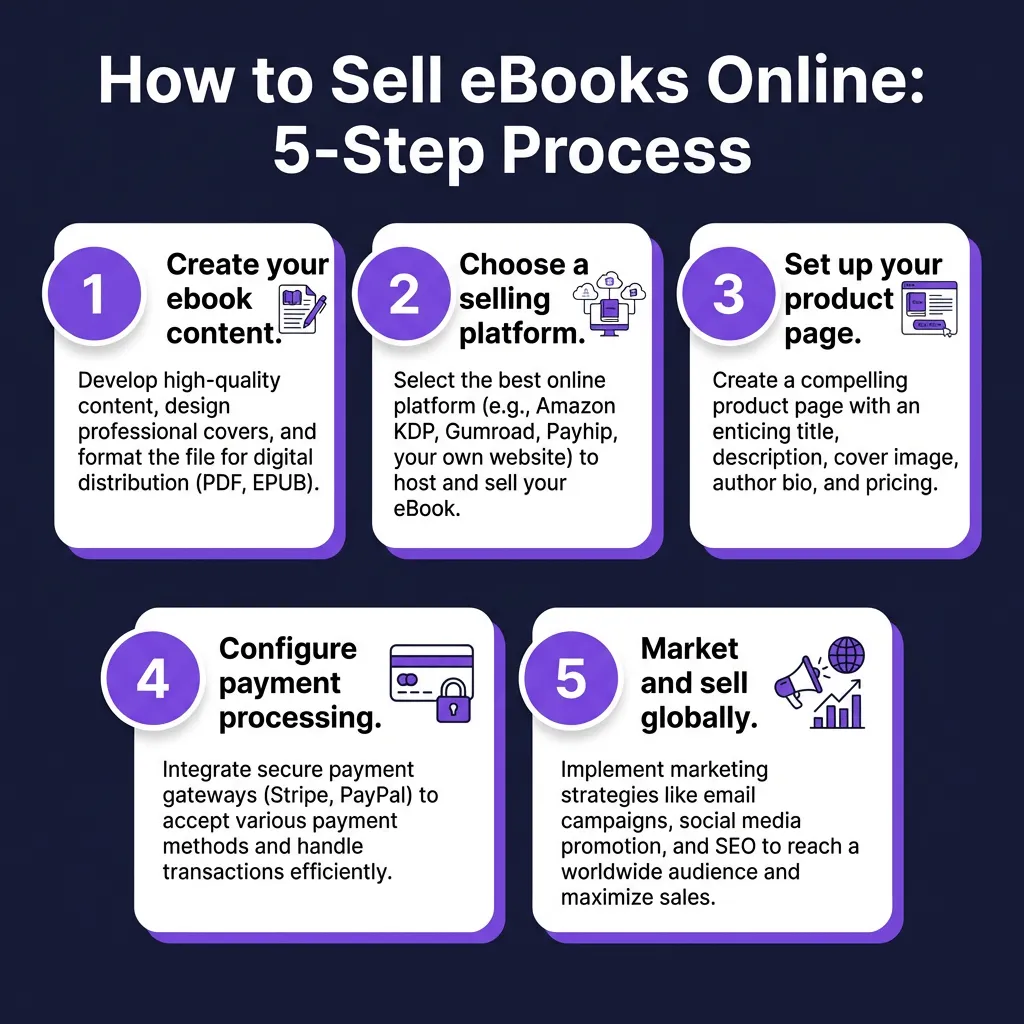
Platform Comparison: Fees at a Glance
| Platform | Fee Structure | Best For |
|---|---|---|
| Amazon KDP | 30-70% royalty | Mass market reach |
| Fungies | 5% + $0.50 | Global tax compliance |
| Gumroad | 10% + $0.30 | Creator audience building |
| Payhip | 5% (or $29/mo) | Low fees + features |
| Etsy | 6.5% + $0.20 + processing | Marketplace discovery |
| Apple Books | 70% royalty | Apple ecosystem |
| Kobo | 45-70% royalty | International markets |
| Sellfy | $29+/mo, no transaction fees | Branded storefront |
| Shopify | $39+/mo + processing | Full ecommerce |
| Self-hosted | Just processing (~2.9%) | Maximum control |
How to Choose the Right Platform for Your eBook
With all these options, how do you actually decide? Here’s my framework:
If You’re Just Starting Out
Start with Amazon KDP for fiction or Gumroad for non-fiction/digital products. Both have low barriers to entry and built-in audiences. You can always expand to other platforms once you have sales momentum.
If You’re Selling Internationally
Tax compliance will eat you alive if you try to handle it yourself. Use a Merchant of Record platform like Fungies that handles VAT, sales tax, and GST automatically. The slightly higher fee is worth avoiding the compliance headache.
If You Have an Existing Audience
Sell directly from your own website or use a platform like Sellfy for a branded experience. You already have the traffic — don’t give up 30-70% in royalties to a marketplace you don’t need.
If You’re Selling Premium eBooks ($50+)
Avoid marketplaces with high percentage cuts. A 30% cut on a $5 ebook is $1.50. On a $200 course or premium guide, that’s $60. Use lower-fee platforms like Payhip, Fungies, or self-hosted solutions.
Frequently Asked Questions
Can I sell the same ebook on multiple platforms?
Yes, with one exception: Amazon KDP Select requires 90-day exclusivity for the ebook format. Outside of Select, you can sell on Amazon, your own site, Gumroad, and everywhere else simultaneously. I recommend going wide rather than exclusive — the extra distribution usually outweighs the Kindle Unlimited benefits.
Do I need to charge sales tax or VAT on ebooks?
In most jurisdictions, yes. Digital products are taxable in the EU, UK, most US states, Australia, and many other countries. The rules vary by location and your sales volume. Using a Merchant of Record platform handles this automatically; otherwise, you’ll need to register, collect, and remit taxes yourself.
What’s the best pricing strategy for ebooks?
For fiction, $2.99-$4.99 is the sweet spot for indie authors. For non-fiction and guides, $9.99-$29.99 works well depending on depth and value. Premium courses and comprehensive guides can command $50-$200+. Test different price points — most creators undercharge.
Should I use DRM on my ebooks?
Honestly? DRM mostly annoys legitimate customers while doing little to stop piracy. I recommend PDF stamping (adding the buyer’s name/email to each page) as a middle ground. It discourages casual sharing without breaking the reading experience.
How do I protect my ebook from piracy?
You can’t completely prevent piracy, but you can minimize it. Use secure download links that expire, PDF stamping, and consider platforms with built-in security. Focus on making purchasing easier than pirating — most customers will pay if the experience is smooth.
Final Thoughts: Start Selling
Here’s the thing about choosing a platform: analysis paralysis kills more ebook businesses than bad platform choices. Pick one, get your book live, and start learning. You can always migrate or expand to additional platforms later.
If you’re selling internationally and want to avoid the tax compliance nightmare, check out Fungies. The Merchant of Record model means you focus on creating and marketing your ebook while we handle the complex back-end stuff.
Whatever platform you choose, remember: the best ebook platform is the one that gets your book into readers’ hands. Everything else is just details.