Choosing the right payment processing for games is one of the most critical decisions game developers face in 2026. Whether you’re launching an indie title on Steam, selling directly to players through your own website, or monetizing a mobile game with in-app purchases, your payment infrastructure directly impacts revenue, player experience, and your ability to scale globally.
According to recent industry data, payment friction accounts for up to 70% of abandoned game purchases. Players expect seamless checkout experiences, local payment methods, and instant access to their games. Meanwhile, developers need solutions that handle the complex backend: tax compliance, fraud prevention, chargebacks, and global regulations.
This comprehensive guide covers everything you need to know about payment processing for games in 2026—from understanding different solution types to choosing the right provider for your specific needs.
What Is Payment Processing for Games?
Payment processing for games refers to the complete infrastructure that enables game developers to accept payments from players worldwide. This includes credit card processing, digital wallet integration, local payment methods, subscription billing, and the regulatory compliance required to sell digital goods across borders.
Unlike standard e-commerce, game payment processing has unique requirements that reflect the nature of digital entertainment products:
- Instant delivery: Players expect immediate access after purchase—any delay creates friction and increases refund requests
- Global reach: Games have international audiences from day one, requiring support for multiple currencies and local payment methods
- Multiple monetization models: One-time purchases, subscriptions, DLC, season passes, virtual currency, and cosmetic items each have different technical requirements
- Platform integrations: Your payment system must work alongside Steam, Epic Games Store, console stores, and your own web store
- Tax complexity: VAT, sales tax, and digital goods regulations vary by country and change frequently
- Fraud sensitivity: Digital goods are attractive targets for fraudsters, requiring robust security measures
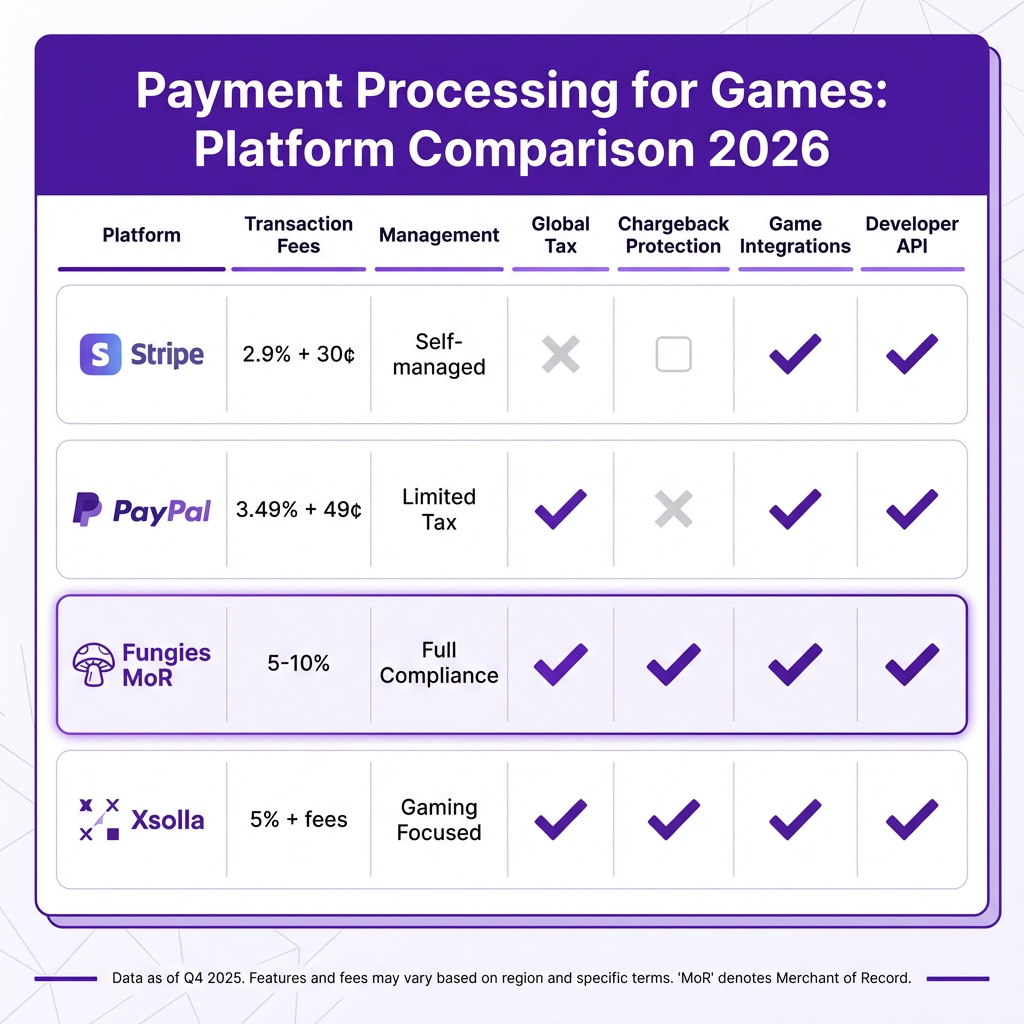
Top Payment Processing Solutions for Game Developers
The payment processing landscape for games has evolved significantly. Here are the main categories of solutions available in 2026:
1. Merchant of Record (MoR) Platforms
Merchant of Record solutions like Fungies, Paddle, and FastSpring handle the entire payment lifecycle. They act as the legal seller of record, taking responsibility for tax collection, compliance, and regulatory requirements. This means they deal with VAT registration, sales tax filings, and regulatory changes so you don’t have to.
Key advantages:
- Instant global tax compliance without registration
- Chargeback protection and fraud management included
- Support for 50+ local payment methods out of the box
- No merchant account setup required
- Simple integration with minimal development time
Best for: Indie developers and small studios who want to focus on game development rather than payment infrastructure. MoR platforms typically charge 5-10% per transaction but include all compliance costs—often making them more cost-effective than they appear at first glance.
2. Direct Payment Processors
Stripe, PayPal, and Square offer lower transaction fees (2.9% + $0.30) but require developers to handle tax compliance, fraud prevention, and regulatory requirements themselves. This approach offers more control and potentially lower per-transaction costs, but significantly increases operational complexity.
Key considerations:
- You become responsible for global tax compliance
- Must implement your own fraud detection and chargeback management
- Limited local payment method support without additional integrations
- Requires accounting resources to handle multi-currency transactions
- More control over checkout experience and branding
Best for: Established studios with dedicated finance and legal teams who can manage compliance internally, or developers selling primarily in a single jurisdiction.
3. Gaming-Specific Platforms
Xsolla and specialized gaming payment processors offer features tailored specifically to game developers: virtual currency management, in-game store integration, and established relationships with gaming platforms. These solutions understand the unique needs of game monetization better than general-purpose processors.
Specialized features:
- Virtual currency and in-game economy management
- Integration with Unity, Unreal Engine, and custom game engines
- Support for microtransactions and small-value purchases
- Game-specific fraud prevention algorithms
- Relationships with game distribution platforms
Best for: Mobile game developers and studios with complex monetization strategies involving virtual goods, currencies, and in-game economies.
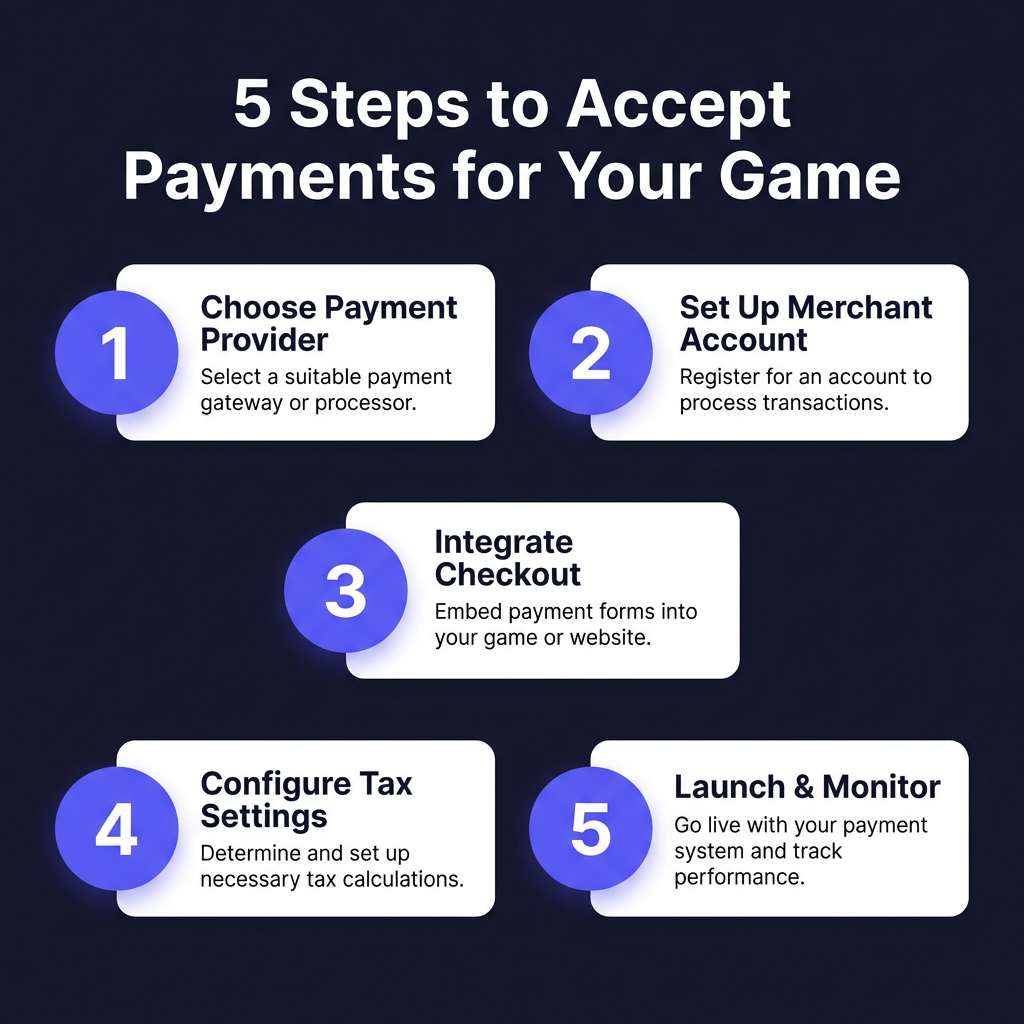
Key Features to Look for in Game Payment Processing
When evaluating payment solutions for your game, prioritize these essential features:
Global Tax Compliance
Selling games internationally triggers tax obligations in over 100 countries. EU VAT applies from your first European sale. US sales tax requirements vary by state. Digital services taxes in countries like France and Italy add additional complexity. A proper payment solution should automatically calculate, collect, and remit taxes based on customer location without requiring manual intervention.
Local Payment Methods
Credit cards aren’t universal. In Germany, SEPA direct debit is preferred. In the Netherlands, iDEAN dominates. In Asia, digital wallets like Alipay, WeChat Pay, and Paytm are essential. Brazil uses Boleto Bancário extensively. Supporting only credit cards can reduce conversion rates by 30-50% in many markets. Your payment processor should support 50+ local payment methods to maximize conversion rates globally.
Chargeback Protection
Digital goods have higher chargeback rates than physical products because they’re instantly delivered and easily disputed. Look for payment solutions with built-in fraud detection, 3D Secure authentication, and chargeback management tools. Some MoR platforms offer chargeback protection as part of their service, absorbing the cost of disputes rather than passing them to developers.
Developer-Friendly APIs
Your payment solution should integrate seamlessly with your game engine and tech stack. REST APIs, comprehensive webhooks, and SDKs for Unity and Unreal Engine enable smooth checkout experiences without pulling players out of the game environment. Documentation quality and developer support responsiveness matter significantly during integration.
Subscription and Recurring Billing
If your game uses a subscription model, SaaS-style billing features become essential. Look for support for free trials, tiered pricing, prorated upgrades/downgrades, and dunning management (handling failed payments). The ability to pause subscriptions rather than cancel them can significantly improve retention.
Ready to Accept Payments for Your Game?
Join hundreds of game developers using Fungies.io — automated tax compliance, 50+ payment methods, global Merchant of Record.
No credit card required • 5-minute setup
How to Choose the Right Payment Processor for Your Game
Selecting the best payment processing solution depends on your specific situation, resources, and goals:
- Pre-revenue indie dev: Choose an MoR platform to avoid upfront compliance costs and focus entirely on building your game. The higher transaction fee is worth the peace of mind.
- Established studio with finance team: Evaluate whether the control of direct processing justifies the compliance overhead. Calculate total cost of ownership including tax software, legal fees, and accounting time.
- Mobile-first game: Prioritize solutions with strong virtual currency and in-app purchase support. Gaming-specific platforms often provide better tooling for this use case.
- Global launch planned: Ensure your solution supports local payment methods in your target markets. Test conversion rates in key regions before committing.
- Subscription-based game: Look for robust recurring billing, dunning management, and subscription analytics. The ability to handle upgrades/downgrades smoothly is crucial.
- Multi-platform release: Consider how your payment solution integrates with Steam, Epic, and console stores. Some solutions offer unified reporting across platforms.
FAQ: Payment Processing for Games
What percentage do payment processors take for games?
Payment processing fees for games typically range from 2.9% + $0.30 (Stripe, PayPal) to 5-10% (Merchant of Record platforms). However, direct processors require additional spending on tax software, compliance tools, and fraud prevention. When total cost of ownership is considered—including tax registration fees, accounting time, and chargeback costs—MoR platforms often provide better value for smaller studios despite higher headline rates.
Do I need a merchant account to sell games?
Not necessarily. Merchant of Record platforms provide their own merchant accounts, allowing you to start selling immediately without credit checks or underwriting. Direct payment processors like Stripe offer aggregated merchant accounts with quick approval. Traditional merchant accounts require separate applications, underwriting, and often minimum volume commitments—making them unsuitable for most indie developers.
How do I handle taxes when selling games internationally?
You have three main options: First, use a Merchant of Record that handles all tax compliance automatically—this is the simplest approach. Second, register for tax in each jurisdiction and use tax calculation software like TaxJar or Avalara. Third, sell only through platforms like Steam that handle taxes for you. For most indie developers, using an MoR provides the best balance of compliance and simplicity without requiring legal expertise.
Can I use multiple payment processors?
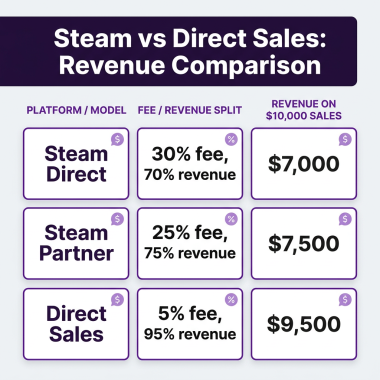
Yes, many successful games use multiple payment methods strategically. You might sell through Steam for discoverability while also offering direct sales through your website using a different processor for higher margins. Some developers use different processors for different regions to optimize for local payment methods. Just ensure your solution can handle the accounting complexity of multiple revenue streams and currencies.
What’s the fastest way to start accepting payments?
Merchant of Record platforms offer the fastest setup—typically under 30 minutes from signup to first transaction. Direct processors like Stripe can be integrated in a few hours if you have development resources. Gaming-specific platforms may take 1-2 days for account approval due to their focus on fraud prevention. If speed is your priority, choose an MoR platform for immediate launch capability.
How do I prevent fraud in game payments?
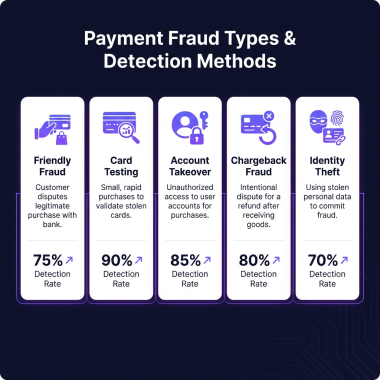
Implement 3D Secure authentication for high-risk transactions, use address verification (AVS) for card payments, and monitor for suspicious patterns like multiple failed attempts or unusual purchasing behavior. MoR platforms include fraud prevention as part of their service. For direct processors, consider additional fraud detection tools like Sift or Signifyd. Digital goods are attractive fraud targets, so never skip security measures.
Conclusion
Payment processing for games is more than just accepting credit cards—it’s about creating a frictionless purchase experience while managing the complex regulatory requirements of global digital sales. The right solution depends on your team size, technical resources, and growth ambitions.
For most indie developers and small studios, Merchant of Record platforms provide the best combination of speed, compliance, and peace of mind. As you scale and develop internal expertise, you can always reevaluate whether bringing payments in-house makes financial sense for your specific situation.
The most important thing is to start selling. Don’t let payment complexity delay your game’s launch or distract from development. Choose a solution that fits your current needs, integrate it properly, and focus on what matters most: creating great games that players love. Your payment processor should be invisible to players and hassle-free for you—that’s the standard you should demand.