The digital creator economy has evolved from a side hustle phenomenon into a legitimate global industry worth $313.95 billion in 2026. With over 207 million active content creators worldwide and a compound annual growth rate of 22.5-23.4%, this sector is outpacing traditional media in both revenue generation and cultural influence. For the first time in history, user-generated content has surpassed traditional media in advertising revenue, fundamentally reshaping how brands connect with audiences.
This is not just about influencers posting selfies anymore. The creator economy encompasses a sophisticated ecosystem of video producers, podcasters, writers, artists, educators, and entrepreneurs who have built sustainable businesses around their content. From YouTube creators earning millions through the Partner Program to niche newsletter writers building six-figure subscription businesses, the opportunities for monetizing creativity have never been greater—or more competitive.
In 2026, the creator economy is at an inflection point. Platform algorithms are shifting, AI tools are democratizing content production, and audience expectations are evolving. Creators who understand these dynamics and build diversified, sustainable business models will capture disproportionate value in this rapidly expanding market. Those who fail to adapt risk being left behind as the industry matures and consolidates.

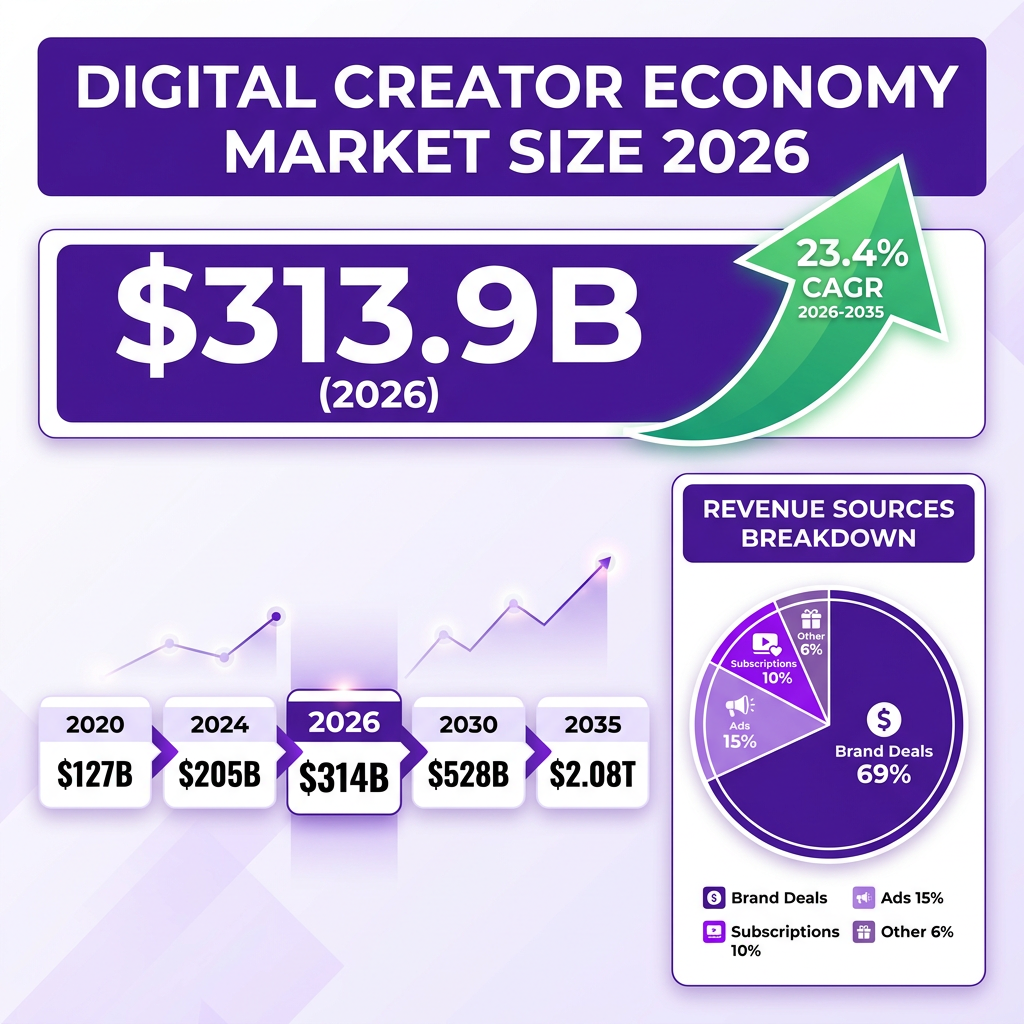
Market Overview: The $313.95 Billion Creator Economy
The digital creator economy in 2026 represents one of the fastest-growing sectors in the global economy. According to Precedence Research, the global creator economy market size reached $254.4 billion in 2025 and is projected to grow to $313.95 billion in 2026. This represents a year-over-year growth rate of approximately 23%, making it one of the most dynamic industries in the world.
The long-term projections are even more impressive. By 2035, the creator economy is expected to reach approximately $2.08 trillion, expanding at a compound annual growth rate (CAGR) of 23.41% from 2026 to 2035. This trajectory positions the creator economy to overtake the traditional advertising agency sector in value within the next decade.
Goldman Sachs Research provides a slightly different but equally bullish perspective, projecting that the creator economy could approach $500 billion by 2027. Their analysis suggests that the sector is growing faster than initially anticipated, driven by increased brand investment, platform innovation, and the professionalization of content creation.
Breaking down the market by platform type reveals where value is being created. Video streaming platforms dominate with the largest share, followed by live streaming, blogging platforms, e-commerce platforms, and podcasting platforms. Video content continues to command premium advertising rates and audience attention, making it the most lucrative format for creators who can produce high-quality content consistently.
Geographically, North America holds the largest share of the global creator economy, with the U.S. market alone valued at $50.9 billion in 2024 and projected to reach $297.3 billion by 2034 at a 19.3% CAGR. However, Asia-Pacific is the fastest-growing region, driven by massive user bases in countries like India, Indonesia, and the Philippines, where mobile-first content consumption is exploding.
The revenue channel breakdown tells an important story about creator monetization. According to research from Exploding Topics, approximately 68.8% of creators rely on brand deals as their main source of revenue. This is followed by advertising revenue, subscriptions, tips and donations, affiliate marketing, and merchandise sales. The dominance of brand deals highlights the critical importance of creator-brand partnerships in the current ecosystem.
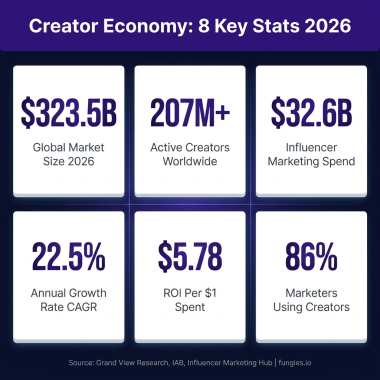
The influencer marketing industry, a key subset of the creator economy, has grown to $32.55 billion in 2026 with a compound annual growth rate of 33.11% over the past decade. This represents a 19x increase since 2016, making it one of the fastest-growing marketing channels. Brands now earn an average of $5.78 for every $1 spent on influencer marketing, demonstrating the clear ROI that drives continued investment.
The scale of platform payouts to creators is staggering. YouTube alone has paid out more than $70 billion to creators through its Partner Program, making it the single largest source of platform-to-creator payouts in the digital economy. Meta reported paying nearly $3 billion to creators in 2025, up 35% from the previous year. These numbers underscore the real economic value being transferred from platforms to individual creators.
Key Statistics and Data Points
The numbers behind the creator economy revolution are staggering. Here are the key statistics that define the digital creator landscape in 2026, organized by category for easy reference:
Market Size and Growth
- Global Creator Economy Market Size (2026): $313.95 billion
- Market Size (2025): $254.4 billion
- Market Size (2024): $205.25 billion
- Projected Market Size (2030): $528.39 billion
- Projected Market Size (2035): $2.08 trillion
- CAGR (2026-2035): 23.41%
- Annual Growth Rate: 22.5%
- U.S. Market Size (2024): $50.9 billion
- Projected U.S. Market (2034): $297.3 billion
Creator Population Statistics
- Total Active Creators Worldwide: 207 million
- People Who Identify as Content Creators: 200 million
- YouTube Creators: 61.8 million
- Americans Who Get Paid for Social Media: 27 million
- Americans Who Engage with Social Media Daily: 250 million
Creator Income and Revenue
- Creators Earning Primary Income from Platform Ads: 34%
- Creators Relying on Brand Deals as Main Revenue: 68.8%
- Creators Earning Under $5,000/Year: 50%
- Top 1% Capturing Platform Revenue: 97%
- YouTube Total Creator Payouts: $70+ billion
- Meta Creator Payments (2025): $3 billion (up 35% YoY)
- Patreon Creator Earnings: $2+ billion annually
Influencer Marketing Statistics
- Influencer Marketing Industry Size (2026): $32.55 billion
- Projected Industry Size (2026): $39.33 billion
- Average ROI: $5.78 for every $1 spent
- Industry Growth Since 2016: 19x
- Industry Growth Rate: 33.11% CAGR
Platform and Monetization
- Creators Offering Paid Memberships: 54%
- Creators with Recurring Subscriptions: 41%
- Creators Using 6+ Tools: 27%
- Creators Prioritizing Member Transformation: 69%
- AI Adoption in Influencer Marketing: 92% of brands
- Brands Reporting Improved Outcomes with AI: 66.4%
Challenges and Barriers
- Creators Reporting Burnout: 78%
- Top Barrier to Growth (Algorithm Changes): 18%
- Inconsistent Income as Barrier: 14%
- Burnout as Barrier: 13.9%
- Lack of Consistent Brand Deals: 17%
7 Major Trends Shaping the Creator Economy in 2026
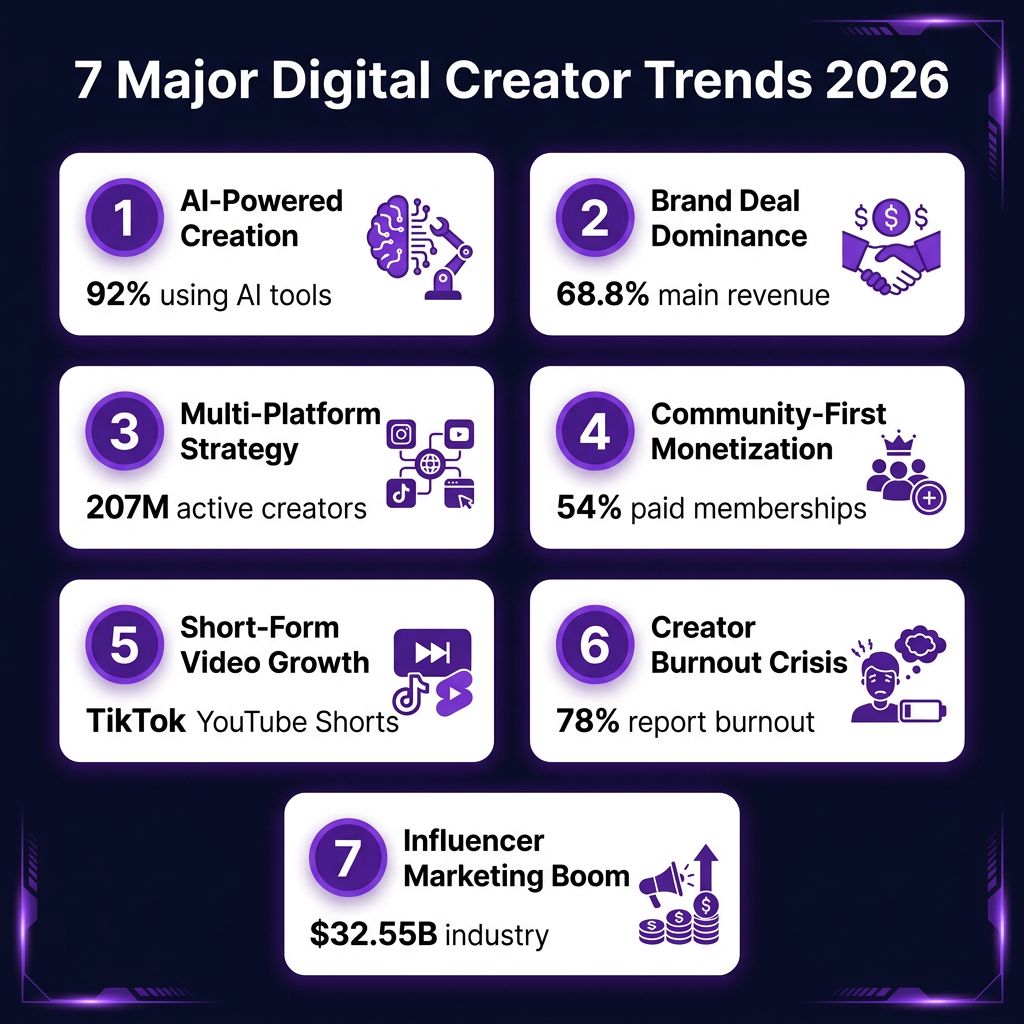
The creator economy landscape in 2026 is being shaped by seven transformative trends that are redefining how creators build audiences, monetize content, and sustain their businesses. Understanding these trends is essential for anyone looking to succeed in this competitive space.
1. AI-Powered Content Creation
Artificial intelligence has become an indispensable tool for content creators in 2026. According to industry data, 92% of brands are already using or open to using AI to support creator marketing workflows, with 66.4% reporting improved campaign outcomes after implementation. For individual creators, AI tools are democratizing content production, enabling solo creators to produce professional-quality content that previously required teams.
AI is being used across the entire content creation workflow—from ideation and scripting to video editing, image generation, and distribution. Tools like ChatGPT and Claude help creators draft marketing content and scripts. Video editing platforms like Descript and CapCut use AI to automate editing tasks. Image generators like DALL-E and Midjourney enable creators to produce custom visuals without graphic design skills.
The impact on productivity is significant. Creators report being able to produce 3-5x more content with AI assistance, allowing them to maintain consistent posting schedules across multiple platforms. However, this also means increased competition, as the barrier to entry for content production continues to fall.
2. Brand Deal Dominance
Brand partnerships have become the primary revenue source for professional creators. With approximately 68.8% of creators relying on brand deals as their main source of revenue, sponsored content has moved from a nice-to-have to a must-have monetization strategy. The influencer marketing industry’s growth to $32.55 billion reflects this shift, with brands increasingly viewing creator partnerships as essential to their marketing mix.
The nature of brand deals is also evolving. Long-term ambassador relationships are replacing one-off sponsorships, providing creators with more stable income. Performance-based compensation models are becoming standard, with creators earning based on actual results rather than just reach. And micro-influencers (10K-100K followers) are commanding higher rates as brands recognize their superior engagement rates and niche audience access.
Unilever’s announcement that it will invest 50% of its marketing spend on influencers—hiring 20 times more creators than today—signals where the industry is heading. Major brands are shifting budgets from traditional advertising to creator partnerships at an unprecedented scale.
3. Multi-Platform Strategy
Successful creators in 2026 no longer rely on a single platform. With algorithm changes cited as the top barrier to business growth (18% of creators), diversification has become a survival strategy. Creators are building audiences across YouTube, Instagram, TikTok, newsletters, podcasts, and owned communities to reduce platform risk.
This multi-platform approach serves multiple purposes. It protects against algorithm changes or platform policy shifts on any single platform. It allows creators to reach different audience demographics where they prefer to consume content. And it creates multiple monetization opportunities, as different platforms offer different revenue models.
Meta’s “Creator Fast Track” program, which pays creators $1,000-$3,000 monthly to post on Facebook, reflects the platform wars for creator talent. Creators with established audiences on one platform are being actively courted by competing platforms, creating new income opportunities for those who can maintain presence across multiple ecosystems.
4. Community-First Monetization
The most successful creators in 2026 are shifting from audience-building to community-building. According to Circle’s research, 69% of creators now prioritize member transformation as their primary driver of retention and growth. These creators are moving away from transactional content models toward sustained, member-first businesses.
This shift manifests in several ways. 54% of creators now offer paid memberships, and 41% rely on recurring subscriptions. Creators are building owned communities on platforms like Circle, Discord, and Patreon where they have direct relationships with their most engaged fans. And the focus is shifting from vanity metrics (views, followers) to community health metrics (retention, engagement depth, member success).
The business rationale is clear: communities generate predictable recurring revenue, create higher customer lifetime value, and provide defense against platform algorithm changes. A creator with 1,000 paying community members at $20/month generates $240,000 annually—often more sustainable than chasing viral content.
5. Short-Form Video Explosion
Short-form video continues to dominate content consumption in 2026. TikTok, YouTube Shorts, and Instagram Reels have become essential platforms for creator discovery and growth. However, the monetization dynamics are challenging—TikTok pays just $0.02-$0.04 per 1,000 views through its Creator Fund, and YouTube Shorts ad revenue is significantly lower than long-form content.
Creators are adapting with sophisticated funnel strategies. Short-form content serves as discovery and audience-building content, while monetization happens through long-form YouTube videos, sponsorships, merchandise, and community memberships. The most successful creators treat short-form as a marketing channel for their broader business rather than a primary revenue source.
TikTok’s shift from the Creator Fund to the Creator Rewards Program, which promises up to 20x higher earnings potential, reflects the platform’s recognition that creators need better monetization tools. However, the fundamental economics of short-form video remain challenging compared to other formats.
6. Creator Burnout Crisis
Despite the industry’s growth, creator burnout has reached crisis levels. 78% of creators report experiencing burnout by 2026, driven by the relentless content treadmill, algorithm anxiety, and the pressure to maintain constant visibility. The creator who posts daily, engages with comments, manages brand partnerships, and runs a community faces an unsustainable workload.
This burnout manifests in several ways. Inconsistent income (cited by 14% as a top challenge) creates financial stress. The pressure to constantly produce content leaves no time for rest or creative recharge. And the emotional toll of public visibility—dealing with criticism, maintaining a public persona, and managing parasocial relationships—takes a significant mental health toll.
The industry is responding with new tools and approaches. AI automation is handling routine tasks like comment moderation and analytics. Creator collectives and co-working spaces are providing community support. And a growing number of creators are prioritizing sustainability over growth, accepting smaller audiences in exchange for healthier work-life balance.
7. Professionalization and Infrastructure
The creator economy is maturing from a hobbyist space to a professional industry. Creators are increasingly functioning as full-stack business operators, overseeing monetization, member lifecycle design, analytics, and business strategy. 27% of creators now rely on six or more tools to manage their community business, reflecting the complexity of modern creator operations.
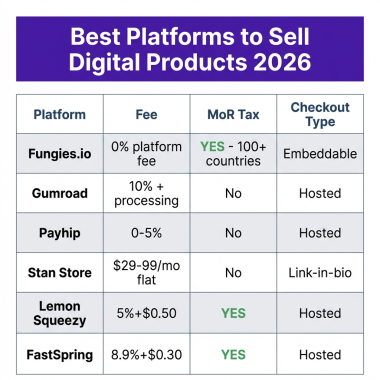
This professionalization is driving demand for creator-focused business infrastructure. Platforms like Stan Store, Beacons, and Linktree provide link-in-bio commerce. Tools like ConvertKit and Beehiiv power newsletter businesses. Community platforms like Circle and Skool enable paid memberships. And financial tools like Catch and Karat provide banking and credit services tailored to creator income patterns.
The emergence of creator economy investors and accelerators—like Steven Bartlett’s investments in creator brands—signals that the industry is being recognized as a legitimate asset class. Creators are no longer just content producers; they are entrepreneurs building valuable businesses.
Key Players and Platforms
The creator economy ecosystem is dominated by a handful of major platforms, each with distinct monetization models, audience demographics, and creator opportunities. Understanding these platforms is essential for developing an effective creator strategy.

YouTube: The Revenue King
YouTube remains the most lucrative platform for creators who can build sustainable audiences. With over $70 billion paid to creators through the Partner Program, YouTube has created more millionaire creators than any other platform. The platform’s ad-sharing model, which gives creators 55% of ad revenue, provides predictable income that scales with viewership.
Finance and business content performs particularly well on YouTube, earning $15-50 per 1,000 views due to high advertiser demand. Long-form content (8+ minutes) enables mid-roll ads, significantly increasing revenue potential compared to shorter videos. And YouTube’s search functionality provides long-tail discoverability that platforms like TikTok cannot match.
With 61.8 million creators on the platform, competition is intense. Success requires consistent publishing, SEO optimization, and the ability to retain viewer attention. But for creators who can crack the YouTube algorithm, the financial rewards remain unmatched.
TikTok: The Discovery Engine
TikTok has become the primary platform for creator discovery, with its algorithm capable of turning unknown creators into viral sensations overnight. However, monetization remains challenging. The original Creator Fund paid just $0.02-$0.04 per 1,000 views, and while the new Creator Rewards Program promises up to 20x higher earnings, most creators still struggle to generate significant platform revenue.
TikTok’s real value is as a top-of-funnel audience builder. Successful TikTok creators monetize through brand deals, merchandise sales, and driving traffic to other platforms where monetization is more robust. The platform’s demographic skew toward younger users (Gen Z and young Millennials) makes it particularly valuable for brands targeting these audiences.
TikTok Shop and affiliate marketing are emerging as significant revenue streams, allowing creators to earn commissions on products featured in their videos. As the platform builds out its commerce infrastructure, direct monetization opportunities are expanding.
Instagram: The Brand Partnership Hub
Instagram remains the dominant platform for influencer marketing and brand partnerships. With its visual focus, shopping features, and established creator marketplace, Instagram is where brands go to find creators for sponsored content. The platform’s demographic skew toward Millennials and Gen Z with disposable income makes it attractive for consumer brands.
Instagram’s monetization tools have expanded significantly, including Subscriptions, Badges in Live, and Bonuses for Reels. However, brand deals remain the primary revenue source for most Instagram creators. The platform’s algorithm changes in recent years have made organic reach more challenging, increasing the importance of paid promotion and diversified platform presence.
Patreon and Subscription Platforms
Patreon has paid out over $2 billion annually to creators, making it a significant player in the direct-to-fan monetization space. Subscription models provide predictable recurring revenue that is not dependent on algorithms or advertiser demand. Podcasters, writers, artists, and video creators all use Patreon to monetize their most engaged fans.
Newer platforms like Circle, Skool, and Beacons are challenging Patreon’s dominance with features tailored to specific creator needs. Circle focuses on community-driven memberships with courses and coaching. Skool combines community with structured learning. And Beacons provides an all-in-one link-in-bio solution with integrated monetization.
Newsletter Platforms
Newsletter platforms like Substack, Beehiiv, and ConvertKit have created a new category of writer-creators who monetize through paid subscriptions. This model is particularly attractive for creators with expertise in specific domains—finance, technology, health, politics—who can provide analysis and insights that audiences are willing to pay for.
The newsletter model offers several advantages. It provides direct access to audience inboxes, bypassing algorithmic filtering. It enables higher pricing for niche expertise (some newsletters charge $500+ annually). And it creates valuable owned assets that can be sold or leveraged for other opportunities.
Challenges and Pain Points
Despite the impressive growth and opportunity in the creator economy, creators face significant challenges that can make sustainable success difficult to achieve. Understanding these challenges is essential for developing strategies to overcome them.
1. Platform Algorithm Dependency
According to CreatorIQ research, platform algorithm changes or volatility is the top barrier to business growth for creators worldwide, cited by 18% of respondents. A single algorithm update can decimate a creator’s reach and revenue overnight. YouTube demonetization, Instagram reach declines, and TikTok policy changes have all devastated creator businesses.
This dependency creates constant anxiety and forces creators to constantly adapt their content strategies to please opaque algorithms. The lack of transparency about how algorithms work—and when they will change—makes long-term planning difficult.
2. Income Inequality
The creator economy exhibits extreme income inequality. While headlines focus on creators earning millions, the reality is that 50% of all creators earn under $5,000 per year, and the top 1% capture 97% of platform-derived revenue. For every MrBeast or Charli D’Amelio, there are thousands of creators struggling to make minimum wage.
This inequality is driven by power-law dynamics where a small number of creators attract disproportionate audience attention. Platform algorithms tend to reinforce this concentration, promoting already-popular creators over emerging talent.
3. Inconsistent Income
Inconsistent income is cited by 14% of creators as a top challenge. Brand deals are often lumpy, with creators going months between sponsorships. Ad revenue fluctuates with seasonality and algorithm changes. And platform bonus programs can end without warning, eliminating significant income streams.
This inconsistency makes financial planning difficult and creates stress for creators trying to make a living from their content. The lack of benefits like health insurance and retirement accounts—standard in traditional employment—adds to the financial precarity.
4. Burnout and Mental Health
With 78% of creators reporting burnout, mental health has become a crisis in the creator economy. The pressure to constantly produce content, engage with audiences, and maintain visibility creates an unsustainable workload. The emotional toll of public visibility—dealing with criticism, harassment, and the pressure to maintain a persona—takes a significant mental health toll.
Unlike traditional jobs where you can clock out, creator work is never done. There is always another video to edit, another comment to respond to, another trend to jump on. This always-on culture is burning out a generation of creators.
5. Lack of Consistent Brand Deals
Lack of consistent brand deals is cited by 17% of creators as a top barrier to growth. While 68.8% of creators rely on brand deals as their main revenue source, securing these deals consistently is challenging. Many creators experience feast-or-famine cycles with sponsorships, making financial planning impossible.
The brand deal market is also highly competitive, with brands increasingly working with a smaller number of proven creators rather than experimenting with emerging talent. This consolidation makes it harder for new creators to break into the sponsorship market.
Opportunities and Growth Strategies
For creators looking to build sustainable businesses in 2026, several key opportunities and strategies have emerged. These approaches have been proven to deliver measurable results and competitive advantage.
1. Build Owned Assets
The most successful creators in 2026 are building businesses they own, not just content on rented platforms. This means developing email lists, paid communities, courses, and products that exist independently of any single platform. As one industry expert noted, “Building owned infrastructure beats renting platform space.”
Owned assets provide protection against algorithm changes and platform policy shifts. They enable direct relationships with audiences without intermediary algorithms filtering reach. And they create valuable businesses that can be sold or leveraged for other opportunities.
2. Diversify Revenue Streams
Relying on a single revenue stream is risky in the creator economy. Successful creators combine multiple income sources: platform ad revenue, brand sponsorships, affiliate marketing, merchandise, paid subscriptions, courses, and consulting. This diversification provides stability when any single revenue source underperforms.
The data shows that creators with 3+ revenue streams earn significantly more than those relying on a single source. They are also more resilient to platform changes and market shifts.
3. Focus on Niche Expertise
Generalist creators face intense competition from millions of others producing similar content. Creators who develop deep expertise in specific niches—whether that’s vintage watch restoration, tax optimization for freelancers, or sourdough baking—can command premium pricing and build loyal audiences that are difficult to replicate.
Niche creators also benefit from higher engagement rates, which translate to better performance on algorithm-driven platforms and higher conversion rates for sponsorships and products.
4. Leverage AI for Productivity
Creators who effectively use AI tools can produce significantly more content than those working manually. This productivity advantage compounds over time, allowing AI-enabled creators to maintain consistent posting schedules across multiple platforms while others burn out.
AI is particularly valuable for tasks like transcription, thumbnail generation, content repurposing, and analytics—freeing up creator time for high-value activities like community building and strategic planning.
5. Build Community, Not Just Audience
Audiences consume content; communities build relationships. Creators who prioritize community development—through paid memberships, Discord servers, or cohort-based courses—create sustainable businesses with predictable recurring revenue and high customer lifetime value.
Community members are also morelikely to purchase products, attend events, and advocate for the creator’s brand. The 69% of creators who prioritize member transformation are building more resilient businesses than those focused solely on content views.
Case Studies and Success Stories
Real-world examples demonstrate the transformative potential of the creator economy when strategies are executed effectively. These case studies illustrate different paths to success in the creator economy.
Case Study 1: MrBeast and the YouTube Empire
Jimmy Donaldson, known as MrBeast, has built the most successful creator business in history. With over 300 million YouTube subscribers and estimated annual revenue exceeding $700 million, MrBeast demonstrates the scale possible in the creator economy. His strategy combines viral content production with diversified revenue streams including Feastables (snack brand), Beast Burger (virtual restaurant chain), and extensive brand partnerships.
MrBeast’s success is built on reinvesting virtually all YouTube ad revenue into increasingly ambitious video productions, creating a content flywheel that attracts more viewers and higher sponsorship rates. His business employs over 250 people and operates with the sophistication of a major media company while maintaining the authenticity of creator content.
Case Study 2: Newsletter Writers Building Media Empires
Writers on Substack and Beehiiv have demonstrated that text-based creators can build substantial businesses. Newsletter writers like Ben Thompson (Stratechery), Lenny Rachitsky (Lenny’s Newsletter), and Packy McCormick (Not Boring) have built seven-figure businesses through paid subscriptions, charging $100-500 annually for their analysis.
These creators succeed by developing deep expertise in specific domains—technology strategy, product management, and crypto/tech respectively—and providing analysis that readers cannot find elsewhere. Their businesses have low production costs, high margins, and predictable recurring revenue from loyal subscribers.
Case Study 3: Niche Creators Building Sustainable Businesses
Not every successful creator needs millions of followers. Creators like Thomas Frank (productivity), Ali Abdaal (studying/entrepreneurship), and MKBHD (technology) have built sustainable businesses with focused, engaged audiences. Thomas Frank’s Notion templates generate seven-figure revenue. Ali Abdaal’s Part-Time YouTuber Academy teaches others to build creator businesses. MKBHD’s tech reviews command premium sponsorship rates.
These creators demonstrate that expertise and audience trust matter more than raw view counts. By providing genuine value to specific audiences, they have built businesses that are more sustainable than those chasing viral trends.
Case Study 4: Creator-Led Brands
A growing number of creators are launching their own product brands rather than just promoting others. Emma Chamberlain’s coffee brand, Logan Paul’s Prime Hydration, and KSI’s Sides restaurant chain demonstrate how creator influence can be leveraged to build substantial product businesses.
These creator-led brands benefit from built-in distribution (the creator’s audience), authentic marketing (the creator’s personal story), and higher margins than traditional sponsorships. As Steven Bartlett’s investments in creator brands show, this model is attracting significant investor interest.
Future Outlook and Predictions (2026-2030)
The creator economy is poised for continued explosive growth through the end of the decade. Here is what industry experts and analysts predict for the coming years:
Market Projections
- 2030 Creator Economy Size: $528.39 billion
- 2035 Creator Economy Size: $2.08 trillion
- 2027 Creator Economy Size: $500 billion (Goldman Sachs projection)
- Influencer Marketing by 2026: $39.33 billion
Technology Trends
AI Integration: By 2030, AI will be deeply integrated into every aspect of content creation, from ideation to distribution to monetization. Creators who effectively leverage AI will have 10x productivity advantages over those who do not. However, audiences will also become more sophisticated at detecting AI-generated content, creating demand for authentic human perspectives.
Virtual and Augmented Reality: As VR and AR technologies mature, new content formats will emerge. Creators who establish early presence in these platforms will have first-mover advantages as mainstream adoption accelerates.
Platform Consolidation: The creator economy will likely see significant consolidation, with major platforms acquiring smaller ones and dominant players strengthening their positions. This could reduce creator negotiating power and increase platform dependency risks.
Industry Evolution
Creator-First Media: By 2030, the creator economy will be indistinguishable from traditional media. As one industry expert predicted, “By 2030, the creator economy will be called ‘the media.’” Major brands will allocate the majority of their marketing budgets to creator partnerships, and creator-led content will dominate advertising.
Professionalization: The creator economy will continue to professionalize, with standard business practices, industry associations, and regulatory frameworks emerging. Creators will increasingly operate as media companies with professional teams, not solo operators.
Regulatory Scrutiny: As the creator economy grows, it will face increased regulatory attention around issues like disclosure requirements, platform monopolies, and creator labor rights. Creators and platforms will need to navigate evolving legal landscapes.
Economic Impact
The economic impact of the creator economy will accelerate significantly between 2026 and 2030. Goldman Sachs projects the sector could approach $500 billion by 2027, and $2+ trillion by 2035. This growth will create millions of jobs—not just for creators, but for the ecosystem of editors, managers, agents, platform employees, and service providers that support them.
However, this growth will not be evenly distributed. The power-law dynamics that concentrate wealth among top creators will likely intensify, making it increasingly difficult for new entrants to break through. Success will require increasingly sophisticated strategies, significant investment, and often, a bit of luck.
Looking ahead to 2030, the creator economy will likely undergo fundamental structural changes that reshape how value is created and captured. The integration of blockchain technologies and decentralized platforms may enable new monetization models, including tokenized communities, NFT-based content ownership, and direct creator-to-fan economic relationships that bypass traditional platform intermediaries. While these technologies are still emerging, early adopters are already experimenting with Web3 business models that could become mainstream by decade’s end.
The globalization of the creator economy will also accelerate, with creators from emerging markets gaining access to global audiences and monetization tools. This democratization of opportunity will diversify the creator landscape, bringing new perspectives and content formats to global audiences. However, it will also intensify competition as the pool of professional creators expands from millions to potentially hundreds of millions worldwide.
For brands, the creator economy represents both an opportunity and a challenge. The opportunity lies in accessing engaged, niche audiences through authentic partnerships that outperform traditional advertising. The challenge is navigating an increasingly complex landscape of creator tiers, platform algorithms, and measurement methodologies. Brands that develop sophisticated creator strategies—treating creators as strategic partners rather than media vendors—will capture disproportionate value in this evolving ecosystem.
Key Takeaways
- The global creator economy has reached $313.95 billion in 2026, growing at 22.5-23.4% annually
- Over 207 million active creators worldwide are competing for audience attention and revenue
- 68.8% of creators rely on brand deals as their primary revenue source
- The influencer marketing industry has grown to $32.55 billion with $5.78 ROI per dollar spent
- 50% of creators earn under $5,000/year while the top 1% capture 97% of platform revenue
- 78% of creators report burnout, highlighting the sustainability challenges in the industry
- 92% of brands now use AI in influencer marketing workflows
- The market is projected to exceed $500 billion by 2027 and $2 trillion by 2035
- Successful creators are building owned assets and diversified revenue streams rather than relying on single platforms
- The creator economy is maturing from hobby to professional industry with sophisticated business infrastructure
Sources and Citations
- Precedence Research – “Creator Economy Market Size to Hit USD 2084.57 Billion by 2035” (precedenceresearch.com)
- Coherent Market Insights – “Global Creator Economy Market Size and Forecast, 2026-2033” (coherentmarketinsights.com)
- Research Nester – “Creator Economy Market Size & Share | Forecast Report” (researchnester.com)
- Companies History – “Creator Economy Statistics And Market Size 2026” (companieshistory.com)
- Exploding Topics – “Creator Economy Market Size (2025-2030)” (explodingtopics.com)
- Goldman Sachs – “The creator economy could approach half-a-trillion dollars by 2027” (goldmansachs.com)
- AutoFaceless.ai – “Content Monetization Statistics 2026” (autofaceless.ai)
- DemandSage – “41+ Creator Economy Statistics 2026” (demandsage.com)
- Circle – “Creator Economy Statistics for 2026” (circle.so)
- Archive.com – “Influencer Marketing Budget Allocation Statistics” (archive.com)
- LinkedIn – “Global Influencer Marketing Industry Expected to Reach $39.33 Billion” (linkedin.com)
- Digital Applied – “Influencer Marketing Statistics 2026: 150+ Data Points” (digitalapplied.com)
- CNBC – “Meta will pay Instagram, TikTok and YouTube stars to post on Facebook” (cnbc.com)
- TechCrunch – “Facebook launches a new monetization program to attract popular creators” (techcrunch.com)
- MiraFlow.ai – “TikTok Monetization in 2026” (miraflow.ai)
- InfluenceFlow.io – “Creator Earnings Reports Guide 2026” (influenceflow.io)
- EMARKETER – “For creators, the biggest threat to business growth isn’t burnout” (emarketer.com)
- Stan Store – “8 Trends That Will Define the Creator Economy in 2026” (stan.store)
- ThoughtLeaders – “Creator Economy Trends and Predictions for 2026” (thoughtleaders.io)
- Influencer Marketing Factory – “What Is the Creator Economy? Market Size, Trends, and Statistics in 2026” (theinfluencermarketingfactory.com)
- WPP Media – “2026 Creator Marketing Trends: Unfiltered Insights” (wppmedia.com)
- HappyScribe – “10 AI Tools Every Content Creator Must Use in 2026” (happyscribe.com)
- Buffer – “14 AI Tools for Social Media Content Creation in 2026” (buffer.com)
- Creative Salon – “The Creator Economy Will Fuel The Future of Advertising” (creative.salon)