The digital creator economy has evolved from a side-hustle playground into a $205 billion global industry that is fundamentally reshaping how content is produced, consumed, and monetized. With over 207 million active creators worldwide and influencer marketing spend exceeding $32.55 billion in 2026, this ecosystem has outgrown its experimental phase and entered an era of consolidation, professionalization, and unprecedented opportunity. Whether you are an aspiring creator, a brand looking to tap into this market, or an investor seeking the next big platform, understanding the current landscape is not optional—it is essential.
Market Overview: The $205 Billion Creator Ecosystem
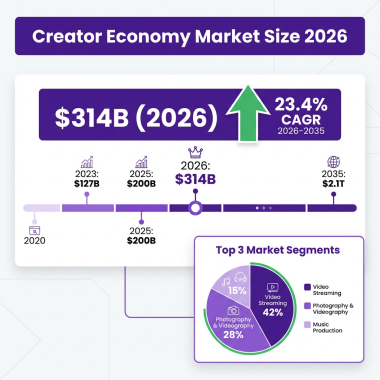
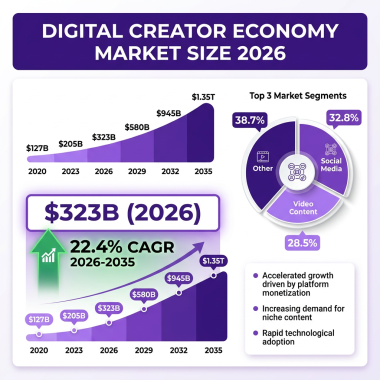
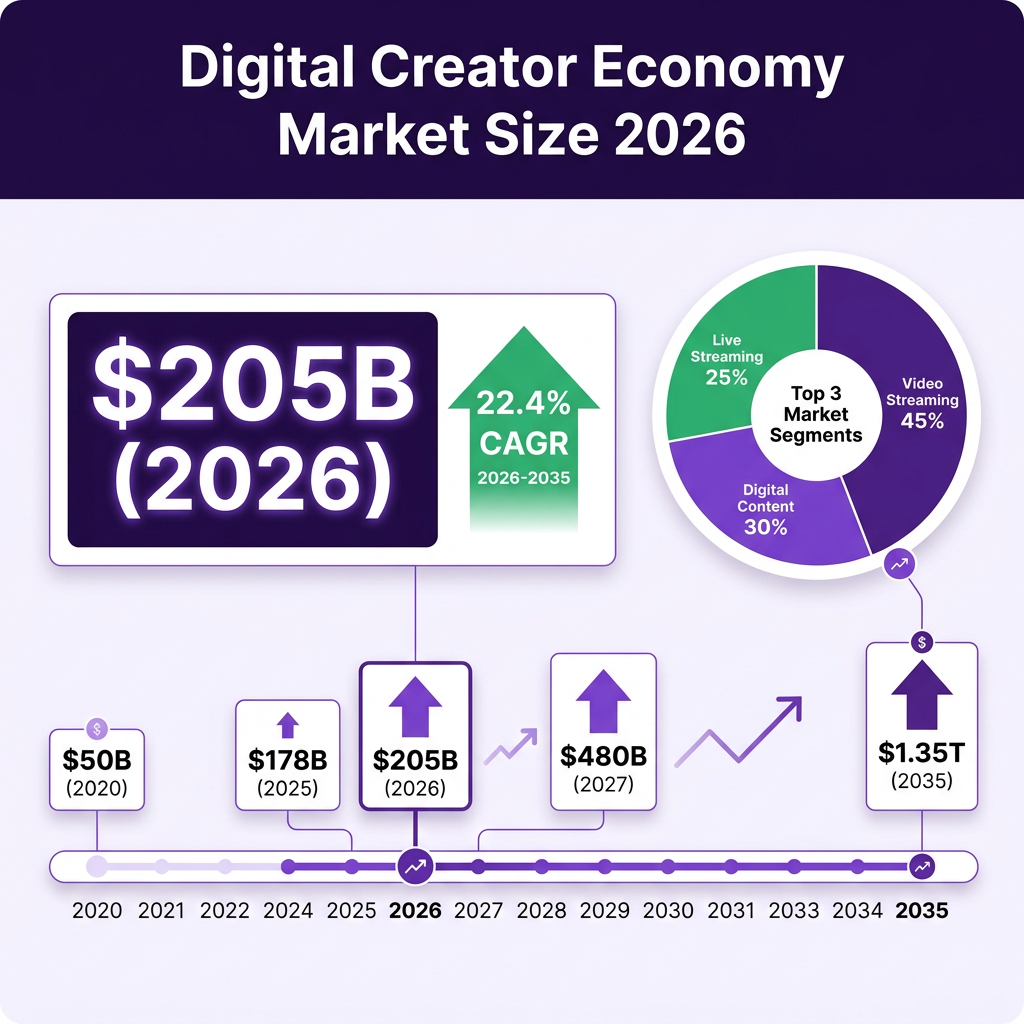
The creator economy market size has experienced explosive growth over the past decade, transforming from a niche corner of the internet into a dominant force in global media and commerce. In 2025, the market was valued at $178.4 billion, but by 2026, it has surged to $205 billion, representing a 14.9% year-over-year increase. This growth trajectory shows no signs of slowing, with projections indicating the market will reach between $480 billion and $525 billion by 2027, and potentially exceed $1.35 trillion by 2035.
The compound annual growth rate (CAGR) for the creator economy stands at an impressive 22.4% for the period 2026-2035, making it one of the fastest-growing sectors in the digital economy. This growth is driven by several converging factors: the democratization of content creation tools, the rise of short-form video platforms, the expansion of social commerce, and the increasing willingness of consumers to pay for creator-produced content and experiences.
Looking at the historical trajectory, the creator economy was valued at approximately $117 billion in 2024, meaning the market has nearly doubled in just two years. Goldman Sachs has been particularly bullish on the sector, projecting a 27.5% CAGR that would push the market to $500 billion by 2027. Other analysts are even more optimistic, with some forecasts suggesting the market could reach $600 billion by 2030 and $1.14 trillion by 2034.
The regional distribution of the creator economy reveals interesting patterns. North America currently leads in terms of creator income and platform revenue, with the United States accounting for the largest share of influencer marketing spend. However, Asia-Pacific is experiencing the fastest growth, driven by massive user bases in India, Southeast Asia, and China. Europe represents a mature market with strong regulatory frameworks, while Latin America and Africa are emerging as high-growth regions with young, digitally-native populations.
The platform landscape is equally diverse. YouTube remains the dominant platform for long-form video creators, with its Partner Program distributing billions in ad revenue annually. TikTok has revolutionized short-form content and is aggressively expanding its monetization tools through the Creator Fund and live shopping features. Instagram continues to be the platform of choice for lifestyle, fashion, and beauty creators, while LinkedIn has emerged as a surprising hub for B2B and professional content creators. Newer platforms like BeReal, Lemon8, and various live-streaming apps are constantly entering the market, creating both opportunities and fragmentation challenges for creators.
Key Statistics and Data: By the Numbers
The creator economy is defined by numbers that tell a story of scale, inequality, and opportunity. Understanding these statistics is crucial for anyone looking to enter or invest in this space. Here are the most important data points that define the creator economy in 2026:
Market Size and Growth: The global creator economy reached $205 billion in 2026, up from $178.4 billion in 2025. The market is projected to grow at a 22.4% CAGR through 2035, potentially reaching $1.35 trillion. Goldman Sachs projects $525 billion by 2027 at a 27.5% growth rate. The content creator economy market is expected to hit $1.14 trillion by 2034, growing from $117 billion in 2024 at a 25.6% CAGR.
Creator Population: There are over 207 million active content creators worldwide as of 2026. This includes everyone from casual hobbyists to full-time professionals. The United States alone has approximately 50 million creators, representing about 23% of the adult population. Globally, creators spend an average of 10-15 hours per week on content creation, with full-time creators dedicating 40+ hours weekly to their craft.
Influencer Marketing Spend: Brands spent $32.55 billion on influencer marketing in 2026, representing a 33.11% compound annual growth rate. For every $1 spent on influencer marketing, brands earn an average of $5.78 in return. A remarkable 86% of US marketers now use influencer marketing as part of their strategy, up from just 55% five years ago.
Creator Income Distribution: The income inequality in the creator economy is stark. 50% of creators earn less than $5,000 annually from their content. Only 4% of creators surpass $100,000 in annual earnings. The average creator earns between $3,500 and $8,500 monthly once they reach 100,000 followers. However, top creators like MrBeast can earn $82 million annually. It takes an average of 6.5 months for a new creator to earn their first dollar.
Platform Statistics: YouTube has over 3 million creators in its Partner Program. TikTok’s Creator Fund has distributed hundreds of millions to creators. Instagram has over 500 million daily active users engaging with creator content. Twitch streamers collectively earn billions through subscriptions, donations, and sponsorships. 76% of US Instagram users are aged 18 to 29, making it the platform of choice for reaching younger demographics.
Revenue Streams: Creators with three or more revenue streams earn $75,000 more on average than those relying on a single source. The most common revenue streams include brand partnerships (48% of creator income), platform ad revenue (22%), affiliate marketing (15%), direct fan support through subscriptions and tips (10%), and merchandise sales (5%).
AI and Technology Adoption: 66.4% of marketers report improved campaign results through AI implementation. 60.2% of brands are actively using AI for influencer identification and optimization. AI-powered content creation tools are being adopted by 45% of creators to enhance productivity and creativity. However, 41% of consumers say they are actively reducing screen time, creating a challenge for creators to capture attention.
Social Commerce: Social commerce sales through creator content are projected to exceed $100 billion globally in 2026. Live shopping, popularized in China and now expanding globally, represents one of the fastest-growing revenue streams for creators. Platforms are investing heavily in native shopping features, allowing creators to sell products directly to their audiences without leaving the app.
Creator Demographics: 48% of creators operate as solo entrepreneurs, handling content creation, community management, and monetization alone. 19% lead small teams focused on community and operations. 15% work as hired community managers within larger creator-led or brand-led communities. The average creator is between 25-34 years old, though successful creators span all age groups from Gen Z to Baby Boomers.
Brand Partnerships: The brand repeat rate in influencer marketing is 45.1%, meaning nearly half of brands that run one creator campaign will run another. Micro-influencers (10,000-100,000 followers) command $1,000-$3,000 per sponsored post on average. Nano-influencers (1,000-10,000 followers) typically earn $100-$500 per post. Macro-influencers (100,000-1 million followers) can command $5,000-$25,000 per post, while mega-influencers (1M+ followers) earn $50,000+ per sponsored post.
Major Trends Shaping the Digital Creator Economy in 2026
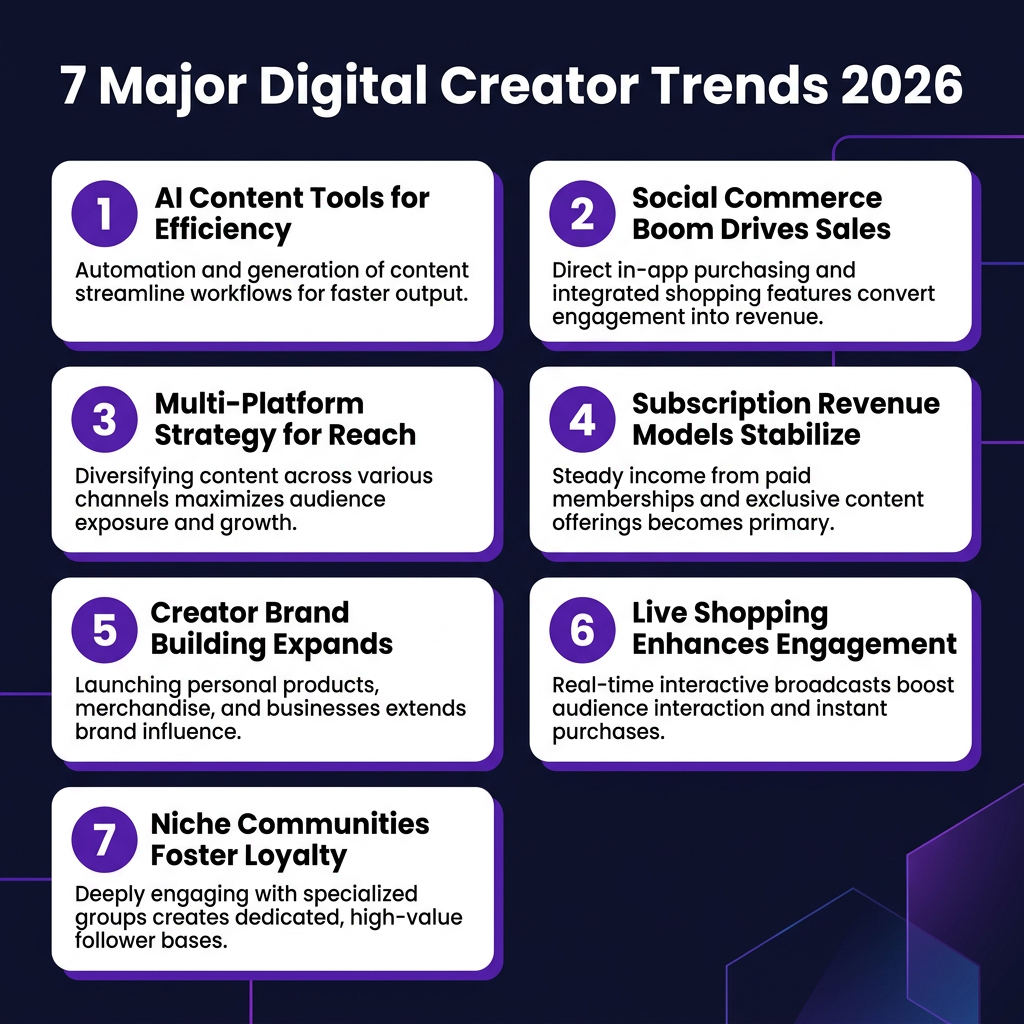
The creator economy is not static—it is constantly evolving as platforms, technologies, and consumer behaviors shift. Here are the seven major trends that are defining the creator economy in 2026:
1. AI-Powered Content Creation and Optimization
Artificial intelligence has moved from a buzzword to an essential tool for creators. AI is being used for everything from scriptwriting and video editing to thumbnail generation and audience analytics. Tools like ChatGPT help creators brainstorm content ideas and write scripts, while AI-powered editing software can automatically cut highlights, add captions, and optimize videos for different platforms. 66.4% of marketers report improved campaign results through AI implementation, and 60.2% are actively using AI for influencer identification and optimization. For creators, AI represents both an opportunity to increase productivity and a threat as the barrier to entry lowers and content volume explodes.
2. The Rise of Social Commerce and Live Shopping
Social commerce has become a dominant force in the creator economy. Platforms are integrating shopping features directly into content, allowing creators to tag products, host live shopping events, and earn commissions on sales. TikTok Shop, Instagram Shopping, and YouTube’s affiliate program are just a few examples of how platforms are monetizing the connection between content and commerce. Live shopping, which has been massive in China for years, is finally gaining traction in Western markets. Creators can showcase products in real-time, answer questions, and drive immediate purchases, creating a new revenue stream that complements traditional brand partnerships.
3. Multi-Platform Strategy Becomes Essential
Gone are the days when creators could build a sustainable business on a single platform. Algorithm changes, policy updates, and platform volatility have taught creators the importance of diversification. Successful creators in 2026 maintain a presence across multiple platforms—typically using short-form content on TikTok and Instagram Reels to drive discovery, long-form content on YouTube for deeper engagement and ad revenue, and owned channels like newsletters and communities for direct fan relationships. This multi-platform approach reduces dependency on any single algorithm and creates multiple touchpoints for audience engagement.
4. Subscription and Membership Models
Creators are increasingly moving away from purely ad-supported and brand-sponsored models toward direct fan monetization through subscriptions and memberships. Platforms like Patreon, Substack, and YouTube Memberships allow creators to offer exclusive content, community access, and direct interaction in exchange for monthly fees. This model provides predictable recurring revenue and creates a closer relationship between creators and their most dedicated fans. The data shows that creators with subscription revenue tend to have more stable incomes and are less vulnerable to algorithm changes or brand budget cuts.
5. Creator-Led Brands and Product Lines
The most successful creators are no longer just content producers—they are building full-fledged businesses around their brands. From MrBeast’s Feastables chocolate bar to Emma Chamberlain’s coffee company, creators are launching products that leverage their audience trust and distribution. This trend represents a shift from renting audience attention (through brand deals) to owning the customer relationship (through direct product sales). The infrastructure for creator-led brands has improved dramatically, with companies like Pietra, Fourthwall, and Shopify providing tools for creators to design, manufacture, and sell products without massive upfront investment.
6. Niche Community Building
As the creator economy matures, generalist content is becoming less effective. The most successful creators in 2026 are those who have carved out specific niches and built tight-knit communities around shared interests. Whether it is vintage watch collecting, urban gardening, or niche programming languages, creators who serve specific audiences can command higher engagement rates and more valuable brand partnerships. Platforms like Circle, Discord, and Geneva are enabling creators to build private communities where they can offer deeper value and charge for access.
7. The Era of Consolidation
The creator economy is entering what industry experts call “the era of consolidation.” After years of explosive growth and platform experimentation, the market is maturing. We are seeing consolidation at multiple levels: platforms acquiring competitors (Twitter/X’s evolution, Meta’s integration of features across its apps), creator economy startups merging or being acquired by larger players, and creators themselves forming collectives and agencies to increase bargaining power. This consolidation creates both challenges (reduced competition, higher barriers to entry) and opportunities (better infrastructure, more professional support) for creators.
Key Players and Competitive Landscape
The creator economy ecosystem is composed of platforms, tools, agencies, and individual creators who collectively shape the industry. Understanding the key players is essential for navigating this landscape.
Major Platforms:
YouTube remains the most established platform for creator monetization, with its Partner Program setting the standard for ad revenue sharing. YouTube Shorts has successfully challenged TikTok’s dominance in short-form video, and the platform continues to invest in features like channel memberships, Super Chat, and merchandise shelves. With over 3 million creators in its Partner Program, YouTube distributes billions in ad revenue annually.
TikTok has revolutionized content discovery with its algorithm-driven For You Page. Despite regulatory challenges in some markets, TikTok remains the platform of choice for reaching younger audiences. The TikTok Creator Fund, Creator Marketplace, and increasingly sophisticated live shopping features have made it a viable platform for creator income, though many creators complain about lower per-view payouts compared to YouTube.
Instagram continues to evolve, integrating Reels to compete with TikTok while maintaining its strength in photo content and Stories. The platform’s shopping features, branded content tools, and Creator Marketplace make it a hub for lifestyle, fashion, and beauty creators. However, algorithm changes have made organic reach increasingly difficult, pushing creators toward paid promotion and Reels.
Twitch dominates the live streaming category, particularly for gaming content. Amazon’s ownership has brought resources and integration with Prime Gaming, but the platform faces competition from YouTube Live and emerging platforms like Kick. Twitch’s subscription model, where fans pay monthly to support creators, has proven highly effective for building sustainable creator businesses.
LinkedIn has emerged as a surprising force in the creator economy, particularly for B2B content, professional development, and thought leadership. The platform’s algorithm favors original content, and its professional audience commands higher rates for sponsored content compared to consumer-focused platforms.
Emerging Platforms: Newer entrants like BeReal (authentic, unfiltered sharing), Lemon8 (lifestyle content popular in Asia), and various decentralized Web3 platforms are constantly challenging the incumbents. While none have yet achieved the scale of the major platforms, they represent the ongoing innovation in the space.
Creator Economy Tools and Infrastructure:
Link-in-Bio Tools: Linktree, Beacons, and Stan Store have become essential for creators to aggregate their various links, products, and content in one place. These tools have evolved from simple link aggregators to full monetization platforms with features like email capture, digital product sales, and analytics.
Community Platforms: Circle, Mighty Networks, Geneva, and Discord enable creators to build private communities where they can offer exclusive content and charge for access. These platforms are increasingly important as creators seek to own their audience relationships rather than relying solely on social media algorithms.
Newsletter Platforms: Substack, Beehiiv, and ConvertKit have made it easier than ever for creators to start email newsletters and monetize through subscriptions. Email remains one of the most reliable channels for reaching audiences, with higher conversion rates than social media.
Creator Agencies and Management: As the industry has matured, professional management has become essential for top creators. Agencies like UTA, CAA, and VaynerMedia represent major creators, while specialized creator economy agencies like Digital Brand Architects and Select Management focus specifically on influencer talent.
Funding and Investment: The creator economy raised over $1.5 billion in venture capital in 2024, with funding flowing to AI tools, social commerce platforms, and monetization infrastructure. Notable investors include Andreessen Horowitz, Lightspeed Venture Partners, and numerous creator-focused funds. Startups to watch include Suno (AI music), ShopMy (social commerce), and Nectar Social (creator tools).

Challenges and Pain Points
Despite the impressive growth and opportunity, the creator economy is not without its challenges. Understanding these pain points is crucial for anyone looking to build or invest in this space.
1. Creator Burnout and Mental Health
Perhaps the most significant challenge facing creators is burnout. The pressure to constantly produce content, engage with audiences, and stay relevant creates an unsustainable hamster wheel. A 2026 survey found that 76% of marketers and creators report severe exhaustion. The always-on nature of social media means creators feel pressure to respond to comments, post consistently, and chase trending topics. This has led to an increase in creators taking extended breaks, quitting entirely, or speaking openly about the mental health toll of the profession.
2. Income Inequality and the “Middle Class” Problem
The creator economy suffers from extreme income inequality. While top creators like MrBeast earn tens of millions annually, the vast majority struggle to make a living. 50% of creators earn less than $5,000 per year from their content, and only 4% surpass $100,000 annually. This creates a “winner-take-all” dynamic where a small number of creators capture most of the revenue, while the long tail struggles to monetize. Breaking through the micro-influencer ceiling remains one of the biggest challenges for emerging creators.
3. Platform Dependency and Algorithm Volatility
Creators are at the mercy of platform algorithms that can change overnight, dramatically affecting reach and revenue. A creator who builds a business on one platform risks losing everything if that platform changes its algorithm, bans their account, or loses popularity. This dependency creates anxiety and drives the trend toward multi-platform strategies and owned audiences through email lists and communities.
4. Content Saturation and Discovery Challenges
With 207 million active creators producing content, standing out has never been harder. The volume of content being produced daily is staggering, making discovery a major challenge for new creators. Platforms’ algorithms favor established creators with high engagement rates, creating a barrier to entry for newcomers. Additionally, 41% of consumers report actively reducing screen time, meaning the total attention available for creator content may be plateauing or declining.
5. Regulatory and Legal Challenges
Creators face an increasingly complex regulatory environment. FTC disclosure requirements for sponsored content, copyright issues with music and clips, data privacy regulations like GDPR, and potential platform bans (as seen with TikTok in some markets) create legal risks. Creators must navigate disclosure requirements, intellectual property rights, and evolving platform policies, often without legal support.
6. AI Disruption and Authenticity Concerns
While AI offers productivity benefits, it also threatens to commoditize content creation. As AI tools make it easier to generate content, the market faces potential oversaturation with AI-generated material. Additionally, consumer research shows that shoppers are not impressed by AI-generated marketing, creating a tension between efficiency and authenticity that creators must navigate.
Opportunities and Growth Strategies
Despite the challenges, the creator economy offers significant opportunities for those who approach it strategically. Here are the key growth strategies for 2026:
1. Diversification of Revenue Streams
The data is clear: creators with multiple revenue streams earn significantly more than those relying on a single source. Creators with three or more revenue streams earn $75,000 more on average than single-source creators. Successful creators combine platform ad revenue, brand partnerships, affiliate marketing, direct fan support (subscriptions, tips), merchandise sales, and digital products. This diversification not only increases income but also provides stability when one revenue source underperforms.
2. Building Owned Audiences
The most valuable asset a creator can build is a direct relationship with their audience, independent of any platform. Email newsletters, private communities, and owned websites give creators control over their audience relationships and reduce dependency on platform algorithms. Creators who invest in building email lists and community memberships create sustainable businesses that can survive platform changes.
3. Niche Specialization
In a saturated market, generalist content struggles to stand out. Creators who focus on specific niches—whether vintage watch collecting, specialized fitness, or niche programming languages—can build dedicated audiences and command higher rates for sponsored content. Niche creators often have higher engagement rates and more valuable audience demographics than generalist creators with larger followings.
4. Leveraging AI as a Tool, Not a Replacement
Smart creators are using AI to enhance productivity without sacrificing authenticity. AI can help with research, editing, thumbnail generation, and analytics, freeing up time for the creative work that only humans can do. The key is using AI to augment human creativity rather than replace it, maintaining the authenticity that audiences value.
5. Embracing Social Commerce
With social commerce projected to exceed $100 billion globally in 2026, creators who master live shopping, product recommendations, and affiliate marketing can tap into a massive revenue opportunity. Platforms are investing heavily in shopping features, and creators who build trust with their audiences can drive significant product sales.
6. Building Teams and Systems
Solo creators face burnout and scalability limits. Successful creators are building small teams—editors, community managers, virtual assistants—to handle operational tasks and free up time for high-value creative work. Systems and processes allow creators to maintain consistency without sacrificing their mental health.
Case Studies and Success Stories
Real-world examples illustrate the strategies and outcomes possible in the creator economy. Here are three case studies that demonstrate different paths to success:
Case Study 1: MrBeast (Jimmy Donaldson) — The Scale Play
MrBeast represents the pinnacle of what is possible in the creator economy. Starting with gaming videos in his bedroom, Jimmy Donaldson has built a media empire that includes multiple YouTube channels with hundreds of millions of subscribers, a chocolate bar brand (Feastables), a burger restaurant chain, and various philanthropic initiatives. MrBeast earns an estimated $82 million annually, with revenue coming from YouTube ad revenue, brand partnerships, and his various business ventures. His strategy involves reinvesting nearly all revenue into increasingly ambitious video productions, creating a flywheel of growth. The key lesson: extreme reinvestment and a focus on shareability can create exponential growth.
Case Study 2: LaurDIY (Lauren Riihimaki) — The Brand Builder
Lauren Riihimaki, known as LaurDIY, started as a DIY craft YouTuber and has evolved into a lifestyle brand CEO. Unlike creators who rely solely on platform revenue, Lauren has built a sustainable business through brand partnerships, product lines, and strategic business moves. Her journey illustrates the importance of treating creator work as a business from day one, investing in brand building, and diversifying beyond platform-dependent revenue. Lauren’s success demonstrates that creators who think like entrepreneurs can build lasting businesses that transcend any single platform.
Case Study 3: The Solo Creator with Multiple Revenue Streams
While mega-creators get the headlines, the real opportunity for most creators lies in building sustainable five-to-six-figure businesses through diversified revenue. Consider a hypothetical mid-tier creator with 100,000 followers across platforms. By combining YouTube ad revenue ($2,000/month), brand partnerships ($3,000/month), affiliate marketing ($1,500/month), Patreon subscriptions ($2,000/month), and digital product sales ($1,500/month), this creator can build a $10,000/month business. The key is consistency, niche focus, and treating the creator business as a full-time endeavor requiring systems and strategy.
Future Outlook and Predictions (2026-2030)
The creator economy will look significantly different by 2030. Here are the key predictions for the next five years:
Market Growth: The creator economy is projected to reach $500-600 billion by 2030, with some forecasts suggesting $1.14 trillion by 2034. This growth will be driven by continued platform innovation, the expansion of social commerce, and the increasing professionalization of creator businesses.
Platform Evolution: We will see continued consolidation among platforms, with major players acquiring smaller competitors and integrating features across apps. TikTok’s future in Western markets remains uncertain due to regulatory challenges, which could create opportunities for competitors. New platforms will emerge, particularly in the AI and virtual reality spaces.
AI Integration: AI will become deeply integrated into every aspect of content creation, from ideation to production to distribution. However, the creators who thrive will be those who use AI to enhance their unique human perspective rather than replace it. Authenticity will become an increasingly valuable differentiator in a world of AI-generated content.
Professionalization: The creator economy will continue to professionalize, with more creators building teams, implementing systems, and treating their work as serious businesses. We will see the emergence of “creator MBAs” and formal education programs focused on the business of being a creator.
Regulation: Increased regulatory scrutiny is likely, particularly around disclosure requirements, data privacy, and platform accountability. Creators will need to become more sophisticated about legal compliance and business structure.
Web3 and Decentralization: While Web3 has not yet transformed the creator economy as some predicted, decentralized platforms, NFTs, and blockchain-based monetization models will likely play a larger role by 2030. These technologies offer the promise of creator ownership and reduced platform dependency.
Global Expansion: The creator economy will continue to globalize, with significant growth in emerging markets like India, Southeast Asia, Africa, and Latin America. These regions have young, digitally-native populations and increasing internet penetration, creating massive opportunities for local and global creators.
Deep Dive: Creator Monetization Models Explained
Understanding how creators actually make money is essential for anyone looking to enter or invest in the creator economy. The monetization landscape has evolved significantly, with creators now having access to more revenue streams than ever before. Here is a comprehensive breakdown of the primary monetization models available to creators in 2026:
Platform Ad Revenue: The most traditional form of creator monetization, platform ad revenue involves creators earning a share of advertising revenue generated by their content. YouTube’s Partner Program remains the gold standard, with creators typically earning $3-5 per 1,000 views (CPM), though this varies significantly by niche, geography, and season. YouTube Shorts has introduced a new revenue-sharing model that pools ad revenue and distributes it based on total views across all Shorts. TikTok’s Creator Fund pays based on views and engagement, though many creators report lower per-view earnings compared to YouTube. Facebook and Instagram also offer ad revenue sharing for Reels and in-stream ads, though these programs are less mature than YouTube’s.
Brand Partnerships and Sponsorships: Brand deals represent the largest revenue source for many professional creators. These partnerships can range from single sponsored posts to long-term ambassador relationships. Pricing varies dramatically based on follower count, engagement rate, niche, and content format. As noted earlier, nano-influencers (1,000-10,000 followers) typically earn $100-500 per post, while mega-influencers (1M+ followers) can command $50,000 or more. The key to successful brand partnerships is authenticity—audiences can detect inauthentic promotions, and creators who promote products they genuinely use maintain trust and command higher rates over time.
Affiliate Marketing: Affiliate marketing allows creators to earn commissions on sales generated through their unique referral links. Amazon Associates remains the most popular program, offering 1-10% commissions depending on product category. However, specialized affiliate networks like LTK (rewardStyle), ShopMy, and individual brand programs often offer higher commissions for fashion, beauty, and lifestyle creators. The rise of social commerce has made affiliate marketing more seamless, with creators able to tag products directly in posts and stories. Successful affiliate marketers focus on products they genuinely recommend and provide honest reviews that help their audience make informed purchasing decisions.
Direct Fan Support: Direct monetization from fans has become increasingly important as creators seek to reduce dependency on brand partnerships and platform algorithms. Platforms like Patreon, Ko-fi, and Buy Me a Coffee allow fans to make one-time or recurring payments to support creators. YouTube Memberships, Twitch Subscriptions, and Instagram Subscriptions offer tiered support options with exclusive benefits. The key to successful fan support is offering genuine value—exclusive content, early access, direct interaction, or community access—in exchange for financial support. Creators who build strong relationships with their audience tend to have higher conversion rates for direct support.
Digital Products: Selling digital products has become a major revenue stream for creators across niches. Common digital products include online courses, ebooks, templates, presets, stock photos, and software tools. The advantage of digital products is high profit margins—once created, they can be sold infinitely with minimal additional cost. Platforms like Gumroad, Teachable, and Podia make it easy for creators to sell digital products directly to their audience. Successful digital product creators identify specific problems their audience faces and create solutions that can be delivered digitally.
Merchandise and Physical Products: Many creators expand into physical products, from branded merchandise (t-shirts, hoodies, accessories) to original products that align with their brand. Print-on-demand services like Printful and Printify allow creators to sell merchandise without holding inventory, while platforms like Shopify enable more sophisticated e-commerce operations. The most successful creator-led product lines solve real problems for their audience—MrBeast’s Feastables offers high-quality chocolate at an accessible price point, while Emma Chamberlain’s coffee brand leverages her authentic love of coffee.
Consulting and Services: Established creators often monetize their expertise through consulting, coaching, and agency services. A creator who has built a successful presence on a particular platform can offer consulting services to brands looking to enter that space. Many creators also offer one-on-one coaching, group programs, or done-for-you services related to their area of expertise. This model leverages the creator’s personal brand and proven track record to command premium pricing for high-touch services.
Events and Experiences: Live events, meetups, and exclusive experiences represent another monetization avenue for creators with engaged audiences. These can range from intimate dinners and workshops to large-scale conferences and tours. While events require significant logistical effort, they offer unique value that cannot be replicated digitally—face-to-face connection and community building. The pandemic accelerated the development of virtual events, and many creators now offer hybrid experiences that combine in-person and digital components.
Regional Analysis: Creator Economy by Geography
The creator economy is a global phenomenon, but its development varies significantly by region. Understanding these regional differences is crucial for creators looking to expand internationally and for brands seeking to engage creator audiences in different markets.
North America: The United States remains the largest and most mature creator economy market. With approximately 50 million creators and the highest per-creator earnings globally, North America sets trends that influence the rest of the world. The US market is characterized by sophisticated brand partnerships, mature monetization infrastructure, and high consumer spending on creator-supported products and services. Canada follows similar patterns with a smaller but highly engaged creator and consumer base. The regulatory environment in North America is relatively creator-friendly, though FTC disclosure requirements and emerging state-level privacy laws create compliance obligations.
Europe: Europe represents a mature creator economy market with strong regulatory frameworks. The General Data Protection Regulation (GDPR) has influenced how creators collect and use audience data, while the Digital Services Act is reshaping platform responsibilities. The European creator economy is characterized by multilingual content, cross-border audiences, and strong consumer protection. The UK, Germany, France, and the Nordics have particularly developed creator ecosystems. European creators often face lower CPMs on advertising compared to their US counterparts but benefit from strong social safety nets and growing brand investment in influencer marketing.
Asia-Pacific: Asia-Pacific is the fastest-growing region for the creator economy, driven by massive user bases and high mobile penetration. China has the most developed social commerce ecosystem globally, with live shopping and integrated e-commerce features that Western platforms are still catching up to. However, China’s creator economy operates largely behind the Great Firewall, with domestic platforms like Douyin (TikTok’s Chinese equivalent), Xiaohongshu, and Bilibili dominating. India has emerged as a major creator economy market, particularly after the ban on TikTok drove growth of domestic short-form video platforms. Southeast Asia (Indonesia, Thailand, Vietnam, Philippines) represents a high-growth region with young, digitally-native populations and rapidly increasing internet penetration.
Latin America: Latin America is an emerging creator economy market with significant growth potential. Brazil and Mexico lead the region, with growing influencer marketing spend and increasing platform investment. The region’s young population and high social media usage create favorable conditions for creator economy growth. However, economic instability and lower average incomes compared to North America and Europe present challenges for monetization. Creators in Latin America often focus on brand partnerships and social commerce rather than direct fan support due to lower disposable income among audiences.
Middle East and Africa: The Middle East and Africa represent frontier markets for the creator economy. The Gulf states (UAE, Saudi Arabia, Qatar) have high internet penetration and disposable income, creating opportunities for luxury and lifestyle creators. Africa’s creator economy is nascent but growing rapidly, driven by increasing smartphone adoption and mobile internet access. Nigeria, South Africa, Kenya, and Egypt are emerging as key markets. Infrastructure challenges, including limited payment processing options and high data costs, present obstacles that platforms and creators are working to overcome.
The Role of AI in the Creator Economy
Artificial intelligence is reshaping every aspect of the creator economy, from content creation to audience engagement to monetization. Understanding how AI is being used—and how it might disrupt existing models—is essential for creators and industry participants.
AI-Powered Content Creation: AI tools have dramatically lowered the barrier to entry for content creation. Text-to-image generators like Midjourney and DALL-E enable creators to generate custom visuals without graphic design skills. AI writing assistants like ChatGPT and Claude help with scripting, brainstorming, and editing. Video editing tools powered by AI can automatically generate highlights, add captions, and optimize content for different platforms. Voice cloning and AI avatars enable creators to produce content at scale. While these tools increase productivity, they also raise questions about authenticity and the value of human-created content.
AI for Audience Analysis: AI is transforming how creators understand and engage their audiences. Advanced analytics platforms use machine learning to identify optimal posting times, predict content performance, and segment audiences for targeted messaging. Sentiment analysis tools help creators understand how their content is being received and identify potential issues before they escalate. AI-powered recommendation engines on platforms like TikTok and YouTube determine which content gets distributed, making understanding these algorithms crucial for creator success.
AI and Brand Partnerships: Brands are increasingly using AI to identify creators for partnerships, predict campaign performance, and measure ROI. AI-powered platforms can analyze millions of creator profiles to find the perfect match for a brand’s target audience and campaign objectives. This data-driven approach is making influencer marketing more measurable and accountable, though it also raises concerns about reducing creator selection to algorithmic matching rather than human judgment.
The Authenticity Challenge: As AI-generated content becomes more prevalent, audiences are becoming more discerning about what they consume. Research shows that consumers are not impressed by obviously AI-generated marketing, creating a tension between efficiency and authenticity. The creators who thrive in an AI-saturated environment will likely be those who use AI as a tool to enhance their unique human perspective rather than replace it. Authenticity, personal connection, and genuine expertise will become increasingly valuable differentiators.
AI and Platform Algorithms: Platform recommendation algorithms, powered by AI, determine which content gets seen by audiences. Understanding how these algorithms work—and how they are changing—is crucial for creator success. Recent shifts toward prioritizing content from accounts users do not already follow (TikTok’s For You Page model) have created opportunities for new creators to break through, while changes to Instagram’s algorithm have made organic reach more challenging. Creators must stay agile and adapt their strategies as platforms evolve their AI-driven distribution systems.
Key Takeaways
- The creator economy reached $205 billion in 2026 and is projected to grow to $1.35 trillion by 2035 at a 22.4% CAGR
- Over 207 million active creators worldwide are competing for audience attention and brand partnerships
- Influencer marketing spend hit $32.55 billion in 2026, with brands earning $5.78 for every $1 spent
- AI-powered content creation, social commerce, and multi-platform strategies are defining trends for 2026
- Creator burnout and income inequality remain significant challenges, with 76% of creators reporting severe exhaustion and 50% earning under $5,000 annually
- Diversification of revenue streams is essential—creators with 3+ streams earn $75,000 more on average
- Building owned audiences through email and communities reduces platform dependency and creates sustainable businesses
- The era of consolidation is here, with platforms merging, startups being acquired, and creators forming collectives
Sources and Citations
- Research Nester – Creator Economy Market Size & Share Forecast Report 2026-2035: https://www.researchnester.com/reports/creator-economy-market/5691
- Archive.com – 25 Creator Economy Market Size Statistics for 2026: https://archive.com/blog/creator-economy-market-size
- Companies History – Creator Economy Statistics and Market Size 2026: https://www.companieshistory.com/creator-economy-market-size/
- Influencer Marketing Factory – Creator Economy Report 2026: https://theinfluencermarketingfactory.com/creator-economy/
- Stan Store – 8 Trends That Will Define the Creator Economy in 2026: https://stan.store/blog/creator-economy-trends-2026/
- Forbes – The Creator Economy In 2026: The Era Of Consolidation: https://www.forbes.com/sites/jasondavis/2026/01/26/the-creator-economy-in-2026—the-era-of-consolidation/
- DemandSage – 41+ Creator Economy Statistics 2026: https://www.demandsage.com/creator-economy-statistics/
- Uscreen – 75 Creator Economy Statistics for Growth, Income, & Platforms: https://www.uscreen.tv/blog/creator-economy-statistics/
- Ellty – 15 Creator Economy Investors Funding Content Startups 2026: https://www.ellty.com/blog/creator-economy-investors
- Business Insider – 17 Creator-Economy Startups to Watch in 2026: https://www.businessinsider.com/creator-economy-ai-startups-to-watch-according-vc-investors-2026-3
- Circle Blog – Creator Economy Statistics for 2026: https://circle.so/blog/creator-economy-statistics
- ShortsIntel – Creator Economy Statistics 2026: https://www.shortsintel.com/statistics/creator-economy
- CreatorSense AI – 5 Shifts Redefining the 2026 Creator Economy: https://www.creatorsenseai.com/blog/5-shifts-redefining-creator-economy-2026
- AutoFaceless – Content Creator Income Statistics 2026: https://autofaceless.ai/blog/content-creator-income-statistics-2026
- Ringly.io – 47 Influencer Marketing Statistics for 2026: https://www.ringly.io/blog/influencer-marketing-statistics-2026