Here’s a number that surprises most creators: over 110 countries now require VAT or GST collection on digital products sold to their residents. If you’re selling ebooks, online courses, software, or any digital download to customers worldwide, you’re potentially on the hook for tax compliance in dozens of jurisdictions.
I learned this the hard way. A few years back, a SaaS founder I know got hit with a €12,000 VAT bill from an EU audit. He’d been selling subscriptions globally for 18 months without realizing he needed to collect and remit VAT. That experience taught me something crucial: global digital sales aren’t just about payment processing—they’re about compliance infrastructure.
In this guide, I’ll walk you through exactly how to sell digital products globally while staying compliant with international tax laws. No fluff. Just actionable steps you can implement today.
What Counts as a Digital Product?
Before diving into compliance, let’s clarify what falls under ‘digital products’ in tax regulations. Most jurisdictions define digital products as:
- Ebooks and PDFs — downloadable books, guides, templates
- Online courses — video lessons, educational content
- Software and SaaS — apps, plugins, subscription tools
- Digital media — music, photos, graphics, videos
- Memberships — access to exclusive content or communities
The key characteristic? They’re delivered electronically over the internet with minimal human intervention. If your customer can buy it at 2 AM and receive it instantly, it’s probably a digital product.
Why Selling Globally Is Worth the Complexity
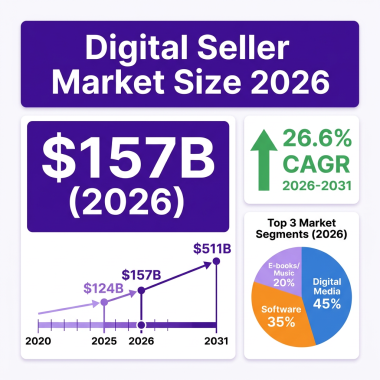
Here’s the thing: global digital product sales are exploding. The market reached $9.8 billion in 2025 and is projected to hit $18.3 billion by 2033. The eLearning sector alone hit $320.96 billion in 2025.
But it’s not just about market size. Selling globally:
- Diversifies revenue — you’re not dependent on one economy
- Extends your runway — international customers often have different buying patterns
- Increases lifetime value — global customers typically spend 23% more over time
- Builds brand resilience — multiple markets = multiple growth opportunities
The challenge? Each country wants its cut of the pie. And they’re increasingly aggressive about collecting.
Understanding Global Tax Obligations
When you sell digital products internationally, you’ll encounter three main tax types:
1. VAT (Value Added Tax)
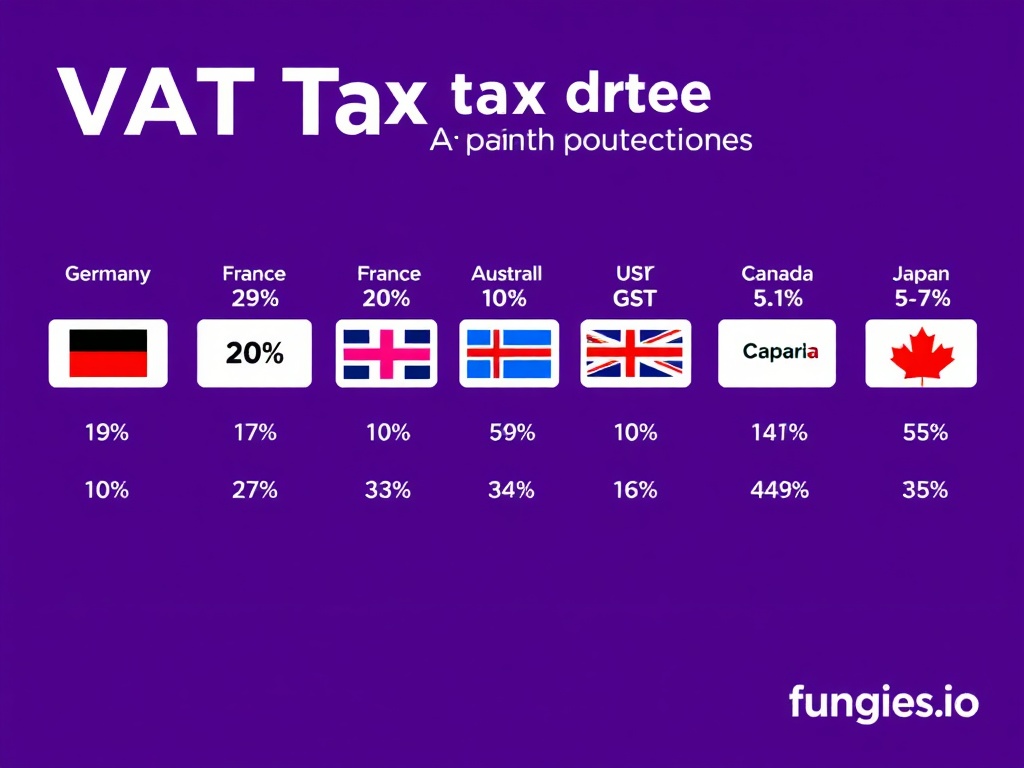
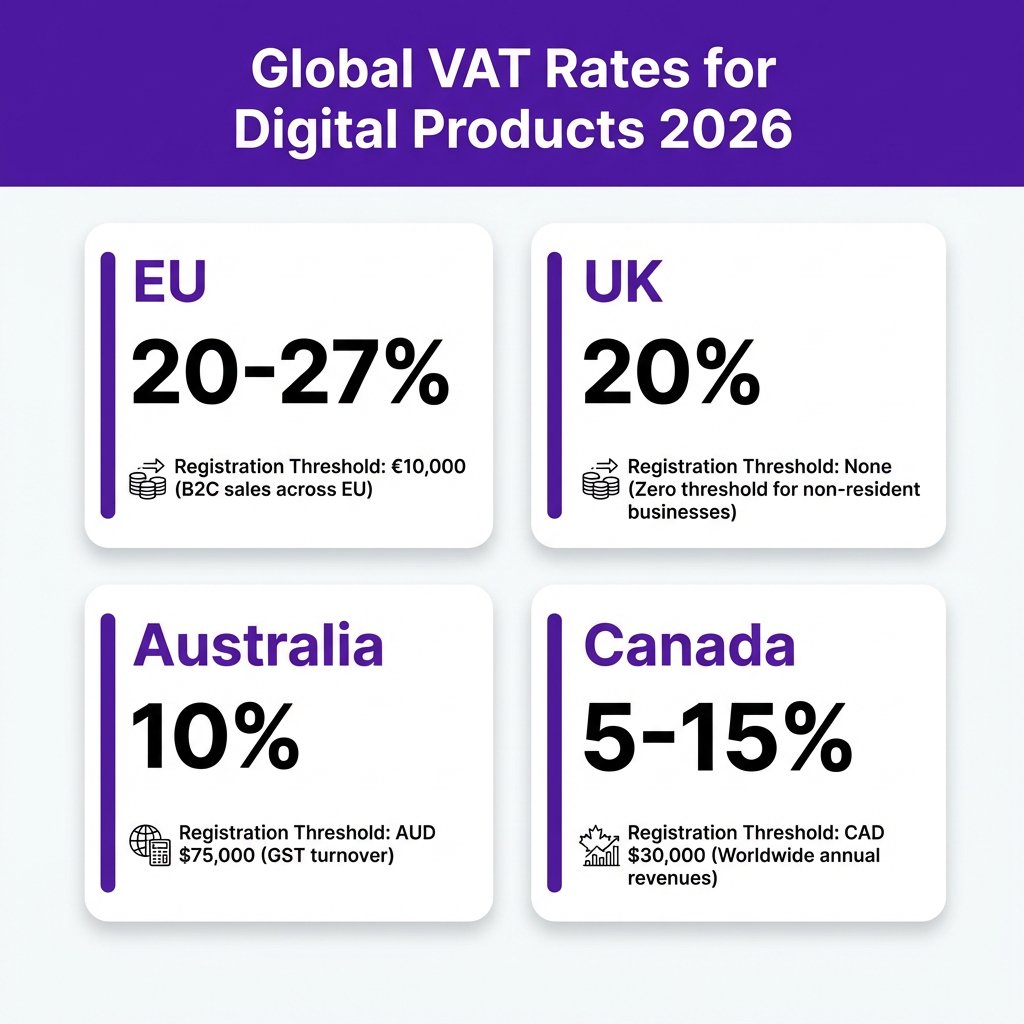
Used in 170+ countries including the EU, UK, Australia, and most of Asia. VAT rates for digital products typically range from 10% to 27%. The EU requires VAT collection from your very first B2C sale—there’s no threshold.
2. GST (Goods and Services Tax)
Similar to VAT but used in countries like Canada, Australia, New Zealand, and Singapore. Australia’s threshold is AUD $75,000 annually. Canada’s varies by province (CAD $30,000).
3. US Sales Tax
The US has no federal sales tax. Instead, 45 states (plus DC) have their own rules. Economic nexus thresholds are typically $100,000 in revenue or 200 transactions per state. But here’s the kicker: digital product taxability varies wildly by state. Some tax SaaS, some don’t. Some tax ebooks, others exempt them.
Global VAT Rates by Region (2026)
| Region | VAT/GST Rate | Registration Threshold | Applies To |
|---|---|---|---|
| European Union | 17% – 27% | First B2C sale | All digital services |
| United Kingdom | 20% | £85,000 | All digital services |
| Australia | 10% | AUD $75,000 | Digital products & services |
| Canada | 5% – 15% | CAD $30,000 | Varies by province |
| New Zealand | 15% | NZD $60,000 | Digital services |
| Singapore | 9% | SGD $1 million | Digital services |
| India | 18% | First B2C sale | Digital services |
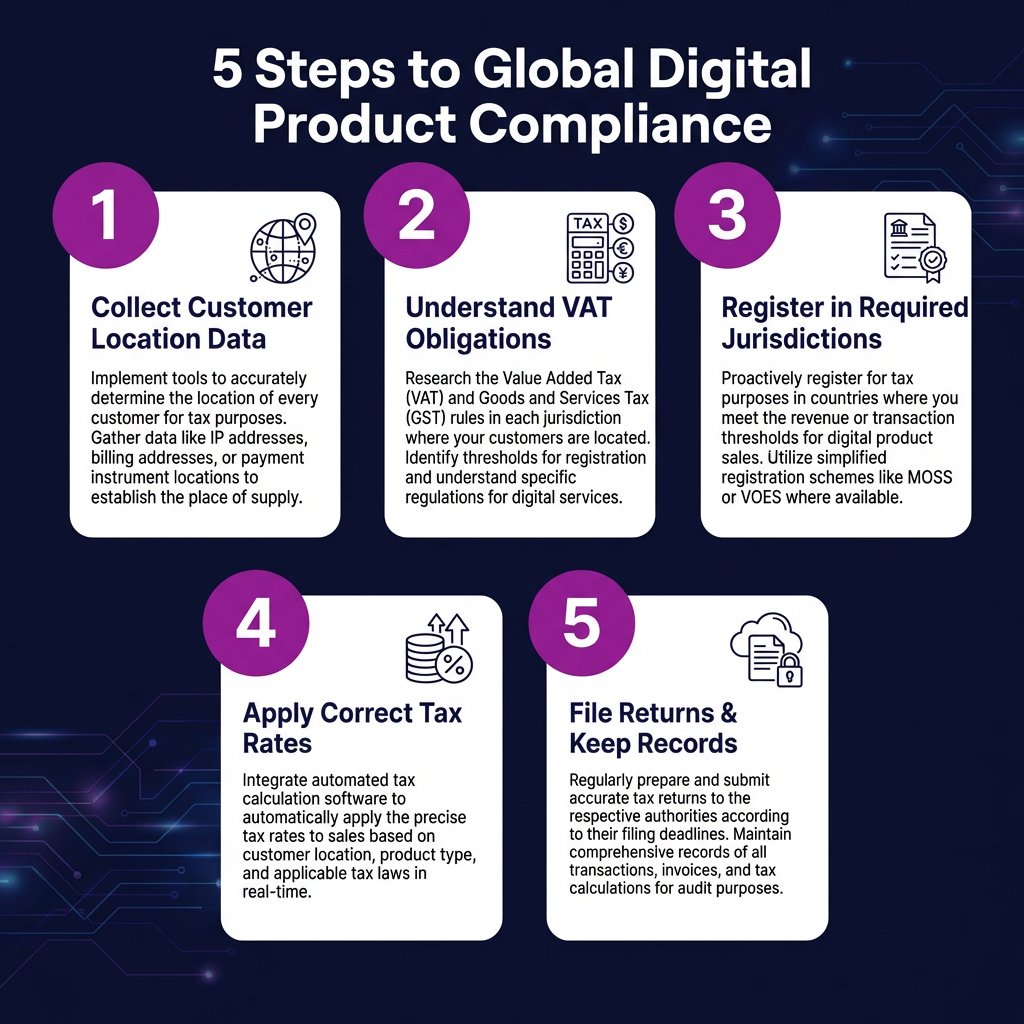
The 5-Step Process to Global Compliance
Step 1: Collect Customer Location Data
You can’t calculate tax without knowing where your customer is. Most jurisdictions require two pieces of non-contradictory evidence for customer location:
- Billing address
- IP address with geolocation
- Credit card country
- Customer account address
Your checkout flow needs to capture this data and store it for audit purposes—typically for 5-7 years depending on the jurisdiction.
Step 2: Determine Taxability
Not all digital products are taxed equally. In the US alone, taxability varies by state:
- SaaS — Taxed in ~25 states, exempt in others
- Ebooks — Often exempt or taxed at reduced rates
- Online courses — May be exempt if educational
- Digital templates — Usually taxable
Internationally, most countries tax all digital services, but rates vary. The EU applies standard VAT rates to digital products, while some countries have special reduced rates for certain categories.
Step 3: Register for Tax Collection
Once you determine you have tax obligations, you need to register:
- EU: Use the One-Stop Shop (OSS) system to register in one member state for all 27 countries
- UK: Register with HMRC for VAT
- US: Register in each state where you have nexus
- Other countries: Register with local tax authorities (often requires a local fiscal representative)
Registration can take 2-8 weeks depending on the jurisdiction. You cannot legally collect tax before registration.
Step 4: Apply Correct Tax Rates
This is where most DIY systems break down. Tax rates change constantly. In 2025 alone:
- Finland increased VAT to 25.5%
- Several US states expanded digital goods taxation
- Manitoba (Canada) announced cloud services taxation starting 2026
You need a system that updates rates automatically or you’ll be collecting (or under-collecting) the wrong amounts.
Step 5: File Returns and Remit Tax
Filing frequencies vary:
- EU OSS: Quarterly filings
- UK: Quarterly (or monthly for larger businesses)
- US states: Monthly, quarterly, or annually depending on volume
Miss a filing deadline? Expect penalties ranging from 5% to 25% of the tax due, plus interest.
Payment Processing Options for Global Sales
You have three main approaches to handling global digital sales:
Option 1: DIY with Stripe/PayPal
Best for: Low volume, simple tax situations
Stripe and PayPal handle the payment processing, but you’re responsible for tax calculation, collection, and remittance. You’ll need to integrate a tax calculation API (like TaxJar or Avalara) and manage registrations yourself.
Pros: Lower transaction fees, full control
Cons: Complex compliance overhead, ongoing maintenance
Option 2: Merchant of Record (MoR)
Best for: Most digital product sellers
An MoR like Fungies becomes the legal seller of record. They handle:
- Payment processing
- Tax calculation and collection
- VAT/GST/sales tax registration
- Tax filing and remittance
- Compliance monitoring
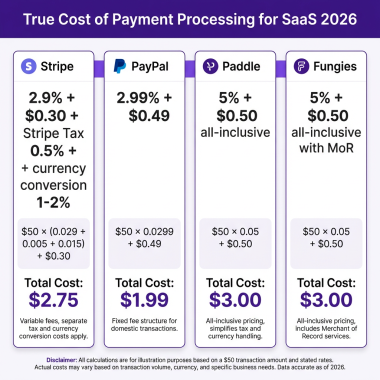
You get a simple integration and global compliance out of the box. Fungies charges 5% + $0.50 per transaction with no monthly fees—often cheaper than DIY once you factor in tax software costs.
Pros: Zero compliance overhead, instant global coverage, fraud protection
Cons: Slightly higher per-transaction fees
Option 3: Marketplaces (Gumroad, Teachable, etc.)
Best for: Hobbyists, testing product-market fit
Marketplaces handle compliance but take a larger cut (10-30%+) and you don’t own the customer relationship.
Pros: Easiest setup, built-in audience
Cons: Highest fees, limited customization, platform dependency
Platform Comparison: Costs for Global Selling
| Platform | Transaction Fee | Tax Handling | Best For |
|---|---|---|---|
| Fungies (MoR) | 5% + $0.50 | Full compliance included | SaaS, digital products |
| Stripe + TaxJar | 2.9% + $0.30 + $19/mo | DIY registration/filing | US-focused businesses |
| Paddle | 5% + $0.50 | Full compliance | Software sellers |
| Gumroad | 10% + processing | Basic compliance | Creators, hobbyists |
| Teachable | 5% + $39/mo | US sales tax only | Course creators |
Common Global Selling Mistakes (And How to Avoid Them)
Mistake #1: Assuming You’re ‘Too Small’ to Matter
The EU requires VAT registration from your first B2C sale. No threshold. Other countries have low thresholds (Australia: AUD $75k, UK: £85k). Don’t wait until you’re ‘big enough’—start compliant from day one.
Mistake #2: Ignoring B2B vs B2C Rules
Most jurisdictions treat B2B and B2C sales differently. B2B sales often use the ‘reverse charge’ mechanism where the buyer handles VAT. But you must validate their VAT ID. Invalid ID? You’re on the hook for the tax.
Mistake #3: Not Keeping Records
Tax authorities can audit you years after the sale. You need to keep:
- Customer location evidence
- Transaction details
- Tax calculations
- Registration certificates
- Filing confirmations
Retention periods range from 5-10 years depending on the country.
Mistake #4: Forgetting About Currency
Displaying prices in USD to EU customers creates friction. Local currency pricing can increase conversion rates by 12-15%. Your payment solution should handle multi-currency display and conversion.
Frequently Asked Questions
Do I need to collect VAT if I’m a small business?
In the EU, yes—from your first B2C sale. In other regions, it depends on thresholds. Australia (AUD $75k), UK (£85k), and Canada (CAD $30k) have registration thresholds. When in doubt, consult a tax professional or use an MoR that handles this automatically.
What happens if I don’t comply with VAT?
Penalties vary by country but typically include: back taxes owed, interest on unpaid amounts (often 5-10% annually), fines (10-50% of tax due), and potential criminal charges for willful evasion. It’s not worth the risk.
Can I sell to the EU without registering for VAT?
No. EU regulations require non-EU sellers to register for VAT and collect it on all B2C digital service sales. The only exception is selling exclusively through a marketplace that handles VAT (like Amazon).
How do I handle refunds and VAT?
When you issue a refund, you typically need to adjust the VAT in your next filing. Most jurisdictions allow you to claim back VAT on refunded transactions. Keep detailed records of all refunds and the reason.
What’s the easiest way to sell globally?
For most digital product sellers, a Merchant of Record like Fungies is the simplest path. You get global compliance, fraud protection, and multi-currency support without the administrative overhead of managing dozens of tax registrations.
Ready to Sell Globally?
Selling digital products globally opens massive revenue opportunities, but compliance complexity is real. You have three paths:
- DIY: Lower fees, high complexity, ongoing maintenance
- Merchant of Record: Simple integration, instant compliance, predictable costs
- Marketplace: Easiest setup, highest fees, least control
For most creators and SaaS founders, an MoR strikes the right balance. You focus on building great products; they handle the tax maze.
Want to start selling globally today? Create your Fungies account and get your first international sale live in under 10 minutes—with full tax compliance built in.