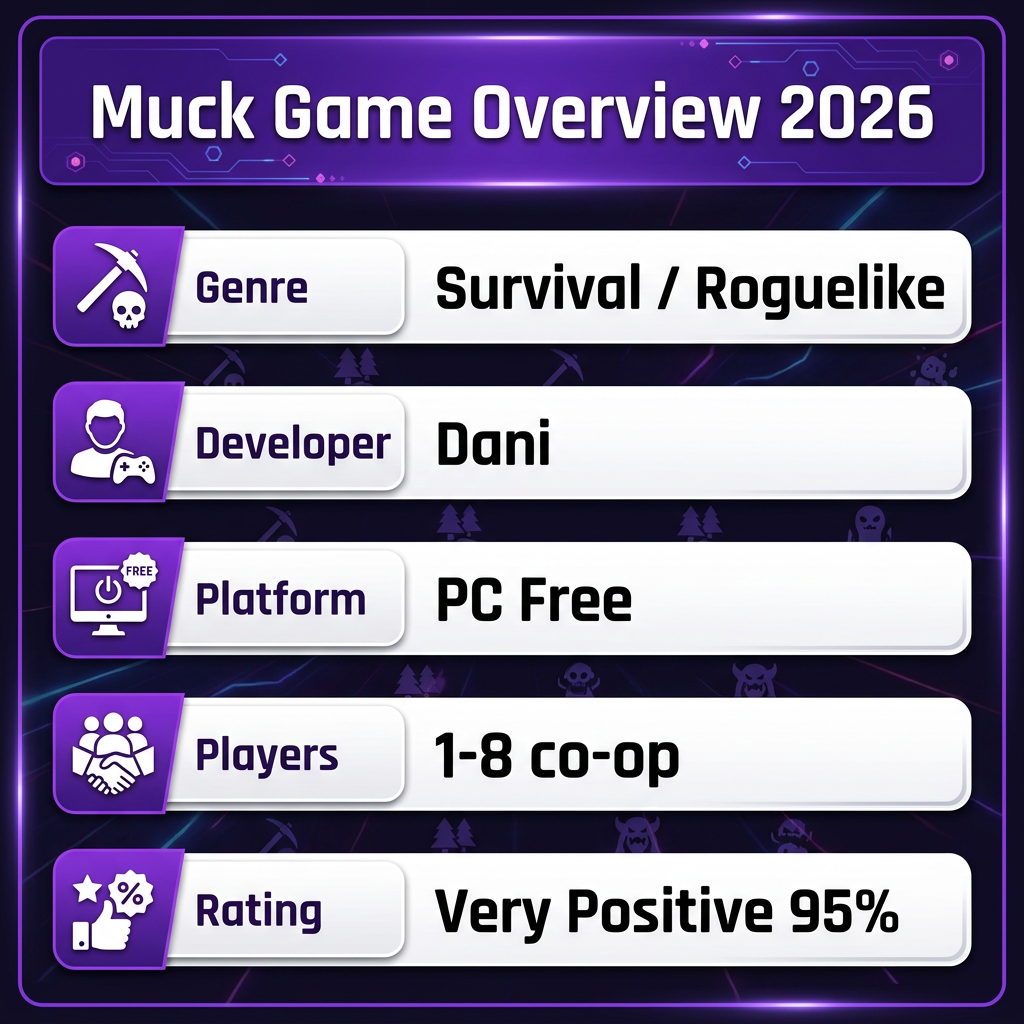
Muck Game took the indie gaming world by storm when it launched as a free survival roguelike on Steam. Created by solo developer Dani in 2021, this fast-paced multiplayer game has amassed over 10 million downloads and maintains a “Very Positive” rating from more than 100,000 players. If you’re looking for a challenging co-op survival experience that won’t cost you a dime, Muck deserves your attention.
In this comprehensive guide, we’ll explore everything you need to know about Muck Game — from its unique roguelike mechanics and multiplayer features to survival strategies that will help you and your friends last longer in this unforgiving world.
What is Muck Game?
Muck is a free-to-play survival roguelike game developed by Dani and released on Steam in June 2021. Unlike traditional survival games that focus on long-term base building and resource management, Muck emphasizes fast-paced gameplay sessions where each run is unique thanks to its roguelike elements.
The game drops you on a procedurally generated island with nothing but your bare hands. Your goal is simple: survive as long as possible while gathering resources, crafting tools, building defenses, and fighting off increasingly difficult enemies. But here’s the twist — when you die, you start over completely. No saved progress, no carried-over items. Every run is a fresh challenge.
What makes Muck particularly engaging is its multiplayer support. Up to 8 players can join together in co-op mode, making it an excellent choice for game nights with friends. The chaos of coordinating resource gathering, base defense, and boss fights with a group adds a layer of social fun that single-player survival games often lack.
Key Features of Muck Game
Procedural Generation: Every island is randomly generated, ensuring no two playthroughs are identical. Resource locations, enemy spawn points, and chest contents vary each time you start a new game.
Roguelike Progression: Death is permanent in Muck. When you fall, you lose everything and start fresh. This creates genuine tension and makes every decision matter — do you risk exploring that cave for better loot, or play it safe?
Multiplayer Co-op: Support for up to 8 players means you can tackle the survival challenge with friends. Cooperation is essential — assign roles like gatherer, builder, and fighter to maximize your chances of survival.
Crafting System: Gather wood, stone, and ore to craft increasingly powerful weapons, tools, and armor. The crafting progression feels satisfying, with clear upgrades that make you feel genuinely more powerful.
Boss Battles: As days pass, powerful bosses will spawn and hunt you down. These encounters require preparation, coordination (in multiplayer), and skill to overcome. Defeating bosses yields valuable rewards that can turn the tide of your run.
Power-ups and Buffs: Scattered throughout the island are shrines and chests containing power-ups that provide permanent buffs for your current run. These can dramatically change your strategy — a speed boost might make you a hit-and-run fighter, while health regeneration lets you tank damage.
How to Download and Play Muck
Getting started with Muck is incredibly simple. The game is completely free and available exclusively on Steam for PC. Here’s how to download it:
1. Open Steam and search for “Muck” in the store
2. Click “Add to Account” (it’s free, so no purchase required)
3. Once added, install the game
4. Launch and start your first survival run
The game runs well on modest hardware — you don’t need a gaming PC to enjoy Muck. This accessibility is part of why it became so popular among casual gamers and streamers alike.
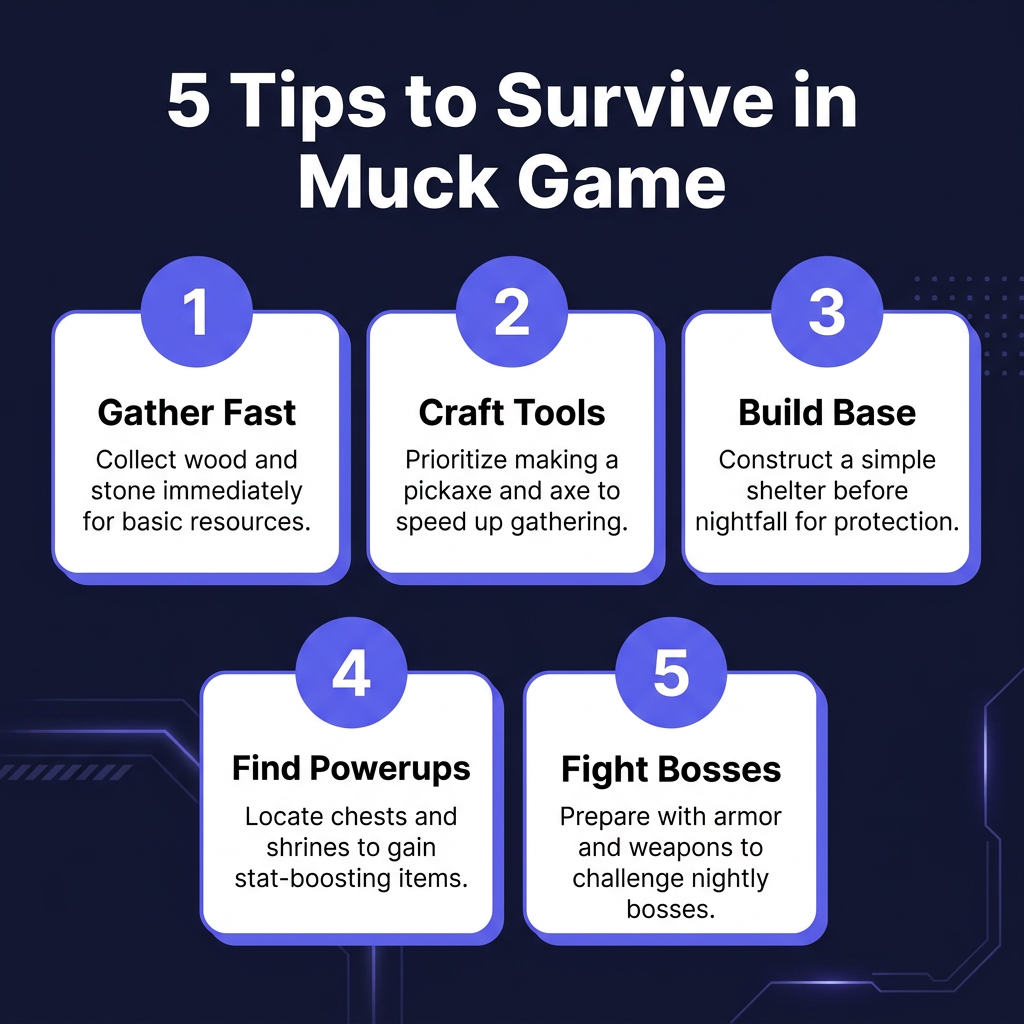
5 Essential Tips for Surviving in Muck
1. Gather Resources Immediately
The first few minutes are crucial. Punch trees for wood, break rocks for stone, and collect any flax you find. These basic resources let you craft your first tools, which dramatically speed up gathering. Don’t wander too far from your starting point initially — enemies become more aggressive as days pass.
2. Prioritize Tool Crafting
Craft a wooden pickaxe and axe as soon as possible. Tools gather resources much faster than punching, and time is your enemy in Muck. Upgrade to stone tools quickly, then aim for iron once you find ore deposits.
3. Build a Defensible Base
By nightfall, enemies will attack. Build walls and place a workbench before sunset. A simple enclosed area with a bed (respawn point) gives you a fighting chance. Place spikes around entrances to damage attacking mobs.
4. Hunt for Power-ups
Green shrines scattered around the island grant permanent buffs when activated. These can double your damage, increase movement speed, or provide health regeneration. Prioritize finding these early — they stack and can make the difference between a 5-minute run and a 30-minute victory.
5. Prepare for Boss Fights
Bosses spawn at set intervals and announce their arrival. When you hear the warning, return to your base and prepare. Stockpile food, ensure your best weapons are equipped, and coordinate with teammates. Kiting (attacking while retreating) is often safer than face-tanking boss damage.
Why Muck Became a Viral Sensation
Several factors contributed to Muck’s explosive popularity. First, it’s genuinely free — no microtransactions, no premium currency, no pay-to-win mechanics. In an era of $70 AAA games with battle passes, a completely free quality game stands out.
Second, the roguelike format creates perfect content for streamers and YouTubers. Each run is different, failures are entertaining, and victories feel earned. Popular creators like Socksfor1 and DanTDM featured Muck, exposing it to millions of potential players.
Finally, the multiplayer aspect created organic marketing. Friends tell friends about this “free survival game we should play together.” The low barrier to entry (free + low system requirements) means groups can easily jump in together.
FAQ About Muck Game
Is Muck Game really free?
Yes, Muck is completely free on Steam with no in-app purchases or microtransactions. The developer Dani released it as a passion project.
Can I play Muck solo?
Absolutely. While multiplayer is fun, Muck is fully playable and enjoyable as a single-player experience. The difficulty scales somewhat with player count.
Does Muck have controller support?
Yes, Muck supports controllers, though many players prefer mouse and keyboard for the precision it offers in combat.
Will Muck receive updates?
Dani has released several updates since launch, adding new content, balancing gameplay, and fixing bugs. While development is slower now, the community remains active.
Are there games similar to Muck?
If you enjoy Muck, consider Valheim (more complex survival), Don’t Starve Together (similar roguelike elements), or Raft (ocean survival with crafting).
Conclusion
Muck Game proves that great gaming experiences don’t require massive budgets or price tags. Its blend of survival mechanics, roguelike tension, and multiplayer chaos creates something genuinely special — and the fact that it’s completely free makes it an easy recommendation for anyone looking for their next gaming obsession.
Whether you’re playing solo or with up to 7 friends, Muck offers hours of challenging, rewarding gameplay. Download it today and see how long you can survive.
Ready to Monetize Your Game?
Join hundreds of game developers using Fungies.io — automated payments, global tax compliance, and instant checkout for your indie games.
No credit card required