The Software as a Service (SaaS) industry has evolved from a disruptive technology into the dominant software delivery model of our era. In 2026, the SaaS market stands at a pivotal inflection point, valued at $465.03 billion according to Precedence Research, with 99% of organizations now using at least one SaaS application in their operations. This represents a fundamental shift in how businesses consume software—from perpetual licenses and on-premise installations to subscription-based, cloud-delivered solutions that scale with organizational needs.
The journey from 2020’s $157 billion market to today’s nearly half-trillion-dollar ecosystem tells a story of relentless innovation, changing work patterns, and the democratization of enterprise-grade tools. What began as simple web-based applications has transformed into sophisticated platforms powered by artificial intelligence, serving every industry vertical imaginable. The COVID-19 pandemic accelerated adoption by an estimated 5-7 years, forcing even the most traditional enterprises to embrace cloud solutions for remote work, collaboration, and digital transformation.
The SaaS model has fundamentally changed how software is developed, deployed, and monetized. Unlike traditional software that required significant upfront investment in infrastructure, licensing, and maintenance, SaaS delivers immediate value with minimal setup. This shift has lowered barriers to entry for businesses of all sizes, enabling startups to access the same tools as Fortune 500 companies. The subscription model also aligns vendor incentives with customer success—vendors must continuously deliver value to maintain recurring revenue, rather than relying on one-time license sales.

Market Overview: The $465 Billion SaaS Ecosystem
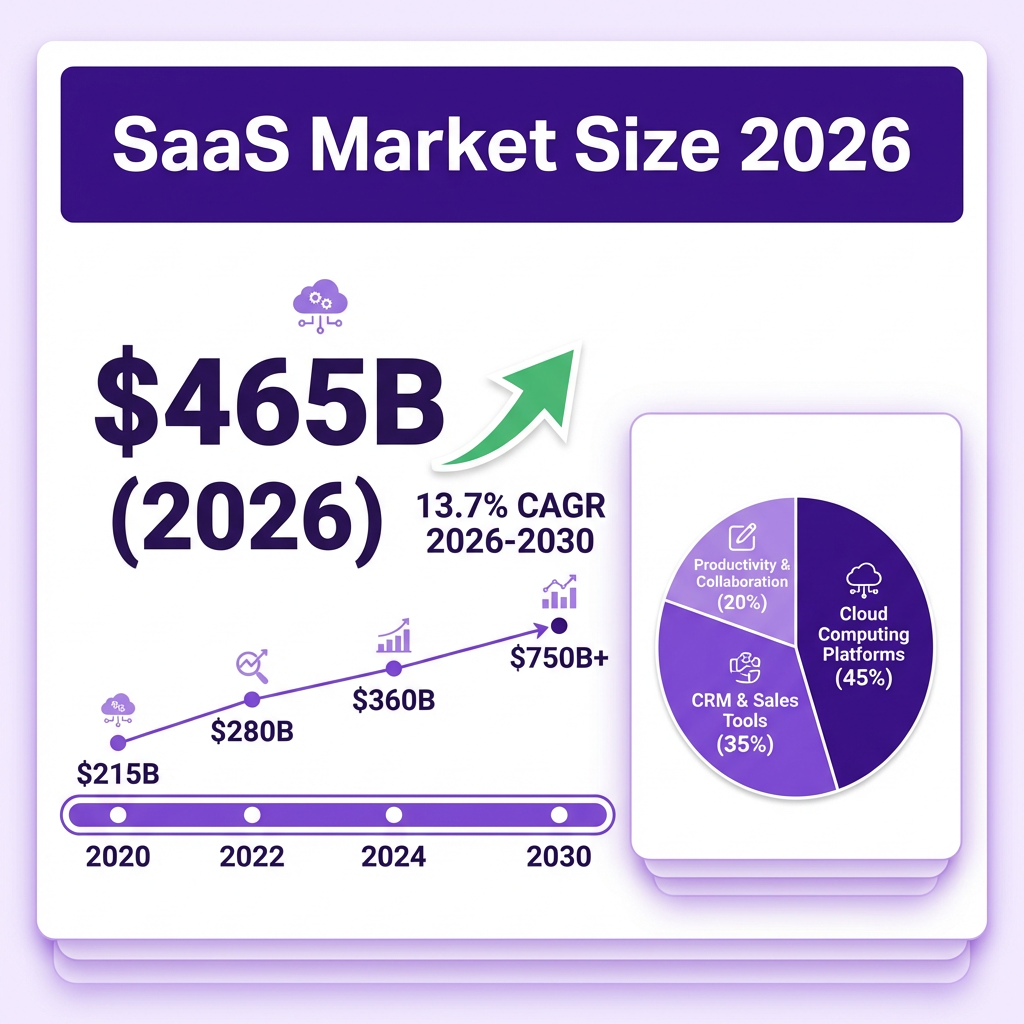
The global SaaS market has demonstrated remarkable resilience and growth trajectory. According to multiple industry reports, the market reached $408.21 billion in 2025 and is projected to hit $465.03 billion in 2026. This represents a compound annual growth rate (CAGR) of approximately 13.7%, positioning SaaS as one of the fastest-growing segments within the broader technology sector. By 2030, market analysts project the industry will exceed $887 billion, nearly doubling its current size within just four years.
The public cloud deployment segment continues to dominate, driven by its cost-effectiveness, scalability, and reduced IT infrastructure requirements. However, hybrid cloud solutions are gaining significant traction among enterprise customers who require the flexibility to maintain sensitive data on-premise while leveraging cloud capabilities for less critical operations. This hybrid approach addresses growing data sovereignty concerns and regulatory compliance requirements across different jurisdictions.
Geographic distribution reveals North America maintaining its leadership position, accounting for approximately 45% of global SaaS revenue. The United States remains the epicenter of SaaS innovation, hosting the headquarters of industry giants like Salesforce, Microsoft, Oracle, and countless emerging startups. However, the Asia-Pacific region is experiencing the fastest growth rate, with countries like India, Singapore, and Australia becoming significant markets for SaaS adoption. Europe represents the second-largest market, with particular strength in data privacy-compliant solutions following GDPR implementation.
Enterprise size segmentation shows interesting dynamics. While large enterprises were early adopters and continue to represent substantial revenue, small and medium enterprises (SMEs) are driving the next wave of growth. The democratization of enterprise-grade tools through affordable SaaS subscriptions has leveled the playing field, allowing smaller companies to access capabilities previously reserved for Fortune 500 companies. This SME segment is growing at 16% annually, outpacing the overall market.
The industry breakdown of SaaS adoption reveals that IT and telecommunications remain the largest consumers, followed by BFSI (Banking, Financial Services, and Insurance), retail, healthcare, and manufacturing. Each industry has unique requirements that have driven the development of specialized vertical solutions. Healthcare SaaS, for example, must navigate complex HIPAA compliance requirements, while financial services solutions must address stringent security and audit standards.
Key Statistics and Data Points
The SaaS industry’s scale becomes apparent when examining the granular data points that define its current state. Organizations today use an average of 130 different SaaS applications, up from just 16 in 2017—a staggering 712% increase in less than a decade. This proliferation reflects both the specialization of SaaS solutions and the increasing sophistication of business operations that require dedicated tools for specific functions.
Spending patterns reveal the depth of SaaS integration into business operations. Gartner projects that global SaaS investments will reach approximately $299 billion by the end of 2025, with continued acceleration into 2026. The average company spends $2,623 per employee annually on SaaS subscriptions, though this figure varies dramatically by industry and company size. Technology companies typically spend 3-4 times more per employee than traditional manufacturing firms.
AI-native SaaS applications have emerged as the fastest-growing subsegment, with spending increasing 108% year-over-year according to Zylo’s 2026 SaaS statistics report. This surge reflects the integration of generative AI capabilities into existing platforms and the emergence of entirely new categories of AI-first applications. Companies are not merely experimenting with AI features—they are restructuring their software stacks around AI capabilities that promise productivity gains of 20-40% in knowledge work.
Customer acquisition and retention metrics provide crucial insights into SaaS business health. The median private SaaS company achieves 25% year-over-year revenue growth, though top-quartile performers exceed 50% annually. Net Revenue Retention (NRR) has become the gold standard metric, with best-in-class SaaS companies achieving 120-140% NRR. This means these companies grow revenue from existing customers even after accounting for churn, primarily through expansion revenue, upsells, and cross-sells.
Revenue per employee benchmarks offer another lens for evaluating SaaS efficiency. As of 2025, the median revenue per employee for private SaaS companies stands at $180,000, with top performers exceeding $300,000. This metric has become increasingly important as companies focus on capital efficiency in a tighter funding environment. The rule of 40—combined growth rate and profit margin—remains a key benchmark, with companies targeting scores above 40% to demonstrate healthy unit economics.
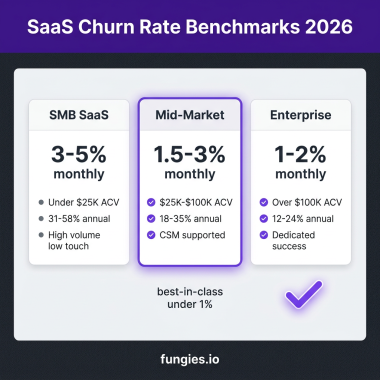
Churn rates vary significantly by market segment. B2B SaaS companies targeting enterprise customers typically achieve annual churn rates of 5-7%, while those serving small businesses may experience 20-30% annual churn. The difference reflects the higher switching costs and deeper integration of enterprise solutions versus the more transactional nature of small business software purchases. Companies with product-led growth (PLG) strategies often achieve lower churn by ensuring users experience value before committing financially.
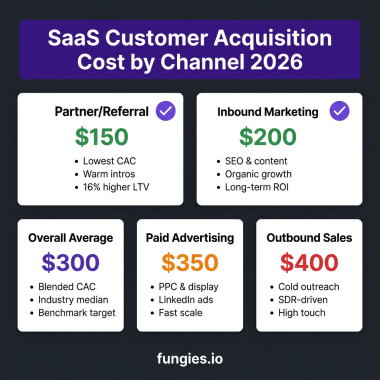
SEO and content marketing have proven particularly effective for SaaS customer acquisition. B2B SaaS companies achieve 702% ROI from SEO investments with a break-even time of just 7 months, dramatically outperforming paid advertising channels. This has driven significant investment in content marketing, with leading SaaS companies publishing hundreds of blog posts, guides, and resources to capture organic search traffic. The average B2B SaaS company generates 35% of its leads through organic search.
Funding statistics highlight the continued investor confidence in the SaaS model. Approximately 47% of all venture capital funding went to SaaS startups in 2025, with median Series A rounds reaching $12 million and Series B rounds averaging $35 million. However, the funding environment has become more selective, with investors prioritizing capital efficiency and clear paths to profitability over pure growth metrics. The days of growth-at-all-costs have given way to sustainable business model validation.
Additional metrics paint a comprehensive picture of the SaaS landscape. The average SaaS company takes 9-12 months to reach product-market fit and 24-36 months to achieve $1 million in ARR. Customer acquisition costs have risen 60% over the past three years, making retention and expansion more critical than ever. The median payback period for CAC is now 14 months for enterprise SaaS and 8 months for SMB-focused solutions. These metrics underscore the importance of efficient growth and strong unit economics in the current environment.
The average contract value (ACV) for SaaS companies varies dramatically by market segment. Enterprise SaaS companies report median ACVs of $50,000-$100,000 annually, while mid-market solutions range from $5,000-$25,000, and SMB-focused products often start below $1,000. This segmentation has created distinct go-to-market strategies, with enterprise SaaS relying on sales-led approaches and SMB solutions prioritizing product-led growth and self-service adoption.
Major Trends Shaping SaaS in 2026
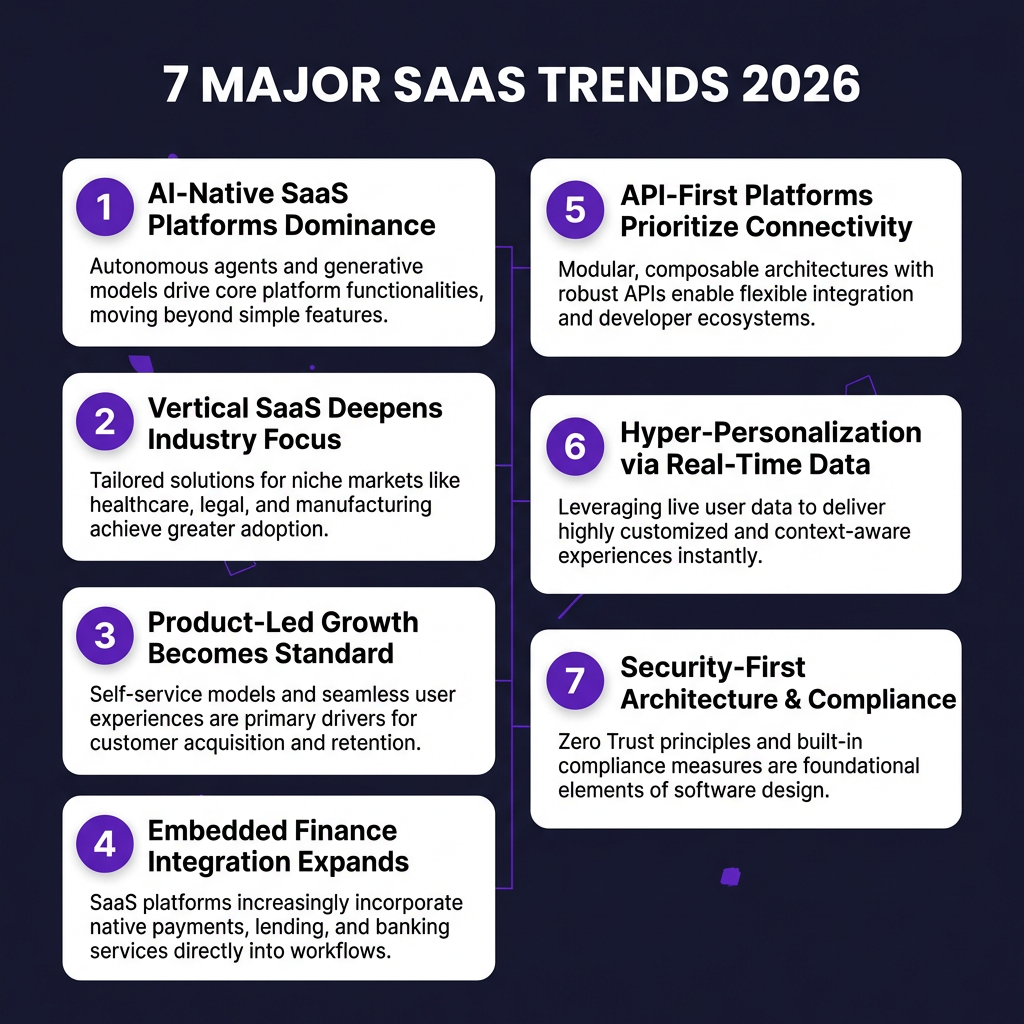
The SaaS landscape of 2026 is being fundamentally reshaped by seven converging trends that are redefining how software is built, sold, and consumed. Understanding these trends is essential for anyone operating in or evaluating the SaaS ecosystem.
1. AI-Native Architecture Becomes Default
The distinction between “AI-powered” and “AI-native” has become critical. AI-powered SaaS refers to traditional applications with AI features bolted on, while AI-native SaaS is built from the ground up with artificial intelligence as the core architecture. In 2026, AI-native products are moving from novelty to necessity. Companies like Cursor AI have demonstrated what is possible, achieving a $50 billion valuation by making AI the product rather than a feature. This trend is forcing incumbent vendors to fundamentally rearchitect their platforms or risk obsolescence.
The implications extend beyond product development to pricing models. AI-native SaaS often employs consumption-based pricing tied to AI usage rather than traditional seat-based models. This aligns costs with value delivered but creates forecasting challenges for both vendors and customers. The most successful AI-native companies are those that deliver immediate, demonstrable value that justifies variable costs.
2. Vertical SaaS Dominance
Vertical SaaS—software built for specific industries rather than horizontal business functions—has moved from niche to mainstream. Companies like Toast (restaurants), Shopify (e-commerce), and ServiceTitan (home services) have demonstrated that industry-specific solutions can achieve 3x higher retention rates than horizontal alternatives. The vertical approach allows for deeper workflow integration, industry-specific compliance features, and tailored user experiences that horizontal platforms cannot match.
The vertical SaaS playbook has expanded to include embedded fintech, with platforms offering payment processing, lending, and insurance products native to their software. This embedded finance approach captures additional revenue streams while increasing customer stickiness. A restaurant using Toast for POS is more likely to use Toast Capital for financing than seek external options, creating powerful ecosystem effects.
3. Product-Led Growth Evolution
Product-led growth (PLG) has evolved from a go-to-market strategy to a complete business methodology. The most successful SaaS companies of 2026 combine self-service product adoption with sophisticated sales assistance at key expansion moments. This “product-led sales” hybrid model allows companies to efficiently acquire customers through free trials and freemium tiers while capturing enterprise value through targeted sales intervention.
Cursor AI exemplifies this evolution, becoming the fastest SaaS company to reach significant ARR milestones by combining viral freemium adoption with enterprise sales for advanced features. The key insight is that PLG is not about eliminating sales—it is about making sales conversations contextually relevant based on demonstrated product usage and value realization.
4. API-First and Composable Architecture
The monolithic SaaS platform is giving way to composable architectures where best-of-breed components integrate through APIs. Companies are increasingly unwilling to accept the trade-offs of all-in-one platforms when specialized solutions offer superior functionality for specific use cases. This has driven demand for SaaS products with robust APIs, webhooks, and integration capabilities.
The rise of integration platforms as a service (iPaaS) and workflow automation tools like Zapier, Make, and Workato has accelerated this trend. Modern SaaS buyers evaluate integration capabilities as heavily as core functionality, recognizing that their tech stack will consist of 50-100+ applications that must work together seamlessly. API-first companies that prioritize developer experience are capturing disproportionate market share.
5. Hyper-Personalization at Scale
AI capabilities have enabled personalization that was previously impossible. SaaS applications now adapt their interfaces, workflows, and recommendations based on individual user behavior, role, and context. This goes beyond simple user preferences to predictive personalization that anticipates needs before users articulate them.
The personalization trend extends to pricing and packaging. Dynamic pricing models that adjust based on usage patterns, company characteristics, and market conditions are becoming more common. While this creates value optimization opportunities, it also raises transparency concerns that vendors must navigate carefully to maintain customer trust.
6. Security-First Architecture
Security has moved from a checkbox feature to a core architectural requirement. With the average data breach costing $4.45 million according to IBM’s 2023 report, and regulatory frameworks like GDPR, CCPA, and sector-specific requirements expanding, SaaS vendors must build security into their foundations rather than layering it on top.
Zero-trust architecture, end-to-end encryption, and continuous compliance monitoring have become table stakes for enterprise SaaS. Vendors are increasingly pursuing SOC 2 Type II, ISO 27001, and industry-specific certifications not as marketing assets but as fundamental business requirements. Security gaps are deal-killers in enterprise sales cycles, with automated compliance platforms reducing gap detection time from 90 days to under 15 minutes.
7. Sustainable Growth and Capital Efficiency
The funding environment of 2026 demands capital efficiency that was not required in the zero-interest-rate era. SaaS companies are extending runways, reducing burn rates, and demonstrating clear paths to profitability earlier in their lifecycle. The median private SaaS company now targets 24-36 months of runway between funding rounds, compared to 12-18 months during the growth-at-all-costs period.
This efficiency focus has driven renewed interest in bootstrapped SaaS and revenue-based financing as alternatives to traditional venture capital. Companies like Basecamp and Mailchimp demonstrated that massive outcomes are possible without external funding, and a new generation of founders is following their example, prioritizing control and sustainable growth over rapid scaling.

Key Players and Competitive Landscape
The SaaS competitive landscape is characterized by a mix of established giants, high-growth challengers, and emerging specialists. Understanding the positioning and strategies of key players provides insight into where the industry is heading.
Microsoft maintains its position as the largest SaaS vendor globally, with its Intelligent Cloud segment generating over $100 billion annually. The company’s comprehensive portfolio spanning productivity (Microsoft 365), collaboration (Teams), infrastructure (Azure), and business applications (Dynamics) creates powerful ecosystem effects. In fiscal year 2024, Microsoft saw SaaS revenue increase by $8.5 billion, or 12% year-over-year. The company’s aggressive AI integration through Copilot features across its product suite represents a strategic bet on AI as the next platform shift.
Salesforce remains the dominant force in CRM and has successfully expanded into platform services, analytics, and commerce. The company’s $31 billion acquisition of Slack demonstrated its commitment to collaboration as a core enterprise need. Salesforce’s Einstein AI capabilities, while initially lagging competitors, have improved significantly and are now deeply integrated across the platform. The company’s vertical industry solutions have gained traction, challenging point solutions in financial services, healthcare, and manufacturing.
Adobe has successfully transitioned from perpetual license software to a SaaS model, with Creative Cloud and Document Cloud generating over $19 billion in annual recurring revenue. The company’s AI integration through Firefly and Sensei platforms has addressed competitive threats from generative AI startups while maintaining its position as the creative professional’s tool of choice. Adobe’s Experience Cloud, while smaller than creative offerings, has gained share in the marketing technology space.
Oracle and SAP continue to dominate enterprise ERP and database markets, though both face pressure from cloud-native competitors. Oracle’s aggressive cloud infrastructure investments and database modernization efforts have slowed customer attrition, while SAP’s S/4HANA migration continues with mixed success. Both companies are investing heavily in AI capabilities to modernize their offerings and justify premium pricing.
Google (Alphabet) has leveraged its cloud infrastructure and Workspace productivity suite to become a significant SaaS player, though it trails Microsoft in enterprise adoption. The company’s AI capabilities through DeepMind and Google AI provide differentiation, particularly in data analytics and machine learning services. Google Cloud’s growth rate exceeds that of AWS and Azure, albeit from a smaller base.
ServiceNow has emerged as a dominant platform for enterprise workflow automation, expanding beyond IT service management into HR, customer service, and custom application development. The company’s platform strategy has created high switching costs and expansion revenue opportunities, with customers building custom workflows that embed ServiceNow deeply into their operations.
Atlassian continues to dominate software development tooling with Jira, Confluence, and Trello, while expanding into IT operations and service management. The company’s focus on team collaboration and knowledge management has created a loyal developer following that extends into business teams. Atlassian’s cloud migration has progressed steadily, though some enterprise customers remain on self-hosted versions.
Workday and Ultimate Software (UKG) lead the HCM (Human Capital Management) category, with Workday expanding into financial management and analytics. The shift to remote and hybrid work has increased demand for sophisticated workforce management capabilities, benefiting both companies. Workday’s AI and machine learning investments have improved its predictive analytics capabilities for talent management.
HubSpot has successfully challenged Salesforce in the SMB and mid-market CRM space with its inbound marketing methodology and integrated platform approach. The company’s freemium strategy and educational content have created a massive top-of-funnel that converts to paid subscriptions. HubSpot’s expansion into operations software (CMS, operations hub) has increased its addressable market and customer lifetime value.
Zoom and Slack (now part of Salesforce) defined the pandemic-era collaboration category, though both face intensifying competition from Microsoft Teams and Google Meet. Zoom’s expansion into contact center, phone systems, and AI-powered features represents an attempt to build a broader communications platform. The company’s challenge is maintaining growth as pandemic-driven adoption normalizes.
Emerging players like Notion, Airtable, Figma (acquired by Adobe), and Canva have demonstrated that category creation and exceptional user experience can challenge incumbents. These companies prioritize product-led growth and viral adoption mechanics, often achieving significant scale before building traditional sales organizations. Their success has validated the thesis that user experience and viral loops can overcome incumbent advantages in distribution and brand recognition.
Challenges and Pain Points
Despite its growth and innovation, the SaaS industry faces significant challenges that vendors and customers must navigate. Understanding these pain points is essential for evaluating risks and opportunities in the market.
1. SaaS Sprawl and Management Complexity
The average organization’s 130+ SaaS applications create significant management challenges. Shadow IT—unsanctioned software purchases by individual departments or employees—results in redundant subscriptions, security vulnerabilities, and wasted spending. Companies are increasingly implementing SaaS management platforms to discover, manage, and optimize their software portfolios. Zylo’s research indicates that organizations can reduce SaaS spending by 20-30% through proper management and license optimization.
The sprawl challenge extends to data fragmentation, with customer and operational data scattered across dozens of applications. Creating unified customer views and consistent data models requires significant integration investment. The promise of SaaS—reduced IT burden—has been partially offset by the complexity of managing diverse, interconnected applications.
2. Customer Acquisition Cost (CAC) Inflation
As SaaS markets mature, customer acquisition costs have risen dramatically. The proliferation of competing solutions, ad platform saturation, and privacy changes affecting targeting have made paid acquisition increasingly expensive. Companies that relied on Facebook and Google advertising for growth have seen CAC increase 50-100% over the past three years.
This CAC inflation has driven renewed focus on organic growth channels, product-led acquisition, and customer retention. The economics of SaaS require that customer lifetime value (LTV) significantly exceed CAC, typically by a ratio of 3:1 or higher. When CAC rises faster than LTV, unit economics break down and sustainable growth becomes impossible.
3. Churn and Retention Pressure
Economic uncertainty has increased scrutiny of software spending, with CFOs demanding clear ROI justification for every subscription. This has led to higher churn rates, particularly among nice-to-have tools rather than mission-critical platforms. Companies without strong product-market fit or clear value propositions have experienced churn increases of 30-50%.
The retention challenge is particularly acute for SMB-focused SaaS, where smaller customers are more price-sensitive and have lower switching costs. Enterprise SaaS benefits from deeper integration and higher switching costs, but faces longer sales cycles and more complex procurement processes. The companies thriving in this environment are those that have achieved “system of record” status—becoming essential infrastructure rather than discretionary tools.
4. Security and Compliance Complexity
Each SaaS application added to an organization’s stack represents a potential security vulnerability. Data breaches involving SaaS vendors have increased as attackers recognize that third-party applications often provide easier entry points than primary infrastructure. Supply chain attacks targeting software vendors have heightened awareness of vendor security practices.
Compliance requirements vary by industry and geography, creating complexity for global SaaS vendors. GDPR in Europe, CCPA in California, HIPAA in healthcare, SOX in public companies, and industry-specific regulations like PCI-DSS for payments all impose requirements that must be addressed. The cost of compliance has increased, with vendors investing heavily in security certifications and audit processes.
5. AI Integration and Differentiation
The rapid pace of AI development creates both opportunities and challenges. Vendors must invest heavily in AI capabilities to remain competitive, but the underlying technology (large language models, computer vision, etc.) is often commoditized through APIs from OpenAI, Anthropic, Google, and others. Differentiation comes from application-layer innovation, proprietary data, and workflow integration rather than core AI technology.
The risk is that AI capabilities become table stakes rather than differentiators, requiring significant investment without corresponding pricing power. Companies that successfully integrate AI to deliver unique, defensible value will thrive; those that simply add chatbots and generic AI features will struggle to justify premium pricing.
Opportunities and Growth Strategies
Within the challenges lie significant opportunities for SaaS companies that execute effectively. The following strategies represent the most promising paths to growth and market leadership in 2026.
1. Vertical Expansion and Industry Specialization
The vertical SaaS opportunity remains substantial, with many industries still underserved by modern software. Sectors like construction, agriculture, logistics, and professional services have historically been underserved by horizontal SaaS and present opportunities for specialized solutions. The playbook established by Toast, Shopify, and ServiceTitan—deep industry integration, embedded fintech, and workflow optimization—can be replicated across dozens of verticals.
Success in vertical SaaS requires genuine industry expertise, not just software development capability. Founders with deep domain knowledge in underserved industries have significant advantages over generalist teams. The total addressable market for any single vertical may be smaller than horizontal categories, but the ability to capture higher market share and achieve better unit economics often compensates.
2. AI-Native Category Creation
AI enables entirely new categories of software that were not previously possible. Companies like Jasper (AI writing), Midjourney (AI image generation), and Harvey (AI legal research) have created new software categories rather than disrupting existing ones. The opportunity to build AI-native solutions for previously unaddressed use cases remains substantial.
The key is identifying workflows where AI can deliver 10x improvements rather than incremental gains. Categories like AI-powered research, automated compliance monitoring, predictive maintenance, and personalized learning represent significant opportunities. The companies that define these categories will capture disproportionate value as markets mature.
3. Platform and Ecosystem Strategies
Building platforms that enable third-party developers and integrators creates powerful network effects. Shopify’s app ecosystem, Salesforce’s AppExchange, and Slack’s integrations have created moats that are difficult for competitors to cross. The platform approach transforms SaaS vendors from application providers to infrastructure layers that other businesses build upon.
Successful platform strategies require significant investment in developer experience, documentation, and support. The most valuable platforms provide not just APIs but complete development environments, marketplaces for distribution, and revenue-sharing models that align incentives. Companies that achieve platform status benefit from ecosystem growth without proportional investment.
4. International Expansion
While North America remains the largest SaaS market, significant growth opportunities exist in Europe, Asia-Pacific, and emerging markets. Companies like Zoom, Slack, and Atlassian have demonstrated that SaaS products can achieve global adoption with relatively modest localization investment. The key requirements are multi-language support, regional data centers for performance and compliance, and localized payment methods.
Asia-Pacific represents the fastest-growing region, with countries like India, Indonesia, and Vietnam experiencing rapid digital transformation. However, these markets often require different go-to-market strategies, with mobile-first approaches and lower price points than Western markets. Companies that successfully adapt to local market conditions can achieve significant scale.
5. Expansion Revenue and Land-and-Expand
The most efficient SaaS growth comes from existing customers rather than new logos. Land-and-expand strategies—starting with limited deployments and growing account value over time—have proven highly effective. Companies like Snowflake, Datadog, and Twilio have built billion-dollar businesses primarily through expansion revenue rather than new customer acquisition.
Successful expansion requires modular product architectures that allow customers to adopt additional capabilities incrementally. Usage-based pricing models align vendor success with customer success, creating natural expansion as customer usage grows. The best expansion strategies feel organic to customers—solving additional problems as they are identified rather than pushing unnecessary features.
Case Studies and Success Stories
Examining specific success stories provides concrete examples of the strategies and execution that drive SaaS success. The following case studies illustrate different paths to market leadership.
Case Study 1: NeuroFlow AI — From $0 to $100M ARR in 18 Months
NeuroFlow AI represents the potential of AI-native SaaS when product-market fit is achieved. Starting with $500K in seed funding, the company reached $100M ARR in just 18 months by making AI agents the core product rather than a feature. The company’s viral freemium tier allowed any user to experience value immediately, with AI agents handling complex workflows that previously required human expertise.
The key to NeuroFlow’s success was identifying a specific, high-value use case—automating knowledge work in professional services—where AI could deliver immediate, measurable ROI. Rather than building general-purpose AI tools, the company focused on vertical applications where domain-specific training created defensible advantages. The lesson for other SaaS founders is that AI success requires specific application, not just technology access.
Case Study 2: Cursor AI — The $50 Billion AI Coding Revolution
Cursor AI’s $50 billion valuation following a $2 billion funding round represents one of the most dramatic value creations in SaaS history. The company’s AI-powered code editor achieved what seemed impossible—challenging Microsoft’s dominance in developer tools. By deeply integrating large language models into the development workflow, Cursor demonstrated productivity improvements of 30-50% for software engineers.
Cursor’s growth was driven entirely by product-led adoption, with developers adopting the tool organically and bringing it into their organizations. The company spent minimally on sales and marketing, relying instead on viral loops within developer communities and demonstrable productivity gains. This case illustrates the power of product-led growth when the product delivers genuinely transformative value.
Case Study 3: Vertical SaaS Success — Toast’s Restaurant Revolution
Toast’s journey from startup to public company demonstrates the vertical SaaS playbook executed at scale. By focusing exclusively on restaurants, Toast built deep workflow integration that horizontal competitors could not match. The company’s point-of-sale system became the foundation for an ecosystem including payroll, inventory management, online ordering, and financial services.
Toast’s embedded fintech strategy—offering payment processing, loans, and insurance through its platform—has created multiple revenue streams while increasing customer stickiness. Restaurants using Toast for POS are significantly more likely to use Toast Capital for financing than seek external options. This ecosystem approach has driven net revenue retention above 110% despite operating in a challenging industry with high business failure rates.
The lesson from Toast is that vertical focus enables ecosystem strategies that horizontal players cannot replicate. By becoming the operating system for a specific industry, vertical SaaS companies can capture value across multiple dimensions—software, payments, lending, and insurance
—while building powerful competitive moats.
Future Outlook and Predictions
The SaaS market’s trajectory through 2030 and beyond will be shaped by technological evolution, changing work patterns, and economic conditions. Based on current trends and market dynamics, several predictions emerge for the industry’s future.
Market Size and Growth Projections
The global SaaS market is projected to reach $887 billion by 2030, representing a CAGR of 13.7% from 2026. This growth will be driven by continued cloud migration in developing markets, AI-powered capability expansion, and the emergence of new software categories. The Asia-Pacific region will likely account for an increasing share of global SaaS revenue, potentially reaching 30% by 2030 compared to approximately 20% today.
Vertical SaaS is expected to grow faster than horizontal categories, potentially capturing 40% of total SaaS spending by 2030. Industry-specific solutions will continue displacing generic tools as buyers prioritize workflow optimization over feature breadth. The embedded fintech opportunity within vertical SaaS could represent an additional $100+ billion market by decade’s end.
AI Transformation
By 2030, AI will be deeply integrated into virtually all SaaS applications, with “AI-powered” becoming as redundant as “cloud-based” is today. The distinction between AI-native and AI-enabled will blur as incumbents complete their AI transformations. However, companies that built AI-native architectures from inception will maintain advantages in capability and efficiency.
The AI transformation will drive significant consolidation as companies without AI capabilities become acquisition targets or fade into obsolescence. We can expect major acquisitions of AI-native startups by incumbent vendors seeking to accelerate their AI roadmaps. The winners will be those that successfully integrate AI into core workflows rather than treating it as a separate feature.
Workforce and Workplace Evolution
Remote and hybrid work patterns established during the pandemic have become permanent fixtures, driving continued demand for collaboration and productivity SaaS. However, the nature of these tools will evolve from simple communication platforms to sophisticated AI-powered productivity suites that automate routine tasks and augment human capabilities.
The gig economy and fractional work trends will create demand for SaaS tools designed for non-traditional employment relationships. Platforms that enable companies to engage fractional executives, freelance specialists, and project-based teams will capture growing market share as organizations embrace more flexible workforce models.
Regulatory Environment
Data privacy regulations will continue expanding globally, with more jurisdictions implementing GDPR-like frameworks. SaaS vendors will need to invest heavily in compliance infrastructure, data localization capabilities, and privacy-preserving technologies. Companies that treat privacy as a competitive advantage rather than a compliance burden will win customer trust and market share.
Antitrust scrutiny of major SaaS platforms may increase, potentially leading to structural separations or operational restrictions. Microsoft, Google, and Salesforce face ongoing regulatory attention in multiple jurisdictions. While breakups remain unlikely, compliance costs and operational restrictions could create opportunities for smaller competitors.
Pricing Model Evolution
The traditional per-seat pricing model will face continued pressure from usage-based and outcome-based alternatives. AI capabilities, in particular, resist seat-based pricing because value derives from computation rather than human access. Successful SaaS companies will develop pricing models that align vendor success with customer success, capturing value proportional to the outcomes delivered.
Freemium and product-led growth strategies will become table stakes, with customers expecting to experience value before committing financially. The challenge for vendors will be converting free users to paid subscriptions while maintaining the viral loops and low friction that drive initial adoption.
Key Takeaways
- The SaaS market reached $465.03 billion in 2026 and is projected to exceed $887 billion by 2030, with a CAGR of 13.7%
- AI-native SaaS is the fastest-growing subsegment, with 108% year-over-year spending growth as companies restructure around AI capabilities
- Vertical SaaS solutions achieve 3x higher retention rates than horizontal alternatives, driving industry-specific platform strategies
- Product-led growth has evolved into “product-led sales,” combining self-service adoption with targeted enterprise sales intervention
- Best-in-class SaaS companies achieve 120-140% net revenue retention through expansion revenue and low churn
- Security-first architecture and continuous compliance monitoring have become table stakes for enterprise SaaS adoption
- The funding environment prioritizes capital efficiency and clear paths to profitability over pure growth metrics
- International expansion, particularly in Asia-Pacific, represents significant growth opportunities for SaaS vendors
- Organizations use an average of 130 SaaS applications, up from just 16 in 2017, creating both opportunities and management challenges
- B2B SaaS companies achieve 702% ROI from SEO investments with a break-even time of just 7 months
Sources and Citations
- Precedence Research – SaaS Market Size and Forecast 2026-2030: https://www.precedenceresearch.com/software-as-a-service-market
- Quantumrun – SaaS Industry Growth Statistics 2026: https://www.quantumrun.com/consulting/saas-industry-growth-statistics/
- Zylo – 175+ Unmissable SaaS Statistics for 2026: https://zylo.com/blog/saas-statistics/
- Mordor Intelligence – Software As A Service Market Report: https://www.mordorintelligence.com/industry-reports/software-as-a-service-market
- SaaS Capital – Four Early 2026 SaaS Trends: https://www.saas-capital.com/blog-posts/four-early-2026-saas-trends/
- Innovecs – Top SaaS Trends in 2026: https://innovecs.com/blog/the-top-7-saas-trends/
- Eagle Rock CFO – SaaS Business Metrics Benchmarks 2026: https://www.eaglerockcfo.com/blog/research/saas-business-metrics-benchmarks-2026
- Prospeo – SaaS Revenue Growth 2026 Benchmarks: https://prospeo.io/s/saas-revenue-growth
- DemandSage – 18+ SaaS Statistics 2026: https://www.demandsage.com/saas-statistics/
- Geekflare – Top 41 SaaS Companies Dominating the Market in 2026: https://geekflare.com/guide/top-saas-companies/
- Statista – Software as a Service Worldwide Market Forecast: https://www.statista.com/outlook/tmo/public-cloud/software-as-a-service/worldwide
- Grand View Research – SaaS Market Size Report 2025-2030: https://www.grandviewresearch.com/industry-analysis/saas-market-report
Additional market research indicates that the average sales cycle for enterprise SaaS has extended to 3-6 months, requiring more sophisticated sales enablement and stakeholder management. Companies are investing in mutual action plans, ROI calculators, and proof-of-concept programs to accelerate decision-making. The most successful vendors treat sales as a consultative process, helping buyers build internal business cases rather than simply pitching features.
The rise of revenue operations (RevOps) as a discipline has transformed how SaaS companies approach go-to-market strategy. By aligning sales, marketing, and customer success around shared metrics and processes, RevOps enables more efficient revenue generation and better customer experiences. Companies with mature RevOps functions report 15-20% higher revenue growth than those with siloed operations.
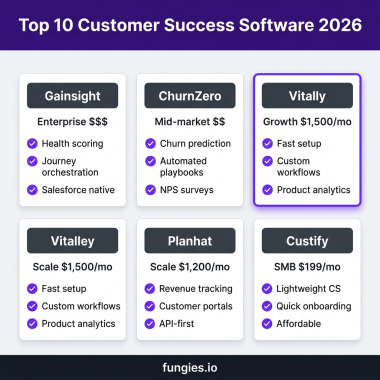
Customer success has evolved from a support function to a strategic growth driver. Proactive customer success management, including quarterly business reviews, health scoring, and expansion playbooks, has become essential for achieving high net revenue retention. The best customer success teams are measured on outcomes—customer ROI, adoption metrics, and expansion revenue—rather than traditional support metrics like ticket resolution time.
The SaaS ecosystem continues to mature, with established playbooks for every stage of company development. From seed-stage product-market fit validation to Series D+ scaling, founders have access to proven frameworks and experienced operators who have navigated similar journeys. This institutional knowledge has reduced the failure rate for SaaS startups while raising the bar for what constitutes exceptional performance.