Selling games online has never been more accessible for indie developers. With the global gaming market projected to exceed $200 billion by 2026, there’s never been a better time to monetize your creative work. Whether you’ve built a passion project in your spare time or you’re a full-time indie studio, this comprehensive guide will walk you through exactly how to sell games online — from choosing the right platform to handling payments, taxes, and marketing your release.
The landscape of game distribution has shifted dramatically. While Steam remains the dominant platform with over 120 million monthly active users, many developers are discovering the benefits of selling directly to players. Direct sales can offer revenue shares as high as 95% compared to Steam’s 30% cut, plus complete control over your customer relationships and marketing data.
Understanding Your Game Selling Options
Before diving into the technical setup, it’s crucial to understand the different platforms available for selling your games online. Each option comes with distinct advantages, revenue models, and levels of control over your distribution.
Digital Distribution Platforms
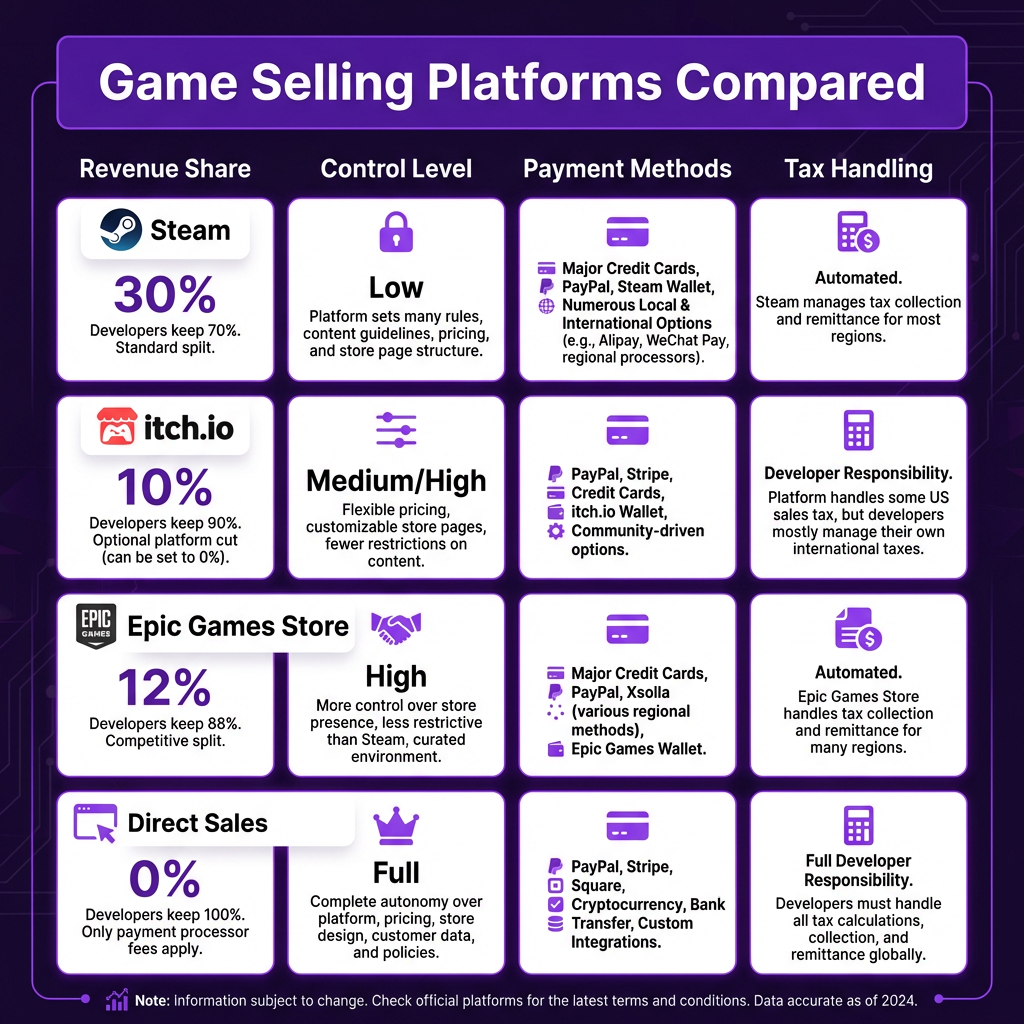
Steam remains the 800-pound gorilla of PC game distribution. With over 50,000 games available and a massive built-in audience, Steam offers unparalleled visibility potential. However, this comes at a cost: Steam takes a 30% revenue share, and standing out among thousands of releases requires significant marketing effort or luck with the algorithm.
Epic Games Store has emerged as a viable alternative, offering a more favorable 12% revenue share. Epic has also been aggressive about securing exclusive releases and offering free games to build their user base. For developers, this means less competition and potentially better visibility, though the user base is smaller than Steam’s.
itch.io caters specifically to indie developers and experimental games. With a flexible revenue share (default 10%, but customizable), itch.io has become the home for game jams, prototypes, and niche titles. The platform’s audience appreciates unique experiences and is often willing to pay for innovative concepts that might not find a home on mainstream platforms.
GOG (Good Old Games) focuses on DRM-free releases and has a dedicated following of players who value ownership. While the curation process is more selective, being on GOG signals quality to a certain segment of PC gamers.
Direct Sales: The Alternative Approach
Selling directly through your own website represents the ultimate in control and profitability. When you sell direct, you keep nearly 100% of your revenue (minus payment processing fees of roughly 3-5%). You own the customer relationship, collect valuable email addresses for future marketing, and can build a brand independent of any platform.
The challenge with direct sales has traditionally been the technical complexity. Setting up payment processing, handling global tax compliance (VAT, sales tax), managing download keys, and preventing fraud requires significant development time or expensive third-party solutions. This is where modern Merchant of Record services like Fungies.io have changed the game.
Step-by-Step: How to Sell Games Online
Now let’s walk through the practical process of setting up your game for online sales. Whether you choose a marketplace or direct sales, these steps will ensure you’re prepared for a successful launch.
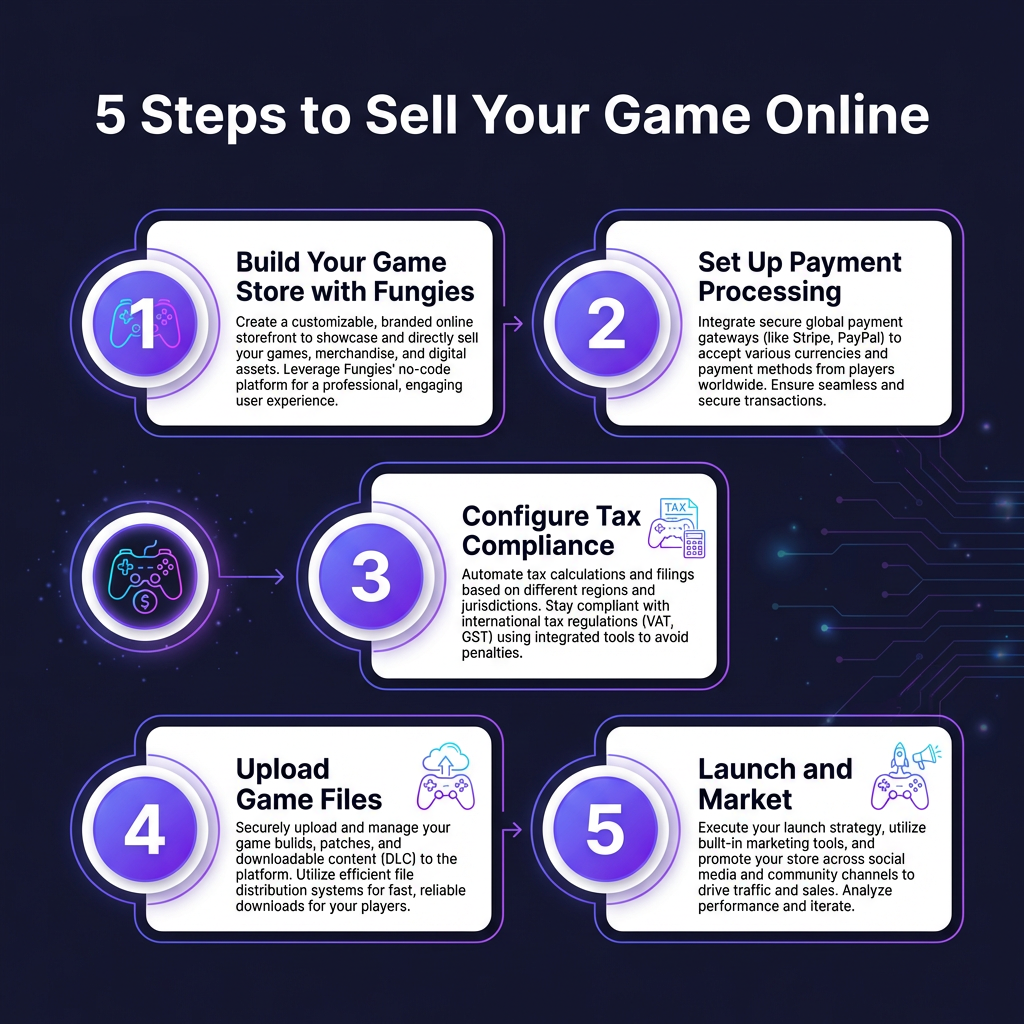
Step 1: Prepare Your Game for Distribution
Before you can sell anything, your game needs to be in a distributable state. This means creating builds for your target platforms (Windows, macOS, Linux), testing them thoroughly, and packaging them appropriately. Consider creating both a demo version and the full game — demos can significantly increase conversion rates by letting players try before they buy.
Your game should include proper metadata: a compelling description, system requirements, feature list, and high-quality screenshots or trailer. Store pages with video content see conversion rates up to 30% higher than those with images alone. Invest time in your store page copy — it’s your primary sales tool.
Step 2: Choose Your Selling Strategy
Most successful indie developers use a multi-platform approach. Launching on Steam provides access to the largest audience, while simultaneously selling direct through your own website captures the highest margins from your most dedicated fans. itch.io can serve as a home for early access versions, betas, or special editions.
Consider your game’s price point carefully. The $10-20 range works well for most indie titles, though shorter experiences might price at $5-10, while more ambitious projects can command $20-30. Research comparable games in your genre to find the sweet spot that maximizes both units sold and total revenue.
Step 3: Set Up Payment Processing
For direct sales, you’ll need a payment solution. Stripe and PayPal are the most common choices, offering developer-friendly APIs and broad international support. However, simply having payment processing isn’t enough — you need to handle the complex world of global tax compliance.
When selling digital products globally, you’re responsible for collecting and remitting VAT in the EU (20% average), sales tax in the US (varies by state), GST in Australia and New Zealand, and similar taxes in dozens of other jurisdictions. The compliance burden can be overwhelming for small studios. This is why many developers choose to work with a Merchant of Record like Fungies.io, which handles all tax collection, filing, and remittance automatically.
Step 4: Handle Distribution and Keys
Once payment is processed, players need access to their purchase. For direct sales, this means secure download links, ideally with expiring URLs to prevent unauthorized sharing. Many developers also provide Steam keys as a bonus for direct purchasers — this builds goodwill while still capturing the higher margin of the direct sale.
Consider offering multiple download options: a direct download for immediate play and a torrent option for players with slower connections. Cloud saves, achievements, and multiplayer features will require backend infrastructure if you’re not using a platform like Steam that provides these services.
Step 5: Launch and Market Your Game
Your launch strategy can make or break your game’s success. Build an email list during development through a website or newsletter. Engage with communities on Reddit (r/gamedev, r/indiegaming), Discord servers, and Twitter/X. Reach out to gaming press and streamers at least two weeks before launch.
Consider a launch discount of 10-20% to drive initial sales and generate reviews. The first 48 hours after launch are critical for visibility on most platforms. Have your social media posts ready, your email announcement scheduled, and your community engaged before you hit the launch button.
Tax Compliance: The Hidden Complexity
One of the most overlooked aspects of selling games online is tax compliance. When you sell digital products internationally, you become responsible for understanding and complying with tax laws in every jurisdiction where you have customers.
In the European Union, digital products are subject to VAT (Value Added Tax) at the rate of the customer’s country, not your own. This means tracking VAT rates across 27 member states, each with different rates ranging from 17% to 27%. You must register for VAT, collect the correct amount, file periodic returns, and remit payment — all in the appropriate currency.
The United States presents its own challenges with sales tax. Following the 2018 South Dakota v. Wayfair Supreme Court decision, you may have sales tax obligations in any state where you exceed certain sales thresholds (often $100,000 in revenue or 200 transactions annually). With 45 states plus local jurisdictions having sales taxes, compliance becomes a full-time job.
Other countries have their own requirements: GST in Australia and New Zealand, consumption tax in Japan, digital services taxes in several jurisdictions. The complexity grows with every sale across borders.
FAQ: Selling Games Online
Do I need a company to sell games online?
No, you can sell games as an individual in most jurisdictions. However, forming an LLC or equivalent can provide liability protection and may offer tax advantages. Consult with a local accountant to understand the best structure for your situation.
What percentage does Steam take from game sales?
Steam takes a 30% revenue share for most developers. This drops to 25% after $10 million in sales and 20% after $50 million. For the vast majority of indie developers, expect to pay the full 30%.
How do I handle refunds when selling direct?
Most payment processors allow you to issue refunds through their dashboard. It’s recommended to offer refunds within a reasonable window (14-30 days) if the game hasn’t been played extensively. Good refund policies build trust with customers.
Can I sell my game on multiple platforms simultaneously?
Yes, and most developers do. There’s no exclusivity requirement unless you’ve specifically agreed to one (such as for Epic Games Store exclusives). Selling on Steam, itch.io, and your own website simultaneously is a common and recommended strategy.
What’s the best platform for first-time game developers?
itch.io is often recommended for first releases due to its indie-friendly community, low revenue share, and minimal barrier to entry. Itch allows you to build an audience and gather feedback before potentially pursuing Steam release.
Conclusion: Your Path to Game Sales Success
Selling games online offers unprecedented opportunities for independent developers. The key is choosing the right mix of platforms for your goals, handling the technical and compliance requirements professionally, and building a marketing strategy that connects your game with its audience.
For developers who want maximum control and profitability without the compliance headaches, direct sales through a Merchant of Record service represents the best of both worlds. You maintain your brand, keep the vast majority of your revenue, and let experts handle the complex world of global tax compliance.
Whatever path you choose, remember that the quality of your game comes first. No marketing strategy can save a poor product, but even great games need smart distribution to find their audience. Start planning your distribution strategy early, build your community during development, and launch with confidence knowing you’ve set yourself up for success.
Ready to Sell Your Game Directly to Players?
Join hundreds of indie developers using Fungies.io — your own game store, automated tax compliance, and keep 100% of your revenue.
No credit card required • Setup in minutes