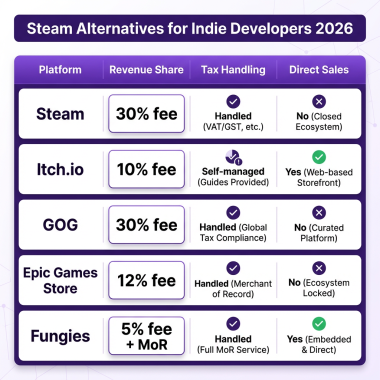
Selling digital products has never been more accessible. Whether you’re creating ebooks, online courses, templates, or software, the right platform can make the difference between a side hustle and a thriving business. In this guide, we’ll compare the best platforms to sell digital products in 2026, analyzing fees, features, and who each platform is best suited for.
The digital products market is booming — creators earned over $50 billion from digital downloads in 2025, and that number continues to grow. But with so many options available, choosing the right platform can feel overwhelming. Should you prioritize low fees, built-in marketing tools, or global tax compliance? Let’s break it down.
Why the Right Platform Matters
Your choice of platform affects everything from your profit margins to your customer experience. High transaction fees can eat into your revenue — a 10% fee on a $100 product means losing $10 on every sale. Payment processing limitations can block international customers. And tax compliance? That’s a headache many creators don’t realize they need to handle until it’s too late.
The best platforms handle the technical complexities — payment processing, file delivery, sales tax collection, and VAT compliance — so you can focus on creating. Here’s what to look for when evaluating platforms:
- Transaction fees: What percentage does the platform take per sale?
- Monthly costs: Is there a subscription fee or is it free to start?
- Payment methods: Does it support credit cards, PayPal, Apple Pay, and local methods?
- Tax compliance: Does the platform handle sales tax and VAT automatically?
- Customization: Can you brand your storefront and checkout experience?
- Marketing tools: Built-in email marketing, affiliate programs, or upsells?
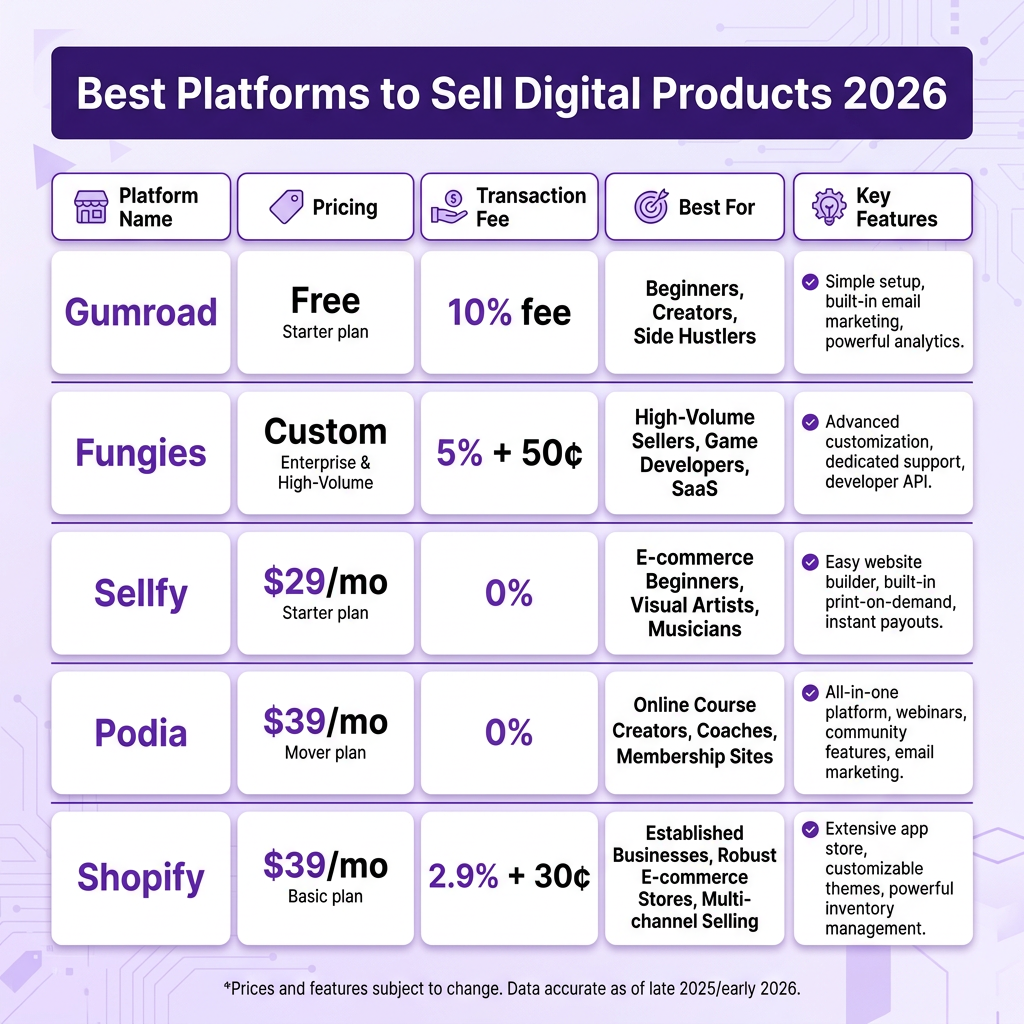
Top 7 Platforms to Sell Digital Products
1. Gumroad
Best for: Beginners and creators testing the waters
Gumroad is the go-to platform for creators starting out. It’s free to use with no monthly fees — you only pay when you make a sale. The platform takes a flat 10% + 30¢ per transaction, which includes payment processing fees.
Pros: No monthly fees, easy setup, built-in email marketing, audience analytics, supports memberships and subscriptions
Cons: High transaction fees (10%), limited customization, no automatic tax compliance for international sales
Pricing: Free to start; 10% + 30¢ per transaction
2. Fungies.io
Best for: Creators who want global tax compliance handled automatically
Fungies.io stands out as a Merchant of Record platform that handles the complex tax compliance side of selling digital products. When you sell through Fungies, they become the seller of record — meaning they handle VAT, sales tax, and regulatory compliance globally. This is huge for creators selling to international customers.
Pros: Automatic global tax compliance (VAT/sales tax), competitive fees (5% + 50¢), 50+ payment methods, customizable checkout, no monthly fees
Cons: Less brand recognition than Gumroad, newer platform
Pricing: No monthly fees; 5% + 50¢ per transaction (includes payment processing and tax compliance)
3. Sellfy
Best for: Creators selling multiple product types (digital + physical)
Sellfy is an underrated gem for creators who want flexibility. You can sell digital products, subscriptions, and even print-on-demand merchandise from a single storefront. Unlike Gumroad, Sellfy charges a monthly subscription but offers 0% transaction fees on higher-tier plans.
Pros: No transaction fees on higher plans, supports digital + physical products, built-in print-on-demand, customizable storefront
Cons: Monthly subscription required ($29+/mo), limited marketing features compared to competitors
Pricing: Starter $29/mo, Business $79/mo, Premium $159/mo
4. Podia
Best for: Course creators and coaches
Podia is designed specifically for creators selling courses, memberships, and digital downloads. The platform shines with its clean course builder and community features. While pricier than Gumroad, Podia charges 0% transaction fees — you keep everything except standard payment processing (2.9% + 30¢).
Pros: 0% platform fees, excellent course builder, community features, email marketing included, affiliate management
Cons: Higher monthly cost ($39+/mo), limited design customization, no built-in tax compliance
Pricing: Mover $39/mo, Shaker $89/mo
5. Shopify
Best for: Creators building a full e-commerce brand
Shopify is the heavyweight of e-commerce platforms. While overkill for simple digital products, it’s ideal if you’re building a serious brand with multiple product lines. You’ll need the Digital Downloads app (free) to sell digital files, and Shopify handles the infrastructure for unlimited products.
Pros: Professional storefront, extensive app ecosystem, powerful analytics, scalable for growth, 24/7 support
Cons: Monthly subscription ($39+/mo), transaction fees unless using Shopify Payments, complex setup, no automatic tax compliance for digital goods
Pricing: Basic $39/mo, Shopify $105/mo, Advanced $399/mo + payment processing fees
6. Payhip
Best for: Budget-conscious creators wanting instant payouts
Payhip offers a compelling middle ground — free to start with a 5% transaction fee, or upgrade to Pro for $99/mo with 0% fees. The standout feature? Instant payouts to your PayPal or Stripe account. No waiting weeks for your money.
Pros: Instant payouts, EU VAT handling included, affordable pricing, supports memberships and courses
Cons: Limited customization options, basic analytics, less polished than competitors
Pricing: Free (5% fee) or Pro $99/mo (0% fee)
7. Lemon Squeezy
Best for: Software and SaaS creators
Lemon Squeezy has become the darling of the indie software community. Beyond digital products, it excels at software licensing, subscriptions, and SaaS billing. The platform handles global tax compliance automatically — a major plus for software sellers.
Pros: Software licensing built-in, global tax compliance, beautiful checkout experience, affiliate program included
Cons: Higher fees (5% + 50¢), limited customization, software-focused (less ideal for other digital products)
Pricing: Free to start; 5% + 50¢ per transaction
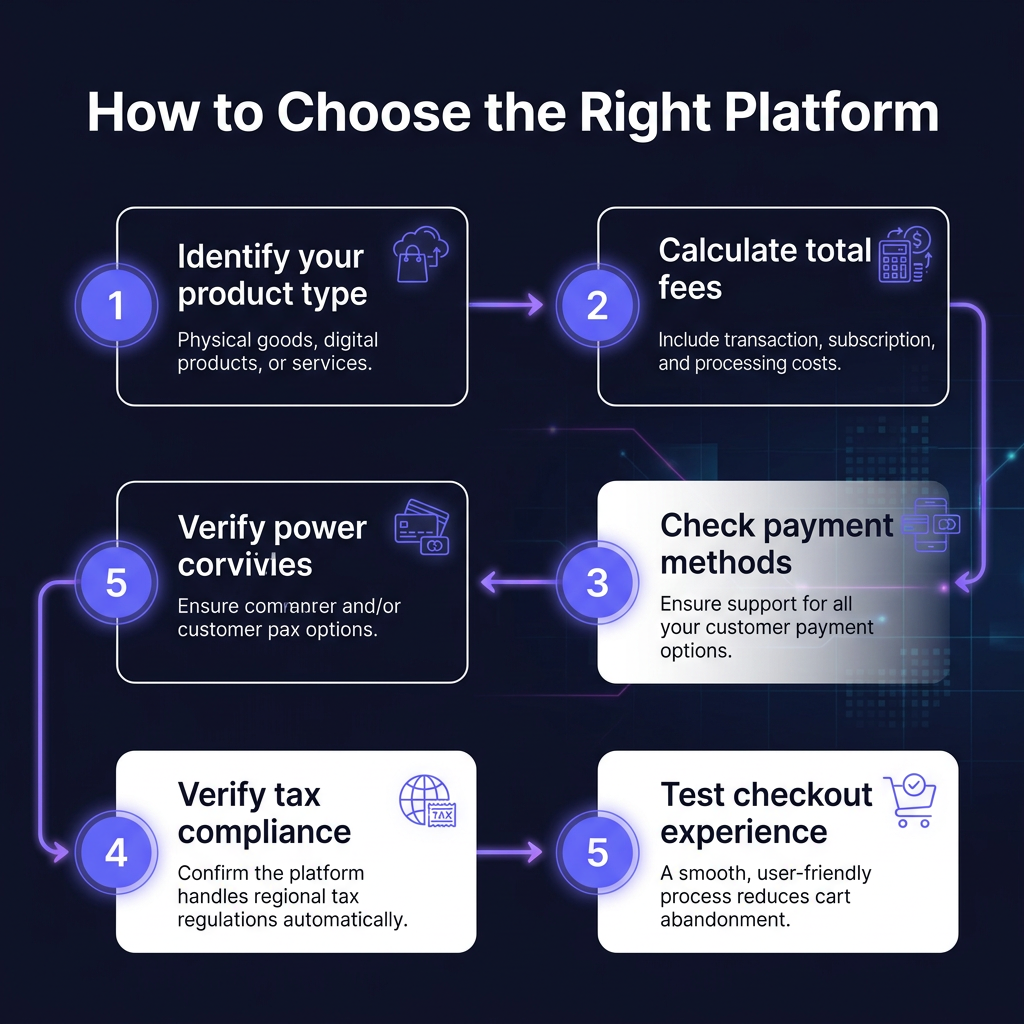
How to Choose the Right Platform
With so many options, how do you pick? Here’s a simple framework:
Step 1: Identify your product type. Are you selling simple downloads (ebooks, templates), courses, software licenses, or subscriptions? Different platforms excel at different product types.
Step 2: Calculate total fees. Don’t just look at the percentage — factor in monthly costs and payment processing. A platform with 0% fees but a $99/mo subscription only makes sense if you’re selling significant volume.
Step 3: Check payment methods. Ensure the platform supports how your customers want to pay. Credit cards are essential, but PayPal, Apple Pay, and local methods can boost conversion rates.
Step 4: Verify tax compliance. If you’re selling internationally (and you should be), tax compliance is crucial. Platforms like Fungies and Lemon Squeezy handle this automatically; others leave it to you.
Step 5: Test the checkout experience. Go through the buying process yourself. A clunky checkout kills conversions. The best platforms offer one-click purchases and mobile-optimized flows.
Platform Comparison at a Glance
| Platform | Monthly Cost | Transaction Fee | Best For |
|---|---|---|---|
| Gumroad | Free | 10% + 30¢ | Beginners |
| Fungies | Free | 5% + 50¢ | Global tax compliance |
| Sellfy | $29/mo | 0% | Digital + physical |
| Podia | $39/mo | 0% | Courses |
| Shopify | $39/mo | 2.9% + 30¢ | Full e-commerce |
| Payhip | Free | 5% | Instant payouts |
| Lemon Squeezy | Free | 5% + 50¢ | Software/SaaS |
FAQ
What’s the cheapest platform to sell digital products?
Gumroad and Payhip are free to start, making them ideal for testing. However, Gumroad’s 10% fee adds up at scale. For higher volumes, a platform with monthly fees but 0% transaction fees (like Sellfy or Podia) becomes more economical.
Do I need to collect sales tax when selling digital products?
Yes, in most jurisdictions. In the US, sales tax applies to digital products in most states. In the EU, VAT is required on all digital sales to consumers. Platforms like Fungies and Lemon Squeezy handle this automatically; on others, you’re responsible for compliance.
Can I use multiple platforms?
Absolutely. Many creators start on Gumroad for its simplicity, then migrate to platforms with lower fees as they grow. You can also use different platforms for different products — courses on Podia, templates on Gumroad, software licenses on Lemon Squeezy.
What’s the best platform for selling internationally?
For global sales, prioritize platforms that handle tax compliance. Fungies and Lemon Squeezy automatically calculate and remit VAT/sales tax worldwide. Without this, you’ll need to register for tax in each jurisdiction where you have customers — a significant burden.
How do I drive traffic to my digital products?
Platform choice matters less than marketing. Successful creators build audiences through content marketing (blogs, YouTube, social media), email lists, and partnerships. The platform is just the checkout — you bring the customers.
Conclusion
Choosing the best platform to sell digital products depends on your specific needs. For beginners, Gumroad offers the easiest start with no upfront costs. For creators prioritizing global tax compliance, Fungies and Lemon Squeezy handle the complexity automatically. For course creators, Podia provides the best dedicated features.
Start by identifying your must-have features, calculate the true cost based on your expected sales volume, and test the checkout experience. The right platform will grow with your business, handling the technical details while you focus on creating products your audience loves.
Ready to Simplify Your Payment Compliance?
Join hundreds of creators using Fungies.io — automated tax compliance, 50+ payment methods, global Merchant of Record.
No credit card required
Last updated: May 2026. Platform features and pricing change frequently — verify current details before signing up.