The digital product market is exploding. In 2026, creators are earning anywhere from $1,000 to $100,000+ per month selling digital downloads — all without inventory, shipping, or overhead costs. But here’s the truth: not all digital product niches are created equal. Some are oversaturated. Others are hidden goldmines waiting to be tapped.
In this guide, we’ll break down the 15 most profitable digital product niches for 2026, backed by real market data and creator success stories. Whether you’re just starting or looking to pivot your existing business, this list will help you find a niche that matches your skills with market demand.
Why Digital Products Are the Ultimate Business Model in 2026
Before diving into specific niches, let’s understand why digital products have become the go-to business model for modern entrepreneurs:
- Zero Marginal Cost: Create once, sell infinitely. Whether you sell 10 copies or 10,000, your production cost stays the same.
- Global Reach: Sell to customers in 190+ countries without worrying about shipping, customs, or logistics.
- Instant Delivery: Customers get immediate access, leading to higher satisfaction and fewer support tickets.
- High Profit Margins: With no physical materials or storage costs, profit margins often exceed 80-90%.
- Passive Income Potential: Automated systems can handle sales, delivery, and even customer support while you sleep.
According to recent industry data, the digital product market is projected to reach $500+ billion by 2027. The creators who win in this space aren’t just creating great products — they’re choosing the right niches.
The 15 Most Profitable Digital Product Niches for 2026
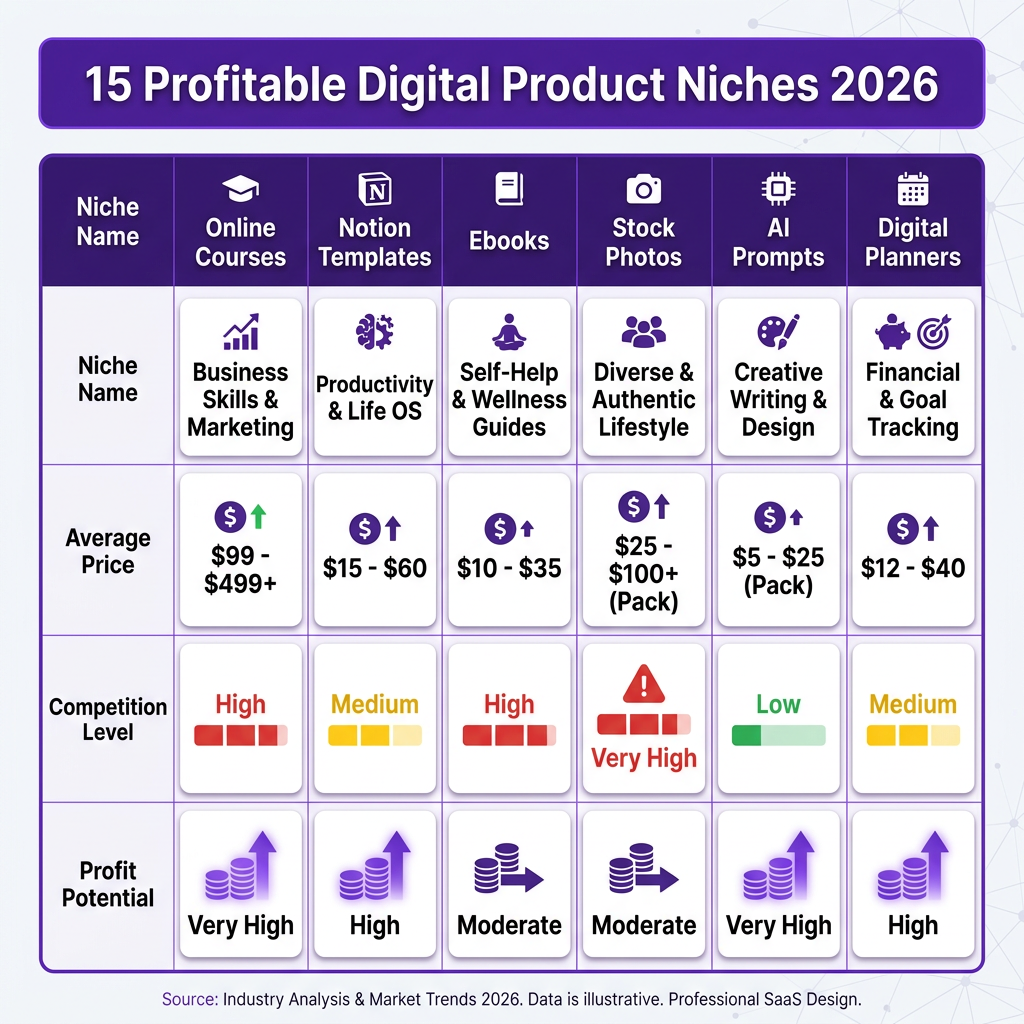
1. Online Courses and Educational Content
Average Price Point: $47-$997 | Market Growth: 15% YoY
Online learning isn’t slowing down. From coding bootcamps to watercolor painting, people are paying premium prices for structured knowledge. The key is specificity — “Python for Data Science” outperforms generic “Learn to Code” courses. Top creators on platforms like Teachable and Podia are earning $10,000-$50,000 per month.
2. Notion Templates and Productivity Systems
Average Price Point: $9-$49 | Market Growth: 35% YoY
Notion has 30+ million users, and many will pay for pre-built templates that save hours of setup. Top sellers include content calendars, habit trackers, and business dashboards. Thomas Frank famously earned over $1 million from his Notion templates. The barrier to entry is low, and demand continues to surge.
3. Ebooks and Digital Guides
Average Price Point: $7-$47 | Market Growth: 8% YoY
Ebooks remain one of the fastest digital products to create and validate. With AI tools, you can produce a complete formatted ebook in days, not months. The sweet spot is 50-150 pages packed with actionable insights. Fiction, self-help, and how-to guides consistently top the charts.
4. Stock Photos and Visual Assets
Average Price Point: $5-$199 per bundle | Market Growth: 12% YoY
Businesses, bloggers, and marketers constantly need fresh visuals. Instead of competing on generic stock sites, successful creators sell themed bundles directly — “50 Instagram Story Templates for Coaches” or “100 AI-Generated Backgrounds for Podcasters.” Quality and specificity beat quantity.
5. AI Prompts and Prompt Libraries
Average Price Point: $9-$97 | Market Growth: 200%+ YoY
This is the newest high-margin digital product category. As AI tools explode, users need proven prompts to get quality results. Collections of “100 Midjourney Prompts for Realistic Portraits” or “50 ChatGPT Prompts for Marketing Copy” are selling like hotcakes. First-mover advantage is real here.
6. Digital Planners and Journals
Average Price Point: $5-$25 | Market Growth: 18% YoY
GoodNotes and similar apps have created a massive market for digital planners. Budget planners, fitness trackers, and gratitude journals are perennial favorites. The key is beautiful design and hyper-specific use cases — “Wedding Planning Journal” or “90-Day Fitness Transformation Tracker.”
7. Software Templates and Themes
Average Price Point: $29-$299 | Market Growth: 10% YoY
WordPress themes, Webflow templates, Framer sites, and Shopify themes command premium prices. Businesses need professional designs without hiring agencies. A single high-quality theme can generate $5,000-$20,000 per month on marketplaces or through direct sales.
8. Music, Sound Effects, and Audio Assets
Average Price Point: $15-$149 per pack | Market Growth: 14% YoY
YouTubers, podcasters, and game developers need royalty-free audio. Lo-fi beats for studying, sound effects for video editing, and background music for content creation are in constant demand. Bundles organized by mood or use case perform best.
9. Printable Art and Wall Decor
Average Price Point: $5-$35 | Market Growth: 11% YoY
Minimalist prints, motivational quotes, and nursery art are evergreen sellers on Etsy and independent shops. The beauty is customers print at home or at local shops — zero fulfillment for you. Seasonal collections (holiday decor, back-to-school) create recurring revenue spikes.
10. Memberships and Subscription Content
Average Price Point: $9-$99/month | Market Growth: 22% YoY
Recurring revenue is the holy grail. Exclusive content libraries, monthly template drops, or community access create predictable income. The key is consistent value delivery — members stay when they see ongoing benefits.
11. Presets and Filters (Lightroom, Photoshop, VSCO)
Average Price Point: $15-$75 per pack | Market Growth: 9% YoY
Photographers and Instagram creators pay for one-click editing solutions. Moody presets, bright and airy filters, and vintage film looks consistently sell. Before/after examples are crucial for marketing these products effectively.
12. Spreadsheets and Business Tools
Average Price Point: $19-$79 | Market Growth: 16% YoY
Budget trackers, content calendars, and business dashboards built in Excel or Google Sheets solve real problems. Freelancers and small business owners pay for tools that save them time. The more automated and user-friendly, the higher the price you can command.
13. 3D Models and Assets
Average Price Point: $10-$200+ | Market Growth: 25% YoY
Game developers, 3D artists, and AR/VR creators need ready-made assets. Characters, environments, and props for Unity, Unreal Engine, and Blender are in high demand. Quality matters enormously — professional-grade assets command premium prices.
14. Fonts and Typography
Average Price Point: $15-$65 per family | Market Growth: 7% YoY
Designers constantly seek unique typography. Display fonts, script fonts, and complete font families sell well, especially when they fill a specific aesthetic gap. Vintage, modern, and handwritten styles are perennial favorites.
15. Done-for-You Systems and Workflows
Average Price Point: $47-$497 | Market Growth: 28% YoY
This is where high-ticket digital products shine. Complete email marketing sequences, sales funnel templates, and client onboarding systems save businesses dozens of hours. The ROI is clear — pay $197 once, save 40 hours of work.
How to Choose the Right Niche for You
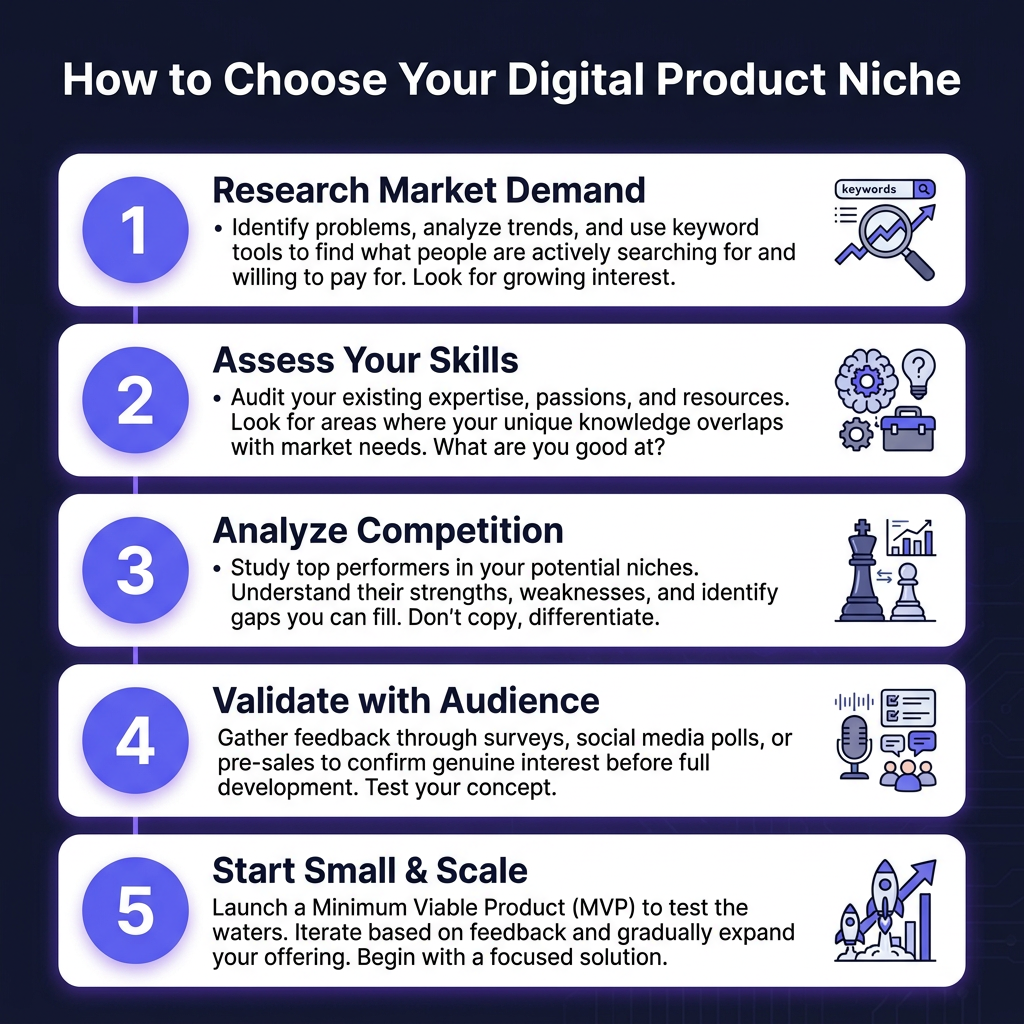
Not every profitable niche is right for every creator. Here’s a 5-step framework to find your perfect match:
Step 1: Research Market Demand
Use tools like Google Trends, keyword research tools, and marketplace browsing to validate demand. Look for niches with steady or growing interest, not fading trends. Check competitor reviews — what are customers complaining about? That’s your opportunity.
Step 2: Assess Your Skills and Interests
The best niche sits at the intersection of: what you’re good at, what you enjoy, and what the market wants. If you hate writing, don’t start with ebooks. If you love design, templates and presets might be perfect.
Step 3: Analyze Competition Intelligently
Competition isn’t bad — it validates demand. But look for gaps. Are existing products outdated? Poorly designed? Missing key features? Can you serve a specific sub-niche better than generalists?
Step 4: Validate with Real Customers
Before investing months building, test demand. Create a landing page, run a small ad campaign, or pre-sell your idea. If people won’t pay for the promise, they won’t pay for the product.
Step 5: Start Small and Scale
Don’t try to dominate a niche overnight. Launch a minimum viable product, gather feedback, and iterate. Successful creators often start with one product, learn what works, then expand their catalog.
FAQ: Digital Product Niches
Which digital product niche has the highest profit margins?
Online courses and done-for-you systems typically have the highest margins (85-95%) because they command premium prices with minimal ongoing costs. AI prompts are also extremely high-margin due to low creation time.
What’s the easiest digital product to start with?
Notion templates and simple ebooks have the lowest barriers to entry. You can create your first product in a weekend using free tools. These are perfect for testing the waters before investing in more complex products.
How do I price my digital products?
Research competitor pricing, then position based on value. If your product saves 10 hours of work at $50/hour, charging $97 is a no-brainer for customers. Don’t compete on price — compete on value and outcomes.
Can I sell digital products without a website?
Yes! Platforms like Gumroad, Payhip, and Fungies.io let you sell directly through their infrastructure. You get a hosted storefront, payment processing, and delivery — no technical setup required.
How long does it take to make money selling digital products?
With the right niche and marketing, creators often see first sales within 30 days. However, building a sustainable business typically takes 6-12 months of consistent effort, product creation, and audience building.
Conclusion: Your Niche is Waiting
The digital product revolution isn’t slowing down — it’s accelerating. The creators who succeed in 2026 and beyond will be those who pick the right niche, create genuine value, and market strategically.
Whether you choose high-ticket courses, trendy Notion templates, or cutting-edge AI prompts, the opportunity is real. The market is massive. The barriers are low. The only question is: which niche will you dominate?
Start today. Validate tomorrow. Scale forever.
Ready to Launch Your Digital Product Business?
Fungies.io handles payments, tax compliance, and global delivery — so you can focus on creating.
Start Free Trial →No credit card required • Instant setup