Building a professional website for your game isn’t optional anymore — it’s essential. Whether you’re an indie developer preparing for a Steam launch or a solo creator selling directly to players, your gaming website is your digital storefront, your press kit, and your community hub all rolled into one.
But here’s the problem: most website builders aren’t built for games. They’re designed for restaurants, law firms, or e-commerce stores selling physical products. You need something that understands screenshots, trailers, system requirements, and direct game sales.
I’ve spent weeks testing the top platforms specifically for game developers. In this guide, I’ll break down the 10 best gaming website builders in 2026 — what makes each one unique, who it’s best for, and how much it’ll cost you.
Why Indie Game Developers Need Specialized Website Builders
Before diving into the platforms, let’s talk about why you can’t just use Squarespace or Wix and call it a day. Game websites have unique requirements that generic builders struggle with:
- Media-heavy layouts: You need to showcase trailers, screenshots, and GIFs without slowing down load times. A game page might have 20+ high-res images and multiple embedded videos.
- System requirements: Clean display of minimum and recommended specs in a format PC gamers expect to see.
- Direct sales integration: Selling downloads, keys, or in-game items directly without routing through a marketplace that takes 30%.
- Press kit functionality: Journalists need easy access to logos, screenshots, and fact sheets — and they need it fast.
- Community features: Discord integration, newsletter signup, update logs, and wishlist buttons.
The right platform handles all of this without you writing a single line of code. The wrong one leaves you hacking together plugins and workarounds that break every time you need to update your site.
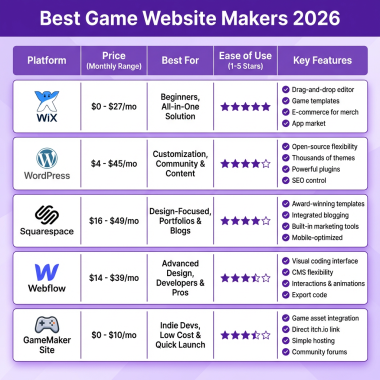
1. GameMaker Site — Best for GameMaker Studio Users
If you’re already building your game in GameMaker Studio, their website builder is the obvious choice. It’s deeply integrated with their ecosystem — you can pull screenshots, metadata, and even pricing directly from your game project.
The setup is genuinely zero-friction. Connect your GameMaker account, pick a template, and your game info auto-populates. The templates are designed specifically for games, with sections for features, trailers, and purchase links already built in.
Key Features: Automatic game data sync, built-in store integration, press kit generator, trailer embedding, responsive design
Pricing: Free for GameMaker Studio users; $9/month for custom domain
Best For: Developers already in the GameMaker ecosystem who want zero-friction setup
2. Itch.io Pages — Best for Early Prototypes
Itch.io isn’t just a store — their page builder is surprisingly powerful for simple game sites. The community is built-in, which means instant visibility to players already browsing for indie games.
What makes Itch.io special is the culture. Players there expect experimental, weird, and unfinished games. You can upload a prototype on Tuesday and have feedback by Thursday. The devlog feature lets you document your development journey, building an audience before launch.
Key Features: Zero setup time, built-in audience of 20M+ gamers, pay-what-you-want pricing, devlog integration, community comments, jam integration
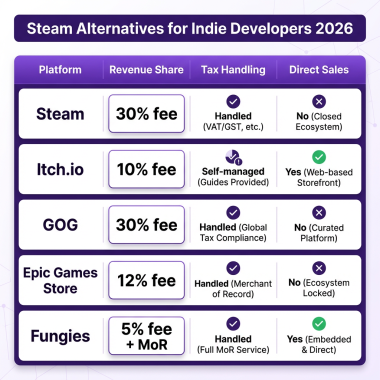
Pricing: Free (10% revenue share on sales, can be adjusted down to 0%)
Best For: Jam games, early prototypes, and developers testing market interest
3. PressKit() — Best for Press Pages
Created by Rami Ismail of Vlambeer fame, PressKit() is the industry standard for game press kits. It’s not a full website builder, but if you need a professional press page that journalists actually want to use, this is it.
Here’s why it matters: journalists are busy. They cover dozens of games per week. If your press kit makes their job harder, they’ll skip you. PressKit() puts everything in one place — facts, quotes, awards, trailers, downloadable assets — in a format they recognize.
Key Features: Automatic fact sheet generation, downloadable assets in multiple formats, trailer embeds, awards section, quotes management, team bios
Pricing: Free (open source)
Best For: Any developer who wants press coverage — use alongside your main site
4. Webflow — Best for Custom Design
Webflow gives you complete design freedom without writing code. Their templates are gorgeous, and the CMS handles game portfolios beautifully. The learning curve is steeper than drag-and-drop builders, but the results speak for themselves.
Where Webflow shines is animation and interaction. You can create the kind of immersive, scrolling experiences that big studios pay agencies six figures to build. For a standout indie game, that visual polish can be the difference between a wishlist and a purchase.
Key Features: Visual CSS editor, CMS collections for games, advanced animations, SEO control, custom interactions, hosting included
Pricing: $14-39/month
Best For: Design-conscious developers who want a unique, branded experience
5. Squarespace — Best for Non-Technical Creators
Squarespace templates are polished and professional. While not game-specific, their portfolio templates work well for single-game sites, and the e-commerce features handle direct sales competently.
The real advantage here is simplicity. You can have a professional-looking site live in an afternoon. Their templates are genuinely beautiful — better than most developers could design themselves without significant effort.
Key Features: Beautiful templates, built-in analytics, email marketing, appointment booking, member areas, e-commerce
Pricing: $16-49/month
Best For: Solo devs who prioritize ease of use over game-specific features
6. Carrd — Best for Single-Page Sites
Carrd specializes in simple, single-page websites. For a game launch or landing page, it’s perfect. You won’t build a complex studio site here, but for a focused campaign, Carrd is fast and affordable.
The templates are modern and mobile-first. You can add email capture, embed trailers, and link to your store pages. For under $20/year, you get a custom domain and pro features — hard to beat that value.
Key Features: Lightning-fast setup, responsive by default, form integrations, custom domains, embed support
Pricing: Free tier; $19/year for pro features
Best For: Landing pages, email capture, and simple game announcements
7. WordPress + Game Themes — Best for Content Marketing
WordPress powers 43% of the web for a reason. With game-specific themes like GameZone or PlayerX, you get gaming-focused layouts with the full power of WordPress’s blogging and SEO capabilities.
If you’re serious about content marketing — devlogs, behind-the-scenes posts, SEO traffic — WordPress is unbeatable. The plugin ecosystem means you can add almost any functionality without custom development.
Key Features: Unlimited customization, SEO plugins (Yoast, RankMath), blogging platform, community plugins, WooCommerce for sales
Pricing: $5-25/month hosting + $30-80 theme
Best For: Studios planning regular content marketing and long-term SEO growth
8. Wix — Best Drag-and-Drop Simplicity
Wix’s editor is the most intuitive on this list. Their gaming templates have improved significantly, and the App Market adds functionality like Discord widgets and Twitch embeds.
The ADI (Artificial Design Intelligence) can build a site for you after answering a few questions. It’s not perfect, but it’s a fast starting point you can customize.
Key Features: True drag-and-drop, 900+ templates, app marketplace, booking system, e-commerce
Pricing: $11-39/month
Best For: Beginners who want maximum visual control with minimum learning
9. Shopify — Best for Merchandise + Games
If you’re selling physical merchandise alongside digital games, Shopify is unbeatable. Their digital downloads app handles game sales, while the core platform manages shirts, posters, and collectibles.
The inventory management is enterprise-grade. If you’re running a Kickstarter with physical rewards or building a brand with merchandise, Shopify scales from your first sale to millions.
Key Features: E-commerce powerhouse, digital downloads, inventory management, global shipping, POS integration
Pricing: $29-299/month + 2.9% + 30¢ per transaction
Best For: Developers with merchandise lines or planning physical rewards
10. Fungies.io — Best for Direct Game Sales
Full disclosure: I work with Fungies. But I’m including them because they actually solve a real problem — selling games directly without handling VAT, sales tax, or payment processor headaches.
Fungies is a Merchant of Record, which means they handle all the tax compliance, fraud prevention, and payment processing. You get a checkout that works globally, and they remit taxes for you. No more worrying about EU VAT thresholds or US sales tax nexus.
The checkout embeds into any website — WordPress, Webflow, Carrd, whatever you’re using. Players get a seamless experience, and you get paid without the compliance burden.
Key Features: Global tax compliance (VAT, sales tax), 50+ payment methods, no-code checkout embed, instant payouts, fraud protection
Pricing: Transaction-based (no monthly fees)
Best For: Developers who want to sell direct but avoid tax and compliance complexity
Ready to Monetize Your Game?
Join hundreds of indie developers using Fungies.io — automated payments, global tax compliance, and 50+ payment methods built for game creators.
No credit card required
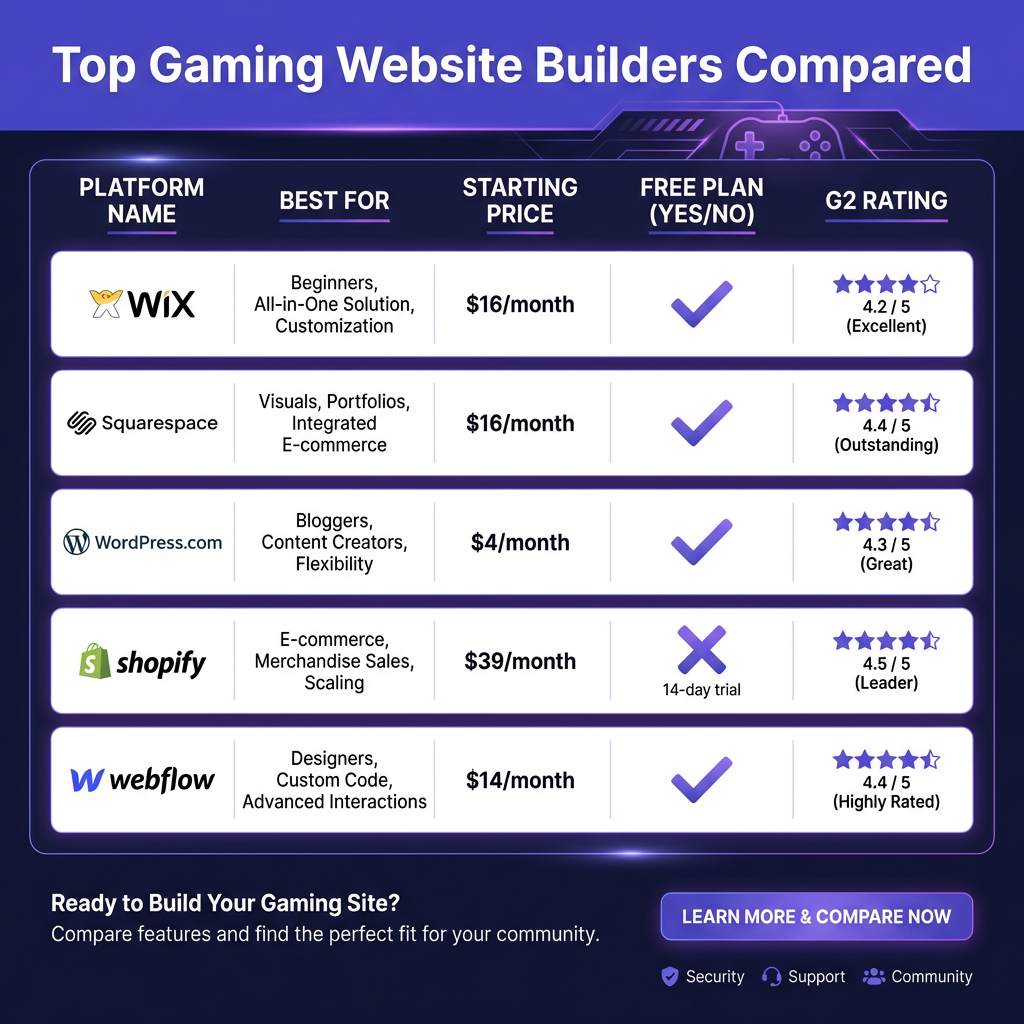
Comparison Table: Quick Reference
| Platform | Best For | Starting Price | Free Plan |
|---|---|---|---|
| GameMaker Site | GameMaker users | $9/mo | ✓ |
| Itch.io | Prototypes | 10% rev share | ✓ |
| PressKit() | Press pages | Free | ✓ |
| Webflow | Custom design | $14/mo | ✗ |
| Squarespace | Non-technical | $16/mo | ✗ |
| Carrd | Landing pages | $19/yr | ✓ |
| WordPress | Content marketing | $5/mo | ✗ |
| Wix | Beginners | $11/mo | ✓ |
| Shopify | Merchandise | $29/mo | ✗ |
| Fungies | Direct sales | Per transaction | ✓ |
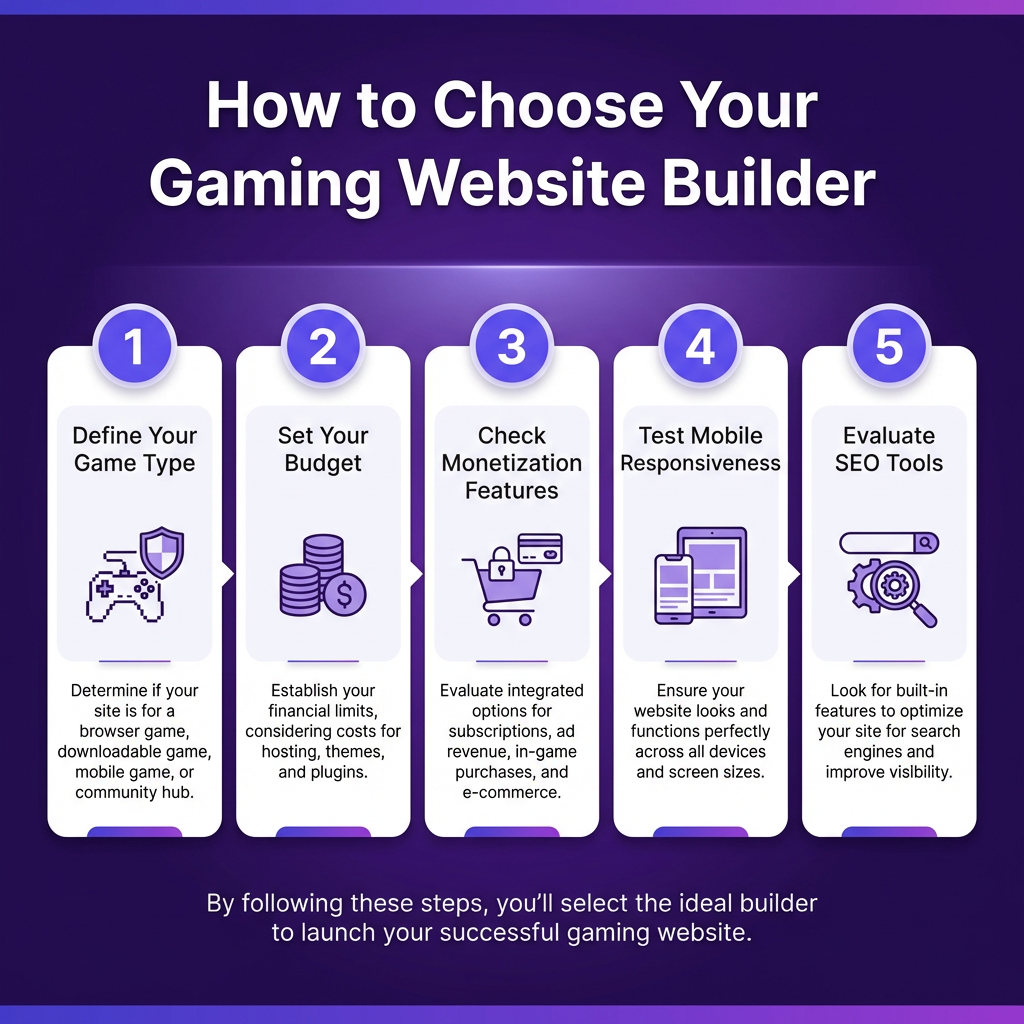
How to Choose: A 5-Step Framework
Still not sure which platform is right for you? Here’s a simple decision framework:
Step 1: Define Your Game Type
Are you building a quick prototype for a game jam, or a commercial release with a marketing budget? Prototypes go to Itch.io. Commercial releases need more professional platforms like Webflow or WordPress.
Step 2: Set Your Budget
Free options exist (Itch.io, PressKit(), Carrd free tier), but you’ll compromise on branding and features. Expect to spend $10-30/month for a professional site with a custom domain.
Step 3: Check Monetization Features
If you’re selling direct, you need more than just a “buy” button. Consider tax compliance, payment methods, and key distribution. Fungies handles this; other platforms require integrations.
Step 4: Test Mobile Responsiveness
Over 60% of game discovery happens on mobile. Every platform on this list is responsive, but test your actual site on real devices. What looks good on desktop might be a mess on phones.
Step 5: Evaluate SEO Tools
If you want organic traffic from Google, you need SEO control. WordPress and Webflow excel here. Squarespace and Wix are adequate. Itch.io and Carrd give you almost no control.
FAQ: Gaming Website Builders
Do I need a separate website if I’m selling on Steam?
Yes. Your Steam page is for conversion, but you need a website for discovery. Press, influencers, and potential players will Google your game name — you want to control what they find. Plus, a website lets you capture emails for launch notifications and build an audience independent of any platform.
Can I sell games directly from these builders?
Most support direct sales, but you’ll need a payment processor. For simple setups, Itch.io or Fungies handle everything including tax compliance. For WordPress or Webflow, you’ll integrate Stripe or PayPal — but remember, that makes you responsible for global tax compliance, which gets complex fast.
What’s the cheapest option for a solo developer?
Itch.io is free (just revenue share). Carrd is $19/year for a custom domain. If you need e-commerce, Fungies has no monthly fees — you only pay when you make sales. For a professional site under $50/year, Carrd + Fungies checkout is a powerful combo.
Do these builders handle game keys and downloads?
Itch.io and Fungies handle key distribution and downloads natively. For other platforms, you’ll need to integrate a service like Keymailer, SendOwl, or build your own delivery system. Steam keys are easy — just generate them in Steamworks and distribute via email.
Which builder is best for SEO?
WordPress with Yoast or RankMath gives you the most control over meta tags, sitemaps, and structured data. Webflow has excellent SEO tools built-in. Squarespace and Wix are decent for basics but lack advanced optimization. If SEO is a priority, avoid closed platforms like Itch.io for your main site.
Final Thoughts
The “best” gaming website builder depends on where you are in your development journey. Early prototypes? Itch.io. Press coverage? PressKit(). Full studio site with blog? WordPress. Direct sales without tax headaches? Fungies.
My recommendation: start simple. Use Itch.io or Carrd for your first game. As you grow, invest in a more robust platform. The most important thing isn’t which builder you choose — it’s that you have a professional presence when players, press, and publishers search for your game.
Your website is often the first impression you make. Make it count. Now go build that site — your future players are searching for you right now.