Muck has taken the indie gaming world by storm. This free survival roguelike, developed by Dani and released in 2021, has amassed over 10 million downloads on Steam alone. But what makes this simple-looking game so addictive? And why are players still flocking to it in 2026?
In this guide, I’ll break down everything you need to know about Muck — from its core gameplay mechanics to why it became a viral sensation, and how it compares to other survival games on the market. Whether you’re a curious gamer or an indie developer looking to understand what makes a game stick, this article has you covered.
What Is Muck? The Basics
Muck is a free-to-play survival roguelike game that drops players onto a procedurally generated island with nothing but their bare hands. The goal? Survive as long as possible, gather resources, craft better gear, and defeat increasingly difficult bosses that spawn each day.
The game was created by Dani, a solo indie developer and YouTuber known for his game development tutorials. What started as a challenge to create a survival game in one week turned into a viral hit that has dominated Steam’s free-to-play charts for years.
Here’s what makes Muck unique in the crowded survival genre:
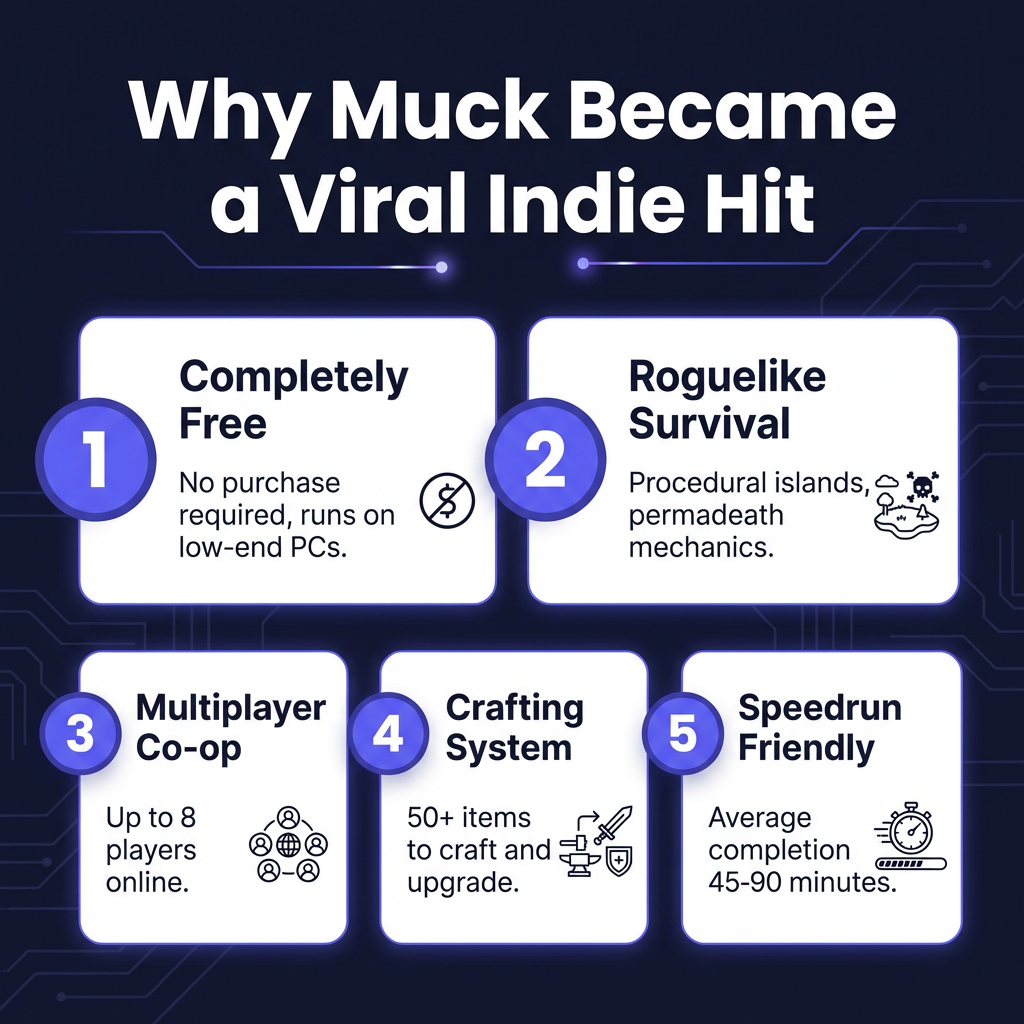
- Completely Free: No upfront cost, no microtransactions, no pay-to-win mechanics
- Procedural Generation: Every playthrough features a different island layout
- Permadeath: When you die, you start over — adding real tension to every decision
- Multiplayer Co-op: Play with up to 8 friends online
- Speedrun Friendly: Average completion time is 45-90 minutes
Why Did Muck Go Viral?
Muck’s success didn’t happen by accident. Several factors contributed to its explosive growth:
1. The Developer Already Had an Audience
Dani had built a substantial YouTube following through his game development content. When he released Muck, he had an instant player base of millions who were eager to try his creation. This is a crucial lesson for indie developers — building an audience before launch can make or break your game’s success.
2. The “Free” Price Point
In a market where most survival games cost $15-30, Muck being completely free removed all barriers to entry. Players could try it without any financial risk, and the game’s quality kept them coming back.
3. Streamer and Content Creator Adoption
Muck became a favorite among Twitch streamers and YouTubers. The game’s chaotic multiplayer sessions made for entertaining content, which drove even more players to try it. The “just one more run” nature of roguelikes kept viewers engaged.
4. Low System Requirements
Unlike graphically intensive survival games like Valheim or ARK, Muck can run on almost any PC. This accessibility opened the game to players who don’t have gaming rigs, significantly expanding its potential audience.
Gameplay Mechanics: How Muck Works
Muck’s gameplay loop is deceptively simple but incredibly addictive. Here’s how a typical session unfolds:
Day 1: The Scramble
You spawn on a random island with nothing. Your first priority is gathering basic resources — wood from trees, rocks from boulders, and wheat from grass. You’ll craft your first tools (a wooden pickaxe and axe) and build a simple shelter before night falls.
Days 2-4: Building Up
As you explore the island, you’ll discover caves with valuable ores like iron and gold. You’ll craft better weapons, armor, and tools. The game features over 50 craftable items, giving you plenty of options for how to approach each run.
Boss Fights
Every few days, a boss spawns. These range from giant goblins to massive beasts, each requiring different strategies to defeat. Boss drops give you powerful upgrades that help you survive longer and push further into the game.
The Final Goal
Eventually, you’ll face the final boss — a massive challenge that tests everything you’ve learned. Defeating it is the ultimate victory, though many players find themselves starting new runs immediately after, trying different strategies or playing with friends.
Muck vs The Competition: How It Stacks Up
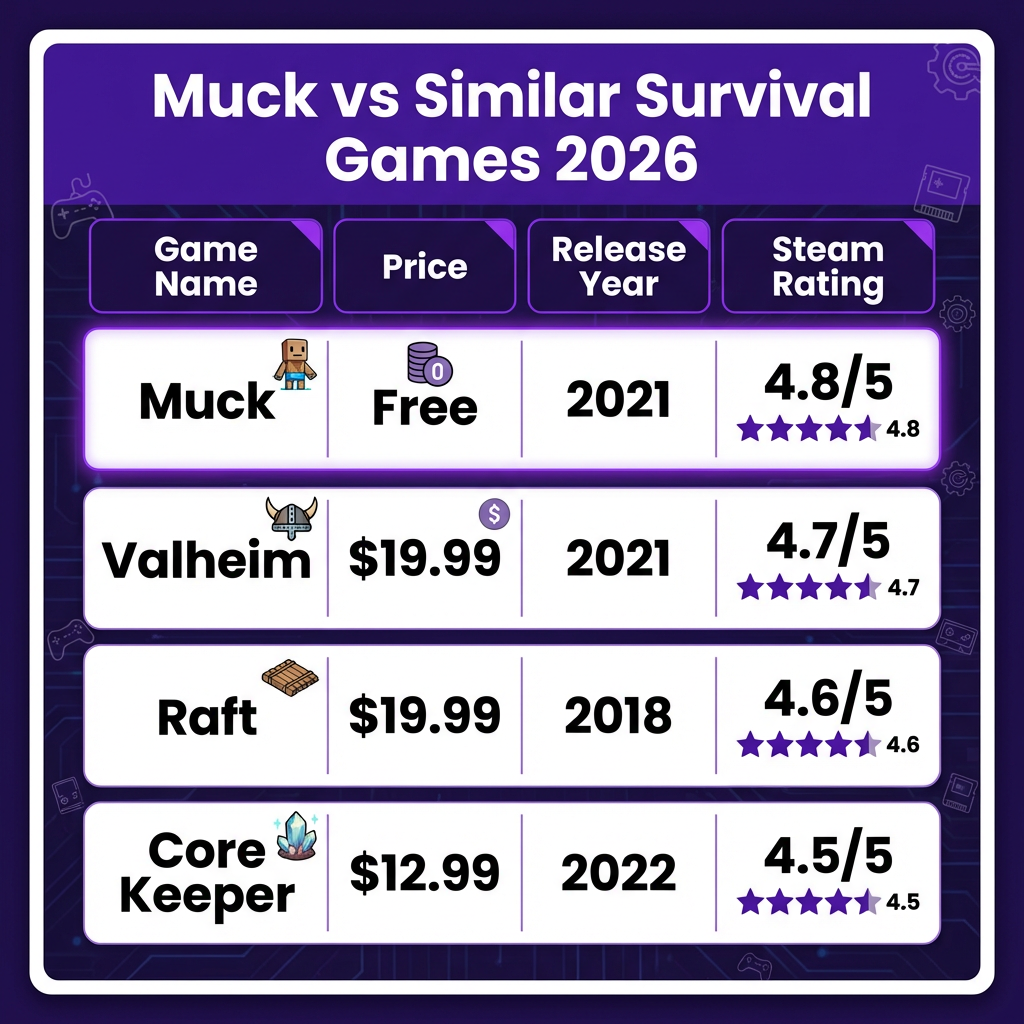
Muck isn’t the only survival game on the market. Here’s how it compares to some popular alternatives:
| Game | Price | Focus | Multiplayer | Best For |
|---|---|---|---|---|
| Muck | Free | Roguelike survival | Up to 8 players | Quick sessions, casual play |
| Valheim | $19.99 | Norse mythology survival | Up to 10 players | Long-term progression |
| Raft | $19.99 | Ocean survival | Up to 8 players | Story-driven experience |
| Core Keeper | $12.99 | Underground crafting | Up to 8 players | Exploration and automation |
| Don’t Starve | $9.99 | Gothic survival | Up to 6 players (DST) | Hardcore challenge |
Muck’s main advantage is its accessibility. While other games offer deeper mechanics or better graphics, none match Muck’s combination of being free, fast to play, and easy to run on any PC.
Tips for New Players
If you’re jumping into Muck for the first time, here are some tips to help you survive longer:
- Prioritize wood and stone early: You’ll need these for basic tools and shelter
- Don’t fight enemies bare-handed: Craft a sword as soon as possible
- Build a bed: This sets your respawn point if you die
- Explore caves for ores: Better gear makes everything easier
- Play with friends: Multiplier is where Muck really shines
- Learn boss patterns: Each boss has tells you can exploit
What Indie Developers Can Learn From Muck
Muck’s success offers valuable lessons for anyone looking to create and sell their own games:
Build an Audience First
Dani’s YouTube channel gave him a built-in marketing machine. If you’re an indie developer, start sharing your development process early. Document your journey, teach others, and build a community around your work.
Remove Barriers to Entry
Muck being free meant anyone could try it. While you might not want to give your game away, consider offering a demo or free trial. The easier you make it for players to experience your game, the more likely they are to become customers.
Focus on Core Gameplay
Muck doesn’t have cutting-edge graphics or a complex story. What it has is a tight, satisfying gameplay loop. Polish your core mechanics before adding features. A simple game that feels great to play will outperform a complex game that feels clunky.
Make It Streamer-Friendly
Muck’s multiplayer chaos makes for great viewing. When designing your game, consider how it will look when streamed. Visual clarity, exciting moments, and multiplayer interactions can all help your game find an audience through content creators.
Selling Your Own Game? Fungies Has You Covered
Join indie developers using Fungies.io — automated tax compliance, 50+ payment methods, and Merchant of Record protection for your digital products.
No credit card required
Frequently Asked Questions About Muck
Is Muck really free?
Yes, Muck is completely free to download and play on Steam. There are no microtransactions, DLC, or hidden costs.
Can I play Muck solo?
Absolutely. While multiplayer is popular, Muck is fully playable and enjoyable as a single-player experience.
How long does a typical Muck session last?
Most runs last between 45 minutes and 2 hours, depending on your skill level and how far you progress. This makes Muck perfect for shorter gaming sessions.
Will Muck receive updates?
Dani has moved on to other projects, and Muck is considered complete. However, the game has enough content and replayability to keep players engaged for dozens of hours.
What are the system requirements for Muck?
Muck runs on almost any modern PC. The minimum requirements are very low — basically any computer from the last 10 years should handle it fine.
Conclusion: Why Muck Still Matters in 2026
Five years after its release, Muck remains a testament to what a solo developer can achieve. It’s proof that you don’t need a massive budget, a large team, or cutting-edge technology to create a game that millions of people love.
For players, Muck offers an accessible entry point into the survival genre. For developers, it offers a blueprint for viral success. And for the gaming industry as a whole, it’s a reminder that sometimes the simplest ideas are the most powerful.
If you haven’t played Muck yet, it’s absolutely worth your time — especially since it costs nothing to try. And if you’re an indie developer looking to sell your own games, consider how Fungies can help you handle payments, taxes, and compliance so you can focus on what you do best: making great games.