Selling digital downloads has become one of the most lucrative ways to build passive income in 2026. Whether you’re creating ebooks, Notion templates, printable planners, or digital art, the market for digital products is exploding. According to recent industry data, the digital products market is projected to reach $500+ billion by 2027, with individual creators earning anywhere from $500 to $50,000+ per month.
The beauty of digital downloads? You create once, sell infinitely. No inventory, no shipping, no manufacturing costs. Just pure profit margins that can reach 90% or higher after platform fees. This guide will walk you through everything you need to know to start selling digital downloads online in 2026.
What Are Digital Downloads?
Digital downloads are any files that customers can purchase and download instantly. Unlike physical products, there’s no shipping or handling required. The most popular types of digital downloads in 2026 include:
- Ebooks and PDF guides — Educational content, how-to guides, and niche expertise
- Notion templates — Productivity systems, planners, and workspace setups
- Printables — Wall art, planners, checklists, and organizational tools
- Digital art and graphics — Illustrations, icons, SVGs, and design assets
- Stock photos and videos — Professional media for content creators
- Music and audio files — Sound effects, loops, and royalty-free music
- Software and plugins — Productivity tools, browser extensions, and apps
- Online courses — Video lessons, tutorials, and educational content
The key to success is choosing a digital product type that aligns with your skills and solves a specific problem for your target audience. The most successful creators focus on niches where they have expertise and can provide unique value.
Best Platforms to Sell Digital Downloads in 2026
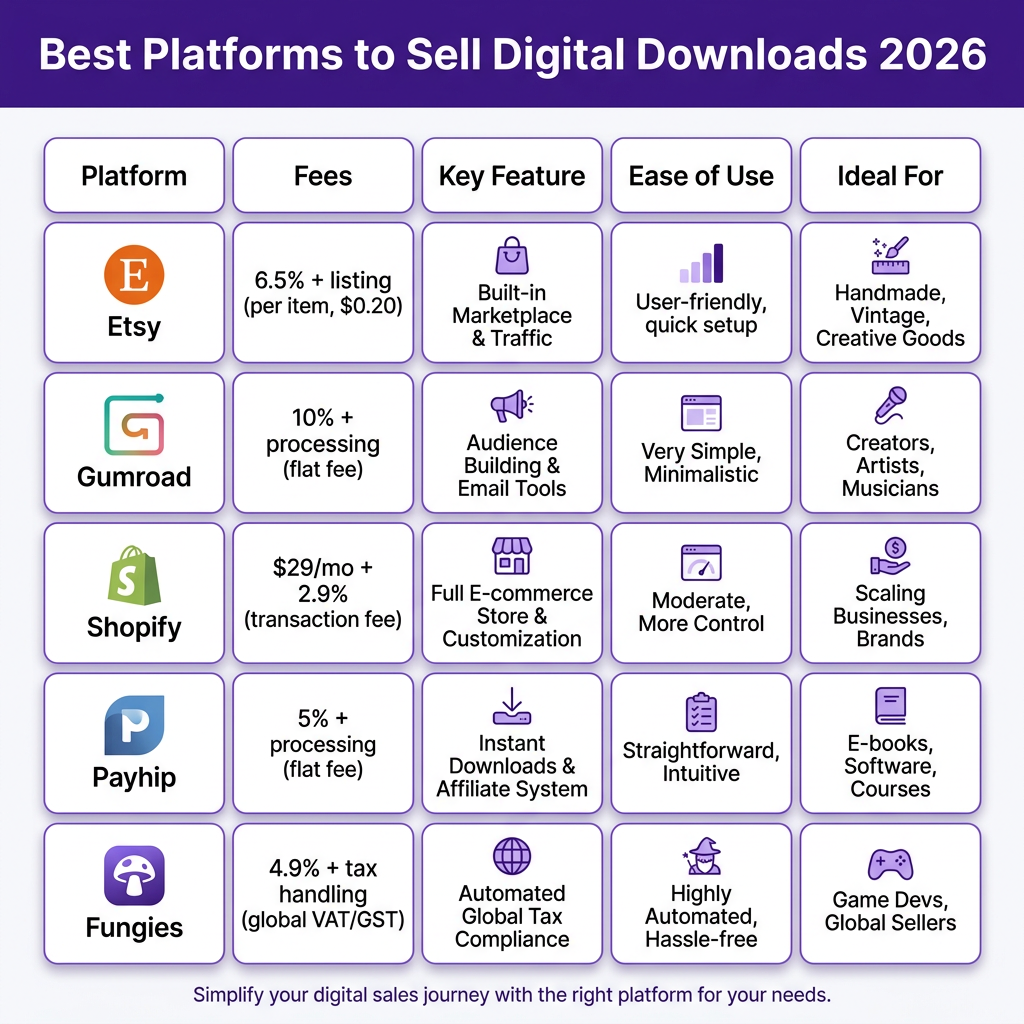
Choosing the right platform is crucial for your success. Each platform has different fee structures, audiences, and features. Here’s a breakdown of the top platforms for selling digital downloads in 2026:
1. Etsy
Etsy is the largest marketplace for creative digital products. With millions of active buyers searching for printables, templates, and digital art, it offers built-in traffic that new sellers crave. However, fees can add up: $0.20 listing fee per item, 6.5% transaction fee, plus payment processing fees. Best for: Printables, wedding templates, wall art, and craft patterns.
2. Gumroad
Gumroad has become the go-to platform for creators selling digital products directly to their audience. It’s incredibly easy to set up, handles VAT/tax compliance automatically, and offers a clean checkout experience. Fees start at 10% + processing fees on the free plan, or you can reduce fees with paid plans. Best for: Ebooks, courses, software, and creator products.
3. Shopify
Shopify gives you complete control over your brand and customer experience. Starting at $29/month, it’s more expensive than marketplace options but offers powerful customization, marketing tools, and scalability. You’ll need to drive your own traffic through SEO, social media, or ads. Best for: Established creators ready to build a brand, high-volume sellers.
4. Payhip
Payhip is an underrated gem for digital product sellers. It offers a free plan with just 5% transaction fees, instant delivery, and built-in marketing tools like discount codes and affiliate programs. The platform handles EU VAT automatically. Best for: Solopreneurs, first-time sellers, and those wanting low fees without monthly costs.
5. Fungies.io
Fungies.io is emerging as a powerful alternative for creators who want the simplicity of Gumroad with lower fees and better tax handling. At just 4.9% + 30¢ per transaction, it undercuts most competitors while handling global tax compliance (VAT, sales tax) automatically. The platform offers instant file delivery, customizable checkout pages, and supports 50+ payment methods globally. Best for: Creators who want to maximize profits while staying compliant with international tax laws.
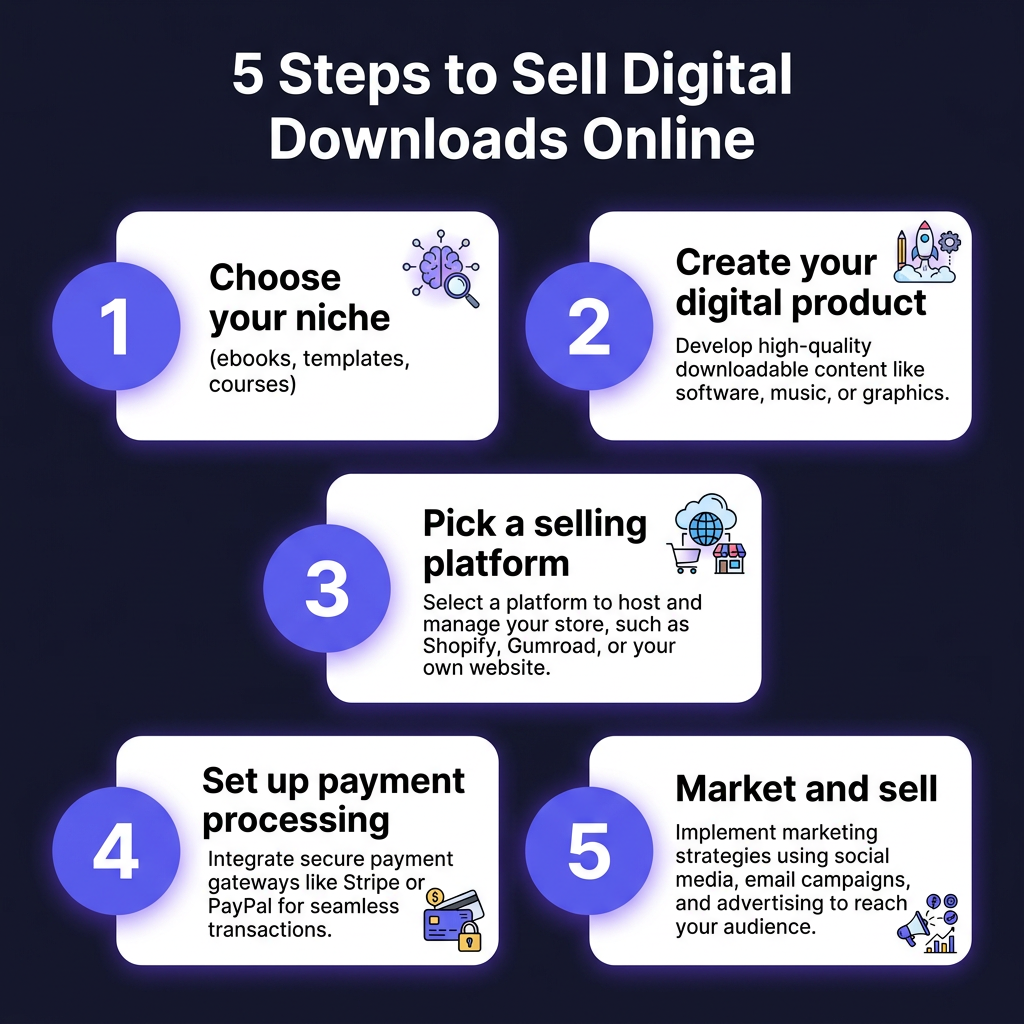
5 Steps to Start Selling Digital Downloads
Step 1: Choose Your Niche and Product Type
Success starts with choosing the right niche. Look for intersections between your skills, market demand, and profit potential. Research trending products on Etsy, Gumroad, and social media. Tools like Google Trends, EtsyRank, and Sale Samurai can help identify profitable niches. Popular niches in 2026 include productivity templates, AI prompt guides, social media templates, and educational resources.
Step 2: Create High-Quality Digital Products
Quality is everything in the digital product space. Your products should solve a specific problem or fulfill a clear desire. Invest time in professional design using tools like Canva Pro, Adobe Creative Suite, or Figma. Create multiple variations and bundle related products to increase average order value. Always test your files thoroughly before listing to ensure customers can download and use them without issues.
Step 3: Set Up Your Selling Platform
Choose a platform that aligns with your goals and technical comfort level. For beginners, marketplaces like Etsy or all-in-one platforms like Payhip or Fungies offer the easiest start. For brand builders, Shopify provides maximum control. Set up your shop profile with a professional logo, compelling bio, and clear policies. Configure payment processing, tax settings, and automated delivery before launching.
Step 4: Price Your Products Strategically
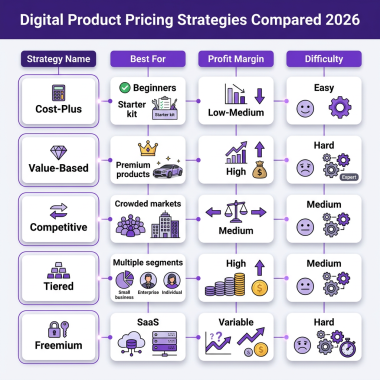
Pricing digital products requires balancing perceived value with market rates. Research competitors to understand price ranges in your niche. Common strategies include: introductory pricing (lower initially to gain reviews), tiered pricing (basic/premium versions), and bundle pricing (multiple products at a discount). Don’t undervalue your work — digital products often command higher prices than creators expect, especially when they solve expensive problems.
Step 5: Market and Promote Your Products
Even on marketplaces with built-in traffic, marketing accelerates success. Leverage Pinterest for visual products, Instagram for lifestyle templates, and TikTok for trending digital products. Build an email list from day one — it’s your most valuable asset. Create free lead magnets to attract subscribers, then nurture them with valuable content and product recommendations. Consider influencer partnerships, affiliate programs, and paid ads once you have proven products.
Legal and Tax Considerations
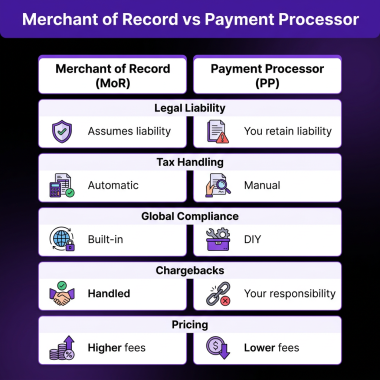
Selling digital products comes with legal and tax obligations. Depending on your location and where customers are based, you may need to collect and remit VAT (EU), sales tax (US), or GST (Australia/NZ). Platforms like Gumroad, Payhip, and Fungies handle tax compliance automatically, saving you significant headaches. Always include clear terms of use with your products and consider copyright protection for your original work.
FAQ: Selling Digital Downloads
How much can you make selling digital downloads?
Earnings vary widely based on niche, product quality, and marketing effort. Beginners often earn $200-$500 in their first few months, while established sellers can make $5,000-$50,000+ monthly. Top creators in popular niches report six-figure annual incomes from digital products alone.
What digital products sell best in 2026?
Top-selling digital products include Notion templates, printable planners, social media templates, AI prompt guides, Canva templates, resume templates, and educational ebooks. Products that save time, solve problems, or help users make money tend to perform best.
Do I need a business license to sell digital downloads?
Requirements vary by location. Many jurisdictions allow hobby-level selling without formal business registration, but once you reach certain income thresholds (often $400-$1,000 annually), you’ll likely need to register as a business and report income. Consult a local accountant or tax professional for specific guidance.
How do I protect my digital products from piracy?
While complete piracy prevention is impossible, you can deter theft by: watermarking preview images, using PDF stamping with customer info, offering products through membership sites rather than direct downloads, and including clear terms of use. Focus on serving paying customers rather than obsessing over pirates.
Which platform has the lowest fees for selling digital products?
Fungies.io currently offers the lowest fees at 4.9% + 30¢ per transaction, followed by Payhip at 5% on their free plan. Gumroad charges 10% on their free plan, while Etsy fees can exceed 10% when including listing and transaction fees. Shopify has monthly costs but lower per-transaction fees at higher volumes.
Conclusion: Start Your Digital Download Business Today
Selling digital downloads in 2026 represents one of the best opportunities for creators to build passive income streams. With minimal startup costs, high profit margins, and the ability to scale infinitely, digital products offer a path to financial freedom that wasn’t possible a decade ago.
The key is to start. Choose your niche, create your first product, pick a platform, and launch. Your first product won’t be perfect — and that’s okay. Learn from customer feedback, iterate on your offerings, and build momentum over time. The creators who succeed are those who consistently show up and improve.
Ready to turn your knowledge and creativity into income? Choose a platform, create your first digital download, and join the thousands of creators building businesses around their expertise. The opportunity is there — it’s time to seize it.
Ready to Simplify Your Digital Product Sales?
Join hundreds of creators using Fungies.io — automated tax compliance, instant delivery, global payments, and only 4.9% + 30¢ per transaction.
No credit card required