9 Best VAT Automation Software for Digital Products in 2026 (Compared)
Selling digital products to EU customers? You need VAT compliance. I tested 9 leading VAT automation platforms — from Merchant of Record solutions to tax calculation tools. Here’s which one fits your business stage, pricing breakdown, and what to avoid in 2026.
Here’s a hard truth: if you’re selling digital products to customers in the EU and not charging VAT, you’re probably breaking the law. And with 2026 bringing stricter enforcement and real-time reporting requirements across Europe, “I didn’t know” won’t fly anymore.
The good news? You don’t need to become a tax expert overnight. VAT automation software handles the heavy lifting — calculating the right rate for each customer, generating compliant invoices, and even filing returns in some cases. But with dozens of tools claiming to solve this problem, which one actually delivers?
I’ve spent the last month testing nine leading VAT automation platforms, digging into their pricing, feature sets, and real user experiences. Here’s what I found.
What Is VAT Automation Software?
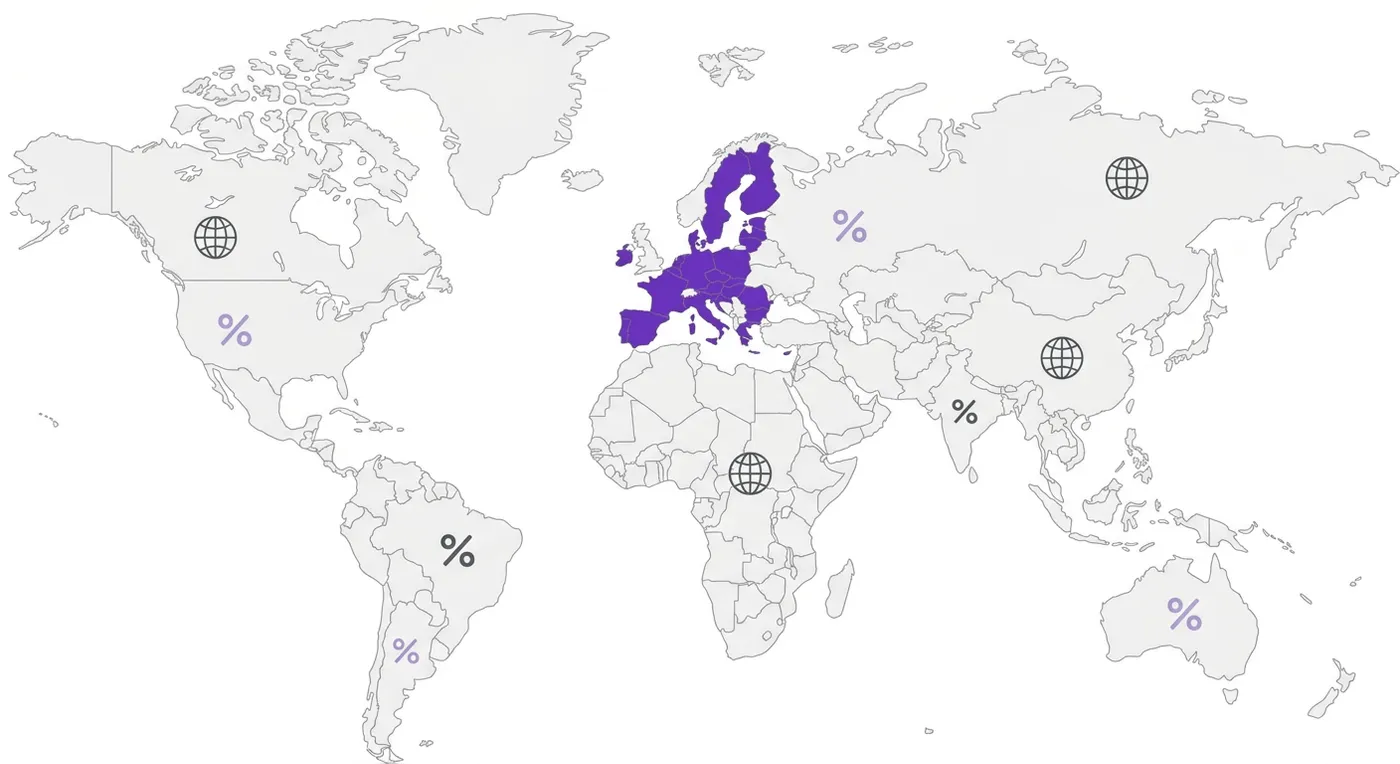
VAT automation software is a tool that automatically calculates, collects, and remits Value Added Tax (VAT) on your digital product sales. Instead of manually tracking tax rates across 27+ EU countries (plus the UK, Norway, and beyond), the software integrates with your checkout and handles everything in real-time.
For digital sellers — whether you’re selling SaaS subscriptions, online courses, ebooks, templates, or downloadable software — this isn’t just convenient. It’s often legally required.
Why VAT Compliance Matters for Digital Sellers in 2026
The EU’s VAT rules for digital products have been evolving rapidly. Here’s what changed recently that you need to know about:
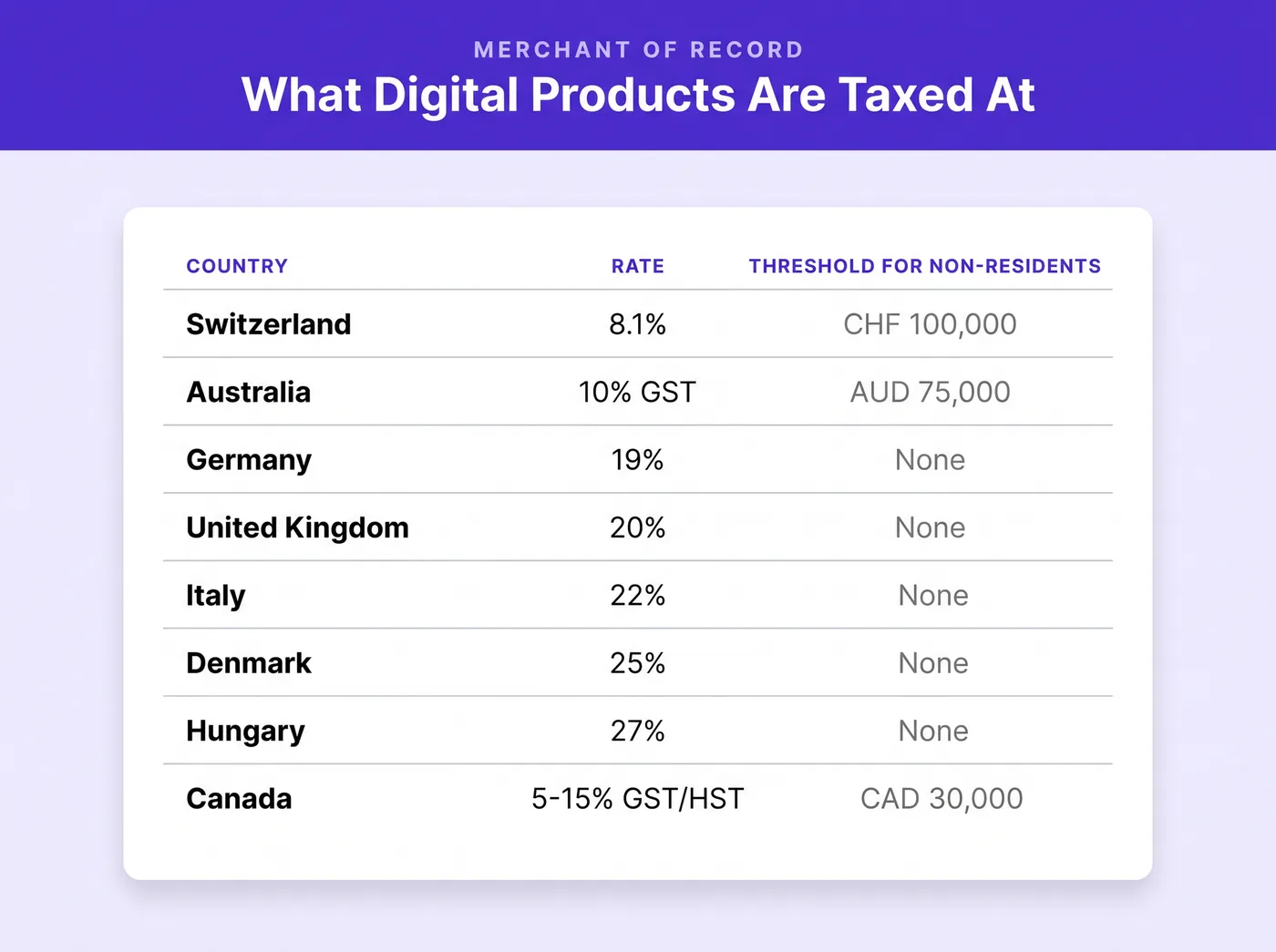
- Destination-based taxation: You charge VAT based on where your customer is located, not where you’re based. Selling from the US to a customer in France? That’s French VAT (20%).
- No threshold for digital services: Unlike physical goods, there’s no minimum sales threshold for digital products. Every single B2C sale to an EU customer requires VAT collection.
- Real-time reporting (ViDA): The EU’s “VAT in the Digital Age” initiative is pushing member states toward real-time or near-real-time VAT reporting. Manual quarterly filings are becoming obsolete.
- Platform liability: Marketplaces and payment platforms are increasingly being held responsible for collecting VAT on behalf of sellers. But don’t rely on this — the ultimate responsibility still sits with you.
- Hefty penalties: Non-compliance can result in fines up to €50,000 or more, plus back taxes with interest. Several EU countries have ramped up enforcement in 2025-2026.
Honestly, most indie developers and small SaaS founders underestimate how complex this gets. You’re not just dealing with one tax rate — you’re managing 27 different EU rates, each with its own rules about what’s taxable, reduced rates for certain products (like ebooks in some countries), and specific invoicing requirements.
That’s where automation comes in. Let’s look at the nine best options.
9 Best VAT Automation Software for Digital Products in 2026
1. Fungies.io
Best for: Indie hackers, SaaS founders, and digital product sellers who want all-in-one payments + tax compliance without the complexity
Fungies.io operates as a Merchant of Record, which means they take on the legal responsibility for VAT compliance on your behalf. This is fundamentally different from pure tax automation tools — you’re not just getting calculation software, you’re getting a partner that handles the actual tax liability.
- VAT handling: Automatic calculation, collection, and remittance for all EU countries + UK + Norway
- Pricing: 5% + $0.50 per transaction (all-in, includes tax compliance)
- Invoicing: Compliant invoices generated automatically with customer VAT IDs, reverse charge handling for B2B
- Integration: No-code checkout, REST API, webhooks for subscription management
- Best for: Sellers who want to offload tax liability entirely, not just automate calculation
The key differentiator here is the Merchant of Record model. With most other tools on this list, you’re still legally responsible for filing returns and paying taxes — the software just makes it easier. With Fungies, they become the seller of record and handle everything end-to-end.
2. Quaderno
Best for: Growing SaaS companies that need robust tax automation with strong Stripe integration
Quaderno has built a solid reputation for handling complex international tax scenarios. It’s particularly strong for businesses already using Stripe, with deep integration that automates tax calculation at checkout.
- VAT handling: Real-time calculation for 100+ countries, automatic tax rules based on product type and customer location
- Pricing: Starts at $89/month (up to 500 transactions), then $199/month (2,000 transactions), custom for higher volumes
- Invoicing: Automatic compliant invoices, VAT ID validation, reverse charge support
- Integration: Stripe, Shopify, WooCommerce, Paddle, and 20+ other platforms via native integrations or API
- Filing support: Tax reports ready for filing, but you still file yourself (or hire a service)
Quaderno shines when you need flexibility — it works with multiple payment processors and ecommerce platforms. The downside is the monthly fee, which can add up for smaller sellers. At $89/month minimum, you need decent volume to justify the cost versus percentage-based alternatives.
3. TaxJar (by Stripe)
Best for: US-based sellers who need both US sales tax and international VAT coverage
Acquired by Stripe in 2021, TaxJar has become the go-to for US sellers expanding internationally. It’s strongest on US sales tax compliance but has solid VAT capabilities for digital products.
- VAT handling: EU VAT calculation and reporting, UK VAT, Australian GST, Canadian GST/HST
- Pricing: Starts at $59/month (Professional), $199/month (Premium with auto-filing)
- Invoicing: Tax reports and transaction logs, but invoicing is more US-focused
- Integration: Deep Stripe integration, plus Shopify, Amazon, Etsy, WooCommerce, and 40+ platforms
- Filing support: Auto-filing available for US states and some international jurisdictions (Premium plan)
TaxJar’s strength is its breadth — if you’re selling both in the US and internationally, it handles both in one platform. However, for EU-only digital sellers, it might be overkill, and the pricing is on the higher end for small operations.
4. Avalara
Best for: Enterprise businesses with complex, multi-jurisdiction tax needs
Avalara is the enterprise heavyweight in tax compliance. It’s powerful, comprehensive, and… expensive. For indie hackers and small SaaS teams, it’s probably overkill. But if you’re doing seven figures in global revenue, it’s worth considering.
- VAT handling: Full global VAT/GST coverage with real-time calculation and reporting
- Pricing: Custom pricing (typically $500+/month for small businesses, much higher for enterprise)
- Invoicing: Comprehensive invoice generation with full compliance for all supported jurisdictions
- Integration: 1,000+ integrations including all major ERPs, ecommerce platforms, and payment processors
- Filing support: Full auto-filing service available (additional cost)
The main issue with Avalara for smaller sellers is cost and complexity. You’re paying for enterprise features you probably don’t need, and the implementation can take weeks. For a solo founder selling a $29/month SaaS tool? Not the right fit.
5. Lemon Squeezy
Best for: Digital product creators who want a simple, all-in-one merchant of record solution
Like Fungies, Lemon Squeezy operates as a Merchant of Record, handling tax compliance on your behalf. It’s particularly popular among indie hackers selling digital downloads, courses, and small SaaS products.
- VAT handling: Full MoR service — they collect and remit VAT globally
- Pricing: 5% + $0.50 per transaction (similar to Fungies)
- Invoicing: Compliant invoices generated automatically
- Integration: Hosted checkout, API, webhooks, plus integrations with popular platforms
- Best for: Creators selling digital downloads, courses, and simple SaaS products
Lemon Squeezy is a solid choice, though some users report slower payout times compared to other MoR platforms. The platform is also more focused on digital downloads than complex SaaS billing scenarios.
6. Stripe Tax
Best for: Businesses already deep in the Stripe ecosystem who need tax calculation (not full compliance)
Stripe Tax is an add-on to Stripe Payments that calculates taxes automatically at checkout. Important distinction: it calculates taxes but doesn’t file returns or take on liability. You’re still responsible for compliance.
- VAT handling: Automatic calculation for EU VAT, UK VAT, and other global taxes
- Pricing: 0.5% per transaction (capped at $500/month), on top of standard Stripe processing fees
- Invoicing: Tax calculation data available, but you generate invoices separately
- Integration: Native Stripe integration — works seamlessly if you’re already using Stripe
- Filing support: Tax reports provided, but you file yourself
Stripe Tax is a good middle ground if you want to stay with Stripe but need tax automation. The 0.5% fee is reasonable for high-volume sellers. But remember — you’re still on the hook for actual tax filing and compliance.
7. Paddle
Best for: B2B SaaS companies with established revenue looking for full-service MoR
Paddle is one of the most established Merchant of Record platforms, particularly strong in B2B SaaS. They handle everything from payments to tax compliance to chargebacks.
- VAT handling: Full MoR service with global tax compliance
- Pricing: Custom pricing (typically 5% + fixed fee, but varies by volume and negotiation)
- Invoicing: Fully compliant invoicing with VAT ID validation and reverse charge
- Integration: Hosted checkout, API, and integrations with major platforms
- Best for: Established B2B SaaS companies doing $50K+ MRR
Paddle is excellent but geared toward larger companies. They have minimum revenue requirements and a more involved onboarding process. For early-stage startups or solo founders, they might not be the best fit.
8. FastSpring
Best for: Established software companies selling globally with complex licensing needs
FastSpring has been in the MoR space for nearly 20 years. They’re particularly strong for companies selling desktop software, enterprise licenses, and complex product bundles.
- VAT handling: Full MoR service with global tax compliance and filing
- Pricing: Custom pricing (typically higher than newer MoR platforms)
- Invoicing: Comprehensive invoicing with support for complex licensing scenarios
- Integration: API, hosted checkout, and integrations with major platforms
- Best for: Established software companies with complex product catalogs
FastSpring is reliable but tends to be more expensive than newer competitors. Their strength is handling complex scenarios — multiple currencies, licensing models, and enterprise sales. For simple SaaS subscriptions, you might find better value elsewhere.
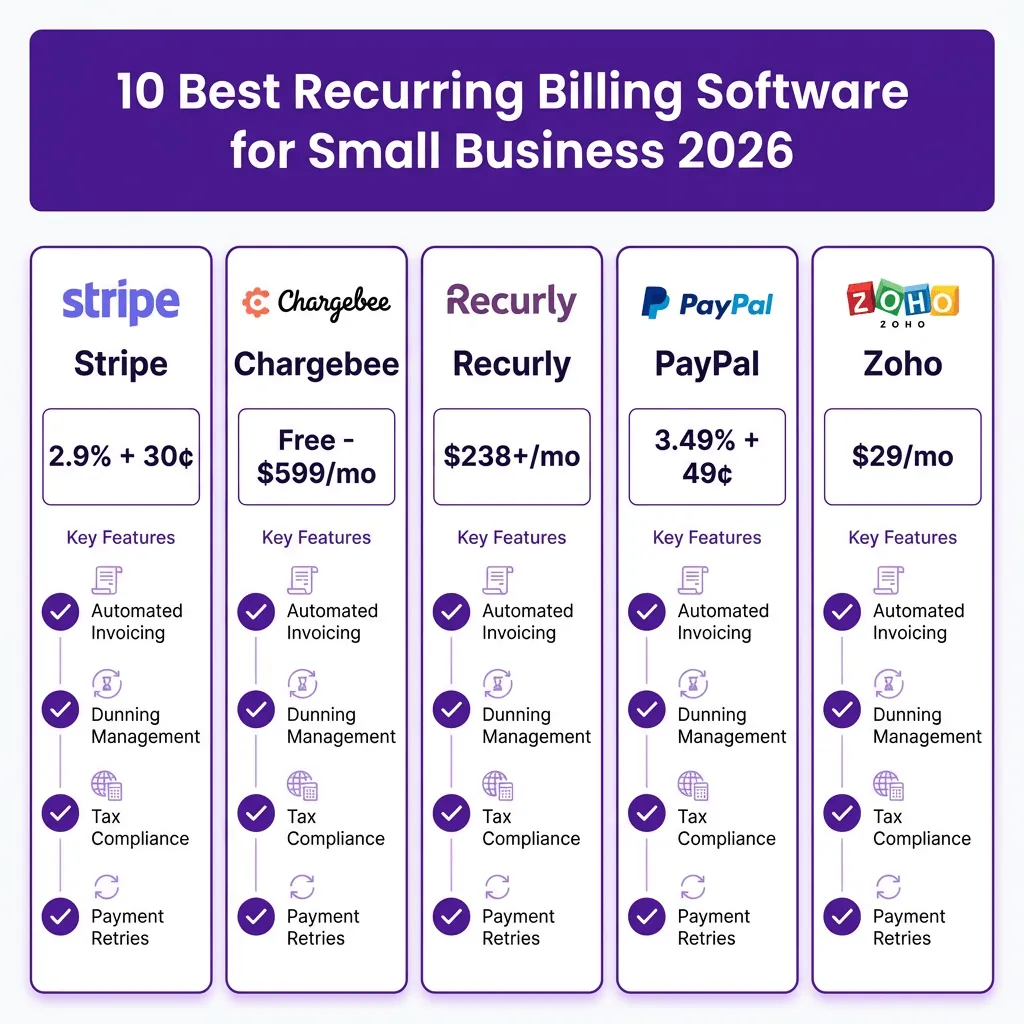
9. Chargebee
Best for: Subscription businesses that need advanced billing features plus tax automation
Chargebee is primarily a subscription management platform that sits on top of payment gateways (like Stripe). Their tax automation is an add-on feature, not a core MoR service.
- VAT handling: Tax calculation via integration with Avalara, TaxJar, or native tax engine
- Pricing: Starts at $299/month (Growth plan), plus additional cost for tax automation
- Invoicing: Advanced invoicing with subscription management, dunning, and revenue recognition
- Integration: Works with Stripe, Braintree, PayPal, and other gateways
- Filing support: Reports provided, but you file yourself (or use integrated tax service)
Chargebee makes sense if you need advanced subscription features — metered billing, complex proration, multiple pricing tiers. But for straightforward VAT compliance, it’s expensive and adds complexity. You’re paying for subscription management first, tax second.
VAT Automation Software Comparison Table
| Platform | Model | Pricing | EU VAT | Auto-Filing | Best For |
|---|---|---|---|---|---|
| Fungies.io | Merchant of Record | 5% + $0.50 | ✅ Full compliance | ✅ Included | Indie hackers, SaaS founders |
| Quaderno | Tax Automation | $89-$199/mo | ✅ Calculation | ❌ Reports only | Stripe users, growing SaaS |
| TaxJar | Tax Automation | $59-$199/mo | ✅ Calculation | ⚠️ Premium only | US + international sellers |
| Avalara | Tax Automation | $500+/mo | ✅ Full coverage | ✅ Available | Enterprise, complex needs |
| Lemon Squeezy | Merchant of Record | 5% + $0.50 | ✅ Full compliance | ✅ Included | Digital creators, courses |
| Stripe Tax | Tax Calculation | 0.5% per tx | ✅ Calculation | ❌ You file | Stripe ecosystem users |
| Paddle | Merchant of Record | Custom (5%+) | ✅ Full compliance | ✅ Included | B2B SaaS, $50K+ MRR |
| FastSpring | Merchant of Record | Custom (higher) | ✅ Full compliance | ✅ Included | Enterprise software |
| Chargebee | Billing + Tax | $299+/mo | ⚠️ Via integration | ❌ Reports only | Complex subscription billing |
How to Choose the Right VAT Automation for Your Business
Here’s the framework I’d use if I were choosing today:
If you’re pre-revenue or under $10K MRR
Go with a Merchant of Record platform like Fungies or Lemon Squeezy. The percentage-based pricing means you only pay when you make sales, and you get full compliance without hiring a tax accountant. At this stage, your time is better spent building product than learning EU tax law.
If you’re doing $10K-$50K MRR
You have more options. Quaderno or Stripe Tax become cost-effective if you have enough volume to justify the monthly fee. If you’re already using Stripe, adding Stripe Tax at 0.5% is straightforward. If you want to offload liability entirely, stick with an MoR.
If you’re doing $50K+ MRR
At this point, you can negotiate better rates with MoR platforms like Paddle or FastSpring. Or, if you have a finance team, use a tax automation tool like Avalara and handle filing in-house. The decision comes down to: do you want to own the compliance risk, or pay someone else to take it on?
If you sell primarily in the US with some EU sales
TaxJar is your best bet. It’s built for US sales tax first, with international VAT as a secondary feature. You get unified reporting across all jurisdictions, which simplifies things considerably.
If you have complex subscription billing needs
Chargebee or Recurly (not on this list) make sense if you need metered billing, usage-based pricing, or complex proration. Add tax automation as a module. But if your billing is straightforward, this is overkill.
Frequently Asked Questions
Do I really need VAT automation for digital products?
If you’re selling to EU customers as a business (B2C), yes. There’s no minimum threshold for digital services — every sale requires VAT collection. The only exception is B2B sales with valid VAT IDs, where reverse charge applies. But you still need to validate those VAT IDs and keep records.
What’s the difference between Merchant of Record and tax automation?
A Merchant of Record (MoR) becomes the legal seller on the transaction. They take on tax liability, handle chargebacks, and ensure compliance. Tax automation software just calculates the right tax amount — you’re still responsible for filing returns, paying taxes, and dealing with audits. MoR is more expensive but removes risk; tax automation is cheaper but keeps liability with you.
Can I just use Stripe and handle VAT myself?
Technically yes, but it’s risky. Stripe collects payments but doesn’t handle VAT compliance (unless you add Stripe Tax, which only calculates). You’d need to register for VAT in each EU country where you have customers, file returns quarterly, and keep detailed records. For most small sellers, an MoR or automation tool is far more practical.
What about VAT for B2B sales?
B2B sales within the EU use the reverse charge mechanism. You don’t charge VAT, but you must validate the customer’s VAT ID (using VIES), issue a compliant invoice showing reverse charge, and report the transaction in your VAT return. Most tools on this list handle VAT ID validation automatically.
How much does VAT automation cost?
It varies widely. Merchant of Record platforms charge 5% + $0.50 per transaction (Fungies, Lemon Squeezy) or custom rates for larger volumes (Paddle, FastSpring). Pure tax automation tools charge monthly fees: $59-$199/month for small businesses (TaxJar, Quaderno), $500+/month for enterprise (Avalara). Stripe Tax charges 0.5% per transaction. Choose based on your volume and risk tolerance.
Final Thoughts: Don’t Wait Until You Get Audited
Here’s what I’d do if I were starting fresh in 2026:
For most indie hackers and small SaaS founders, I’d go with Fungies.io or Lemon Squeezy. The 5% + $0.50 pricing is transparent, you get full compliance without hiring anyone, and you can focus on building your product instead of worrying about VAT returns.
If you’re already doing serious volume ($20K+ MRR) and have Stripe integrated, adding Stripe Tax at 0.5% is a no-brainer. Or use Quaderno if you need more flexibility across multiple payment processors.
The worst move? Doing nothing. EU tax authorities are getting smarter about tracking digital sales, and penalties aren’t something you want to deal with as a small business. Pick a tool, integrate it, and sleep better knowing you’re compliant.
Ready to get compliant without the headache? Start with Fungies today — full Merchant of Record service, no monthly fees, and you’re protected from day one.
Sources
- EU VAT in the Digital Age (ViDA) framework — European Commission, 2025
- “VAT on eBooks: Navigating Global VAT Rules” — VATUpdate.com, March 2026
- “Latest Trends in Global VAT Compliance for Online Businesses in 2026” — 1StopVAT
- “Who Handles EU VAT on Digital Platforms?” — HelloTax, 2025
- “Quaderno vs TaxJar vs Avalara Comparison” — Quaderno.io blog
- “Best Merchant of Record for SaaS in 2026” — Creem.io
- “Avalara vs TaxJar: 2026 Pricing & Better Alternatives” — Galvix.com
- G2 Merchant of Record Software Reviews — April 2026