Indie Game Funding: The Complete 2026 Guide for Developers
Discover 6 proven indie game funding strategies for 2026: self-funding, publishers, crowdfunding, grants, angel investors, and revenue share models. Complete guide with real numbers and timelines.
Indie game development has never been more accessible—or more competitive. With over 14,000 new games launching on Steam annually, standing out requires more than just a great idea. It requires funding. Whether you’re a solo developer working nights and weekends or a small team ready to go full-time, understanding your funding options is crucial to turning your passion project into a sustainable business.
In 2026, the indie game funding landscape has evolved dramatically. Traditional publishers now compete with crowdfunding platforms, angel investors, revenue-sharing models, and an expanding ecosystem of grants designed specifically for independent creators. This guide breaks down every viable funding path, complete with real numbers, timelines, and strategies that work in today’s market.
Why Funding Matters More Than Ever in 2026
The economics of indie game development have shifted. According to industry data, the average indie game now takes 2-3 years to develop, with costs ranging from $50,000 to $500,000 depending on scope and team size. Marketing budgets alone can consume 30-50% of total project costs—a reality many first-time developers underestimate.
But here’s the encouraging news: the global indie game market is projected to reach $14 billion by 2027, growing at 8.5% annually. Players are hungry for unique experiences that AAA studios won’t take risks on. The funding exists—you just need to know where to find it and how to position your project.
Self-Funding: The Bootstrap Approach
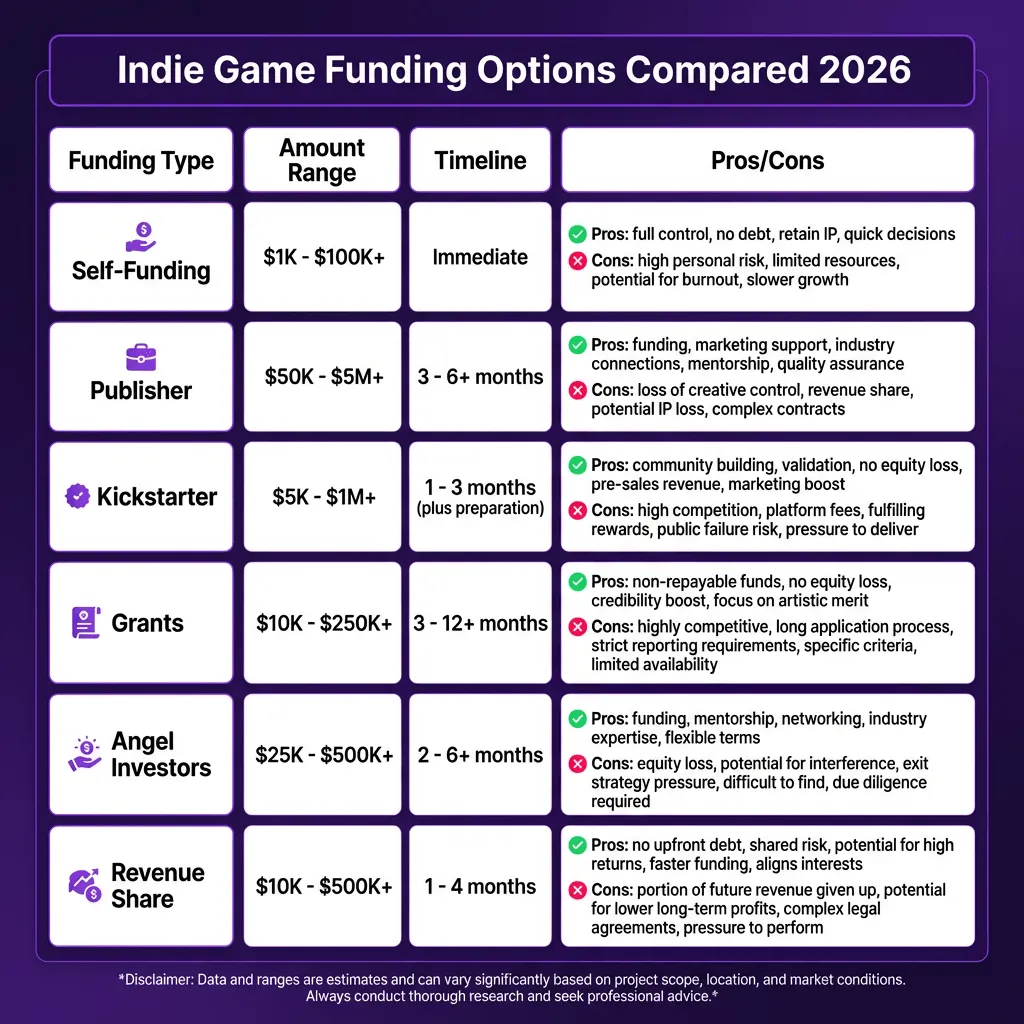
Self-funding remains the most common starting point for indie developers. A 2026 industry survey revealed that 67% of indie developers rely primarily on personal savings or revenue from previous projects to fund their current game. This approach offers complete creative control but comes with significant personal financial risk.
The key to successful self-funding is ruthless scope management. Start with a vertical slice—a polished, playable demonstration of your core mechanics. This approach lets you test your concept with minimal investment before committing to full development. Many successful indies, including Stardew Valley and Undertale, began as side projects funded by day jobs.
Consider these strategies for stretching self-funded budgets:
- Revenue from early access: Launching on Steam Early Access or itch.io can generate income while you finish the game
- Contract work: Many indie studios fund development through client work, using profits to support passion projects
- Asset stores: Selling tools, assets, or plugins on Unity Asset Store or Unreal Marketplace
- Patronage: Platforms like Patreon or Ko-fi let fans support development monthly
Publisher Funding: Trading Equity for Resources
Working with a publisher can provide substantial funding—typically $100,000 to $2 million for established indie publishers—along with marketing expertise, QA resources, and platform relationships. However, this comes at the cost of revenue share (usually 30-50%) and some creative control.
In 2026, several publishers specialize in indie games:
- Devolver Digital: Known for quirky, innovative titles; offers marketing muscle with creative freedom
- Raw Fury: Developer-friendly terms, focuses on artistic games
- Team17: Full-service publishing with strong platform relationships
- Annapurna Interactive: Premium indie titles with high production values
- Private Division: Mid-tier budgets for ambitious indie projects
When approaching publishers, come prepared with a playable demo, clear budget breakdown, realistic timeline, and evidence of market demand (wishlist numbers, community size, or similar successful games). Publishers invest in teams as much as ideas—demonstrate that you can deliver.
Crowdfunding: Validating Your Concept
Crowdfunding platforms like Kickstarter and Indiegogo have funded thousands of indie games, with successful campaigns raising anywhere from $10,000 to over $5 million. Beyond funding, crowdfunding validates market demand and builds a community of invested players before launch.
The most successful gaming Kickstarters share common traits:
- Visual polish: A compelling trailer and screenshots are non-negotiable
- Clear value proposition: What makes your game different?
- Realistic funding goals: Account for platform fees (5-8%), taxes, and reward fulfillment costs
- Engaging reward tiers: Digital copies, beta access, physical merchandise, and design input opportunities
- Active community building: Successful campaigns start marketing 3-6 months before launch
Be aware that crowdfunding comes with obligations. Fulfilling physical rewards can consume significant time and budget. Consider digital-only tiers to minimize logistics. Most importantly, only promise what you can deliver—failed campaigns damage reputations and can lead to legal issues.
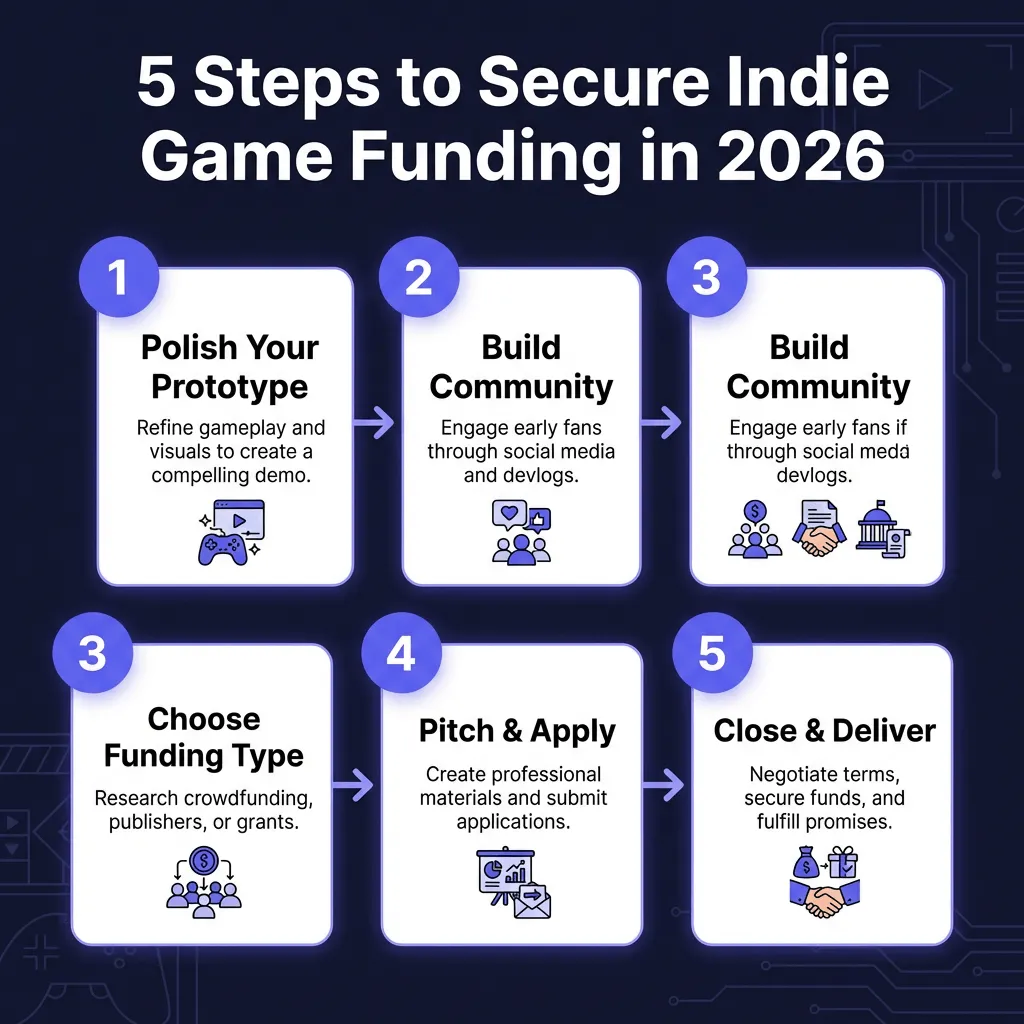
Grants: Non-Dilutive Funding for Indies
Grants represent the holy grail of indie funding: capital without equity dilution or repayment requirements. In 2026, numerous grant programs support game developers at various stages:
Major Grant Programs for 2026
- Epic MegaGrants: $5,000 to $500,000 for projects using Unreal Engine or advancing the 3D graphics ecosystem
- UK Games Fund: Up to £50,000 for UK-based developers (Round 13 opens January 2026)
- Canada Media Fund: Significant funding for Canadian developers with innovative projects
- Creative Europe: EU funding supporting cultural and creative projects
- IGDA Foundation Diverse Game Developers Fund: $300,000 fund supporting marginalized developers
- Unity for Humanity: Grants for projects with social impact
Grant applications require detailed proposals, budgets, and often proof of concept. Competition is fierce—success rates typically range from 5-15%. Start with smaller, local grants to build a track record before applying for major programs.
Angel Investors and Venture Capital
For studios with growth ambitions beyond a single game, angel investors and VC firms offer substantial capital. Blue Ocean Games launched a $30 million fund in 2026 specifically for indie developers, focusing on teams with strong community validation rather than just financial projections.
Investment terms vary widely, but expect to give up 10-30% equity for seed funding. Investors look for:
- Experienced teams: Track record of shipped games or relevant industry experience
- Scalable concepts: Games with live service potential or strong IP expansion opportunities
- Market validation: Proven demand through wishlists, alpha testing, or previous sales
- Clear monetization: Understanding of how the game will generate ongoing revenue
Revenue Share and Alternative Models
Innovative funding models are emerging that blend elements of publishing, investment, and revenue sharing:
- Indie Fund: Provides development funding in exchange for revenue share until repaid plus a modest return
- Xsolla Funding Club: Connects developers with publishers and investors; claims 1 in 10 applicants secures funding
- GameDev.tv Indie Fund: Smaller grants ($500-$5,000) for educational game projects
- Revenue-based financing: Some firms offer funding against projected future sales
Choosing Your Funding Path
The right funding strategy depends on your project’s scope, your team’s experience, and your long-term goals. Here’s a quick decision framework:
- Small scope, solo developer: Self-fund through savings + early access revenue
- Unique concept, existing community: Crowdfunding for validation and capital
- Experienced team, ambitious project: Publisher or angel investment
- Social impact or innovative mechanics: Grant programs
- Proven concept, need capital to finish: Revenue share models
FAQ: Indie Game Funding
How much does it cost to make an indie game in 2026?
Costs range from $50,000 for a simple 2D game developed part-time to $500,000+ for a 3D game with a small team. Marketing typically adds 30-50% to development costs.
Can I get funding without a playable demo?
Most publishers and investors require at least a vertical slice or polished prototype. Grants may fund earlier stages if you have a strong concept document and team credentials.
What’s the success rate for game Kickstarters?
Approximately 35-40% of game projects reach their funding goal. Success correlates strongly with pre-campaign community building and visual polish.
Do I need to incorporate to receive funding?
Yes, most publishers, investors, and grant programs require a legal business entity. Many developers form LLCs or corporations before seeking significant funding.
How long does the funding process take?
Crowdfunding campaigns run 30-45 days. Publisher negotiations typically take 2-6 months. Grant applications can take 3-6 months for decisions. Angel investments vary widely but often close within 3 months of initial contact.
Conclusion: Start Building, Start Funding
The indie game funding ecosystem in 2026 offers more options than ever before. Whether you bootstrap from savings, rally a community through crowdfunding, partner with a publisher, or secure grant funding, the key is matching your funding strategy to your project’s needs and your team’s capabilities.
Remember: funding is a means to an end, not the end itself. The best-funded game still needs to be fun, polished, and marketed effectively. Start with a strong concept, build something playable, and let your work speak for itself. The funding will follow.
Ready to Monetize Your Game Globally?
Join hundreds of indie developers using Fungies.io — automated global payments, tax compliance, and Merchant of Record services.
No credit card required