How to Sell Your AI-Built App: The Complete Monetization Setup Guide for Vibe Coders (2026)
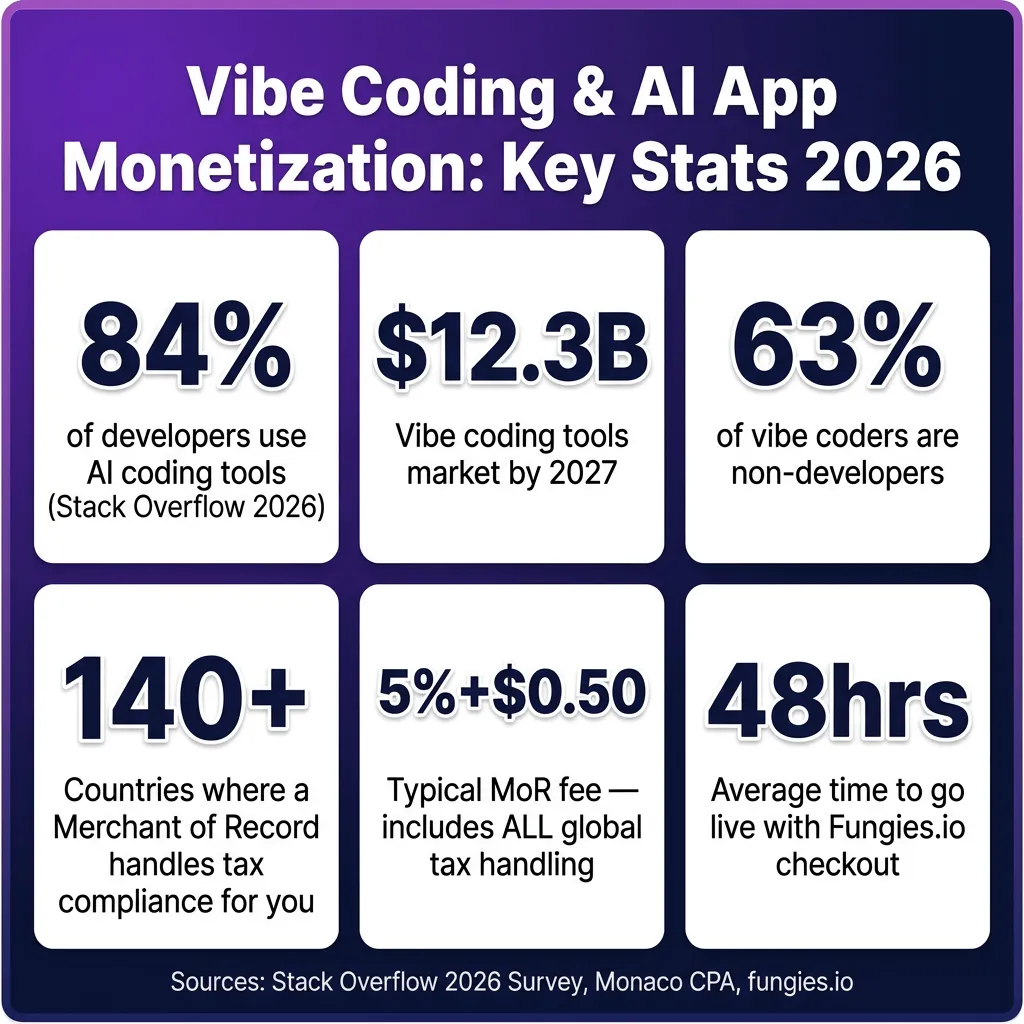
Your Bolt.new project hit 100 signups overnight. Lovable generated the app in 3 hours. Cursor wrote the API. Now someone actually wants to pay for it — and you have no idea where to start. You’re not alone. 84% of developers now use AI coding tools, and 63% of vibe coders have no traditional programming
Your Bolt.new project hit 100 signups overnight. Lovable generated the app in 3 hours. Cursor wrote the API. Now someone actually wants to pay for it — and you have no idea where to start.
You’re not alone. 84% of developers now use AI coding tools, and 63% of vibe coders have no traditional programming background (Stack Overflow Developer Survey 2026). The tools market for AI builders hit $4.7 billion in 2025, projected to reach $12.3 billion by 2027. Building is solved. Monetizing? That’s where most founders stall.
This guide cuts through the noise. We’ll cover every decision you need to make — payment model, platform, tax compliance, checkout setup — so you can go from “it works” to “it makes money” in days, not months.
Why Monetizing AI-Built Apps Is Different
AI coding tools like Cursor, Lovable, Bolt.new, Replit, and v0 are phenomenal at generating UIs, writing CRUD logic, and spinning up databases. They’re terrible at one thing: money.
Ask an AI to “add a checkout button” and you’ll get a button. What you won’t get is:
- Automatic VAT collection on EU transactions
- US sales tax registration and remittance (SaaS is taxable in ~25 states)
- Failed payment recovery and dunning
- Chargeback handling when a customer disputes
- A legal entity to sell in 140+ countries
If you just plug in Stripe directly — which the AI will often suggest — you become personally liable for all of that. Every. Single. Country.
The vibe coder tax trap is real. As Monaco CPA documented: “If you use Stripe directly (not a Merchant of Record), you are personally responsible for sales tax compliance in every state where you have economic nexus.” That’s a six-figure mistake hiding behind a clean UI.
Step 1: Choose Your Payment Model
Before picking a platform, decide how you’re charging. The wrong model kills conversion. The right one scales automatically.
One-Time Purchase
Best for: templates, Chrome extensions, desktop software, Notion packs, AI-generated reports.
Simple to set up. No recurring billing logic. Customers own it forever. The downside is no predictable MRR — you’re always hunting new customers.
Subscription (Monthly/Annual)
Best for: SaaS tools, AI assistants, API services, productivity apps.
Creates predictable revenue. Annual plans reduce churn by 50-70% vs monthly. The standard today: offer monthly at $X, annual at $X×8 (2 months free). Customers who pay annually churn at ~5% vs ~15% for monthly.
Credit / Usage-Based
Best for: AI generation tools, API services, anything with per-use costs.
Users buy a pack of credits (e.g., 100 credits for $10). Each AI generation, API call, or export costs credits. This model aligns your revenue with your costs — when a user generates 1,000 images, they pay for 1,000 images. It’s also incredibly sticky because users don’t want to lose unused credits.
As Rishabh Goel, CEO of Dodo Payments, put it: “Most AI products undercharge in the beginning and overpay for billing infrastructure later. Getting the pricing model right from the start — whether credits, tokens, or per-request — saves months of migration pain.”
Freemium + Paywall
Best for: tools with a clear value demonstration before asking for money.
Let users do something meaningful for free, then gate the good stuff. The key is not making the free tier too generous. If users can accomplish their main job for free, they won’t convert.
Step 2: Understand the Tax Compliance Problem (Before You Pick a Platform)
Here’s the part nobody talks about at build-in-public meetups. When you sell digital products globally:
- EU VAT: You must collect 20-27% VAT on digital services sold to EU customers. No threshold — first sale in Germany triggers German VAT obligations.
- US Sales Tax: SaaS is taxable in ~25 states. Once you hit economic nexus (usually $100K revenue or 200 transactions in a state), you must collect and remit.
- UK VAT: 20% on digital services, no threshold for non-UK sellers.
- Australia GST: 10%, applies to cross-border digital services.
- Canada GST/HST, India GST: Similar frameworks.
Managing this yourself means registering in dozens of jurisdictions, filing quarterly returns, and staying current with constantly changing rules. That’s a part-time job.
The solution: a Merchant of Record (MoR). An MoR becomes the legal seller of your product. They collect tax, remit it to governments worldwide, handle compliance, and take on chargeback liability. You get a clean payout of your revenue minus their fee.
This is why vibe coders should almost always start with an MoR, not raw Stripe.
Step 3: Pick Your Payment Platform
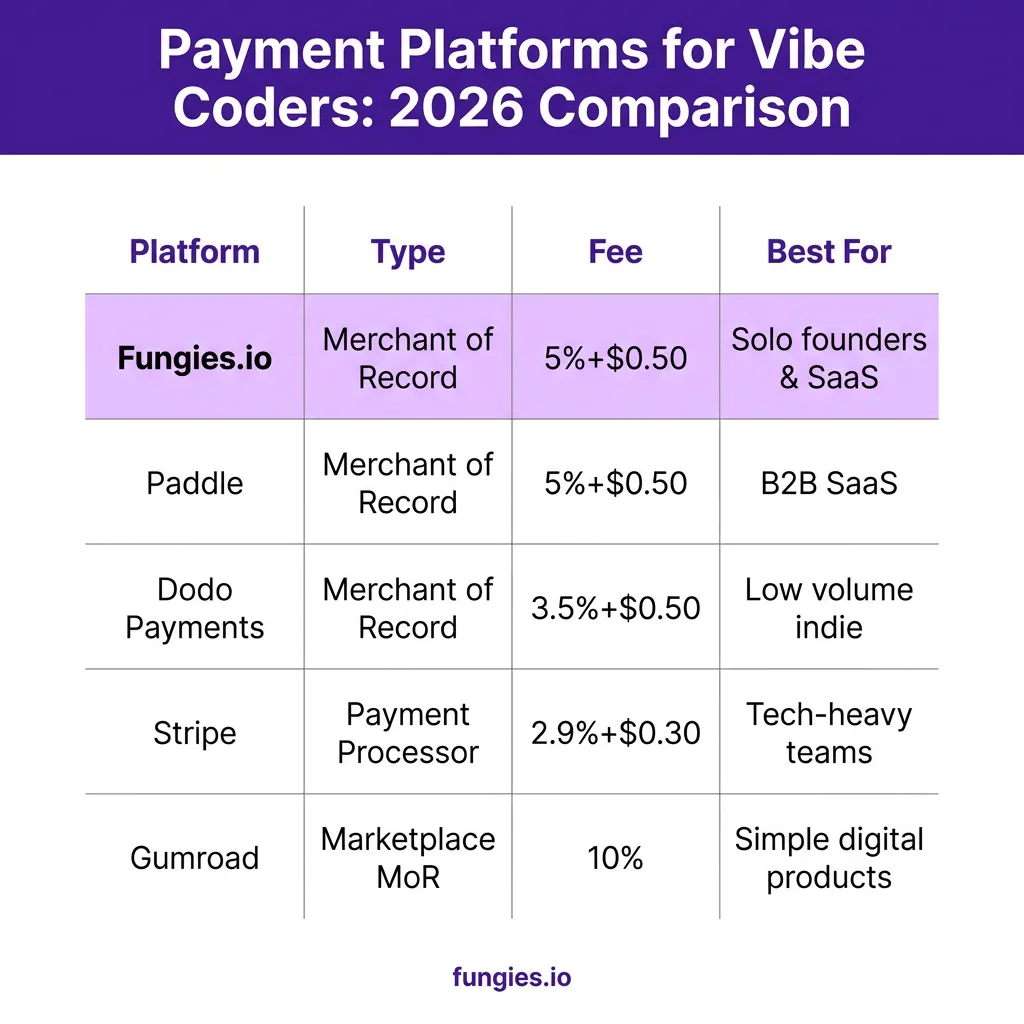
Here’s an honest breakdown of your main options:
| Platform | Type | Transaction Fee | Tax Handling | Best For | Dev Experience |
|---|---|---|---|---|---|
| Fungies.io | Merchant of Record | 5% + $0.50 | Full global (140+ countries) | SaaS, AI tools, solo founders | ⭐⭐⭐⭐⭐ Drop-in embed |
| Paddle | Merchant of Record | 5% + $0.50 | Full global | B2B SaaS, $50K+ MRR | ⭐⭐⭐⭐ Good docs, complex setup |
| Dodo Payments | Merchant of Record | 3.5% + $0.50 | Full global | Low-volume indie hackers | ⭐⭐⭐⭐ Simple API |
| Lemon Squeezy | Merchant of Record (Stripe) | 5% + $0.50 | Full global | Creators, simple SaaS | ⭐⭐⭐⭐ Acquired by Stripe in 2023 |
| Stripe | Payment Processor | 2.9% + $0.30 | Stripe Tax add-on (+0.5%) | Dev-heavy teams with tax resources | ⭐⭐⭐⭐⭐ Best in class, but you own compliance |
| Gumroad | Marketplace MoR | 10% flat | Full (marketplace model) | Individual creators, simple products | ⭐⭐⭐ Very simple, very limited |
The vibe coder’s default choice: Start with Fungies.io if you’re building a SaaS or AI tool. You get full global tax compliance, a drop-in checkout that embeds with a single `<script>` tag, subscription management, and no legal exposure. The 5% fee is the price of not having a tax lawyer on retainer.
If you’re selling simple digital files (ebooks, templates, presets), Gumroad’s 10% might actually be worth it for the zero-setup convenience — until you hit $500/month, at which point Fungies becomes cheaper.

Step 4: Set Up Checkout Without Breaking Your App
Here’s the good news: you don’t need to rewrite your app to add payments. Modern MoR platforms offer multiple embed options that work regardless of how your app was built.
Option A: Hosted Checkout Page
The fastest path. Fungies (and most MoRs) generate a hosted checkout URL for each product. You link to it from your app — a button click opens the checkout in the same tab or a new window.
<!-- Drop this anywhere in your app -->
<a href="https://app.fungies.io/checkout/YOUR_PRODUCT_ID"
   class="btn-primary">
  Buy Now — $29/mo
</a>
No backend changes. No webhook setup required to launch. Works with Lovable, Bolt.new, Bubble, whatever your AI builder generated.
Option B: Embedded Checkout Widget
More seamless — checkout appears as a modal or inline form within your app, not a redirect. Fungies provides a JavaScript snippet you drop in:
<script src="https://app.fungies.io/embed.js"></script>
<div data-fungies-checkout="YOUR_PRODUCT_ID"></div>
Still no real backend required for basic setups. The payment widget handles card capture, 3D Secure authentication, and confirmation.
Option C: API + Webhooks (For Power Users)
If your app needs to unlock features after payment, provision accounts, or send custom confirmation emails, you’ll need webhooks. When a payment completes, the MoR sends a POST request to your server with the order details.
This is where having even basic backend capabilities matters. If your AI-built app doesn’t have a backend, services like Zapier or n8n can receive webhook events and trigger actions — no custom code required.
Step 5: Pricing Your AI App (The Numbers That Actually Work)
Vibe coders consistently underprice. You built the thing in 3 hours, so it feels like it should be cheap. Wrong. The value is what the tool does for the user, not how long it took you to build.
SaaS Pricing Benchmarks for AI Tools (2026)
| Tool Type | Common Price Points | Typical Conversion Rate | Notes |
|---|---|---|---|
| AI writing/content tool | $9–$49/mo | 2–5% free-to-paid | Freemium works well here |
| AI image/video generator | $15–$99/mo or credits | 5–15% visitor-to-paid | Credit model preferred |
| Developer API tool | $29–$199/mo | 3–8% trial-to-paid | Usage tiers convert better |
| Chrome extension | $5–$19/mo or $49–$99 one-time | 1–3% install-to-paid | One-time beats subscription |
| Notion/Obsidian template | $9–$49 one-time | Depends on traffic source | Gumroad or Payhip work fine |
| AI automation/workflow | $49–$299/mo | 10–25% demo-to-paid | High-value, sell outcomes |
Key rule: Start higher than you think is right. You can always discount. Raising prices on existing customers is painful. $29/month feels scary when you first launch; $9/month feels safe. The $29 plan will make you 3x the revenue with similar conversion — because most people who won’t pay $29 also won’t pay $9.
Annual vs Monthly
Offer annual at 20% off (effectively 2 months free). Annual subscribers churn at 5% vs 15%+ for monthly. A customer paying $348/year upfront is worth $696 over 2 years vs a monthly customer churning after 8 months ($232). Push annual hard.
Step 6: Handle Taxes Without a Tax Lawyer
When you use a Merchant of Record like Fungies.io, taxes are essentially handled for you. Here’s what that means in practice:
- At checkout: Fungies detects the customer’s location, applies the correct tax rate (e.g., 20% UK VAT, 23% Polish VAT, applicable US state sales tax), and adds it to the price
- After payment: Fungies collects that tax and remits it to the relevant tax authority on your behalf
- Year-end: You get a clean revenue report. No VAT returns to file. No state tax registrations to manage.
- Receipts: Fungies generates compliant invoices with proper VAT numbers for B2B customers who need them
If you’re using raw Stripe instead, you need Stripe Tax (costs 0.5% extra per transaction), but you still remain the legal seller and still need to file returns yourself. That’s the difference.
Step 7: Set Up Subscriptions and Manage Them
Once you have subscriptions running, you need to handle the lifecycle: upgrades, downgrades, cancellations, failed payments, and reactivations.
Dunning: The Revenue Recovery You’re Ignoring
Failed payments kill SaaS revenue. Cards expire. Banks decline. A subscriber with a failed payment who doesn’t get a retry email is a churned customer. Good MoR platforms handle this automatically:
- Day 1: Retry payment, send email to customer to update card
- Day 3: Retry again
- Day 7: Final retry + warning email
- Day 14: Cancel subscription
This automated dunning sequence recovers 20-40% of failed payments that would otherwise churn. At $50 ARPU and 100 subscribers, that’s $1,000–$2,000/month you’d lose without it.
Customer Portal
You don’t want to handle “cancel my subscription” emails manually. MoR platforms provide a customer portal where users can manage their own billing — upgrade, downgrade, update payment method, download invoices, cancel. Link to it from your app’s settings page and let the platform handle the support overhead.
The Fungies.io Setup: What It Actually Takes
For a vibe coder building a SaaS or AI tool, here’s the realistic setup timeline with Fungies.io:
- Day 1 (30 mins): Create account at app.fungies.io, verify identity, connect your bank account
- Day 1–2: Create your product(s) with pricing. Set up monthly + annual plans.
- Day 2 (1 hour): Embed checkout link or widget in your app. Test with a real card.
- Day 2–3 (optional): Set up webhook endpoint to provision accounts after purchase
- Day 3: Launch. Start making money.
No legal entity registration in 140 countries. No VAT registration. No tax attorney. The platform handles it. Your job is to keep building the product.
Common Mistakes Vibe Coders Make
- Starting with Stripe raw — Great for developers with dedicated accounting teams. Not for a solo founder shipping fast.
- Building a custom payment flow — Don’t. Seriously. Drop-in checkout converts better than anything you’ll build, and you’ll spend weeks on it instead of on the product.
- Launching without a refund policy — You’ll get chargebacks. Have a clear policy upfront: “30-day money-back guarantee, no questions asked” reduces disputes and builds trust.
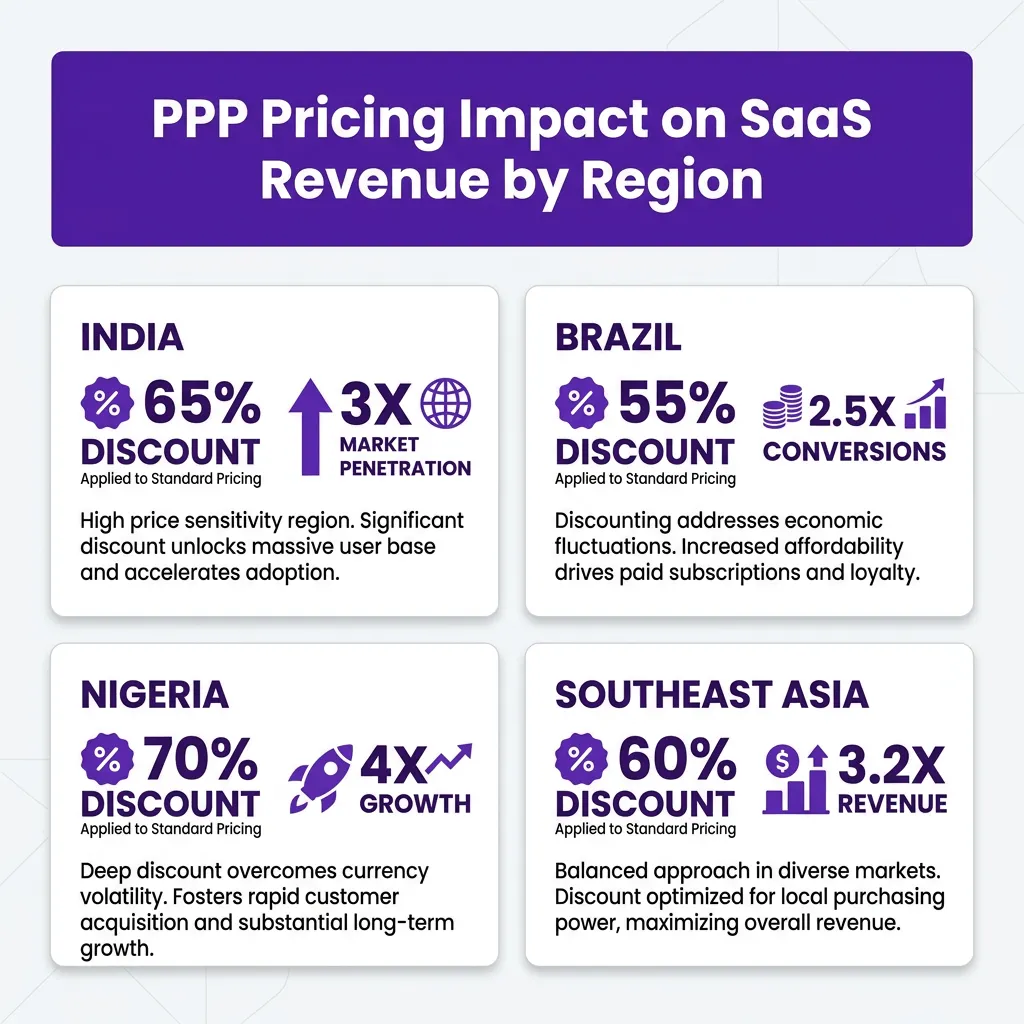
- Using one price globally — $49/month is expensive in Brazil and cheap in Switzerland. PPP (Purchasing Power Parity) pricing can 3x your revenue from emerging markets. Some MoR platforms support this.
- Ignoring involuntary churn — Failed payments are silent killers. Dunning is not optional.
- Forming a Delaware C-Corp too early — The Stripe Atlas C-Corp is right for VC-backed companies. For bootstrapped indie apps earning under $500K, an LLC taxed as S-Corp saves thousands per year.
Key Takeaways
- Don’t plug raw Stripe into your AI-built app without understanding the global tax obligations — it’s a trap that gets expensive fast
- A Merchant of Record (Fungies.io, Paddle, Dodo Payments) handles global VAT/GST/sales tax automatically — that’s worth the 5% fee if you’re selling globally
- Pick your pricing model before your platform: one-time, subscription, or credits. Each has different implications for MRR, churn, and LTV
- Start with a hosted checkout link — you can add an embedded widget later. Speed to launch beats perfection every time
- Dunning (failed payment recovery) is non-negotiable at scale — it recovers 20-40% of payments that would otherwise churn
FAQ
Do I need to register a company to sell my AI-built app?
Not necessarily to start. You can sell as an individual using an MoR like Fungies.io. The MoR is the legal seller — they take on the compliance. That said, once you’re making meaningful revenue ($1K+/month), forming an LLC protects your personal assets and simplifies accounting. But you don’t need a company to launch.
What’s the difference between a Merchant of Record and Stripe?
Stripe is a payment processor — they move money. When you use Stripe, you remain the merchant of record: legally responsible for taxes, chargebacks, and compliance in every country you sell. An MoR like Fungies takes on that legal responsibility. They’re the seller on the customer’s receipt, they collect and remit taxes, and they handle disputes. You get a revenue share after their fee.
Which payment platform is best for Lovable / Bolt.new / Cursor apps?
For apps with no backend: Fungies.io or Gumroad (hosted checkout link requires zero backend). For apps with a simple backend: any MoR with webhook support. Avoid building a custom Stripe integration unless you have a developer who understands payment flows — it’s weeks of work and ongoing maintenance.
How much should I charge for my AI-built SaaS?
More than you think. Most vibe coders underprice because building was fast. Price based on value delivered, not time invested. $19–$49/month is a solid starting range for productivity tools. Test with a higher price before discounting down — you can always lower prices, but raising them on existing customers is painful. Offer annual upfront at 20% off to maximize LTV.
Conclusion
The gap between “this app works” and “this app makes money” is smaller than you think — if you set up payments correctly from day one. Don’t build your own payment system. Don’t raw-dog Stripe without understanding tax obligations. Use a Merchant of Record, embed the checkout, and go back to what you do best: shipping.
The AI tools you already use built the hard part. Monetization is 48 hours of work if you use the right infrastructure. Don’t let payment complexity be the reason a genuinely useful product never reaches the people who need it.
Ready to sell your AI-built app globally? Start with Fungies.io — no monthly fees, takes 30 minutes to set up →
References
- Stack Overflow Developer Survey 2026 — AI Tool Adoption — https://survey.stackoverflow.co/2026
- Monaco CPA — “Vibe Coder Taxes: What Happens When Your AI Side Project Starts Making Money” — https://www.monacocpa.cpa/post/vibe-coder-taxes-saas-indie-developer-guide
- Dodo Payments — “The Complete Guide to Monetizing Vibe-Coded Apps” — https://dodopayments.com/blogs/monetize-vibe-coded-apps
- Freemius — “Best Payment Solutions for AI-Built Apps in 2026” — https://freemius.com/blog/best-payment-solutions-ai-built-apps/
- Lovable — Cursor vs Bolt vs Lovable 2026 Comparison — https://lovable.dev/guides/cursor-vs-bolt-vs-lovable-comparison
- Stripe Sessions 2026 — AI Economic Infrastructure Announcements — https://stripe.com/newsroom/news/sessions-2026